
NASCAR at Homestead 2015: Winners and Losers from the 2015 NASCAR Season
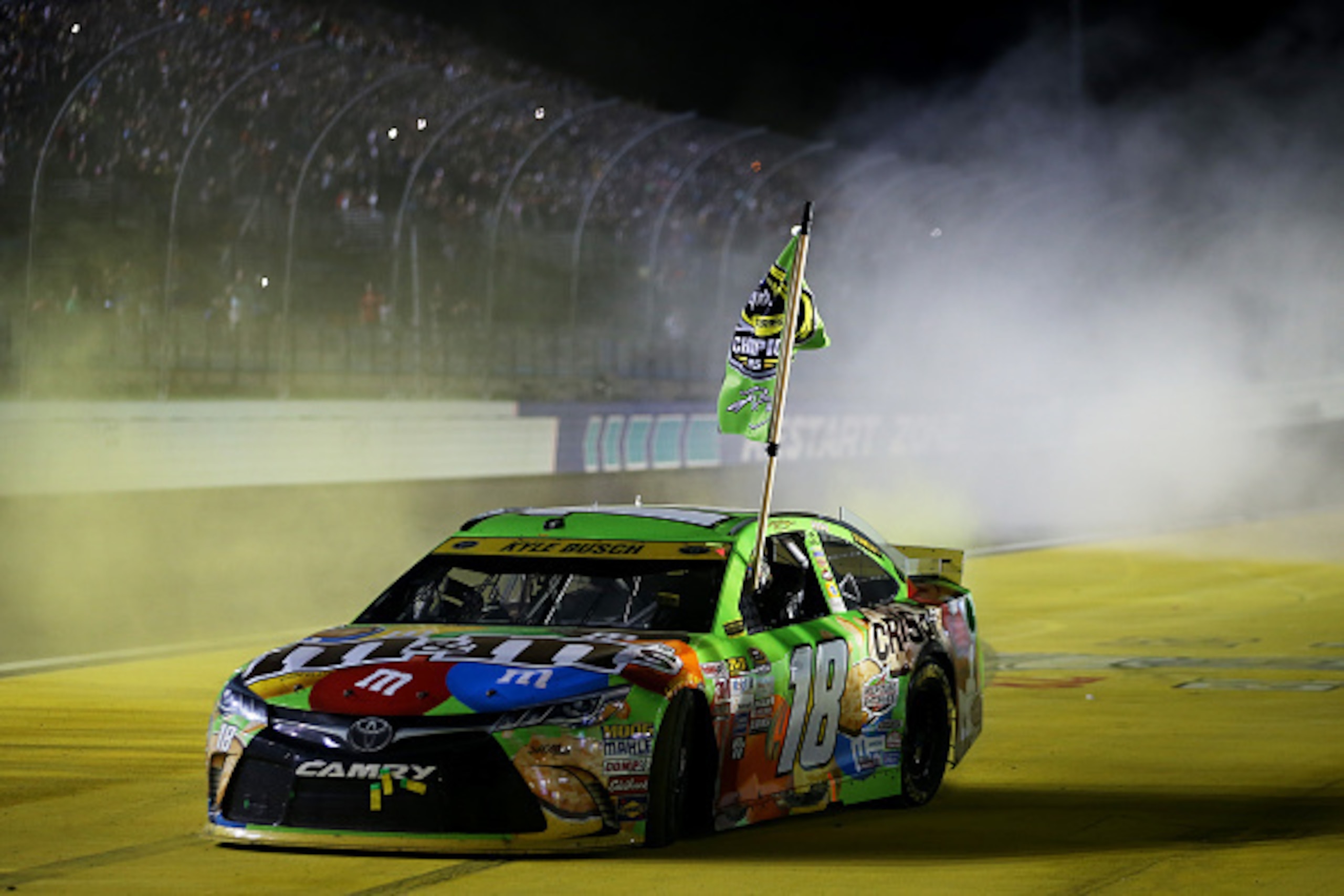
Kyle Busch won the Ford EcoBoost 400 and the Sprint Cup championship with an ice-water-in-the-veins performance at Homestead to close out the NASCAR season.
He came back from a broken foot and a broken leg, missed 11 races and made it all the way to the sweetest Victory Lane on the entire calendar.
But it’s not just Busch's winning the Sprint Cup that colors this slideshow. There’s an entire season to consider and meditate on—not just this final race in South Florida.
There are aero packages, race cancellations, resurgent owners, surprise drivers and one of the greatest of all time saying farewell, all of which painted this season a new shade of awesome.
Read on for winners and losers from the 2015 season.
Loser: No Fire, No Smoke
1 of 10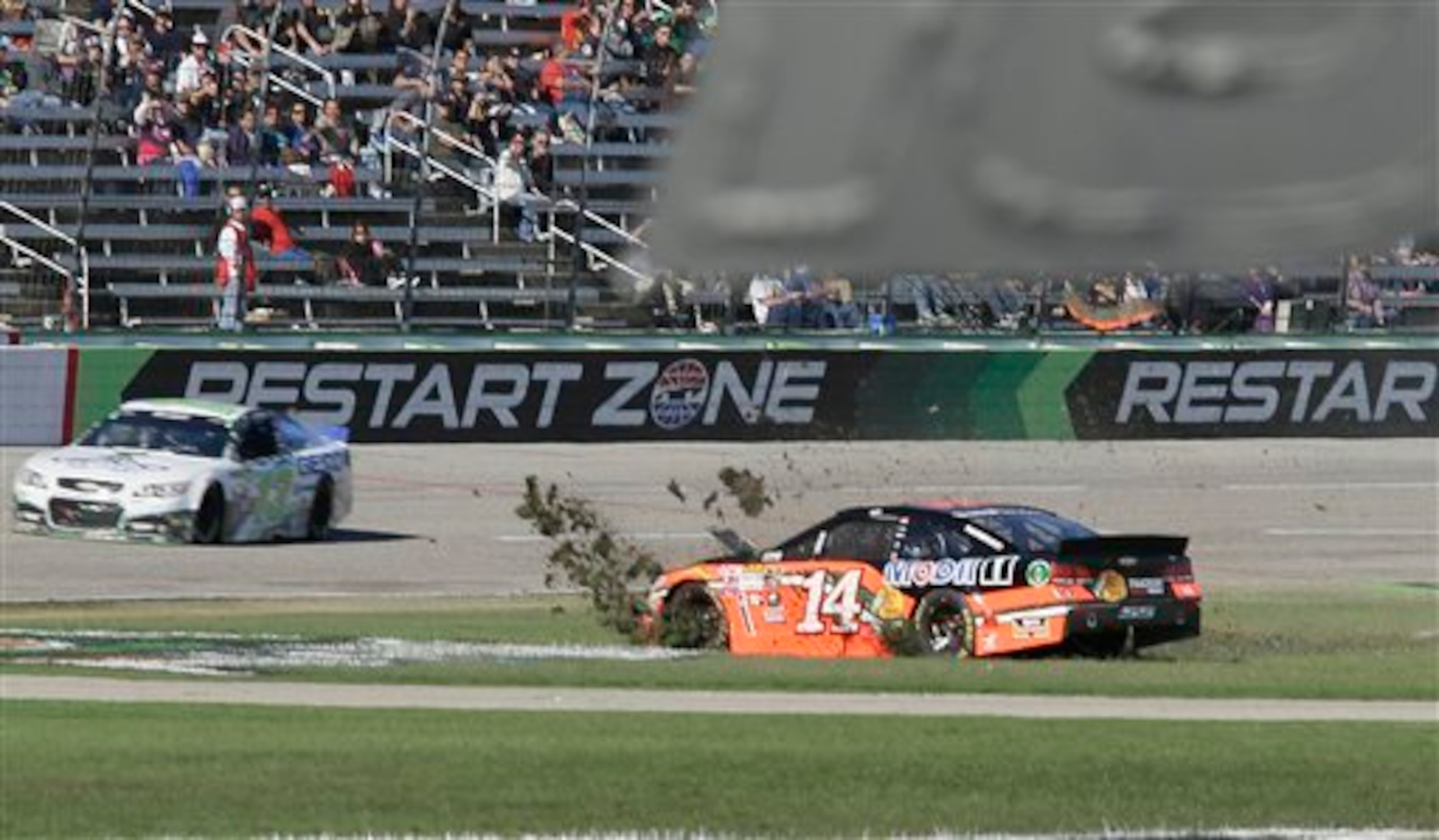
If Jeff Gordon is going out on a high note, then perhaps that will give Tony Stewart hope for 2016, his swan song.
Stewart likely can’t wait to get to 2016 because his car hasn’t been competitive for a few years now. His 2015 was a low point in his three-time Sprint Cup-winning career.
With an average finish of 24.7 and only three top 10s and no top fives (both numbers are career lows for Stewart), Stewart hasn’t been the same since his car struck and killed Kevin Ward Jr. at an Upstate New York dirt track in August 2014.
Now he feels it’s time to hang up the fire suit.
“It's the right thing,” Stewart said in Jeff Gluck’s USA Today story. “It's not performance‑based, it's just time to do what we're doing. I still fully anticipate we're going to get things turned around. If I didn't feel that way, I wouldn't waste my time next year for anybody.”
It appears smoke may rise from the fire in 2016.
“Next year is not a coast-and-collect year,” Stewart said. “It's just the opposite because I don't have to worry about making anybody mad next year and having to deal with it in 2017. I can rough everybody up next year if that's what it takes to accomplish my goals and sit there and just smile and laugh about it at Homestead.”
Stewart doesn’t have to be great for 26 races in the regular season. He needs to be great for one race and then see how he can shake it up in the Chase, but that’s next year.
This year was, to put it mildly, no bueno for the No. 14 team.
Winner: The Lower Downforce Aero Package
2 of 10
When NASCAR visited the Lady in Black, the newer, shinier, low-downforcier aero package changed the nature of the race. It allowed the drivers to carpe diem the heck out of the track.
FoxSports.com’s Larry McReynolds wrote:
"I do think they are onto something because [at Darlington] I never heard anyone complaining about not being able to pass. I also loved the fact that we had drivers who simply didn't stay out to gain track position while others pitted. Don't get me wrong, some did try that strategy, but they paid a price by doing it.
"
Carl Edwards, the winner at “Carlington,” was like a debutante shopping for prom dresses after the race.
"I don't think I can get in trouble for how much I liked it, but I loved it—this is as good as it gets," Edwards said in Reid Spencer’s NASCAR.com story. "This is what it's about. We're sliding cars, tires are falling off—this is the style of racing—if there's any chance we can run this in the Chase, I hope we can do it. It was an awesome day."
Looking forward to 2016, this rules package will be in place for most of the tracks, and that puts more of the race’s impact in the cockpit, making the on-track product considerably more dynamic and, one hopes, more entertaining.
Loser: The Three Strikes of Brian France
3 of 10
Brian France, NASCAR’s CEO, hasn’t had the greatest year. From a public-relations perspective, he’s had to deal with safety issues on the track with so many sections of fences lacking SAFER barriers.
Then, late in the season, he called Joey Logano’s move on Matt Kenseth at Kansas “quintessential” NASCAR (QN). Perhaps that’s QN in the middle of the season, but when it effectively ruins a driver’s chance at advancing in the playoffs, it becomes something else entirely.
Then there was the cancellation of the Phoenix race because of rain. Again, in the middle of the season, that’s probably the right call. But in the final-cut race of the sport’s playoffs? It doesn’t add up.
It’s lonely at the top of the mountain, and the sun burns brightest at the summit. The SAFER barriers, the QN and the Phoenix cancellation were blights on his 2015 campaign.

.jpg?w=2560)
Winner: Sprint Cup Champion Kyle Busch
4 of 10
The fact that Kyle Busch even reached Homestead was a victory unto itself, and then the No. 18 went out and won the damn thing. He's undoubtedly the comeback story of the season.
You know the story. During the Xfinity Series race on the eve of the Daytona 500, Busch smashed into a fixed concrete wall denuded of SAFER barriers. The impact could be felt straight through the television.
“I’ve never been through anything that traumatic before and had to figure out what it was like to walk,” Busch said during the NBC broadcast. “This injury was a blessing in disguise. The most important moment was for me to be up and on my feet and walking for the birth of my son.”
Busch returned for the all-star weekend, and his first full race of the season came at the Coke 600.
He then went on a tear winning three races in a row and four out of five as he desperately climbed into the top 30, part of the condition for him to qualify for the Chase.
Busch trailed off late in the season, but he had enough speed to carry him through the Challenger, Contender and Eliminator Rounds and into the Championship Four. Then he launched his car out of a cannon on the final restart at Homestead and won the whole thing.
“It’s a day we didn’t think would ever be possible with the injury in Daytona,” Busch said on the NBC broadcast. “That’s the reason everyone says we’re playing with house money. We’re here because we deserved it.”
"I can't believe it with everything that happened this year," Busch said after the race.
Loser: Michael Waltrip Racing
5 of 10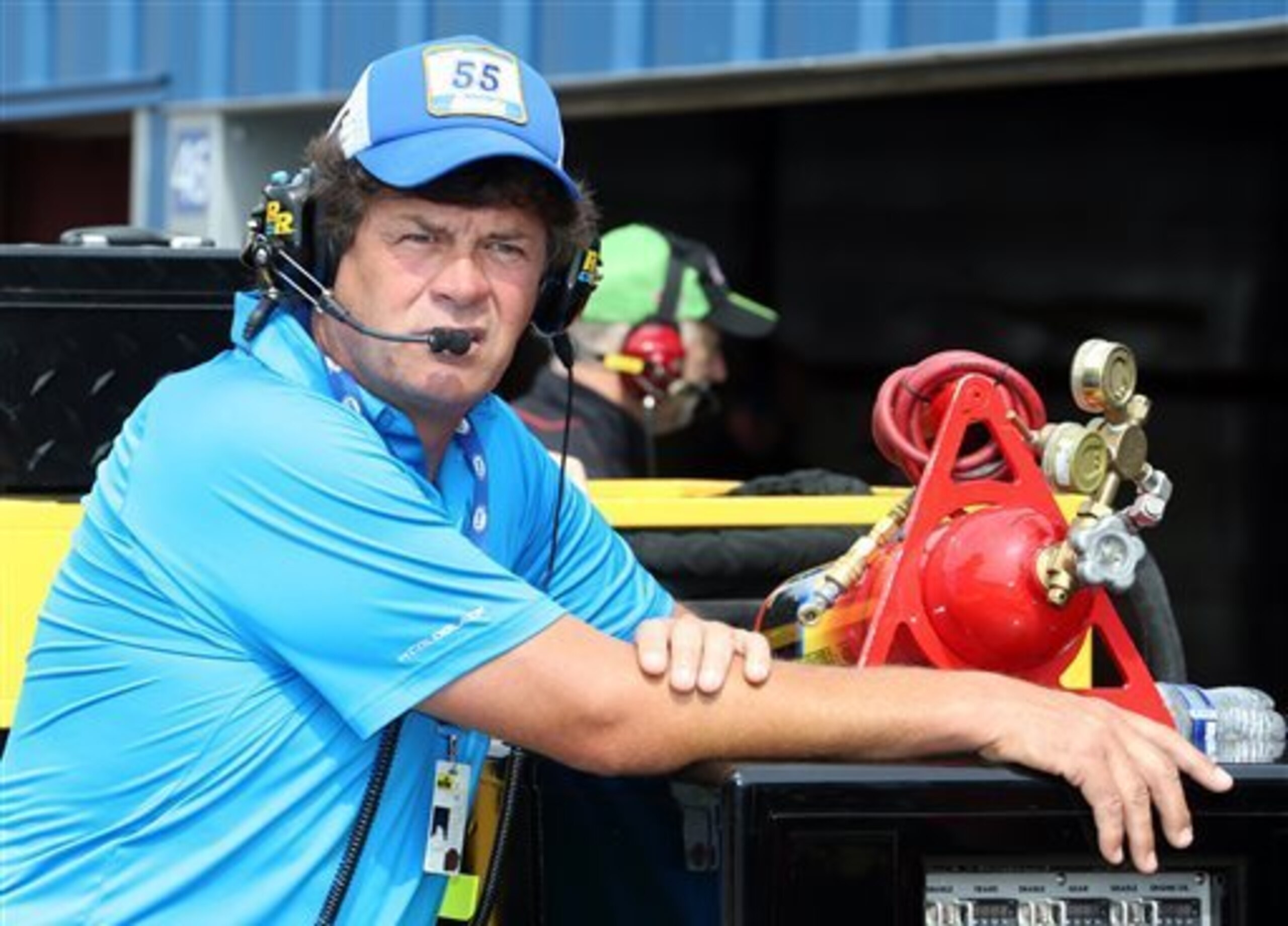
Michael Waltrip Racing didn’t win a race in 2014, didn’t win a race in 2015 and, after failing to be competitive, is packing up the hauler for good.
Rob Kaufman, the majority owner of MWR, was the life support keeping MWR’s EKG from flat-lining. After failing to make the Chase in 2014 and then squeaking in with Clint Bowyer in 2015, Kaufman grew fatigued with subsidizing the team.
Kaufman said in Bob Pockrass’ ESPN.com story:
"Michael Waltrip Racing wouldn't have existed through today without substantial and continued financial support from me. From a business standpoint, that didn't make sense any longer. You can't have a top-10 budget and top-10 resources and not be in the top 10 for a sustained period of time.
"
It's a performance-related business. It's all about performance. It's a great sport but a very difficult business model. From a business decision, it just made sense to not go forward with that organization, which is not commercially viable.
The Richmond Incident of 2013 cost the team $300,000 and in hindsight looks like the desperate move by a desperate team reading the writing on the wall. Nearly two years to the date of that race-manipulation scandal, MWR is no more.
It's fitting that Bowyer wrecked on Lap 46 at Homestead and didn’t return.
Winner: Joe Gibbs Racing
6 of 10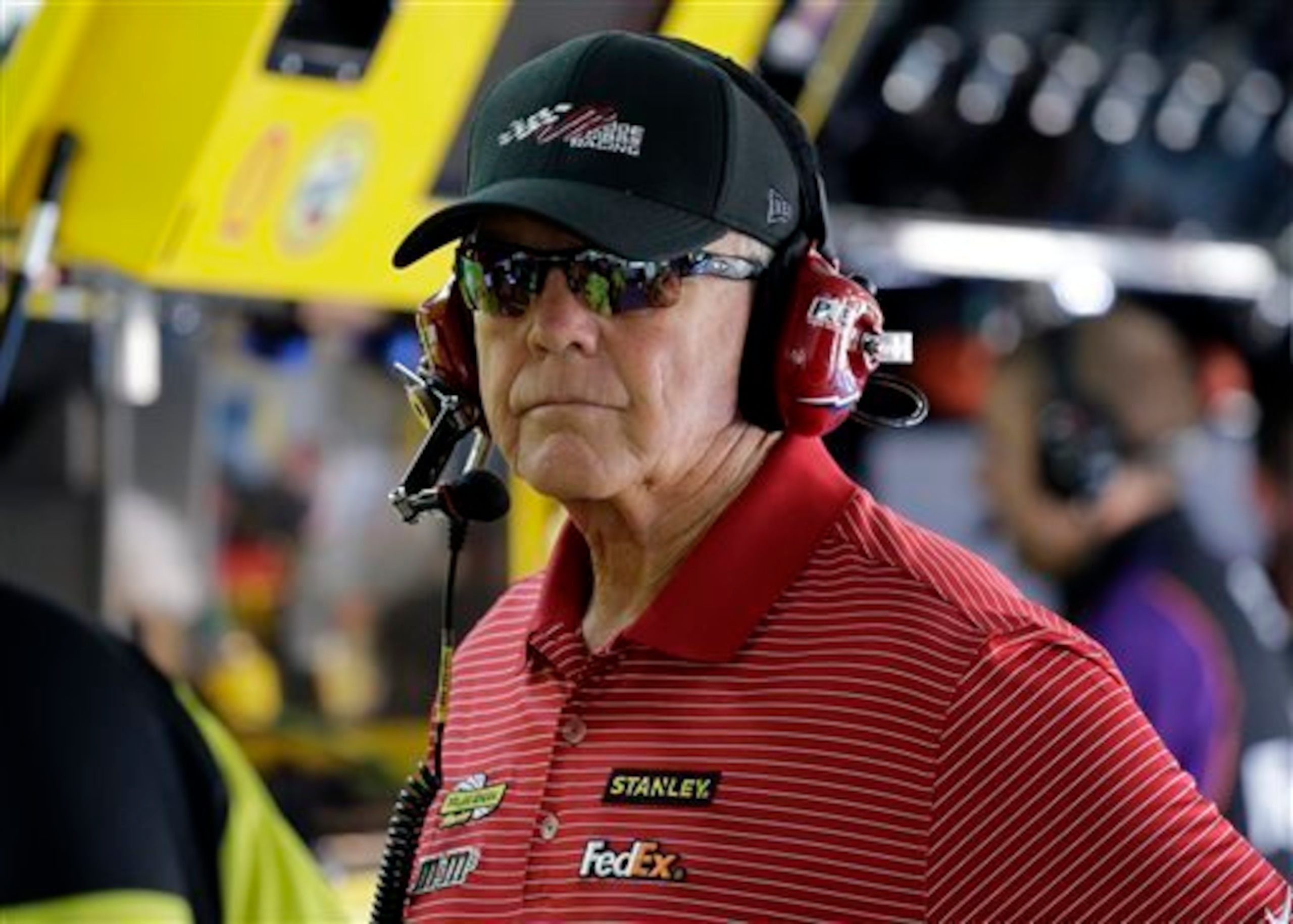
For the past few years, Hendrick Motorsports was the preeminent team in NASCAR. The balance of power shifted in 2015 when Joe Gibbs Racing sent its four drivers to Victory Lane 14 times.
The JGR drivers won on road courses, short tracks and the 1.5-mile tracks. It won with new rules packages and old. In a word, JGR was dominant. In another word, JGR was resurgent.
JGR stepped into the big time by adding Carl Edwards at the start of the season. That extra car was an extra point of reference—an extra way to get more information to bolster the company. That new car (Edwards) won two of the most prestigious races on the calendar: the Southern 500 and the Coke 600.
NASCAR changed the aero package for 2016, and that could affect JGR’s capacity to parlay this recent success into another year. But if Edwards’ ability to win with that new aero package at Darlington Carlington is any indication, JGR will be fine in 2016.
Let’s not forget: Erik Jones is in the farm system, a driver who may be the best of his generation.
Loser: The Chase Exposed
7 of 10
In theory, the Chase format, now in its second year (terrible twos?), adds that extra level of pressure and ups the stakes. It means drivers can’t accrue a ton of points early in the Chase and coast for the remainder of the playoffs.
On paper, it seems perfect, but we saw firsthand how imperfect it can be. Bad luck and, in some cases, driver retaliations make an otherwise championship-caliber season reduced to ash.
Jimmie Johnson, a winner of four races heading into the Chase (five overall), had mechanical issues at Dover in the first-cut race of the Chase. He was a favorite to win the Sprint Cup, and his entire season was undone by hardware.
Matt Kenseth’s best chance at advancing was made worse by a speedy, impatient and some may say greedy Joey Logano.
Logano, who swept the Contender Round, had his chances of winning at Martinsville (and thus advancing to Homestead) ruined by Kenseth’s road rage.
There are so many variables, so many moving parts that can ruin an entire season. That’s the beauty of it too. Just like in football, untimely injuries turn a formidable team into a weaker version of itself.
With 43 cars in every field and tracks such as Talladega and Martinsville thrown into the Chase, the randomness that is a part of every race now has far too much impact—impact that you can bounce back from in the regular season.
Now the champion isn’t necessarily the best car but the luckiest—truly a survivor instead of a winner.*
*Yes, Harvick won out in 2014, but you get the idea.
Winner: Martin Truex Jr. and Furniture Row Racing
8 of 10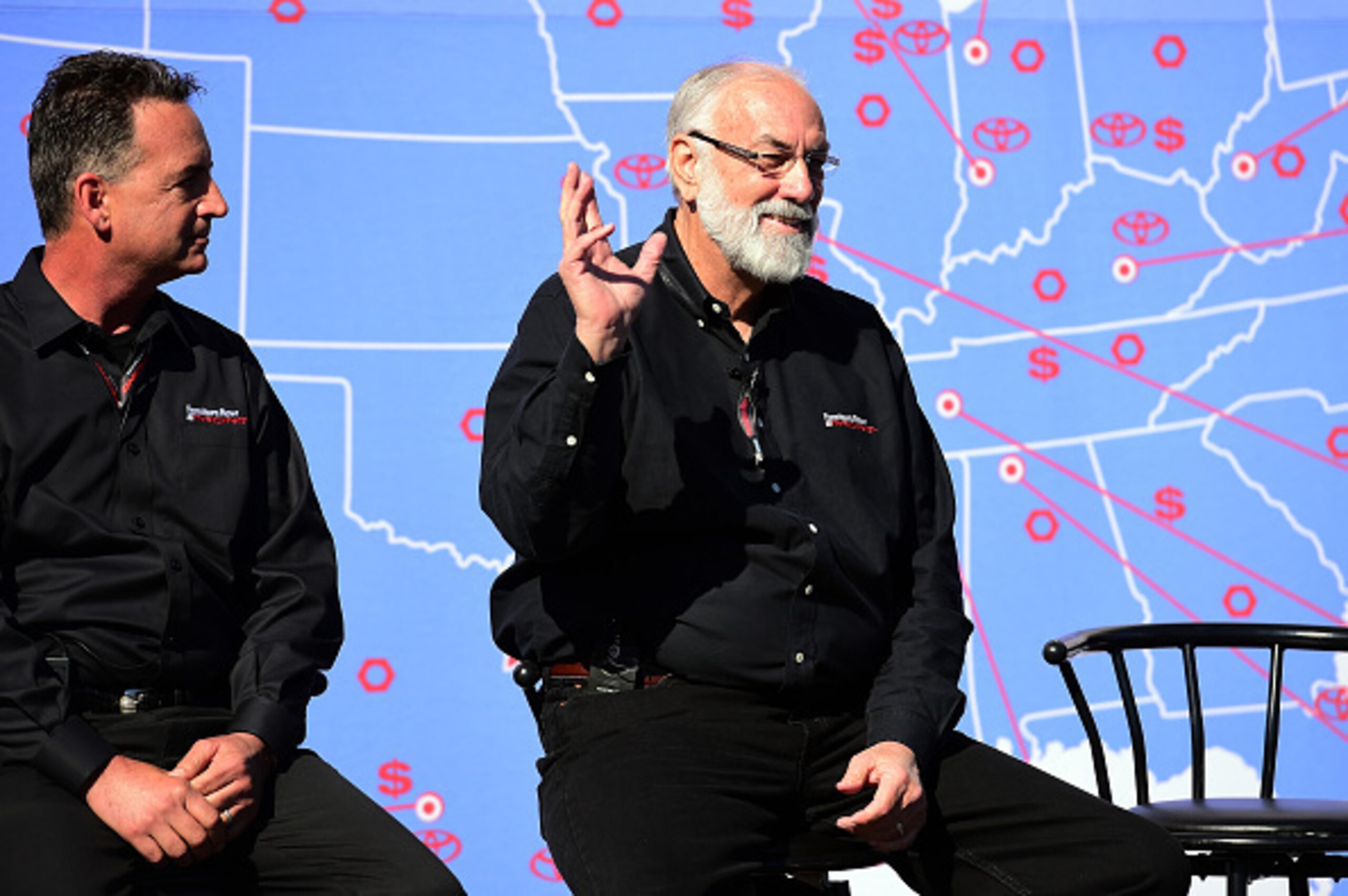
A one-car team has no shot, right? Not in today’s NASCAR when teams such as HMS, JGR and Stewart-Haas Racing send out 12 of the fastest cars every single week. The best drivers with the best equipment bury the other 31 cars on a nearly weekly basis.
But sometimes an outlier stands tall. Sometimes, the Rocky Mountains throw one back. Denver-based Furniture Row Racing, led by crew chief Cole Pearn, made Martin Truex Jr. something far greater than a good story; it made Truex a title contender. He finished 12th in the race and fourth overall. What a season for the No. 78 team.
"I have 100 percent confidence in my team and every time I come to the race track it's stress free. I know we're going to run well,” Truex said in Holly Cain’s NASCAR.com story. "It's real easy to put on your helmet, focus on your driving.”
Truex earned 22 top 10s, including 14 from the first 15 races of the season. It’s an especially proud moment for Barney Visser, the team’s owner.
"I love building something from nothing," Visser told Mark Kiszla of the Denver Post.
Visser started FRR in 2005 and hit a home run out of nowhere by signing Truex for the 2014 season.
Truex surprised everyone by winning a race this season and being the most consistently solid Chevy without the No. 4 painted on it. The question remains for Truex and FRR: Will they perform at the same level in 2016 or regress to the middle of the pack?
Loser: The Runner-Up Machine
9 of 10
It feels somehow slimy to call Kevin Harvick a “loser,” but by the definition of these sliders, technically he is. The No. 4 had a great season, ensuring that 2014’s run was, in fact, no fluke.
“We were just struggling all night,” Harvick said during the NBC Sports broadcast after the race. “We had a lot of trouble getting off the corner. It’s been a great couple of years. You always want to win, but you don’t want to get greedy.”
Yes, it has been a great couple of years. He led nearly 2,300 laps in 2015, and won three races and 13 runner-ups with 22 top fives.
He’s the best loser on the entire circuit in that he comes up just short so many times. Dozens of teams would take those results in a heartbeat, but when it’s Harvick and the bar is so high, finishing second is somehow disappointing, and nobody did that more in 2015 than the pride of Stewart-Haas Racing.
Winner: One of the Greatest of All Time
10 of 10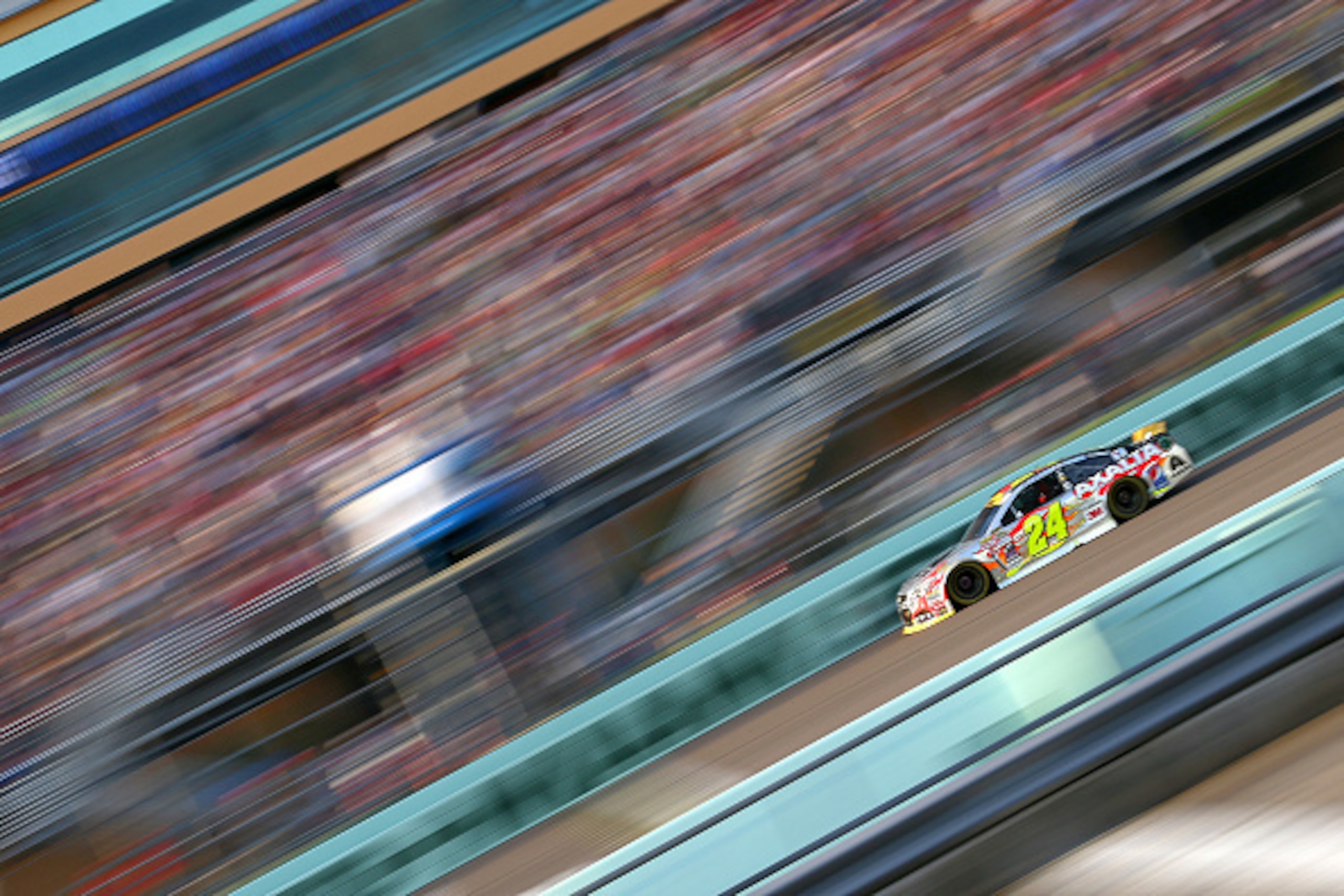
Well, Jeff Gordon finished sixth and thus third in the Sprint Cup standings in his final season behind the wheel of the No. 24 car.
Gordon took the lead early in the race, and the entire peninsula of Florida erupted. He couldn’t hold on for long, but to get this far provided NASCAR fans an extra few weeks of Gordon relevance and allowed them to get their fix before he drove off for good.
“I’m a little disappointed, I’ll be honest,” Gordon said after the race during the broadcast. “I think when the sun went down, we were missing something. I wanted that win, but we’re going to celebrate anyway.”
Dale Jarrett, a long time NASCAR driver and analyst for NBC, said during the pre-race broadcast:
"It is an end of another era… The things that he has done on the race track are just a small percentage of what he has done for our sport. He has changed the idea and the perception of what this sport is really about. Every driver that is out here, they can thank Jeff Gordon for the things that they are able to do and the money that they are able to make.
"
One of the more indelible images of the entire season was Gordon winning at Martinsville and punching his ticket to Homestead so we could bask a little longer in what he means to this sport.
Stats came from Racing-Reference.info.


.jpg?w=2560 "Viral Rams Coach Vid 🖕")

.jpg?w=2560 "Injury-stricken Seahawks signing veteran RB")
