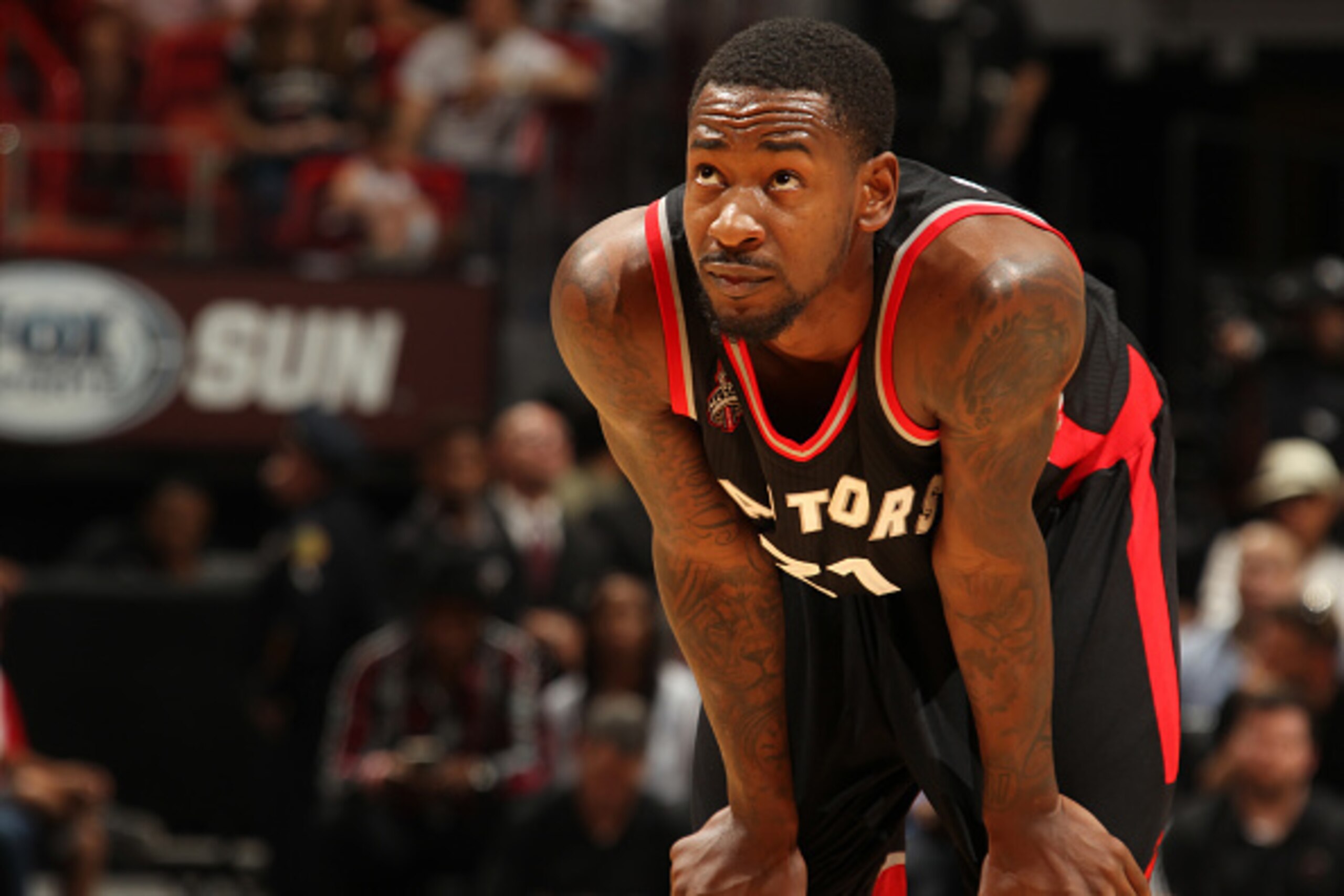

5 NBA Players Who Might Not Make the Leap Everyone Expects
Talent plus opportunity equals leap.
It's a simple formula that surfaces in every coming-of-age NBA story. It's incredible to watch a player advance through developmental levels and climb basketball's food chain.
But part of what makes it so exciting is that we know there's a flip side to that tale—not every player with raw talent and physical gifts puts it all together.
Where this gets tricky is that the first few chapters of both stories read fairly similar. If people are watching for a potential leap, that means the player has some skills (physical, basketball or both) and a logical path to playing time. These also obviously aren't first-year players (you can't leap without first establishing a baseline), so there's some degree of a track record behind them.
The following five players all entered the 2015-16 campaign with reasons for optimism. There's still time to transform that hope into a tangible reward, but the season's early returns have these purported rising talents heading the wrong direction.
Michael Carter-Williams, Milwaukee Bucks
1 of 5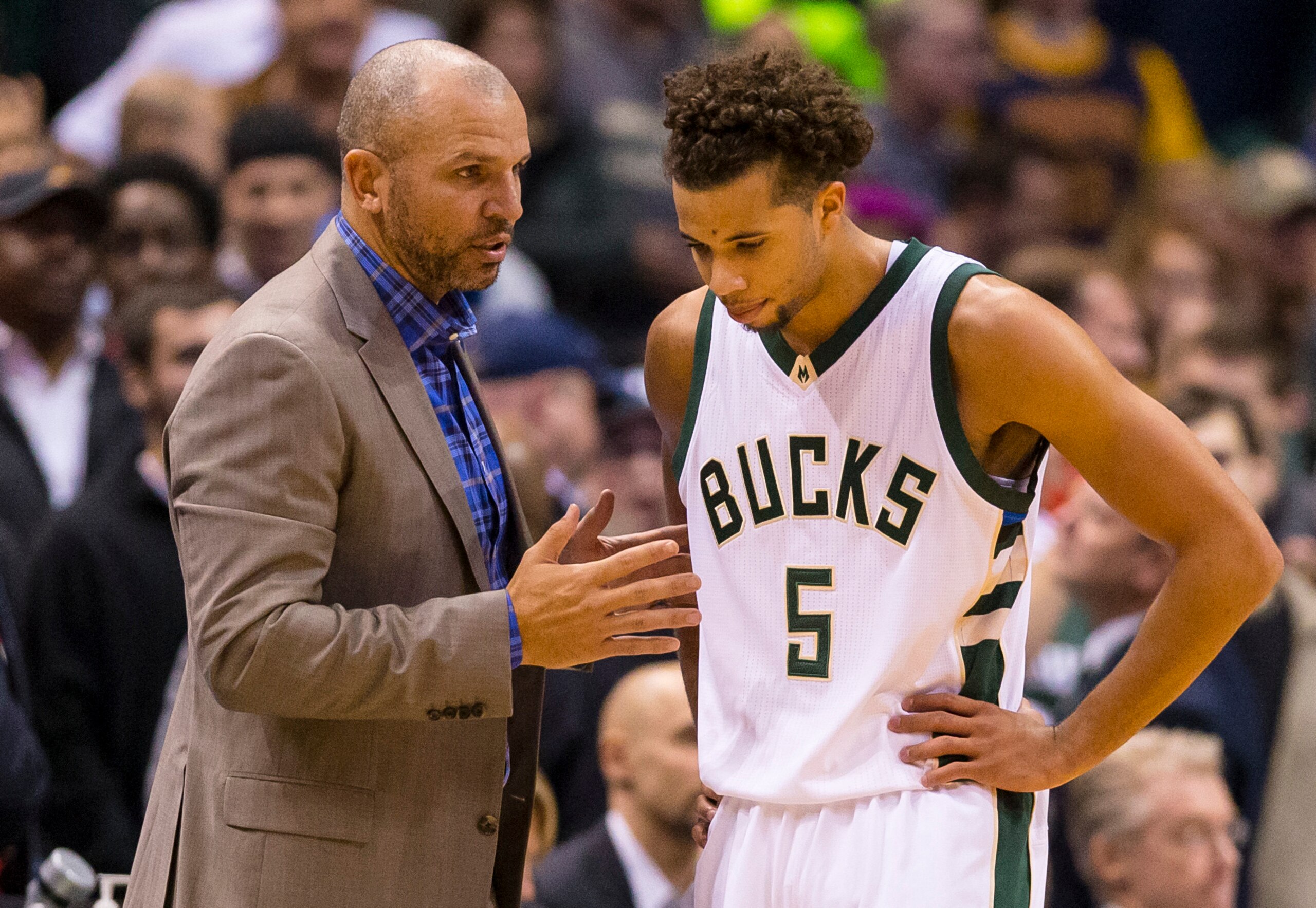
The Milwaukee Bucks had been amassing youth, length and athleticism, and former Rookie of the Year Michael Carter-Williams arrived with all three in hand at last season's trade deadline. As an added bonus, the 6'6" point guard could now learn under head coach Jason Kidd, a proven winner who had to develop a jumper over the course of his career.
"He could be better [than me]," Kidd said of Carter-Williams in April, via ESPN.com's Ohm Youngmisuk. "His athletic ability is probably better. He can pass the ball, makes his teammates better. ... I think he is going to be a great leader in this league."
If that time is coming, it's still well off in the distance.
The current iteration of Carter-Williams is, at best, a work in progress. He's actually shooting the ball better than ever (42.7 percent from the field, 33.3 from deep), but every other part of his stat sheet is declining.
His per-36-minute marks in points (15.0), assists (6.1), rebounds (4.2) and steals (1.5) are all career lows, as is his 14.0 player efficiency rating. His 21.6 turnover percentage is also a personal worst.
It's hard enough for Carter-Williams to reach anything close to his full potential while he's battling a shaky jump shot—he's still hitting just 30.6 percent from beyond 10 feet. But with his impact diminishing in other areas, it's fair to wonder whether we have already seen his best.
Tim Hardaway Jr., Atlanta Hawks
2 of 5
Tim Hardaway Jr.'s first two NBA seasons, both with the New York Knicks, seemed to establish him as a moderately high-volume, low-efficiency scorer. He could pile up points quickly, but it might take him a few shots to do it. He rarely moved the needle in any other statistical category.
But Hardaway was a serviceable—occasionally fiery—three-point shooter. And teams can't have too many perimeter threats in today's pace-and-space league.
The Atlanta Hawks spotted something in Hardaway they liked. On draft night, they parted with a first-round pick to get him.
"Tim (has the) ability to make shots in different situations," coach Mike Budenholzer said, via Hawks.com's KL Chouinard. "Whether it's coming off screens or spotting up, the more shot-makers you have, the more difficult you are to guard."
At worst, it seemed Hardaway could fill an instant-offense role. If the Hawks could expand his game at all, they'd have an intriguing 23-year-old project on their hands.
There's only one problem: Hardaway has yet to make his Atlanta debut. This isn't an injury issue. Rather, he's been buried behind the likes of Justin Holiday and Lamar Patterson on the wing rotation.
That may not change. Hardaway isn't a good enough shooter to earn floor time for that alone (career 35.3 percent from three), and the rest of his skill set underwhelms. He's forgettable as both a rebounder and distributor, and his defense is historically generous.
Terrence Ross, Toronto Raptors
3 of 5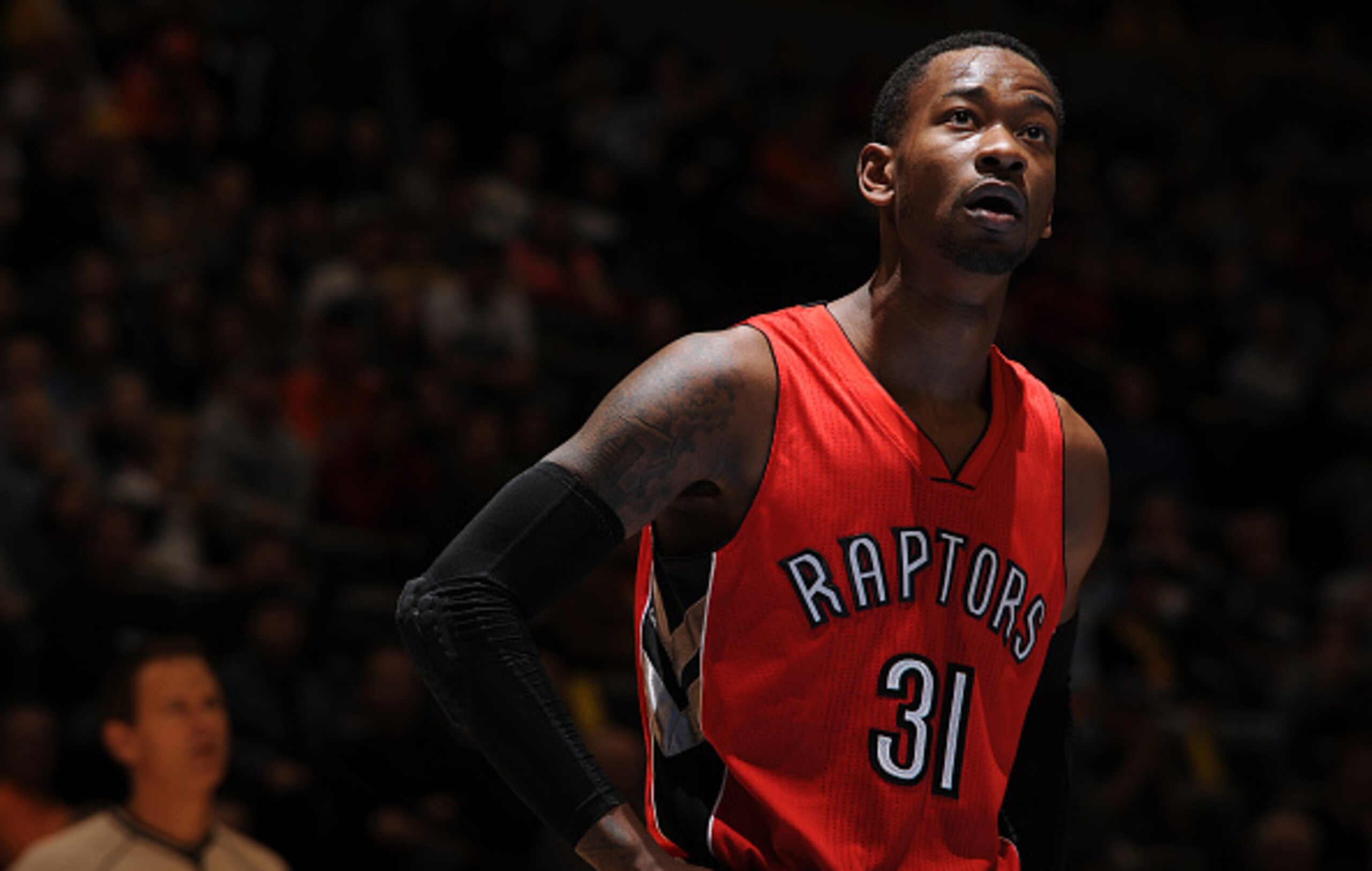
Terrence Ross knows how to make an impression.
His good moments are electric. He's a former dunk contest champion whose in-game slams could work in the event. He's also an ignitable long-range shooter, a point hammered home during his 51-point outburst (which included 10 triples) in January 2014.
Still only 24 years old, he's an interesting blend of freakish physical ability and explosive scoring skills. The Toronto Raptors, who selected him eighth overall in 2012, know him as well as anyone and deemed him worthy of a three-year, $33 million extension earlier this month.
The ingredients are there for Ross to blossom as a consistent two-way contributor, but that hasn't happened through three-plus seasons.
"He could explode for 20-plus points, but he could also be invisible offensively," wrote CBS Sports' James Herbert. "Worse, his attention to detail on defense can disappear seemingly at random."
Look beyond Ross' few magical moments, and the total picture disappoints more than anything.
His sophomore season was his best statistically, with 10.9 points, 42.3 percent field-goal shooting and a 39.5 percent conversion rate from beyond the arc. He also posted a career-high PER that year—12.0, well below the league-average mark of 15.0. Last season, he ranked dead last among 75 small forwards with a minus-3.77 defensive real plus-minus, via ESPN.com.
There's a style to his game that's fun when it's on, but a lack of substance beneath it could prevent him from ever becoming an impact player.


Nik Stauskas, Philadelphia 76ers
4 of 5
It's hard to call the union of a tanking franchise and a floundering lottery pick a match made in heaven, but it appeared the Philadelphia 76ers and Nik Stauskas needed each other.
The Sixers were desperate for shooters. They finished the 2014-15 campaign with the league's second-lowest three-point percentage (32.0), a fact that threatened to suffocate promising young frontcourt mates Jahlil Okafor and Nerlens Noel.
Stauskas needed a change of scenery. He played for three head coaches during his rookie season with the Sacramento Kings and suited up at the same spot as the franchise's 2013 lottery pick, Ben McLemore. Stauskas shuffled in and out of a significant role, ultimately producing a freshman stat line that featured only 4.4 points, 0.9 assists and 32.2 percent three-point shooting.
When Philly snagged Stauskas in a July trade, the shooting guard felt he'd been given a life preserver.
"It's almost like a fresh start for me," he told reporters at media day. "It's a chance to get a new beginning."
Stauskas is getting steady minutes now (27.8, up from 15.4), but his stats aren't trending up. His shooting rates have dipped from the field (32.1, down from 36.5) and long range (27.1, from 32.2). He had the fourth-lowest PER of any player last season (minimum 1,000 minutes), and even that number has dropped (7.3, from 7.5).
Both his present and future value will be tied to his shooting and scoring success. He has yet to prove he can do either one consistently or efficiently at the big-league level.
Lance Stephenson, Los Angeles Clippers
5 of 5
Lance Stephenson is built perfectly for the perimeter, packing 230 pounds onto his 6'5" muscular frame. Add a 6'10.5" wingspan to the mix, and he has the tools to be a shut-down defender. When he fully engages, he can be that type of stopper.
His skill set has a little of everything, save for a reliable three-point shot (career 29.8 percent). He plays with tremendous passion. He has the handles, vision and creativity to initiate offense. He's an energetic rebounder and resourceful scorer.
"He's a walking triple-double," Josh Smith said at Los Angeles Clippers' training camp, via Robert Morales of the Long Beach Press-Telegram. "... He's a special player on both ends of the court."
That's almost right, but not quite—Stephenson can be a special player. But that label hasn't fit well for a while.
He had a disastrous one-year stint with the Charlotte Hornets last season, to the point they fared 6.9 points better without him per 100 possessions. There was hope he could reverse that trend after landing with the Clippers in an offseason trade, since he'd have strong veterans around him and a championship coach in Doc Rivers.
But Stephenson's struggles have actually gotten worse. He started the first nine games, but averaged just 6.2 points on 37.3 percent shooting. He played less than two minutes during L.A.'s 10th contest and didn't see action during Thursday's 124-117 loss to the Golden State Warriors.
Rivers still thinks Stephenson can help the Clippers, "just not right now," via Ben Golliver of Sports Illustrated. We're not nearly as optimistic given the lack of evidence that Stephenson is capable of righting the ship. During six NBA seasons, he's never had a league-average PER and only posted a double-digit one twice.
Unless otherwise noted, statistics are current through games played Nov. 19 and used courtesy of Basketball-Reference.com and NBA.com.


.jpg?w=2560 "Grading WWE Raw 🔠")
.jpg?w=2560 "Viral Rams Coach Vid 🖕")
.jpg?w=2560 "Injury-stricken Seahawks signing veteran RB")
.jpg?w=2560 "Bijan's INSANE 1st Half 🤩")
.jpg?w=2560 "2 NFL Officials Suspended")
