

Is Winning Without Style Enough for Real Madrid's Supporters?
A win is a win, or so they say. Or so they say in some parts.
"Real fail to convince in win," ran the headline to Marca's match report following Real Madrid's fortuitous 1-0 victory over Paris Saint-Germain at the Bernabeu in early November, the report itself beginning with three words that didn't need adding to: "It wasn't pretty."
No it wasn't, and the Bernabeu made sure they knew it. Upon the full-time whistle that evening, the roughly 80,000 in attendance poured out with frightening speed—Rafa Benitez and Cristiano Ronaldo headed for the tunnel with similar urgency—a chorus of whistles ringing the arena despite the desirable result on paper.

.jpg?w=2560)

"Whistles?" asked a slightly perplexed Benitez in response afterward. "We're through!"
His team were through, through to the knockout stage of the Champions League after four games without defeat. But that in isolation isn't enough, not here. Here, the how counts. Whether rightly or wrongly, it just does.
Just ask Fabio Capello.
Twice, a decade apart, the Italian steered Real Madrid to the league title but was sacked almost immediately anyway, the second time because of differences in style and ethos; in identity. "We need to find a more enthusiastic way of playing," said former club president Ramon Calderon of Capello's axing, via BBC Sport, saying it all in 10 words.
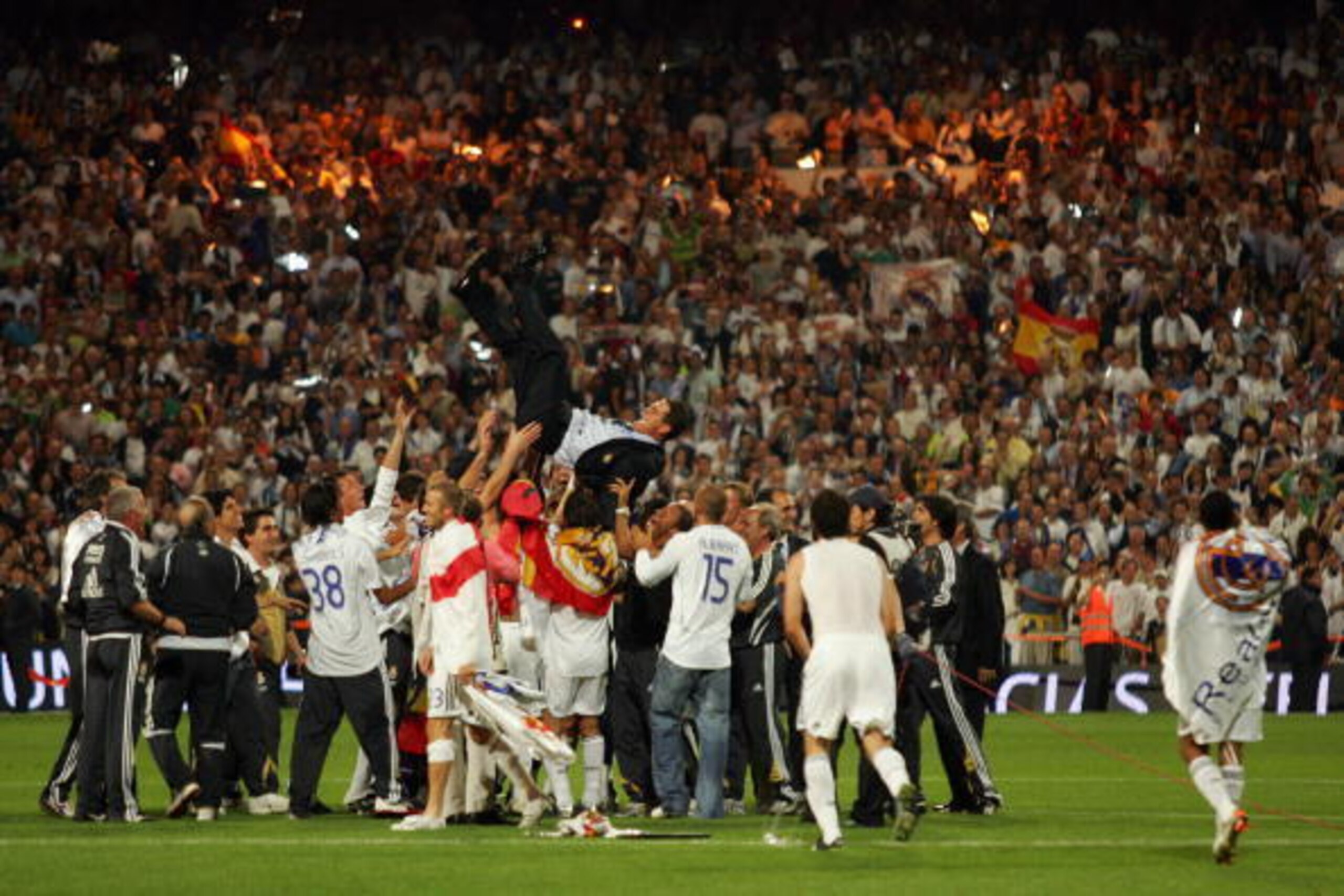
Thus, the question of whether winning alone is enough at Real Madrid has an inescapable answer: In the long-term, it's an unequivocal no.
But is there wriggle room in the meantime? For Benitez and his current side, might winning without style be enough in the short term if it's seen as a necessary step, as disguised progress to something greater? And if so, how long is the short term?
The answer to that final question is hard to be sure of, but one senses it's not long.
For Benitez, the issue is that circumstances outside his control have conditioned an environment in which any short-term leeway afforded to him is shorter on time than it might have been for another man—and has been for other men.
When Jose Mourinho arrived in 2010, the club knew it wanted him. When Carlo Ancelotti arrived three years later, ditto. In the former, Madrid saw the man who would start a necessary war; in the latter, they saw the man whom they would eventually need to end it.
Benitez, however, has arrived at a club that's not sure it wants him, and whereas others might have been able to change that through charisma, through public strategy, Benitez won't; that's not him.
It also doesn't help that the shadows of his predecessors still loom large over him—Ancelotti is still revered by his players; Mourinho remains a cult figure among large sections of the fanbase.
All of this reduces available time and margin for error.
And there's another problem.
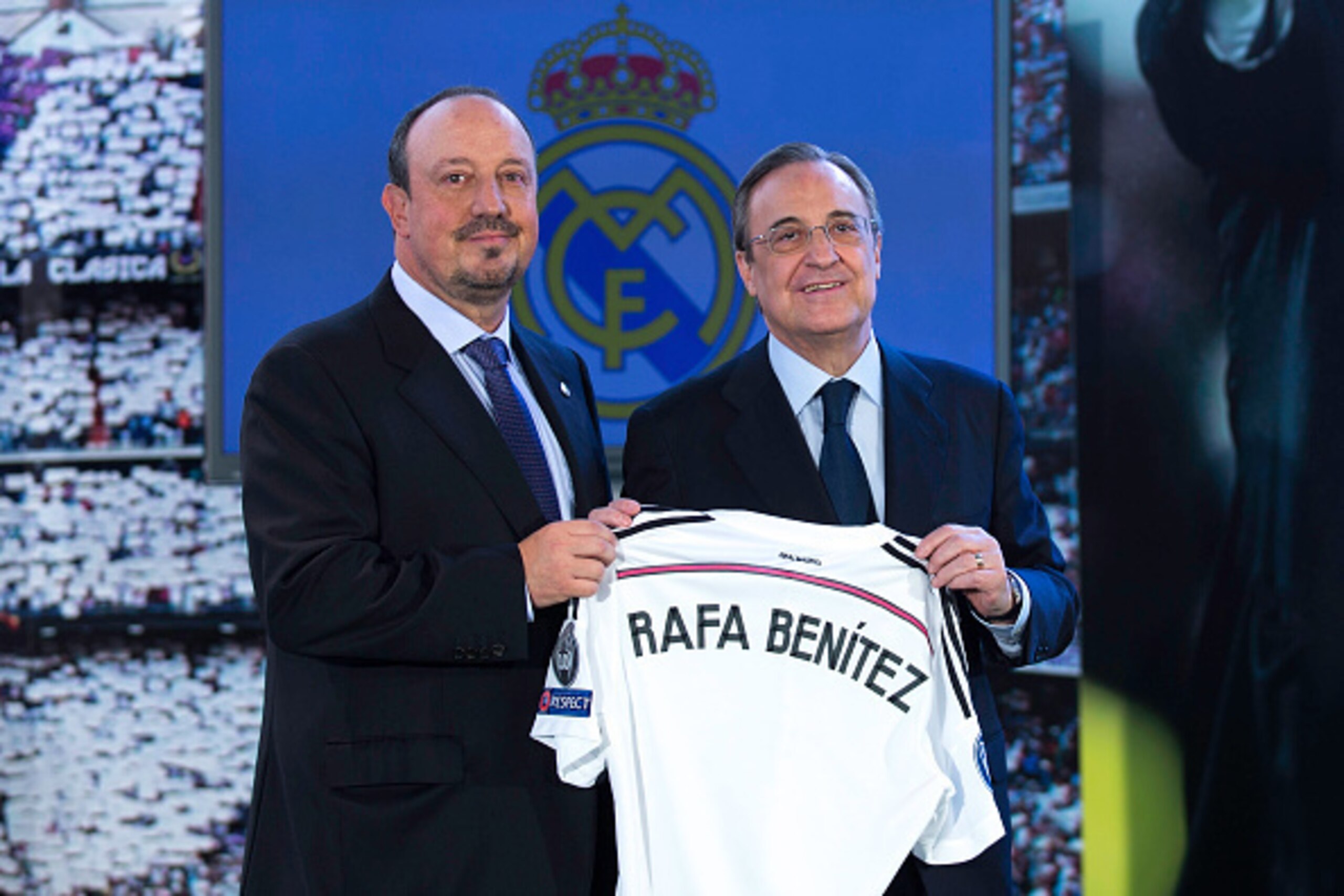
In both the stands and the press, simmering frustration exists toward president Florentino Perez, whose impulsiveness continues to prevent any sense of a legitimate project being built. When Perez sacked Ancelotti, AS called it "Florentino's latest wheeze," and the new manager therefore has become an avenue through which to attack the president, whose hasty decisions resulted in the Madrileno's appointment.
Again, it's out of Benitez's control. But it means he must master the one thing he can control: evidence on the pitch.
When the former Liverpool boss arrived, most understood that a heightened sense of discipline and order was not only likely but required. Under Ancelotti, Real Madrid had been staggeringly freewheeling and joyful, an outfit of instinct, but ultimately they were flawed. Fellow heavyweights outfought them; their crosstown rivals battered them. In 2014-15, a lack of two-way excellence was the reason for their downfall—a common theme in recent seasons.
Thus, a more measured Madrid became temporarily acceptable for a demanding fanbase. On the road, points collected from venues they'd previously left empty-handed could be considered progress; collectively, the adoption of risk management could be considered an added string to the bow.
Here at Bleacher Report, it was argued as such, too, but the problem since has been a lingering feeling that the platform hasn't been built upon; instead of setting a foundation and progressing, the evolutionary process of Benitez's Madrid has slowed in a way that's problematic for a manager who's short on time.
Against Celta Vigo, Real were almost overrun by 10 men; against PSG, they probably should have been overrun by 11.
Against Sevilla, they were.
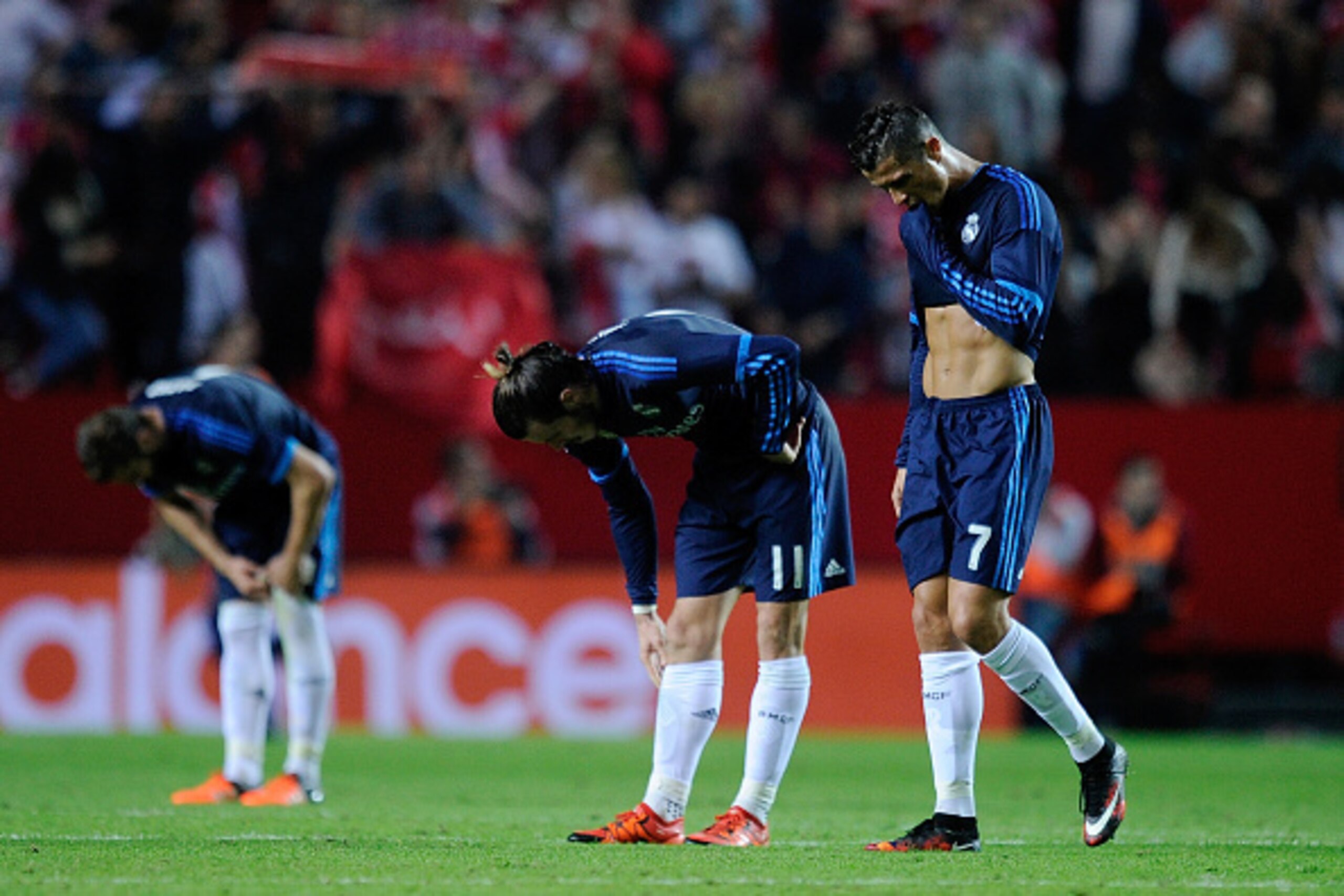
Injuries have certainly complicated matters significantly, but the increasing perception of Madrid is that they're a team being kept on a tight leash too long, rather than one that needed to start that way but then freed ever so gradually thereafter.
"The game collapsed when the players started following their instructions to the letter," wrote AS after PSG's visit of the Bernabeu. "Press, but not so much that the team loses shape. Look ahead, but without losing sight of what lies behind you. Neither were prepared to stick their necks out. And so it all was left down to luck." That is an important point.
Indeed, this stylistic debate surrounding Real Madrid isn't simply founded upon idealism and historical precedent. Though that is a significant part—as is the way football is consumed far differently in Spain than it is in, say, England (Guillem Balague neatly described the thought process among fans as more logical than sentimental)—part of this debate centres on concerns over sustainability, about results being above circumstance.
Across the country in Catalonia, Barcelona's recent dominance in La Liga has been founded upon an encompassing idea, a philosophy universally embraced and protected. But at Real Madrid at present, there's a feeling of a confused identity, as though Benitez's team is caught in an uneasy middle ground between intuition and instruction.
In the short term, results can be still achieved in such an existence, as they have been. But in the long term, something needs to be cultivated that can be embraced and celebrated, and at the centre of that stands winning with personality, with swagger. With style.
Winning without it won't be enough, and Real Madrid know it. As the club went into the international break, Sergio Ramos' assessment to reporters was concise: "We need to change our mentality."
.jpg?w=2560 "Falcons Saints Football")
.jpg?w=2560 "Rams Eagles Football")
.jpg?w=2560 "Injury-stricken Seahawks signing veteran RB")


.jpg?w=2560 "2 NFL Officials Suspended")
