

Are Manchester City's Inconsistencies Caused by Poor Transfer Recruitment?
This is turning into a strange season for Manchester City, a season in which nothing is quite as it seems. They’ve put six past Newcastle United and five past Bournemouth, and yet against West Ham and Aston Villa—even perhaps against Manchester United and Norwich City—they lacked a cutting edge.
They’ve kept seven clean sheets, and yet the capitulation against Tottenham Hotspur means they can never feel entirely secure. Two of their new signings, Kevin De Bruyne and Raheem Sterling, have begun the season well, and yet they feel reliant on the same old faces. They’re top of the table, and yet it feels as though they’ve underperformed.

.jpg?w=2560)
Saturday's game against Liverpool comes as another major test of their credentials.
The last time the Premier League was as close as this after 12 games was in 1999-2000, when United ended up bursting from the pack to win the league by 18 points. If any team is capable of doing something similar this season, you suspect it would be City.
They have the squad, the experience and the combination of stability and new blood that made them favourites alongside Chelsea at the start of the season. The west Londoners' bewildering collapse should leave City out-and-out front-runners.

There was a thought before the season began that City may suffer from lame-duck manager syndrome. It’s an open secret that chief executive Ferran Soriano and sporting director Txiki Begiristain—both of whom previously worked at Barcelona—would like to work again with Pep Guardiola, whose contract at Bayern Munich expires in the summer.
Bayern have offered Guardiola a reported £17 million-a-year extension for two seasons, per John Cross of the Daily Mirror, but whether he ends up arriving at the Etihad next season is, in a sense, less relevant than the fact that, in the summer, there seemed a genuine possibility he might be available for next season.
That left City to play a waiting game. They couldn’t move for Guardiola because he had made it clear he intended to see out his deal, and they couldn’t move for anybody else because the Bayern boss had only a year remaining. That—and perhaps only that—kept Pellegrini in the job, even if City seem a club rather more committed to stability and the long term than most.
Perhaps they realise that the failings at the Etihad last season, when they came second in the league without looking like challenging for it after January, when they went out of the Champions League in the last 16 and failed to get beyond the fourth round of either cup competition, were less to do with the manager than with recruitment.
City, for all their investment, ended last season with the oldest team in the league.
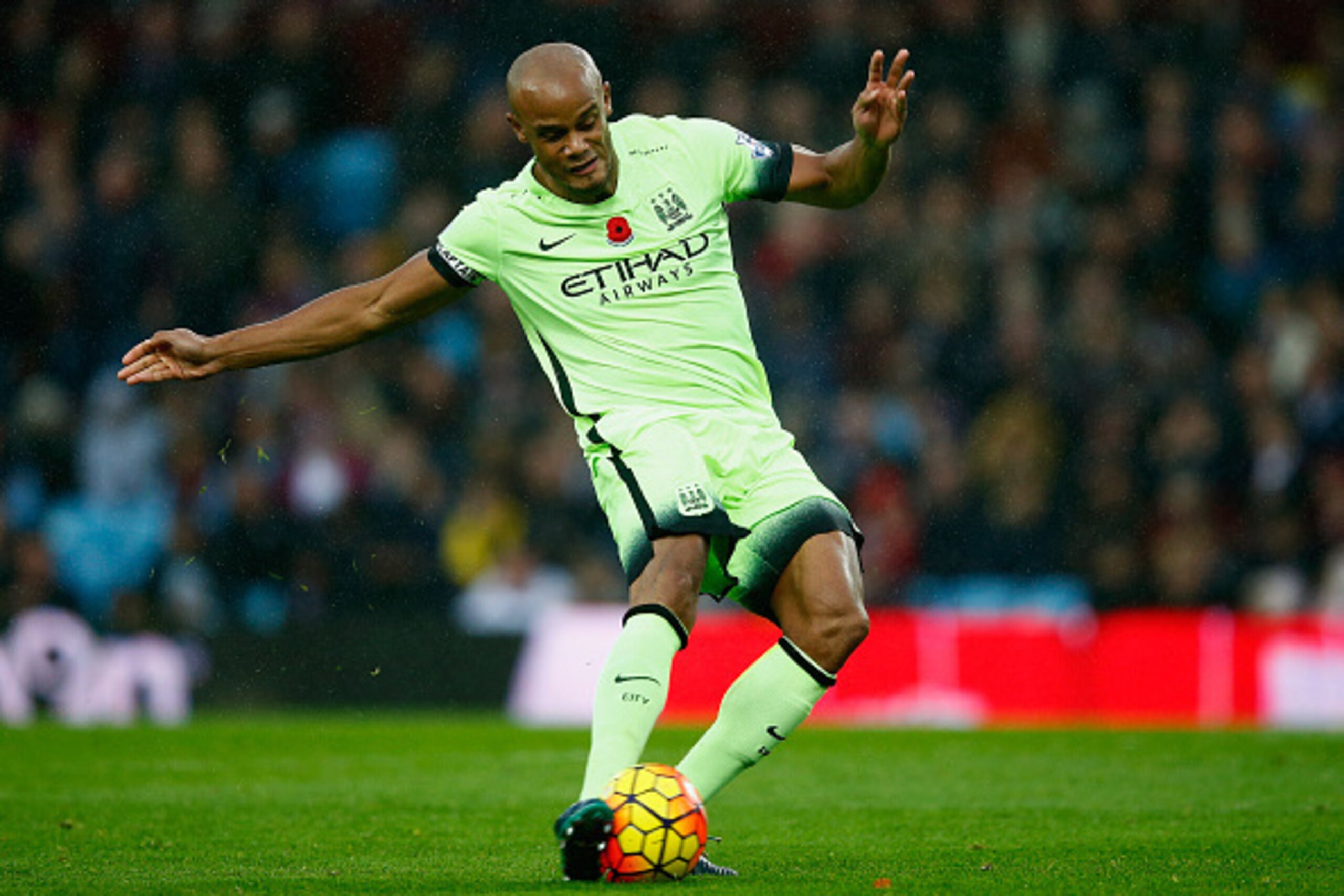
The most damning indictment of City’s recruitment policy is to look at the 11 who started their first Champions League game, a 1-1 draw with Napoli in September 2011. Their team that day was: Joe Hart; Pablo Zabaleta, Vincent Kompany, Joleon Lescott, Aleksandar Kolarov; Samir Nasri, Yaya Toure, Gareth Barry, David Silva; Edin Dzeko, Sergio Aguero.
Of that 11, eight are still first-team regulars. Only Lescott, Barry and Dzeko had slipped away. Perhaps Nasri has been supplanted by Sterling or De Bruyne this season, but essentially the team's core hasn’t changed.
There is, admittedly, something impressive about that—or rather, there would be had City not spent £344 million in that time on new players (and recouped £109 million). Of the new players who arrived before this summer, only Fernandinho and Martin Demichelis really forced themselves into the side. That’s a lot of wastage, and it brought last season a sense of staleness.
Yet City’s general policy has seemed sound. I met Soriano at a book event in Milan in spring 2013, and he admitted that the previous summer, City had been too scattergun in their signings; they’d bought too many players who had made the squad bigger but not necessarily better. The new plan, he said, would be to make three or four top-class signings each year.

They’ve pretty much stuck to that—that summer, Fernandinho, Alvaro Negredo, Jesus Navas and Stevan Jovetic all arrived. Perhaps City were a little unfortunate in those deals—Negredo started well but felt homesick, while Jovetic never got over a string of injuries. Navas has played a lot of games even if Pellegrini seems more convinced by his abilities than outsiders, and Fernandinho has excelled.
The following season’s signings have been more questionable—Fernando, Eliaquim Mangala and Wilfried Bony are yet to convince. Which perhaps just goes to show that however sound the policy, mistakes can be made. Luck, in the shape of injuries or a player unexpectedly finding he can't settle in England, also plays its part.
This summer has probably been the best yet for City under the present regime. De Bruyne and Sterling have settled quickly and, after a slightly shaky start, Nicolas Otamendi is beginning to assert himself. Fabian Delph has barely played because of injury but certainly shouldn’t be dismissed yet.
But that injection of new blood is only the start. City are paying for the previous three years of poor transfer activity. The age profile of the side is wrong and can only be changed gradually, but that makes an impact on the pitch.
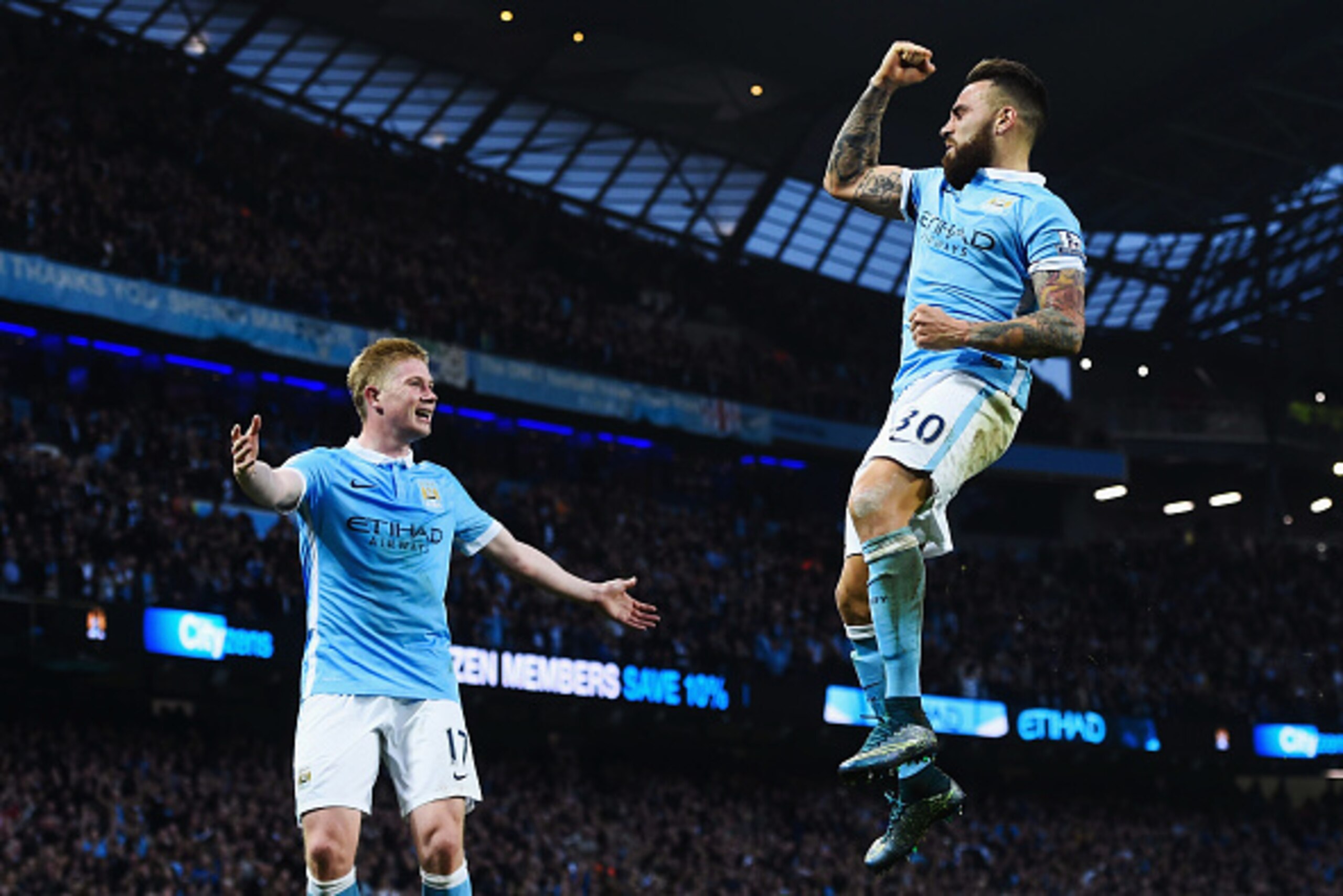
De Bruyne and Sterling can’t be expected to arrive and become leaders straightaway, even if their personalities are suited to it (which Sterling’s may not be). That means that City have to rely on the old spine—Hart, Kompany, Toure, Silva and Aguero.
All five were either absent or feeling the effects of injury in that defeat at Spurs. Add in the absence of Zabaleta and the disintegration in the second half there can, perhaps, be written off as freakish ill-fortune with absentees.
But the fact is that old players get injured more. Kompany’s calf cannot be relied on, while Toure is picking up more and more strains. This is a squad at a strange phase of development, the rejuvenation just underway, and that perhaps explains City’s inconsistency—if not their dependence on one striker.
Once Guardiola’s decision on his future is known, the speculation over who will be in charge at the Etihad next season will begin again.
Pellegrini, you suspect, needs to win either the league or the Champions League to stay on and, if Guardiola does end his spell in Munich, even that may not be enough. But just as big an issue is getting the recruitment right and continuing the overhaul of an ageing squad.


.jpg?w=2560 "Viral Rams Coach Vid 🖕")

.jpg?w=2560 "Injury-stricken Seahawks signing veteran RB")
