

What Has Happened to Chris Ivory and the Jets Rushing Attack?
Over the first six weeks of the season, no running back played better than Chris Ivory.
The New York Jets running back was the primary reason for the success of his team's offense. In four games the Jets won, he ran the ball 83 times for 460 yards and four touchdowns. He averaged 22.3 touches per game for 131.5 yards per game and one touchdown per game.
In Week 4, Ivory was a doubt to feature against the Miami Dolphins in London. Despite his apparent lack of full health, he ran the ball 29 times for 166 yards and a touchdown. Ivory followed that game up with a 146-yard, one-touchdown performance on 20 carries against Washington in Week 6.

.jpg?w=2560 "Rams Eagles Football")
.jpg?w=2560 "Falcons Saints Football")
Since those displays, Ivory's production has almost disappeared.
Ivory has run the ball 55 times for 74 yards and two touchdowns over the past three games. Both touchdowns came against the Jacksonville Jaguars in Week 9, but it was the second week in a row that he averaged 1.1 yards per carry.
Averaging less than 1.2 yards per carry on more than 20 attempts in a game is a rare feat. Only four players have done it since 1960, and none had before Ivory over the past 15 years. Of those four players, Ivory had the lowest average per carry.
His 15-carry performance the previous week was also historically unproductive. Ivory became one of 47 players since 1960 to run 15 times and average 1.2 yards per carry or less in a single game. His 1.13 average was the exact same number he would achieve against the Jaguars.
For a player to go through such variance over a short period of time is unprecedented. Players are always inconsistent, but this is pushing it to a new extreme.
Unsurprisingly, there are a variety of reasons for Ivory's recent struggles. First and foremost, Ivory and the Jets have faced better-quality opposition over recent weeks. Against the Dolphins, he was able to run the same play over and over again, and the defense couldn't stop it. That hasn't been the case lately.
Football Outsiders' DVOA measures efficiency on a snap-by-snap basis. This chart highlights the run-defense rankings for each of the Jets' opponents this season.
| Cleveland Browns | 4.6 | 30 |
| Indianapolis Colts | 4.1 | 15 |
| MIami Dolphins | 5.7 | 28 |
| Washington | 7.3 | 22 |
| New England Patriots | 2.4 | 12 |
| Oakland Raiders | 1.1 | 13 |
| Jacksonville Jaguars | 1.1 | 2 |
Ivory's effectiveness against each of these defenses goes into creating their ranking, but it is only one part of it. At this stage of the season, the sample has grown enough that his individual displays shouldn't have such a big impact, and they can be offset by the metric accounting for quality of competition.
The chart makes it clear that Ivory's successes were coming against some of the worst run defenses in the NFL.
While Ivory was making plays against less talented run defenses, he wasn't simply being given wide running lanes to run through. The running back was forced to consistently set up his blockers and manipulate defenders in space to get to and cross the line of scrimmage.
According to Pro Football Focus, 265 of his 460 yards came after contact over his first four games of the season. Since then, he has gained 76 yards after contact despite gaining just 84 yards.
Ivory's ability to break tackles consistently against lesser defenses allowed him to transcend the limited play of his offensive line. He broke 18 tackles on 83 carries over his first four games—one every 4.6 attempts—and five on 55 carries since then, one every 11 attempts.
Without getting much help from his run blocking, Ivory has too much pressure placed on him to create yards against better defenses.
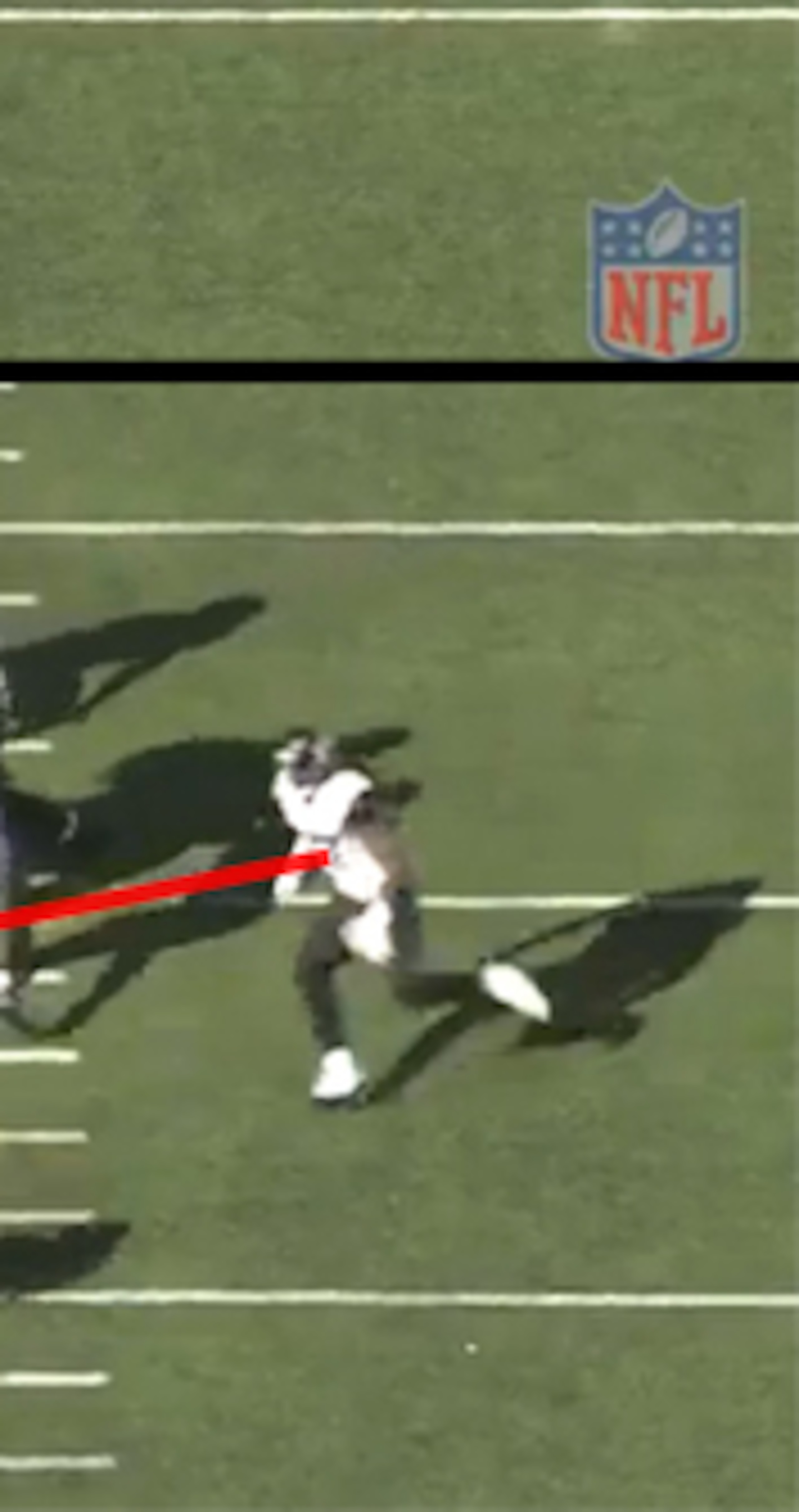
Against the Jaguars, Ivory rarely had anywhere to go. On this play, the Jaguars lined up with seven defenders in the box against the Jets' six blockers. When Ivory got the ball going between the tackles, he had a defender coming free in his face. That defender took away all of his immediate options.
Ivory would need to cut back across the formation in this situation normally, but the Jaguars had a free defender waiting for the cutback.
He lost two yards on the play.
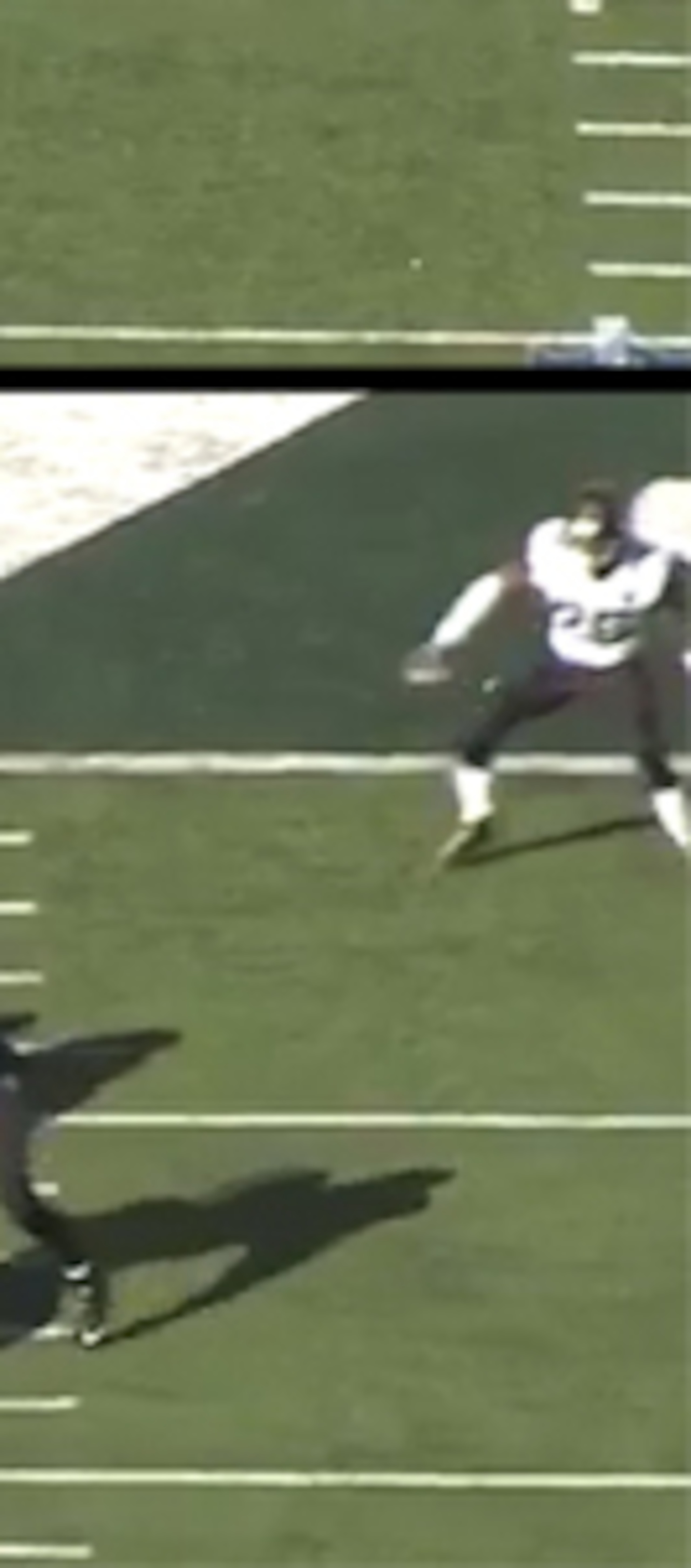
Soon after losing two yards on that play, Ivory faced a similar setup in the red zone. On this occasion, the Jaguars again had seven defenders in the box against the Jets' six blockers. However, this time the Jets looked to run toward the outside rather than up the middle.
Ivory took the ball directed toward the inside shoulder of his right tackle. He didn't initially have an obvious option to run to, so he hesitated in his movement and considered breaking outside. The edge defender was in good position to prevent him from getting to the outside, so he ultimately ran inside.
As he approached the line of scrimmage, his whole offensive line collapsed in front of him. Ivory couldn't get past the line of scrimmage.
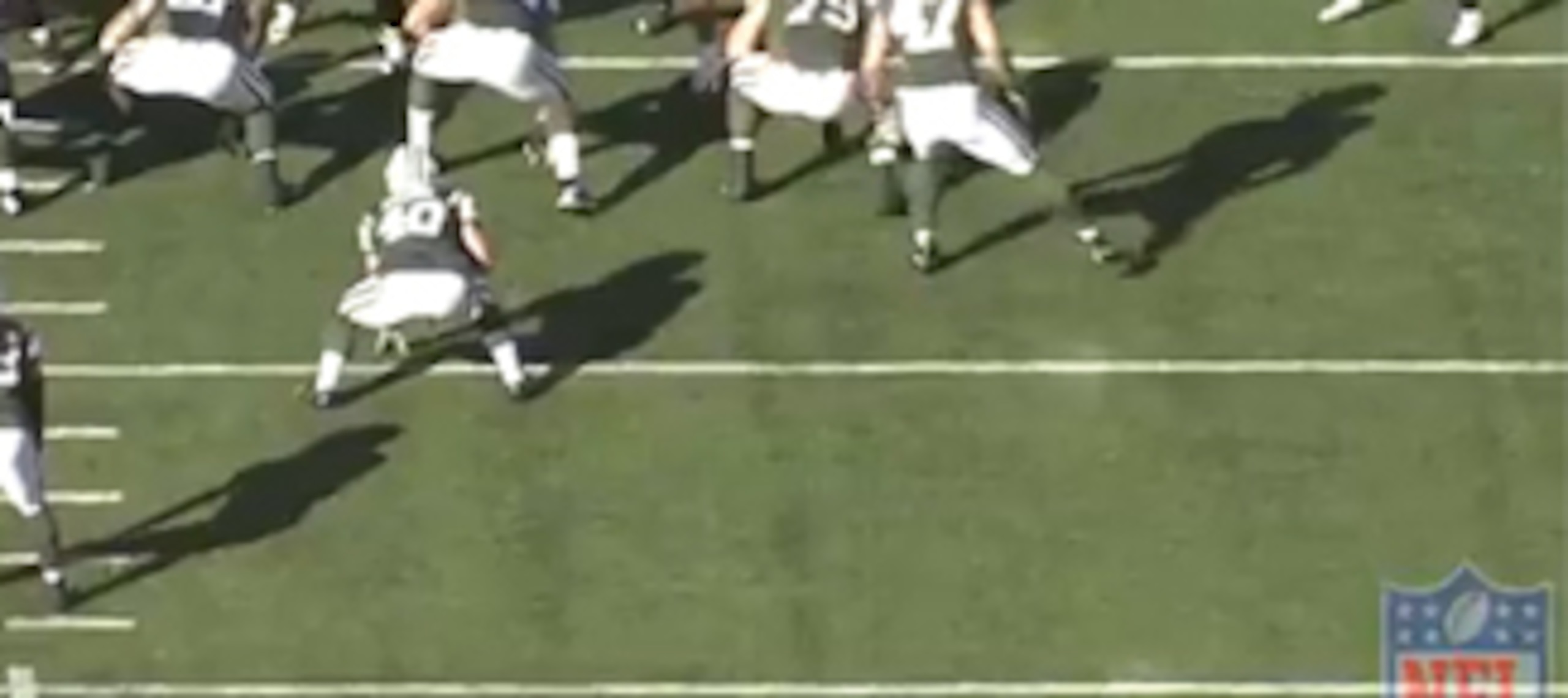
Later in the first quarter, Ivory faced a different situation. This time the Jets looked to run out of a heavy set, and the defense responded appropriately with nine defenders in the box. Ivory had a fullback to lead block for him, but he was offset to the right. This would prove to be an important detail.
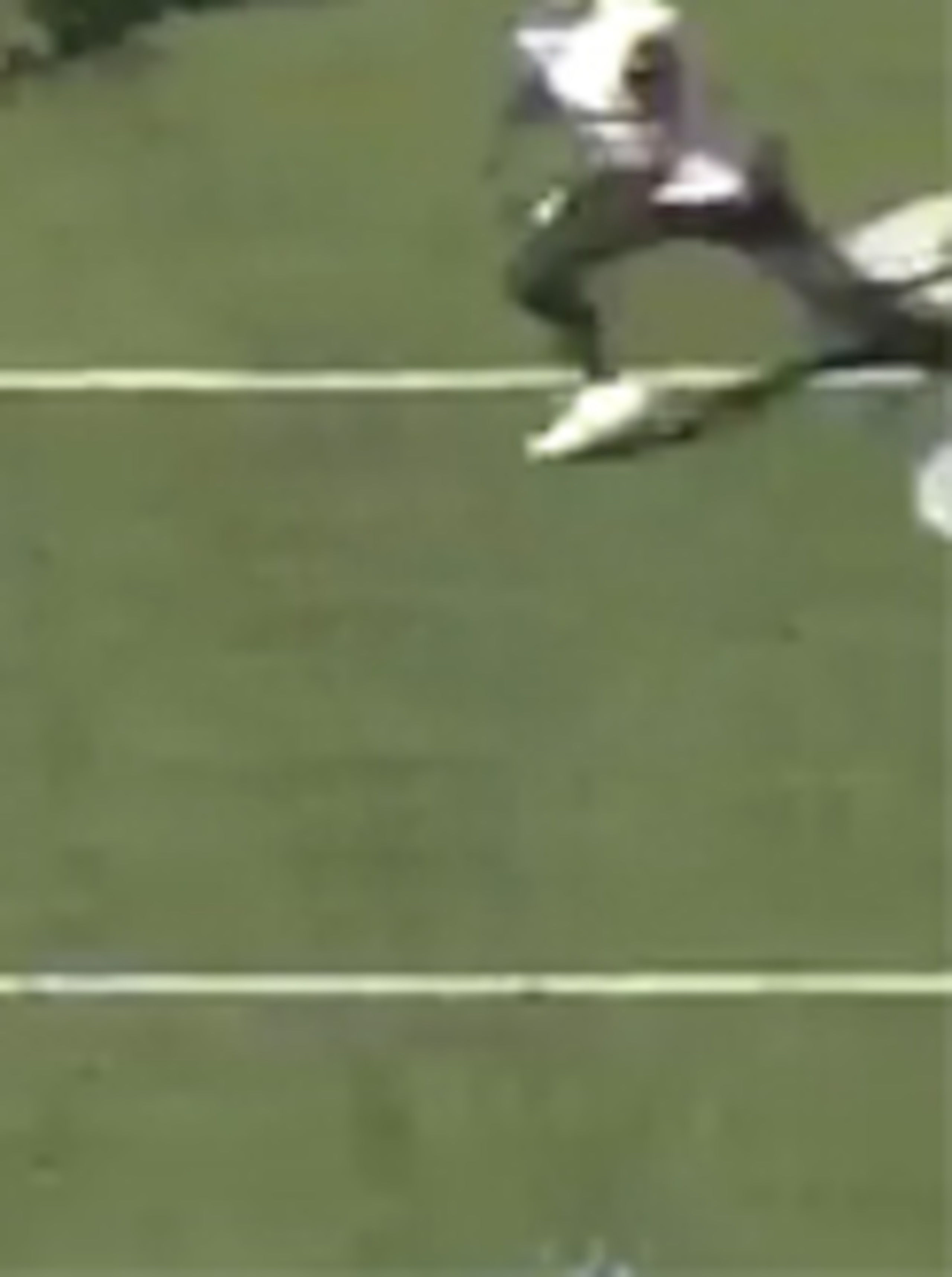
With his fullback offset to the right side and working away from the initial stages of Ivory's run, there is space available for a Jaguars defensive tackle to penetrate into the backfield. He is so quick to get into the backfield that he hits Ivory as soon as the running back gets the ball.
Ivory had no way of avoiding the hit but was able to spin off of it to continue to space outside. Ivory was moving to the outside, but he was turned the wrong way and needed to regain his balance. This made it very difficult for him to break the tackle of the defensive back who met him at the line of scrimmage.
Although Ivory was still able to force his way through the defensive back, he was hit again from behind before he could break free.
Running backs who break a lot of tackles typically do so from specific situations. It's not possible for a runner with no space at all to easily get away from tacklers because he needs space to operate in or space to build momentum for his power.
The Jets don't need to find a way to give Ivory wide running lanes. They just need to be effective enough so that he has the tools to be creative.
Ivory's early-season production wasn't just a fluke. He has been a great runner for the course of his whole career. The only reasons he has never established himself as a star is because of his limitations in the passing game and his lack of health.
Over the coming weeks, the Jets face the Buffalo Bills (26th in run defense DVOA), Houston Texans (20th) and Miami Dolphins (28th). If Ivory can't be a productive runner in those games, the Jets' playoff chances will take a major hit.

.jpg?w=2560 "Texans-Mixon Released Football")
.jpg?w=2560 "Grading WWE Raw 🔠")


.jpg?w=2560 "2 NFL Officials Suspended")
