

Comparing Rafa Benitez's Start to Life at Real Madrid to Carlo Ancelotti's
"[He is] a great coach and a great person," said Rafa Benitez to Radio Marca's Al Primer Toque. "[He will] restore Real Madrid's time-honoured values."
The man he was talking about? Carlo Ancelotti.
It was June 2013, and the Italian had just been presented as Real Madrid's new manager following the departure of Jose Mourinho. For Benitez, though he'd been linked with a return to the Spanish capital and though he'd spoken of his boyhood club as his "sweetheart," his career had taken him to Serie A and Napoli rather than back to the Bernabeu.


A return would have to wait. Another man had the position he coveted.
Ancelotti, of course, had been a regular rival of Benitez. In 2005 and 2007, the pair met in the Champions League final with Liverpool and AC Milan before Ancelotti's switch to Chelsea saw them cross paths in the Premier League as well.
"I have a good relationship with Carlo," said Benitez after the Italian's unveiling at Madrid. "He is a polite, courteous person and a good professional. He knows what he's doing and does it well, and he wins trophies."
And win trophies Ancelotti did.
In his first season in Chamartin, Ancelotti steered Los Blancos to the capture of the Copa del Rey and the Champions League, finally ending Madrid's quest for La Decima. Soon after, he added the UEFA Super Cup and Club World Cup, too, but a difficult end to the 2014-15 campaign saw Ancelotti sacked, and just two years after praising the Italian's fit at the Bernabeu, Benitez had replaced him, his task exactly the same: Topple Barcelona.
Benitez is now 15 games into that task, and despite a strong record, the mood surrounding him is mixed. Though his Madrid have lost just once, doubts persist over his style and his team's intent, even amid a transitional phase.
But how does his start at Real Madrid compare to that of Ancelotti two seasons earlier? What sort of progress is Benitez making in comparison to his predecessor?
Let's take a detailed look.
Circumstances Upon Arrival

It's easy to overlook once the season gets going, but the circumstances into which a manager arrives are absolutely critical to examine. And in this respect, the differences for Ancelotti and Benitez are profound.
In 2013, Ancelotti inherited a club that had internally unravelled. In Mourinho's final season in charge, Madrid had lurched toward a civil war: Divides existed in the dressing room, in the stands and in the press; the battle lines were fierce; Mourinho stood at the centre of it all. And on the pitch, Madrid finished the 2012-13 season 15 points behind Barcelona—the biggest gap between first and second in history.
Ancelotti, therefore, walked into a landscape that had been damaged by a severe storm. It was far from ideal, but in a sense, it was also helpful for the manager.
What the Italian went into was a club that both wanted and needed his skill set. To put out fires, Madrid needed his diplomacy, his charm, his endearing personality and his softly-softly touch. And that's what they got.
Consequently, players quickly warmed to him, and the club embraced him. Ancelotti, after all, was the antithesis of Mourinho—exactly what was wanted at the time.
Benitez, however, arrived to a very contrasting scene. Instead of replacing a polarising figure, he was replacing a popular one—popular with his players in particular. Thus, though the madrileno walked into a club more settled as an institution, his personal task was trickier, the goodwill that had been afforded to Ancelotti much harder to find at a club that wasn't sure it wanted him.
Benitez is still fighting this battle now—a battle that affords him less time and less margin for error.
Squad Turnover to Deal With
When comparing managerial stints, it's also important to factor in the squad turnover that unfolds at the beginning of tenures, to understand the extent of restructuring that was necessary.
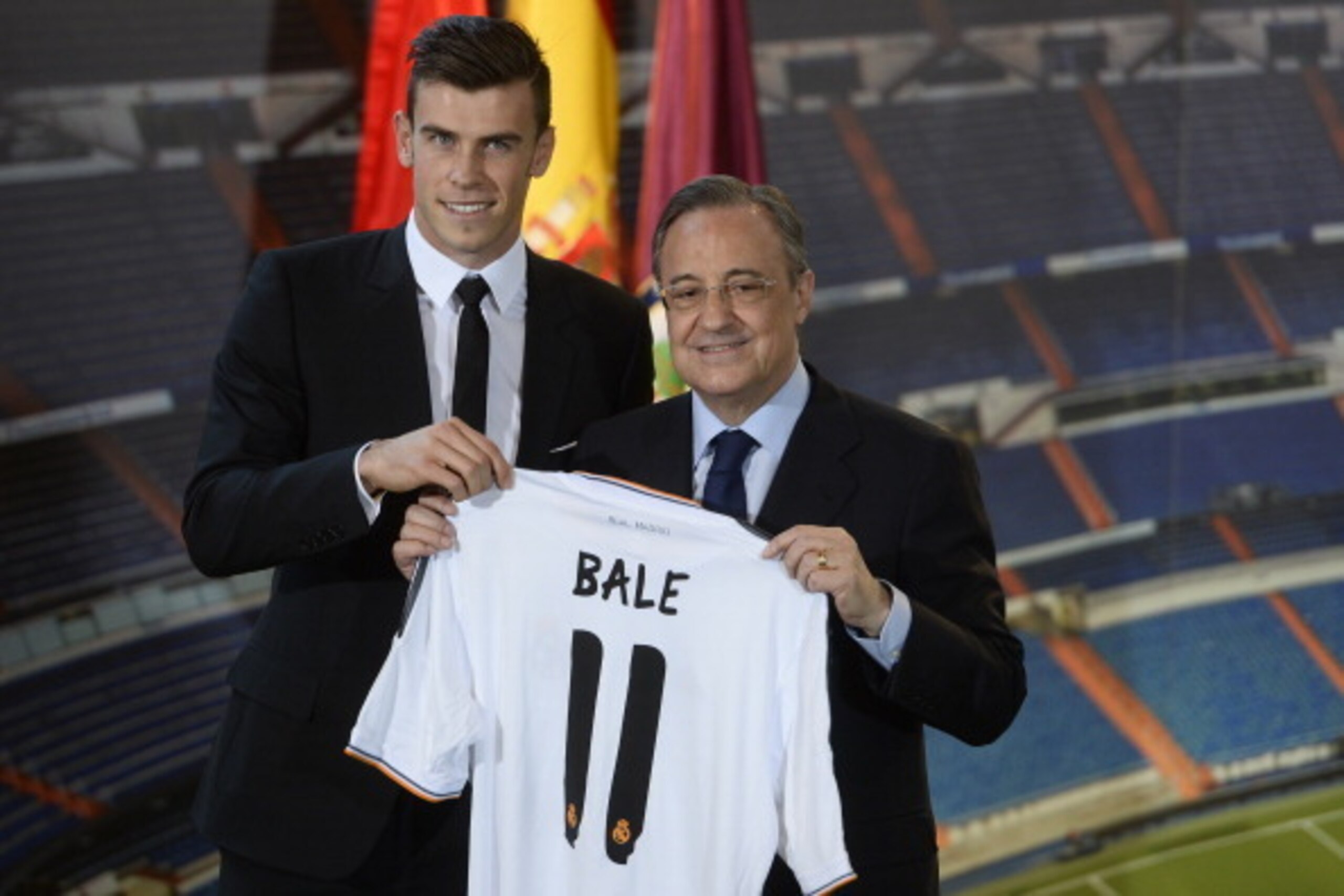
For Ancelotti, his arrival in 2013 coincided with the resumption of big spending and the Galactico policy by club president Florentino Perez. Determined once more to shape the club in his image having ceded more power to Mourinho than he had to any other manager in the preceding years, Perez spent big sums on Isco and Asier Illarramendi before making Gareth Bale the world's most expensive player.
At the same time, Mesut Ozil and Gonzalo Higuain made high-profile exits, with the former's departure forcing Ancelotti to make significant alterations to the team's shape and the roles of some of his stars.
For Benitez, though, restructuring of a similar extent hasn't been necessary, with changes occurring on a tactical level more than a personnel one.
Indeed, this summer, the bulk of Real Madrid's transfer activity occurred on the squad's periphery. Either coming in or returning were Danilo, Mateo Kovacic, Kiko Casilla, Lucas Vazquez, Denis Cheryshev and Casemiro, while the outgoing list included Illarramendi, Lucas Silva, Fabio Coentrao, Sami Khedira and Iker Casillas.
Though Casillas' exit was uneasy, for Benitez the summer saw the core of the squad remain essentially untouched, giving him an established platform to work with rather than a first XI in a significant state of flux.
In that regard, Ancelotti's reshuffling at the beginning of 2013-14 could be considered more difficult.
Overall Record and Form
So here we get into the nitty gritty. First up, the overall records.
Here's how they compare after 15 games:
| Ancelotti 2013-14 | 12 | 1 | 2 | 42 | 18 | +24 | 37 |
| Benitez 2015-16 | 10 | 4 | 1 | 33 | 7 | +26 | 34 |
What's important to acknowledge first is that Ancelotti's opening 15 games at Real Madrid involved 12 in the league and three in the Champions League, while for Benitez, the numbers are 11 and four, respectively.
For the latter, of course, that's meant two clashes with a European heavyweight in the form of Paris Saint-Germain, but the comparison is balanced somewhat by the fact that a Clasico meeting with Barcelona—a clash that is still to come for Benitez—was included in the first 15 games for Ancelotti.
So, which start is more impressive?
| W: 2-1 vs. Real Betis | D: 0-0 vs. Sporting Gijon |
| W: 1-0 vs. Granada | W: 5-0 vs. Real Betis |
| W: 3-1 vs. Athletic Bilbao | W: 6-0 vs. Espanyol |
| D: 2-2 vs. Villarreal | W: 4-0 vs. Shakhtar Donetsk |
| W: 6-1 vs. Galatasaray | W:1-0 vs. Granada |
| W: 4-1 vs. Getafe | W: 2-1 vs. Athletic Bilbao |
| W: 2-1 vs. Elche | D: 0-0 vs. Malaga |
| L: 0-1 vs. Atletico Madrid | W: 2-0 vs. Malmo |
| W: 4-0 vs. Copenhagen | D: 1-1 vs. Atletico Madrid |
| W: 3-2 vs. Levante | W: 3-0 vs. Levante |
| W: 2-0 vs. Malaga | D: 0-0 vs. Paris Saint-Germain |
| W: 2-1 vs. Juventus | W: 3-1 vs. Celta Vigo |
| L: 1-2 vs. Barcelona | W: 3-1 vs. Las Palmas |
| W: 7-3 vs. Sevilla | W: 1-0 vs. Paris Saint-Germain |
| W: 3-2 vs. Rayo Vallecano | L: 2-3 vs. Sevilla |
As made evident in the tables above, the Italian's Real Madrid had accumulated more victories, more points and more goals by this stage, but that also came at the cost of defensive security, and like it is now, Madrid's form was patchy throughout.
In the 2-1 victory over Real Betis to open the 2013-14 season, Ancelotti's men were extremely fortunate as Betis hit the bar and squandered another golden opportunity, while in the laboured 1-0 win over Granada that followed, the Andalusians were denied a strong penalty shout against Casemiro in the dying minutes.
Quickly after, Madrid then somehow escaped a barrage from Villarreal at El Madrigal with a fortuitous point thanks to Diego Lopez, who was instrumental with seven saves, while defeats to title rivals in Barcelona and Atletico Madrid were damaging.
Of course, there were some far stronger performances in that period—the thrashings of Galatasaray, Getafe and Copenhagen were impressive, and only Willy Caballero saved Malaga from suffering something similar—but a theme throughout Madrid's opening 15 games under Ancelotti was the absence of risk management. It was a high-stakes game they played, and they were fortunate on several occasions.
At the Estadi Ciutat de Valencia, Madrid needed a 94th-minute winner from Cristiano Ronaldo to claim a 3-2 victory against Levante, while they also escaped a siege on their own goal from Rayo Vallecano in another 3-2 win.
And then there was the 7-3 victory over Sevilla, a game that could easily have ended up 9-6 and neatly summed up Ancelotti's Madrid in those opening 15 games: breathless to watch but not entirely convincing.
Benitez, however, is overseeing a very different team at present.
Aside from consecutive thrashings of Real Betis and Espanyol, Madrid under their new manager have been vastly more measured in their approach, often playing tighter and deeper with a greater defensive emphasis.
Injuries to key players have significantly forced Benitez's hand in that respect (more on that later), but an added degree of conservatism has been important in taking points from some difficult tests away from home—something that regularly proved problematic under Ancelotti.
What has hurt Benitez, though, is both the string of underwhelming performances in attack against the likes of Sporting Gijon, Granada and Malaga—only five points were taken from a possible nine in those games—and the manner in which his team completely relinquished control against Celta Vigo, Paris Saint-Germain and Sevilla.
In all three of those outings, Benitez's side took early leads but allowed their opponents to seize the ascendency thereafter, an uncharacteristically passive and cautious approach inviting pressure in a manner that has pleased few.
Statistical and Tactical Comparison
In press conferences this season, Benitez has regularly pointed to statistics to prove his side's effectiveness, so how do the numbers of the current Real Madrid team compare to those during Ancelotti's opening 15 games in charge?
Here's how:
| Shots | 18.9 | 20.1 |
| Shots on Target | 8.0 | 7.8 |
| Possession (%) | 55.8 | 55.4 |
| Passing Accuracy (%) | 84.9 | 87.7 |
| Total Passes | 525.4 | 574.9 |
| Dribbles | 21.8 | 22.3 |
| Shots Conceded | 12.3 | 11.4 |
| Shots on Target Conceded | 4.5 | 3.3 |
| Tackles | 26.3 | 25.9 |
| Interceptions | 14.5 | 17.0 |
| Clearances | 19.3 | 17.3 |
| Blocks | 12.5 | 12.1 |
| Saves | 3.3 | 2.7 |
| Clean Sheets (total) | 2 | 10 |
What's striking in the table above is that, in the early stages of Ancelotti's reign, Real Madrid were taking fewer shots on goal than Benitez's team is now but were scoring significantly more often. That would suggest the chances they were creating were better, which is to be expected given the differences in tactical approaches.
In the opening months of 2013-14, Madrid's game was not only very expansive, it was also vertical and quite direct. Having lost Ozil, Ancelotti initially placed Isco in the hole and surrounded him with Ronaldo, Karim Benzema and Angel Di Maria (Bale was gradually incorporated, and it wasn't until later in the season that the successful 4-3-3 became regular), giving the team a lethal end-to-end capacity.
But it also made their games exactly that, too: end to end.
Consequently, Madrid regularly created good scoring chances in space but also allowed their opponents to do the same in contests that were frenetic, which is reflected in the defensive stats presented above. A contributing factor was also the absence of Xabi Alonso at the start of that season, while Khedira also picked up an early injury, leaving Ancelotti with little physicality or protection in midfield.
It's what made Madrid's games breathless but high risk.

In contrast, Benitez's XIs in 2015-16 have regularly contained an extra central midfielder in the form of Casemiro or Kovacic, who alongside Luka Modric and Toni Kroos have given Real Madrid a more deliberate and less explosive method—something reflected in the higher number of passes completed by Benitez's team despite similar time spent in possession.
What will be most interesting to observe, however, is how Real Madrid's style and tactical approach under Benitez evolves after the international break.
Indeed, many of the new manager's decisions thus far have been forced upon him by a number of high-profile injuries in attack. And at Real Madrid, it's the composition of the attack that defines the team.
Without Bale for large stretches, Benitez has been without the power Ancelotti nearly always had at his disposal, robbing him of dynamism. Additionally, the absences of Benzema and James Rodriguez have taken away from Benitez the players you might term the "connector men," leaving behind a system in which the forwards can easily grow detached from the midfield, the whole formation prone to almost operating as two separate components.
And then there's Ronaldo.
When Ancelotti arrived, he had the luxury of a Ronaldo still in full flight. Operating from the left, in 2013 the Portuguese was still blowing apart opponents with brutal force. But that's now changing; Ronaldo is in a period of evolution, his game growing more concentrated, his play becoming narrower, the shift heightening the importance of others around him such as Bale, Rodriguez and Benzema—the men whom Benitez has been without.
When that quartet is once again intact, therefore, the comparison with Ancelotti might prove more favourable for Benitez.
.jpg?w=2560)



.jpg?w=2560 "Viral Rams Coach Vid 🖕")
.jpg?w=2560 "2 NFL Officials Suspended")
