
Hell in a Cell Concept at Odds with WWE's PG-TV Programming
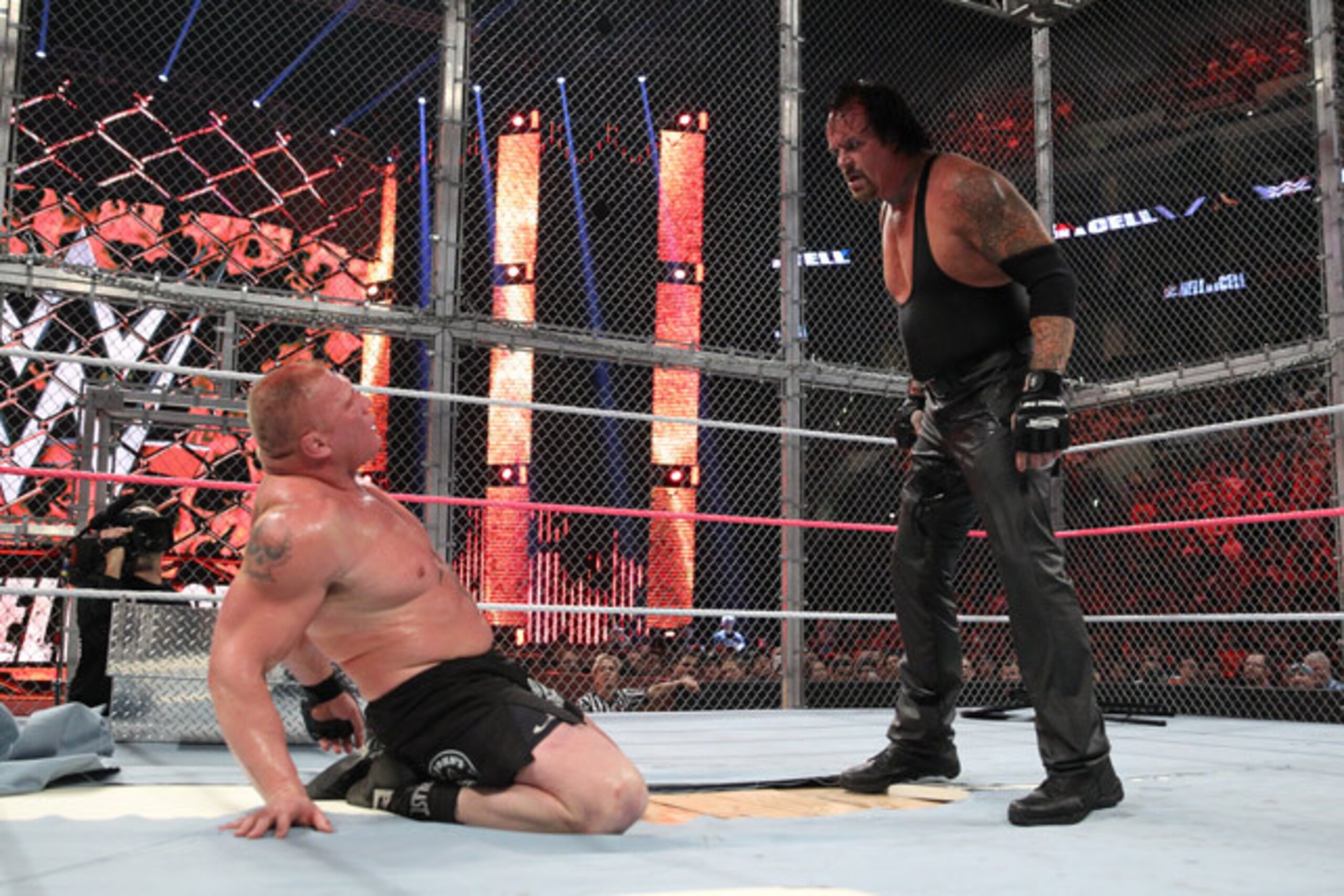
Blood pasted Undertaker's hair to his forehead and dripped from Brock Lesnar's head, reddening his chest and threatening to blind him mid-match. Of the Hell in a Cell battle, announcer John "Bradshaw" Layfield said, "I knew this thing was going to be brutal. I didn't know it was going to be this brutal."
And despite WWE's PG-TV rating, it was as Layfield described: more savage than anyone expected.
The Hell in a Cell structure, however, was designed with this exact purpose in mind. It is a monument to sadism, a means for pro wrestling to veer toward barbarity for the sake of a feud's finality.
.jpg?w=2560)
It's primary function as a Thunderdome-esque house of violence clashes with WWE's move toward more family-friendly programming. An entity that chooses to bleep out the word "bitch" and blur erect middle fingers can't also promise the kind of hellfire that is supposed to crackle inside the Hell in a Cell.
Lesnar vs. Undertaker highlighted that disparity in standards.
When the two warriors emerged from their war, bloodied, aching and spent, the discussion turned to whether they bladed. Was Lesnar's gash born from a self-inflicted (and banned) nick? Did Undertaker sidestep protocol in order to add color and gore to a bout with a rich history in such things?
A pair of peeks backstage didn't fully answer those questions.
Dave Meltzer reported on F4WOnline, "While Vince McMahon was upset at the gorilla position and ordered the doctor to the ring to have the blood wiped off, nothing was said to the talents after the match regarding the subject."
According to PWInsider (h/t Wrestling Inc), McMahon wasn't thrilled with the blood in the match but was upset over Lesnar's pushing away that doctor. That was reportedly not a scripted moment.
This goes beyond two legends possibly skirting around the rules, though. The blood-stained canvas that they left behind is a symbol of Hell in a Cell's identity crisis.
WWE is happy to show off the fact that Lesnar received nine stitches to close the wound in his head, posting graphic photos of the procedure on its front page. At the same time, though, the company isn't comfortable enough with the match's violence to show its bloody pictures in color.
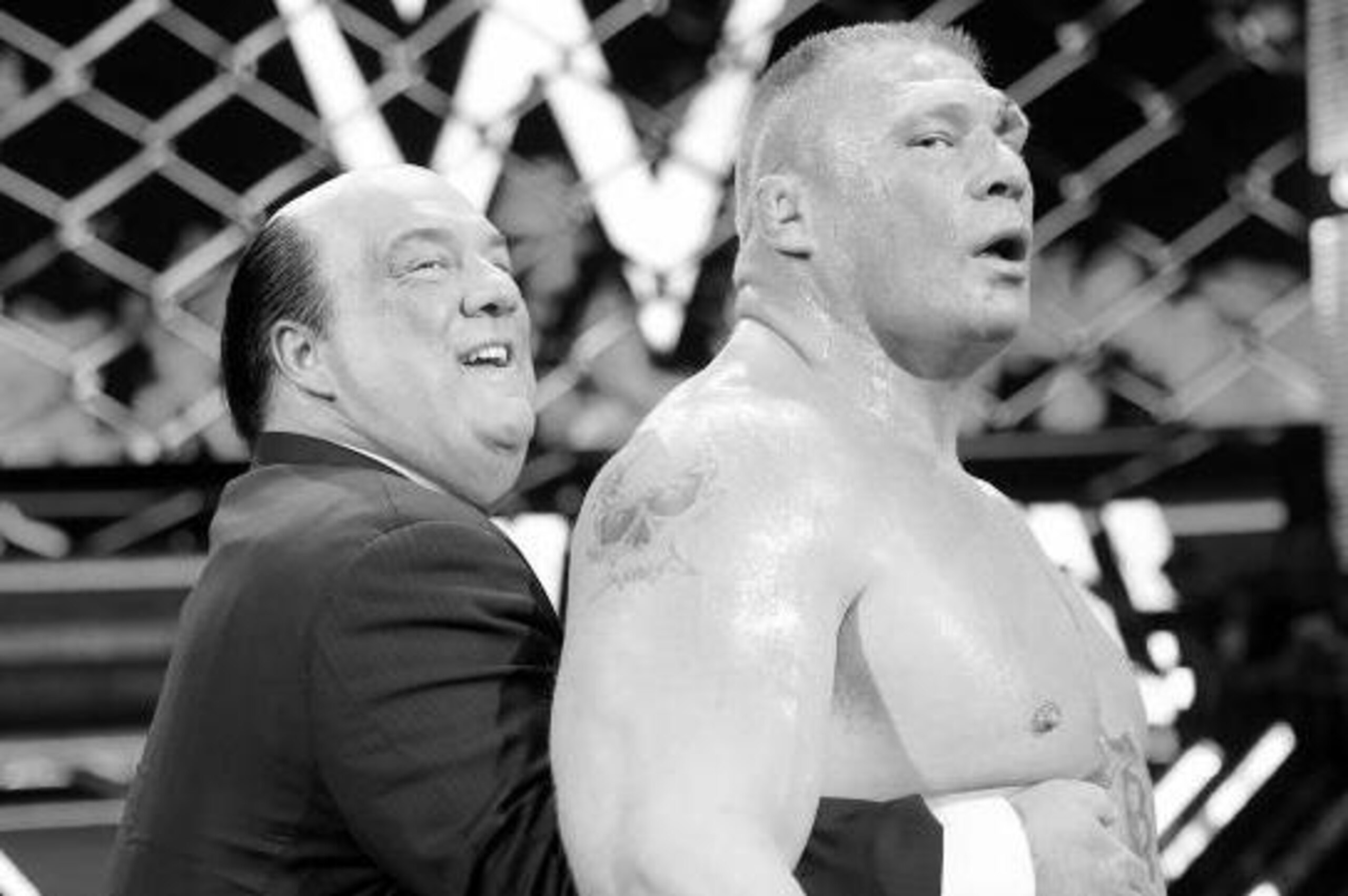
Lesnar and Undertaker delivered what the Hell in a Cell has long promised.
That steel structure is billed as satanic. Buildup to these bouts talk up the destruction that is to come. The cell is portrayed as the most violent environment WWE has to offer.
A hype video for the bout in 2011 (well into the WWE's PG Era) featured announcers dubbing it "wicked," "diabolical," "carnal" and "career-shortening":
Grantland's David Shoemaker called it, "An institution of powerfully theatrical violence and a site of worship for wrestling's most bloodthirsty fans."
Either all of this is true and it can't possibly fit in a PG context, or none of this is true and it must instead be a watered-down, sanitized version of itself.
TVGuidelines.org describes PG-TV programming as material that parents may want to watch with their younger children, noting that it may contain "moderate violence." What Undertaker and Lesnar did to each other in their instant classic of a collision in that cage was not "moderate."
The Deadman crushed Lesnar's throat against a steel chair. He ground his hand across Lesnar's bloody forehead. But those moments are exactly why this match finally felt like a true Hell in a Cell match, one that James Montgomery of Rolling Stone called a "throwback to wrestling's gory glory days, when the crowds were red hot and the feuds were of the blood variety."
For the match to truly fit within the PG framework, it would have adjust its promises. "The Hall of Moderate Violence" is a harder sell than The Devil's Playground, though.
In the past, WWE has often gone the route of putting on Hell in a Cell bouts that offer minimal in-ring savagery.
Men hurl men into ring steps. Chairs crash against flesh. The combatants push each other into the cage every once in a while.
But many of these clashes haven't had that added layer of violence that is expected from a Hell in a Cell match.
Even with the use of Kendo sticks, with tables breaking and chairs bending, the Hell in a Cell match that preceded Lesnar vs. Undertaker received criticism for not going far enough on the violence spectrum. As excellent as Roman Reigns vs. Bray Wyatt was, some fans dismissed it as being good for a PG offering.
Despite WWE's producing PG-rated TV for over seven years now, and despite the many examples of softer, blood-free versions of the bout, fans still cling to anticipating the same bloodbaths and career-threatening battles Hell in a Cell once offered.
And why not? WWE continually hypes the next Hell in a Cell contest with footage of the match's most violent moments. The company keeping drawing a picture of a hellish, fearsome place, one that doesn't mesh with the PG concept.
WWE can choose to have its pay-per-views, or just Hell in a Cell, opt for a TV-14 rating. But it can't have Hell in a Cell be its true, unsettling self in a PG context. As Jim Ross wrote on his blog, "[The] bottom line is that HIAC isn't a PG entity."




.jpg?w=2560 "Jonathan Taylor Landing Spots")
.jpg?w=2560 "NFL House in Paris Closes for Protests (AP)")


.jpg?w=2560 "Trevon Diggs Cut by Seahawks")