
Mexican Grand Prix 2015 Preview: Start Time, TV Times, Weather, Schedule, Odds
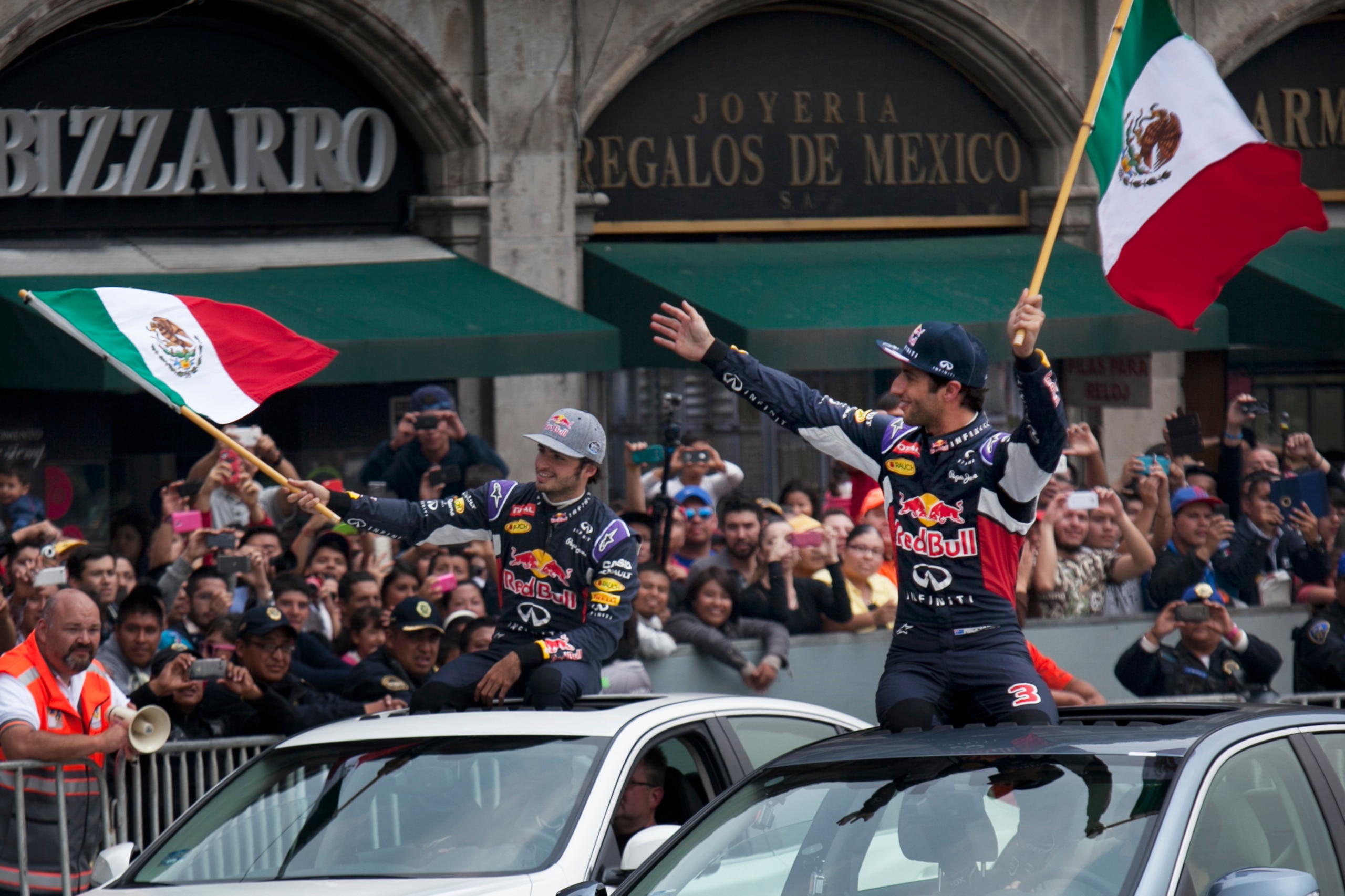
Formula One returns to the Autodromo Hermanos Rodriguez for the first time in more than 20 years for the 2015 Mexican Grand Prix.
The famous circuit close to the heart of Mexico City last hosted a grand prix in 1992. Nigel Mansell won the race and went on to take the drivers' title; this year, another Brit, Lewis Hamilton, arrives at the track as a newly crowned champion.
However, he and his rivals will race on a very different layout to that used by the likes of Mansell, Ayrton Senna and Alain Prost.
The whole circuit has been redesigned and fresh tarmac has been laid down to bring the venue up to modern safety standards.
The terrible weather experienced by Mexico last weekend will have cleared from the area of the circuit in time for this weekend's action; a repeat of the delays and cancellations seen last time out in Texas are highly unlikely.
With the drivers' championship decided and the constructors' title wrapped up long ago, there's not as much to play for as far as the top drivers are concerned.
But Hamilton, Nico Rosberg, Sebastian Vettel and the rest will still want to win the race, and there are still important and exciting battles to be decided further down the order.
Read on for a full preview of the weekend ahead, including a circuit map and detailed guide, TV times, session times, tyre and DRS information, current standings, weather and odds.
Drivers' and Constructors' Championship Standings
1 of 6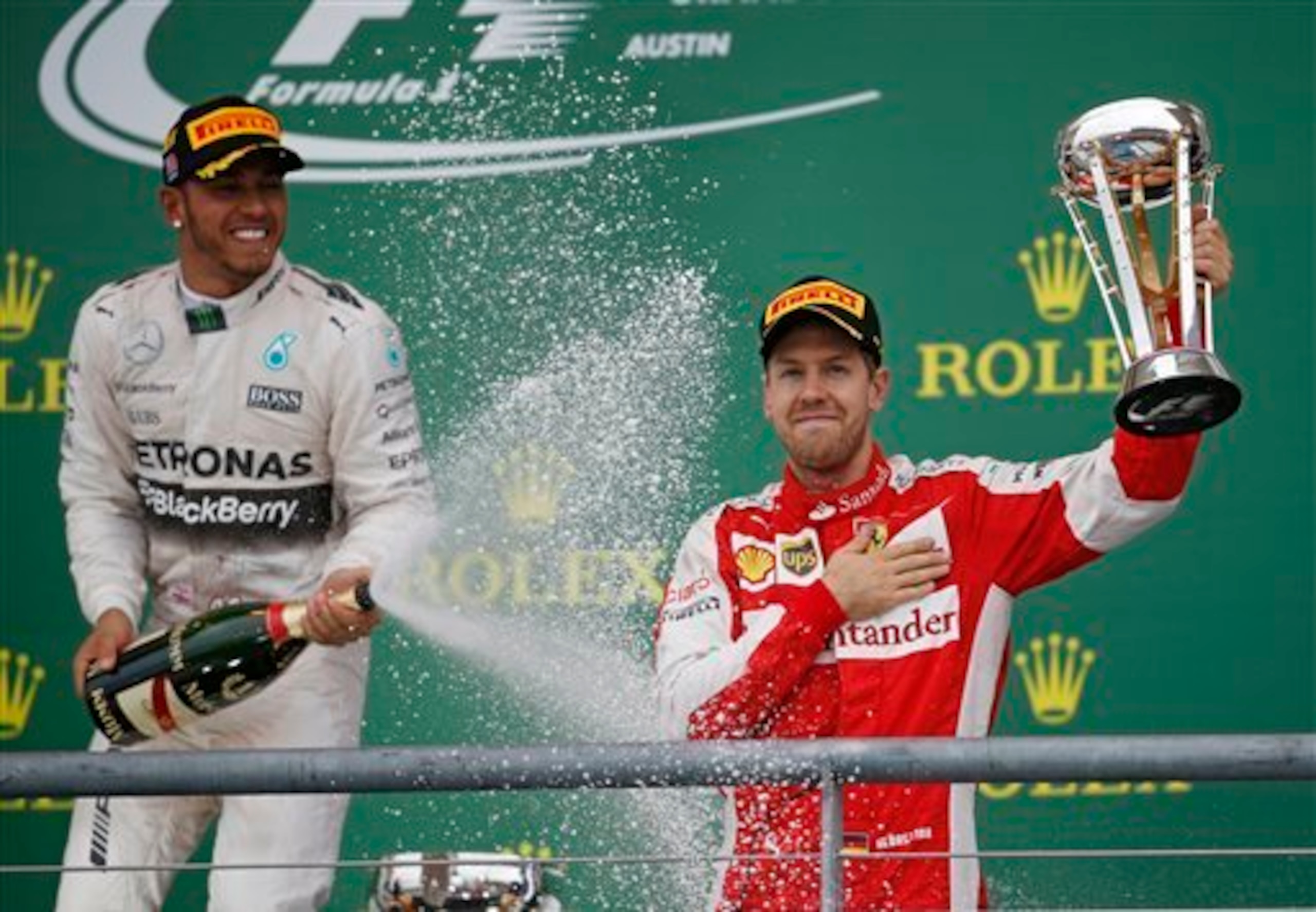
Lewis Hamilton secured his third drivers' championship with victory at the United States Grand Prix. With three races to go, he cannot be caught, but the battle for second between Nico Rosberg and Sebastian Vettel remains very much alive.
So does the fight for fourth, after all three of the men involved failed to score in Austin.
The current top 10 drivers are:
| 1 | Lewis Hamilton | 327 |
| 2 | Sebastian Vettel | 251 |
| 3 | Nico Rosberg | 247 |
| 4 | Kimi Raikkonen | 123 |
| 5 | Valtteri Bottas | 111 |
| 6 | Felipe Massa | 109 |
| 7 | Daniil Kvyat | 76 |
| 8 | Daniel Ricciardo | 74 |
| 9 | Sergio Perez | 64 |
| 10 | Max Verstappen | 45 |
Mercedes and Ferrari will finish the year where they currently stand, and Williams are starting to look safe in third.
But Red Bull are, incredibly, looking a bit vulnerable to attack from Force India. The fight between Lotus and Toro Rosso will also be one to watch—and could McLaren catch Sauber?
| 1 | Mercedes | 574 |
| 2 | Ferrari | 374 |
| 3 | Williams | 220 |
| 4 | Red Bull | 150 |
| 5 | Force India | 102 |
| 6 | Lotus | 70 |
| 7 | Toro Rosso | 63 |
| 8 | Sauber | 36 |
| 9 | McLaren | 27 |
| 10 | Manor | 0 |
Data sourced from the official F1 website.
Autodromo Hermanos Rodriguez
2 of 6
The Autodromo Hermanos Rodriguez started life as the Magdalena Mixhuca circuit and first hosted a non-championship F1 race in 1962.
This event was marred by tragedy as 20-year-old local star Ricardo Rodriguez, already a Ferrari works driver in F1, was killed in a practice crash when his suspension failed at Peraltada. He remains to this day the youngest driver to have started on the front row of an F1 grid—a feat he achieved at his first-ever world championship grand prix.
The second of the "hermanos Rodriguez" (Rodriguez brothers), older sibling Pedro, continued his own racing career. He drove in 54 grands prix, winning two, but at the age of 31, he too was killed when he crashed during a 1971 sports car race.
Two years later, the circuit was renamed in their honour, and F1 racing returned for a seven-year run between 1986 and 1992.
The new incarnation of the circuit follows a similar line to the old layout, but every corner has been modified to one degree or another. The biggest changes are those that have been made to the Esses section and to the final corner—all in the name of safety.
Peraltada is no more and the Esses look far less exciting than they once did, but Hermann Tilke has done what could be described as a "sympathetic redesign"—the character and soul of the circuit looks to have been largely retained.
A Note on Altitude
The track lies in the Iztacalco borough, east of the heart of Mexico City. This vast metropolis of over 20 million people sits 2,250 metres above sea-level, making the Autodromo by far the most elevated circuit visited by Formula One.
The impact of this altitude will be felt in a number of ways. The air is thinner than at sea-level, which means a wing will produce less drag and downforce than it would at a typical circuit.
The V6 turbo engines will not be affected anywhere near as severely as the old naturally aspirated units would have been. However, as noted by Honda's Yasuhisa Arai in McLaren's race preview, "the turbocharger must work harder to maintain its usual output due to the increase in altitude, to push more air to the engine."
We should also spare a thought for the team personnel and drivers. Their bodies will need at least several days to acclimatise to the Autodromo's high altitude, but they'll all be working hard as soon as they arrive.
Circuit Guide
No racing laps have been completed around the new circuit, so this guide is, by necessity, based on looking at simulations and the track map.
A highly useful video of a drone flight over the circuit was promoted by the Autodromo's official Twitter account. However, Formula One Management made a copyright claim and it has since been removed. Bravo, guys. Bravo.
Turns 1, 2 and 3
A lap begins on the pit straight with a very long run down to the first corner. DRS-assisted speeds in excess of 340 kilometres an hour are likely before the drivers brake hard for the first corner, a fairly—but not excessively—slow right-hander.
This, and the straight leading up to it, should be the circuit's prime overtaking spot.
As soon as they're through Turn 1, the drivers will head across to the right-hand side of the track to be ready for the slow left of Turn 2. The right-hander of Turn 3 completes the opening corner sequence and sends the cars out onto the circuit's second-longest straight.
Turns 4, 5 and 6
This straight should provide a secondary overtaking opportunity for attacking drivers who were able to get their opponent out of shape in the earlier corners.
At the end of it, the drivers brake hard for the slow left-hander of Turn 4, then immediately enter a similarly slow right (Turn 5).
A few seconds of throttle later, and it's back on the anchors for what looks like a slow, double-apex right. The line through here should be a smooth, constant curve.
A short straight follows.
Turns 7, 8, 9, 10 and 11
At the end of the straight lies the medium-speed left-hander of Turn 7—this corner marks the start of a redesigned Esses section.
Turn 8 looks like a quick right-hander, but the drivers will have to feather the throttle mid-corner to be ready for the medium-speed left of Turn 9.
A second or two of straight track follows before a somewhat tighter right-hander (Turn 10); this leads into a more open corner, this one a left (Turn 11). The drivers will slam the throttle to the floor as they sweep through a left-hand kink—which doesn't appear to have a number—and out onto a straight.
It's very difficult to work out exactly how this section will be driven, and how quickly. It might be the best part of the track for the drivers; alternatively, it could be a bit of a letdown.
Turn 12
At the end of the straight, the drivers should be travelling at speeds a little in excess of 300 kilometres an hour before braking for the medium-speed, 90-degree right of Turn 12.
This corner takes them away from the old track layout—and the famous Peraltada corner—that was used last time F1 visited Mexico. The new layout sees the cars head down a short straight and into a baseball stadium packed with passionate fans.
Turns 13, 14 and 15
The noise levels from the crowd could easily exceed those from the engines as the drivers brake and tackle the very slow left-hand hairpin of Turn 13. It leads immediately into a more open right-hander (Turn 14).
Turn 15 isn't really a corner, just a piece of kerb at the exit of Turn 14. The cars now pass between the grandstands and out of the stadium.
The corners in this section aren't especially interesting, but the sight and sound of the cars entering this modern amphitheatre will be very special indeed.
Turns 16 and 17
Turn 16 is a slow right-hander that sends the drivers back onto the path of the old circuit layout. Getting a good exit here will be very important, because it leads out—via flat-out Turn 17—onto the long pit straight and the start of another lap.
Pit Lane
The pit-lane entry is on the inside of Turn 17, and the exit lies on the right-hand side of the pit straight around halfway between the last and first corners.
Tyre Choices and DRS Zones
3 of 6
The Autodromo Hermanos Rodriguez is an old venue, but the racing surface is entirely new. It was laid down only a few months ago so it'll have received very little use, even from track inspection vehicles, in its short life.
Pirelli's pre-race press release detailed the difficulties it faces when arriving at a new venue, with boss Paul Hembery saying:
"Nominating the compounds for a new track is not without its challenges, but simulation—one of the most important areas of growth in Formula One technology recently—is very accurate now, although it’s inevitable that we would incline towards a more conservative choice during the first year at a new track.
"
The supplier has gone for what could be considered the "default" selection of the yellow-marked soft and white-marked medium compound tyres. This is the most versatile and common pairing and it will hopefully suit the circuit.
Pirelli is aiming for two stops, but—as long as it stays dry—there's at least half a chance that one may be favoured.
In the event of wet weather, the green-marked intermediates and blue-marked wet tyres will also be available.
DRS Zones
There will be two DRS zones for the Mexican Grand Prix. They will run from a single detection point at the exit of Turn 14.
The first will have its activation line around a third of the way down the pit straight, and it will end with braking for Turn 1.
The second zone's activation point will be shortly after the exit of Turn 3. This zone will end at Turn 4.
It's unfortunate that the two zones are being run from a single detection point; even if a move is completed in the first zone, the driver will still have DRS in the second, so he'll be able to pull away from the car he just overtook.
This means a driver who is passed in Zone 1 will have almost no chance of mounting a counter-attack.


.jpg?w=2560 "Colts Football")
Weather Forecast
4 of 6
Mexico City has a subtropical highland climate but there are large variations between different areas of the city. The Iztacalco borough sees warm temperatures all year round, with average November highs in the low 20s degrees Celsius.
Rainfall is most abundant in the late Spring to early Autumn.
The forecast for the weekend ahead suggests we'll have a dry Friday and Sunday, but a shower could pass over the circuit and affect the Saturday sessions. Temperatures will be at or a little below the long-term average.
BBC Weather will have the latest.
Odds
5 of 6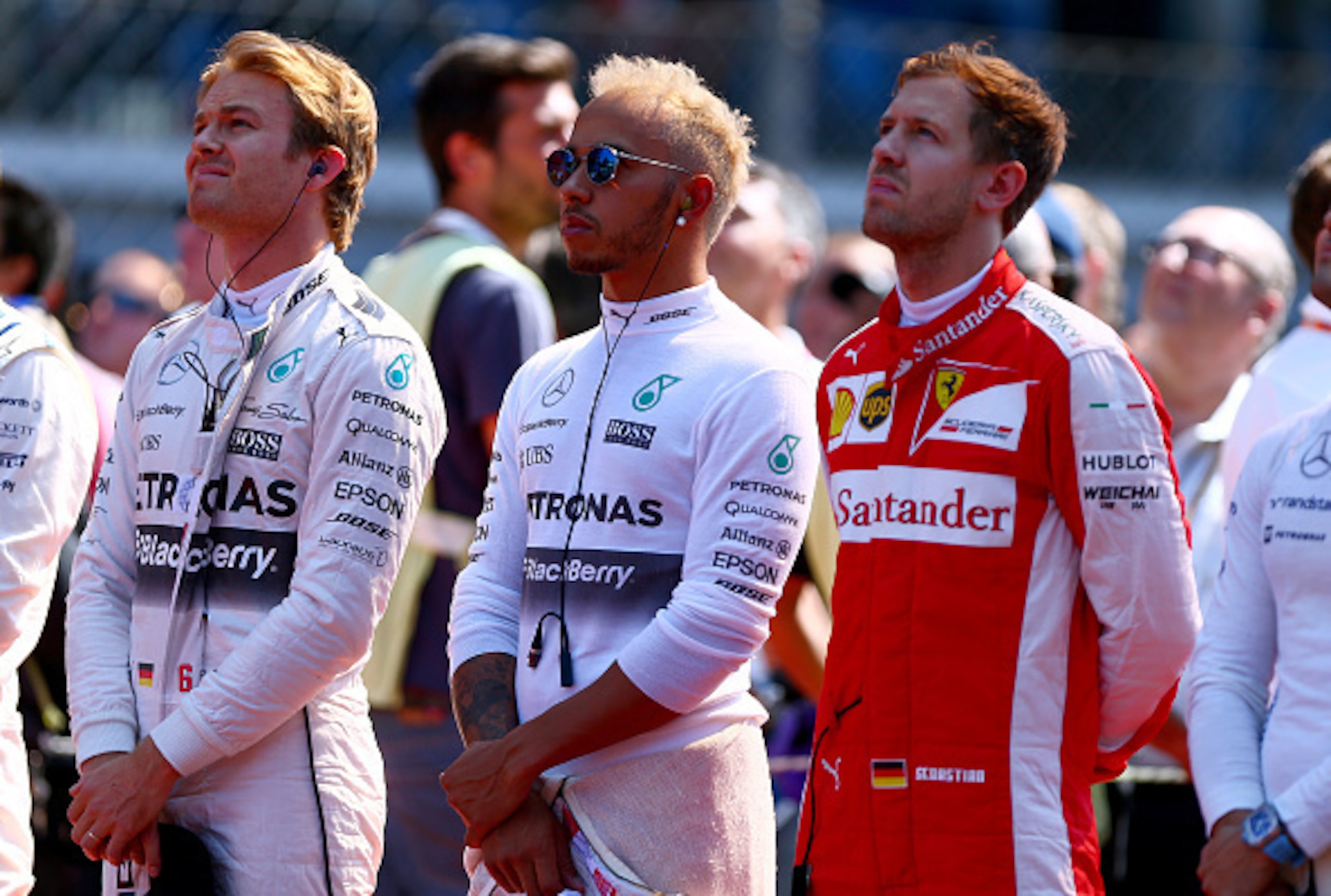
Lewis Hamilton doesn't need to win this race, but he remains the bookies' favourite. Nico Rosberg is their second choice, with Sebastian Vettel third.
The top 10 favourites are:
| Lewis Hamilton | 8-15 |
| Nico Rosberg | 11-4 |
| Sebastian Vettel | 10-1 |
| Valtteri Bottas | 40-1 |
| Kimi Raikkonen | 50-1 |
| Felipe Massa | 50-1 |
| Daniel Ricciardo | 100-1 |
| Nico Hulkenberg | 150-1 |
| Sergio Perez | 150-1 |
| Max Verstappen | 200-1 |
Selected Others
Hamilton is the only driver to have completed a hat-trick of pole, fastest lap and race win in 2015. He's achieved the feat four times and is 10-3 to do it in Mexico. Rosberg is 12-1 and Vettel is 66-1.
McLaren looked much stronger than usual during the U.S. Grand Prix, but this hasn't had much impact on their odds. Fernando Alonso and Jenson Button are both 2-1 to come home in the top 10—as is Pastor Maldonado, who is aiming for his fourth consecutive points finish.
And in the "dream result" betting, most neutrals would love to see Sergio Perez finish on the podium at his first home race. He's 14-1 to get the job done, the same odds as Force India team-mate Nico Hulkenberg.
All odds sourced from Oddschecker.com and correct at the time of publication.
Mexican Grand Prix TV Times and Session Times
6 of 6
As always, the Mexican Grand Prix weekend will consist of three free practice sessions, qualifying and the race.
The session times are as follows:
| Practice 1 | Friday | 10 a.m. |
| Practice 2 | Friday | 2 p.m. |
| Practice 3 | Saturday | 10 a.m. |
| Qualifying | Saturday | 1 p.m. |
| Race | Sunday | 1 p.m. |
All times given are in Mexico City local time (CST, UTC-6). The official Formula One website has a useful tool on its homepage to convert them to your own time zone.
TV Times
In the United Kingdom, live coverage of all sessions will be provided by Sky Sports F1. The programming times are as follows (all times GMT):
| Practice 1 | Friday | 4 p.m. | 3:45 p.m. |
| Practice 2 | Friday | 8 p.m. | 7:45 p.m. |
| Practice 3 | Saturday | 4 p.m. | 3:45 p.m. |
| Qualifying | Saturday | 7 p.m. | 6 p.m |
| Race | Sunday | 7 p.m. | 5:30 p.m. |
Free-to-air highlights of qualifying and the race will be shown by the BBC.
In the United States, live coverage is provided by the NBC network. Live race coverage starts from 1:30 p.m. Eastern time on Sunday; times for all sessions will be posted if they become available.
Enjoy the weekend!
Follow me on Twitter for occasional updates on new articles and thoughts about the F1 world, or if you have any questions or comments.
.jpg?w=2560 "NFL Paris Football")


.jpg?w=2560 "Trevon Diggs Cut by Seahawks")