

What Role Will Divock Origi Play for Liverpool Under Jurgen Klopp?
A new manager brings fresh unknowns—not just for the fans, but for players, too. Precious few among the Anfield corps will have been feeling 100 per cent certain of their roles within the side as Jurgen Klopp was unveiled as Liverpool’s new manager, and chief among them will have been Divock Origi.
It’s not his position in the squad that’s under question—that much has been made clear by Klopp himself. “I tried to sign him at Borussia Dortmund,” the German revealed during his post-match press conference at Tottenham Hotspur's White Hart Lane, taking the time to enthuse about the 20-year-old’s skill set and bright potential.
TOP NEWS

Sullivan, Hall Lead USMNT to Big Win 💥
.jpg?w=2560 "Titans Giants Football")
OBJ Calls Out Giants After Release

Pic of LeBron's Helicopter Commute 🚁
The attempted signing, which failed only due to the price Lille demanded, occurred during the summer in which Klopp was looking to replace Robert Lewandowski. The fact he was considered for such a role, at such a club, suggests the youngster’s talent is held in high esteem by his new boss.
He led the line during Klopp’s first game in charge, a 0-0 draw at White Hart Lane, and played a lone striker role in a 4-3-2-1 formation. The situation was rather forced—injuries to Daniel Sturridge, Christian Benteke, Danny Ings and Roberto Firmino meant Origi had to play—but Klopp game-planned accordingly and utilised the Belgian's strengths.
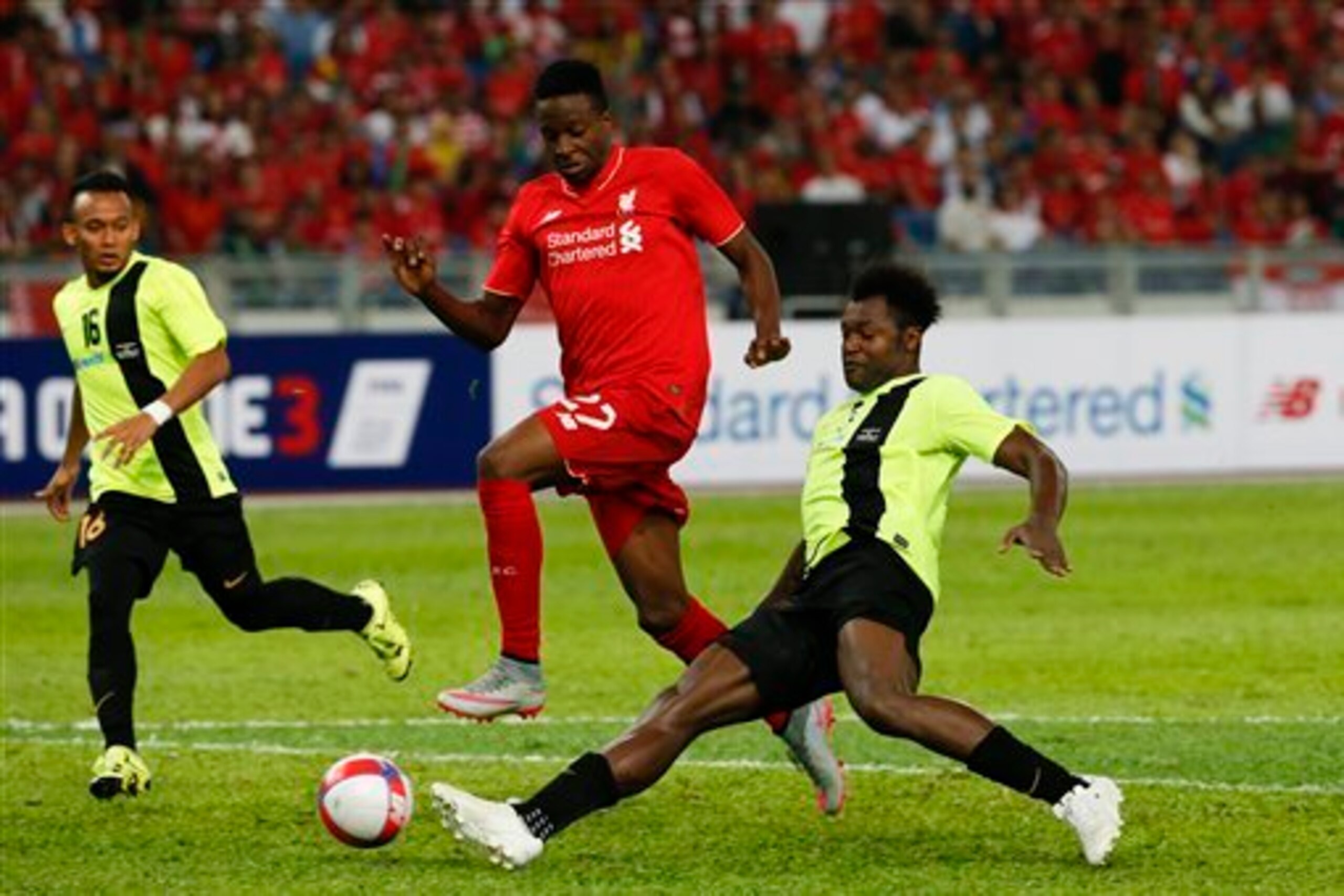
Off the ball he was excellent, closing down and harrying Spurs’ ball-playing centre-backs and giving them absolutely no time to lift their heads and pick a pass. He slowed down a little after 20 minutes but in patches showed great energy and a great willingness to do the dirty work.
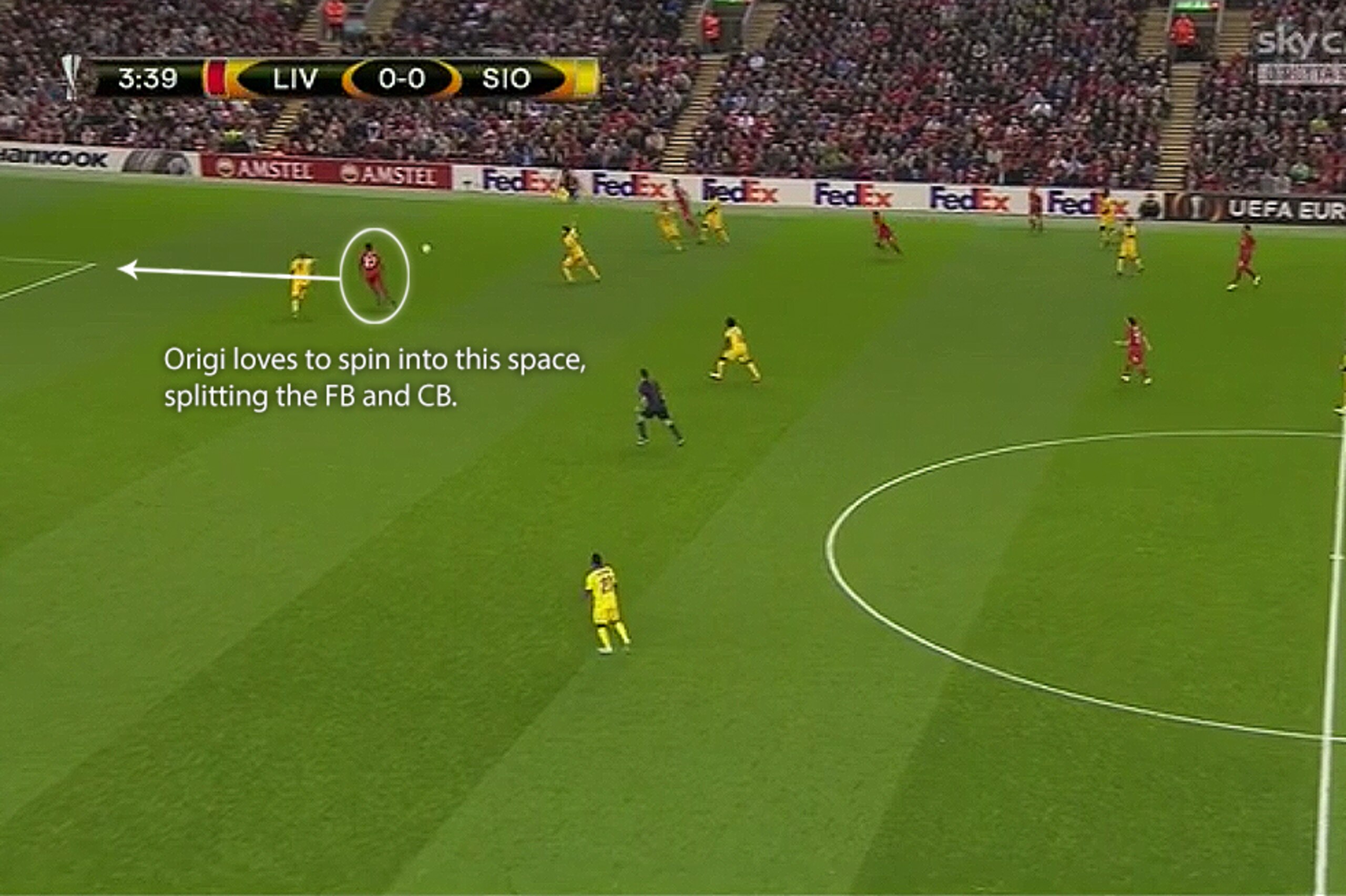
He hit the woodwork with an effort from a corner, coming within inches of giving the Reds the lead, and he consistently hit the channel with his runs, splitting Jan Vertonghen (CB) and Danny Rose (LB). Rose is quick, but Origi’s quicker; had the end product matched the approach play, Spurs would have been beaten soundly in those early stages.
Liverpool played the exact same 4-3-2-1 formation against Rubin Kazan on Thursday, with Origi again getting the nod up top. He didn’t score but did contribute to some good attacks. In fact, it was very much a similar story to the first game at White Hart Lane.
But with Benteke and Firmino making their returns against Rubin via the bench, what does the immediate future hold for Origi? Will he continue to be what is essentially fourth choice (with Ings out for the season), or can he climb the ladder and carve out a role for himself? Where on the pitch, and in what situation, would that be?
As A Lone Forward?
Origi has played as a lone forward in the past—in fact, he shot to prominence as a super-sub leading Belgium’s line at the 2014 FIFA World Cup—but there’s no doubt that there’s a lot of coaching to be done before he’ll be capable of holding down that position for Liverpool.
In the short term, with injuries plaguing Klopp’s team selections, it’s an OK option to have, and he’s started both games in that position and displayed some of the aforementioned strengths. Speed, energy, a willingness to lead the press and an innate ability to pick the right run and time it well make him an asset in any team...but he doesn’t boast the complete skill set most would ask of a lone striker.
His hold-up play, linking ability and core strength are lacking. He’s tall (6’1”), but not strong; he’s not the guy who can occupy two centre-backs (like Diego Milito could) and won’t be able to hold on to the ball under the intense pressure of double-marking.
Unless he works hard to develop the appropriate upper-body strength to be able to pull off the role—and there are hazards regarding that approach, as his speed could dramatically drop off as a result—it’s difficult to see a long-term future for Origi as a pure striker.
As A Winger?
Moving him wide, then, becomes the next port of call. Lille played him off the edge during his rather alarming dry run in front of goal last season, and he’s featured there sporadically for Belgium, too.
His pace makes him an obvious fit for a wide berth, with his abilities to time runs, breach the space in behind defences and split the centre-back and full-back remaining usable tools during the game. If he was left high up on the right, sitting on the defence’s shoulder and looking for a swift out-ball to collect and move forward with, he could become a deadly counter-attacking option.

The role wouldn’t be too dissimilar, in truth, to Sturridge’s back in 2013-14. That season’s play is famed for Luis Suarez’s remarkable hoovering up of chances and his interlinking with the Englishman, but Sturridge often sat touchline-wide on the right, collected a clearance and broke into space. Teams fell foul of it every week.
The issue, though, is that the Reds have yet to play with wingers during Klopp’s tenure. While no conclusions can be drawn on the basis of two games, Liverpool have so far started in a 4-3-2-1 in each fixture and, against Rubin, switched to a diamond for the final 15-20 minutes.
When everyone’s up and running, will there even be a spot up for grabs on the right? Klopp has always favoured the 4-2-3-1 in the past, but even Pep Guardiola deviated from his beloved 4-3-3 at Bayern Munich. Nothing is set in stone.
In a Two?
“Of course, it is an option,” Klopp told Liverpool’s official website this week when discussing the possibility of rolling out a two-man strike partnership full-time. “All good players can play together. It depends on how they work for the team.”
Origi is, in fact, the ideal player for a strike partnership. The relationship he could forge with compatriot Benteke—in a sort of big-man-small (quick)-man mould—is one that could tear the lid off defences in a variety of ways.
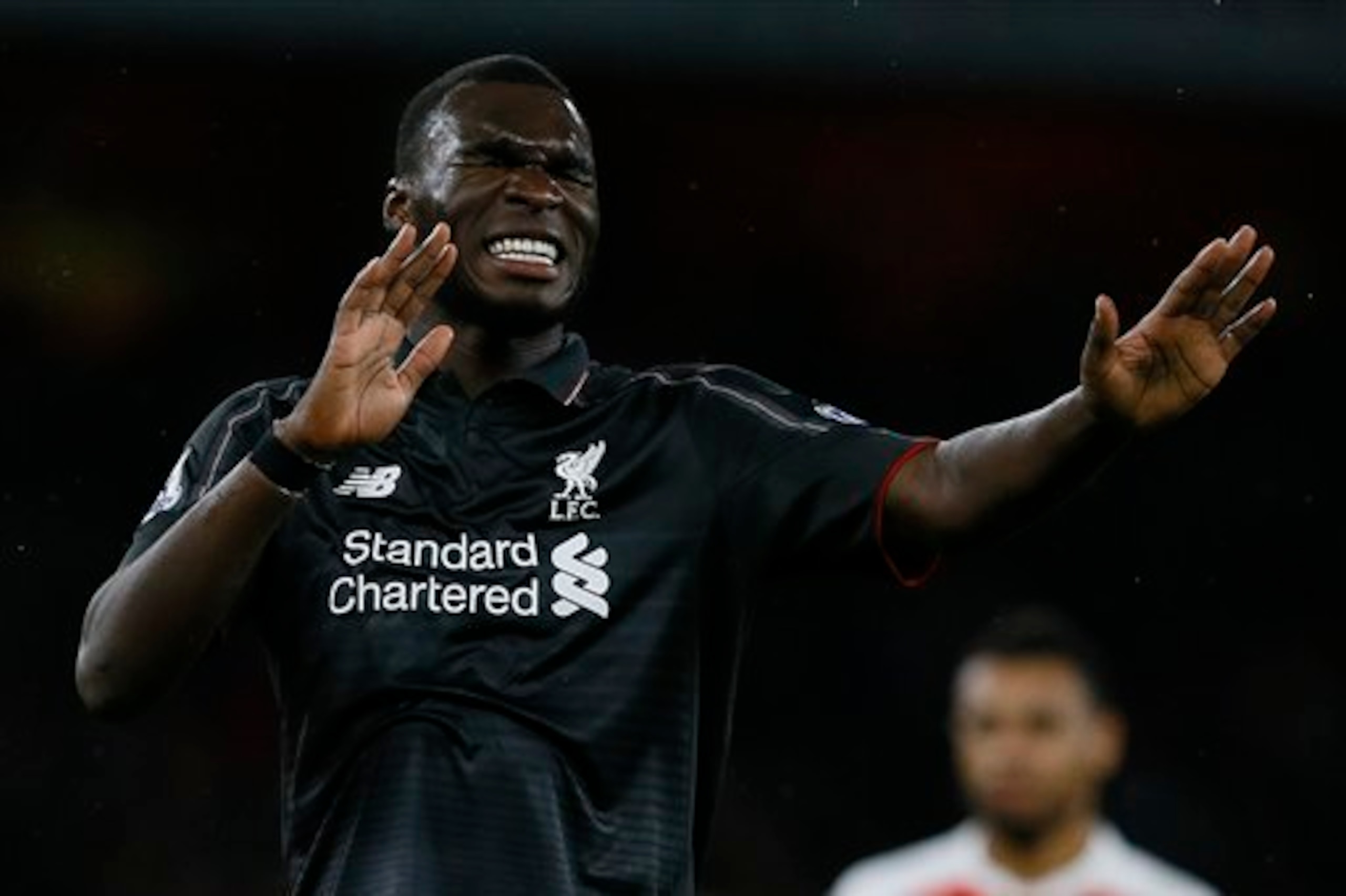
His natural game—the run-in-behind, off-the-shoulder style—melds beautifully with the strikers on the books. Benteke prefers to play flatter, dropping off the line like Wilfried Bony rather than springing the offside trap, while Roberto Firmino—a No. 10 who has been shifted forward on occasion—does that, too. Sturridge, an inherently clever player, can execute any role required.
That puts Origi in a strong position: He meshes well, tactically speaking, with all available partners. Klopp has stressed the importance of balance in the forward line, and Origi might just be the key. Benteke and Firmino could find themselves trying to occupy the same positions if paired together, but that wouldn’t be an issue if it was Origi-plus-one.
Projection
“I think in the short time, I’ve learnt a lot,” Origi admitted to the official site when asked about Klopp’s influence on the club so far. "It's a new system, and I’m very excited.”
It’s early days, but it looks as though Klopp has taken an interest in Origi and has committed to turning him into the player he believes he can become. Admitting he tried to sign him for Dortmund is a public show of confidence, and the reward for that has been committed, dedicated performances from the player.
If Klopp eventually settles on a 4-2-3-1, Origi could be in trouble and may have to settle for a rotational role on the right. He’d need to tuck back and defend, inviting yet more coaching to his raw skill set, but his pace over the top and his energy in the press would be invaluable.
If he settles on a two-man partnership up front—perhaps in a diamond?—he stands a great chance at grabbing minutes and would thrive playing off the likes of Sturridge, Benteke and Firmino.

.jpg?w=2560 "Rap: Lions, LaPorta End Contract Talks")

.jpg?w=2560 "Report: Baker May Miss Up to 6 Weeks")