

Is Pellegrini to Blame for Wilfried Bony's Slow Acclimatisation at Man City?
Manchester City’s Premier League season started off in incredible fashion, winning their first five games convincingly without conceding a single goal.
The title race was declared over; with Chelsea, Liverpool and Arsenal floundering, in addition to Manchester United producing Jekyll-and-Hyde performances, many fans sounded the death knell on the chase and crowned the Citizens champions.
But to continue in such dominant fashion would have been simply unsustainable, and City’s performances dipped a little.
TOP NEWS

Sullivan, Hall Lead USMNT to Big Win 💥
.jpg?w=2560 "Titans Giants Football")
OBJ Calls Out Giants After Release

Pic of LeBron's Helicopter Commute 🚁
A home loss in the UEFA Champions League to Juventus signified the first crack in the armour, and from there—while City have continued to win games and look the best side in the Premier League—they’ve been battling a weekly series of obstacles to maintain excellent form.
Vincent Kompany’s injury, sustained against Juve, was the first card to fall. Removing the defensive linchpin destabilised the side temporarily and Eliaquim Mangala—who had started 2015-16 in stunning form—struggled to acclimatise to new partner, Nicolas Otamendi.

A number of tactical setbacks followed—be it Yaya Toure straining a hamstring, Aleksandar Kolarov’s defensive inability being revealed once again, or Manuel Pellegrini’s random decision to play Willy Caballero in goal ahead of Joe Hart against Tottenham Hotspur—but all were overcome. Whatever the road bump, City’s attack would score enough goals to see them to victory.
The 6-1 win over Newcastle United was impressive, but it still flashed a glimpse of City’s uncertainty at the back. The Magpies played pretty well for half an hour and converted the opening goal via Aleksandar Mitrovic. Sergio Aguero responded with five goals, stepping up as he so often has.
Then the nightmare scenario occurred: During the international break, Silva and Aguero sustained injuries that would rule them out for four and eight weeks, respectively. It’s the sort of double blow that has crippled the Citizens in the past; in recent seasons, it may just have ruled them out of the title race completely.
No David Silva
Ask Manchester City fans who their side’s best player is, and many will answer with the name David Silva. The Spaniard has played at a consistently world-class level for most of the last five years, and for some supporters, a Silva-less City is a more fearful concept than one without Aguero.
Pellegrini deserves no medals for realising this rather obvious fact, but he does warrant some credit for identifying a replacement. Kevin De Bruyne, signed late in August for a ridiculous fee of around £55 million, has (re)taken to the Premier League like a duck to water in a blue jersey.
The Belgian, once on the books of Chelsea, was deemed unworthy of a regular spot in Jose Mourinho’s team just over 18 months ago, leading to his sale to Wolfsburg. From there, the 24-year-old has flourished, playing a starring role for his national side and having a big say in Die Wolfe’s remarkable second-place finish in the Bundesliga last season.
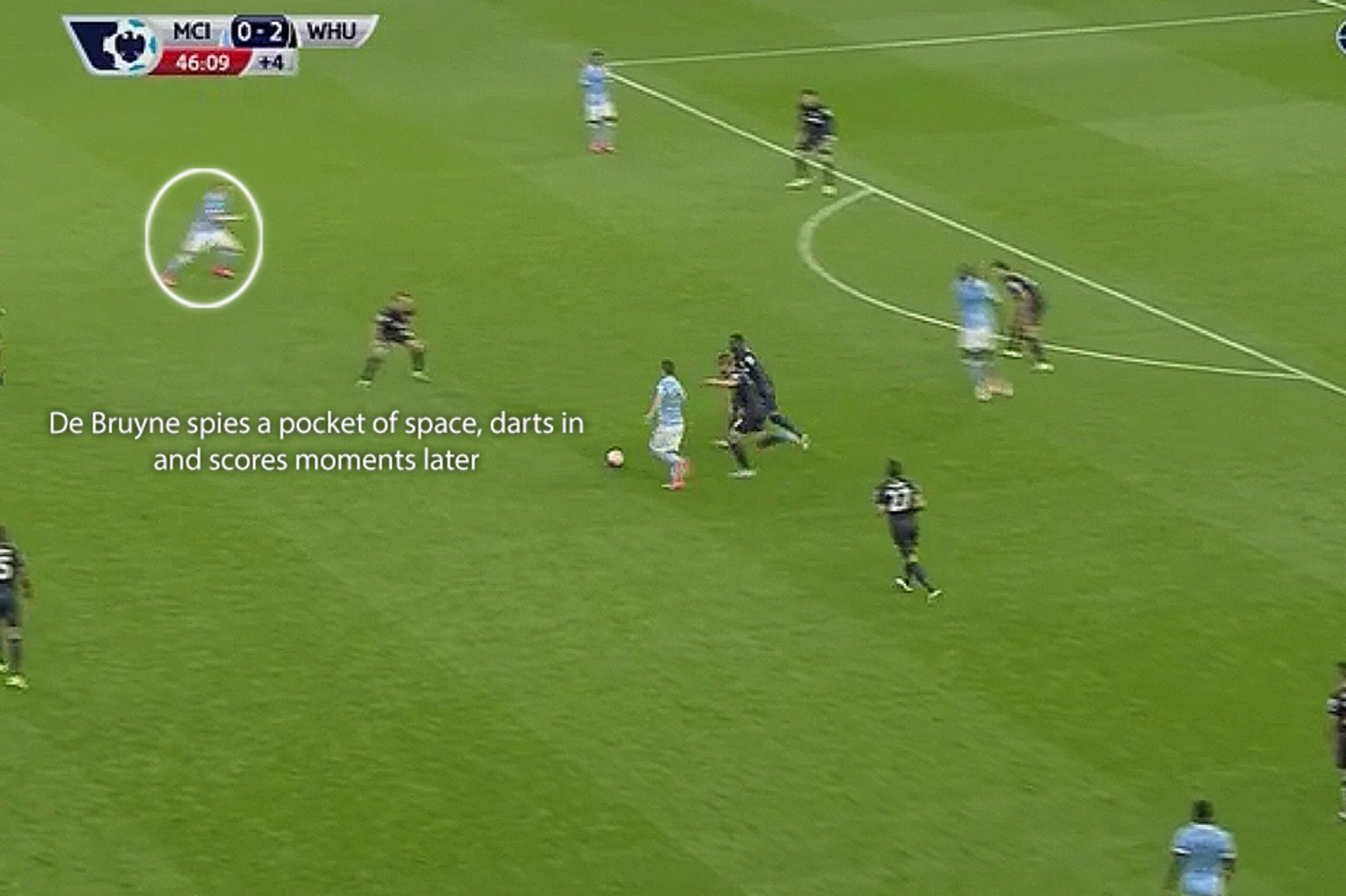
Given the freedom of the pitch, loosely from the No. 10 position but drifting wide, he’s emerged as one of the world’s best space-manipulating playmakers.
Dieter Hecking allowed him to drift wide and file into space laterally, finding pockets to occupy and utilise. His outrageous range of passing, in addition to his ability to make decisions quickly and move the ball on within a second of him receiving it, make him a threat you can’t afford to ignore.
This world-class playmaker is the post-Silva antidote City have needed for three-plus years. When the Spaniard gets hurt, the team have tended to freeze in the final third; they struggle to break down low defensive blocks and lack something special just outside the box—be it a clever flick, an unthought-of cross or a slick reverse pass to release a runner.
De Bruyne can deputise, and with Silva out for just under a month, City fans aren’t anywhere close to as restless as they would have been last season.
Their new Belgian No. 17 picks up the slack then adds a goalscoring presence Silva can’t actually provide—the clutch, last-minute winner against Sevilla (his fifth goal for the club already) stands proof of that.
He’s not a like-for-like replacement, but he’s as close to it as possible. City can play the same way with De Bruyne in the XI in place of Silva; they don’t have to change their approach or system to accommodate him.
No Sergio Aguero
But the same can’t be said for Wilfried Bony, deputising up front for the injured Aguero. The £25 million man has had an unfortunately long list of setbacks during his short time with the club so far—ranging from Africa Cup of Nations duty to the contraction of malaria—but on the pitch, there are tactical teething issues that refuse to go away.
Bony is an entirely different player to Aguero; he stands a hulking, strong figure who thrives when dropping off the line, building play and interlinking with his midfielders.
At Swansea City, his interactions with Gylfi Sigurdsson would carve opponents apart, and he’s shown a lust for playing with a partner—be it closely positioned from the No. 10 role, or up front as a two.
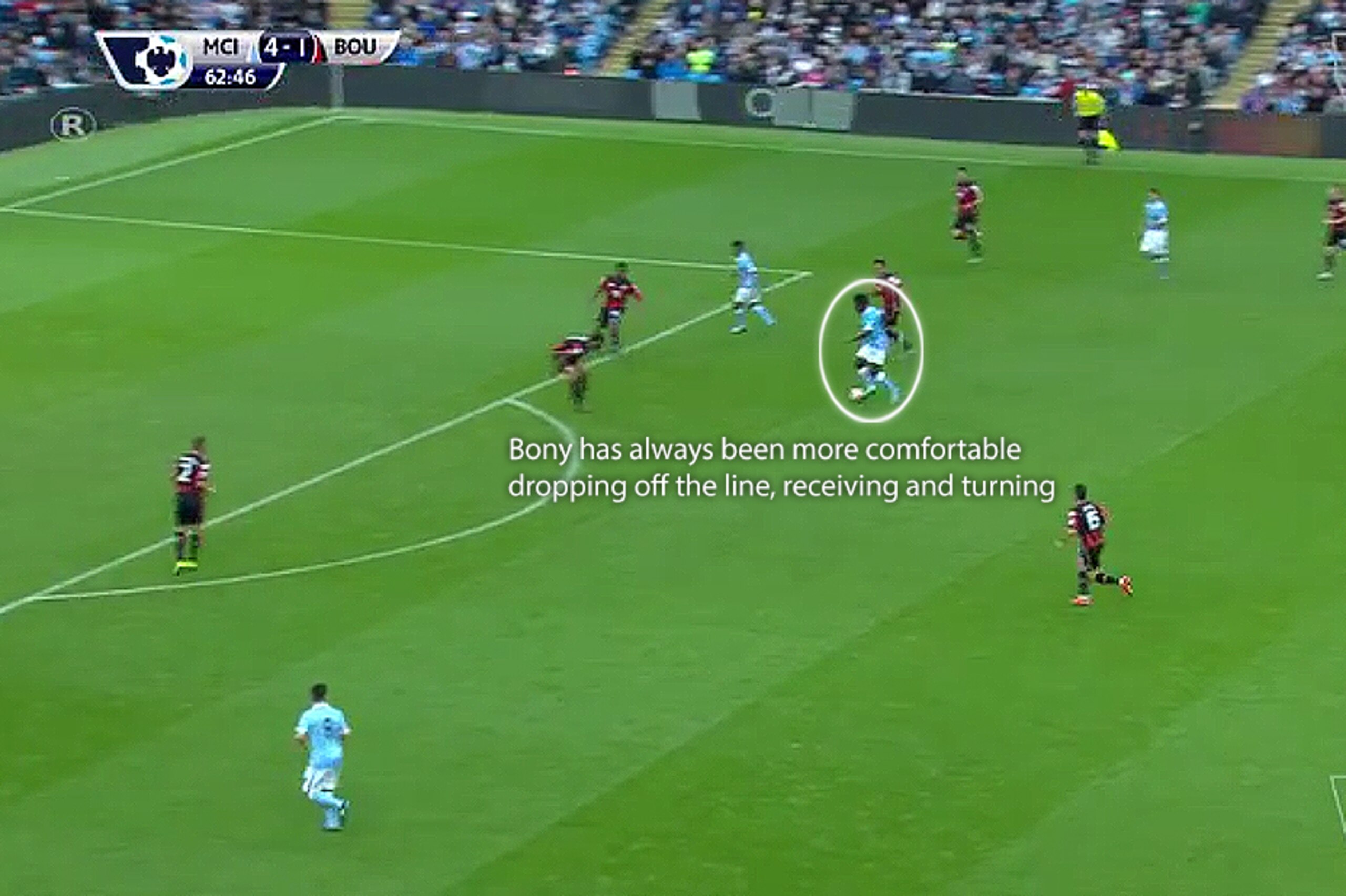
Against Bournemouth, he played well, and that was due to Pellegrini moving Raheem Sterling inside to the No. 10 position and asking them to feed off one another. Bony would drop in, Sterling would make a run in behind, and the Cherries’ defence caved in at the centre due to the ferocious combination of pace, power and movement on display.
Against Sevilla, they tried to replicate it, naming an unchanged XI and pursuing with the same plan. City won 2-1 and Bony forced the equaliser, but the scoreline suggests a success that, frankly, did not occur for Bony and Co. on the pitch.
The stretched nature of the game saw City fall into a 4-4-2-ish shape—fine against Bournemouth, a genuine minnow, but not against a team who have won two UEFA Europa Leagues in a row.
Many of the hosts’ better moves were constructed on the counter-attack, moving the ball forward quickly via Jesus Navas and De Bruyne, meaning Bony became something of an afterthought.
City’s best move of the game, aside from the goal, was when Yaya Toure played Sterling in on the run straight after dispossessing his man, with De Bruyne’s eventual shot dragged wide. The span of the move was less than 10 seconds, and Bony didn’t touch the ball once.
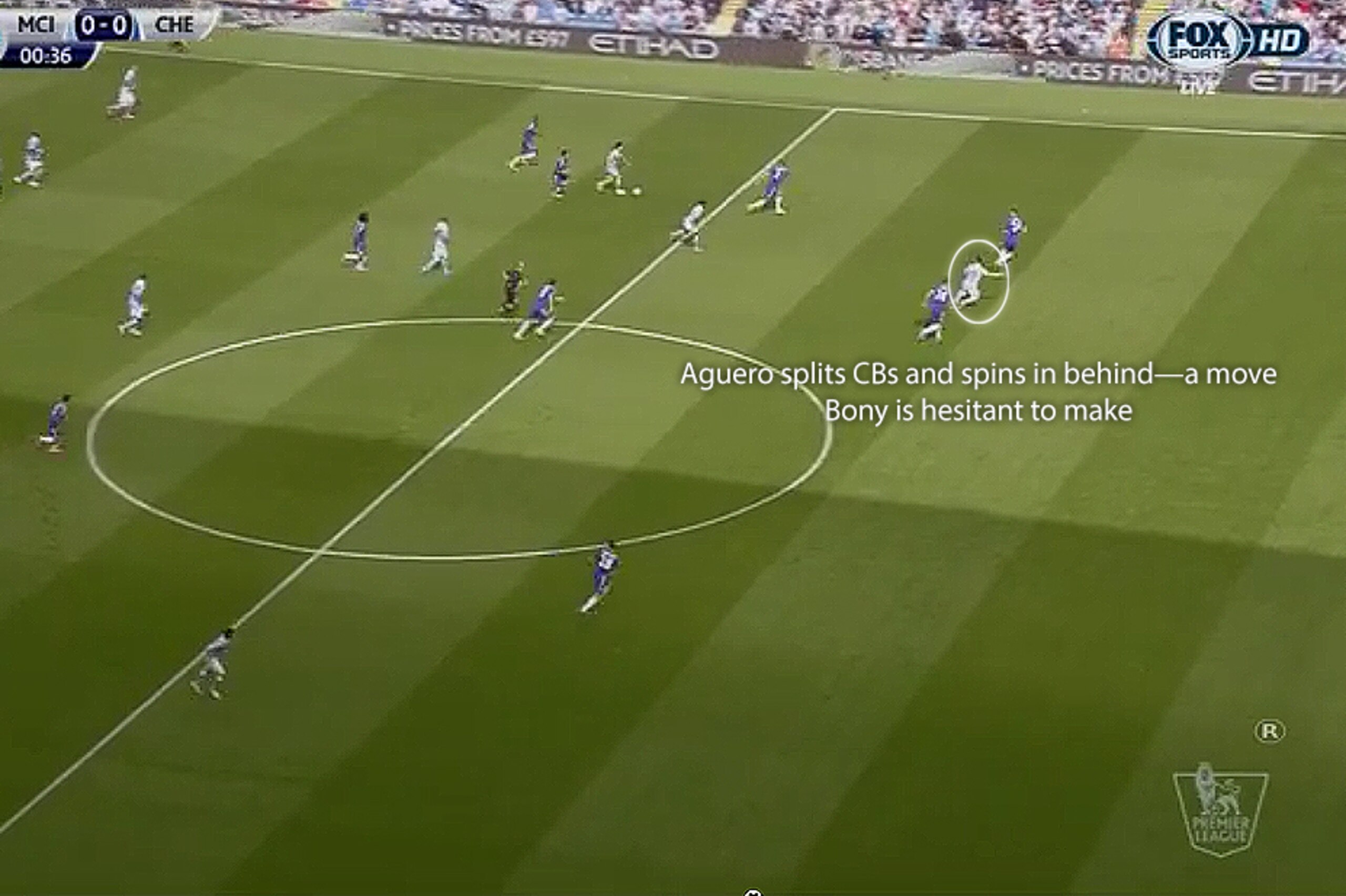
Bony, 26, landed in B/R’s losers column after the game due to the minimal impact he had, but it wasn’t all his fault. De Bruyne’s been a seamless addition to the side because he’s naturally attuned to how City play, and they don’t have to recalibrate in order to fit him in, but with Bony in the side, the attack must change.
Bony doesn’t thrive searing forward on the counter, and he doesn’t wrap his runs around the centre-backs and dart in behind like Aguero does. What he does is very much established—he’s the same player he was back at Vitesse Arnhem before City even approached him—but Pellegrini failed to fit him into the plan on Wednesday night.
The Ivorian drew the ire on the fans on social media after the Sevilla game despite the eventual victory, attracting worries over how he meshes with this side.
His acclimatisation issues are in stark contrast to De Bryune’s seamless integration, and it’s on Pellegrini to remould the attacking approach when Bony is in the XI, not Aguero.

.jpg?w=2560 "Rap: Lions, LaPorta End Contract Talks")

.jpg?w=2560 "Report: Baker May Miss Up to 6 Weeks")