3 Changes Jurgen Klopp Must Make at Liverpool Before Transfer Window Opens
Jurgen Klopp's arrival as Liverpool manager, eight games into the 2015/16 Premier League season, marked the beginning an awkward period for the German.
Inheriting an injury-hit squad from Brendan Rodgers, and with no means of reinforcement in terms of the transfer market, Klopp has just over two months to mould his current selection into a cohesive, successful outfit—and he is seemingly happy to do so.
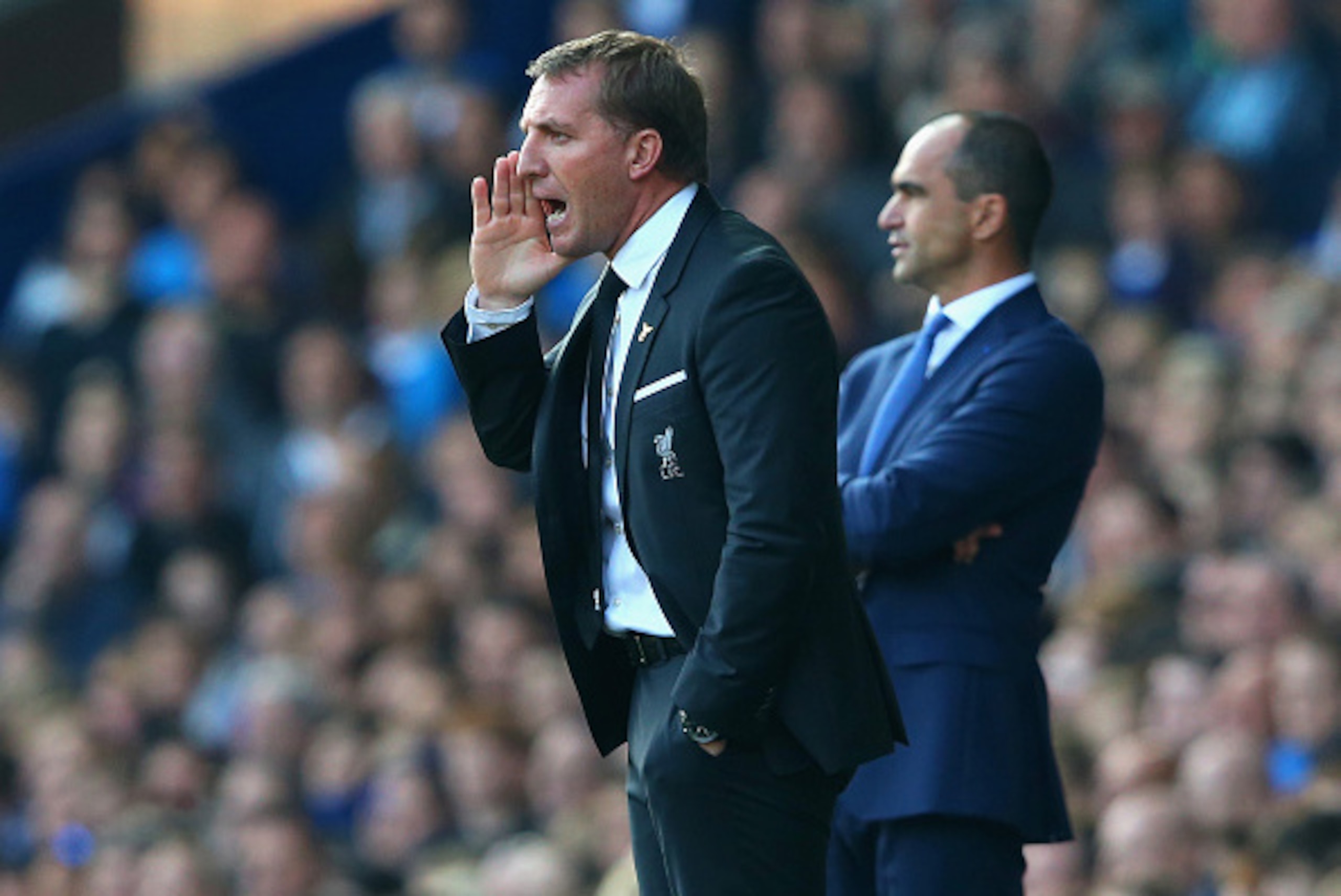
"Whether there is money to spend in January or not doesn’t interest me," he told German publication Bild (h/t the Guardian) earlier in October.


"We are only in October and I don’t even know how many games we’ve got until the transfer window opens and therefore we will have a look at the players at our disposal first."

The 48-year-old has already presented a refreshing approach to the managerial role on Merseyside, with his predecessor, Brendan Rodgers, repeatedly lamenting the limitations on his squad, such as blatantly criticising the players at his disposal shortly before his dismissal, telling Richard Jolly of the Guardian, "If you give me the tools, I'll do the work."
Instead, Klopp is solely focusing on what he is currently able to work with, as his approach to Liverpool's injury crisis attests.
"You do not think about the players who are not available at this moment because there is no chance to get lucky if you do this all of the time," he told James Pearce of the Liverpool Echo.
Nevertheless, Klopp has his work cut out for him to transform Liverpool into a competitive top-level side before the transfer window opens in January, with three changes taking precedence.

1. Implement the 4-2-3-1
One of the key pitfalls of Rodgers' reign was his approach to the transfer market, with a well-documented power struggle involving the Ulsterman and the other members of Liverpool's storied transfer committee underpinning their many recruitment failures, as Pearce revealed for the Echo days after his sacking.
"[Rodgers] was regularly frustrated by a process which meant he had to convince others on the committee that a target met the club’s requirements and was worth pursuing," he explained, before continuing to outline the former Reds manager's many failures:
"There were times when he was out-voted and blocked from signing his first pick. He wanted Ashley Williams, but got Mamadou Sakho. He wanted Ryan Bertrand, but got Alberto Moreno.
On other occasions he was left to pick from a shortlist which didn’t include his initial targets. The best example of that was the summer of 2014 when he was given a choice between Mario Balotelli and Samuel Eto’o at the end of the window.
[...]
Rodgers was the driving force behind signing the likes of Fabio Borini, Joe Allen, Adam Lallana, Dejan Lovren, Rickie Lambert, Danny Ings, James Milner and Christian Benteke, while the other members of the committee championed the suitability of players such as Daniel Sturridge, Philippe Coutinho, Sakho, Emre Can, Moreno, Luis Alberto, Iago Aspas, Lazar Markovic, Divock Origi and Roberto Firmino.
"
This confused recruitment structure saw Liverpool overhaul their squad every summer and, with seemingly no forward planning, various targets were thrust upon an increasingly frustrated Rodgers, who was left to piece together a disjointed squad.
What was most remarkable about this system was that players were seemingly signed with no prior planning as to where they would fit into Rodgers' thinking tactically—arguably a key factor in Liverpool fielding a variety of formations throughout his tenure, including 4-2-3-1, 4-3-3, 3-4-2-1 and 4-4-2.
Klopp found much of his success at Borussia Dortmund with a compact, hardworking 4-2-3-1, and with no opportunity to strengthen before January, he should look to implement this system and then build on it.
Klopp's outlook for the first game of Liverpool career, Saturday's 0-0 draw away to Tottenham Hotspur, saw him field a variation on the 4-2-3-1, with James Milner's shifting role—from central midfield in the defensive phase and on the right flank when on the counter—prompting a fluid switch between that and a 4-3-2-1.
The relative success of this system at White Hart Lane underlines its suiting to the players currently available to him, with those currently on the sidelines also likely to fit in.
Continue to fine-tune this layout, and Klopp can then develop this with any necessary additions in January and beyond—not the other way around.
2. Integrate Roberto Firmino
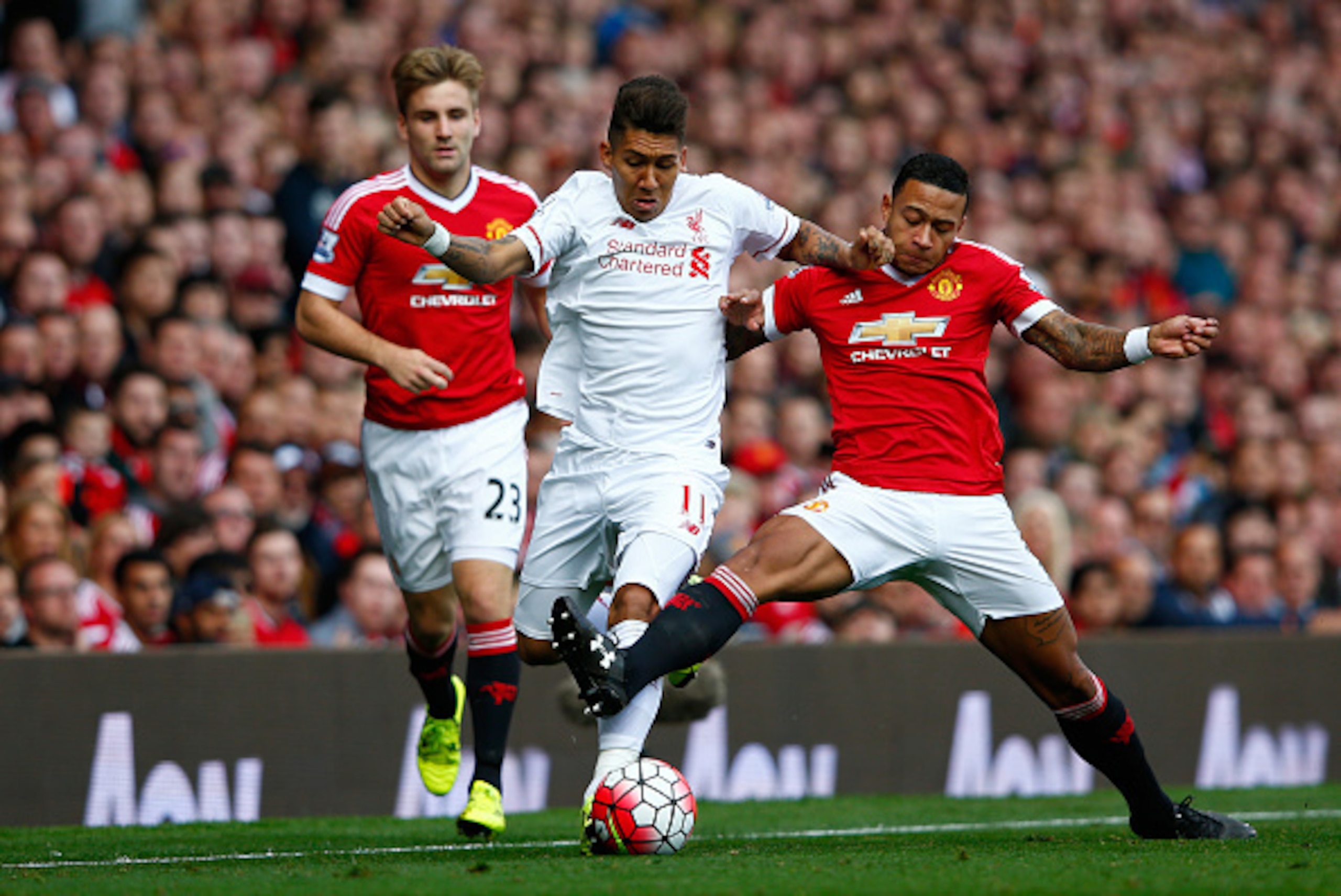
Roberto Firmino is a player who Klopp will know well from their time in the Bundesliga—Firmino with 1899 Hoffenheim, and Klopp with Dortmund—and the German's arrival could prompt an upturn in fortunes for a summer signing who has endured a tough start to life on Merseyside.

Firmino joined in a deal worth £29 million in June, and was widely lauded by Liverpool supporters as the marquee signing that could compensate for the inevitable loss of Raheem Sterling, who joined Manchester City for £49 million the following month.
This was a Brazil international, and a proven top-level forward with experience in Europe and, perhaps most importantly, a phenomenal work rate to back up his attacking prowess.
Under Rodgers, however, Firmino was undersold. Regularly played out of position and a prime target for substitution when change was required, the South American's career trajectory looked to be heading the same way as the previous summer's big-money attacking signing, Lazar Markovic.
But the arrival of Klopp could see Firmino establish himself at Liverpool, and integrating the 24-year-old should be made a priority by the manager ahead of the transfer window.
Lutz Pfannenstiel, head of international relations and scouting at Hoffenheim, highlighted the effect Klopp's arrival could have on Firmino shortly ahead of the German's appointment, writing for the Mirror:
"Speed is a key element in Klopp’s style on the pitch as well—which is why the pacy Firmino could well become his new fulcrum at Anfield.
The Brazilian learned the Kloppist ideals of chasing, pressing, defending on the opposition's box and speedy counter-attacking under [Markus] Gisdol at Hoffenheim.
So, I think Firmino will not need long to adjust to Klopp's system and that could make the young Brazilian into the ace up his sleeve, once he returns from injury.
"
Pfannenstiel also notes how Klopp reportedly "tried to sign [Firmino] for Dortmund," and suggests that he could play a similar role to that of Marco Reus at the Westfalenstadion.
On returning from a back injury in the coming weeks, Firmino can offer Klopp an invaluable option in the 4-2-3-1—able to play all across the forward line, including as an auxiliary striker—and his intensity, determination, pace and work rate makes integrating him into the starting lineup a key move.

3. Assess Youth Ranks
Firmino's injury is not the only layoff Klopp has been forced to contend with in the first weeks of his Anfield tenure, with Christian Benteke (thigh), Daniel Sturridge (knee), Jordan Henderson (foot), Jon Flanagan (knee), Danny Ings (ACL) and Joe Gomez (ACL) all on the sidelines for his first game in charge—many face longer spells in the treatment room, with both Ings and Gomez expected to miss the rest of the season.
This has left Klopp's squad depleted, and with no opportunity to strengthen until January, he will be left to work with the players at his disposal.
However, to avoid unnecessary short-term fixes in the transfer window, Klopp would be wise to assess his youth ranks to plug the gaps, and speaking to Paul Wilson of the Guardian ahead of the trip to White Hart Lane, he suggested this would be the case during his time at the club:
"When I am managing a club, I think each young player should smile, because the door is wide open for him. He has the chance to do anything.
I don’t care so much about experience, it can be important, but it is not the main thing. The best players in the world today are around already, you can see them.
What I enjoy more is trying to identify the best players of tomorrow, who has the capacity to improve himself most.
"
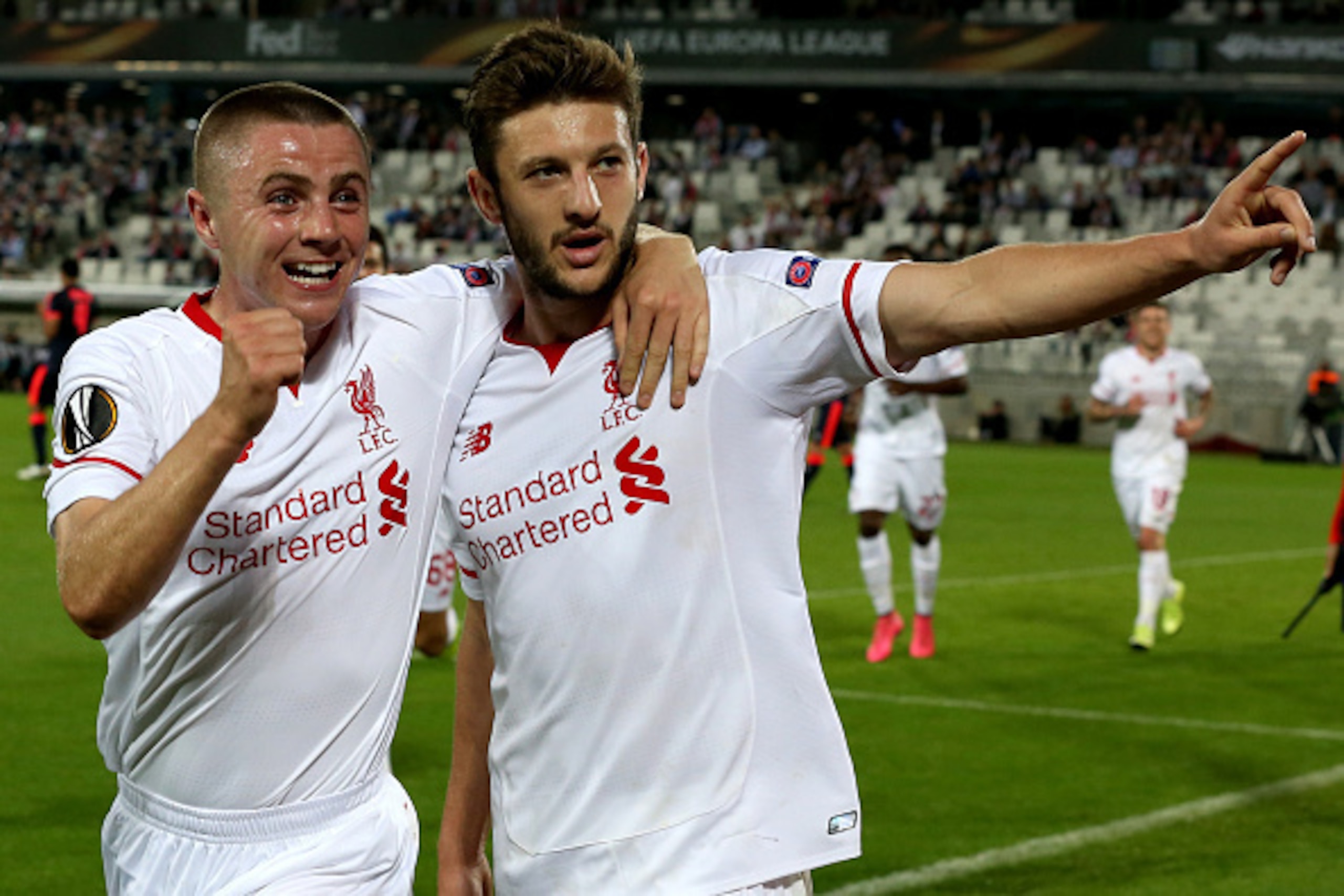
Klopp deployed Divock Origi (20) as his lone centre-forward against Spurs, in the absence of Ings, Sturridge and Benteke, and also included academy stars Connor Randall (19), Joao Carlos Teixeira (22) and Jerome Sinclair (19) on the substitutes' bench, alongside first-team regular Jordon Ibe (19).
Elsewhere in his youth-team ranks, Jordan Rossiter (18), Cameron Brannagan (19), Pedro Chirivella (18) and Alex O'Hanlon (19) could all make the step up to the first team in order to flesh out Klopp's squad.
The German could also pursue the possibility of recalling a host of his young loanees, replicating the move made by Rodgers in ending Ibe's season-long loan with Derby County in January—the winger went on to make 12 appearances in the Premier League in 2014/15.

Sheyi Ojo (18), on loan with Wolves, is the prime candidate with this in mind, while fellow forwards Sergi Canos (18) and Ryan Kent (18), currently with Brentford and Coventry City respectively, would also complement Klopp's squad.
Ideally, each would remain with their temporary clubs unless a regular starting role is guaranteed at Liverpool, but utilising the talents currently on the club's books would be preferable to wasteful spending.
Even without a significant outlay in January, Klopp is clearly confident he can coax performances out of his squad.
The German will preside over a host of changes during his time on Merseyside, and many can be implemented without another major spend in the transfer market.
Statistics via WhoScored.com.
.jpg?w=2560 "Colts Football")

.jpg?w=2560 "Malik Beasley Negotiating Plea Deal (AP)")
.jpg?w=2560 "NFL House in Paris Closes for Protests (AP)")