
Bayern Munich's Best All-German Bundesliga XI vs. Best Overseas XI
Bayern Munich are one of world football's most celebrated and decorated clubs and far and away have been Germany's most successful team. The Bavarian giants have always been proud to supply the backbone of the Germany national team during its most successful eras, especially since greats such as Franz Beckenbauer and Gerd Muller featured in the club and West Germany in the 1960s and 1970s.
Yet as of late, things have changed. Germany became World Cup winners in 2014, but Bayern have since sold winner Toni Kroos and now-captain Bastian Schweinsteiger. And although they have brought in some young Germans, the Bavarians have sought a more international character in recent years: Their highest-profile signings in the last two summers have been a Pole (Robert Lewandowski), a Brazilian (Douglas Costa) and a Chilean (Arturo Vidal).
With Bayern appearing to change their approach, at least in the short term, B/R takes a look at their history, selecting their best German and foreign XIs and weighing them against one another. Players selected are all at least 30 years of age, having had enough time in their careers to make an impression and build a reputation.
Click "Begin Slideshow" to see the side-by-side comparison of goalkeepers, defenders, midfielders and forwards through the lens of a 4-3-3 formation.
Goalkeepers
1 of 4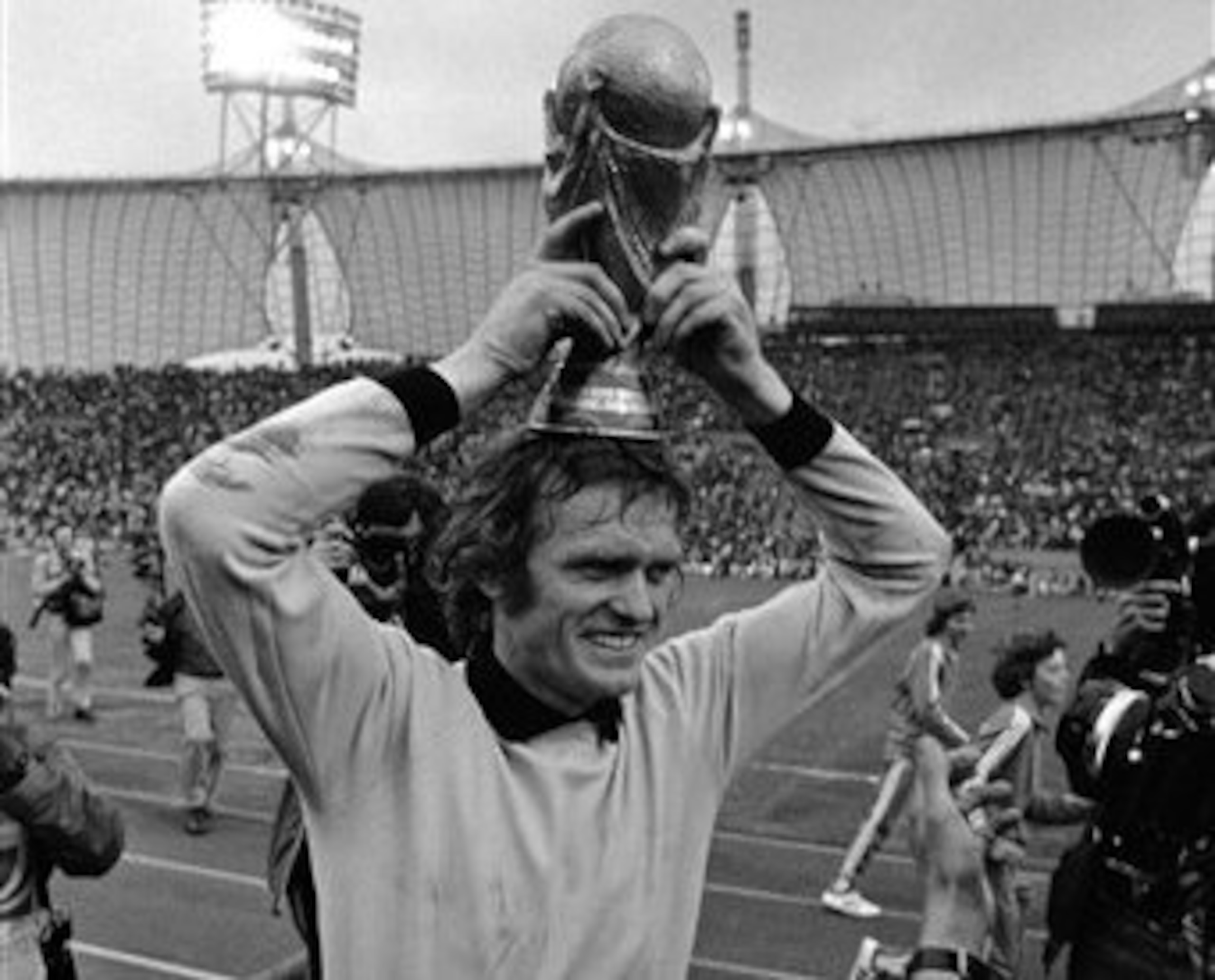
German: Sepp Maier
Manuel Neuer may one day surpass Sepp Maier on the list of Bayern's best goalkeepers, but for now, the three-time European Cup winner stands in a league of his own. Maier's three titles came in consecutive seasons between 1974 and 1976, during which time he also won the World Cup with Germany. He was a four-time Bundesliga and DFB-Pokal winner as well and won Euro 1972 with his national team.
Individually, Maier was also named German Footballer of the Year on three occasions and Germany's goalkeeper of the century.
Overseas: Jean-Marie Pfaff
The pickings are slim for non-German Bayern goalkeepers, but the winner is a worthy one. Jean-Marie Pfaff represented the Bavarian giants over 150 times from 1982 to 1988, during which time he won three Bundesliga and two DFB-Pokal titles. He was named by Pele as one of the top 125 living footballers in 2004 and is regarded as a footballing hero of Belgium.
Verdict: Maier
Although Pfaff had a great career with Bayern, Maier was the club's starting goalkeeper throughout the best spell in the club's history. He benefited from having top-class teammates to help propel the team to victory but was no passenger and had class that was absolutely worthy of the team. Maier is deservedly a legend, not only of Bayern and Germany but also of world football.
Defenders
2 of 4
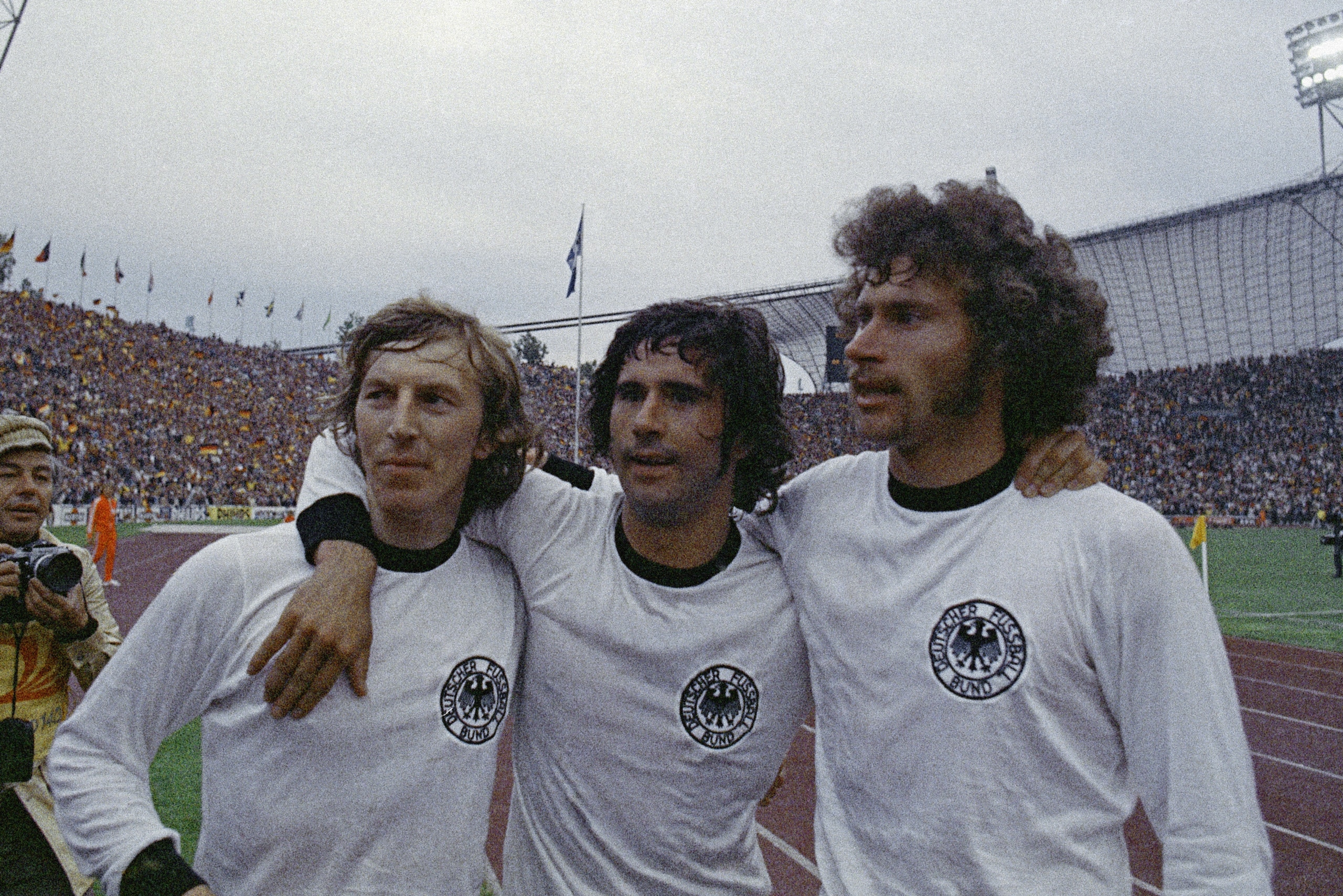
German: Philipp Lahm, Jurgen Kohler, Franz Beckenbauer and Paul Breitner.
Germany have had some outstanding defensive players in their history, and the vast majority have played for Bayern at some point or another.
Paul Breitner and Franz Beckenbauer were dynamic defenders also capable of playing in midfield long before the midfield-defender hybrid became en vogue, and they were mainstays of the national team during its period of dominance in the early 1970s. Breitner left Bayern after playing a part in the first of the three European Cups Beckenbauer and Maier won, missing out on a golden spell in the club's history. However, he was crucial in helping Bayern become the powerhouse that they are today.
Jurgen Kohler came at a very different time and is often overlooked in the club's history but is certainly one of the best players to turn out for the Roten. Although Klaus Augenthaler and Hans-Georg Schwarzenbeck were more longstanding servants of the club, Kohler, who played for Bayern from 1989 to 1991, is widely regarded as one of the best defenders ever to play the game.
He won the Bundesliga with Bayern and Borussia Dortmund, the Champions League with Dortmund, as well as Serie A, the Coppa Italia and the UEFA Cup with Juventus. And in his 105 caps for Germany, he also won the World Cup and European Championship.
Finally, Philipp Lahm makes the grade at right-back. The diminutive defender bears much resemblance to Breitner in terms of his versatility, but he is also one of the best captains in the history of German football. He's captained his club and country to victories in the Champions League and World Cup finals and is well on his way to an eighth Bundesliga title.
Overseas: Willy Sagnol, Lucio, Samuel Kuffour and Bixente Lizarazu.
For much of Bayern's history, their defense has been composed primarily of German players. Things have changed since the mid-1990s, and during their brilliant spell around the turn of the millennium, their back line consisted primarily of foreign players.
France internationals Willy Sagnol and Bixente Lizarazu were simply brilliant wing-backs for the Bavarians from 2000 to 2009 and 1997 to 2004 respectively. The latter was unlucky not to win the Champions League in 1999, but the pair won the trophy together two years later.
Verdict: Lahm, Kohler, Beckenbauer and Breitner.
Bayern's German contingent makes a clean sweep of the back five. Like Maier in goal, Beckenbauer and Breitner served consistently during German football's most dominant era. For all his accolades, Kohler edges Lucio, who, like Michael Ballack, was somewhat unfortunate to serve at a poor time in Bayern's club history. And although Lizarazu would give Lahm more competition, Sagnol lacked the illustrious career his German counterpart has enjoyed.
Midfielders
3 of 4
German: Lothar Matthaus, Uli Hoeness and Bastian Schweinsteiger.
As brilliant as Bayern's defense has been, historically, their midfield has always had pure class. Beckenbauer was a mainstay in the center of the park before redefining the role of the central defender. With the Kaiser at the back in Bayern's all-time German lineup, Lothar Matthaus takes on the role of midfield general.
The most-capped player for Germany, Matthaus is regarded by many as one of the top two or three midfielders to ever play the game. He's a seven-time Bundesliga and three-time DFB-Pokal winner, a two-time UEFA Cup winner and reached the World Cup final twice before winning the trophy in 1990.
Alongside Matthaus in defensive midfield is Bastian Schweinsteiger, who in the last few years has finally proved himself to be in the category of legends ahead of nearly men such as Michael Ballack.
The key difference between Ballack and Schweinsteiger is that the latter won the Champions League and put in a heroic performance in a winning effort in the World Cup final, triumphs that validated his successes beyond the seven domestic doubles and eight Bundesliga titles he earned in his illustrious career at Bayern. And still 31 years of age, his story is far from over.
The third midfield position in Bayern's German XI, a more advanced one, belongs to Uli Hoeness.
Although he stood decidedly in the shadow of greats such as Gerd Muller and Karl-Heinz Rummenigge, the attacking midfielder was a key member of the Bayern team during their three European Cup victories in the mid-1970s and a member of the Germany teams that won the 1972 European Championship and 1974 World Cup. He was unfortunate to have what could have been an even greater career cut short by a knee injury that saw him retire at just 27 years of age.
Overseas: Ze Roberto, Mark van Bommel and Hasan Salihamidzic.
As with the defenders, Bayern's midfield has been predominantly German for most of their history, but after the turn of the 21st century, their structure changed. Ze Roberto signed in 2002 after reaching the Champions League final with Bayer Leverkusen and spent four years in Munich before returning to Brazil, only to return to Bayern after a year for two more seasons.
A two-time Copa America and Confederations Cup winner for country, the Brazilian won four doubles at Bayern, as well as the Champions League with Real Madrid. He was a fan favorite in Munich for not only his flair but also his professionalism, which saw him retain his fitness and play at a high level well into his 30s.
Also in midfield is Mark van Bommel, Bayern's first non-German captain. Like Ze Roberto, the Dutchman had a winning mentality and was well-loved by fans for his passion for the game. And although known for his crunching tackles, Van Bommel also proved on more than one occasion that he was capable of scoring the odd goal in key moments. Over the course of his career, he won a combined eight top-division titles in the Netherlands, Spain, Germany and Italy, as well as the Champions League and three league cups.
Hasan Salihamidzic rounds off the Bayern foreign-midfield trio, the former Bosnia and Herzegovina international having served the German giants from 1998 to 2007. He just missed out on being a part of Bayern's brilliant modern generation but served the club throughout arguably its second-best spell in history, winning six Bundesliga and four DFB-Pokal titles, as well as the 2000-01 Champions League.
Verdict: Matthaus, Hoeness and Schweinsteiger.
Again, it's another clean sweep for the Germans. Matthaus is one of the greatest midfielders to have ever played. Hoeness was hugely accomplished, even in a short period of time. Schweinsteiger's aggregate success for club and country over the course of his career leaves his competitors in his wake.


Forwards
4 of 4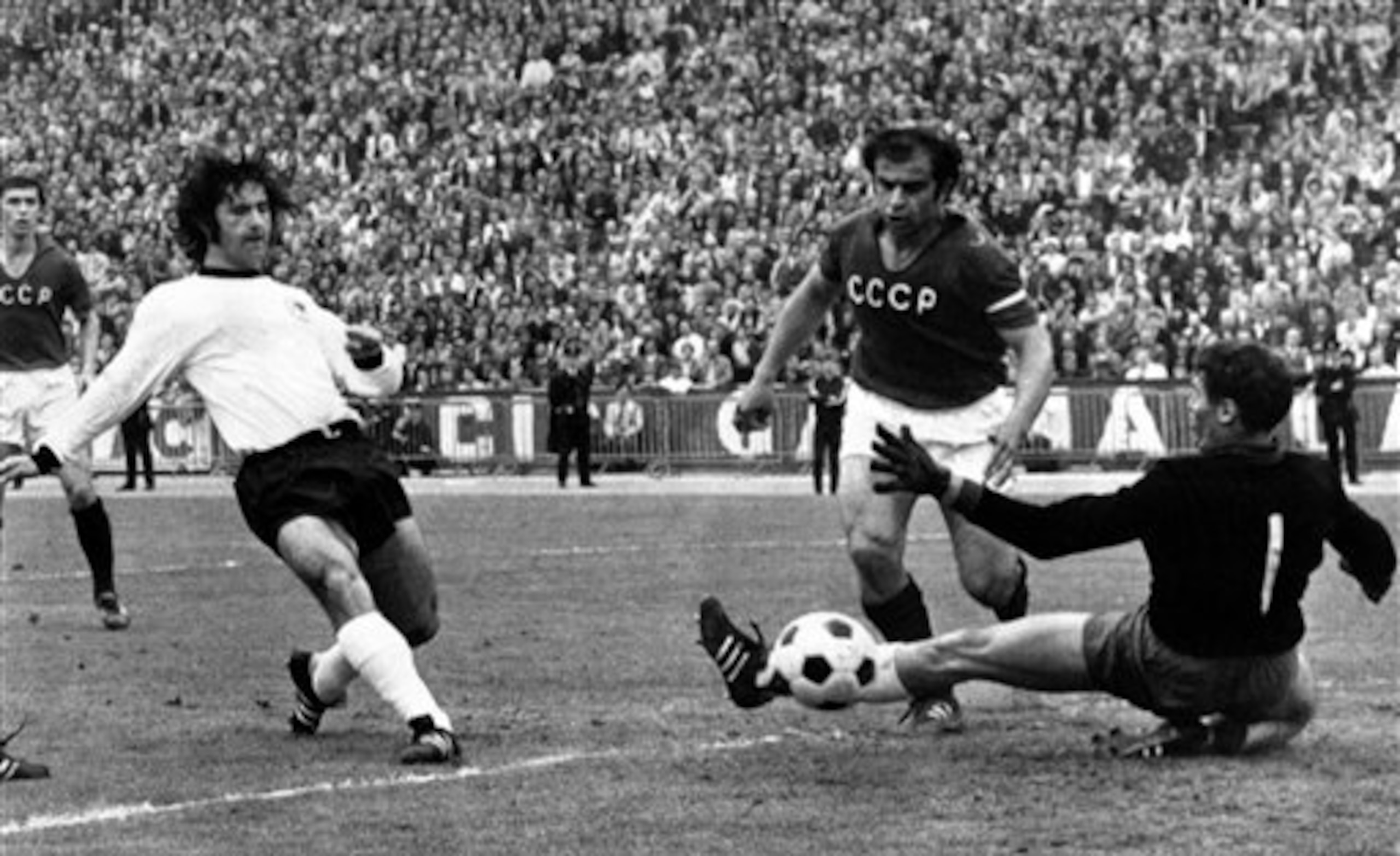
German: Gerd Muller, Karl-Heinz Rummenigge and Jurgen Klinsmann.
Like Beckenbauer and Matthaus, there are some players whose inclusion it is impossible to debate when it comes to the best to have ever played for Bayern. Gerd Muller is one of the very best pure strikers in the history of the game, and his staggering record of 68 goals in 62 caps for Germany and 40 goals in a Bundesliga season are simply stunning.
Karl-Heinz Rummenigge is decidedly second on the list of Bayern forwards, but the current club president helped propel Bayern to the 1975 and 1976 European Cups and took the torch from Muller on the international stage, leading Germany to the 1980 European Championship. He's one of five German Ballon d'Or winners and the only representative of his country beside Beckenbauer to win it twice.
The third forward position is a tougher decision, but Jurgen Klinsmann takes honors despite never being particularly well received by Bayern fans during his brief stay at the club from 1995 to 1997. He spent his prime years elsewhere and only had one truly top-class season at Bayern, but in his career overall, he was a truly magnificent footballer.
A striker with both the ability to finish and the technical skill to take on defenses on his own, Klinsmann won the UEFA Cup with Inter and Bayern, the World Cup and European Championship with Germany and was a Ballon d'Or runner-up in 1995.
Overseas: Arjen Robben, Giovane Elber and Franck Ribery.
Whereas many of Bayern's best teams have been dominated by Germans, their most recent generation has included a much more international character. The club owes a tremendous debt to Arjen Robben and Franck Ribery, who have been its marquee players for the better portion of the last decade.
Ribery signed in 2007 and propelled a side that had struggled for competitiveness at the highest level back into international significance, reaching the Champions League final three times in four seasons and winning the title in 2013. The Frenchman was a Ballon d'Or finalist after leading Bayern to their only treble in 2013.
At the same time, Robben deserves enormous credit for his ongoing efforts since 2009. Time and time again, he's scored critical goals, most notably his winning strike in the 2013 Champions League final. And like Ribery in 2006, the Dutchman played a part in his nation reaching the World Cup final in 2010.
The third foreign forward for Bayern is Giovane Elber, who until recently was the Bundesliga's all-time foreign leading goalscorer. The Brazilian was a fan favorite during his six-year stay in Munich from 1997 to 2003, during which time he won the league four times and the DFB-Pokal on three ocassions. He was a Champions League finalist in 1999 and took the title in 2001. Not bad for just six years in Munich.
Verdict: Muller, Rummenigge and Ribery.
Muller and Rummenigge are legends of German football, and there is no competition for them. The best choice for a third forward, though, is the foreigner Ribery. His move to the Allianz Arena in 2007 was influential on the club's modern history, opening the door for players such as Robben to join as well. And his continued decisions to stay with the club saw the Bavarians rise back to the very top of Europe's elite.
.jpg?w=2560 "Colts Football")
.jpg?w=2560 "NFL House in Paris Closes for Protests (AP)")
.jpg?w=2560 "Trevon Diggs Cut by Seahawks")