Has Mesut Ozil Justified His Huge Arsenal Transfer Fee?
When Mesut Ozil joined Arsenal in the summer of 2013, his acquisition obliterated the club’s existing transfer record. According to David Hytner of the Guardian, the Gunners paid £42.5 million to secure the playmaker’s signature.
In the intervening two years, Ozil, 26, has had a variety of ups and downs. Now the question is being asked: Has he really offered value for money?
First of all, it’s important to examine the fee itself. The sum was doubtless inflated by the fact that Ozil’s transfer took place on deadline day.


As Manchester United’s move for Anthony Martial demonstrates, proximity to the closure of the window can dramatically increase the figures involved.
Arsenal had spent the summer trumpeting their transfer pulling power, but had missed out on high-profile deals for Gonzalo Higuain and Luis Suarez. They needed a marquee arrival, and Madrid knew that. That may have added as much as £10 million on to the final fee.
However, Arsenal weren’t as fussy about the numbers as usual by this point. On the eve of Ozil’s signing, Arsene Wenger admitted to the Guardian that the Gunners were prepared to pay "a bit over the market, as long as it is not crazy” to sign a top-quality player.
Even if Wenger had some hesitation to pay such a lofty fee, chief executive Ivan Gazidis and owner Stan Kroenke would still have been eager to sanction the deal.
Ozil’s signing had huge symbolic value for Arsenal. After years of parsimony, it was a powerful statement of intent. That will always be remembered as the summer the paradigm shifted: Instead of losing a key player to a rival, Arsenal recruited someone with a bona fide global reputation for a record-breaking fee.
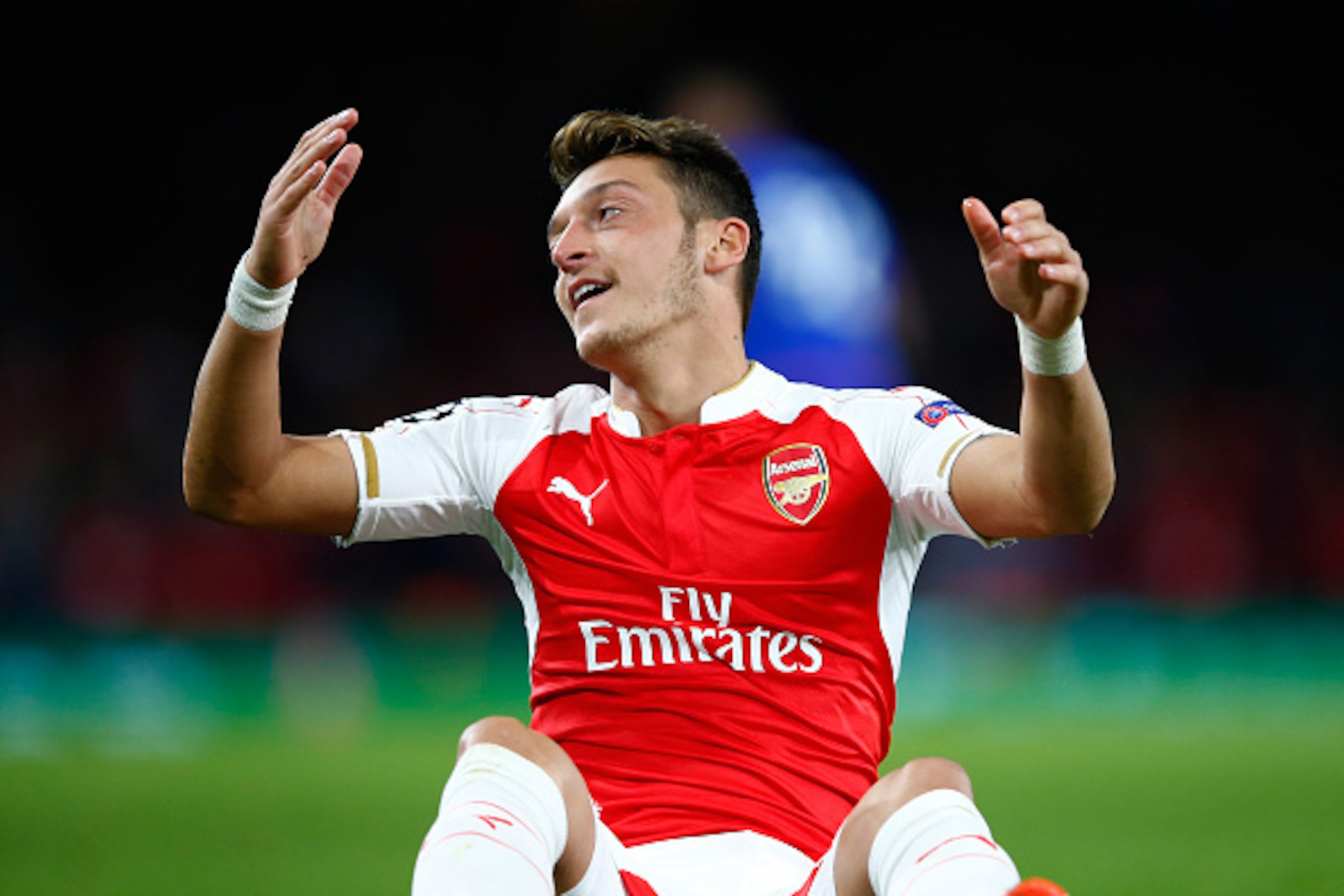
Ozil’s unveiling transformed the mood around the Emirates Stadium—and there is an inherent value in that.
Wenger often lectures about signings not being the solution, but they’re undoubtedly capable of providing a galvanising effect. Arsenal’s willingness to pay top dollar lifted everyone association with the club.
However, the danger with that kind of fee is it creates enormous expectations. When Ozil moved from Werder Bremen to Real Madrid in 2010, it was for a relatively modest fee, per BBC Sport. This was the first time he arrived at a new club with the albatross of a huge outlay around his neck.
When the price is so high, there is understandable anticipation of an immediate and transformative impact.
There were signs of that on Ozil’s Arsenal debut: Within minutes of his first appearance at Sunderland, he had created a goal for Olivier Giroud and laid on a number of chances for other players. However, over the coming months, he faded into the background.
That’s not what people expect from a record signing. Some fans were frustrated by Ozil’s indifferent displays. They expected a player with his reputation to seize games by the scruff of the neck, bending them to his will.
However, while Ozil’s technical ability is beyond compare, he is not necessarily the type of personality to dominate matches in the way a Thierry Henry or Cesc Fabregas might do.

He suffers in comparison with Alexis Sanchez, who arrived a year later and cost Arsenal a fair chunk less.
As soon as the Chilean stepped onto the pitch, he made his presence felt. Even when he’s not contributing in the final third, it’s impossible not to notice his relentless running and dutiful defensive work. To the casual observer, his contribution vastly outstrips that of Ozil.
That’s not to say the German doesn’t bring plenty to the team. Ozil’s qualities are merely more subtle. Perhaps his strongest attribute is his ability to find space in the gaps between the opposition midfield and defence.
Ozil plays without a fixed position, drifting into pockets and continually pulling the back line out of position. It’s a war of attrition: Eventually, their concentration will lapse—and that’s when he strikes.
Although Ozil does not often seem capable of carving matches in his image, he does leave his mark on them with brief moments of breathtaking quality. That has been much more so the case since the start of 2015.
Ozil’s first 18 months with Arsenal felt like a period of adaptation and acclimatisation. He was forced out of Real Madrid, and that bruised his ego. Then he had to adjust to a new city, new team-mates and a new style of football.
After that, there was a gruelling World Cup campaign that, although ultimately successful, left him physically and mentally drained. Throw in a number of fairly serious injuries and it’s easy to see why it took him time to find his best form.
Since returning from a knee problem in January, he has looked much more like the player Arsenal thought they were signing. That’s not unusual: Robert Pires’ first 12 months with Arsenal were timid and forgettable. The question now is whether or not he’s proved to be worth the wait.
The metric Ozil is always going to be assessed on is assists. He’s a pure creator, seemingly taking more satisfaction from setting up goals than scoring them.
In his first season with Arsenal, Ozil assisted nine goals in 26 Premier League appearances. In 2014/15, it was just five in 22—a decrease from 0.35 assists per appearance to 0.23.
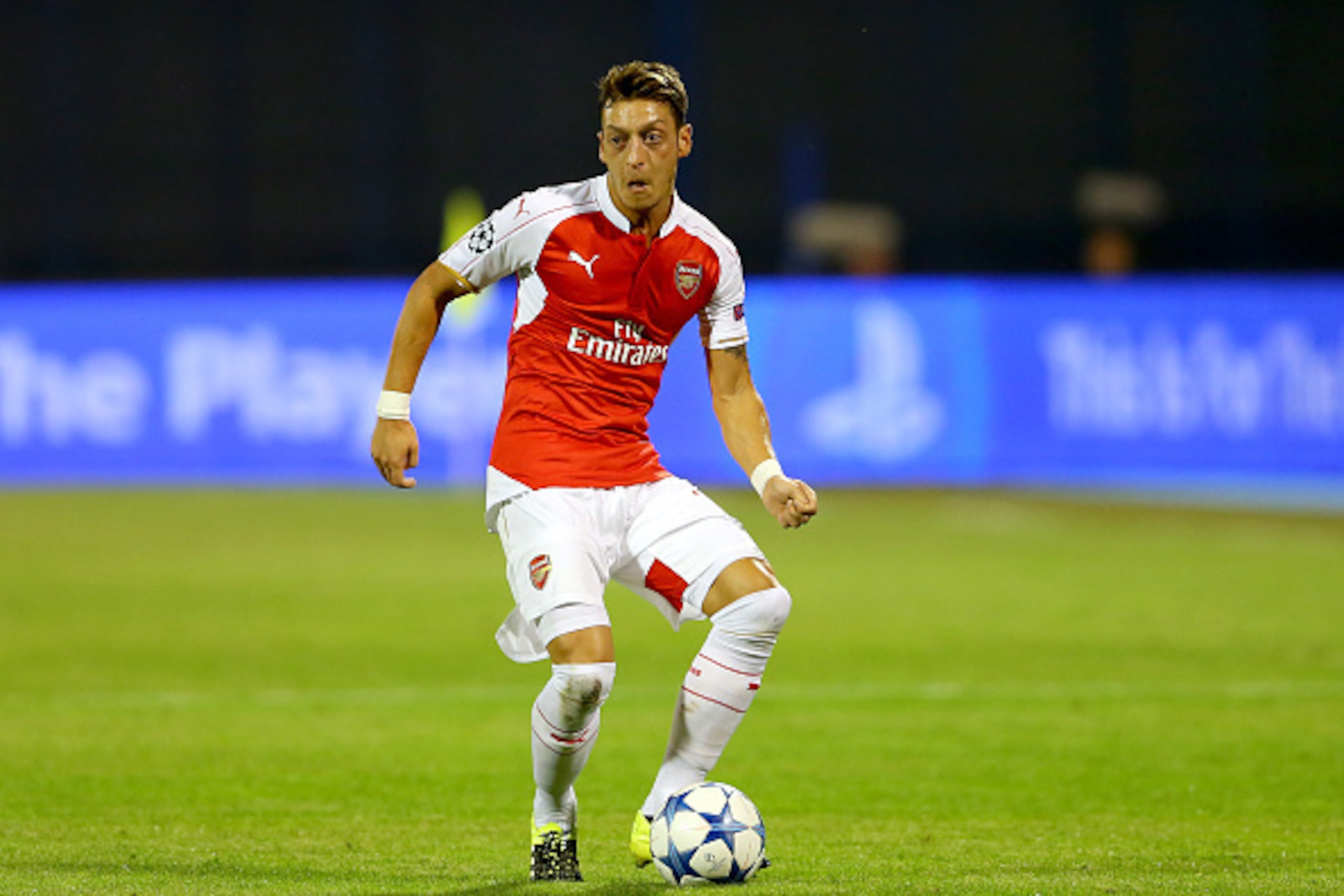
Those numbers are shy of the extraordinary stats he produced at Real Madrid and are seemingly waning. However, that’s not necessarily due to a downturn in Ozil’s performances. He actually created more chances in his second season than first—it’s just that less were converted into goals.
Let’s not forget, at the Bernabeu he was providing the ammunition for the likes of Cristiano Ronaldo and Karim Benzema. With respect to Giroud and Danny Welbeck, they’re not quite in the same league.
It’s difficult to know whether or not Ozil’s value was inflated by playing alongside the Galacticos or is dampened by the insufficient calibre of Arsenal’s current crop of strikers.
However, what is likely is that had Arsenal been successful in their bid to lure one of Suarez or Higuain, Ozil’s numbers might make for more convincing reading.
In September 2014, Wenger insisted to Goal he had no regrets over the deal to sign Ozil:
"I would pay the money again. Of course. You expect the team to play well and not to put the responsibility on any one player to be a magician that does not exist any more in the modern game.
Of course I have to get the best out of him because of his price. But I feel that responsibility exactly the same for a player who cost £1. He did not pay the £42m himself.
"
Wenger makes a good point. In the modern game, fees are very flexible. A player is worth what a club is prepared to pay, and Arsenal were prepared to pay through the nose to get Ozil.
Has his individual contribution matched what you would expect of a player who cost in excess of £40 million? Perhaps not. However, you will struggle to find many people associated with Arsenal who are not glad the deal went through.
Signing Ozil changed Arsenal. It showed they were a major player in the transfer market and made them a more attractive proposition to other players. Without Ozil, would there have been Alexis? Arguably not.
When detractors criticise him, Ozil can point to his trophy cabinet: Arsenal went nine years without silverware until he arrived, but have since picked up two FA Cups in two years. Those triumphs are not down to Ozil's individual quality alone, but his presence does appear to have stirred something in Arsenal.
Ozil is still defining himself as Arsenal's chief creator, but he has already acted as a valuable catalyst.
All statistics courtesy of Squawka.com.
James McNicholas is Bleacher Report's lead Arsenal correspondent and is following the club from a London base throughout 2015/16. Follow him on Twitter here.

.jpg?w=2560 "Colts Football")
.jpg?w=2560 "NFL House in Paris Closes for Protests (AP)")

.jpg?w=2560 "Trevon Diggs Cut by Seahawks")