Real Madrid Not Vintage, but Find a Solution to an Obstacle They'll Often Face

For almost half an hour, it contained the excitement and intensity of an arthouse French biopic. And that in itself was surprising.
In the build-up, Malmo manager Age Hareide had been almost menacing with his messages, seemingly revelling in delivering cryptic warnings. "They know nothing about us," he'd said of Real Madrid in ominous fashion, according to Marca, "and they're only human."
When Hareide went on to "promise" that his right-back Anton Tinnerholm was "going to be all over" Cristiano Ronaldo, on what sounded like a personal crusade, you could have been forgiven for imagining Malmo as some kind of provincial tribe preparing for battle: Hareide's players sharpening metal studs like weapons against the dressing room walls, the pitch covered in stones and broken glass, and the manager's rallying cries reaching out to the entire city.


Yet even those without such vivid imaginations would still have expected Wednesday's hosts to present some sort of hostile stage for their glamorous visitors. You anticipated a certain ferocity from Malmo, a channeled aggression that would whip this momentous occasion for south-west Sweden into a frenzy. After all, they'd even gone to the lengths of narrowing their pitch so they could hunt their targets in a smaller space.
But it didn't turn out that way. Instead of Gerard Butler and 300, this was more Alexander without the combat scenes.
"Cristiano wakes up, Madrid doze," was the headline from AS in its match report after Rafa Benitez's side had claimed a rather untroubled 2-0 victory at the Swedbank Stadion, the night's only heat evident away from the ground.
Ronaldo aside, said AS, there was "no other story to tell."
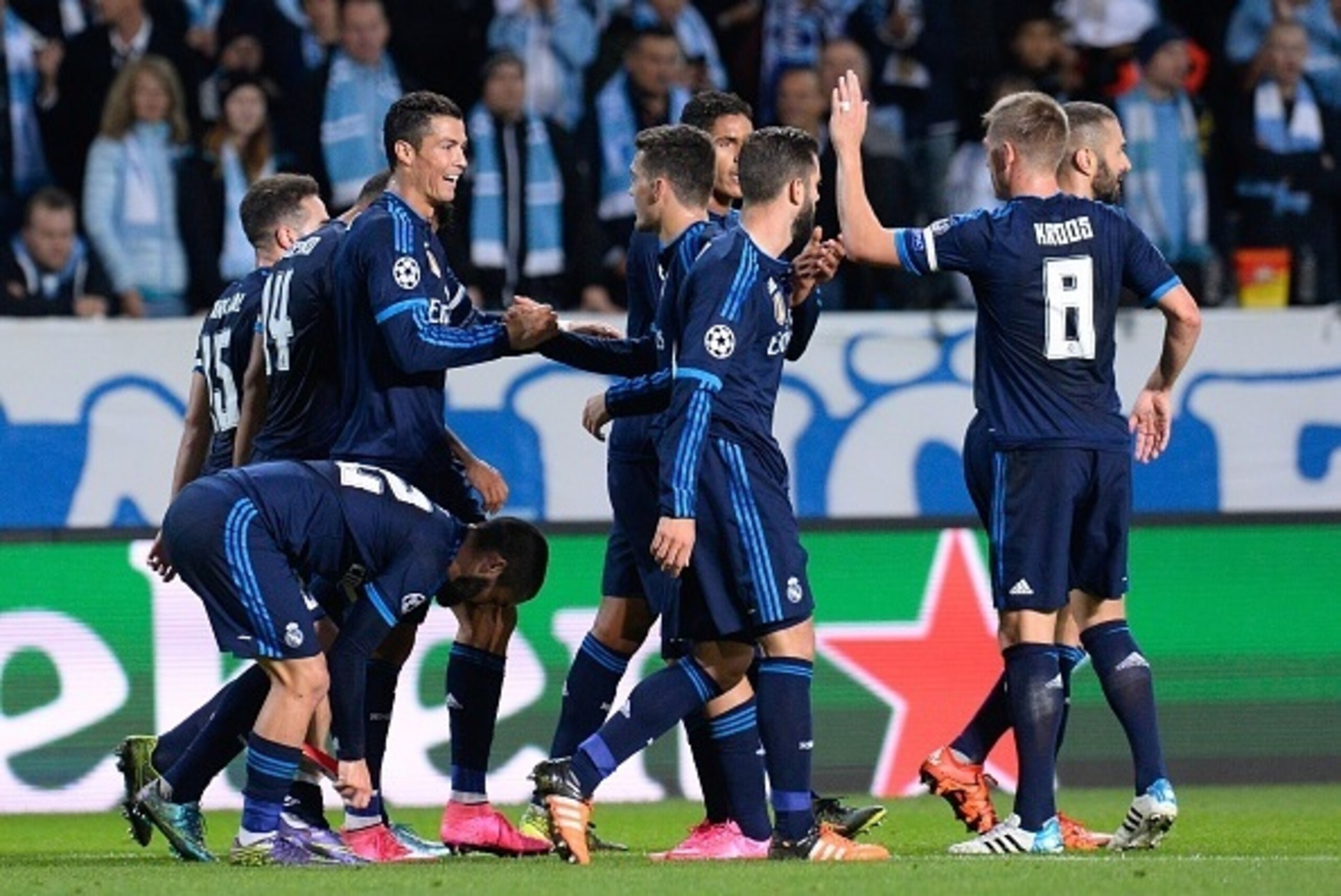
Though such an assertion did capture the game's mood and the surprising absence of a battle, it's not entirely true; there was one other story to tell.
Already this season, Real Madrid possess sore heads from bashing them repetitively against well-structured walls, and here, Malmo, restraining themselves from engaging in an up-tempo and physical scrap, constructed another one.
Organised in a distinctly unadventurous 4-4-2, one featuring two banks of four separated by a hair follicle, the hosts made the opening 29 minutes feel merely like a continuation of the 90 from Real's meeting with Malaga. With their shape compressed like one of those new mini deodorant cans, Malmo were content to cede possession, bunkering down for an exercise of organisation and essentially asking the same question the Andalucians did: Can you find holes even if we don't show you any?
For 29 minutes, Benitez's side couldn't. "Madrid took nearly half an hour to understand the match and their rivals," remarked AS, a fact that was surprising given the task was identical to that of three days prior.
Against Malaga, Madrid's attacking method had a whiff of predictability to it. As Javi Gracia's men rallied around their net, a Real that grew increasingly frustrated also grew increasingly formulaic: position Ronaldo in the middle and send in a barrage of crosses.
And send in crosses they did; 57 of them, in fact, according to WhoScored.com. Like had been evident at Sporting Gijon as well, there was a guile and patience missing from Madrid, the stars in white resorting to routes over and around the wall rather than trying to fracture it.
Here, however, that steadily changed.
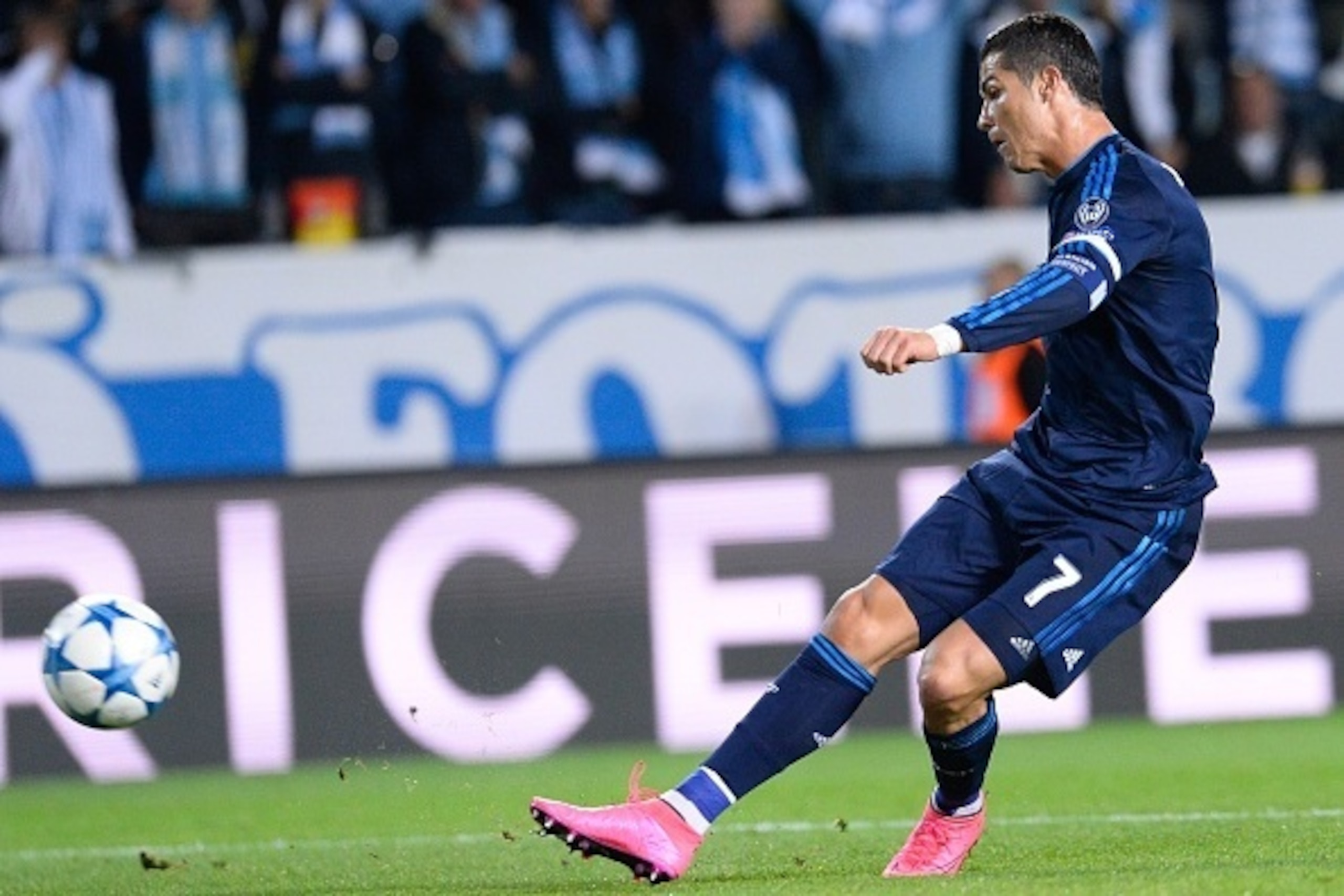
After spending the opening half-hour doing exactly what they'd done against Malaga—it was Daniel Carvajal and Toni Kroos on the right repeatedly delivering crosses and chipped balls into the box this time—Benitez's men opted for something different: They stepped away from the wall. They gave their heads a rest.
Indeed, instead of pressing hard up against it, Kroos and Casemiro in particular withdrew Madrid away from the Malmo penalty area, expanding the team's shape and giving a different look to Malmo—a Malmo at home. A Malmo still at 0-0. A Malmo compelled by their own crowd to respond.
They couldn't help themselves; they broke from their bunkered-down existence
It's how the pattern finally changed.
With Madrid sitting back inside their own half, Nikola Djurdjic sent the ball to Vladimir Rodic on the right flank, the Serbian pushing down the line to win a throw near the corner flag. The eventual result was Tinnerholm whipping in a cross, a cross that found its way to Kroos.
And then Mateo Kovacic.
And then to Isco.
And then to Ronaldo.
Goal. The oldest trick in the book.
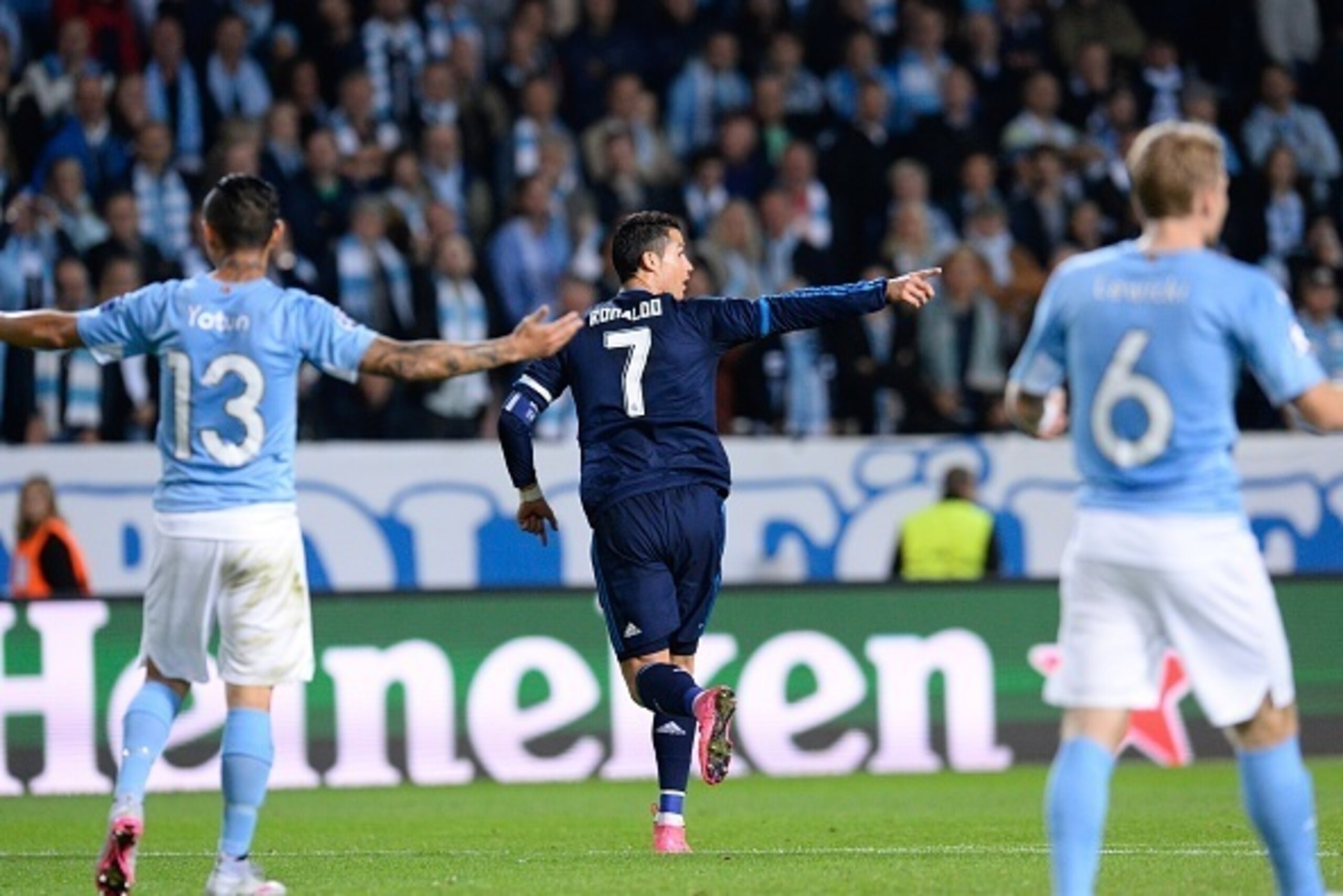
Twenty minutes after the interval: the same process again.
Having drawn Malmo out, Madrid stormed forward when Casemiro won possession from Rodic and flashed a long ball ahead of Ronaldo. Had it not been for the anticipation of goalkeeper Johan Wiland, the result would have been the same, too.
After another 20 minutes: again. This time it was Luka Modric's ball splitting the game open for Ronaldo, who again was denied by Wiland.
Eventually, in the dying stages, the second goal came, Malmo by that stage one man short and visibly exhausted—exhaustion contributed to by Benitez's introduction of the pacey and line-hugging pair of Lucas Vazquez and Denis Cheryshev, who inherently alter the team's threat from intricate to direct.
Later, Hareide, who'd been bullish days earlier, conceded his team had fallen into the trap Real gradually set. "We perhaps had too high a line," the Malmo manager told his post-match press conference. "Our problem was that we lost possession too easily."
Essentially, Real Madrid had done what he didn't want them to do: "They counterattacked us," he added.
Though for much of the game they hadn't, in the moments they busted it open they had. It wasn't necessarily vintage, it wasn't awe-inspiring, but Real Madrid—through a little patience, by pulling back from the wall—found a solution to the obstacle that's halted them before. The obstacle they'll continue to face.

.jpg?w=2560 "Colts Football")
.jpg?w=2560 "NFL House in Paris Closes for Protests (AP)")


.jpg?w=2560 "Trevon Diggs Cut by Seahawks")