

Juan Cuadrado Is Getting Back to His Fearsome Best at Juventus
The name Juan Cuadrado means two very different things to two very different sets of fans.
The first set—those of the Serie A and Colombian persuasion—picture an agile, lightning-fast, direct winger capable of dominating the right-hand flank and tormenting full-backs. The second—largely Chelsea supporters—see a man with a dodgy barnet who is incapable of running with a football at his feet.
Ladies and Gentlemen, we present the modern-day conundrum of Cuadrado, the player who went from hot to not in January with near-inexplicable speed.


Chelsea signed the Colombian from Fiorentina in the closing stages of the winter transfer window for £23.3 million, replacing the similarly priced Andre Schurrle, who had joined Wolfsburg at the start of the year. He was supposed to bring pace, width and production to a right side that sorely needed it, and in projecting the player to the Premier League, most experts felt good about the potential fit.
But there are no guarantees in football, and particularly when it comes to Jose Mourinho and wingers, history suggests things very rarely ever work out. Already the Portuguese has been through a small pile of excellent wide men during his second stint at Chelsea, with Schurrle, Mohamed Salah and now Cuadrado coming and going quickly. Wingers who look stunning at other clubs seriously struggle at Stamford Bridge, and the turnover in the forward areas is quite staggering, to tell the truth.
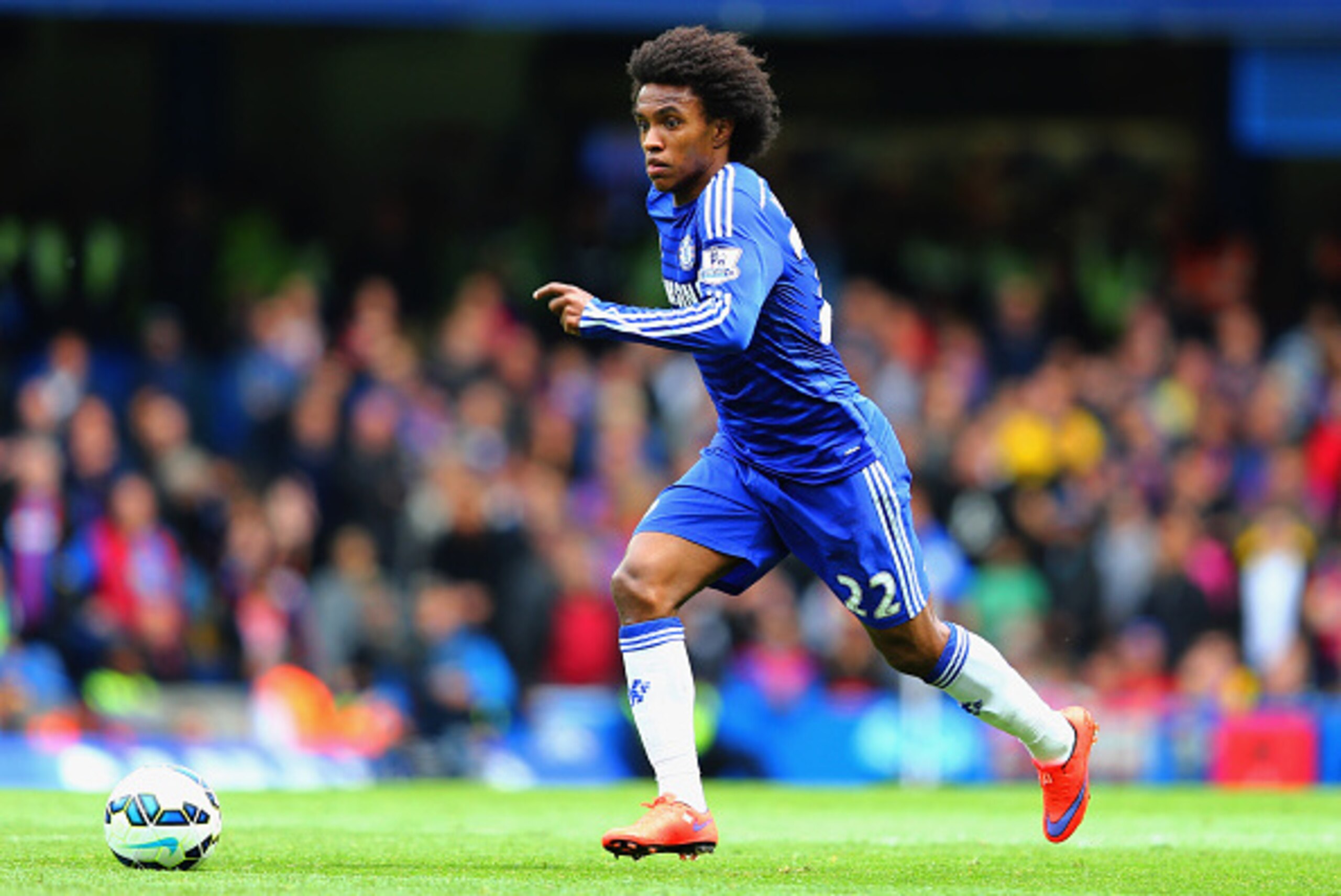
The problem is sourced in what Mourinho asks of a winger; the very bespoke role he creates for the man who plays at No. 7—opposite golden boy Eden Hazard—has got the better of several, and it will get the better of several more.
Tracking, pressing and running are the first three things the No. 7 must commit to. The only success story to date in this area is Willian, who changed the very fundamentals of his game to prosper and keep his place. The Brazilian, a skilful, creative wizard at Shakhtar Donetsk and Anzhi Makhachkala, learned to graft in order to stick around.
In 2013-14 Mourinho produced a 6x4 formation, favouring a low defensive block and picking four players to press high. A trophy-less season, sure, but it set the groundwork for the 2014-15 double. Willian emerged as a key player in this system due to his willingness to press, his tenacity in tracking and his ability to lead the side in transitional play.
In contrast, Salah and Schurrle were perhaps a little individualist to fully grasp this role, and with Hazard given relative freedom on the opposite flank, it’s important to maintain a semblance of structure on the other flank. Still, the fact he was a No. 10 pushed wide showed, with Branislav Ivanovic forming the total sum of the club’s width on the right flank.
The stage was set for Cuadrado to take this team to the next level; his love for the touchline and traditional winger tendencies were exactly what Mourinho needed, and on a tactical and stylistic level, the Colombian was a smart buy.
But it all went horribly wrong. Cuadrado did at least try, but the culture shock of such a different role (he’d always been one of the top outlets or key attacking pieces in his previous sides) led to a confidence crisis. All of a sudden he couldn’t even kick a ball, struggling to run with it, struggling to pass and failing to deliver any balls of note from the flank.
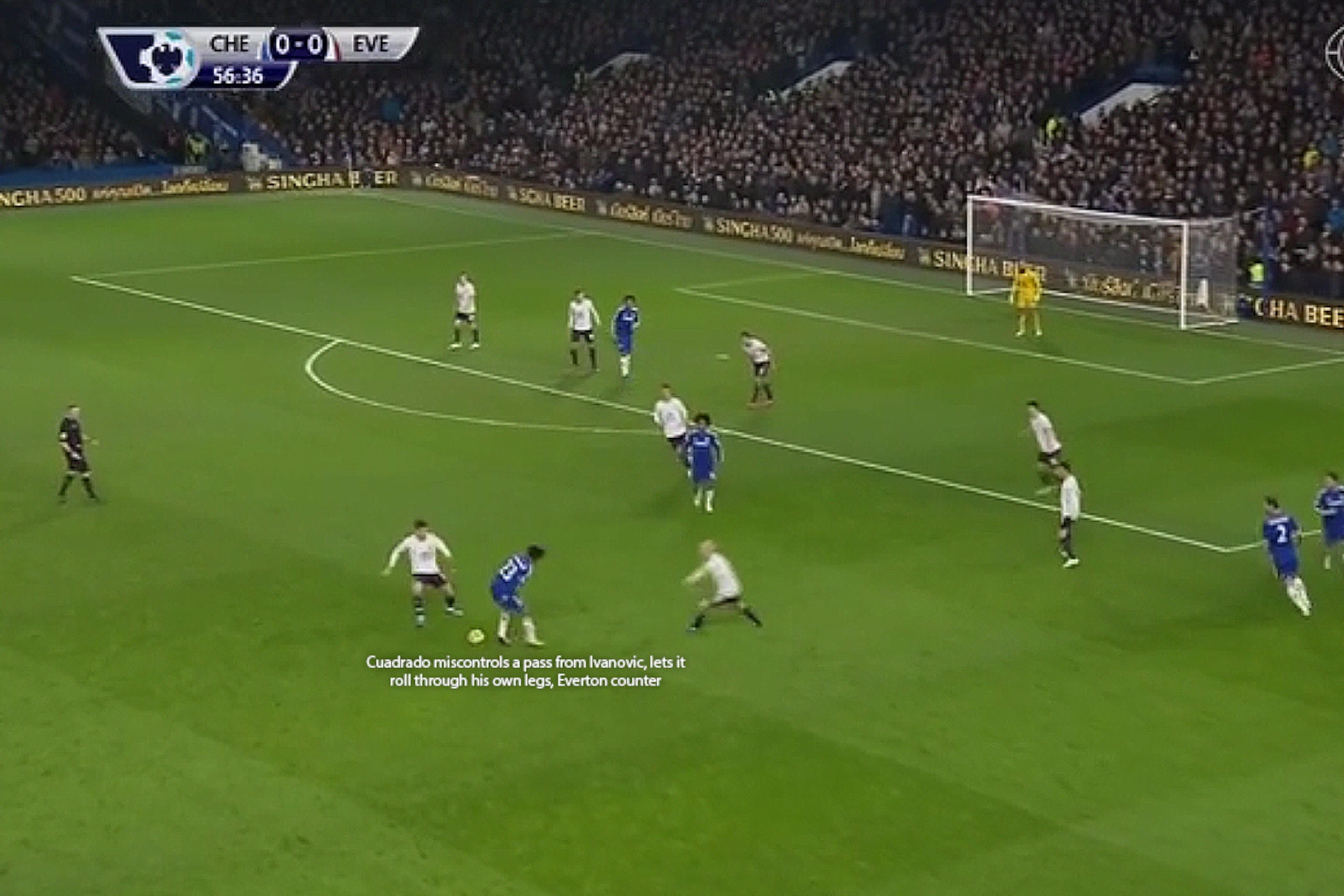
“He can't run, can't cross and can't shoot. Other than that, he's fine,” B/R’s Chelsea writer Garry Hayes bemoaned in June. A man transformed—and not in a good way—Cuadrado had gone from one of Europe’s most deadly wingers to a fluffy kitten chasing after a ball of twine in the span of three six months.
An abject performance in Chelsea’s International Champions Cup loss to Fiorentina—Cuadrado’s former club—on the eve of the 2015-16 season represented the final straw. Whereas Victor Moses (another winger on the precipice) worked hard to make his impact felt even though the Viola were dominating, his Colombian team-mate simply drifted, looking entirely nonplussed by proceedings.
He was shifted out on loan to Juventus after the services of Barcelona’s Pedro had been secured. Oscar, Willian and Pedro would rotate in midfield, one giving way depending on the game, and Cesc Fabregas, also capable of playing as the No. 10, provided enough depth to allow the Colombian to leave.
The kicker is, so far Cuadrado’s been very good for the reigning Italian champions. He’s a player they will have had their eye on while he was in Serie A playing for other clubs but the price tag was too rich; now, they get their man on loan with a cut-price permanent figure agreed for 2016.

It must be noted that his end product is still looking a little bit iffy, but the spark and dynamism we associate with Cuadrado is most certainly back. Juventus have endured a difficult start to their title defence, procuring his five points from their opening five games, but the Colombian is no concern.
Against Manchester City and against Frosinone, Cuadrado played from the right flank and put in exciting, impactful performances. Some jinking runs and accurate, troublesome deep crosses, mixed in with some hard work and studious keeping of the formation, have been the catalyst for a change in fortunes for the player
Against Frosinone, he even began to venture infield after 25 minutes to see more of the ball in key areas; he started beating markers one-on-one and opening up gaps in the opposing formation, initiating quick interchanges and upping the tempo of Juve’s game.

At the Etihad Stadium, he put in a stellar positional display on the right side, holding the shape of the team, and burst forward with gusto on the counter given the chance. The placement of some of his crosses—right in the sweet spot between the defensive line and the goalkeeper, where anything can happen—reminded of the Cuadrado of old.
This shouldn’t come as a surprise; it became clear during the summer that his form was only an issue at Chelsea, as while on international duty at the 2015 Copa America, he sparkled in Colombian yellow once again. “This isn't the Cuadrado I watched from February to May,” ESPNFC’s Miguel Delaney tweeted during los Cafeteros’ 1-0 victory over Brazil, in which he played a starring role.
Juventus may have started the season slowly, but Massimiliano Allegri’s main issues are obvious: an extreme drop in quality in the central midfield and striking positions. Carlos Tevez, Arturo Vidal and Andrea Pirlo are gone, and it’s clear Paul Pogba is now carrying this side through the middle even when playing against the likes of Chievo and Frosinone.
Cuadrado has gone from being a last-resort asset in London to one of Turin’s brightest lights. He’s an attacking spark that Juventus now look to to make the difference in a game. It’s a welcome change for the Colombian, who is now showing his all-round best back in a league where he feels he belongs.



.jpg?w=2560 "Weather Channel Trolls Texans-Titans 💀")

.jpg?w=2560 "Grading WWE Raw 🔠")