Why You Should Appreciate the Outstanding Baseball Career of Rafael Palmeiro
The hardest part about coming of age during the so-called “Steroid Era” of Major League Baseball (MLB) isn’t coming to terms with what you saw. It’s not the ridiculous stats of guys like Barry Bonds and Mark McGwire. It’s not how great Roger Clemens pitched into his old age or how Sammy Sosa essentially went from zero to hero overnight.
It’s not any memories of the time period at all.
Rather, it’s that the vast majority of the media members who form the Baseball Writers Association of America (BBWAA) have taken it upon themselves to blot out that part of the game’s rich history in thick and permanent ink.
TOP NEWS
.png?w=2560)
Muncy Sums Up NLCS Offense 💩

Dodgers Have 0 HRs in NLCS 😰
Brewers have Dodgers' dynasty on life support
Never mind what you and everyone else witnessed with their own eyes. Barry Bonds never hit all those home runs. Roger Clemens never won all those games. Mark McGwire and Sammy Sosa didn’t have one of the best home run battles of all time.
None of that happened at all. And Rafael Palmeiro wasn’t one of only five players in the history of baseball to hit more than 500 home runs and 3,000 hits.
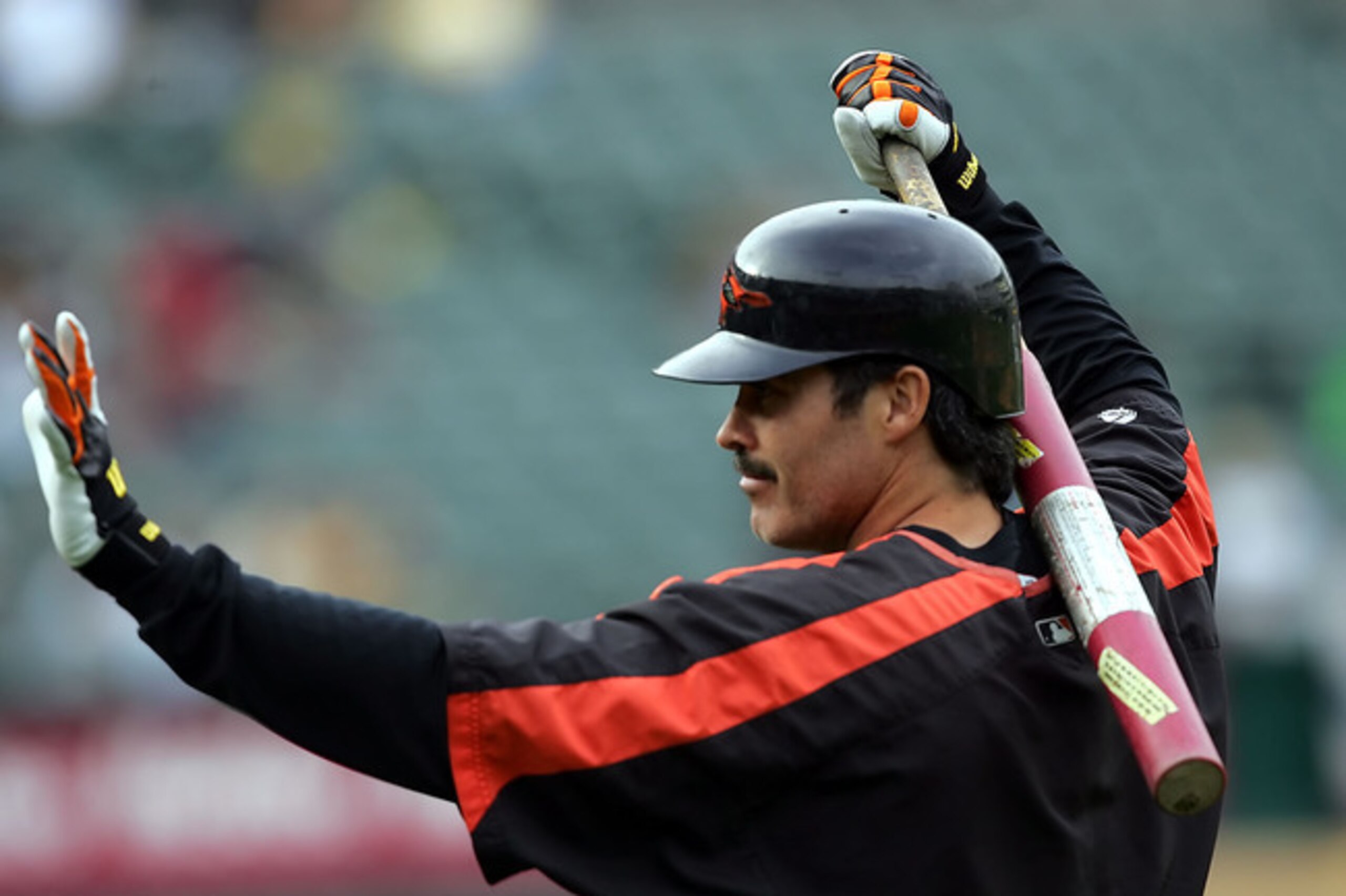
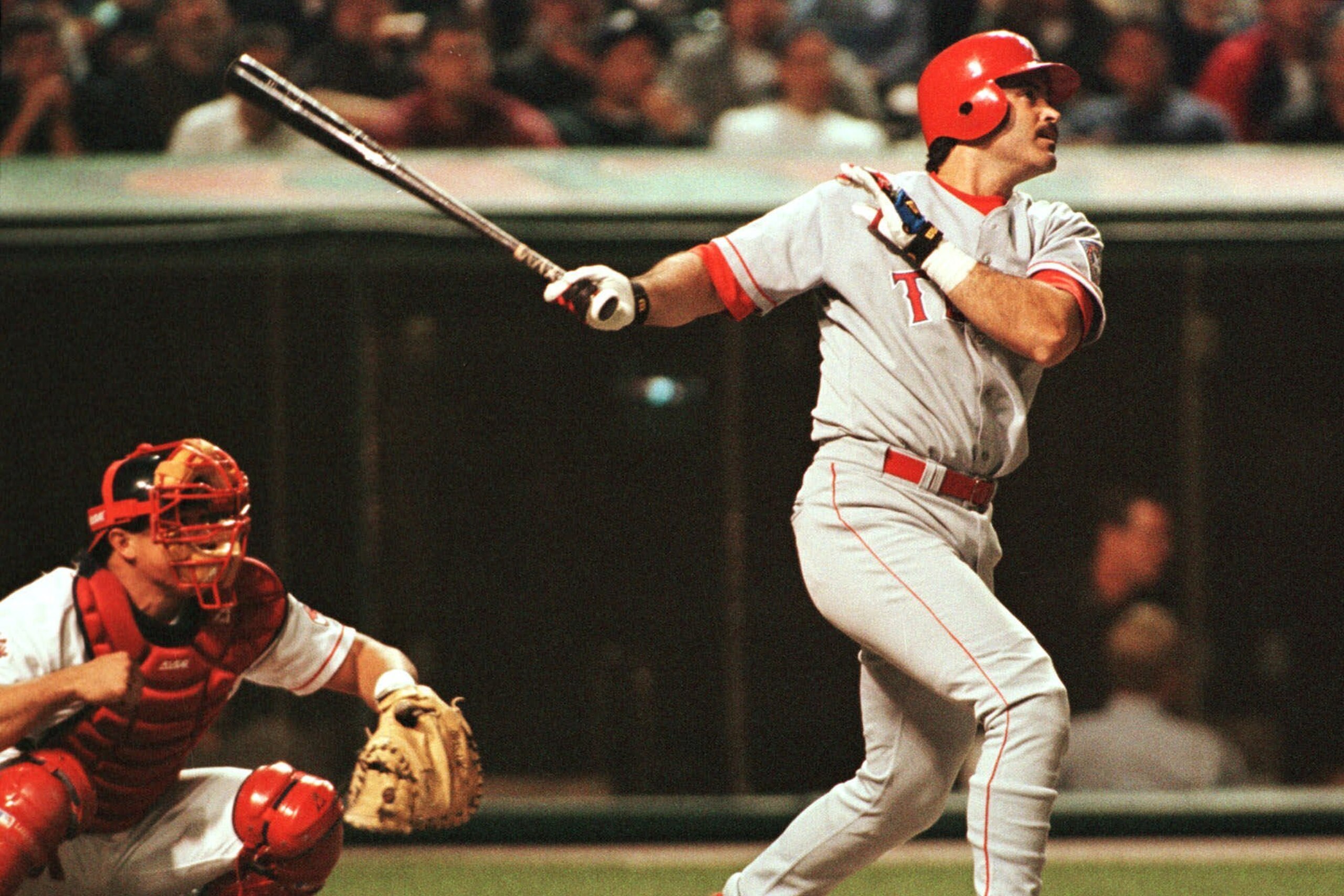
Palmeiro had one of the best swings in baseball. The left-handed first baseman spent 20 years in the sport. He received MVP votes during 10 seasons, won three gold gloves and two silver slugger awards.
Palmeiro’s career batting average was .288. He averaged 33 home runs and 105 RBIs with an OPS of .885. As a member of the Texas Rangers, where he spent the majority of his career over two five-season tours, he led the American League in hits in 1990 and runs scored in 1993. In 1991, Palmeiro hit 49 doubles to lead all MLB hitters.
In 1999 and 2001, Palmeiro hit 47 home runs, a career-best. In 1999, the sweet-swinging southpaw hitter drove in a career-high 148 runs to help the Rangers win 95 games and capture their third division title in four years.
But Palmeiro was not elected to MLB’s Hall of Fame when he first became eligible in 2011, and he was dropped from the ballot completely in 2014 after failing to receive more than five percent of the vote.
So, while players such as Bonds, Clemens and McGwire have lingered on the ballot for years now, Palmeiro has somehow been forgotten completely.
A Day Back in Baseball
Last week, Palmeiro, age 50, joined his son, Patrick, as a member of the Sugar Land Skeeters, an independent minor league team playing in the Atlantic League of Professional Baseball. He was the team’s designated hitter, batting third behind his son, the starting third baseman.
Before the game, just a handful of fans were waiting by the dugout to see the former four-time MLB All-Star. As Palmeiro made his way down the line over to the dugout, bat in tow, he peered over to the few fans who were waiting for pictures and autographs. He waved and promised to return once he was done with his warmup, and he did.
Palmeiro looked older and slower out there. His hair and beard had more gray, and when he ran around on the grass to get some blood flowing in his legs, he labored in comparison to his teammates as much as you’d think any 50-year-old would next to a group of twenty- and thirty-somethings.
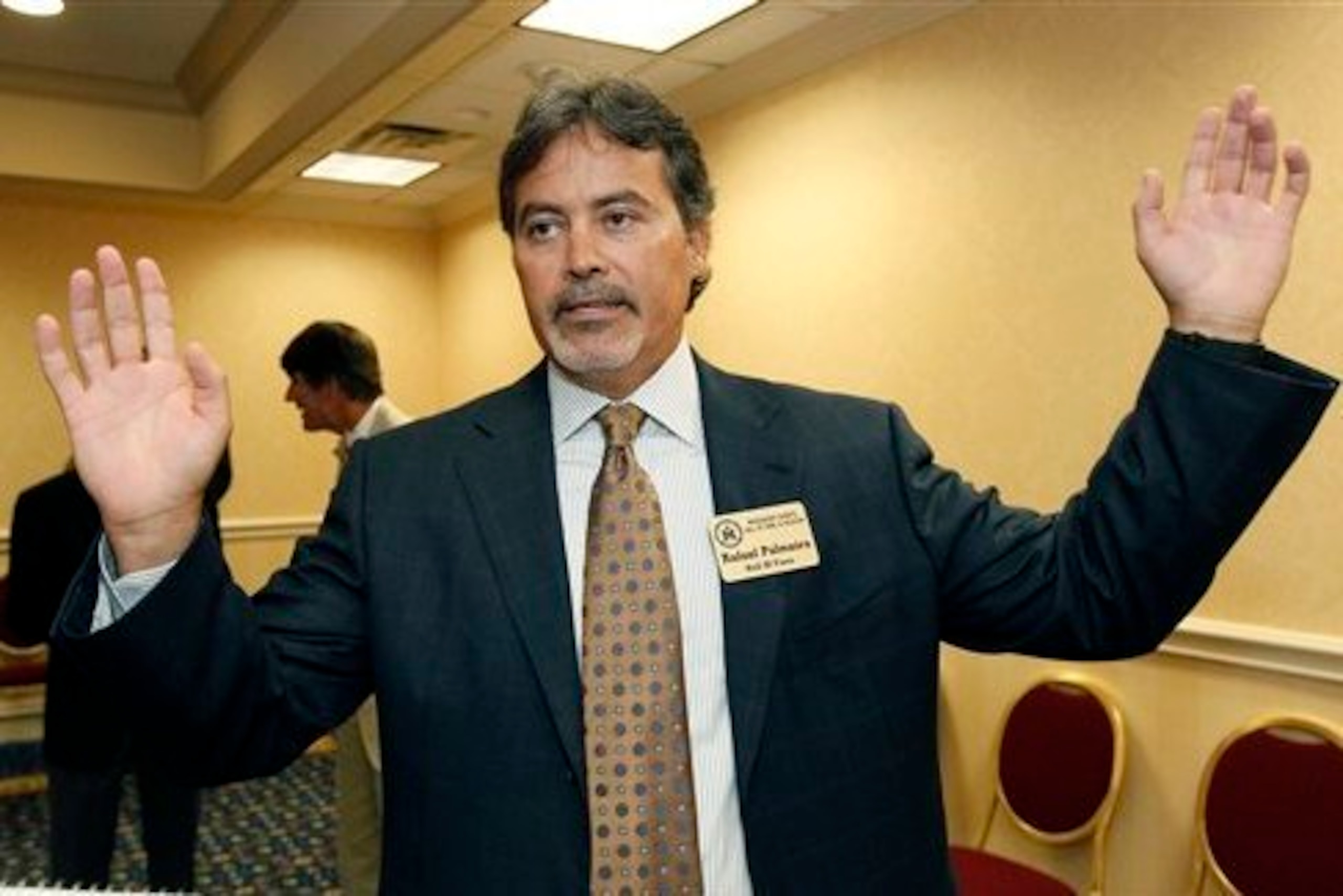
But Palmeiro looked in shape. He looked fit for his age, which for a former professional athlete, means he’s as athletic as just about any retiree could hope to be.
It wasn’t until he walked up to the fans that had waited for him while he warmed up that I remembered how consistently great Palmeiro was during his playing days. Even in an age of bulked-up musclemen who hit baseballs farther and more often than at any other time in the game’s history, Palmeiro was a beacon of steady production. His numbers always seemed reasonable.
In short, Palmeiro never looked like he was on steroids. Unlike Rangers teammates Jose Canseco and Juan Gonzalez, Palmeiro appeared to be just a normal guy. His swing was smooth, and he was as good a pure hitter as the game has ever seen. He hit for power and average, and he drove in runs as well as anyone.
And while Ivan Rodriguez is often cited as the Rangers’ greatest player of the era, the fact of the matter is that Palmeiro just might have been his superior.
Think about it this way. Yes, Rodriguez ranks higher among all catchers in history than Palmeiro does at first base. But while Rodriguez’s historical rivals, Johnny Bench, Yogi Berra and Roy Campanella were great, they suffer in comparison to the likes of Lou Gehrig, Jimmie Foxx and Albert Pujols.
And while Rodriguez had to contend with Mike Piazza as a contemporary, Palmeiro’s position rivals included McGwire, Frank Thomas and Jeff Bagwell.
Still, Palmeiro made his mark.
Palmeiro ranks No. 18 all-time in runs created, sandwiched between Rogers Hornsby and Mickey Mantle. His closest contemporary is Thomas, three spots down, who was elected to the Hall of Fame in 2014.
None of those numbers mattered, of course, when Palmeiro stepped into the batter’s box on Friday night for the Skeeters. From the corner infield seats along the third base side, it almost seemed like the 90s again. I was 15 years old, and Palmeiro was the best hitter on the field.
He drew a four-pitch walk in his first at-bat, indicating a hitter’s eye may be the last thing to go. In his next at-bat in the third inning, he worked a full count before grounding out to second. The old man could still make contact.
In the fourth, though, after watching his son clear the bases with a grand slam, an inspired Palmeiro slapped a single right through the middle of the infield. It was a big inning for the team. Palmeiro eventually scored, helping the Skeeters notch seven runs and take an 8-2 lead over the Camden Riversharks.
In the fifth inning, with runners on second and third, Palmeiro smacked another single to left-center to nab his first RBI in 10 years.
Palmeiro finished 2-for-4 in the game. The Skeeters notched a 10-4 victory. After the game, fireworks lit up the night sky, and Palmeiro worked his way around the dugout to sign baseballs and take pictures with fans.
There were many more interested parties now. Maybe he had reminded them who he was.
“Never.”
In 2005, Canseco identified Palmeiro as a steroid user in his 2005 book, Juiced: Wild Times, Rampant 'Roids, Smash Hits & How Baseball Got Big. He also claimed to have personally injected Palmeiro with steroids.
Later that year, Palmeiro stood before a congressional panel during a hearing about steroid use in baseball and denied that accusation.
"Let me start by telling you this: I have never used steroids, period,” said Palmiero according to the Associated Press. “I don't know how to say it any more clearly than that. Never.”
Palmeiro was under oath at the time.
But just five months later, Palmeiro tested positive for an anabolic steroid under Major League Baseball’s newly implemented PED-testing program. Palmeiro appealed the finding but could not prove his innocence to the arbitration panel.

According to an AP article posted on ESPN.com, the panel also found Palmeiro’s testimony quite convincing, and they did not believe he was lying to them about unintentionally taking steroids. Nonetheless, Palmeiro became what Deadspin’s Tom Scocca aptly described as “the ideal steroids scapegoat” for MLB, and the voting members of the BBWAA have gleefully complied.
From the day he tested positive, Palmeiro has maintained he was innocent.
"Why would I do this in a year when I went in front of Congress, and I testified, and I told the truth? Why would I do this during a season where I was going to get to 3,000 hits? It just makes no sense. I'm not a crazy person.
"
Even Canseco didn’t believe Palmeiro, a man who he had personally accused of injecting with steroids himself, had taken steroids after the appearance before Congress.
"I do not believe right now or recently Rafael Palmeiro has taken steroids," Canseco told CNBC (via AP) that Monday.
Palmeiro’s story hasn’t changed over the years. He recounted it again to the Baltimore Sun’s Dan Connolly last year after expressing disappointment for falling off the Hall of Fame ballot. Per Connolly:
"He continues to maintain that he injected a tainted liquid B-12 supplement from teammate Miguel Tejada and did not purposely use the steroid stanozolol just weeks after wagging his finger while denying PED use to a congressional committee.
"
“I'm not going to change [the story] for the sake of creating a myth,” Palmeiro told Connolly. “It is what it is. It happened. It's the honest-to-God truth.”
Palmeiro will be eligible again in 2026 via the Hall of Fame’s veterans committee. Palmeiro told Connolly he looks forward to that day and hopes for better results.
"I'll look at the bright side. I'll be eligible in [12] years, and maybe at that point things are a lot different, and people see it in a different light. I'm disappointed. I am not going to lie. I won't say I was hoping for a miracle and that I'd get elected, but I was hoping to stay on it a little longer.
"
Despite being one of the best and most consistent players of his era, Palmeiro was shut out in the cold by baseball writers who decided to play judge, jury and executioner on Palmeiro’ s career because of one failed test.
The Smoking Gun
Here’s the thing most disconcerting about the Palmeiro story. It isn’t that he might have cheated. After all, baseball has a long history of players doing such things. Whether it was making the mound higher than legal standards, scuffing the ball to make it move better for the home pitcher or taking amphetamines to get through long road trips, the Hall of Fame is littered with players who tried to get an extra edge over their opponents by any means possible.
What’s okay for some should be okay for others. Deserving players from the Steroid Era should be voted in just like everyone else.
But Rafael Palmeiro might very well be innocent like he says.
According to John Perroto of Baseball Prospectus, the whole truth about Palmeiro’s failed drug test has yet to be told and might never come out.
"An extremely reliable source—with no ties to Palmeiro—told me an off-the-record story at the Winter Meetings that convinced me that Palmeiro was indeed a clean player and was tricked into using the steroid when he thought he was taking a shot of vitamin B-12 that led to his suspension and end of his career in 2005. Unfortunately, there would be too many legal ramifications to make the story public.
"
So let’s once again think back to that time for just another moment. Palmeiro never looked like he was on PEDs. His head didn’t grow the way Barry Bonds' seemed to do. His biceps weren’t those of a professional wrestler like Mark McGwire's were. He didn’t play at an absurdly high level until he was 45 years old like Roger Clemens.
Palmeiro simply looked like a good, old-fashioned baseball player.
Heck, even at age 50, playing for an independent minor league team just outside of Houston, Palmeiro looked like a baseball player. He walked into the batter’s box as if he had never left one. He ran the bases like a man who grew up on the diamond. He made solid contact on the ball almost every time he swung the bat.
Palmeiro can flat-out play.
The Federal government went all-in on trying to bury Bonds and Clemens for perjury over their denials to congress that they ever used PEDs. But the finger-wagging poster boy for the time period, at least to those charged with voting for the Hall of Fame, got a free pass.
That’s right. For some reason, the man it seems easiest to try and convict over the same charges leveled at Bonds and Clemens was given a free pass.
Maybe the government knows what Perroto’s source knows. Maybe they know that Palmeiro was clean.

There are many great tragedies in life. A great baseball player’s shunning by a group of writers who were caught off guard by the news that many of the men they were supposed to know about were cheating right under their noses does not rank very high on the list.
Still, Palmeiro is one of the best baseball players I have ever seen. As far as the Texas Rangers go, he’s one of the greatest players in team history. He should also be considered as much for the Baltimore Orioles, a team Palmeiro gave five of his prime baseball years to, along with his final two as a professional player.
Both should honor Palmeiro as one of their best players. Neither have done so.
Look, even if you believe Palmeiro used steroids at age 40, the fact remains that you have no idea how many times he or any other player did so during that era. All anyone is left with is imperfect analysis based on little information and personal bias against one form of cheating over another.
It makes no sense.
Palmeiro was one of the best players of the era and one of the best players ever. He has first-ballot Hall of Fame credentials. Period.
It’s a shame he’ll have to wait 11 more years to see if he makes it in at all.
Kelsey McCarson writes about boxing but loves baseball just as much. Statistics were obtained at Baseball-Reference.com

.jpg?w=2560 "Top Trade Targets Entering Week 6")