
Singapore Grand Prix 2015: Winners and Losers from Marina Bay Race
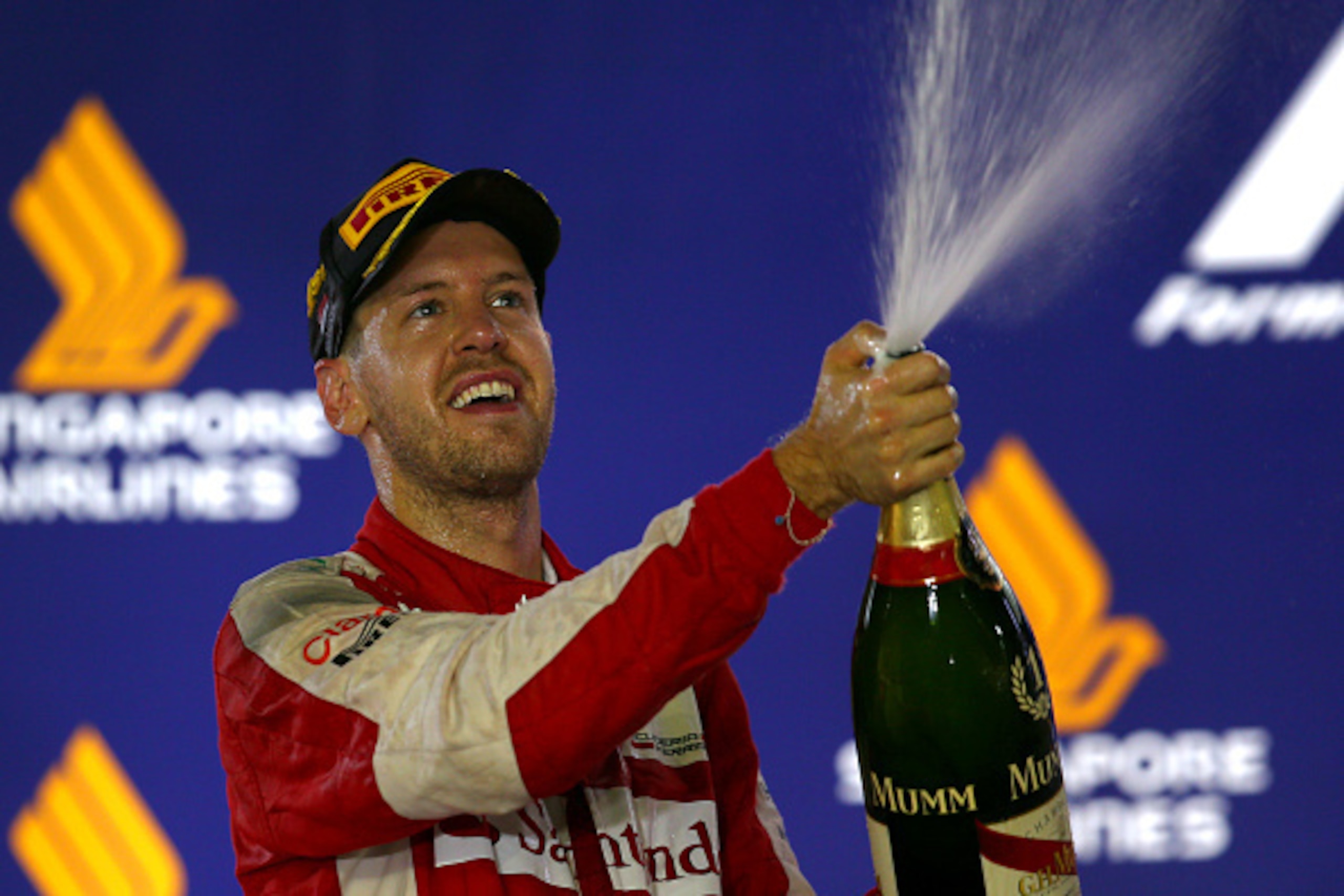
Sebastian Vettel claimed his third win of the 2015 Formula One season in Sunday's Singapore Grand Prix at the Marina Bay street circuit.
The Ferrari driver enjoyed his most successful weekend since the last of his four consecutive title-winning seasons with Red Bull Racing in 2013, securing pole position and leading every lap en route to the chequered flag.
Yet the race was not quite as easy as it seemed for the 42-time grand prix winner, who was forced to deviate from his preferred strategy and pace himself to the chequered flag as his former team-mate, Daniel Ricciardo, lurked behind.
Vettel's victory was as dominant as any of the 26 wins achieved by Mercedes over the last 18 months, but the world champions had a weekend to forget in Singapore with Lewis Hamilton and Nico Rosberg lacking pace and reliability.
With a look at McLaren-Honda's missed opportunity and the drivers left disenchanted by their own team, here are the winners and losers from Singapore.
Winner: Ferrari
1 of 7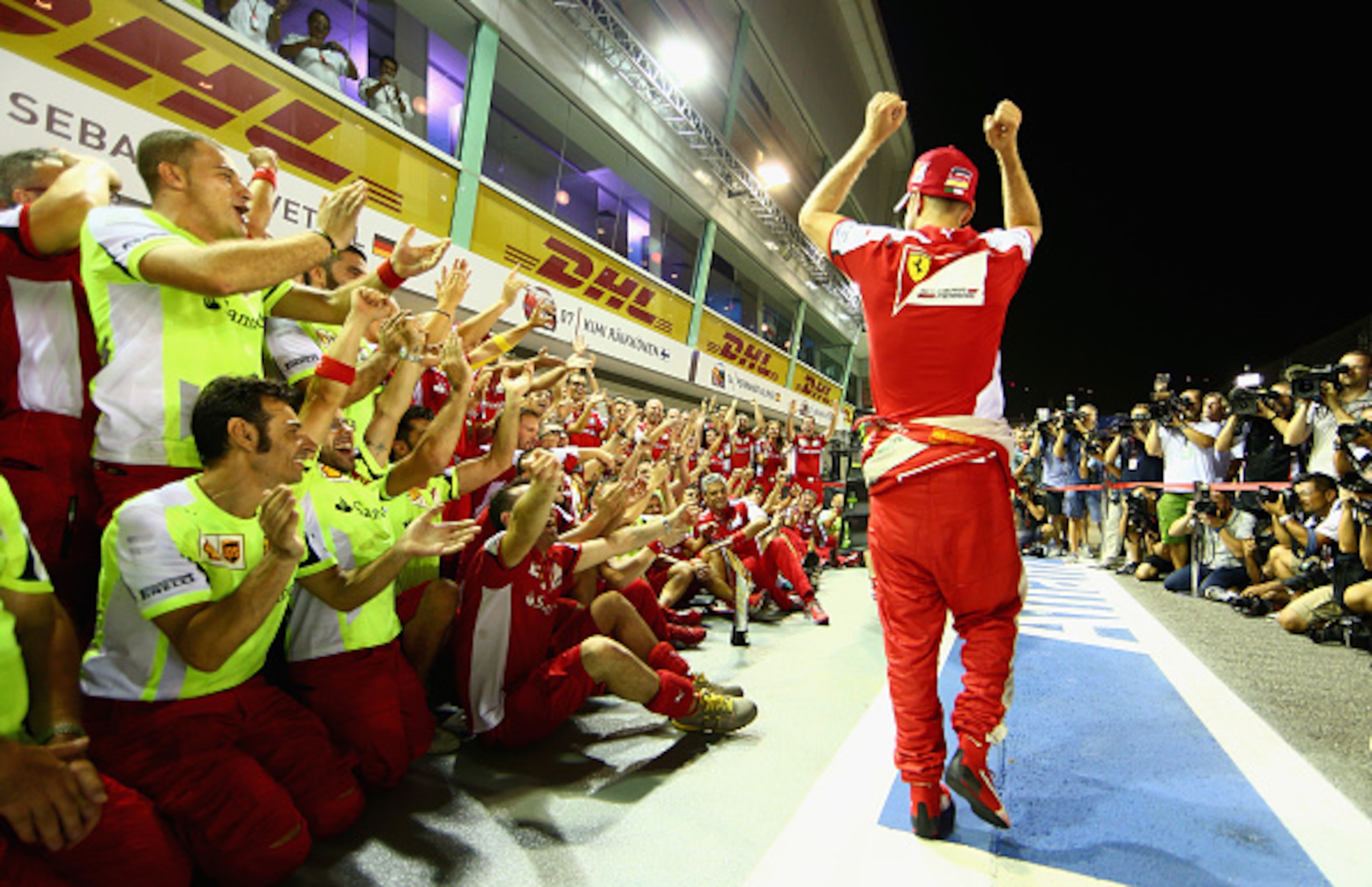
Ferrari have been Mercedes' closest challengers for much of the 2015 campaign, always lingering in their rear-view mirrors and, on occasion, forcing the reigning world champions into mistakes.
But this was something different, something special.
For the first time since the V6 turbo regulations were introduced at the beginning of 2014, a team other than the Silver Arrows was the dominant force throughout a grand prix weekend, and as ever, Sebastian Vettel was at the centre of everything good about Ferrari.
After his statement at the end of Q3 when, despite having pole position already in his pocket, Vettel completed an additional flying lap—almost to showcase his enjoyment behind the wheel of the SF15-T—the German carried his form into the race.
Starting from pole for the first time since 2013, Vettel approached the opening phase of the grand prix in the same way he did at the height of his four consecutive championship triumphs with Red Bull Racing, establishing a lead of three seconds by the end of the opening lap.
Yet his hard-charging style proved counterproductive as Daniel Ricciardo closed the gap toward the end of the first stint, and it was at that point Vettel's qualities truly became apparent.
Rather than listening to his natural instincts and persevering with his trademark of sprinting into the distance, he had the presence of mind, the maturity and, indeed, the humility to change his tactics mid-race, driving in a more measured, controlled fashion and keeping the chasing pack behind while protecting his car and tyres.
The result meant he took the chequered flag just 1.478 seconds ahead of Ricciardo, per the official F1 website, but it was one of the most comfortable close finishes he'll ever experience.
Kimi Raikkonen, as we've come to expect in 2015, lacked Vettel's pace across the weekend.
Yet the very fact he still claimed an untroubled third place despite being unhappy with his car—after qualifying, the Finn told the FIA press conference how "surprised" he was to find himself in P3—only underlines the strides in performance Ferrari have made.
Whisper it, but Mercedes' dominant spell may just be coming to an end.
Loser: Mercedes
2 of 7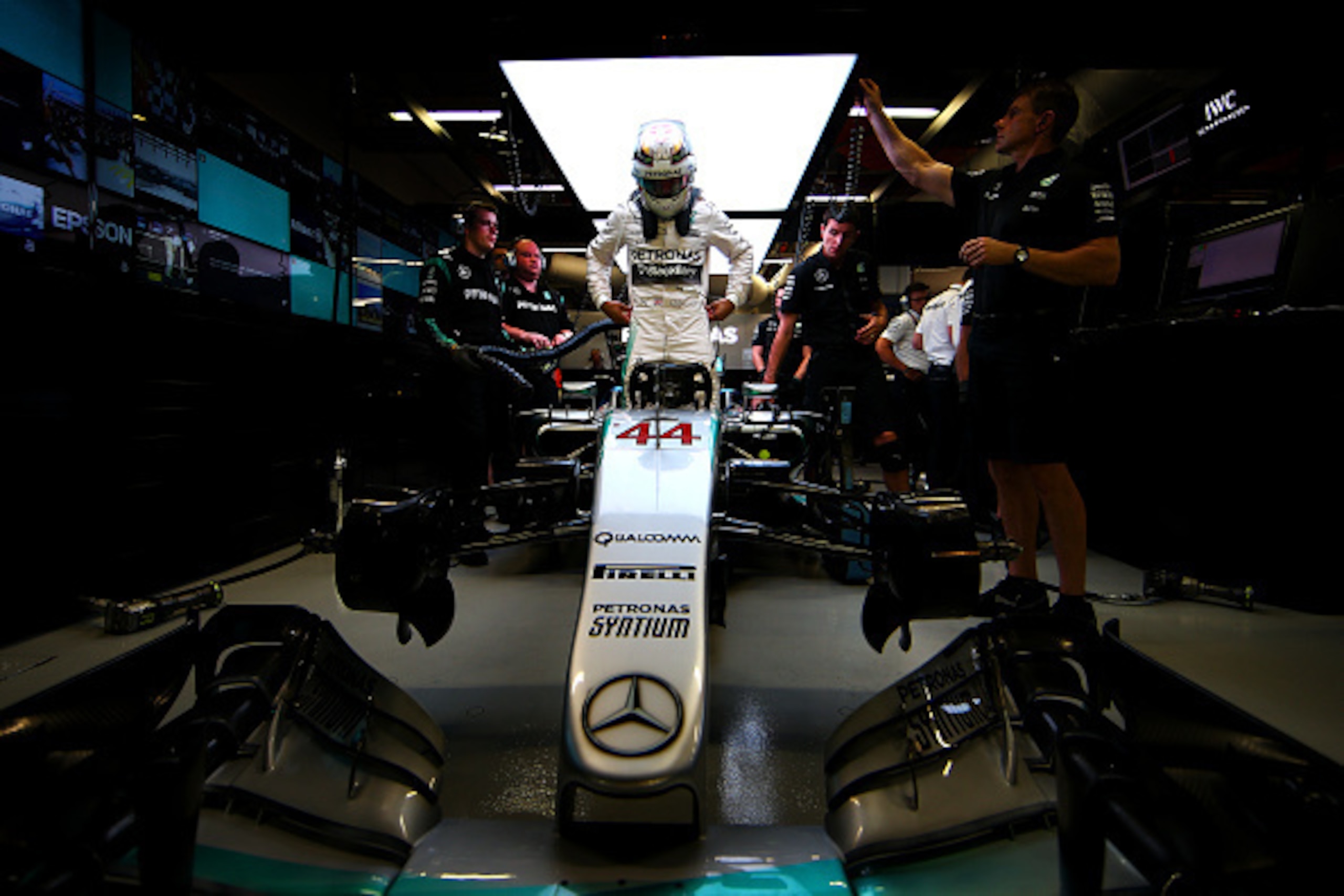
Was it the tyres? The circuit layout? The conditions? The setup? Or all of the above?
Who knows?
But as Nico Rosberg told Motorsport.com's Valentin Khorounzhiy after the race, the fact that Mercedes—for all their experience, intelligence and resources—simply "don't know" why they lacked pace in Singapore was "very worrying" ahead of the final six grands prix.
The team that had won all but two races over the last 12 months and had a 100 per cent record in qualifying in 2015 were anonymous at Marina Bay, punted down to third in the competitive order just a fortnight after cruising to victory at Monza.
The alarm bells started ringing in the third practice session when Hamilton and Rosberg could only manage fifth and sixth, and that was where they remained in qualifying, with the former 1.415 seconds adrift of Vettel's pole time (according to Crash.net).
Mercedes' decision to switch both drivers to the soft-compound tyres for the second stint, when those around them remained on the supersofts, was the act of a team that knew they were unable to challenge those ahead on even ground, relying on strategy to rescue them from trouble.
The second safety-car period, though, prevented them from pressurising the Ferraris and Ricciardo, with the return of the team's reliability gremlins adding insult to injury and raising further questions over their decision to fast-track their 2016-spec engine.
After engine-related troubles blighted his weekend in Italy, Rosberg was fortunate to start the race after his car stalled twice in quick succession at the end of the pit lane, while Hamilton suffered his first retirement of the year after suffering a gradual loss of power while running fourth.
The seven-day gap between the Singapore and Japanese grands prix leaves the team with precious little time to identify and address their problems.
Although Suzuka should better suit their package, Mercedes, for the first time in 18 months, look vulnerable.
Winner: Red Bull
3 of 7
The high-downforce demands of Marina Bay meant Singapore was Red Bull's last genuine opportunity to record a strong result, and perhaps even a victory, in 2015.
And Daniel Ricciardo, finally able to drive with the confidence and class he showed throughout 2014, came exceptionally close before being forced to settle for second, which was nevertheless his best result of the season thus far.
As the Australian told the team's official website, the timing of both safety cars prevented Ricciardo from taking the fight to his former team-mate, making both rounds of pit stops a rather structured affair when, at racing speed, he could have utilised the undercut technique to potentially overtake Vettel.
Yet his ability to sustain pressure on the Ferrari, despite Vettel's obvious performance advantage, offered a reminder of his qualities.
If Ricciardo's race was harmed by the safety cars, Daniil Kvyat's was ruined by them.
The Russian dropped from fourth to sixth during the first safety-car period after making his first pit stop just one lap before the race was neutralised, while the second saw him fall behind Valtteri Bottas.
Hamilton's retirement promoted him back up to fifth, but on a circuit featuring few overtaking opportunities, he was unable to make his way past the Williams.
That Red Bull extracted a total of 26 points out of the Singapore GP but were still left ruing misfortune and missed opportunities highlighted just how impressive their performance was, and how formidable they remain, in this year of disappointment.



Loser: McLaren-Honda
4 of 7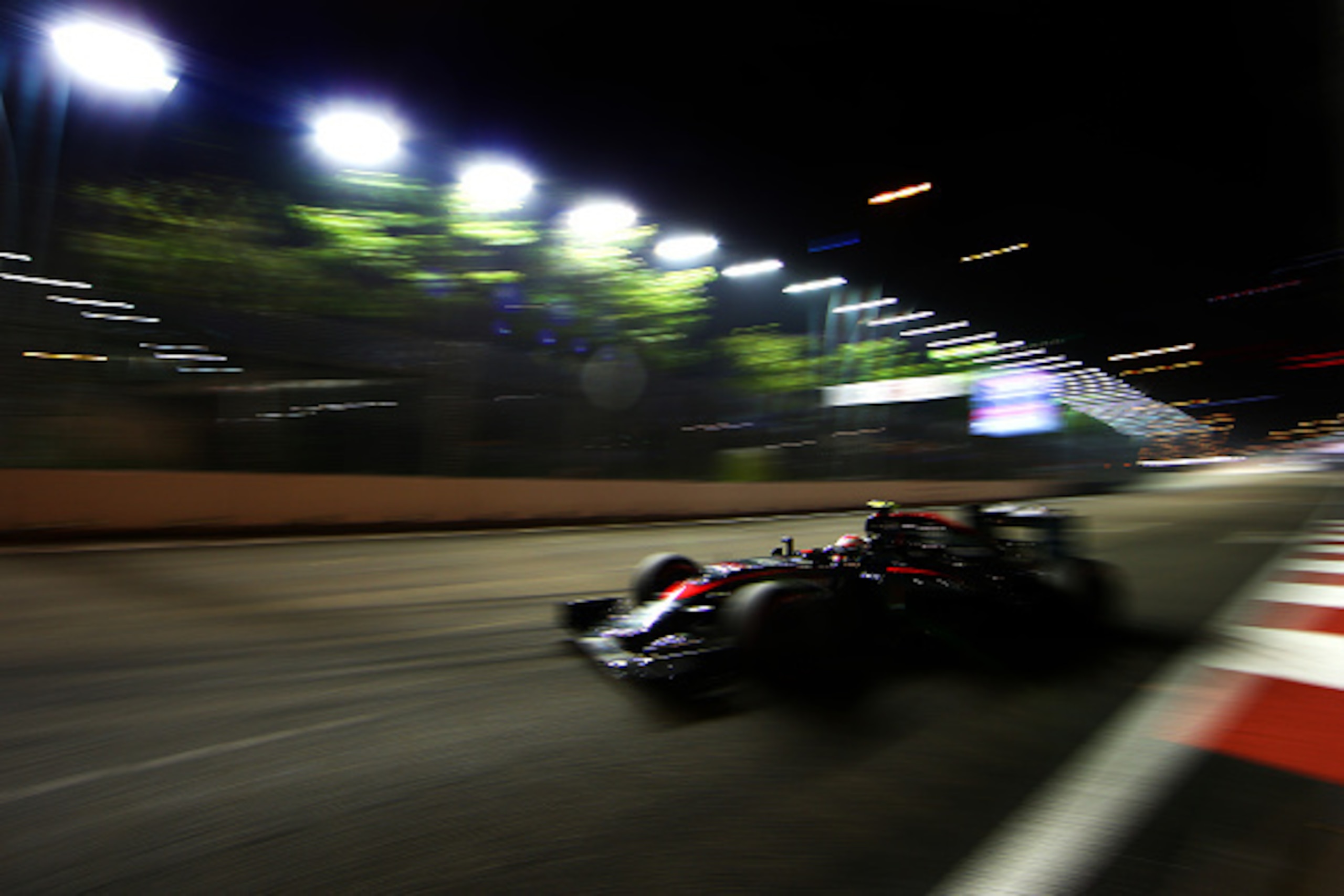
With a similar package to Red Bull—in other words, a weak engine but a decent chassis—McLaren would also have identified the twists and turns of Singapore as a race to add a significant amount of points to their tally.
One of the most fascinating debates surrounding the team in 2015 is just what the MP4-30 could have achieved with power parity, with BBC Sport's Andrew Benson recently claiming the car is widely considered "the fourth- or fifth-best chassis in F1."
Yet even when the effect of its Honda power unit is restricted, the MP4-30, on the evidence of the Marina Bay weekend, is nothing more than a substandard piece of machinery.
In Q1, Jenson Button required a late charge to beat Sauber's Felipe Nasr to a place in the next segment of qualifying by 0.074 seconds, per the official F1 website, only to be nailed to the bottom of the time sheets in Q2.
And while yellow flags ruined Fernando Alonso's final run in Q2, it is fanciful to think he would have found the required 0.523 seconds to squeeze into the top-10 shootout.
As we noted after July's Hungarian GP, the problem with identifying individual races is that it attaches massive significance to these events, making it imperative for teams to capitalise on their opportunities and enjoy clean, trouble-free weekends when it matters most.
It was almost inevitable, therefore, that both McLarens suffered race-ending gearbox problems when the drivers—Alonso in particular—could have claimed a point or two.
The team's fourth double-retirement of the season means it is increasingly likely that McLaren will end 2015 with 17 points and ninth place in the constructors' standings, and it no longer matters whether the chassis, the engine or both are to blame.
The bottom line is, McLaren simply haven't been good enough.
Winner: Toro Rosso's Drivers
5 of 7
Max Verstappen and Carlos Sainz Jr. have exceeded expectations this season, but a true indication of their brilliance was always bound to come at the Singapore Grand Prix.
At a race where two rookies struggled physically in 2014, the heat and humidity of Marina Bay was set to test 21-year-old Sainz and Verstappen, the youngest driver the sport has ever seen at 17, to the absolute limit.
It seemed as though we were going to be denied the experiment when Verstappen's car stalled at the start, leaving him a lap behind before his race had even begun.
Yet with the aid of the safety car, the Dutchman managed to achieve the result his pace deserved, and the Toro Rosso drivers worked in tandem to carve through the field in the latter stages, when their bodies should have been massaged to the finish, to finish eighth and ninth.
The pair effectively ambushed their victims, with Verstappen's initial overtake acting as a cue for Sainz to force his way past first Pastor Maldonado and then Romain Grosjean, each move as brave and breathtaking as the last.
It was an outstanding display of teamwork in a sport in which everyone is out for themselves and allowed Toro Rosso to salvage a handful of points when, as Verstappen sat motionless on the grid and Sainz's car was stuck in neutral, they could have left Singapore with nothing at all.
From their pure pace and their overtaking prowess to their fellowship and their fitness levels, Verstappen and Sainz continue to challenge everything we thought we knew about F1.
Loser: Toro Rosso's Prat Perch
6 of 7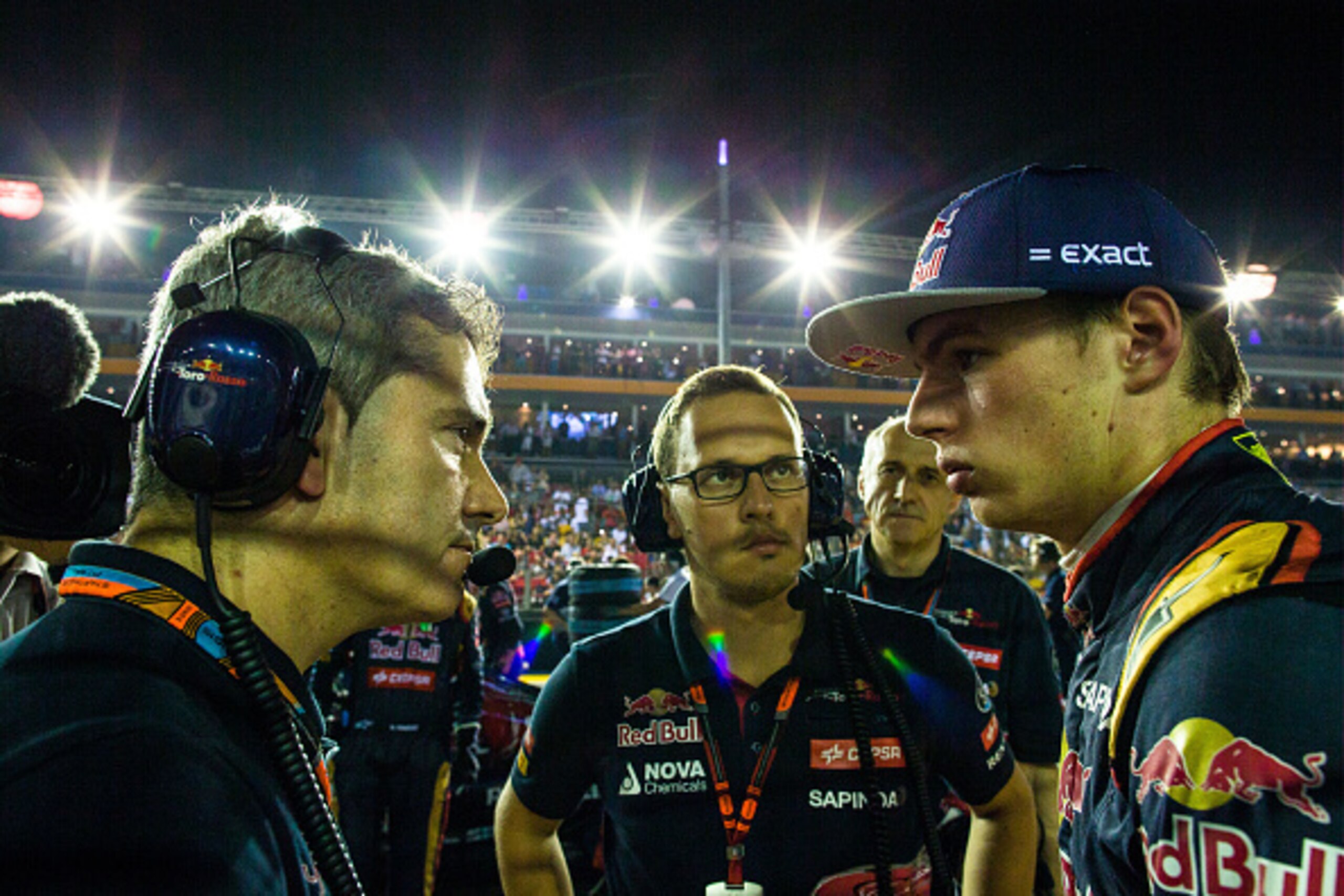
Verstappen and Sainz worked together to put Toro Rosso in a position to score points in Singapore.
But the pit wall, as ever, wanted more.
As the pair closed in on seventh-placed Sergio Perez in the latter stages, Verstappen, per the FIA television feed, was instructed to give his position to Sainz, to which he simply, brazenly and justifiably replied: "No!"
Quite why the team felt Sainz, with tyres that were only one lap fresher than his team-mate's, would stand a better chance of overtaking Perez than Verstappen, who is his short time in F1 has already established himself as one of the most aggressive and confident passers on the grid, is anyone's guess.
Yet the team's constant messages to the 17-year-old—Sainz later told BBC Sport how Verstappen was told to move aside on four separate occasions—led to a much deeper concern.
Verstappen is one of the most exciting, natural talents to arrive in F1 for a generation, and it was lamentable that the prat perch felt the need to contaminate the Dutchman—and Sainz, for that matter—with the poison that is team orders, especially at this stage of their careers.
Both men, in their rookie campaigns, should be encouraged to drive with freedom, spontaneity and a sense of adventure, and it was revealing that Toro Rosso team principal Franz Tost quickly defended Verstappen's stubbornness, per Sky Sports' Mike Wise.
The team's call to switch positions, to stifle their drivers' creativity, was wholly unnecessary and, regrettably, only served to detract the attention from Sainz and Verstappen's latest outstanding performances.
Winner: Felipe Nasr
7 of 7
After receiving an updated Ferrari power unit at the Belgian Grand Prix, Sauber introduced a range of aerodynamic upgrades—including a short nose, 2015's must-have accessory—in Singapore.
The plan, following their midseason lull, is to enjoy a relatively strong finish to the season and cement eighth place in the constructors' championship.
But, to the naked eye at least, those so-called improvements didn't seem to make a difference to what is now the second-worst car on the grid, with Marcus Ericsson and Felipe Nasr failing to progress from Q1.
The C34, though, tends to perform better in racing conditions, and the retirements to Hamilton, Alonso, Button, Felipe Massa and Nico Hulkenberg—drivers who, in normal circumstances, would all probably finish ahead of Sauber—allowed the team extend their point-scoring streak to four races.
Nasr and Ericsson were evenly matched throughout the weekend, but it was the former—on a two-stop strategy compared to his team-mate's three-stopper—who came out on top.
The Brazilian has suffered plenty of bad luck in recent races—suffering brake problems in Austria and Belgium, a puncture in Italy and failing to even start the British GP—and, with a 10th-place finish, he has scored his first point since May's Monaco GP.
With Ericsson scoring four points in the three races between the Hungarian and Italian grands prix, Nasr's result has also extended Sauber's lead over ninth-placed McLaren to nine points with six races remaining.
Every little helps, after all.
.jpg?w=2560 "Rams Raiders Football")
.jpg?w=2560 "Steelers Saints Football")



.jpg?w=2560 "🚨 Week 8 AP Top 25 Poll")
.jpg?w=2560 "Blockbuster Trade Idea To Shake Up the Eastern Conference 🎇")