


Every minute or so, a tea urn would belch out a great cloud of steam. It was a bitter night, but in the small room just off the tunnel at Adams Park, it was almost unbearably hot. It was packed, full of journalists watching their notepads shrivel in the damp heat, all wondering if it was possible to create enough space to take their coats off. And in the middle of them all, tie askew, top button undone, face gleaming pink, was Jose Mourinho.
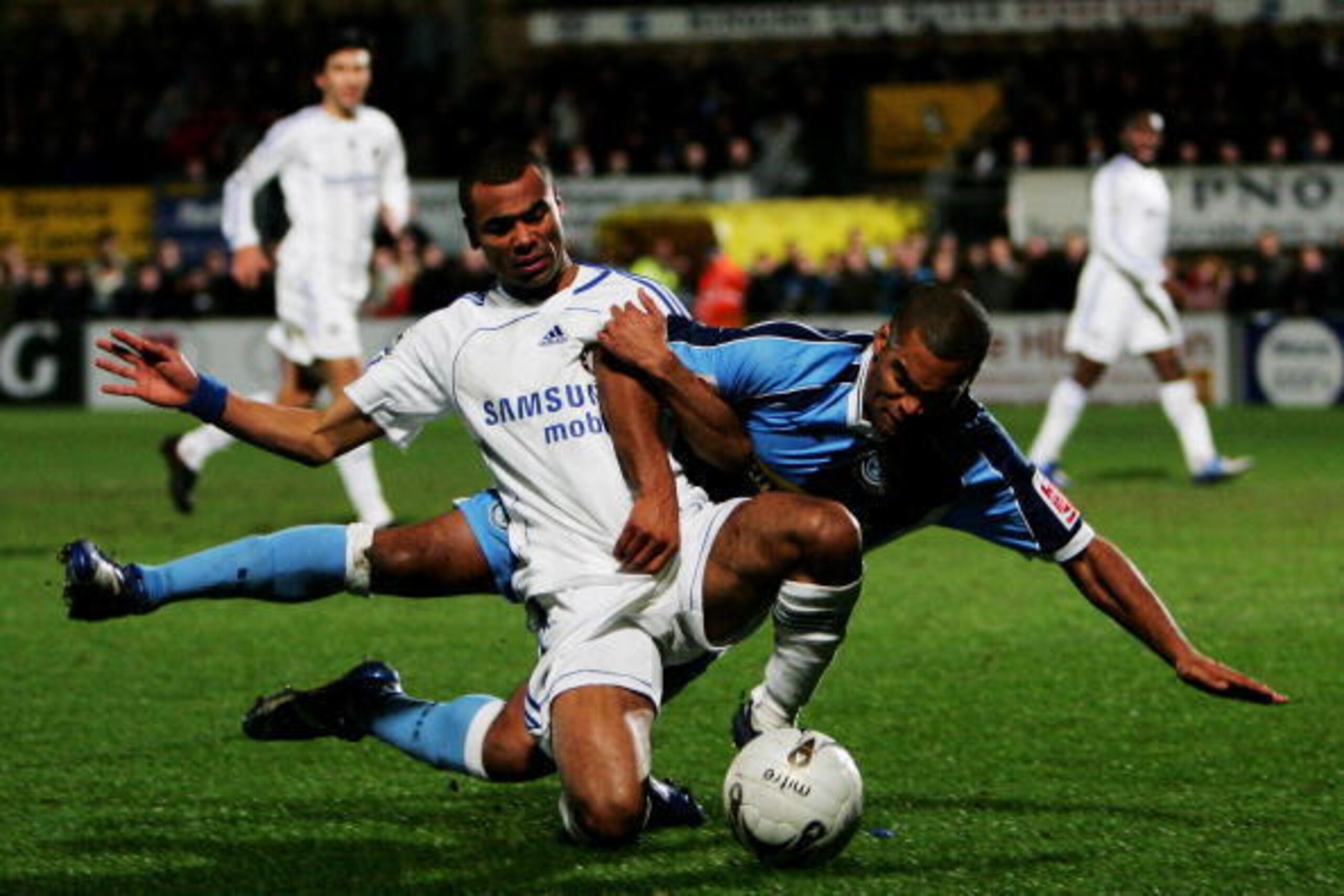
This was January 2007. Chelsea had just drawn 1-1 away to Wycombe Wanderers, at the time 71 places below Chelsea in the professional pyramid, in the first leg of a League Cup semi-final.


Mourinho was fuming. His captain John Terry was recovering from back surgery and an injury to Ricardo Carvalho left him playing Michael Essien and Paulo Ferreira at centre-back.
He wanted to sign Tal Ben Haim from Bolton Wanderers as cover, but the board had denied him. The Israel centre-back’s contract was up at the end of that season, and it seemed Chelsea’s hierarchy was unwilling to pay the £2 million fee needed to secure his signature, per BBC Sport, when they could get him for nothing six months later—as they eventually did.
"We have not the quality of player ready to play for Chelsea," he said when asked if there wasn't a youth player he could bring in. "One or two are young or not good enough to play at this level. I don't have a second squad to go through and pick players."
Had he tried to bring in new players? “Yes.” So why hadn’t he signed anybody? “Club reasons.” Could he expand on that? "It's not my club," he said. "I'm just the manager."
It wasn’t until the following September that Mourinho left Chelsea, but what happened in the tiny interview room at Adams Park that night was the first real sign his position at the club was no longer tenable. That was the beginning of the end of his first spell at Stamford Bridge.
It’s a night that has come to mind a lot over the past few weeks as Chelsea have started the season slowly. After the opening-day draw against Swansea City, Mourinho admitted it was “dangerous” for Chelsea to have been so inactive in the transfer market, at that point having brought in just Radamel Falcao and Asmir Begovic. "You say if you stand still you get worse. It's right.”
After Saturday’s defeat to Crystal Palace, Mourinho was even more pointed. “I hope this does not prompt us to the transfer market,” he began, but as so often with him, tone and context meant as much as the words. “I don’t like that. I gave my club the report of the season projection on April 21. I don’t think it’s now on August 29 or 30 that I am going to say ‘I want this’ or ‘I want that.'”
He went on to say he and the players had to do better, but it was that line that will stay in the mind. I’ve done my job, he seemed to be saying, but others at the club haven’t done theirs; presumably on April 21, he wasn’t only after a reserve forward, a reserve goalkeeper and a promising but largely unproven left-back.
It’s true that Pedro has since arrived—and looked lively against West Bromwich Albion—but given the way that transfer happened, with Chelsea snatching him from under the nose of Manchester United, that appeared opportunistic rather than part of a long-term plan.
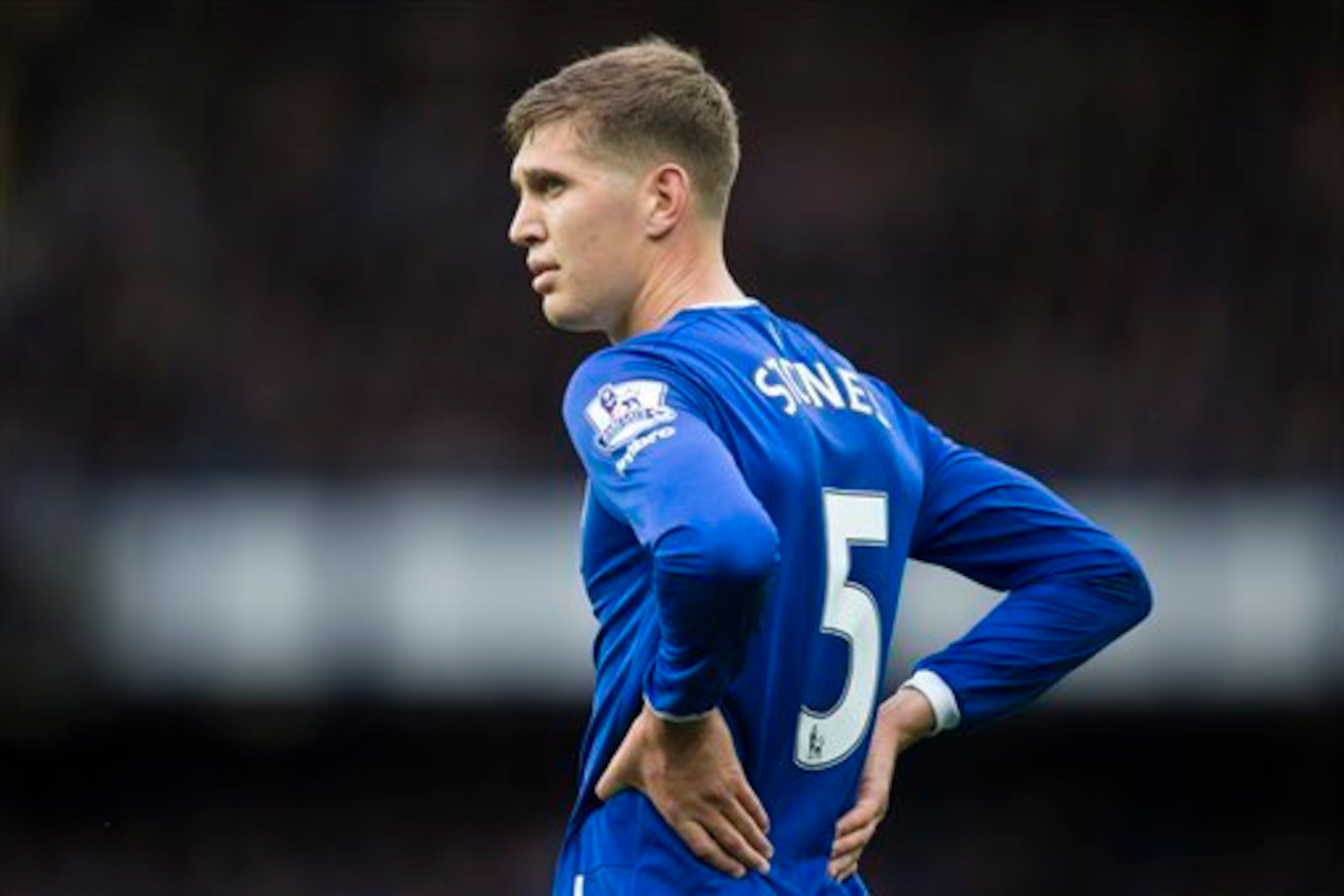
Who else was Mourinho after in April? Given they had four bids rejected for him, John Stones was clearly a prime target, and Chelsea were perhaps surprised by Everton’s willingness to dig in their heels over the defender.
Consequent interest in Zenit Saint Petersburg’s Ezequiel Garay, reported by the Telegraph, was presumably a back-up option before they decided to plump for Papy Djilobodji for £2.7 million from Nantes, a low-risk, low-cost alternative who is surely fourth choice in the position—and whose acquisition makes clear just how hard it is for youth players to break through into the Chelsea first team. At least Chelsea did land him, though, and the Senegal international didn’t become the Ben Haim of 2015.
There appears also to have been interest in signing Paul Pogba from Juventus to bolster the midfield, reported by the Independent. That—along with Stones—suggested Chelsea had around £100 million more they were prepared to spend on players than they actually spent.
That’s entirely plausible given how tightly Chelsea’s finances have been run recently and the way they’ve exploited the loan market, stockpiling young talent and then selling it at a profit even if it doesn’t make the first team—at the moment, Chelsea have 33 players out on loan.
Quite apart from the financial resources that means Chelsea still have unspent funds, what’s fascinating is the two areas of the pitch that seem to have been highlighted as potential weaknesses.
When Diego Costa missed the Community Shield with a hamstring problem, the suspicion was Chelsea may lack cover at centre-forward with only Radamel Falcao, who hasn’t convinced since his return from a knee injury last year, and Loic Remy, who isn’t a natural lone front man, as back-up.
Mourinho, though, insisted Stones was vital and that he was troubled by the defence. Four games into the season, Chelsea have conceded nine goals, the second-worst record in the division.
Terry has looked slow, and Cesar Azpilicueta would be under fire for his form were it not for Branislav Ivanovic’s nightmare at right-back. Mourinho, it turns out, was absolutely right—although presumably not in a way that gives him any satisfaction.
"4 - Chelsea's four point total is the 2nd lowest tally at this stage of a PL season by a reigning champion. Shock. pic.twitter.com/FiwwyLSdcD
— OptaJoe (@OptaJoe) August 29, 2015"
The back of midfield is also an issue. Cesc Fabregas looked shattered toward the end of last season and hasn’t started this season any better, offering Nemanja Matic little help in protecting a back four that suddenly looks rickety. Pogba, clearly, would have been a huge asset in that role—although it would equally clearly have taken a huge offer to prise him from Juventus.
The fact Chelsea failed to land Stones, though, seems to be the one that really rankles, and it doesn’t take a huge leap to interpret Mourinho’s comment about having submitted his list of targets on April 21 as a question about why those charged with signing them failed to do so.
The failure to strengthen the squad may not be the only reason for Mourinho’s grumpiness at the beginning of this season. His evident frustration at certain aspects of how the club has been run has already encompassed the medical staff.
It may not even be the major reason, but it is the most visible reason, and with Chelsea already eight points behind league leaders Manchester City, late 2015 is beginning to feel a lot like early 2007 for Mourinho.
All quotes obtained firsthand unless otherwise stated

.jpg?w=2560 "Raiders Could Start Mendoza")
.jpg?w=2560 "Rodgers Iced Out on Plane 💎")


.jpg?w=2560 "🚨 Week 8 AP Top 25 Poll")
.jpg?w=2560 "Blockbuster Trade Idea To Shake Up the Eastern Conference 🎇")