4 Most Frustrating Things About Being a Bayern Munich Fan Right Now
Generally speaking, life is good for Bayern Munich fans. They support one of the very richest clubs in the world, one with massive financial and sporting dominance over their domestic competitors, and one that boasts one of the very best squads in world football.
Bayern won a treble not long ago and have lifted the Bundesliga trophy at the end of each of the last three seasons, whilst being favorites to make it a record fourth consecutive title at the end of the current campaign.
Yet, things are not perfect in every way for Bayern fans. Click "Begin Slideshow" to see just why.
Not Knowing Which Club Hero Will Be Next to Leave
1 of 4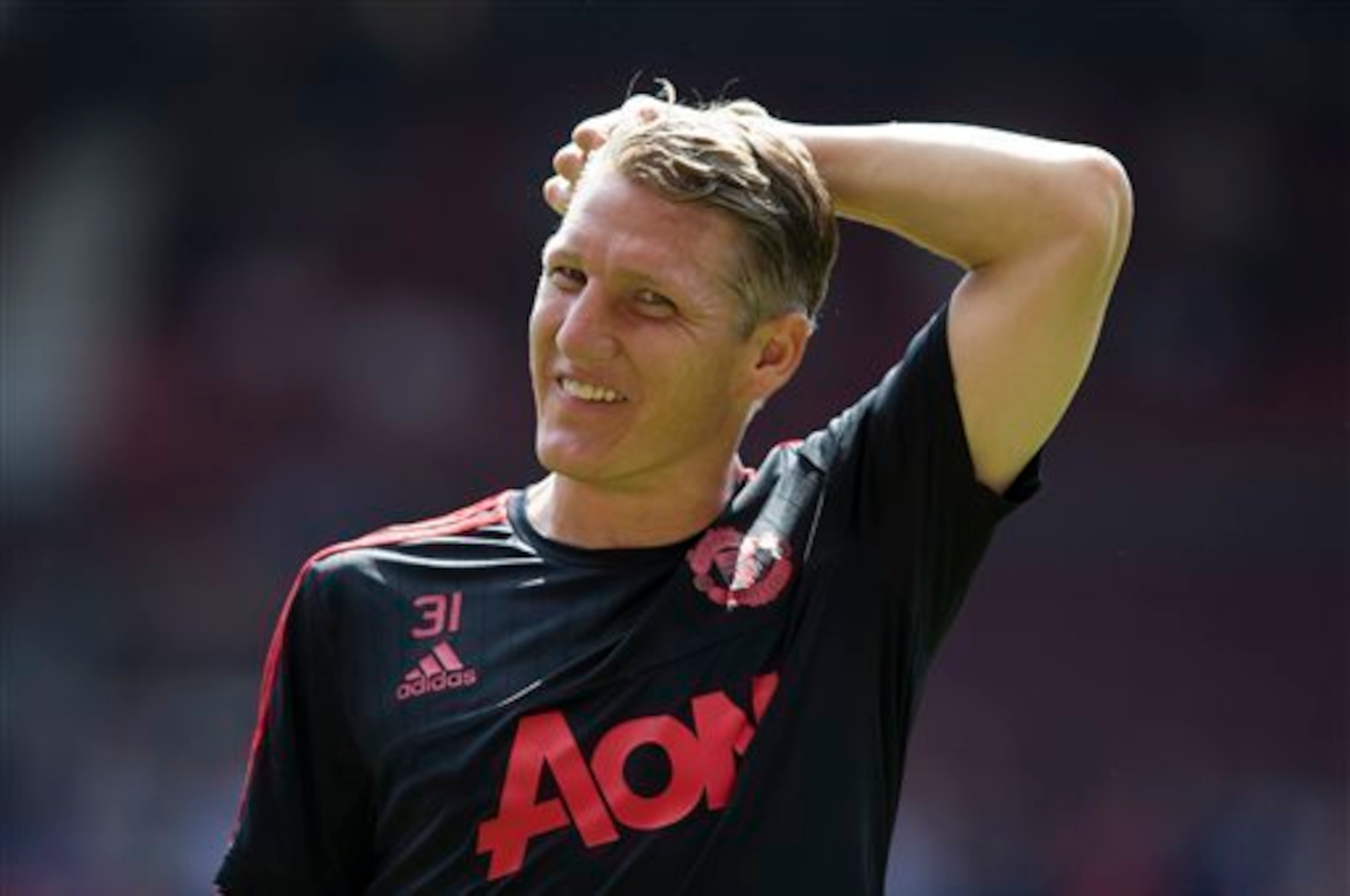
Hate him or love him, there's no questioning that Pep Guardiola is a divisive figure. If he doesn't like a player's style, that player soon leaves. It was no surprise when Luiz Gustavo and Mario Gomez were sent packing the summer that he arrived, despite both having had enjoyed enormous success in a Bayern shirt prior as the club had reached three Champions League finals in four seasons with both players contributing significantly in the process. Many fans lamented the sale of Gomez and particularly Gustavo.
The next year, Mario Mandzukic was dismissed, just 12 months after the fan favorite scored the opener in the Champion League final. He left along with Toni Kroos, a Bayern academy graduate who in the same summer would be instrumental to Germany's demolition of Brazil en route to the World Cup title. And most recently, native Bavarian Bastian Schweinsteiger, captain of the German national team and heroic symbol of Bayern Munich was sold to Manchester United, much to the dismay of many Bayern fans.
There were reasons, some more valid than others, for each of the aforementioned sales. Yet each, to some degree or another, has justifiably been met with considerable disappointment from many fans. In this Bayern club, even heroic players can be sold. And fans are concerned at who may be next to go.
Not Knowing the Next Step After Pep Guardiola
2 of 4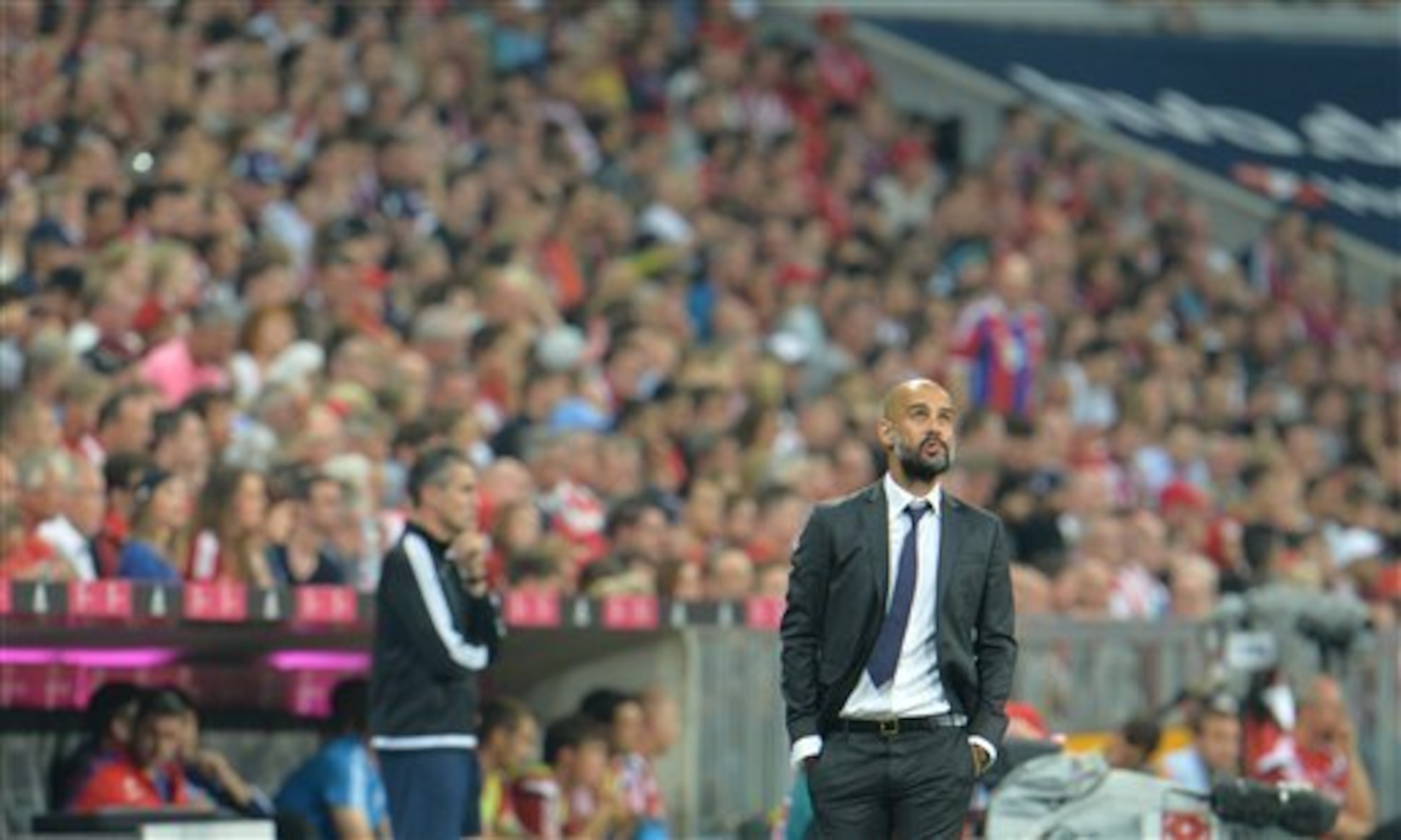
Pep Guardiola has begun the third and final year of his Bayern contract, and still it remains in question who will manage the Bavarians next season. Club president Karl-Heinz Rummenigge has repeatedly expressed his desire to extend the Spaniard's contract, but his efforts as of yet have been in vain.
Many expect Guardiola to leave at season's end, but whether in 2016 or later, the reality is that Bayern will one day need a new trainer. And in this particular case, it's hard to see who could possibly come next.
Guardiola is a very specific type of coach; his approach to the game is unique, and he's transformed the way the club and individuals within his team play the game.
Accordingly, it's extremely difficult to find a suitable successor to Guardiola who will be able to make the club evolve and take the next step. The concept of building a club over the course of a decade and bringing in a new coach every few years to make moderate tweaks and adjustments within the context of a general framework doesn't really apply in the case of this Bayern team and Guardiola.
When he took over for Jupp Heynckes, the ex-Barcelona trainer completely overhauled the system. The drastic changes he made proved to be difficult for his players to adapt to. And to this day, after just over two years at the helm, Guardiola is still trying to find the right formula to succeed in the biggest games.
When Guardiola leaves, his successor will inherit a team of players used to a rather different style of playing. Whether Jurgen Klopp, Lucien Favre, Carlo Ancelotti or otherwise, the new trainer will face a real challenge in avoiding a repeat of Guardiola's first season in which a massive change in playing style cost Bayern dearly at the highest level. And fans know it.
The Club's Shifting Identity
3 of 4
Not long ago, Bayern Munich was Germany's team, with a strong core of national-team players from greater Germany and, in particular, Bavaria. In the last few years, however, that image has changed drastically. The side Jupp Heynckes led to the 2012 Champions League final contained seven Germany internationals in the starting lineup, three of whom were natives of Bavaria. In the next season's final, that figure dropped to five.
In last weekend's Bundesliga opener, only Manuel Neuer, Jerome Boateng and Thomas Muller were members of the starting lineup who also were active members of the German national team, with Muller and Philipp Lahm being the only native Bavarians. For perspective, when Germany won the 2014 World Cup, their squad contained as many players from Arsenal as there are Bayern players in the current national team.
Bayern's transfer strategy has changed. Great things were hoped of Mario Gotze, but the Dortmund academy graduate hasn't lived up to expectations. The other marquee transfers in the last few years have all been foreigners, starting with Javi Martinez, Mario Mandzukic, Xherdan Shaqiri and Dante in 2012 and continuing with Thiago Alcantara, Robert Lewandowski, Arturo Vidal, Douglas Costa, Xabi Alonso, Mehdi Benatia and Juan Bernat in the years since.
There have been some Germans brought to Munich in recent years, but players like Mitch Weiser, Jan Kirchhoff and Sebastian Rode have struggled to earn any meaningful playing time (the former has already left), while Joshua Kimmich faces a steep uphill struggle to assert himself.
To many, an "international" Bayern is no problem at all and rather is embraced. To many others, however, it's important that the club remains true to its roots. Earlier this week, Ottmar Hitzfeld (per Goal) joined a growing chorus of critics concerned with Bayern's changing identity. This is perhaps the greatest public-relations challenge the German giants face.

.jpg?w=2560 "Commanders Eagles Football")

How, to Other Fans, the Champions League Title Is the Only Possible 'Success'
4 of 4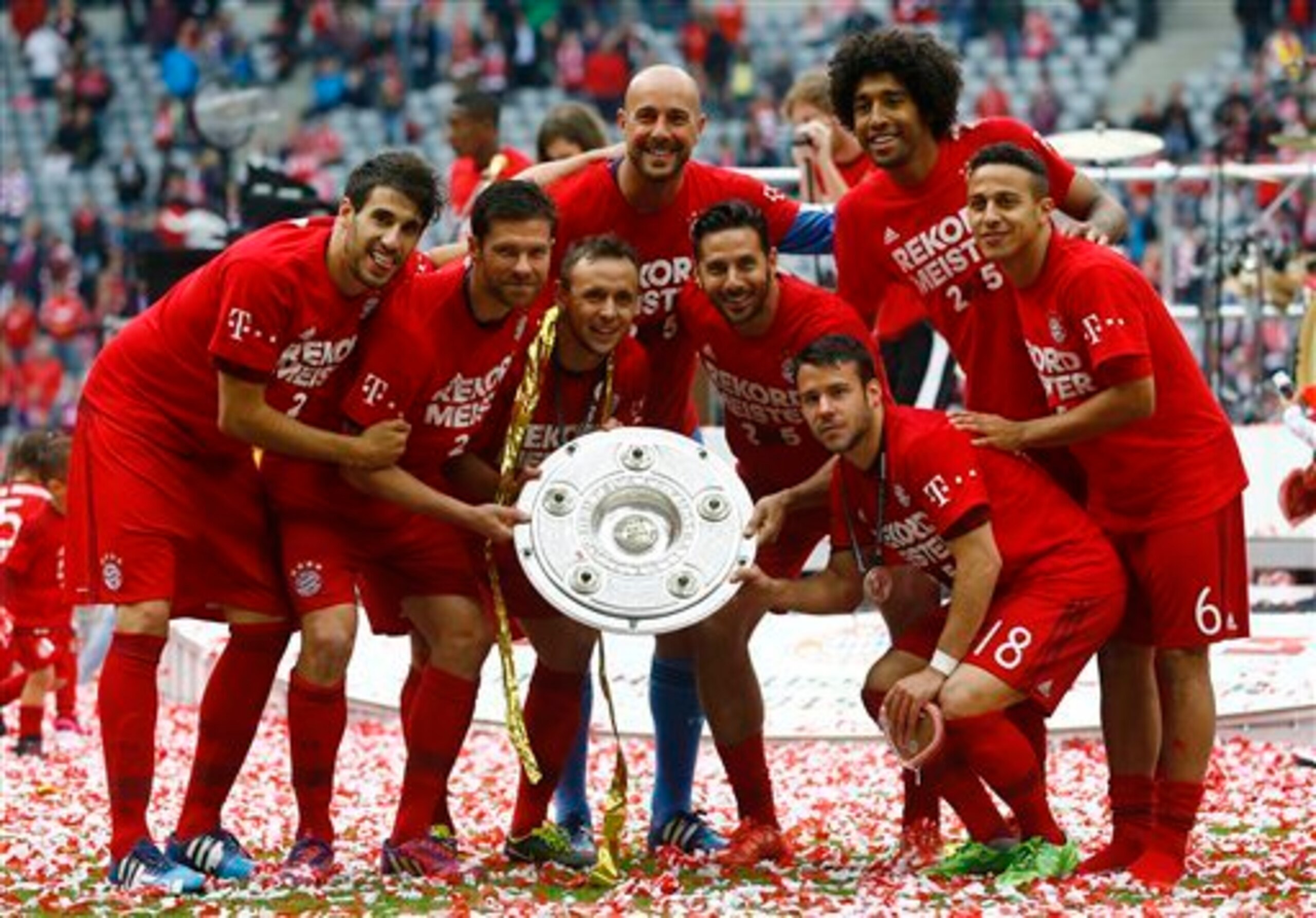
To many, in the Bundesliga and DFB-Pokal, Bayern can only do two things: 1) Achieve an adequate result (winning the title in each case); or 2) fail (come runners-up or worse).
If the German top flight is indeed a "weak" league, an opinion that regardless of Champions League and Europa League results is enforced by a relatively small foreign fanbase and limited marketing power, then the one true German superpower should be able to run away with the title ever year, right?
Not exactly, but that's how many see it.
After all, Bayern (per Deloitte) earned €487.5 million in 2013-14, nearly twice as much as their nearest domestic rivals, Borussia Dortmund (€261.5 million) and more than twice as much as the next side, Schalke (€213.9 million). All other German sides were out of sight. In England, there are several top sides competing on a regular basis, and the distribution of TV revenue is more even. Spain is dominated by two superpowers in Real Madrid and Barcelona, but at least there are two. And although Italy has become the league of Juventus, it can't be ignored that Milan is the second-most successful side in Champions League history in terms of trophies won.
The burden of expectation is the price Bayern pay for the success they created early in Bundesliga history, making a few shrewd signings and getting a good head-start as with their superstars and success, they developed a legacy and reputation. To their credit, Bayern have been ruthless in maintaining their hegemony atop the German league, which is never entirely a given despite their financial and branding dominance.
Targeted signings of star players from rival clubs, excellent marketing to local and foreign investors, and the development of a unique club culture have led to Bayern becoming what they are today, a true powerhouse of world football. If the cost of their success is an unsavory opinion among fans of foreign clubs, it's not the worst price to pay.

.jpg?w=2560 "Chiefs Dolphins Football")

.jpg?w=2560 "Love's Body Already 'Tired'")