How Thomas Tuchel's New System Worked Wonders for Dortmund in Win over Gladbach
Borussia Dortmund did a lot of things right against Borussia Moenchengladbach on Saturday evening. They scored four fantastic goals, for a start, and managed to keep a clean sheet to boot. Lucien Favre's side never stood a chance in front of the feverish Westfalenstadion crowd, and as such, it was a simple, effective win for the former German champions.
But aside from the goals and the three points, something more important has shifted behind the scenes at this Bundesliga club, and it may well come to define the success this side will or will not enjoy this season.
Dortmund have abandoned the quick, long-ball football of former manager Jurgen Klopp and instead turned to Tuchel's own style of football. And boy is it working for them.
.jpg?w=2560 "Commanders Eagles Football")


Perhaps not the most notable shimmy in personnel since Tuchel took charge, but the promotion of Sokratis Papastathopoulos to be partner-in-chief to Mats Hummels over Neven Subotic is one that could perhaps go on to define the difference between Klopp and Tuchel's reigns at the club.
Of course, we can't know for sure which central defender Tuchel truly admires until the Serbian international returns from injury and is fully fit, but it seems as though Sokratis' star may be favoured due to his ability to play the ball on the ground.
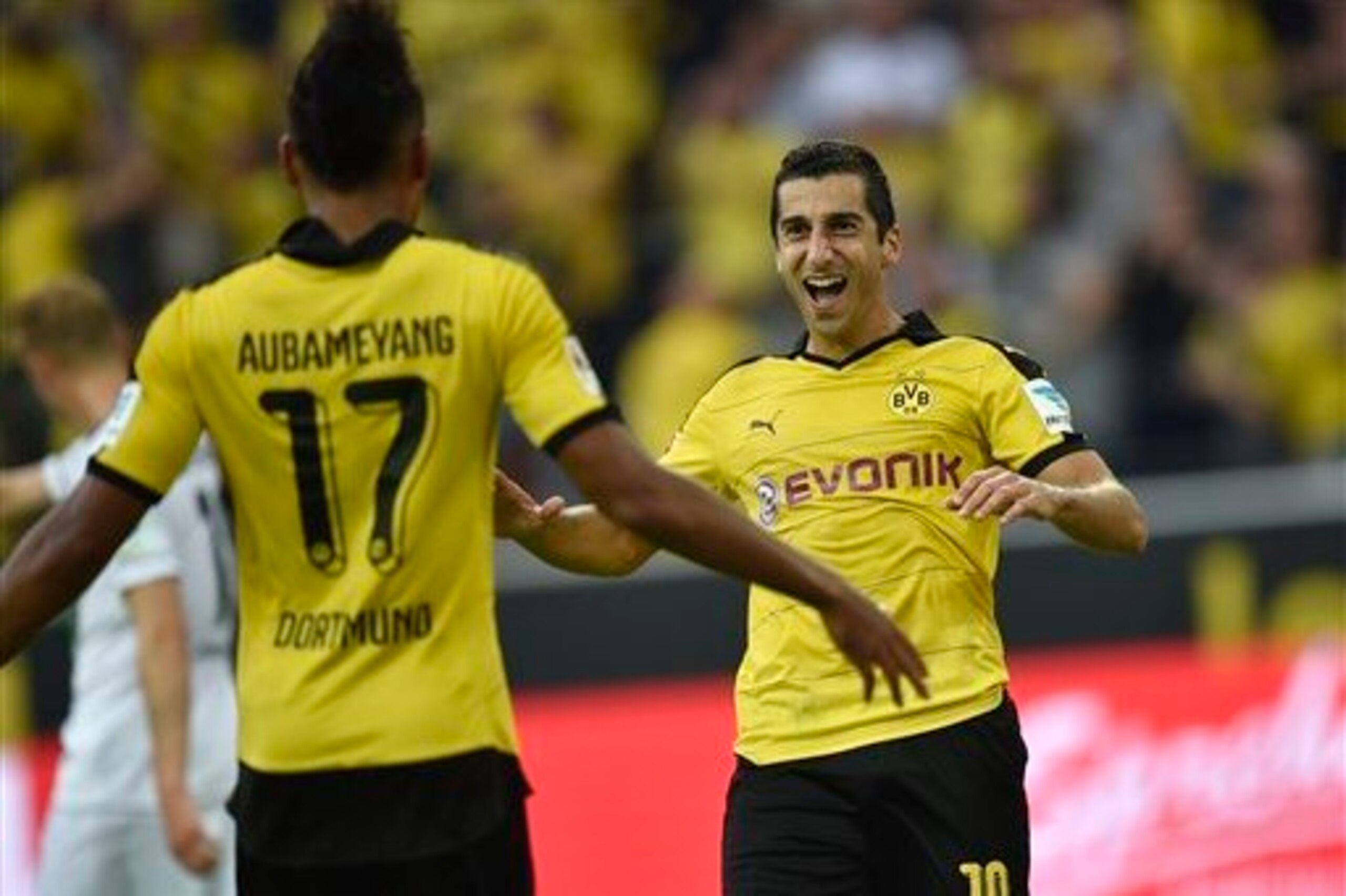
For a number of successful years, Dortmund's side was built on the solid foundations of Hummels, the passer of the ball, and Subotic, the no-nonsense cleaner-up. Yet that system has faltered over the past 18 months. Both have looked far from their best, and when the foundations began to crumble, the whole team fell apart, as we saw with the club's drop to bottom place in the Bundesliga last season.
Now with Sokratis, another passer of the ball, alongside Hummels, Dortmund have another system to build upon. But this time, there will be far fewer punts up the field from the centre of defence.
Another notable switch from one player to the next that suggests Tuchel's changes on the side has been the introduction of 19-year-old Julian Weigl in midfield at the expense of Sven Bender. Weigl, who arrived from 1860 Munich this summer, has been thrown into the side and has very quickly shown his worth to those playing alongside him in the middle of the park.
Bender's exclusion may not surprise too many Dortmund fans, considering the poor run of form he had last season, but it represents so much more than just an out-of-form star at the club. Tuchel has stepped away from the physical, hard-working players that made Klopp's side so successful and instead turned to more technical players who can play the ball on the ground.
The success of this was clear for all to see in Saturday's match as Weigl jinked and sprinted past opposing players in the middle of the pitch while always holding on to possession. Despite his inexperience at this level of the game, the youngster from Munich is already worth so much more to this new Dortmund manager than Bender ever could.
These small but effective changes across the team have changed the manner in which Dortmund play. Rather than fling long balls up the park in the hope of players running on to them, Tuchel's side build from the back and look for short passes across the pitch to counter their opponents with speed and precision.
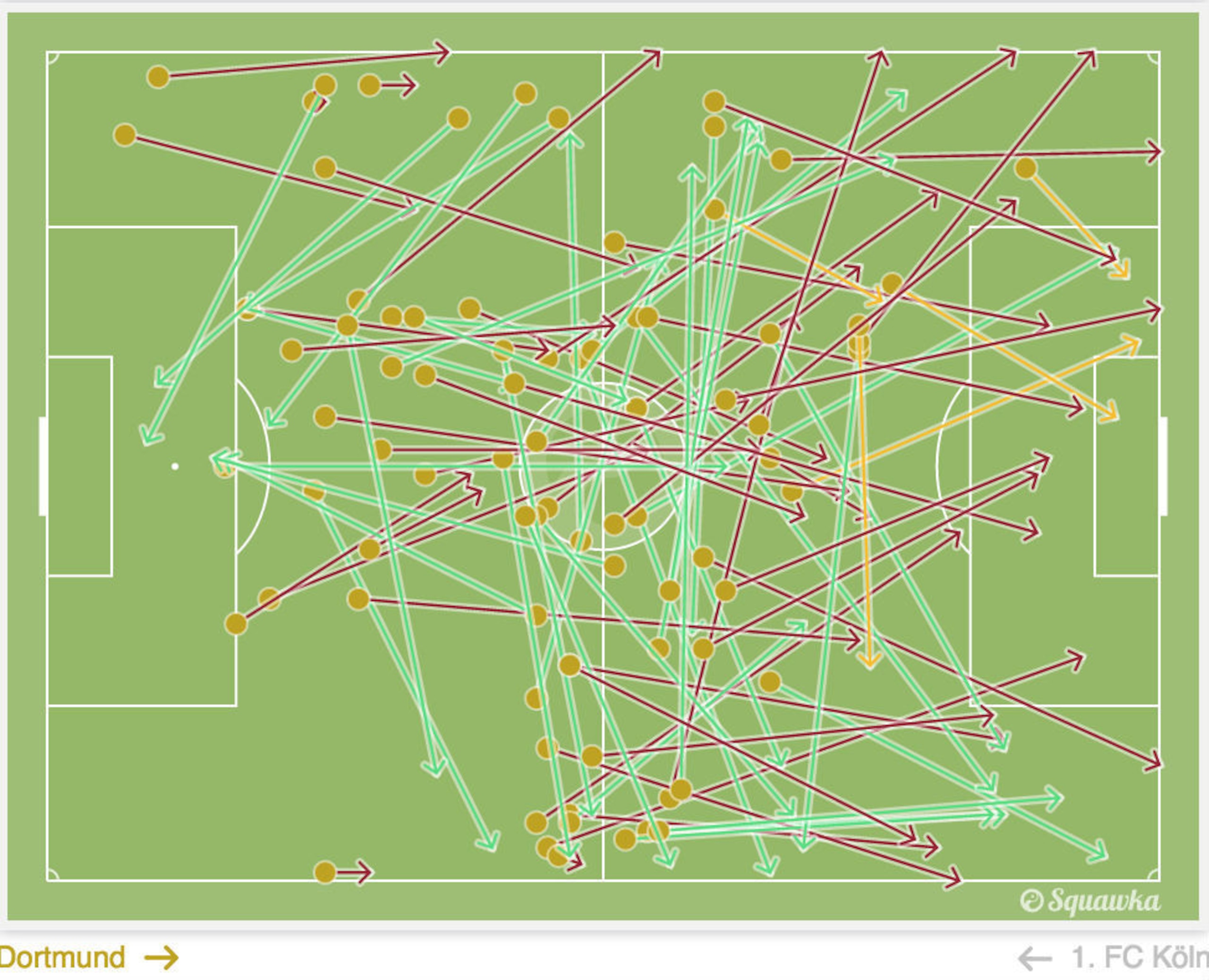
The Squawka graphic above shows the long balls Dortmund attempted against Koln last season in a Bundesliga match under Jurgen Klopp. A vast aray of passes going down the left, right and through the centre of the park with very limited success. The failed attempts, depicted by the red lines, dominate the graphic and show just how poorly Dortmund used to be at getting the ball up the field when in attack.
Contrastingly, the graphic below shows all 42 long balls Dortmund attempted on Saturday against Gladbach. Notice that aside from the two failed passes in Dortmund's own box (clearances from goalkeeper Roman Burki), the side were notably further up the park and crucially preferring to avoid using long balls whenever possible. Dortmund, for the most part, have abandoned Klopp's style of football, and it seems to be working.

The proof of all this was evident for all to see through the manner in which Dortmund's attacking four players regularly broke through the Foals' defence with precession and purpose. Marco Reus and Pierre-Emerick Aubameyang were on the top of their game, and their two opening goals surely killed off the match before it had even started.
But the icing on the cake in Dortmund's opening-day victory was the manner in which both Shinji Kagawa and Henrikh Mkhitaryan looked like completely new players.
Both attacking midfielders struggled to find any consistent form under Klopp's football last season, with the ball routinely bypassing the midfield in favour of direct passes straight to the front line. It should come as little surprise that once Dortmund started passing the ball on the ground under Tuchel's instruction, both players lit up and looked fresh for their side.
Kagawa, who was routinely thrown out wide or asked to play off the striker last season, seems to have been chosen by Tuchel as his playmaker of choice to sit at the top of his midfield diamond in the traditional No. 10 role. It worked wonders in Dortmund's pre-season tour in Asia and clearly baffled Gladbach on Saturday as Kagawa played in Reus for the opening goal.
Perhaps even more impressively, Mhkitaryan—a player who scored just three Bundesliga goals last season—already has six to his name in just four games this season. The Armenian international, like his side as a whole, has truly benefited from Tuchel's tweaked tactics and looks once again like a world beater.
This side have truly moved on from Klopp's time and tactics at the club. A new era is upon us and under Tuchel's new system and style of play it seems as though it may be extremely promising for this new-look Dortmund side.

.jpg?w=2560 "Chiefs Dolphins Football")

.jpg?w=2560 "Injury-stricken Seahawks signing veteran RB")
.jpg?w=2560 "Love's Body Already 'Tired'")