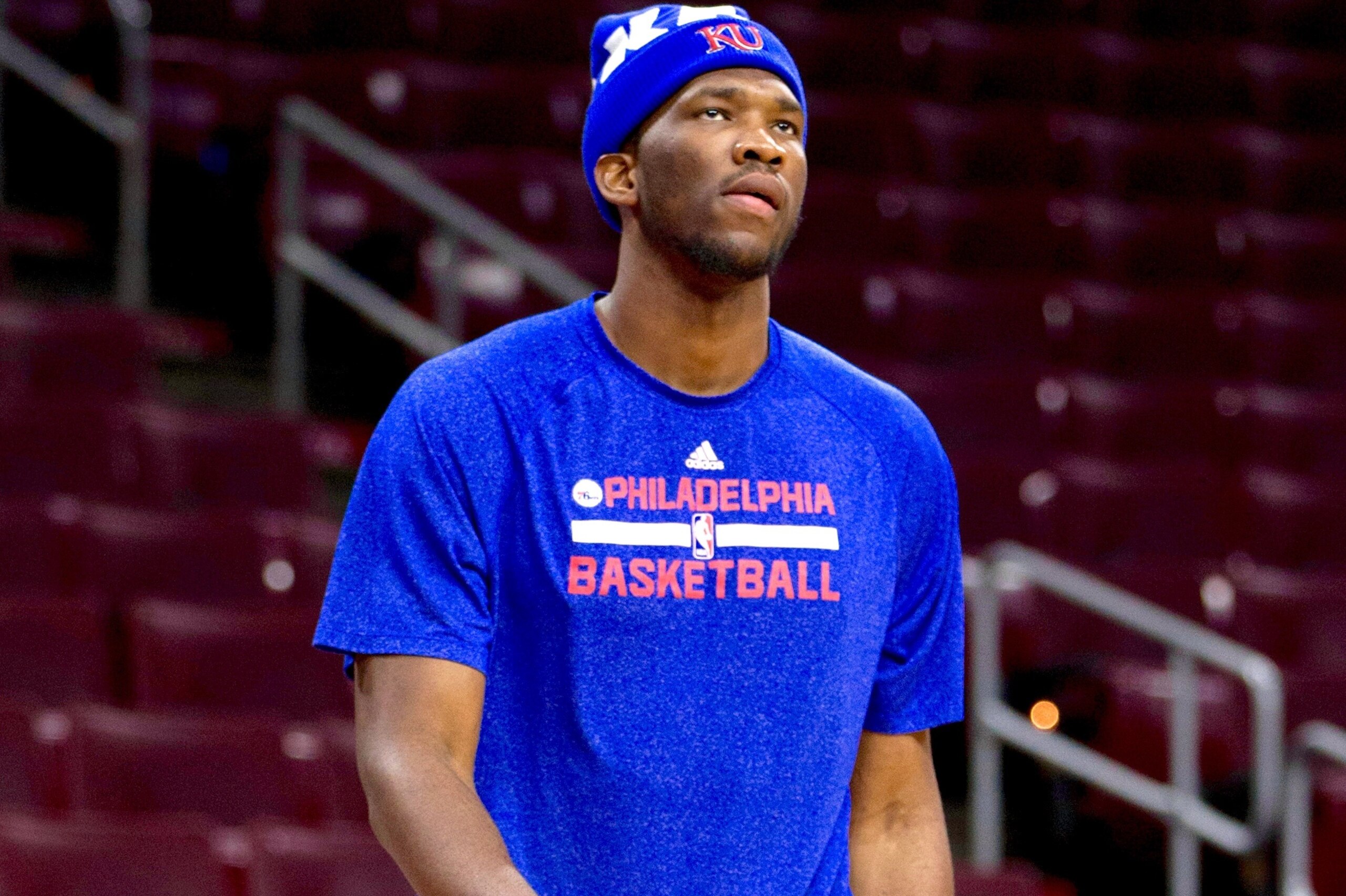

Data-Driven Philadelphia 76ers Just Have Questions, No Answers, with Joel Embiid
The Philadelphia 76ers are a franchise devoted to rigorously quantifying the value of assets, which is why this whole Joel Embiid mess must be eating them up inside.
Here's the situation: A fractured navicular bone in Embiid's right foot allowed the top prospect in the 2014 draft to slip to the Sixers at No. 3 last year. And Philly was all too happy to take him there, as it was in no hurry to win in the short term.
Embiid missed the entire 2014-15 campaign, but flashed some impressive athleticism (and apparent health) in non-game action.
TOP NEWS

LeBron's Special Helicopter Deal

MJ Makes Record-Setting Donation 🙌
Report: Embiid Down to Rookie Weight
Then, this past July, the 76ers released a statement saying Embiid's injured right foot wasn't healing as expected, and that surgery would take place within 7-10 days.
Ten days later, we got news from Bob Cooney of Philly.com that Embiid had re-broken his navicular bone. In early August, John Gonzalez of CSN Philadelphia reported Embiid would undergo surgery in the "near future," which seemed strange after the Sixers' initial timetable in July.
It took another week until a report from Marc Spears of Yahoo Sports pinned Embiid's surgery to a firm date: August 18.
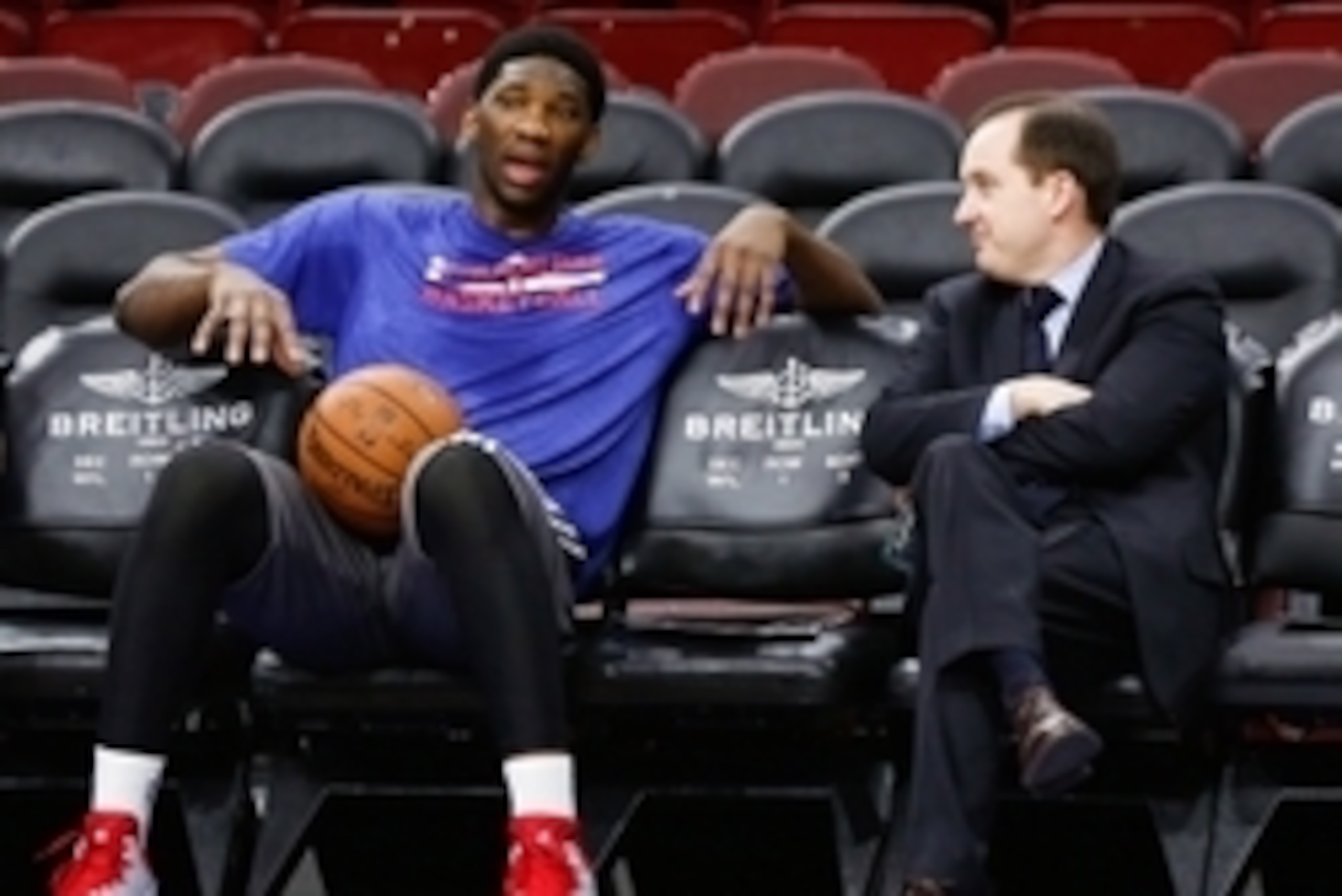
The lack of information shouldn't be surprising. General manager Sam Hinkie is notoriously reluctant to talk when he doesn't have to.
"Sam views everything said in public as information given away for free," Houston Rockets GM and Hinkie's former boss Daryl Morey told Pablo S. Torre of ESPN The Magazine last February.
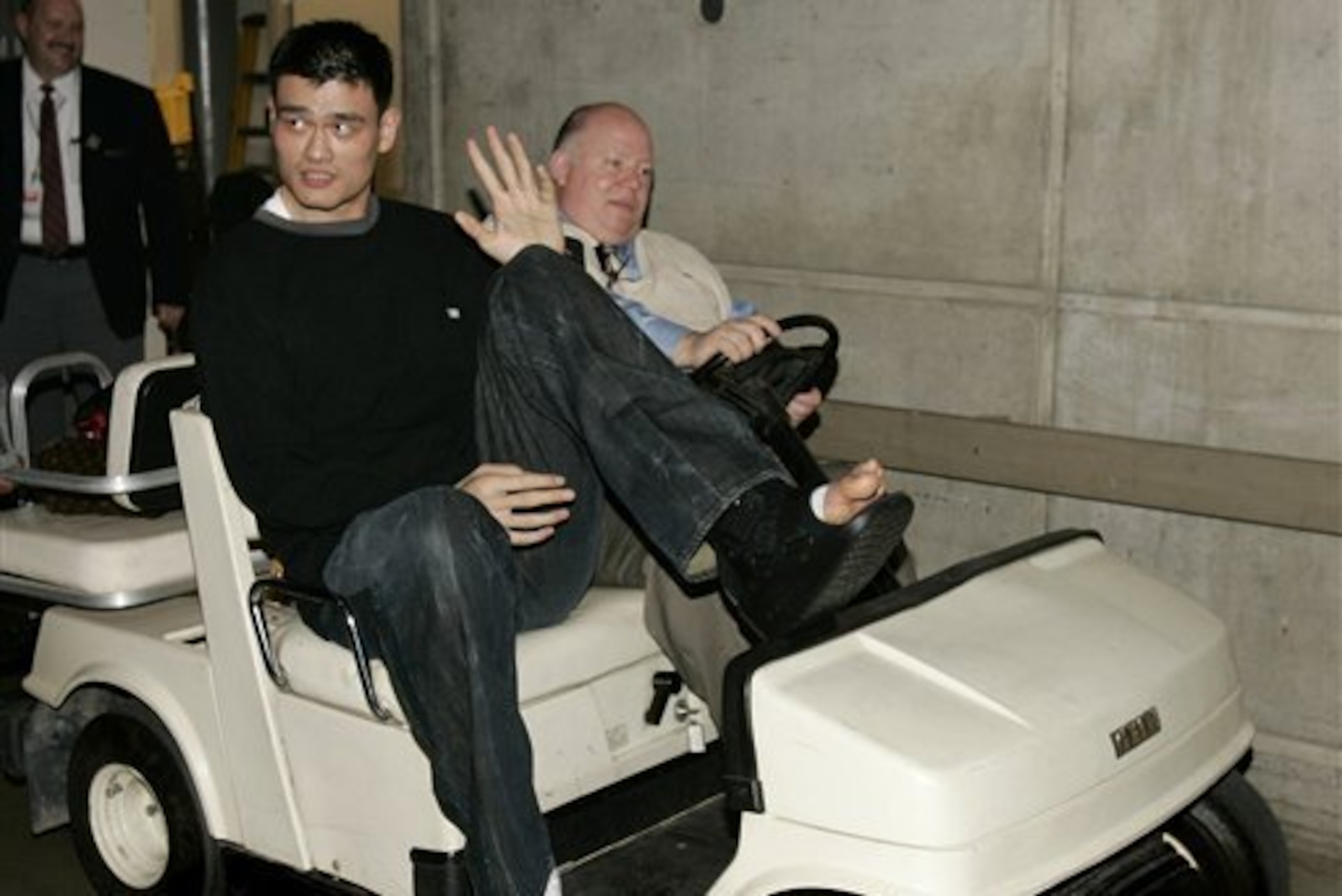
Embiid is the physical embodiment of Philadelphia's rebuilding plan, a monument to the ideology of process over result. You don't draft a big man with the same injury that afflicted Bill Walton, Kevin McHale and Yao Ming unless you're convinced the potential long-term upside outweighs the lack of immediate gain and chance of future injury.
Embiid's latest setback doesn't necessarily threaten the ideas behind the Sixers' vaunted process. That's the thing about process, actually: A good decision can still be a good decision if the thinking behind it was supported by evidence, even if the result turned out badly. Over an infinite timeline, that bad outcome would theoretically change the thinking of the process, but it shouldn't bring the entire operation into question.
Torre explains Hinkie's thinking:
"As a veteran of finance, he was fluent in the dispassionate language of expected value and probability. And in a world governed by random chance, Hinkie believed...that the process leading to a decision—say, the selection and execution of a shot attempt or the logic of an investment—should matter more than the result.
"
Unfortunately, the Sixers aren't operating in finance or on an infinite timeline. Professional sports put a premium on results, and Embiid's injury has profound consequences in the near term.
That's what makes Embiid's injury uniquely problematic. The Sixers' theory may still be sound, but practically speaking, things have to start working out eventually.
What's scary for believers in Hinkie's process, and for Hinkie himself, is that subsequent decisions about Embiid will be necessarily uninformed. And for someone like Hinkie who, according to Torre, "has a brain that runs cost-benefit analysis as relentlessly as a normal human breathes oxygen," the prospect of judging Embiid's value with so little data must be intellectually suffocating.
There simply isn't much to go on when projecting Embiid's recovery and future value.
Michael Jordan broke his navicular bone once, and he turned out OK. But he didn't break it twice, and he wasn't a hulking 7-foot center.
Walton missed much of his prime with navicular fractures and McHale still walks with a noticeable limp. Yao's career ended because of the injury.
Zydrunas Ilgauskas broke his navicular bone twice, and though it took him years to fully recover, he returned to the court in December 2001 and "played at least 78 games each of the following five seasons, moving past his foot issues to become a two-time All-Star," according to ESPN.com's Kevin Pelton.
Toss in Curtis Borchardt and Brendan Haywood, and you've got the entire list of NBA big men who've suffered Embiid's injury.
| Zydrunas Ilgauskas | 756 | 146 |
| Kevin McHale | 419 | 73 |
| Bill Walton | 259 | 479 |
| Curtis Borchardt | 83 | 245 |
| Yao Ming | 82 | 164 |
| Brendan Haywood | 22 | 142 |
That's not a very big sample—certainly not one big enough for the Sixers to feel comfortable with the major decision they'll face down the line.
Embiid is going to miss his first two seasons, which means the 76ers will only have his (theoretically) healthy year in 2016-17 to judge when he becomes eligible for his rookie extension in the summer of 2017. And that one season might not say much, because Embiid is still so early in his development. He's only been playing organized basketball since 2011, and things have changed a bit since then, as this tweet from Embiid shows:
Unpolished, rapidly developing physically and now on the shelf for two years, it's hard to know what the Embiid of 2016 will look like. At the very least, we know the one from 2015 is practically unrecognizable compared to the 2011 version.

Maybe we're underestimating the Philadelphia brain trust. Maybe Hinkie already has advanced predictive models built. Maybe he already knows Embiid's value and is just waiting for another team to approach with an offer whose value is marginally greater.
The decision to select Jahlil Okafor would seem to indicate the Sixers are at least preparing for the possibility of a future without Embiid, according to Gonzalez:
"If Embiid wasn’t a medical mystery, would they still have taken Okafor? Hinkie said he hoped they would’ve had the courage to do it, but he admitted it was a hard question 'because I knew, and it’s hard to un-know where things stood with Joel.'
"
It's deeply ironic that so much uncertainty surrounds Embiid.
The Sixers are devoted to dispassionate decisions and analytical thinking, yet they may have to make the most critical call in recent franchise history by trusting gut instincts as much as any cost-benefit breakdown.
Can Embiid get healthy in a year? If he does, will he be the cornerstone so many envisioned? Is it worth the risk to pay him like a star without seeing evidence of stardom? Is it worth the potential embarrassment of not keeping him and then watching him become a superstar elsewhere?
The questions never end.
Maybe there's room for feel and guesswork in the Sixers' hallowed process, but they probably didn't expect those tools to play this big of a role in such an important decision.


.jpg?w=2560 "Injury-stricken Seahawks signing veteran RB")

.jpg?w=2560 "Viral Rams Coach Vid 🖕")
.jpg?w=2560 "2 NFL Officials Suspended")

.jpg?w=2560 "Mahomes' Wife Trolls Kubiak 💀")