
Ranking the Top Returning NBA Draft Prospects in College Basketball
While the one-and-done prospects typically hog the attention in the NBA draft conversation, this year, there are a number of quality sophomores, juniors and seniors worth talking about.
Our top returning prospect on the board could have potentially been a lottery pick had he declared last May.
Some of these players have had the opportunity to participate in offseason showcase events like Adidas Nations, the Pan American Games, the Under-20 European Championships and the FIBA Americas Championship. The experience should ultimately help them, especially those expected to take on bigger roles in 2015-16.
The following 20 prospects are ranked based on NBA potential, which takes into account everything from physical tools and athleticism to ball skills, basketball IQ and individual development over the years.
20. Yogi Ferrell, Indiana, 6'0", PG, Senior
1 of 20
Yogi Ferrell made some improvements to his floor game in 2014-15 without significantly taking away from his scoring.
He averaged 16.3 points while increasing his assist rate and reducing his turnovers.
The appeal to Ferrell ultimately stems from his shot-creating ability—both for himself and for teammates. Ferrell's tight handle and quickness allow him to separate and get to any spot on the floor.
But he's also made at least 40 percent of his threes in back-to-back seasons. Ferrell is a legitimate shooter capable of connecting off either the catch or the bounce.
A lack of size doesn't do him any favors, particularly on defense and at the rim. And he isn't an explosive athlete, which drastically limits his upside.
But from an NBA standpoint, Ferrell's shot-and-playmaking skills are worth monitoring for a potential spark-plug role off the bench.
19. Melo Trimble, Maryland, 6'3", PG, Sophomore
2 of 20
Melo Trimble was an offensive machine last year as Maryland's freshman lead guard. He averaged 16.2 points and finished third in the country in free throws made—a reflection of his attacking style of play.
Melo is fearless going to the basket, though he's just as dangerous out on the perimeter, where he knocked down 61 threes at a scorching 41.2 percent clip.
This year, scouts will be focused on Trimble's floor game. His scoring repertoire seems a lot further along than his facilitating, given his 3-2.5 assist-to-turnover ratio last season.
Trimble also lacks above-the-rim burst, a limitation that weighs on his projected upside in the pros.
He wasn't particularly impressive last month in the Pan American Games, where he shot just 21.1 percent in limited minutes.
Still, Trimble's ball-skill level should be high enough to generate NBA interest. He'll likely be viewed as a potential backup somewhere in the 20-40 range.
18. Marcus Lee, Kentucky, 6'9", PF/C, Junior
3 of 20
Finally, Marcus Lee should be locked into regular minutes after playing behind Julius Randle, Karl-Anthony Towns, Willie Cauley-Stein, Trey Lyles and Dakari Johnson over the past two years at Kentucky.
"I think this is his time, and I've said it to him: 'This is your time to go and do what you're supposed to do,'" said coach John Calipari via Vaughtsviews.com's Larry Vaught. "There's no reason now. You're going to have minutes.'"
This will ultimately be Lee's first real chance to sell his athleticism and overall activity, which typically consists of finishes, transition buckets, putbacks and blocked shots. Leave him in long enough, and he's bound to make plays off the ball.
However, to really take that next step, he'll need to show he's more of a threat with the ball, whether it's in the mid-range, post or free-throw line (career 15 of 41; 36.6 percent).
"I told him, 'That elbow offensive game, you've got to be able, they've got to guard you when you catch it on the elbow. You got to make free throws better, because you're going to get fouled,'" said Calipari.


17. Ron Baker, Wichita State, 6'4", PG/SG, Senior
4 of 20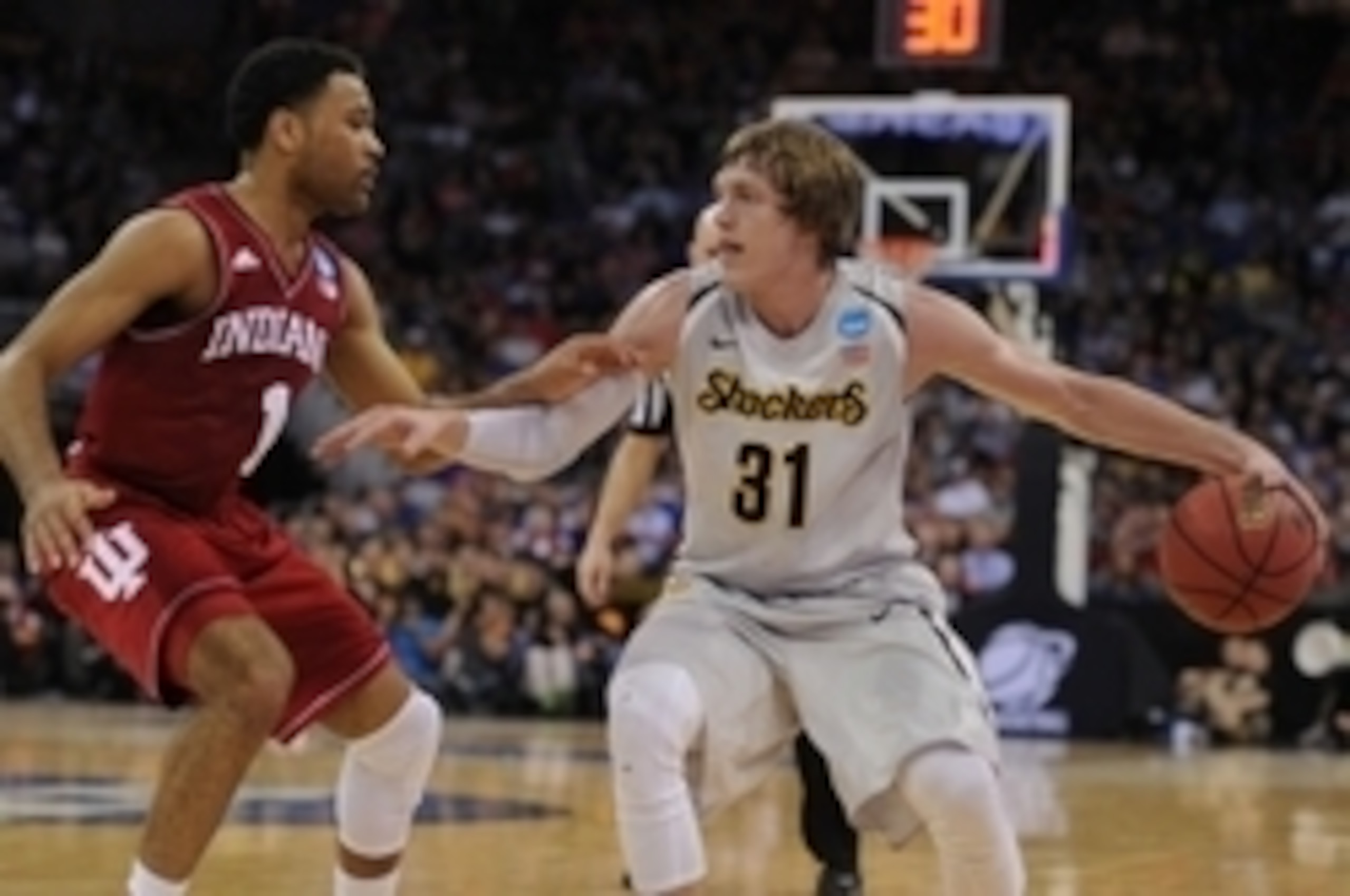
Ron Baker isn't new to the NBA draft discussion—he's been on the radar since helping guide Wichita State to a Final Four in 2013.
His game screams role-player potential. Baker can work as a secondary ball-handler or knock down jumpers and threes (made 80 threes at 38.3 percent clip last year).
And though not a dynamic playmaker, he's a ball-mover—a guard who looks for his teammates and shows a willingness to make the extra pass.
Baker also brings it defensively with toughness and ball pressure.
He recently played solid minutes for Team U.S.A. in the Pan American games against pros and older opponents.
Below-average athleticism and poor shot-creating ability limit his upside, but on the right NBA team that allows him to play to his strengths. Baker's shooting, defense and basketball IQ (just 1.1 turnovers per game) could hold value off the bench.
16. Buddy Hield, Oklahoma, 6'4", SG, Senior
5 of 20
At this stage of his career, Buddy Hield's game is cut and dry, though it's certainly one that NBA teams could covet.
Of his 498 field goal attempts in 2014-15, 408 of them either came from behind the arc or at the rim, per Hoop-Math.com.
He's a volume shooter with a confident stroke and smooth open-floor athleticism.
Hield also shows a nice feel as both a ball-handler and passer. His transition game is also strong.
On the downside, he struggles to blow by or create high-percentage shots as a one-on-one scorer, but in the NBA, that won't be his role.
From his shot-making ability and floor game to his energy and competitive edge, Hield ultimately possesses a number of promising attributes that highlight role-player potential at the next level.
15. Jake Layman, Maryland, 6'9", SF/PF, Senior
6 of 20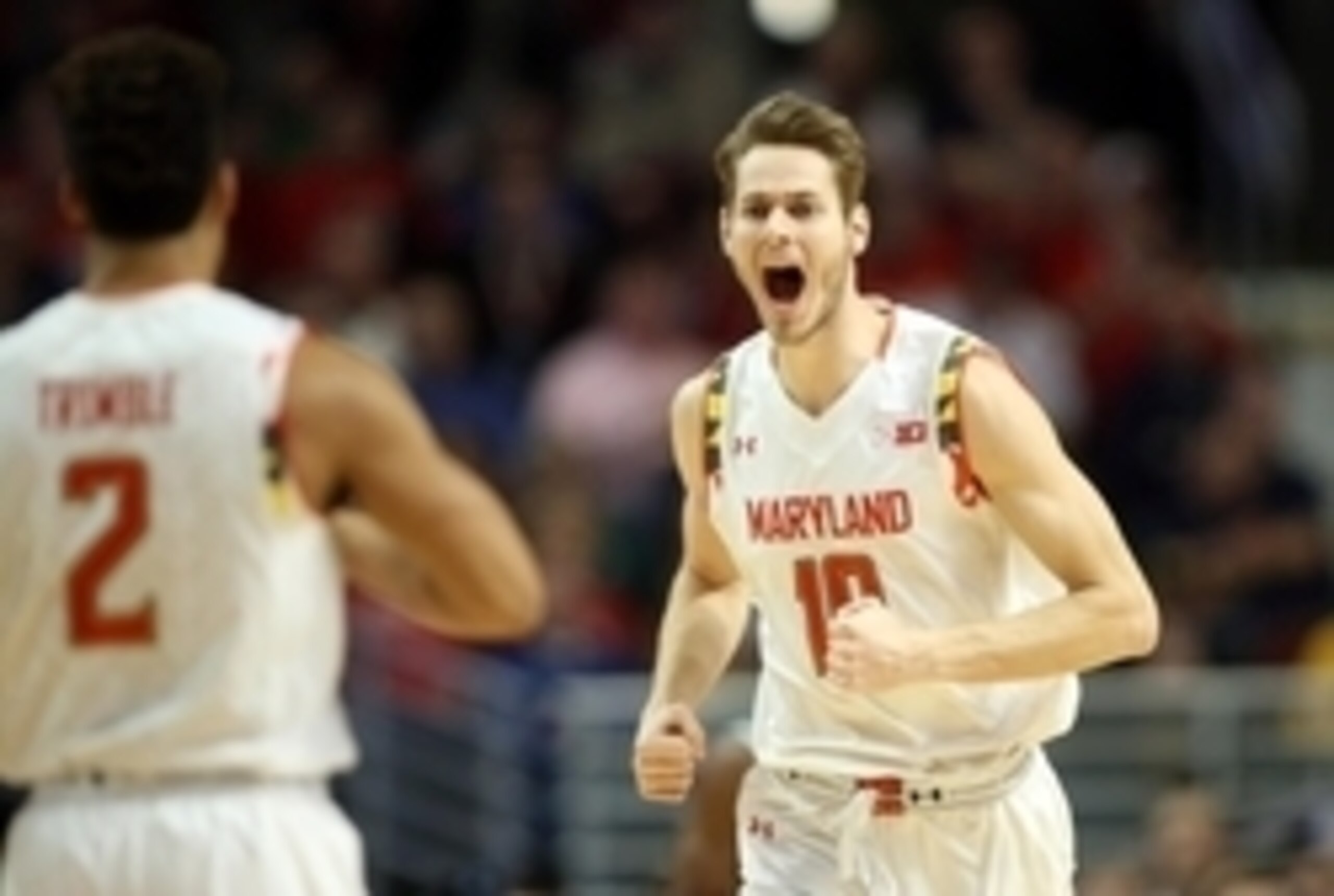
Jake Layman found the radar as a junior, having tightened up his offensive repertoire and overall efficiency.
Layman shot 53 percent inside the arc last year after shooting 44.1 percent on twos as a sophomore. He did a much better job of finishing off cuts, slashes and drives.
And his three ball continued to fall—Layman hit 37.8 percent of his threes, fueling some appealing stretch 4 potential.
He isn't much of a shot creator or defender, but NBA teams could value Layman's athleticism, jumper and versatility in a supporting role.
14. Troy Williams, Indiana, 6'7", SF, Junior
7 of 20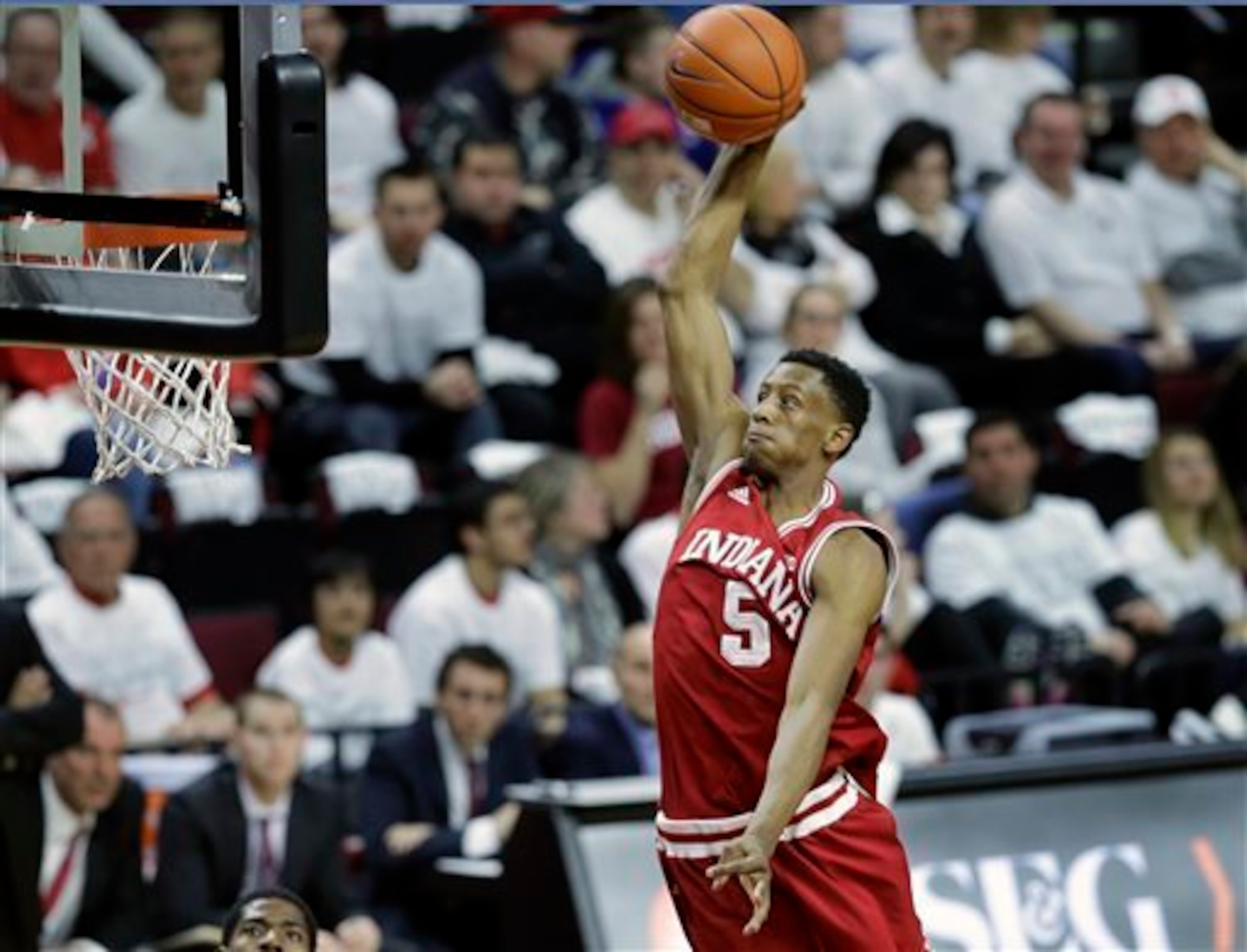
Troy Williams returns to Indiana as one of the country's premier high-flyers. His leaping ability consistently translates to highlights and easy buckets—of Williams' 161 made field goals last year, a whopping 123 of them came at the rim, per Hoop-Math.com.
However, scouts are still waiting for his basketball skills to catch up to his athleticism. He's only made 12 threes in two years, and he can be a bit reckless with his handle and one-on-one game, which just isn't particularly refined.
Still, even without a polished offensive attack, Williams managed to average 13 points on a terrific 54 percent shooting. And though the two assists per game he added don't jump out, he's shown impressive passing instincts for a non-playmaker.
For what it's worth, he did make 74.2 percent of his free throws, an encouraging sign regarding his touch.
Convincing scouts his jumper isn't broken could ultimately be the key to Williams' draft stock.
13. Justin Jackson, North Carolina, 6'8", SF, Sophomore
8 of 20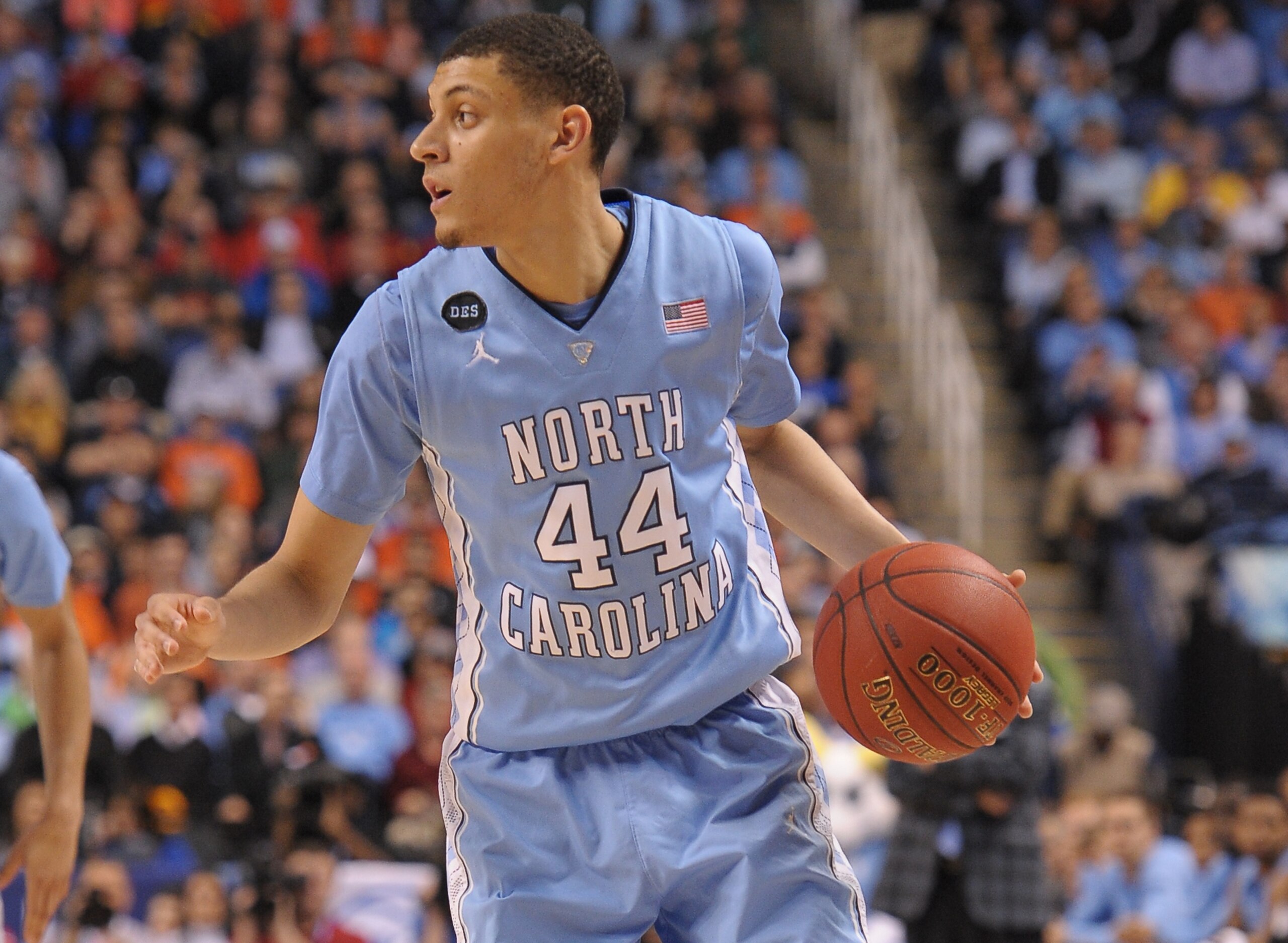
After shooting 45.2 percent over his first 26 games, Justin Jackson finally started to look like the first-round prospect he was initially billed as.
Jackson shot 52.1 percent over North Carolina's final 12 games, finally finding his shooting stroke.
At 6'8", Jackson has natural three-point range, as well as the ball skills to attack closeouts and convert tough runners and floaters on the move.
For the most part, he operates off the ball, where he moves well to position himself for catch-and-shoot opportunities, cuts or open-floor easy buckets.
Scouts will ultimately expect more consistency from Jackson as a sophomore. It also wouldn't hurt to show them he's improved his one-on-one scoring repertoire—especially considering Jackson isn't much of a rebounder or playmaker.
Still, his size, shot-making ability and transition game should be enough to generate first-round attention.
12. DeAndre Bembry, St. Joseph's, 6'6", SG/SF, Junior
9 of 20
DeAndre Bembry was an Atlantic 10 standout last year, averaging 17.7 points and 7.7 rebounds. And he flashed a number of strengths and attributes that highlight NBA potential.
Bembry has good 6'6", 210-pound size and fluid athleticism for a 2-guard. He creates highlights with above-the-rim finishes in the open floor. And though Bembry is yet to achieve much shooting consistency, he knocked down 50 threes and sporadic pull-up jumpers throughout last season.
He's also developed an impressive floor game—Bembry averaged 3.6 assists, showing the ability to find teammates off the dribble as a passer and playmaker.
According to DraftExpress' Mike Schmitz, Bembry "helped himself as much as any other player at the Nike Academy" last month.
Raising his three-point percentage up from 32.7 percent would do wonders for his stock.
11. Grayson Allen, Duke, 6'4", SG, Sophomore
10 of 20
Grayson Allen opened eyes late last year with a few eruptions that highlighted NBA-friendly athleticism and shooting range.
He went for 27 points against Wake Forest on March 4 before going off for 16 big points in the national title game.
Allen is a high-flyer with hops and body control that translate to both easy and difficult finishes at the rim.
And with enough regular reps to build some rhythm, odds are he'll find a way to approach the 40 percent mark from downtown. Allen has a pure, confident stroke capable of connecting under pressure.
Feisty, explosive and dangerous from deep, Allen has offensive spark-plug and energizer written all over him. His role should look much bigger in 2016.
10. Domantas Sabonis, Gonzaga, 6'10", PF/C, Sophomore
11 of 20
Though not a particularly versatile or creative scorer, Domantas Sabonis' interior activity still translates to efficient offense and productivity.
Sabonis compensates for average athleticism and little explosiveness with a terrific motor and competitive edge.
He does almost all of his work on the low block, where he can score over the shoulder and put tons of pressure on the glass.
Sabonis shot 66.8 percent from the floor last year, having rarely taken a shot outside his comfort zone in the paint.
And just last month, he pulled in 28 rebounds in 30 minutes against Ukraine in the Under-20 European Championships. Sabonis averaged 18 per 40 minutes as a freshman.
Unfortunately, poor shooting touch and a fairly basic post game don't bode well for his outlook at power forward. And considering he blocked just 12 shots in 822 minutes last year, Sabonis doesn't project as a rim protector either.
If he's going to make a legitimate NBA living, chances are it's going to be as a frontcourt energizer off the bench. For Sabonis, the late first round seems more realistic than the lottery.
9. Sviatoslav Mykhailiuk, Kansas, 6'8", SG, Sophomore
12 of 20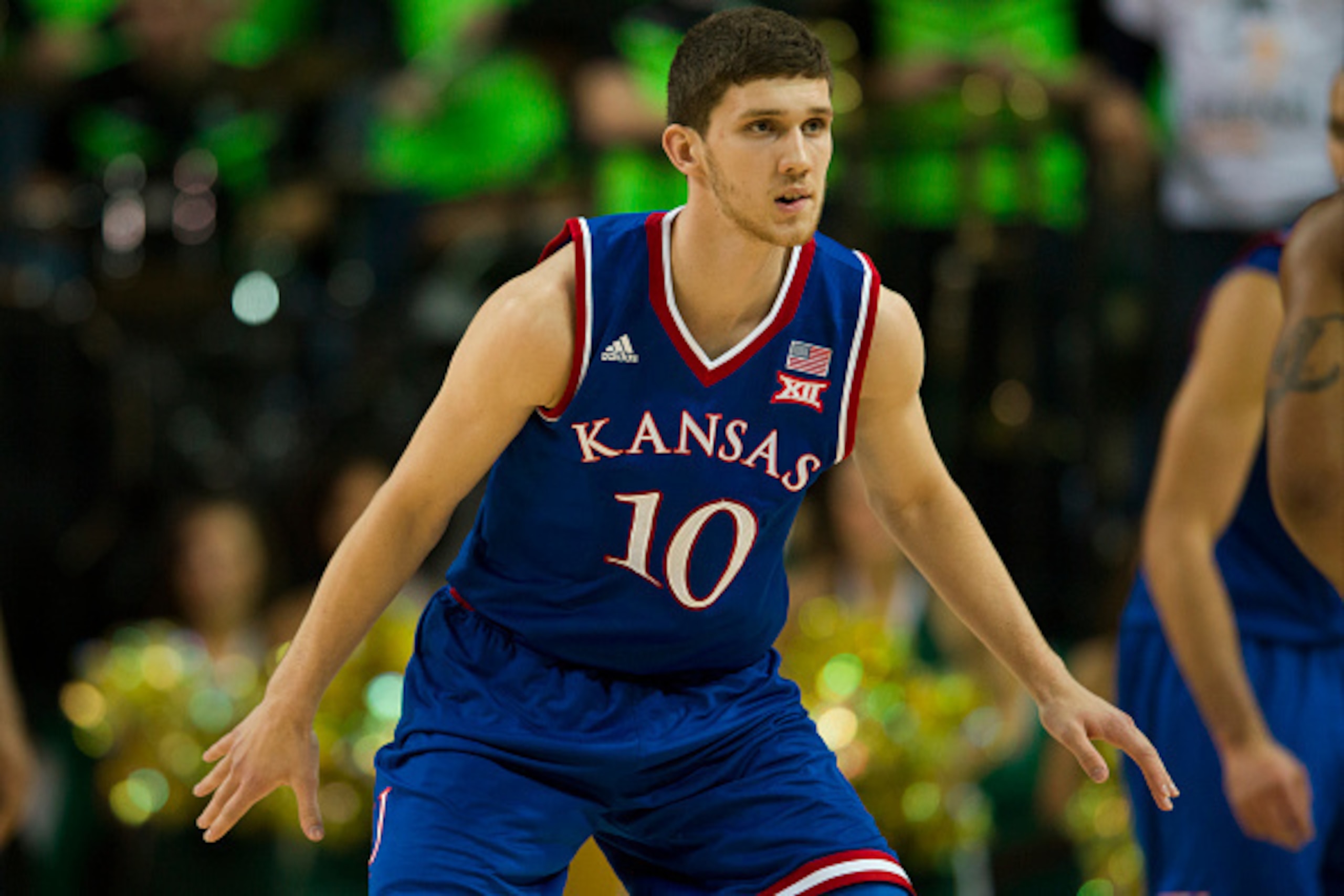
Highly regarded from FIBA and the 2014 Nike Hoop Summit, Sviatoslav Mykhailiuk should see a lot more minutes as a sophomore than he did as a 17-year-old freshman.
A 6'8" guard with plenty of three-point range, Mykhailiuk can generate offense with pull-ups, step-backs, fallaways and off-balance jumpers in the mid-range.
He doesn't need much room—Mykhailiuk has no problem taking and making challenged shots.
It's still tough to ignore his skinny 195-pound frame, short arms (6'6" wingspan) and lack of explosiveness. Mykhailiuk doesn't project as a scorer who'll spend much time at the line or rim.
However, the NBA is bound to value his perimeter shot-making ability. Unless he just can't find a rhythm, Mykhailiuk looks like a mid-to-late first-round option, whether he declares next summer or in 2017.
8. Damian Jones, Vanderbilt, 7'0", C, Junior
13 of 20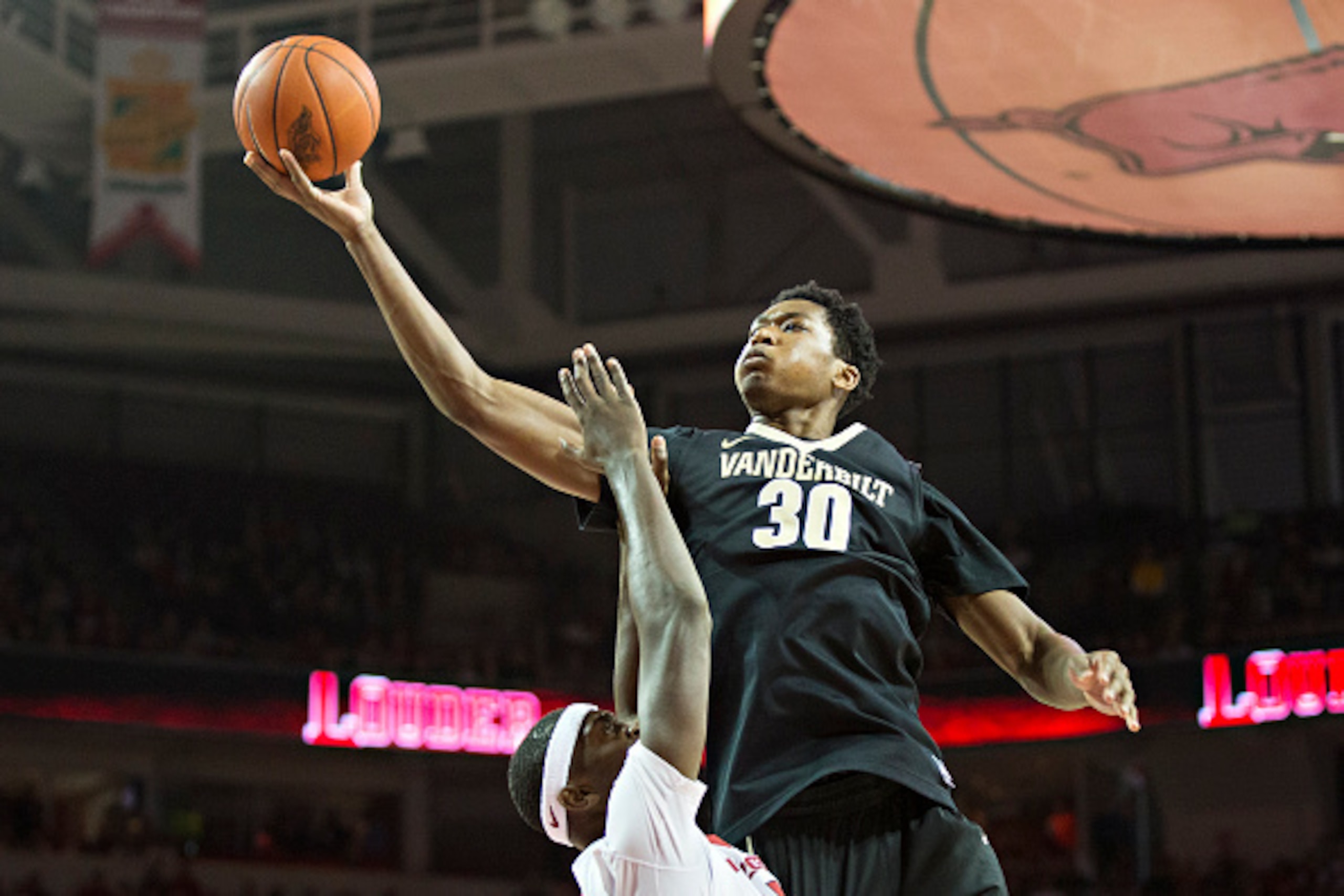
Listed at 6'10" last year, Damian Jones measured 7'0" in July at the LeBron James Nike Skills Academy. Physically, Jones is a monster with long arms and explosive legs around the basket.
And for the most part, his production through two years at Vanderbilt has been fueled by athleticism and strength.
However, we did see flashes of post moves and shooting touch in 2014-15. Jones can work from the elbows, where he's capable of putting the ball on the floor and spinning into one-handers on the move. And though it was rare, Jones showed shot-making ability off turnarounds and fallaways.
To maximize that draft stock, he'll need to show a more refined back-to-the-basket game and threatening mid-range jumper. But Jones clearly has NBA tools and plenty of room to grow as a scorer. Taking another step in his offensive development could lead to lottery buzz in 2016.
7. Nigel Hayes, Wisconsin, 6'8", PF, Junior
14 of 20
Nigel Hayes expanded his game by improving his touch and range—and it's landed him on the first-round radar.
He knocked down 40 of 101 threes (39.6 percent) after not attempting one the year before.
Adding a jumper was key for Hayes, who at 6'8", lacks the size to make a living in the NBA paint.
Still, Hayes is a crafty scorer inside the arc, where he can shake free with his back to the basket or face up and attack his man off the bounce.
With his newfound ability to stretch the floor, he now offers intriguing offensive versatility.
A physical, mistake-free (1.3 turnovers in 33 minutes), high-energy forward, Hayes possesses a wide range of strengths that highlight NBA role-player potential. Expect his touches and usage rate to increase dramatically this year at Wisconsin.
6. Malik Pope, San Diego State, 6'10", SF, Sophomore
15 of 20
He didn't get much freshman burn, but when he did, Malik Pope's physical tools, athleticism and ball skills stood out under the NBA lens.
With terrific 6'10" size (7'2" wingspan), Pope shot 40.8 percent from deep and 41.5 percent on two-point jumpers, per Hoop-Math.com. He looked confident spotting up and comfortable shooting off screens and step-backs.
Pope also created numerous highlights above the rim with open-floor dunks and backdoor alley-oops.
Having only averaged 5.1 points on four field-goal attempts in 2014-15, Pope must convert the flashes into more steady production as a sophomore.
For what it's worth, he failed to make the cut for U.S.A.'s under-19 team that recently took gold in Greece.
Still, there is obvious NBA potential here for coaches to ultimately develop.
5. Taurean Prince, Baylor, 6'7", SF, Senior
16 of 20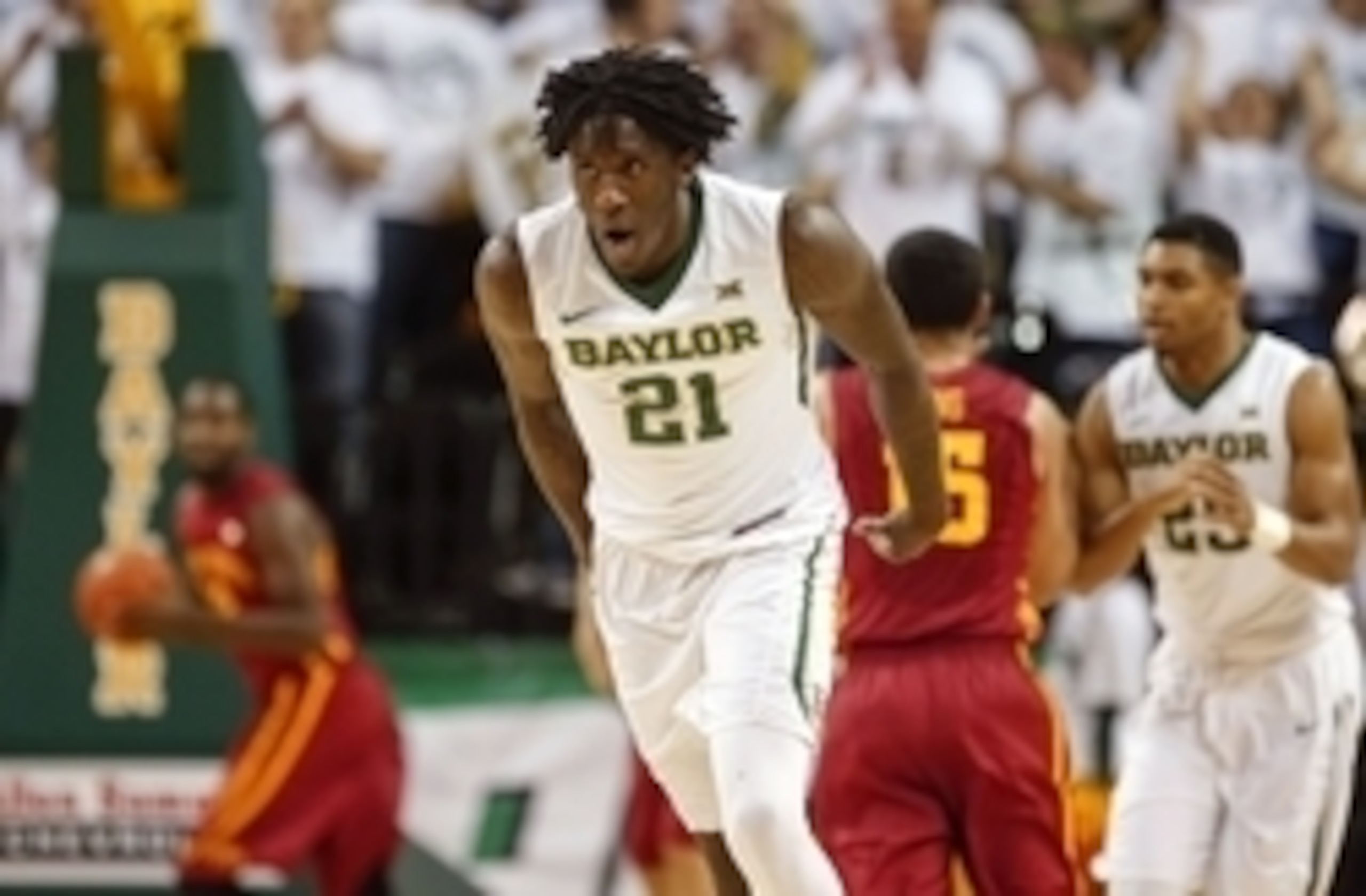
At 6'7" with long arms and a sturdy 215-pound frame, Taurean Prince always had the look of an NBA wing.
But Prince made a noteworthy sophomore-to-junior jump, having doubled his scoring average to 13.9 and turned into an accurate three-point shooter.
He's starting to resemble your traditional three-and-D small forward.
Though not the most dangerous one-on-one threat, Prince does a nice job of knocking down jumpers off screens and spot-ups, which allows him to score within his team's offense.
Throw in his defensive versatility and motor under the boards (8.5 rebounds per 40 minutes), and Prince has the makings of potential two-way NBA player.
Coming off a strong showing for U.S.A. last month at the Pan American Games, (10.8 points per game), Prince looks poised for a breakout senior year. We have him pegged as a first-rounder entering the season.
4. Caris LeVert, Michigan, 6'7", SG, Senior
17 of 20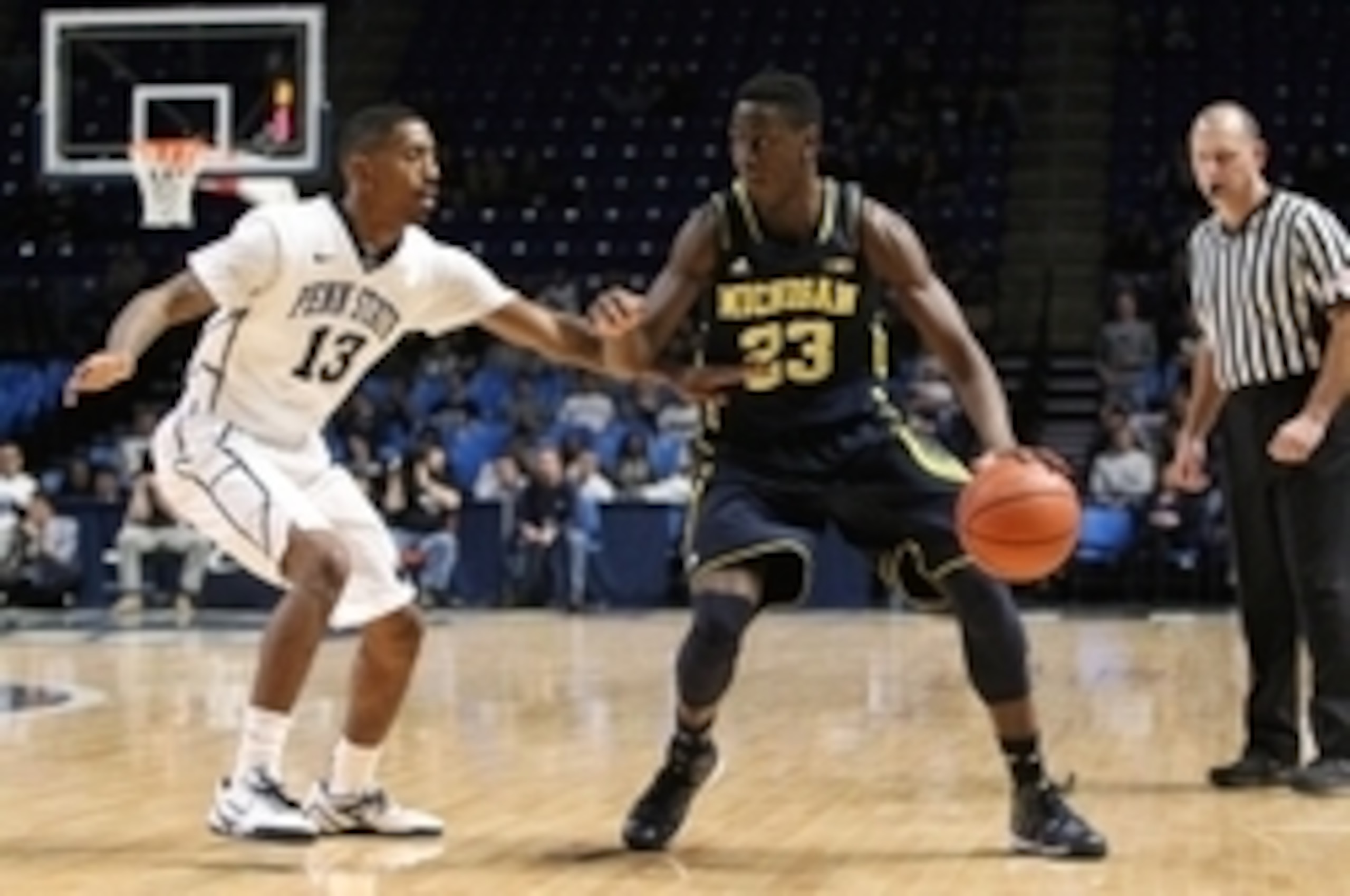
He'll need to stay healthy after undergoing back-to-back surgeries on his foot, but from strictly a basketball perspective, Caris LeVert is a top-20 talent.
His versatility could hold serious value at the NBA 2-guard position, where he's a dangerous shooter and above-average playmaker.
LeVert hit at least 40 percent of his threes last year for the second straight season. Before going down, he was also leading the team in assists, showing strong ball-handling and vision off ball screens and pick-and-rolls.
If there is a knock on LeVert's skill set, it's his in-between game—LeVert made just 31.4 percent of his two-point jumpers after making 31.1 percent of them as a freshman, per Hoop-Math.com.
But as long as he's able to finish the year in one piece, LeVert's shot-making and passing ability should generate plenty of mid-first-round interest.
3. Jakob Poeltl, Utah, 7'0", C, Sophomore
18 of 20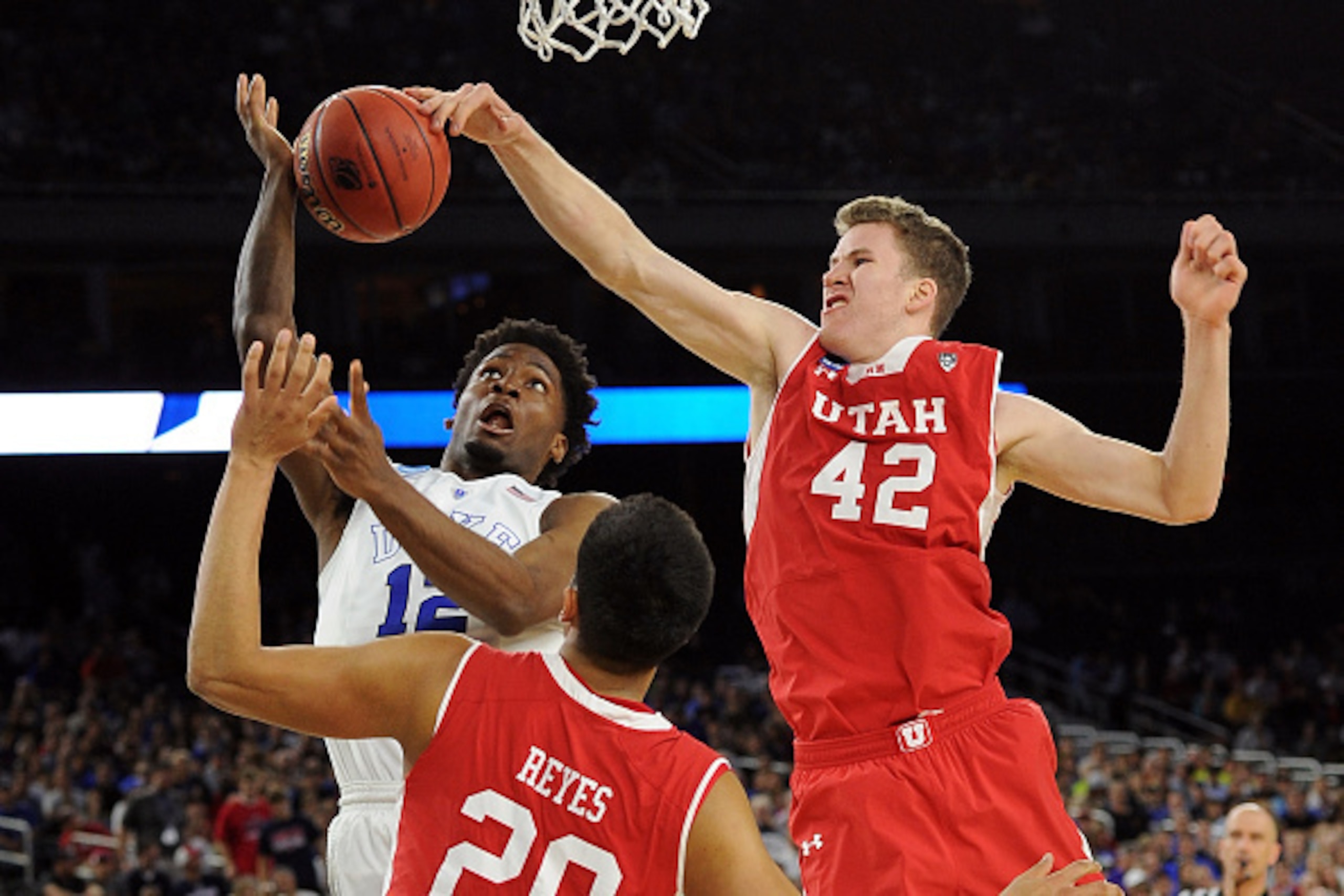
At this time last year, Jakob Poeltl was nowhere near the first-round radar. That changed quickly.
Poeltl's 7'0" size, mobility and athleticism immediately jumped out, even if his offensive game didn't. His physical tools alone translated to easy finishes, volume rebounding (18.2 percent rebounding percentage, per sports-reference.com) and blocked shots (3.2 per 40 minutes) .
And though not quite a refined post player or threatening shooter, he still found ways to score off pick-and-rolls and rim runs.
Poeltl was tremendous down the stretch last year, having averaged 13.5 points over his final six games and held Jahlil Okafor to just six points in the NCAA tournament.
Unless Poeltl's offense takes off—which seems unlikely without Delon Wright there to facilitate—cracking the top 10 in June may be difficult. But between his NBA center body, defensive potential and high-percentage shot selection (shot 68.1 percent from the floor), he'll remain relevant in the draft conversation—regardless of how little he improves.
2. Demetrius Jackson, Notre Dame, 6'1", PG, Junior
19 of 20
With Jerian Grant off to the pros, the ball now goes to Demetrius Jackson, who's poised for a breakout season in a lead-guard role.
Jackson was exceptionally efficient last year, shooting 50.8 percent from the floor as a 6'1" secondary ball-handler.
He makes up for average height with a diesel frame, tremendous quickness and explosive leaping ability.
The fact that he's a lights-out shooter also helps diminish concerns over his size. Jackson gets excellent elevation on his jumper, which hit on at least 41 percent of his threes for the second straight year.
Whether or not he shoots into the top-10 conversation could come down to his effectiveness facilitating. But with scoring playmakers becoming more acceptable at the point guard position, Jackson should remain coveted regardless.
1. Kris Dunn, Providence, 6'3", PG, Junior
20 of 20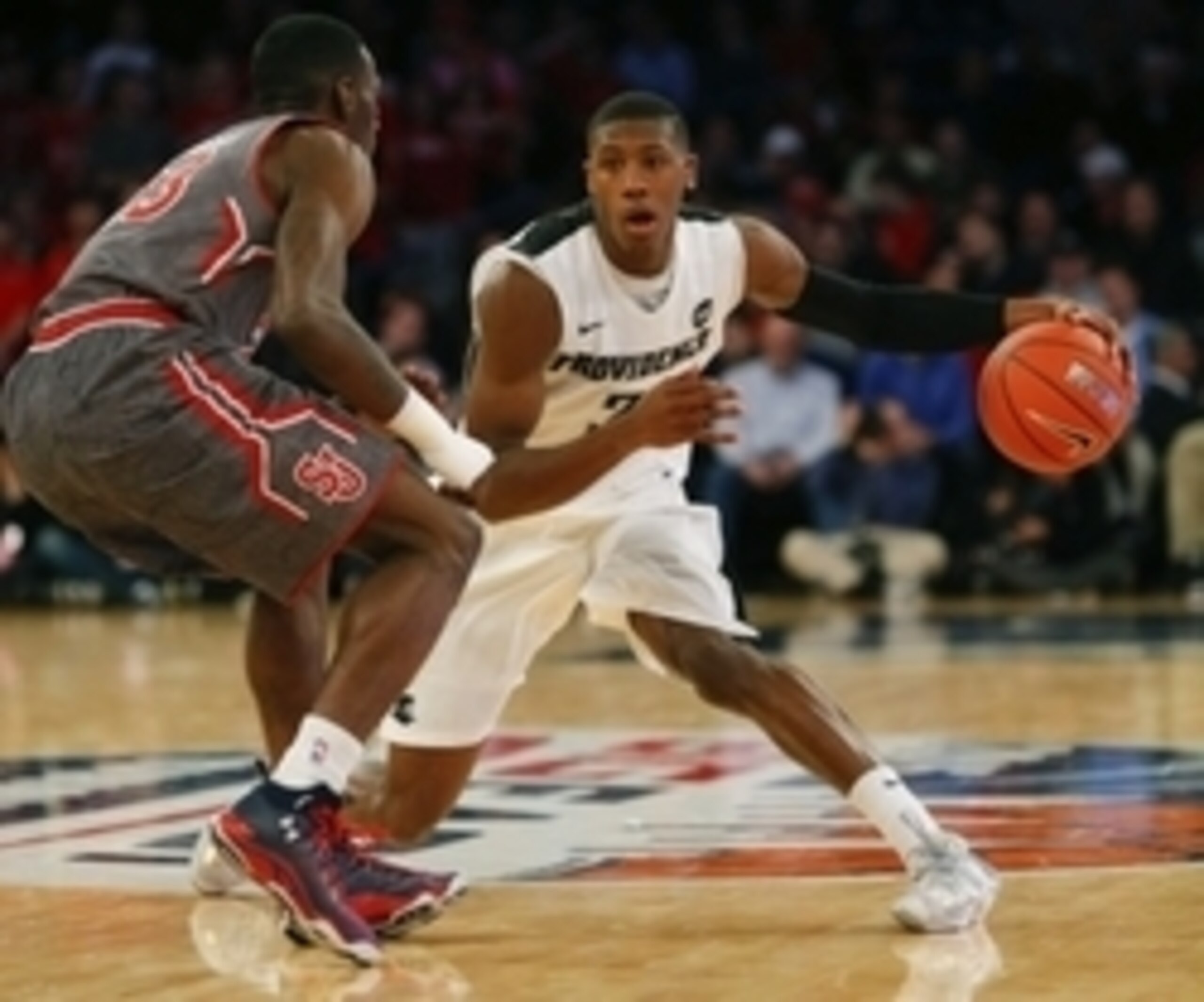
Having passed on a shot at the 2014 lottery, Kris Dunn will enter the 2015-16 season as our No. 1 returning NBA prospect.
Dunn just looks the part of a pro point guard, from his 6'3" frame and electric athleticism to his spectacular playmaking ability.
He averaged 15.6 points and led the country in assist percentage last year, per sports-reference.com. Dunn is a nightmare to contain off the dribble, where he can change speed and direction, locate cutters and shooters or score acrobatically on the move.
Dunn is unsurprisingly an even tougher cover in transition—with tremendous speed, agility and body control, he turns open-floor opportunities into easy buckets at the rim.
And though not quite known for his jumper, he's more than capable of separating into pull-ups and step-backs and knocking them down in the mid-range.
Dunn even established himself as a defensive asset. His 6'8" wingspan and quickness translated to an outstanding 2.7 steals per game (a handful of which were intercepted passes taken the other way for two) and relentless ball pressure.
To sell himself as an NBA starter and maximize his chances of going top 10, Dunn must cut down on his turnovers (he led the nation) and tighten up his decision making. It wouldn't hurt to build on his 27 made threes as well.
But unless Dunn takes an unexpected step backward, he could be a tough two-way weapon to pass on for a team that lacks backcourt firepower on the ball.
.jpg?w=2560 "2 NFL Officials Suspended")


.jpg?w=2560 "Mahomes' Wife Trolls Kubiak 💀")
.jpg?w=2560 "Love's Body Already 'Tired'")
.jpg?w=2560 "Injury-stricken Seahawks signing veteran RB")