
Top 3 Priorities for Detroit Pistons During 2026 NBA Offseason
The Detroit Pistons avoided becoming the first No. 1 seed to lose in the opening round since 2023, climbing out of a 3-1 hole against the Orlando Magic to reach the second round.
Their luck ran out against the Cleveland Cavaliers, as fouls and turnovers piled up in a hard-fought seven-game fall that highlighted troubling offensive deficiencies.
Detroit's lack of secondary creation crippled its attack. Jalen Duren wilted after a standout year. And a Cleveland squad featuring plenty of its own frailties prevented a 60-win team from reaching the Conference Finals.
The Pistons clearly have some questions to answer this offseason.
From consequential contract negotiations to a real examination of its other core pieces, Detroit needs to assess itself honestly. Those 60 regular-season wins still count, but the Pistons clearly weren't as good as their record indicated.
Here's where they need to focus if they want to prove they're more than a bully who beats up on soft competition over 82 games.
1. Jalen Duren's Contract
1 of 3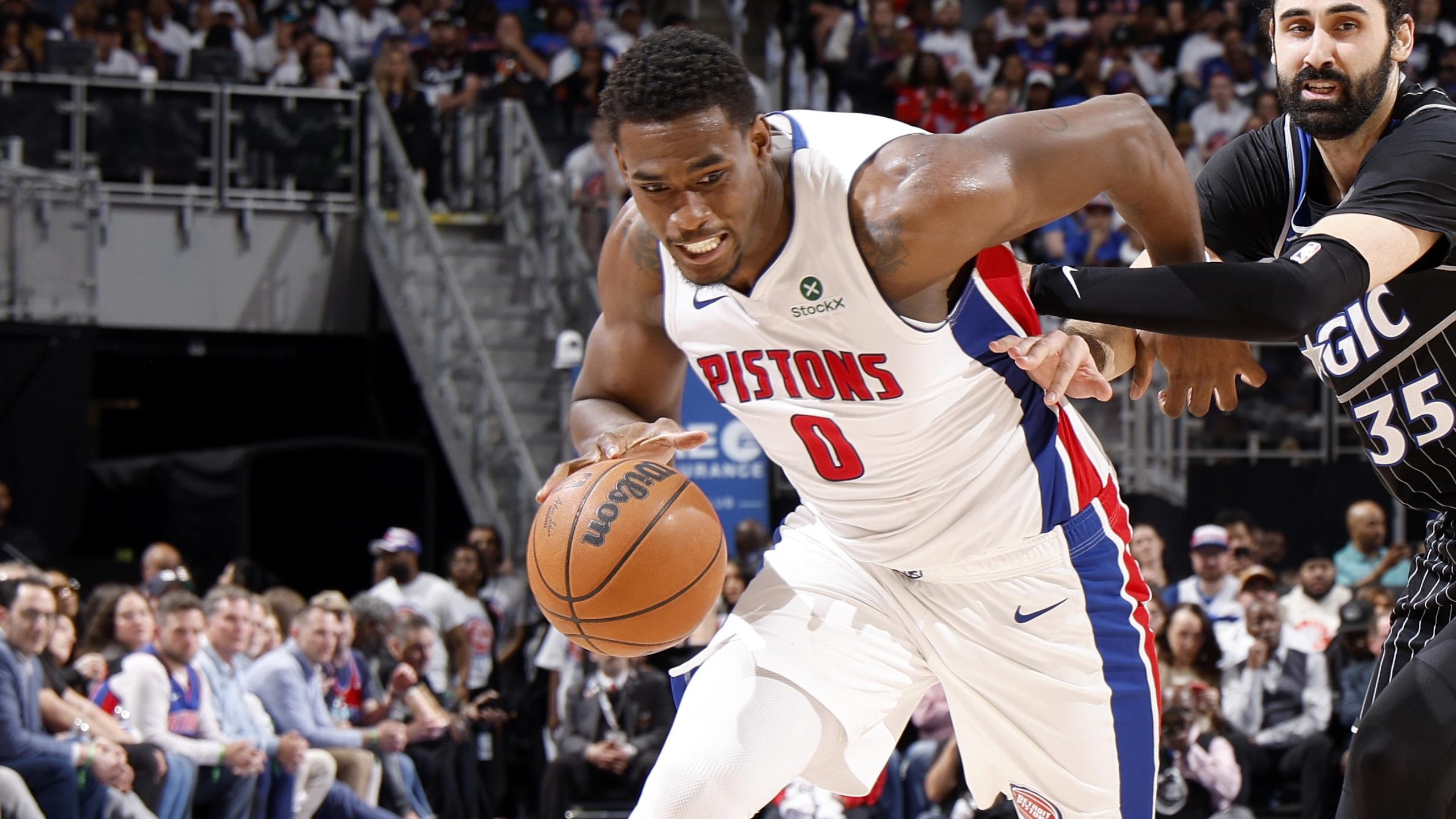
Before his first-round struggles and second-round no-show, restricted free agent Jalen Duren had a real chance to sign a max contract this summer. Though still eligible for five years and $287 million from the Detroit Pistons (if he makes All-NBA), five years and $239 million (if he doesn't) or four years and $177 million from another team, the 22-year-old center can probably forget about the two highest figures on that list.
The playoffs taught the Pistons they couldn't trust Duren as a second option in the games that matter, which dents his earning potential.
If Duren inks an offer sheet for $177 million over four years with the Los Angeles Lakers, Brooklyn Nets or Chicago Bulls, the Pistons should probably match it. After all, they can't just lose Duren for nothing—not when his youth still gives him a great chance at further improvement.
As Forbes' Bryan Toporek pointed out, Alperen Sengün's five-year, $185 million deal with the Rockets is an interesting comp. Detroit would surely love to lock in that fifth year, which would only be Duren's age-27 season.
If you're the Pistons, and you know how far your offense is from scaring playoff opponents, it still might not be so easy to fork over that much cash. This, then, could be a fraught negotiation—one in which other teams' cap space could make an offer sheet more realistic than usual.
2. Offensive Upgrades
2 of 3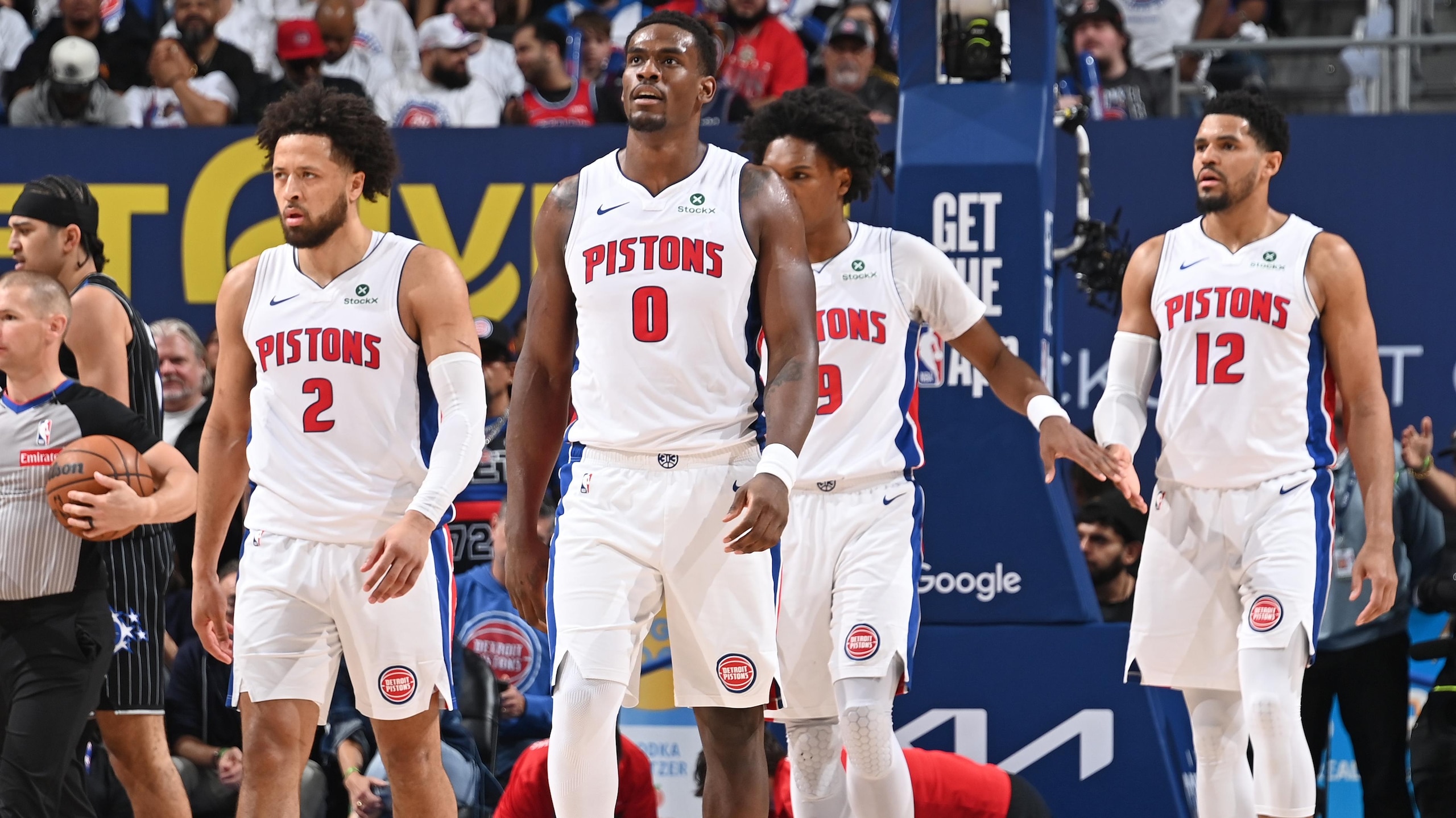
Some might argue the Detroit Pistons have to find more shooters. Others will cite secondary playmaking as the real trouble spot.
After watching Detroit fire bricks, pile up turnovers and otherwise fail to generate quality looks throughout its series against the Magic and Cavs, maybe we need to concede that this team's offensive woes require several fixes.
The Pistons' anemic scoring was easy to see coming. They ranked 16th in half-court efficiency during the year, turned the ball over on 15.0 percent of their possessions and only scored at respectable rates overall because they amassed tons of offensive boards and free-throw attempts. The postseason proved that effort, size and physicality weren't enough to compensate for wretched spacing and dreadful passing.
Detroit declined to swing big at the trade deadline, when fans and analysts clamored for offensive upgrades. There'll be revolts if the Pistons play things so passively this summer.
3. Hard Conversations on Ausar Thompson
3 of 3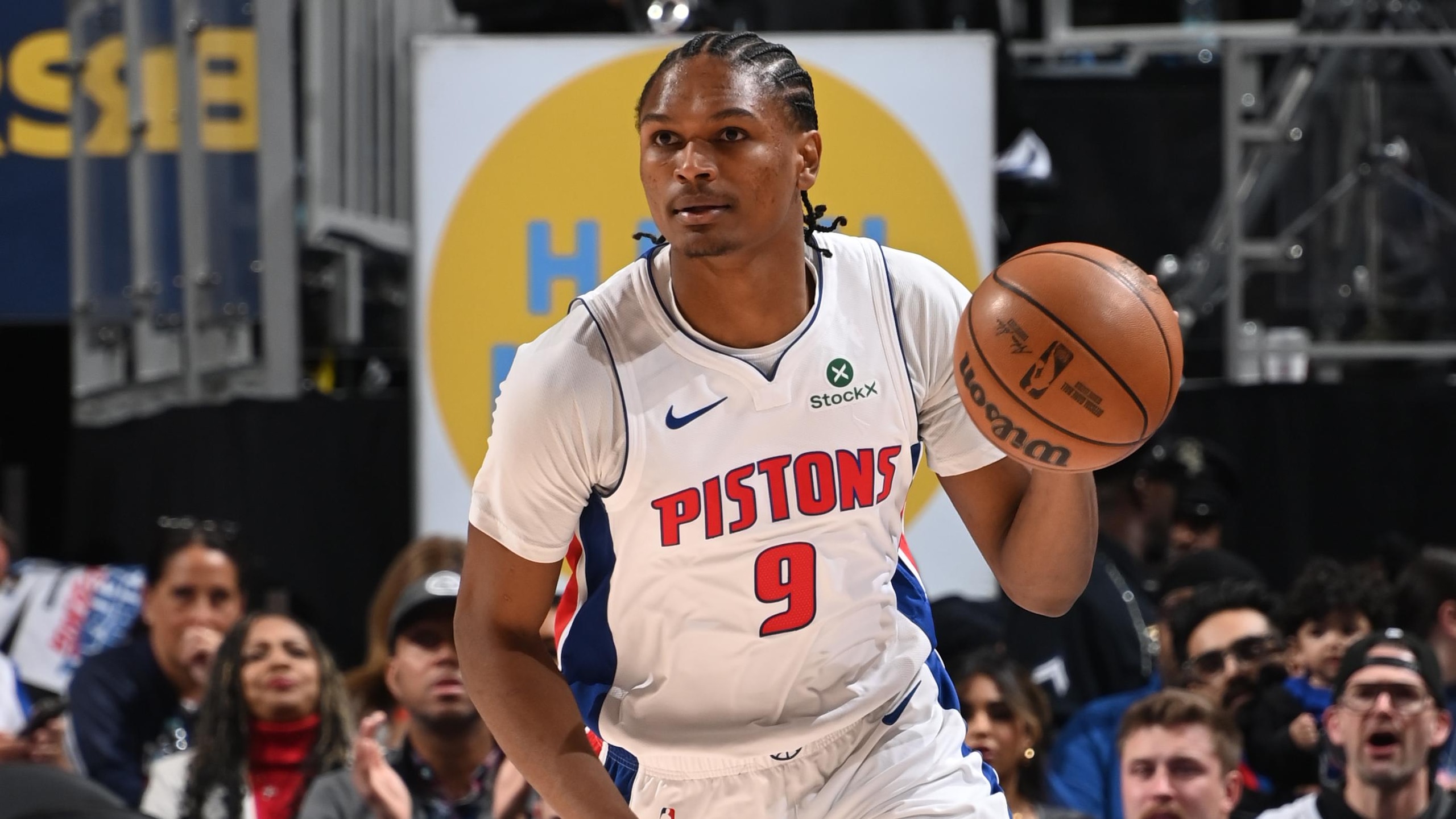
If Ausar Thompson is going to be a key piece of this Pistons team, he either needs to develop as an on-ball creator or as a floor-spacing shooter.
Everyone loves his disruptive defense, athleticism and rebounding. But with Jalen Duren sitting higher in the pecking order and providing neither spacing nor passing, Thompson essentially cannot occupy a major role without dramatically improving his offensive game. Unless something changes, opponents will continue to ignore him, clogging the lane and making life much harder for Detroit's more capable offensive weapons.
Thompson is a 20.4 percent shooter on extremely low three-point volume for his career and has only knocked down 60.0 percent of his free throws. Those numbers suggest he simply doesn't have a future as a shooter, which means he must develop as a second-side attacker, cutter and facilitator. Even then, smart playoff defenses will exploit him. But maybe he'll be slightly better able to limit the damage.
This is all particularly relevant because Thompson is eligible for a rookie-scale extension this summer. Detroit would be making a huge mistake to invest now, unless it can do so at a discount that reflects all the uncertainty surrounding Thompson's development. If he can't make enormous offensive strides over the offseason, the Pistons should just let restricted free agency set his value in 2027.
Stats courtesy of NBA.com, Basketball Reference and Cleaning the Glass. Salary info via Spotrac.
Grant Hughes covers the NBA for Bleacher Report. Follow him on Bluesky and subscribe to the Hardwood Knocks podcast, where he appears with Bleacher Report's Dan Favale.

.jpg?w=2560 "Grading Wild MITB PLE 😮💨")
.jpg?w=2560 "Cardinals Finalizing MHJ Trade")
.png?w=2560 "Money In The Bank Ends In Shocker 💼")
.jpg?w=2560 "Follow All The MITB Action Live 💼")
.png?w=2560 "Week 6 Winners & Losers 📊")
.jpg?w=2560 "Report: Cowboys Open to More Trades")