
Every MLB Team's Worst Contract in 2026
A year ago, Jacob deGrom and George Springer appeared on B/R's list of the worst contract on the books for each team.
Both responded with tremendous seasons, despite being on the wrong side of 35.
Finally healthy, deGrom was an All-Star in his age-37 season, posting a 2.97 ERA across 172.2 frames for the Texas Rangers, finishing in the top-10 in his league's Cy Young voting for the first time since 2021.
Springer won a Silver Slugger Award during his age-35 campaign, going from hitting .220 with a .674 OPS in 2024 to .309 with a .959 OPS for a Toronto Blue Jays team that ultimately won the 2025 AL pennant.
So, it's possible to get off this list. Here are the 30 candidates who are trying to follow the leads of deGrom and Springer in 2026.
AL East
1 of 6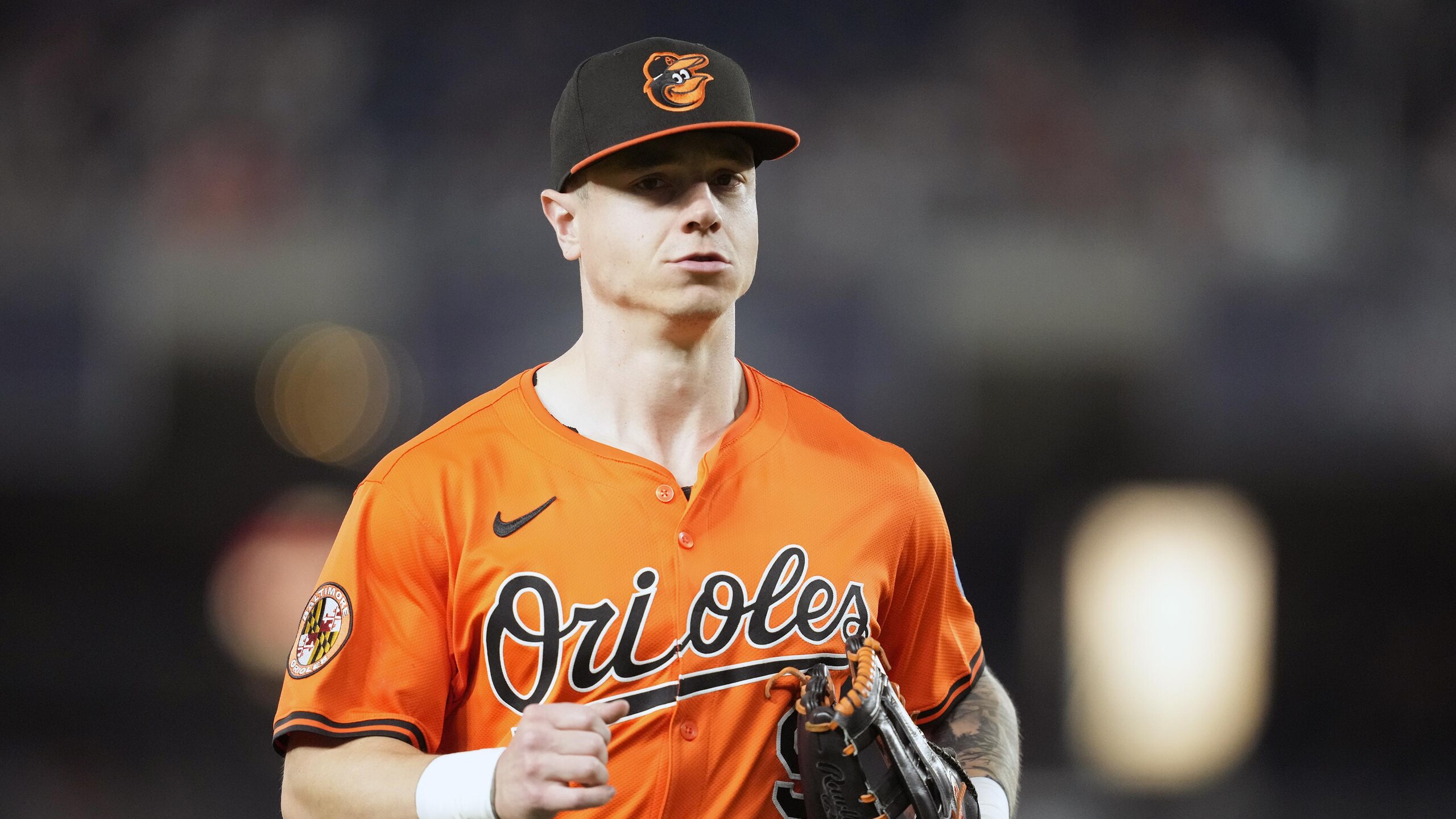
Toronto Blue Jays: Andrés Giménez
Original Contract: Seven years, $106.5 million with $23 million club option for 2030
Remaining Money: $86.3 million through 2030
Andrés Giménez flashed his defensive value for the Blue Jays last season, shifting from second base to shortstop when Bo Bichette went down with a left knee sprain in early September that prevented him from playing shortstop for the remainder of the season.
With Bichette having departed for the New York Mets in free agency, Giménez will open the season as Toronto's starting shortstop. It's great he can do that, although this is someone who won three Gold Glove Awards from 2022-2024 as a second baseman, taking home the Platinum Glove as the best defender in the AL in 2023. He's an all-world defender at second base, as opposed to just being a good defensive shortstop.
More concerning is that since posting an .837 OPS as a member of the Cleveland Guardians in 2022, Giménez has a .657 OPS. As a tremendous defender with infield flexibility, Giménez still has value, but right now, he's a very expensive, below-average offensive player.
New York Yankees: Ryan McMahon
Original Contract: Six years, $70 million
Remaining Money: $32 million through 2027
After being acquired in a July trade from the Colorado Rockies, Ryan McMahon hit just .208 with a .641 OPS for the Yankees.
To his credit, McMahon is a strong defender, as evidenced by the 10 defensive runs saved he posted at the hot corner between the Rockies and Yankees a year ago. But he was virtually unplayable against left-handed pitching in 2025, hitting just .184 with 41 strikeouts in 114 at-bats against southpaws. At this point, he appears to be a platoon player.
Suffice to say, Brian Cashman and the Yankees would probably like a mulligan on agreeing to take on the entirety of the money McMahon is owed over the next two years, because he looks like a platoon player.
Boston Red Sox: Masataka Yoshida
Original Contract: Five years, $90 million
Remaining Money: $37.2 million through 2027
While Masataka Yoshida has gotten strong results in the World Baseball Classic for Japan, it's fair to say that he's been a bust to this point in his MLB career.
Over his first three MLB seasons, Yoshida has been worth just 1.5 WAR total, per FanGraphs. Since posting minus-four defensive runs saved and minus-eight outs above average in left field during his rookie season, the Red Sox have treated Yoshida like a DH, as he's played just 45 innings in the outfield over the last two seasons.
Yoshida is an obvious change of scenery candidate for a Red Sox team that has a surplus of outfielders, and will likely use Jarren Duran as their primary DH to open the season. The two choices chief baseball officer Craig Breslow has right now are to keep Yoshida as an expensive bench player or subsidize a trade for a minimal return.
Tampa Bay Rays: Gavin Lux
Original Contract: One year, $5.525 million
Remaining Money: $5.525 million through 2026
Admittedly, the Rays don't spend much money, so there aren't a ton of options to pick from. It's hard to be outraged about any one-year deal for a relatively small guarantee.
It's hard to shake the feeling, though, that Lux continues to fail upwards in a sense. The former first-round pick is a two-time World Series Champion with the Los Angeles Dodgers, but has a .713 OPS to show for parts of six MLB seasons. He didn't hit particularly well in 2025, despite playing his home games at Great American Ball Park.
Additionally, while he has defensive flexibility, he finished 2025 with minus-five defensive runs saved in left field and minus-four DRS at second base. It's not like he's proven to be a strong defender at any one position.
Again, $5.525 million isn't the end of the world, but for a team that doesn't spend much money, it's hard to see what made Lux attractive.
Baltimore Orioles: Tyler O'Neill
Original Contract: Three years, $49.5 million
Remaining Money: $33 million through 2027
In many senses, Tyler O'Neill's 2025 season went how you would have expected. He homered on Opening Day, the sixth time he's done so in his career. The oft-injured outfielder then proceeded to play in only 53 more games the rest of the campaign.
What was surprising was that even when O'Neill was on the field, he didn't play well. Across 209 plate appearances, O'Neill hit just .199 with a 92 OPS+ (100 is league average). Unsurprisingly, he didn't opt out of the final two seasons of his contract.
O'Neill has traditionally been a strong defensive outfielder who mashes left-handed pitching, so he should have something of a rebound in 2026. Then again, he's currently projected to be a bench player for a much-improved O's team, and whenever he does play, he'll probably get hurt.
AL Central
2 of 6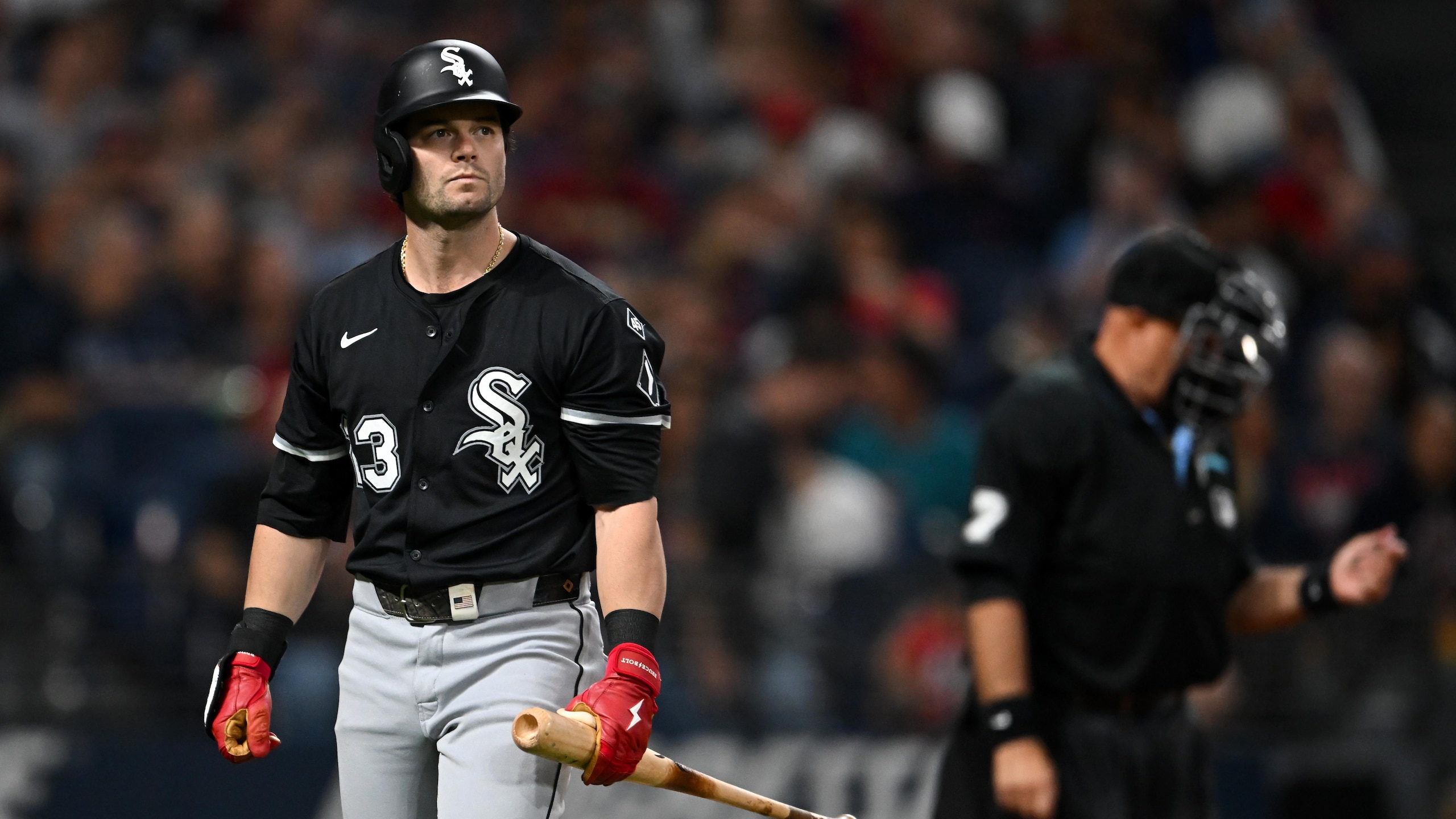
Cleveland Guardians: N/A
According to Spotrac, the Guardians will enter 2026 with only nine players—José Ramírez, Tanner Bibee, Steven Kwan, Shawn Armstrong, Austin Hedges, Nolan Jones, Colin Holderman, David Fry, and Matt Festa—making $1 million or more.
They really don't have a contract that stands out as being bad, but that's more indicative of the fact that they don't take any chances in free agency. Can they spend like the Los Angeles Dodgers or New York Mets? No. But it's embarrassing to enter the 2026 season with a $97 million luxury tax payroll, the 29th among all MLB teams.
Cleveland has avoided getting criticism for how little they spend because they've managed to win without spending much of anything. But imagine if they supplemented their great eye for talent with more occasional free agent investments.
Detroit Tigers: Javier Báez
Original Contract: Six years, $140 million
Remaining Money: $48 million through 2027
Javier Báez's first-half resurgence—which saw him earn an All-Star game nod after he homered 10 times and showed defensive flexibility—was a great story.
Little attention was paid to the fact that he cratered after that, hitting .243 with an unsightly .548 OPS following a trip to the Midsummer Classic.
During his four seasons with the Tigers, Báez has hit .229 and posted a 75 OPS+ (100 is the league average). There's no reason to think that he isn't closer to the player he was in the second half of 2025 than in the first half.
Kansas City Royals: Jonathan India
Original Contract: One year, $8 million
Remaining Money: $8 million through 2027
It would be interesting to see how different Jonathan India would be viewed if he hadn't won the NL Rookie of the Year as a member of the Reds in 2021.
Since posting an .835 OPS and 3.4 WAR in his rookie season, FanGraphs says that India has posted a .719 OPS and been worth 4.4 WAR total over a four-season period.
Unsurprisingly, going from playing his home games at Great American Ball Park to Kauffman Stadium didn't help India revive his career, as he hit .233 with an 89 OPS+ during his first season as a Royal. He also continues to grade out poorly as a defender, doing so both at second base and in left field for KC last year.
Frankly, it's a bit surprising that the Royals didn't non-tender India ahead of his final year of arbitration eligibility.
Minnesota Twins: Victor Caratini
Original Contract: Two years, $14 million with $12 million mutual option for 2028
Remaining Money: $14 million through 2028
We're not saying this wasn't where the catcher market was at, because the Twins gave Caratini this deal hours after the Philadelphia Phillies brought back 35-year-old J.T. Realmuto on a three-year, $45 million deal.
The difference is that while Realmuto isn't nearly the player he once was, he still plays a ton, as he caught 1,151.1 innings last year. Caratini caught 418 innings for the Houston Astros last season, and doesn't even project to be the Opening Day catcher over Ryan Jeffers.
Granted, Caratini is also an option at first base and/or DH, but why is a team likely to lose 90+ games (and that might be generous), giving out a multi-year deal to a part-time catcher?
Chicago White Sox: Andrew Benintendi
Original Contract: Five years, $75 million
Remaining Money: $32.2 million through 2027
Considering the White Sox are projected to enter this upcoming season with a payroll of just $106.6 million, Andrew Benintendi's contract is hardly weighing their franchise down.
That doesn't mean, though, that general manager Chris Getz doesn't wish he hadn't inherited the five-year, $75 million contract that Benintendi signed to join the White Sox ahead of the 2023 campaign.
If you need an idea of how poorly this deal has played out, Benintendi hit .240 with a .738 OPS in 2025, and that represents his best season on the South Side to this point.
Benintendi has spent a decade in the league, which isn't an insignificant accomplishment. However, he's never lived up to the superstar potential he flashed when he broke into the league with the Red Sox as a 21-year-old.
AL West
3 of 6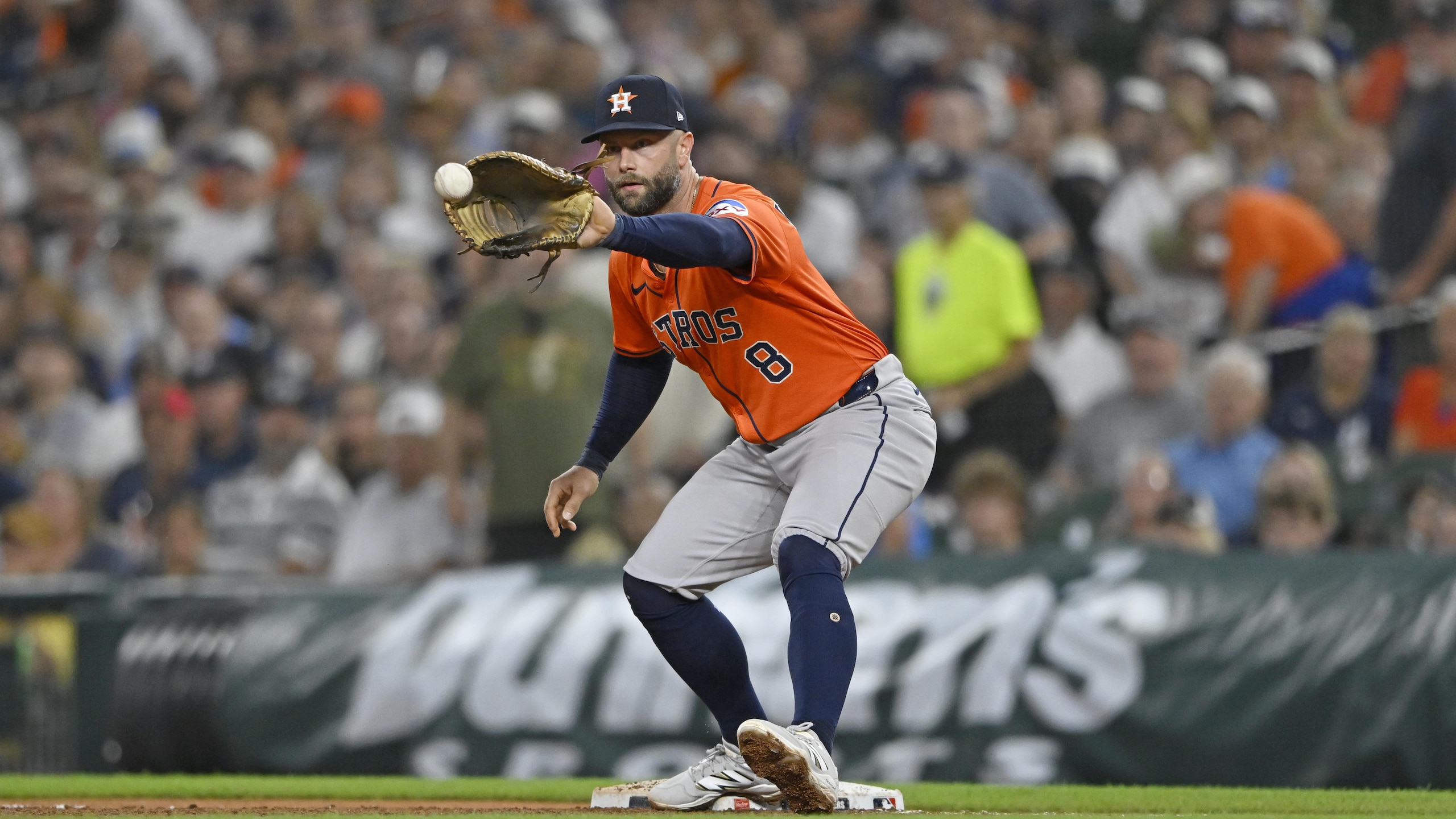
Seattle Mariners: N/A
Certainly, it can be argued that after finishing a win away from their first World Series appearance in franchise history, the Mariners should have been even more active this past offseason.
With that said, they re-signed first baseman Josh Naylor to a five-year, $92.5 million deal. The always-active Jerry Dipoto also traded for super-utility man Brendan Donovan, who is making a modest $5.8 million in his penultimate year of arbitration eligibility. Outfielder Rob Refsnyder—who mashes left-handed pitching—was another shrewd addition for $6.25 million in the winter.
The day is coming when the M's will have to decide whether or not to pay some of their starters, such as Logan Gilbert and George Kirby. For now, though, they don't really have an obvious albatross, especially considering Cal Raleigh and Julio Rodríguez are signed to team-friendly deals.
Houston Astros: Christian Walker
Original Contract: Three years, $60 million
Remaining Money: $40 million through 2027
Perhaps the Astros should just stop trying to sign veteran first basemen.
Christian Walker's deal doesn't look nearly as bad as José Abreu's was, but posting a .717 OPS in the first season of a lucrative three-year deal isn't exactly encouraging. Even scarier is that the three-time Gold Glover had minus-seven defensive runs saved during his first season in Houston.
Walker may very well rebound during his second season with the Astros, though that's hardly a guarantee considering he's going to turn 35 shortly after Opening Day. With a surplus of infielders that may push Isaac Paredes out of a full-time role when Jeremy Peña returns from a fractured ring finger, the Astros would probably love it if there were an amnesty clause that could allow them to get out of the remaining two seasons of Walker's deal.
Texas Rangers: Joc Pederson
Original Contract: Two years, $37 million with $18.5 million mutual option for 2027
Remaining Money: $18.5 million through 2026
Joc Pederson has had enough success in his career to stand out as an obvious bounce-back candidate in 2026.
Still, it's pretty alarming how bad he was during his first season in Arlington, as the two-time All-Star hit just .181 with a .614 OPS in 96 games. He was hardly the only veteran to underperform last season for the Rangers, but he was as much of an offender as anyone else.
Pederson is just two seasons removed from posting a .928 OPS against right-handed pitching for the Arizona Diamondbacks, so again, the guess here is he'll turn in drastically better production in 2026. He needs to.
Athletics: Luis Severino
Original Contract: Three years, $67 million with player opt out available after 2026
Remaining Money: $47 million through 2027
We knew when the Athletics signed Luis Severino that they gave him hazard pay to come pitch in a minor-league ballpark for at least two seasons. As it turned out, he may have underestimated how much of a challenge pitching at Sutter Health Park would be.
Severino posted a 6.01 ERA in 15 home starts during his first season with the A's, openly complaining about Sutter Health Park.
The good news is that he still showed he can be a good MLB pitcher, posting a 3.02 ERA in 14 road starts. He also logged 162.2 innings overall, despite his home struggles.
But if Severino struggles as much at home in 2026, it will set up an interesting decision. Would he actually walk away from a $22 million salary in 2027? Or would he push the A's to eat some money and facilitate a trade after declining the chance to opt out?
Los Angeles Angels: Anthony Rendon
Original Contract: Seven years, $245 million
Remaining Money: $38 million through ???
Anthony Rendon is not with the Angels, but in the final season of one of the worst contracts in MLB history, he's still on the books for $33.9 million against the luxury tax threshold.
ESPN's Alden Gonzalez reported in December that Rendon "had agreed to spread those payments out over what a source described as 'a few years,'" referring to the $38 million salary he was supposed to make in 2026. It remains unclear exactly what the terms of that settlement are.
In the end, Rendon made more than $250 million to play a game that he was, at best, lukewarm about.


NL East
4 of 6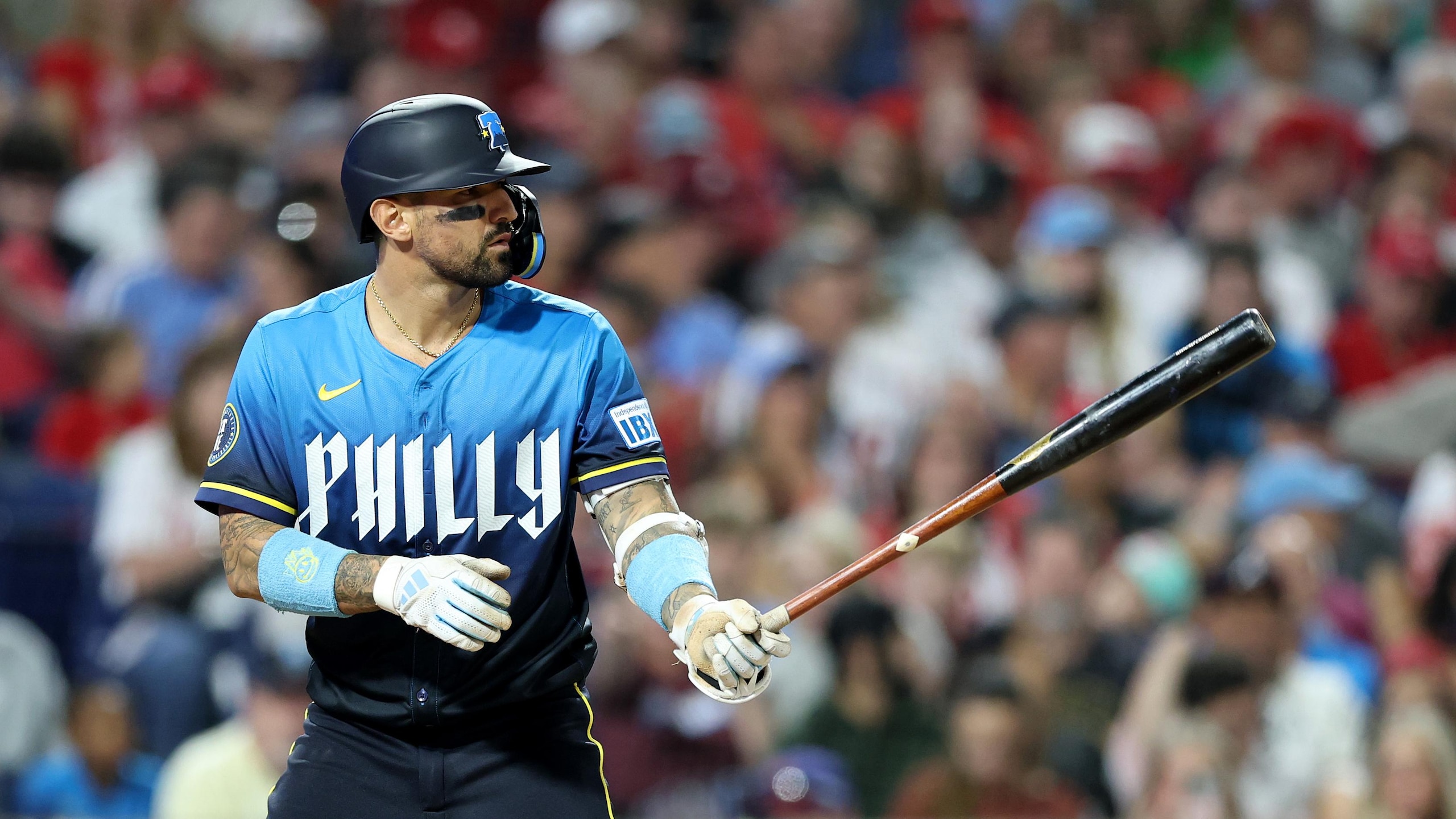
Philadelphia Phillies: Nick Castellanos
Original Contract: Five years, $100 million
Remaining Money: $19.22 million through 2026
While there were some notable positive moments, Castellanos' relationship with the Phillies—particularly manager Rob Thomson—deteriorated to the point that they released him ahead of the final year of a $100 million deal. The only relief they get from what would have been a $20 million salary comes in the form of the league minimum salary Castellanos will receive from the San Diego Padres.
From a bigger-picture standpoint, it's fair to have some concern about Aaron Nola. He's a franchise icon, but posted a 6.01 ERA across 17 starts last season. Was it just a down year, or has Nola—who is entering the third season of a seven-year, $172 million deal—hit a wall after years of being a workhorse?
Additionally, while Taijuan Walker was serviceable last year, the four-year, $72 million deal that he's entering the final season of certainly hasn't played out how the Phillies anticipated.
New York Mets: Frankie Montas
Original Contract: Two years, $34 million
Remaining Money: $17 million through 2026
This one is pretty simple.
Frankie Montas posted a 6.28 ERA across just 38.2 innings for the Mets last season. He's not going to pitch in 2026, after undergoing Tommy John surgery last September. Knowing that, the Mets designated him for assignment this past November, bringing an end to an unfortunate, yet expensive tenure in Flushing.
Fortunately for the Mets, Montas is kind of just a write off for Steve Cohen.
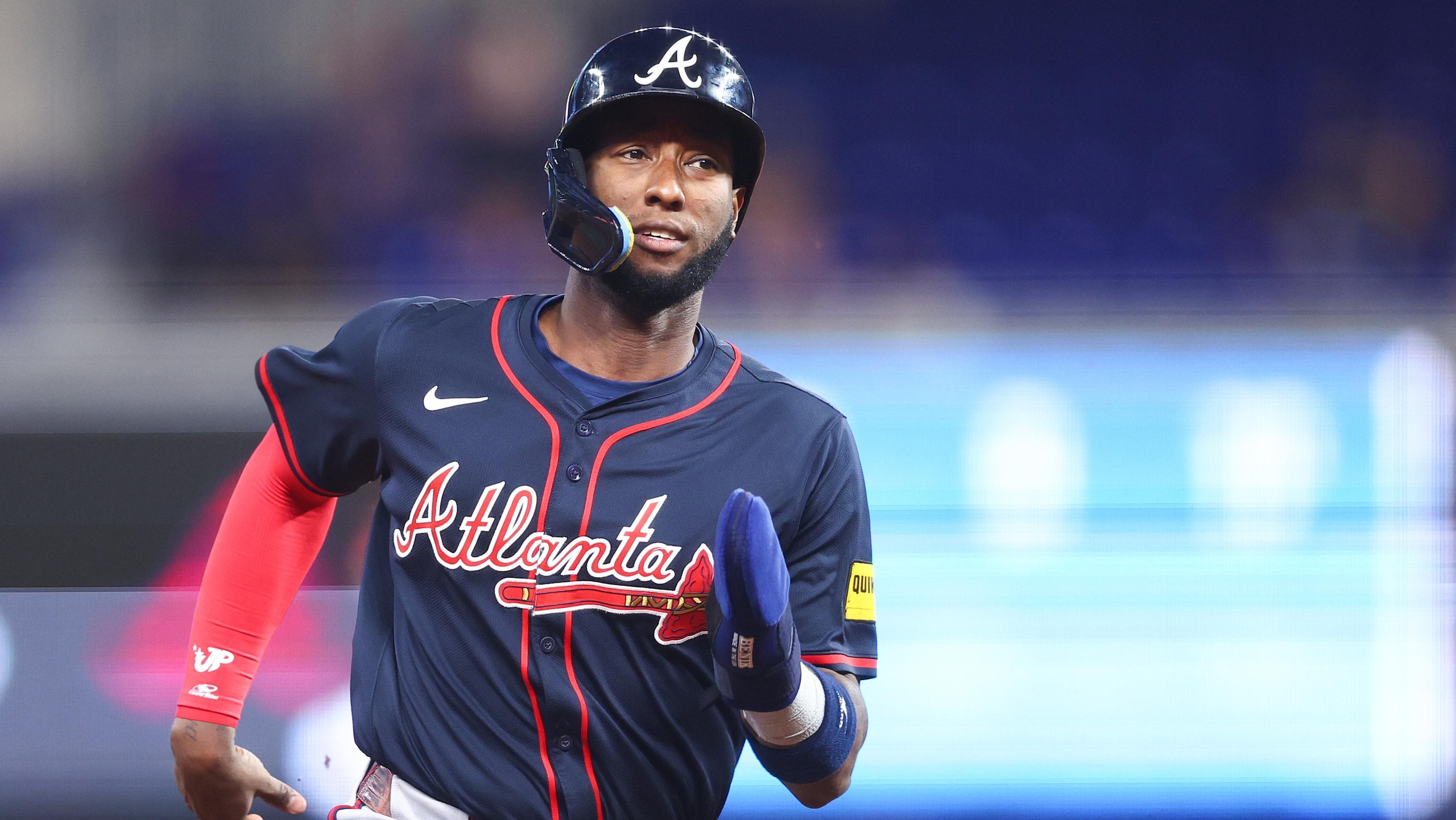
Miami Marlins: Avisaíl García
Avisaíl García will make $5 million from the Marlins this season, despite not having played for the team—or in the league—since 2024.
The Marlins gave the former All-Star a four-year, $53 million contract ahead of the 2022 campaign. Over parts of three seasons with the Fish, García posted an unsightly .582 OPS and -2.0 WAR.
Where does the $5 million salary from this season come from, with García now retired? In his original deal, García secured a $12 million club option for 2026, one that came with a $5 million buyout if not exercised.
Atlanta Braves: Jurickson Profar
Original Contract: Three years, $42 million
Remaining Money: $15 million through 2027
In a way, Jurickson Profar's deal hasn't hurt the Braves as much as you would think. Atlanta didn't have to pay him during his 80-game performance-enhancing drug suspension a year ago, nor will they as he's serving a 162-game penalty that covers all of the 2025 season.
Still, Profar now has a $15 million salary for his age-34 season remaining in 2027. At this stage, we have no idea what Profar, without the benefit of PEDs, will look like. Heck, we don't know that Profar won't try to cheat the system in another way.
President of baseball operations Alex Anthopoulos has made his name by signing players to team-friendly long-term extensions. But Profar has proven to be a rare miss from AA.
Washington Nationals: Keibert Ruiz
Original Contract: Eight years, $50 million with club options for 2031 and 2032
Remaining Money: $36.875 million through 2030
When former president of baseball operations Mike Rizzo signed Keibert Ruiz to an eight-year, $50 million extension in March of 2023, it was a worthwhile gamble for one of the pieces that the Nationals had acquired in the trade that sent Trea Turner and Max Scherzer to the Los Angeles Dodgers. If Ruiz had reached his potential, this extension would have become extremely team-friendly.
Unfortunately for the Nats, Ruiz has just a .664 OPS in parts of five seasons since being acquired. Not only has he not developed into a core piece in D.C., but he's likely to be usurped by Harry Ford as the club's starting catcher at some point in 2026.
This deal won't hamstring the new president of baseball operations, Paul Taboni, but he would still rather not have it on the books.
NL Central
5 of 6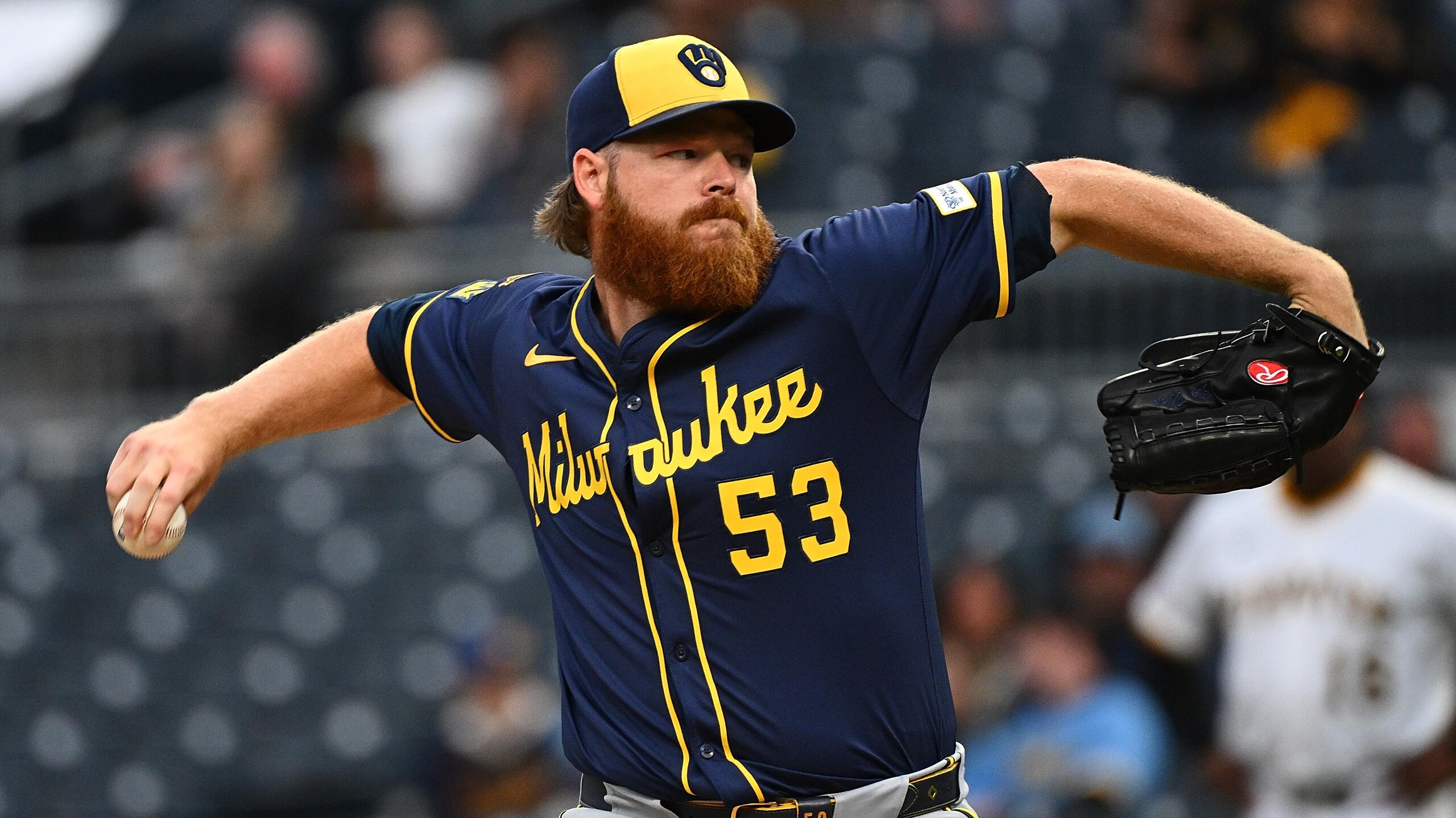
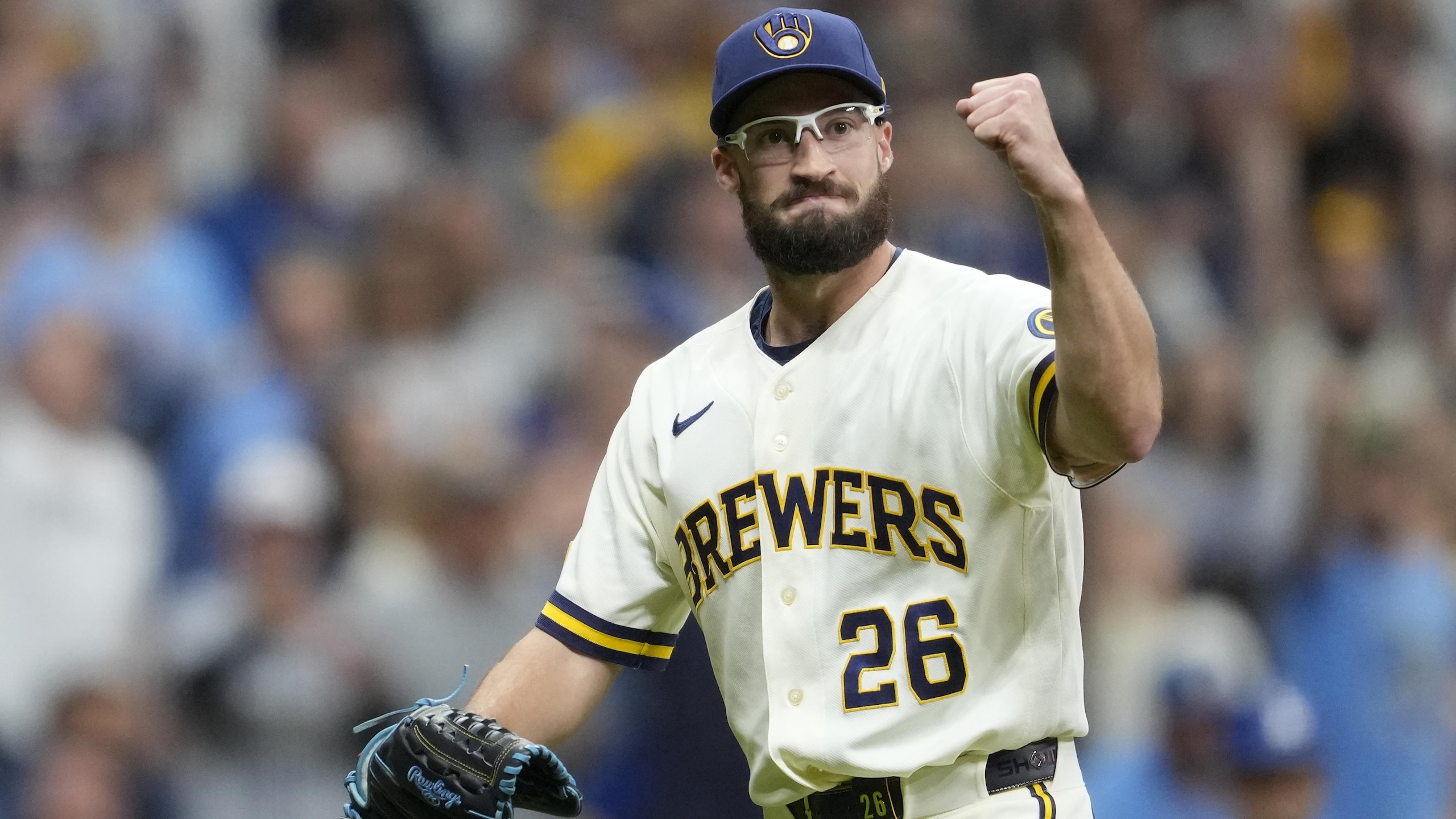
Milwaukee Brewers: Brandon Woodruff
Original Contract: One year, $22.025 million
Remaining Money: $22.025 million through 2026
For as beloved as Brandon Woodruff is in Milwaukee, when the Brewers extended him the one-year, $22.025 million qualifying offer this past offseason, they likely hoped he would decline it and depart in free agency, allowing them to collect draft-pick compensation.
Instead, Woodruff accepted the QO. To be fair, the two-time All-Star was excellent when he was on the mound a year ago, going 7-2 with a 3.20 ERA in 12 starts. The problem is that the 33-year-old has been healthy for just 23 starts since the beginning of the 2023 season.
Perhaps this will be the year Woodruff gets back on track in terms of durability. But the Brewers are taking an expensive gamble to find out, and they'll be in trouble if it doesn't pan out, considering they traded away Freddy Peralta this winter.
Chicago Cubs: Dansby Swanson
Original Contract: Seven years, $177 million
Remaining Money: $109 million through 2029
Considering Dansby Swanson always posts and has 31 defensive runs saved in three seasons with the Cubs, this contract is far from a disaster.
Still, Swanson hit .265 with a .775 OPS over his final three seasons with the Braves, which, when coupled with his tremendous defense, earned him a seven-year deal with the Cubs in free agency. But since joining the Cubs, Swanson's offensive production has declined, as he's hit .243 with a .721 OPS.
It could be worse, the Cubs could have signed Xander Bogaerts during the much ballyhooed free-agent shortstop class of 2022-23, which also included Trea Turner and Carlos Correa. But when Chicago inked Swanson to this contract, they definitely expected he would perform more offensively.
Cincinnati Reds: Ke'Bryan Hayes
Original Contract: Eight years, $70 million
Remaining Money: $36 million through 2030
Ke'Bryan Hayes is a complicated player because he might be the best defender at any position in baseball. He has a staggering 95 defensive runs saved and 80 outs above average at third base, a premium position, since entering the league in 2020.
At the same time, Hayes has been a Triple-A hitter, at best, for most of his career. That includes after he was traded from the Pittsburgh Pirates to the Reds last summer. Even after getting to play his home games at Great American Ball Park, Hayes hit just .234 with a .656 OPS as a Red.
If you have great hitters elsewhere in your lineup—particularly in the middle infield—you can deal with having Hayes hit ninth to have his glove in the field. But he's really just a step above having an old-school NL lineup with a pitcher hitting ninth.
St. Louis Cardinals: Dustin May
Original Contract: One year, $12.5 million
Remaining Money: $12.5 million through 2026
Dustin May is the type of arm it makes sense to take a flier on when you're a team tearing things down to the studs, like the Cardinals are under president of baseball operations Chaim Bloom.
But while there's an outside chance May pitches well enough for the Cardinals to flip him this summer, the more likely scenario is that he spends much of 2026 on the injured list, turning into a sunk cost for the Cards. Mind you, this is someone who had enough service time to qualify for free agency but has logged just 324 innings in his career, despite making 57 of his 71 MLB appearances as a starter.
Also concerning is that even when May was healthy last year, he didn't pitch well. In a season split between the Dodgers and Red Sox, May posted a 4.96 ERA and 4.88 FIP across 132.1 innings.
Pittsburgh Pirates: Bryan Reynolds
Original Contract: Eight years, $106.75 million
Remaining Money: $77.25 million through 2031
When Reynolds led baseball with eight triples and posted a .912 OPS in 2021, he looked destined to be a superstar. He settled more into being just a nice player between 2022 and 2024, when he posted a .795 OPS.
However, he's coming off a down year in 2025, a campaign that saw him hit .245 with 173 strikeouts and a 99 OPS+. To be fair, he graded out relatively well in right field, with one defensive run saved and minus-two outs above average, quite the improvement over the minus-5 DRS and minus-nine OAA he had in left field the prior campaign.
Still, most of Reynolds' value comes from his offense, particularly on a team that's thin on impact offensive players. It's not like he's signed to a megadeal, but when you're a team that doesn't spend much money, there's not much margin for error for players like Reynolds to have disappointing seasons.
NL West
6 of 6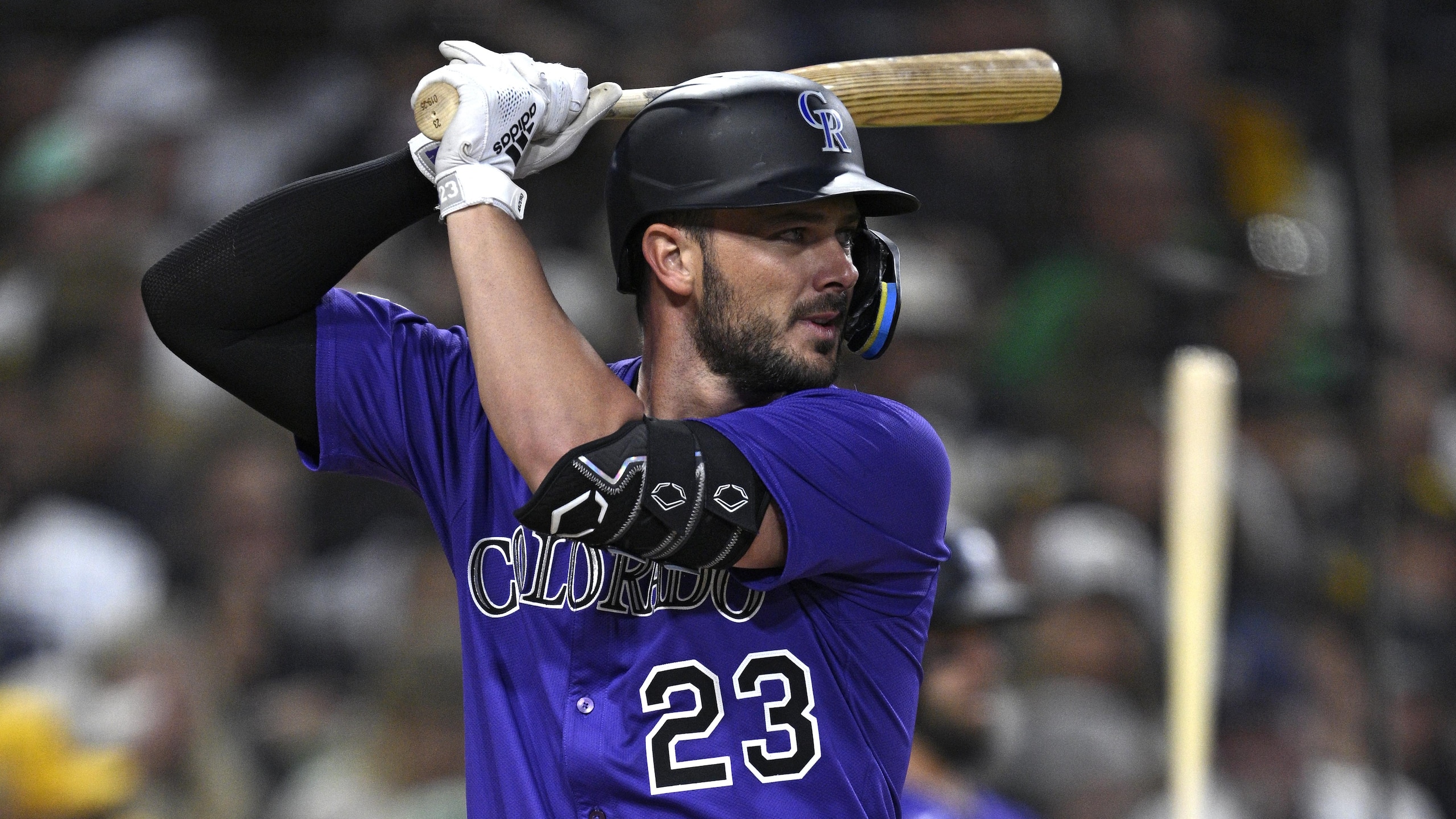
Los Angeles Dodgers: Tanner Scott
Original Contract: Four years, $72 million
Remaining Money: $45.1 million through 2039
Tanner Scott's first season with the Dodgers may have earned him a ring, but "a lower-body abscess incision" prevented him from pitching at all in the postseason following a disastrous regular season.
Scott posted a 4.74 ERA and 4.70 FIP across 61 games during his first season of a four-year deal with the Dodgers. That's a far cry from the 2.04 ERA and 2.53 FIP he posted between the Marlins and San Diego Padres from 2023-24.
All the Dodgers can hope is that the lefty bounces back in his second season in LA. If he doesn't, at least the Dodgers won't be as reliant on him this year with the addition of Edwin Díaz in the offseason.
San Diego Padres: Yu Darvish
Original Contract: Six years, $108 million
Remaining Money: $46 million through 2028
While Yu Darvish continues to attempt to return to the mound, the five-time All-Star acknowledged in January that there's a real shot his body won't allow him to pitch again.
"Although I am leaning towards voiding the contract, there's still a lot that has to be talked over with the Padres, so the finer details are yet to be decided," Darvish said on X. "Also, I will not be announcing my retirement yet. Right now, I am fully focused on my rehab for my elbow, and if I get to a point where I can throw again, I will start from scratch again to compete. If once I get to that point I feel I can't do that, I will announce my retirement."
Set to turn 40 in August, Darvish had an internal brace procedure on his elbow last November, which will knock him out for all of 2026 even in the best-case scenario. With two major elbow procedures on his resume and more than 1,700 career MLB innings, Darvish's body might just be telling him it's time, which would lead to the need for him and the Padres to work out some sort of contract settlement.
San Francisco Giants: Jung Hoo Lee
Original Contract: Six years, $113 million
Remaining Money: $87.5 million through 2029
Jung Hoo Lee got off to a scalding-hot start a year ago, as he was hitting .319 with a .901 OPS at the end of April. However, his production plummeted after that, and he wound up hitting just .266 with a .735 OPS.
What's more, he graded out disastrously in center field, finishing the season with minus-18 defensive runs saved and minus-five outs above average. The Giants signed Harrison Bader to play center field this offseason, which will make Lee an expensive corner outfielder without a ton of power.
This isn't completely a sunk cost, but it's a difficult time to be a Jung Hooligan right now.
Arizona Diamondbacks: Eduardo Rodríguez
Original Contract: Four years, $80 million
Remaining Money: $46 million through 2028
Eduardo Rodríguez's tenure in Phoenix has been a disaster to this point.
After left shoulder inflammation limited him to just 10 starts in his first season with the Diamondbacks, Rodríguez did rebound to make 29 starts spanning 154.1 innings last season. Unfortunately, he wasn't effective, posting a 5.02 ERA.
With Corbin Burnes still recovering from Tommy John surgery and Merrill Kelly dealing with back tightness, the Snakes could use a bounce-back season from Rodríguez in 2026. It's unclear whether they'll get that.
Colorado Rockies: Kris Bryant
Original Contract: Seven years, $182 million
Remaining Money: $81 million through 2028
Kris Bryant has reached a point in his career similar to where Stephen Strasburg was a few years ago—he's exhausted pretty much every avenue to improve his health, but it's clear that he's never going to be able to stay on the field again.
A bad back has limited the former NL MVP to just 170 of a possible 680 games again in four seasons since joining the Rockies in free agency. It would seem like a miracle if Bryant, now 34, plays in 170 games the remainder of his career.
Fans tend to get mad at players who don't live up to big contracts, but if you see Bryant in person, it's clear that he's in pain even doing basic things like walking. It's not his fault that his body has failed him.

.jpg?w=2560)
.jpg?w=2560 "AD Trolls Bears WR on IG 😂")
.jpg?w=2560 "Viral Dan Campbell Presser 💙")
.jpg?w=2560 "Report: Steelers WR to Miss 'Weeks'")
.jpg?w=2560 "Cam Ward Says He's Not A Loser")
.jpg?w=2560 "Buzz: MHJ Hired Agents for Trade")
.jpg?w=2560 "Chargers Fall to 0-5 🤢")