.jpg?w=2560)


Every NBA team wants to put its best foot forward on opening night, and that starts with a strong first unit.
This offseason brought sweeping changes, with trades and free agency reshaping rosters across the NBA. As a result, most teams will debut fresh lineups on opening night. For some, such as the Houston Rockets and Orlando Magic, these never-before-seen groups are a source of excitement.
In others, unproven configurations should have fans feeling a little anxious.
Plenty of offseason remains, and training camp could produce some surprises. But let's make our best guess about how all 30 teams will look when their starters take the floor and hand out grades accordingly.
Atlanta Hawks: B
1 of 30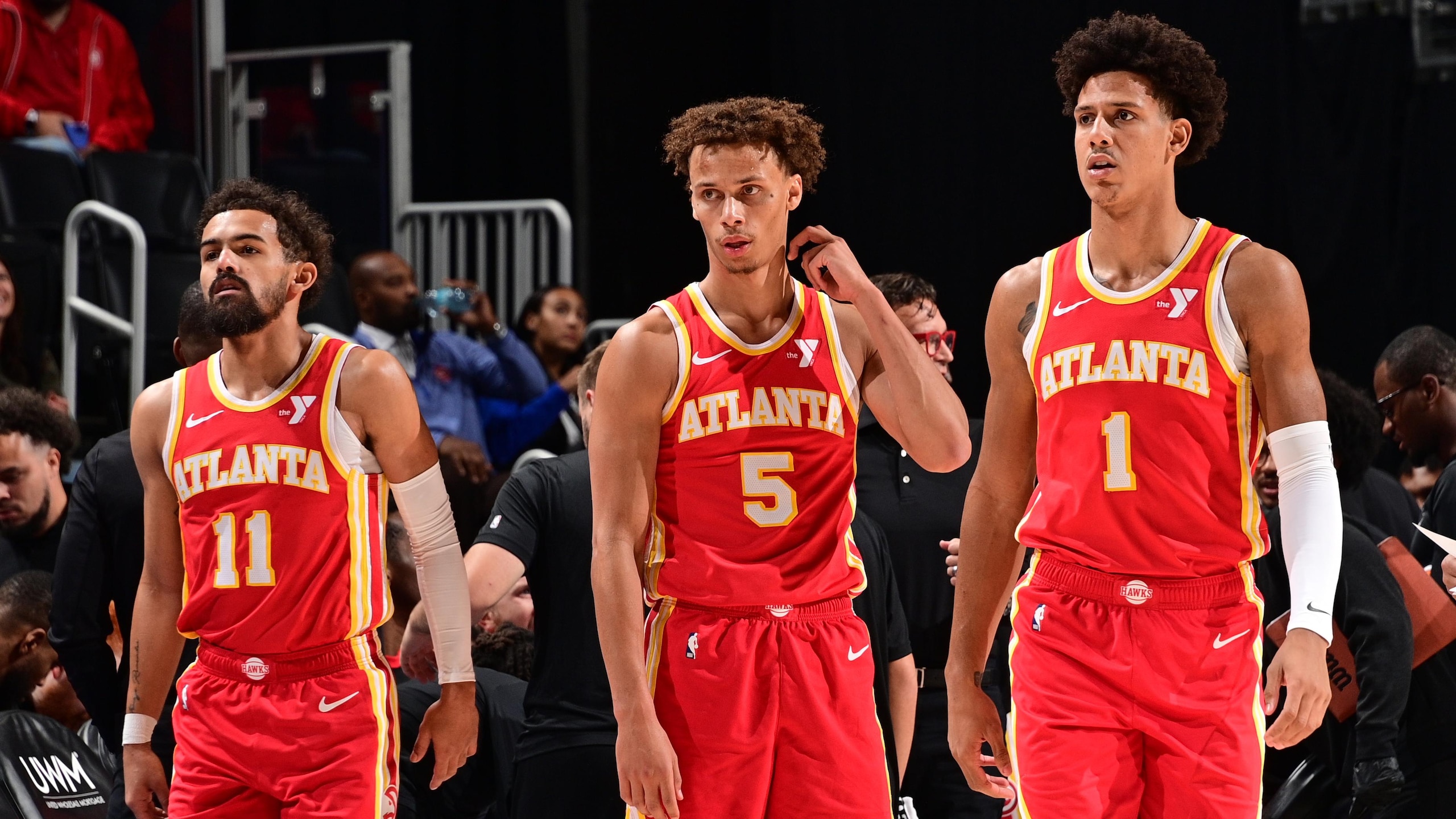
Lineup: Trae Young, Dyson Daniels, Zaccharie Risacher, Jalen Johnson, Kristaps Porzingis
2024-25 Net Rating: N/A
Onyeka Okongwu might be a little disappointed after coming on strong in the second half last year, but Porzingis has the greater potential to unlock the best version of the Hawks by providing elite spacing, shot-blocking and mismatch-smashing post-ups.
Atlanta would be wise to limit Porzingis' minutes and perhaps even shift away from him if the illness-induced inconsistency he showed last year persists.
This group has a chance to shred defenses if Daniels takes another small step forward offensively and if Risacher develops into a bona fide three-point threat after hitting 40.7 percent of his post-All-Star treys.
Johnson might be the key here, as he was breaking out prior to going down with a shoulder injury last season. A full, healthy season from the 23-year-old who averaged 18.9 points, 10.0 rebounds and 5.0 assists in 36 games last year could push Atlanta into the East's top four.
Keep in mind, depth is the real strength in Atlanta. New additions Nickeil Alexander-Walker and Luke Kennard join Okongwu to make up one of the better backup groups in the league.
Boston Celtics: C
2 of 30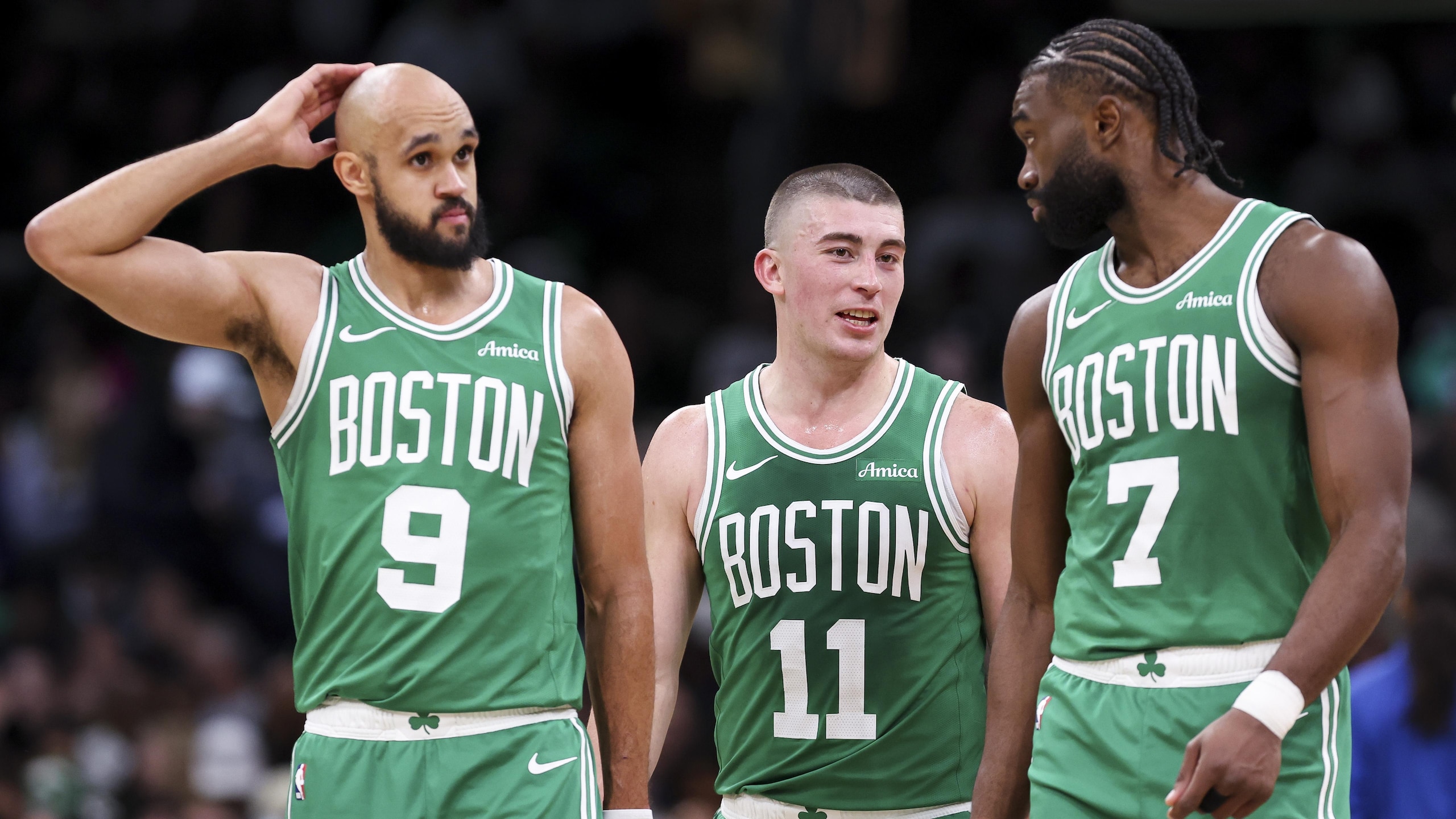
Lineup: Payton Pritchard, Derrick White, Jaylen Brown, Sam Hauser, Neemias Queta
2024-25 Net Rating: Plus-2.1
It's hard to be sure what the post-teardown Boston Celtics will trot out to start games this season, but the unit suggested by NBC Sports Boston's Chris Forsberg seems like the best of their options.
Anfernee Simons might be worth showcasing for a trade if Boston doesn't move him prior to the season, and Chris Boucher could start over Queta. This group is a little on the small side as it is, though, and Queta brings the kind of bulk you need if Brown and Hauser are your forwards.
Shooting should be a strength for this group regardless, as Pritchard, White and Hauser are all lights-out snipers. Pritchard and Hauser each canned over 41.0 percent from deep on extremely high per-minute volume in 2024-25.
Playmaking will be an issue without Jayson Tatum, last year's leader in assists. Perhaps White and Pritchard can prove themselves capable by committee, and maybe Brown will use his age-29 season to prove he's a true No. 1 option.
Boston isn't what it used to be, but this lineup isn't going to get run over by opposing starters. That'll be the thin bench's job.
Brooklyn Nets: D
3 of 30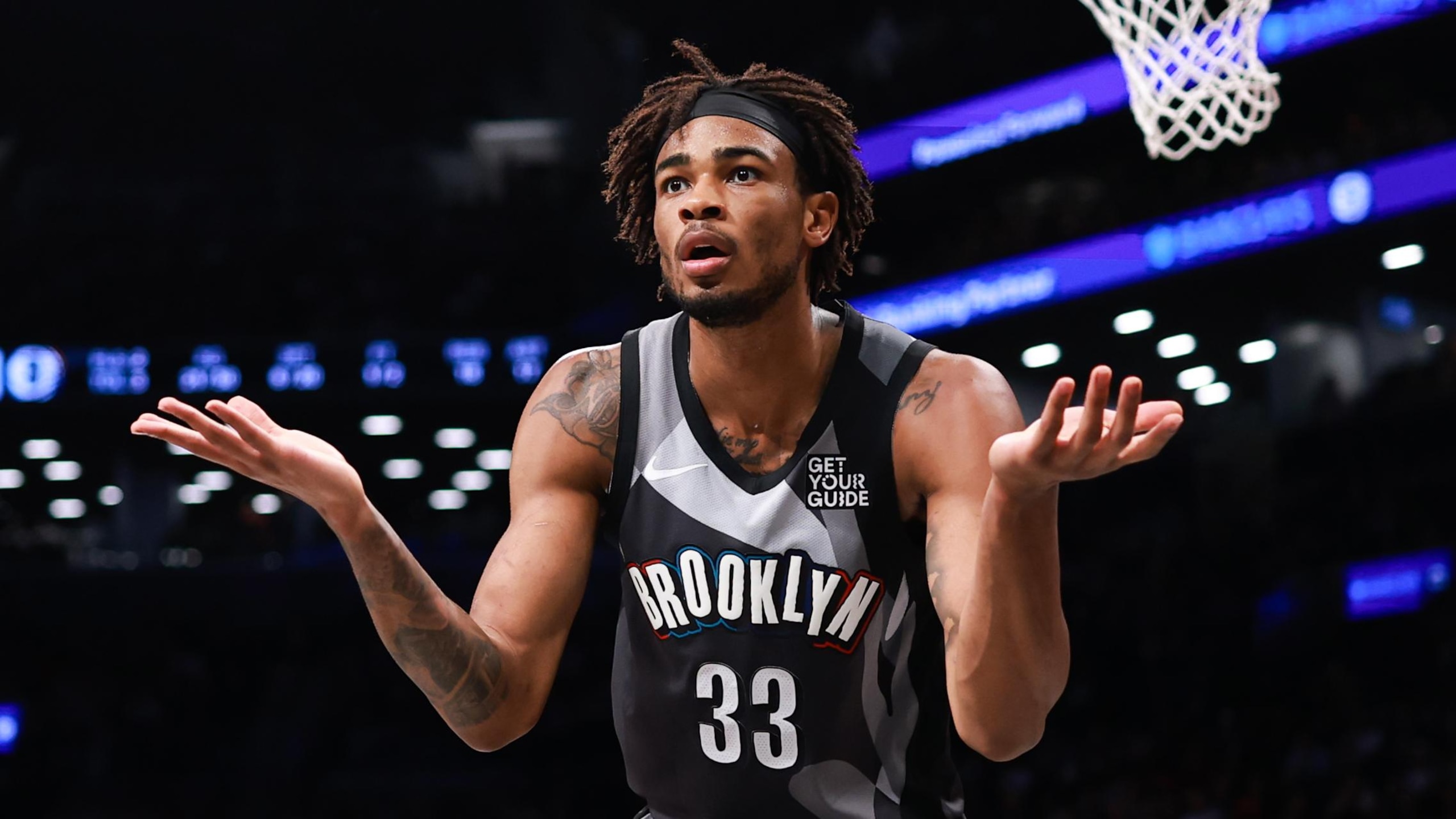
Lineup: Egor Demin, Cam Thomas, Ziaire Williams, Michael Porter Jr., Nic Claxton
2024-25 Net Rating: N/A
The Nets are short on veteran talent and control their 2026 first-round pick, which sets the stage for them to not-so-subtly tank once again.
Brooklyn may start rookie Egor Demin at point guard, lowering its expectations for the season. He is likely to stand out among a group of inexperienced ball-handlers."
The No. 8 overall pick has potential as an oversized 1, complete with obvious passing chops. But he's going to struggle massively, even with high-scoring support from Thomas and offseason addition Porter Jr.
Terance Mann has a shot to take the small forward spot from Williams, but Brooklyn should be incentivized to choose the younger option. Williams got 45 starts a year ago.
If Claxton rediscovers the form that earned him a top-10 finish in DPOY voting way back in 2022-23, it still won't matter. This lineup is going to get blitzed by opposing offenses.
Thomas will get all he can eat, but scoring deficiencies at three other spots in the group will probably also mean this unit puts up points at a below-average rate.


Charlotte Hornets: D
4 of 30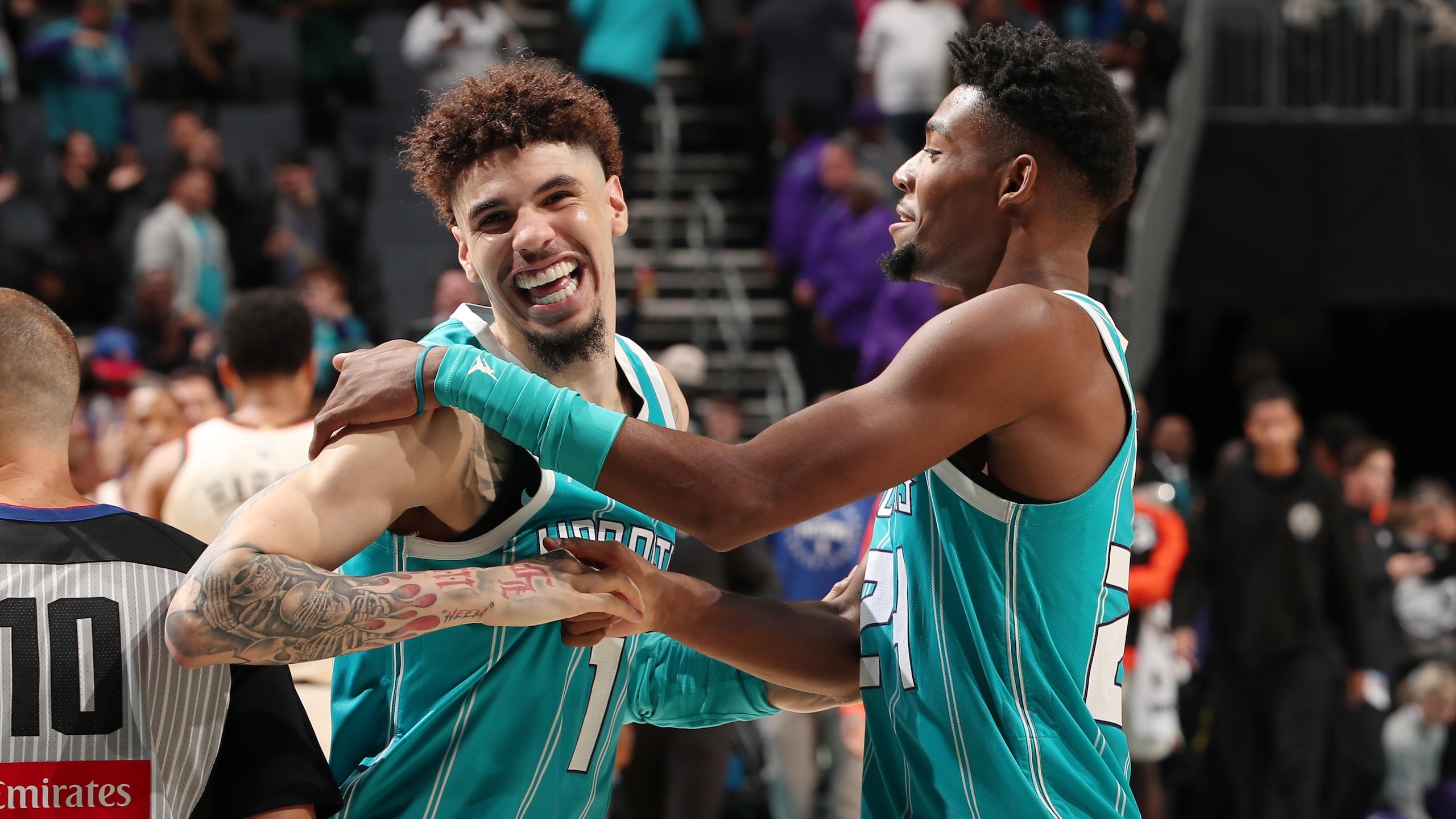
Lineup: LaMelo Ball, Brandon Miller, Kon Knueppel, Miles Bridges, Moussa Diabate
2024-25 Net Rating: N/A
Collin Sexton would probably deserve a starting spot over Knueppel if Charlotte were a pure meritocracy, but the veteran guard doesn't have nearly the same level of organizational investment as the rookie.
Plus, Sexton is a clear trade candidate whose value might benefit from coming off the bench and piling up stats as a second-unit gunner.
Ball, when healthy, has generally been a stellar driver of offense. He's graded out no worse than the 93rd percentile in Offensive EPM across the last four seasons and should stay among the elites with better shooting in his supporting cast.
Miller could take a step forward in his third year, especially if he maintains the spike in three-point volume he showed in 27 games prior to a season-ending wrist injury last season. He and Ball could both get up more than 10.0 threes per game.
The center spot is rough, as Diabate doesn't contribute much besides offensive rebounding. Veteran Mason Plumlee could wind up starting, but he's not an upgrade.
Nobody listed here is known for his defensive contributions. If this unit gets significant minutes, it'll be almost impossible for Charlotte to beat last year's No. 24 ranking in defensive efficiency.
Chicago Bulls: C-
5 of 30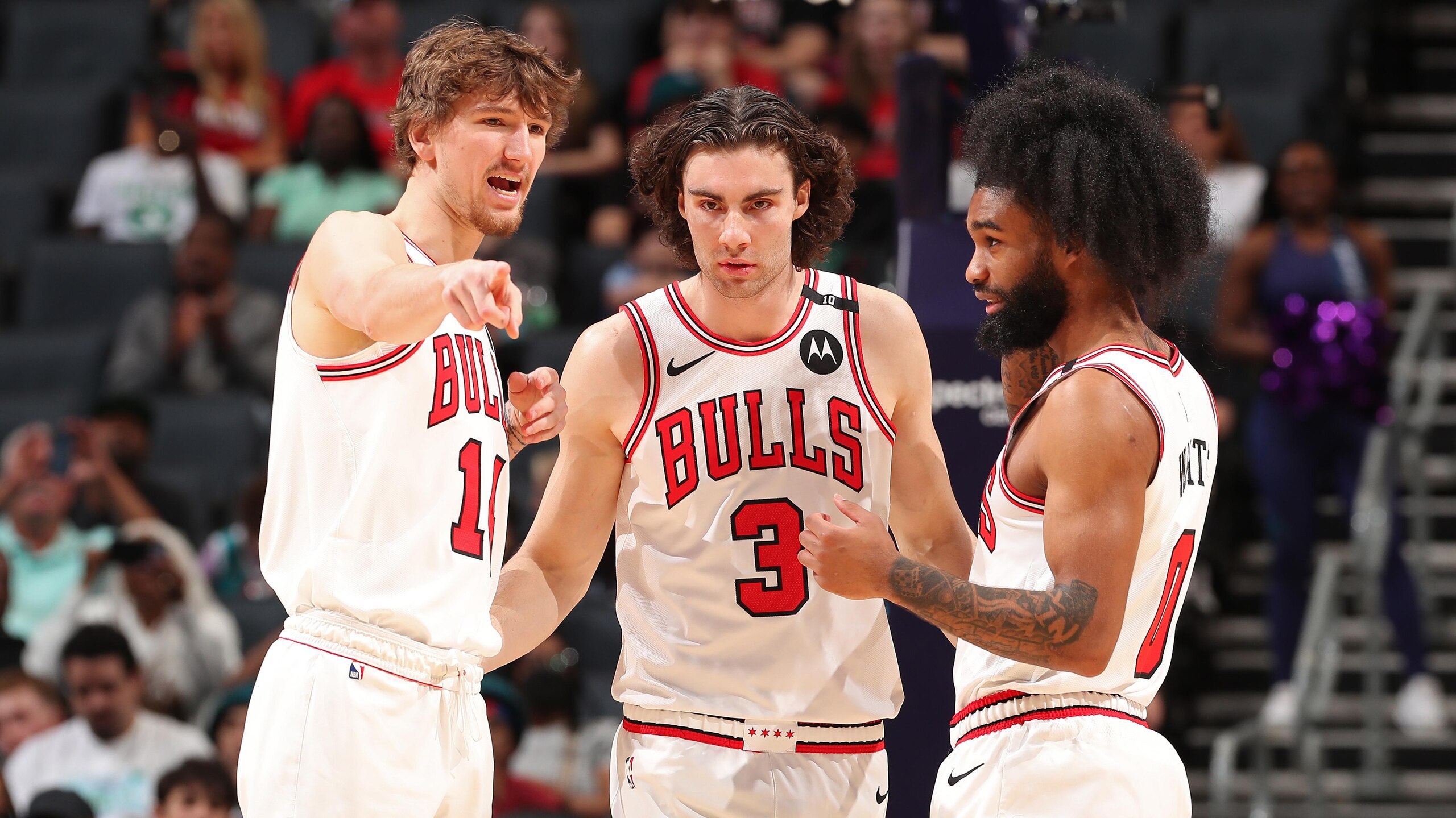
Lineup: Josh Giddey, Coby White, Ayo Dosunmu, Matas Buzelis, Nikola Vučević
2024-25 Net Rating: Minus-37.2
Before anyone freaks out, that ghastly minus-37.2 net rating came on just 127 possessions last year—way too small of a sample to trust.
While the Bulls' projected starters aren't likely to win their minutes, they're not going to get hammered by almost 40 points per 100 possessions.
Assuming Josh Giddey re-signs, his chemistry with Coby White could keep Chicago's offense on track—if Giddey's recent shooting improvements hold up.
Buzelis is a no-brainer and the closest thing to a potential star the Bulls have on the roster. He'll endure growing pains on both ends as his role expands, but he'll inject energy and excitement with his driving aggression.
Dosunmu is the shakiest pick, as Kevin Huerter, Isaac Okoro and even Patrick Williams could wind up being head coach Billy Donovan's preferred choice.
None of those three has proved as much as Dosunmu, though, and this group could use one quality wing defender to make up for what should be pretty poor work from the other four.
Overall, expect solid offensive production and almost zero stopping power. If Giddey regresses, things could get very ugly on both ends.
Cleveland Cavaliers: A
6 of 30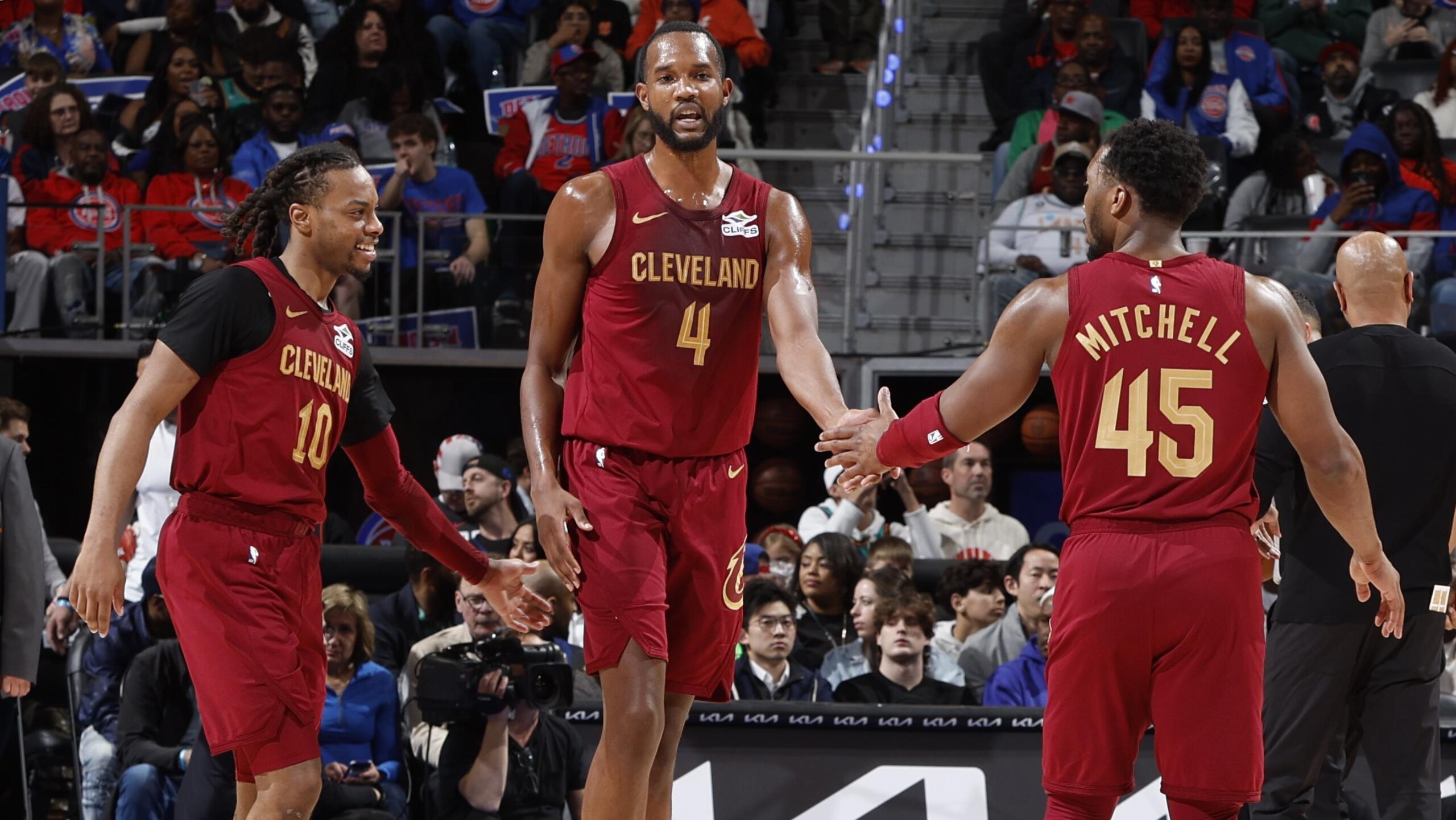
Lineup: Darius Garland, Donovan Mitchell, Dean Wade, Evan Mobley, Jarrett Allen
2024-25 Net Rating: Plus-5.1
Dean Wade is the only question mark here, but he projects as the likeliest first-unit replacement for Max Strus, who underwent surgery to repair a Jones fracture in his left foot.
Health has been a major issue for the 28-year-old throughout his career, but Cleveland has generally been excellent with him on the floor.
Though far from a star, Dean is a tremendous individual defender with great size and a reliable three-point shot. He's graded out in the 80th percentile or better in Defensive EPM across each of the last four seasons.
Garland could also miss time as he recovers from offseason toe surgery, which could thrust Sam Merrill into a bigger role. The Cavs obviously have faith in the underrated sniper. They handed him a four-year, $38 million deal over the summer. He'll be just fine alongside Mitchell if Garland can't ramp up quickly enough to start the year.
Mobley, the reigning Defensive Player of the Year, is on a superstar track and should get some MVP consideration. He'll more than make up for whatever Cleveland might lose with injuries to Garland and Strus.
Don't forget De'Andre Hunter, who has a case to start if Wade slips or can't stay healthy. At the same time, he thrived in a Sixth Man role last year.
Head coach Kenny Atkinson might prefer to keep him in that position, where he can enter games and wreck opposing backups.
Dallas Mavericks: C
7 of 30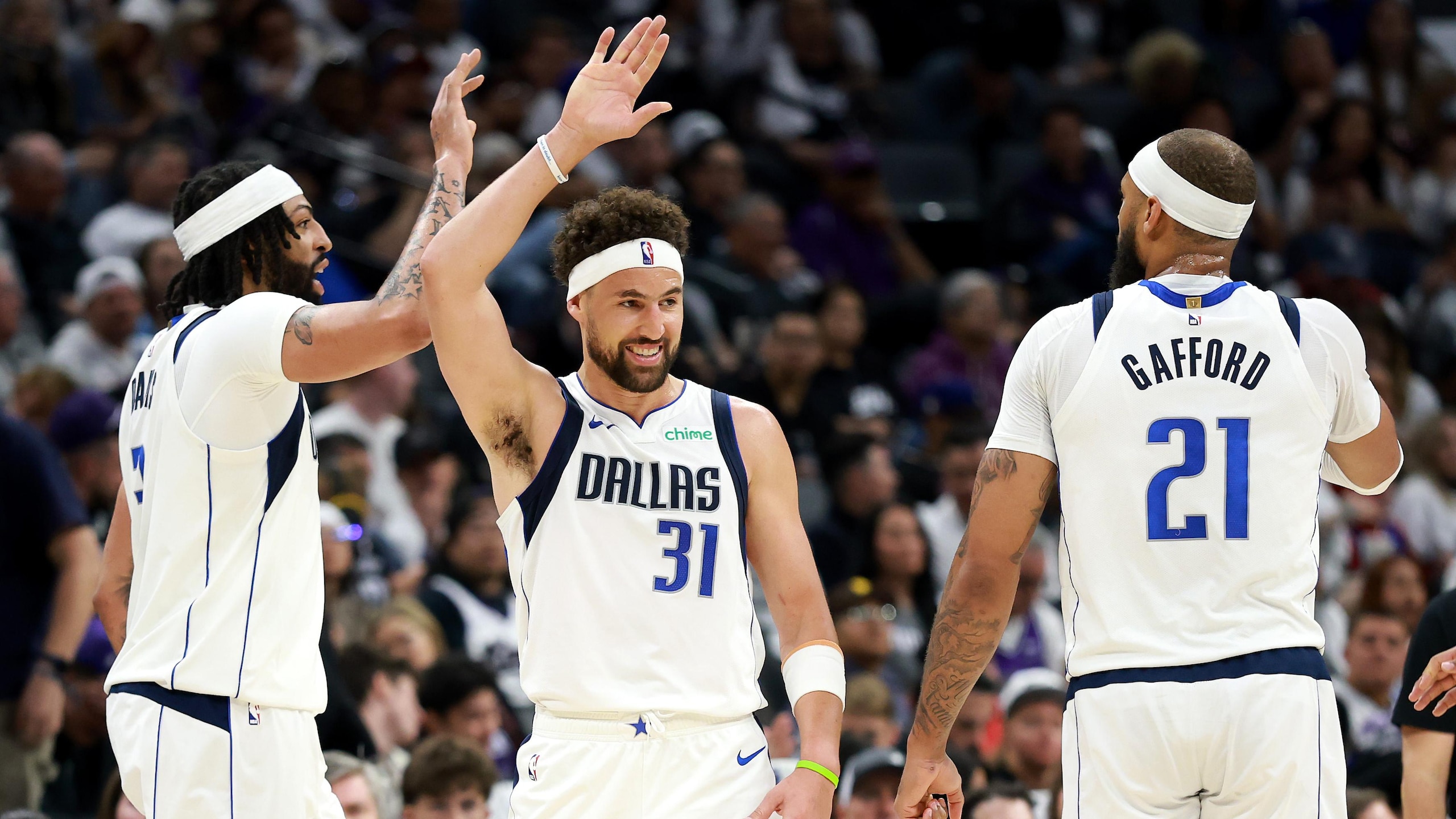
Lineup: D'Angelo Russell, Klay Thompson, Cooper Flagg, Anthony Davis, Daniel Gafford
2024-25 Net Rating: N/A
This is a pretty speculative attempt at Dallas' opening-night starting lineup, as PJ Washington, Naji Marshall, Max Christie and a couple of others deserve consideration.
Russell's spot is secure until Kyrie Irving returns from his torn ACL, and Davis seems ticketed for power forward—even if everybody but him recognizes he should be playing center.
If this is how things look, backcourt defense is going to be an enormous problem. Russell has never been a high-effort contributor on that end, and Thompson's injury history has sapped his lateral mobility. Flagg, Davis and Gafford offer loads of back-line length to compensate, though.
And if Flagg is as good as advertised on D, it's possible this group could be dangerous.
If Dallas starts this many big men, spacing and shooting may become significant issues. While Russell and Thompson are capable outside shooters, Davis and Gafford could severely limit floor spacing.
Lastly, there's no one in this lineup capable of breaking down the defense off the dribble.
Denver Nuggets: A
8 of 30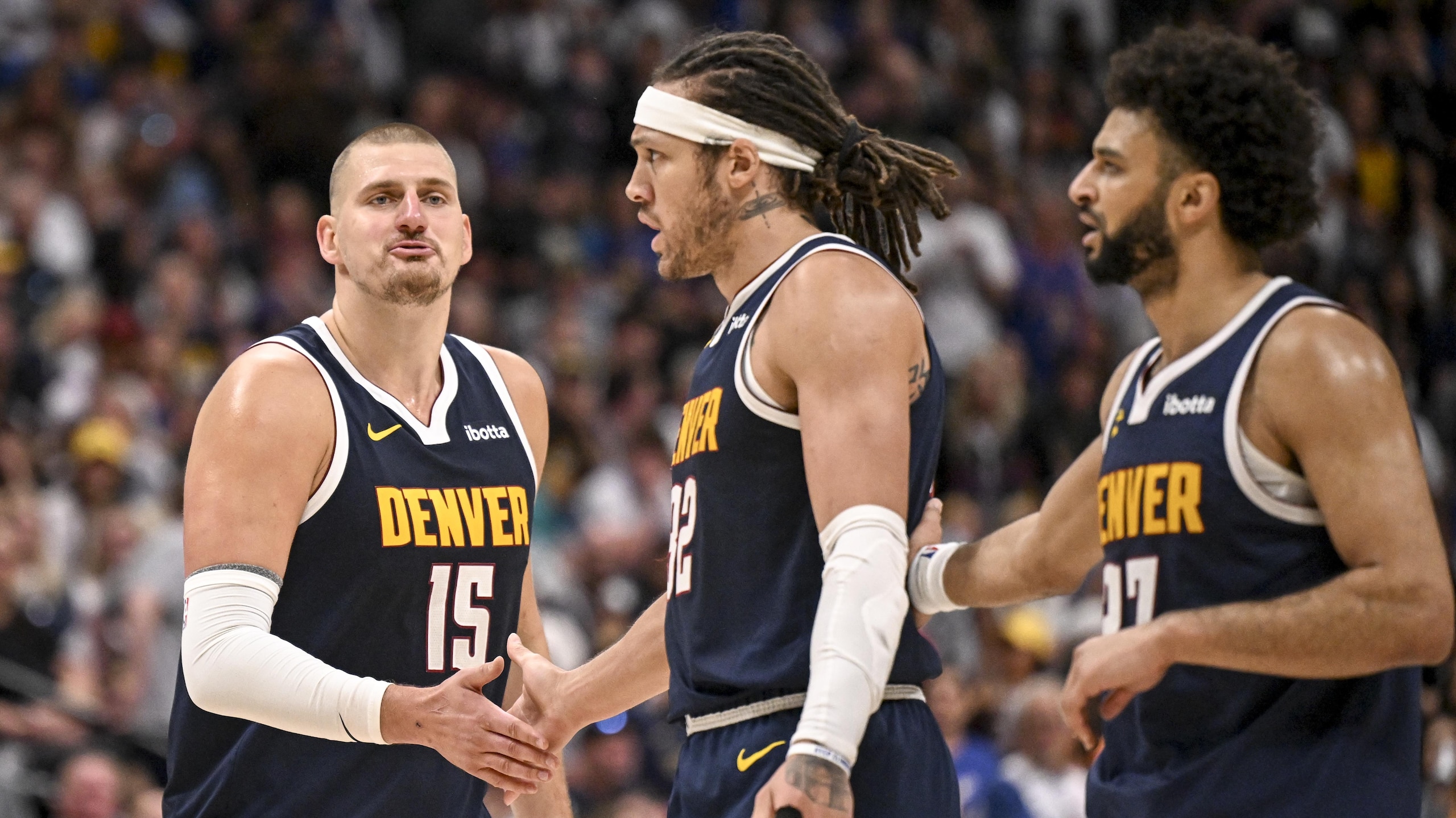
Lineup: Jamal Murray, Christian Braun, Cam Johnson, Aaron Gordon, Nikola Jokić
2024-25 Net Rating: N/A
If you grab four guys off the street and throw them out there with Nikola Jokić, you're still going to get a lineup grade in the "B" range. Include actual NBA players, some of whom are really good, and you end up with the highest possible grade.
Cam Johnson will replace Michael Porter Jr. this season, and it's hard to imagine he'll tank the operation. Even the most ardent MPJ defenders would have to concede that the Johnson-for-Porter swap is, at worst, a lateral move. Denver's new addition will provide nearly as much three-point shooting and may even be a defensive upgrade.
Jamal Murray's mind meld with Jokić and ability to take over games when required makes him an excellent second option, while Christian Braun and Aaron Gordon do all the dirty work.
The Nuggets have dominated during Jokić's time on the floor for almost a decade and should be expected to match or beat the plus-12.8 net rating last year's starting lineup produced.
Detroit Pistons: B
9 of 30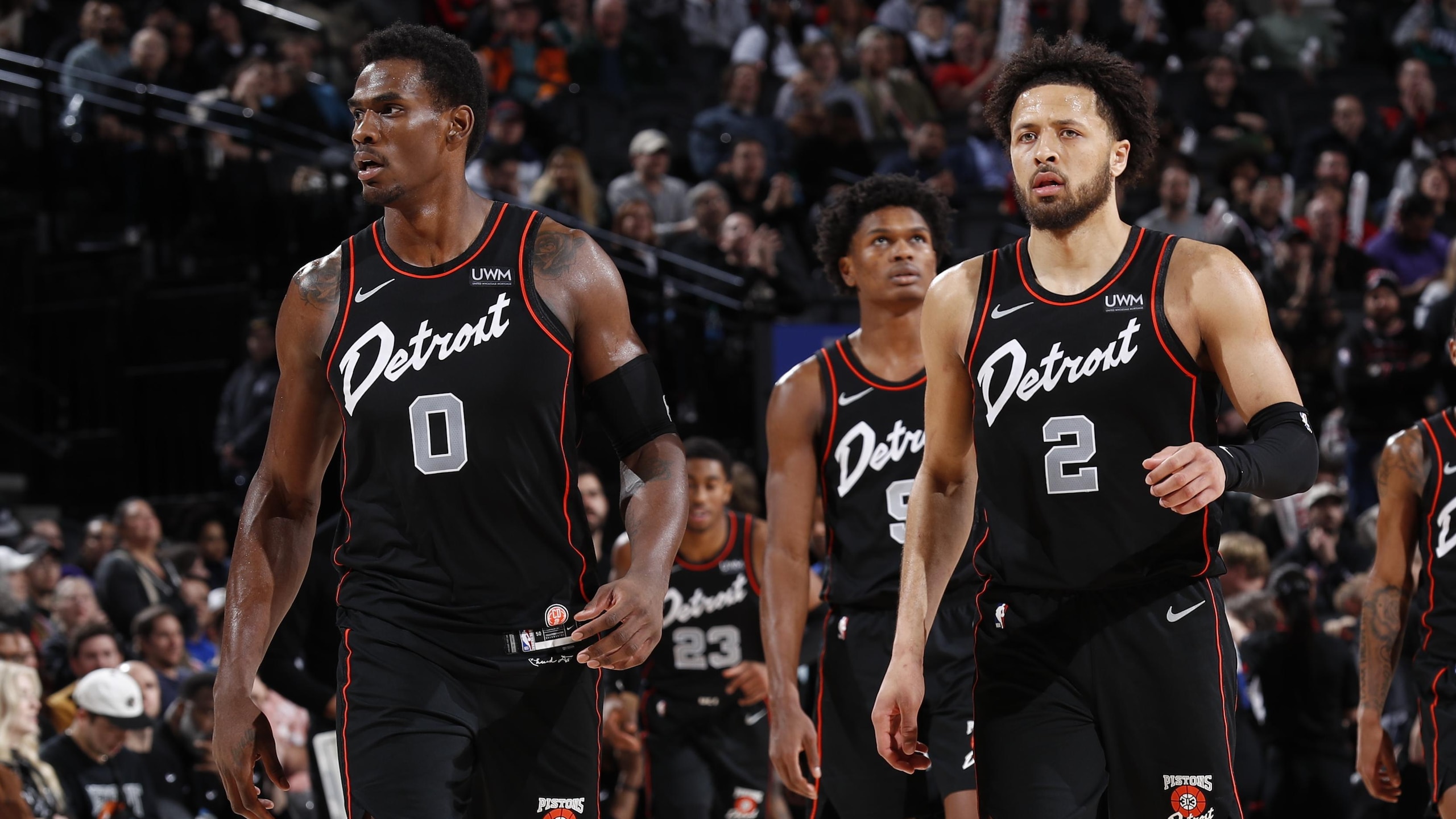
Lineup: Cade Cunningham, Jaden Ivey, Ausar Thompson, Tobias Harris, Jalen Duren
2024-25 Net Rating: N/A
This group technically played together last year, but it was only for three non-garbage-time possessions. That's as close to worthless as samples get, but it's fun to note their net rating was a plus-100.0.
Separate injuries kept Ivey and Thompson out of the lineup for long stretches, and head coach JB Bickerstaff tended to avoid lineups that featured both together. That should change this season.
If Ivey has fully recovered from the broken leg he suffered in January, and if Thompson builds on the elite defensive work that earned him full-time starting duties after the All-Star break, the Pistons could easily improve on last year's 44 wins.
Cunningham is a budding superstar, Harris offers spacing, Duren controls the boards and the Ivey-Thompson combo will bring terrifying athleticism to the mix.
Pistons lineups that included everyone above except Ivey were a plus-4.4 last season. As long as Ivey can knock down shots from the perimeter like he did prior to injury (40.9 percent on 5.1 attempts per game), the 2025-26 Pistons starters should be at least that good.
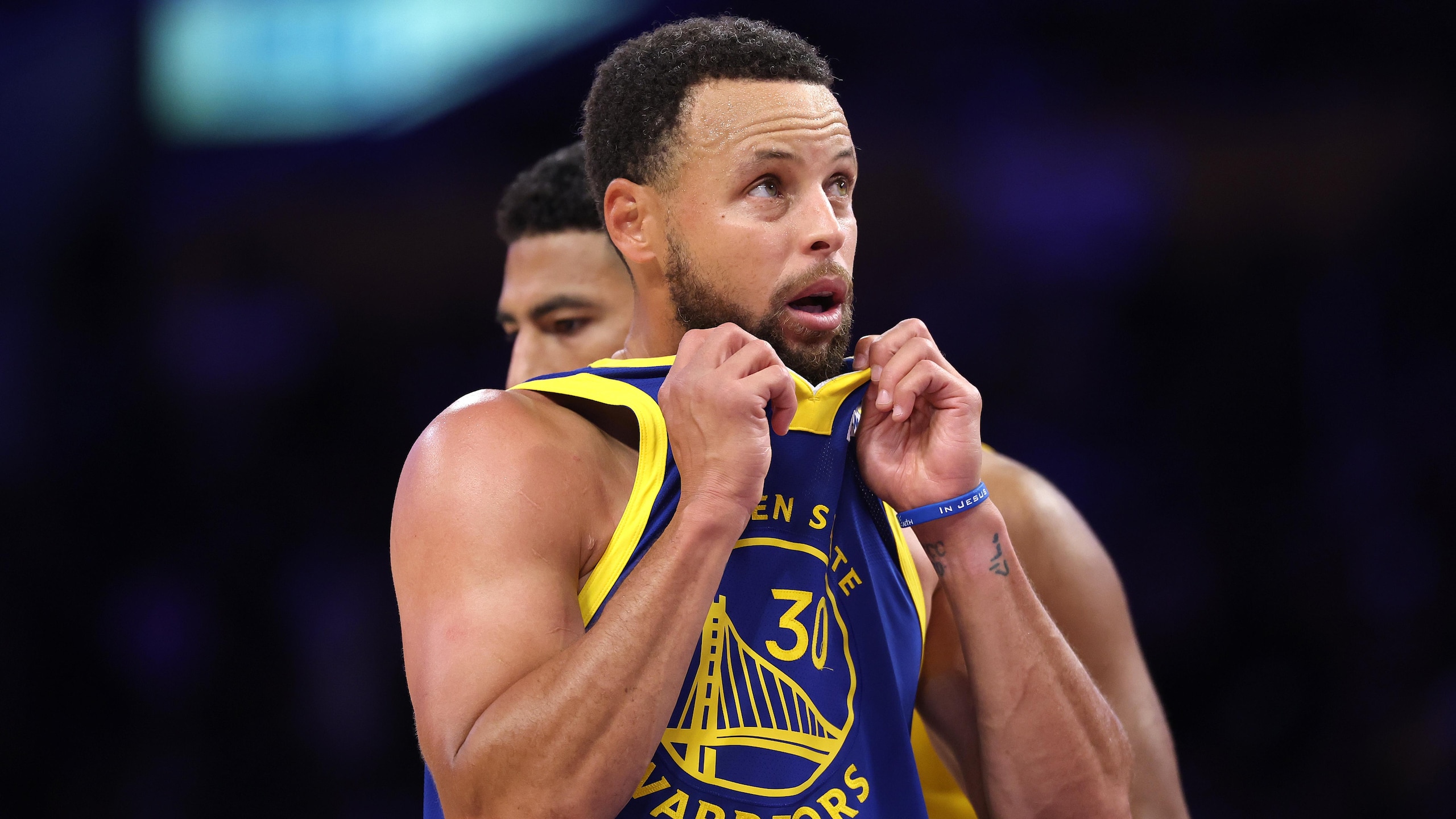
Golden State Warriors: A-
10 of 30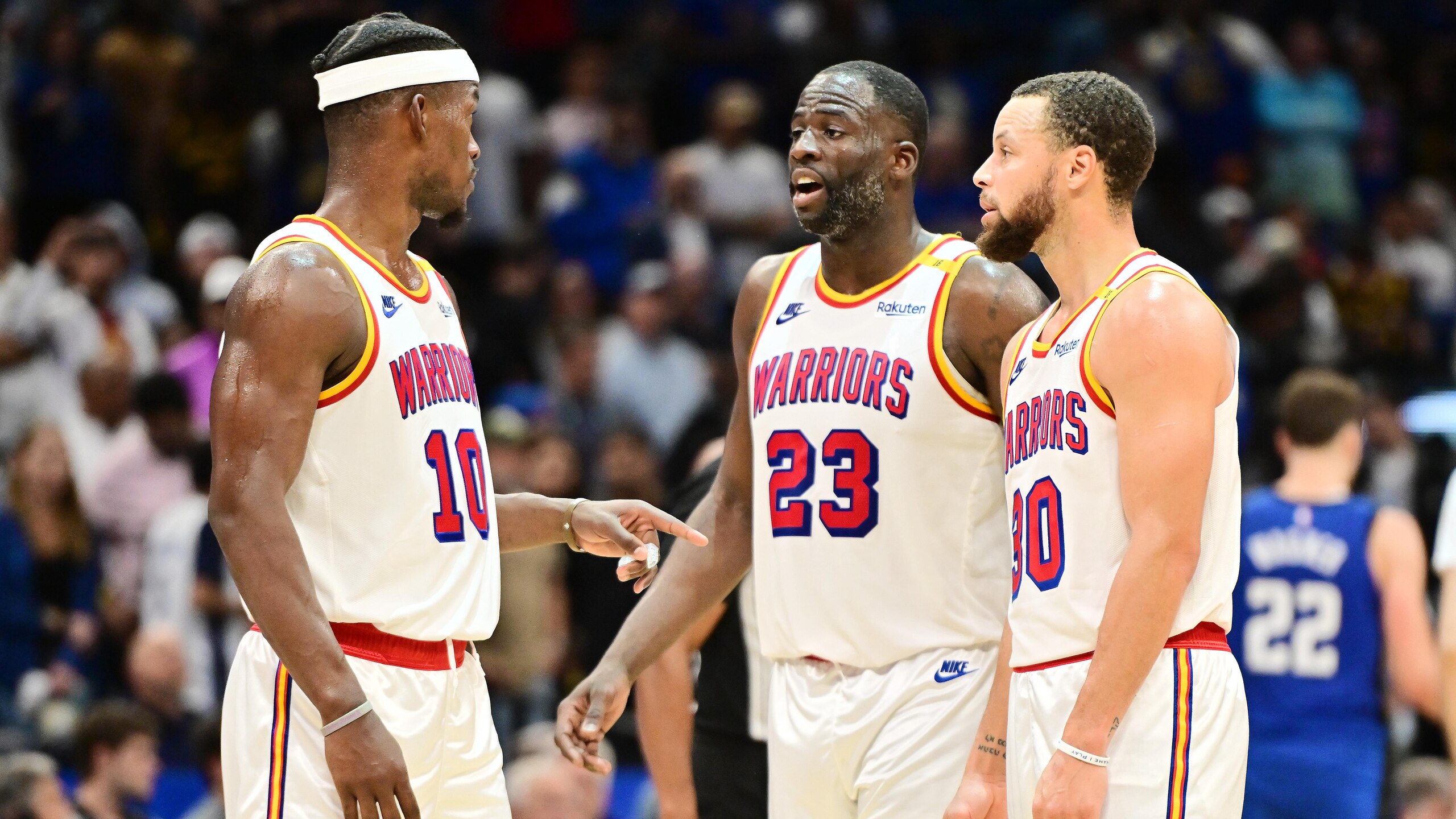
Lineup: Stephen Curry, Brandin Podziemski, Jimmy Butler, Draymond Green, Al Horford
2024-25 Net Rating: N/A
If you think the inclusion of free agent Al Horford makes this lineup too speculative, just know we were this close to swapping out Podziemski for De'Anthony Melton, who is also not technically a member of the Golden State Warriors yet.
Notably, the guy holding up those potential signings, Jonathan Kuminga, doesn't project as a starter under almost any circumstances.
With Butler and Green limiting the Dubs' spacing, Horford and Podziemski are musts. Podz was wildly inconsistent in his second season, but he wound up hitting 37.2 percent of his threes and didn't show enough as a creator to establish himself as a second-unit floor leader.
It might be easier to control Horford's minutes in his age-39 season by using him as a reserve, but second-year marksman Quinten Post will need to answer some defensive questions before he overtakes the vet.
This group has the potential to dominate on both ends if its extreme collective age doesn't catch up all at once. Their grade assumes the key figures are healthy, which they almost certainly won't be at some point in the first few weeks of the season.
Curry, Butler and Green were a plus-8.7 in 950 possessions last season. Put a pair of decent shooters out there with them, and Golden State should be in good shape.
Houston Rockets: A
11 of 30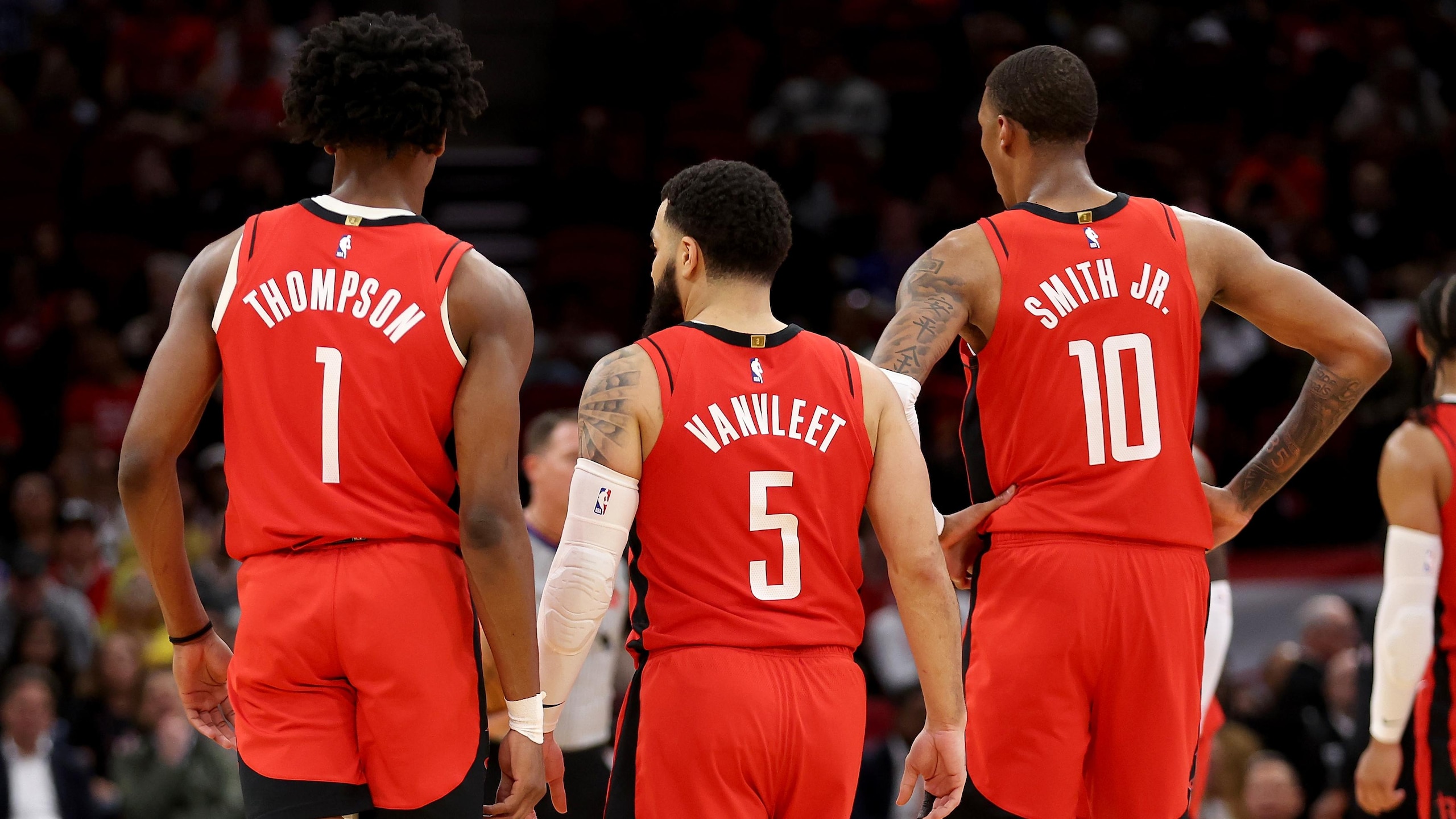
Lineup: Fred VanVleet, Amen Thompson, Kevin Durant, Jabari Smith Jr., Alperen Sengün
2024-25 Net Rating: N/A
Jabari Smith Jr. should return to full-time starting duties after coming off the bench 18 times last year, as his spacing will be key to propping up a half-court offense that struggled in 2024-25 and might still be cramped.
Yes, Kevin Durant will be the "get us a bucket" outlet the Rockets lacked last season, but he'll need help offsetting the crunch created by non-shooters in Thompson and Sengün.
Houston should get elite defensive production out of its first unit, even with Sengün's nonexistent vertical making him less than ideal as a rim protector. Despite that limitation, he graded out exceptionally well by D-EPM, and he deserves a share of the credit for the Rockets' No. 4 finish on D in 2024-25.
Thompson is the superstar clamp-down artist who'll smother any opponent, VanVleet is a pest, and Smith is among the most mobile bigs around. The above lineup with Dillon Brooks in KD's spot was a plus-30.9 in 130 possessions last year.
If either Thompson or Sengün develops as a three-point threat, these guys could be special.
Indiana Pacers: C-
12 of 30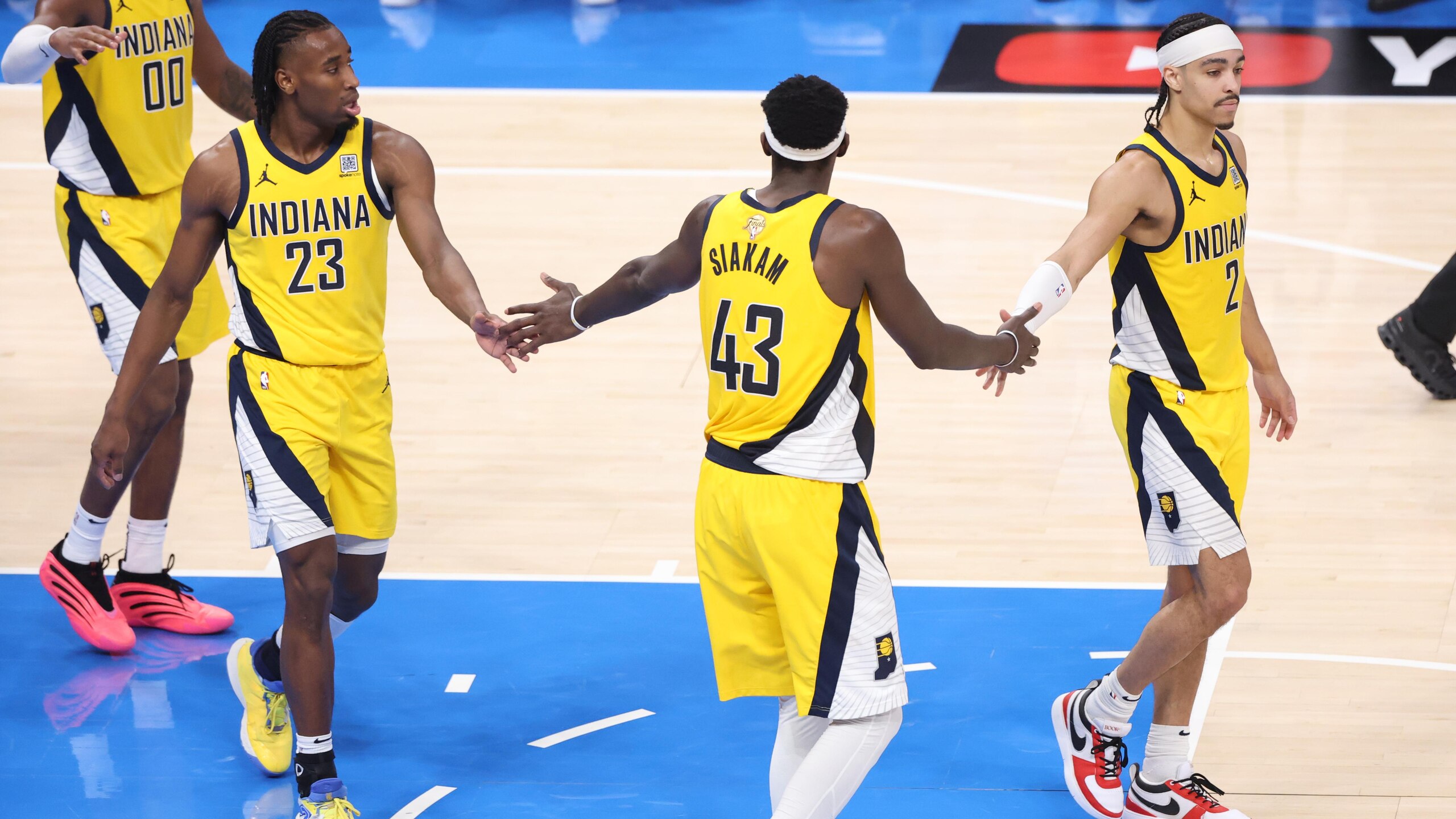
Lineup: Andrew Nembhard, Bennedict Mathurin, Aaron Nesmith, Pascal Siakam, Jay Huff
2024-25 Net Rating: N/A
Andrew Nembhard proved his worth by averaging 12.5 points and 4.7 assists while hitting a laughably good 46.5 percent of his threes in the 2025 postseason, but he's still a major downgrade from Tyrese Haliburton at point guard.
Similarly, Jay Huff mirrors the departed Myles Turner's mix of floor-spacing and shot-blocking at the 5 while not being quite as capable or reliable in either area.
Huff's per-36 minute averages of 21.1 points, 6.2 boards and 2.7 blocks with the Grizzlies last season stand out, but he graded out in the 10th percentile of Defensive EPM.
No wonder Memphis only gave him 11.7 minutes per game.
Nesmith and Siakam are battle-tested, terrific options at the 3 and the 4, but Mathurin will have to prove he's about more than self-created scoring with Haliburton out.
This Pacers group has potential, but we can't pretend it's free of major question marks on both ends.
LA Clippers: B
13 of 30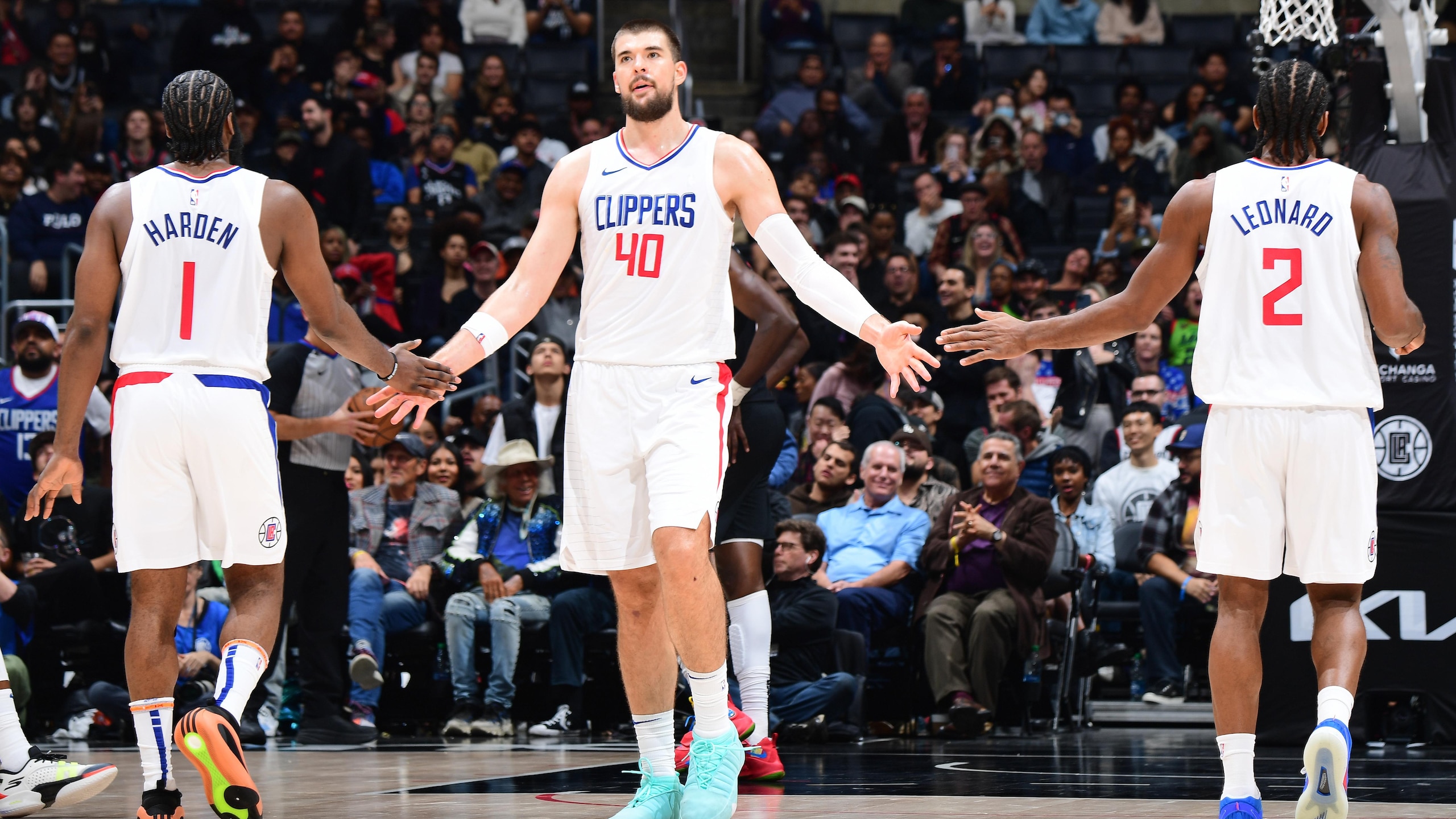
Lineup: James Harden, Bradley Beal, Kawhi Leonard, John Collins, Ivica Zubac
2024-25 Net Rating: N/A
On paper, it looks like Zubac will have his work cut out for him defensively. Harden, Beal and Collins aren't known for their performance on that end, but the Clippers managed to finish third in defensive efficiency a year ago.
Maybe the downgrade at the 2 and 4 from Norman Powell and Derrick Jones Jr. won't be as damaging as it seems.
Powell, for one, wasn't anyone's idea of a stopper.
Offensively, there's a ton to like here. Harden returned to All-Star status, Leonard looked like a superstar for stretches of the postseason, Collins canned 39.9 percent of his threes on career-best volume and Beal is a grossly overqualified third option.
Stop us if you've heard it before, but *health permitting*, the Clippers should be able to compete with anyone's starting five.
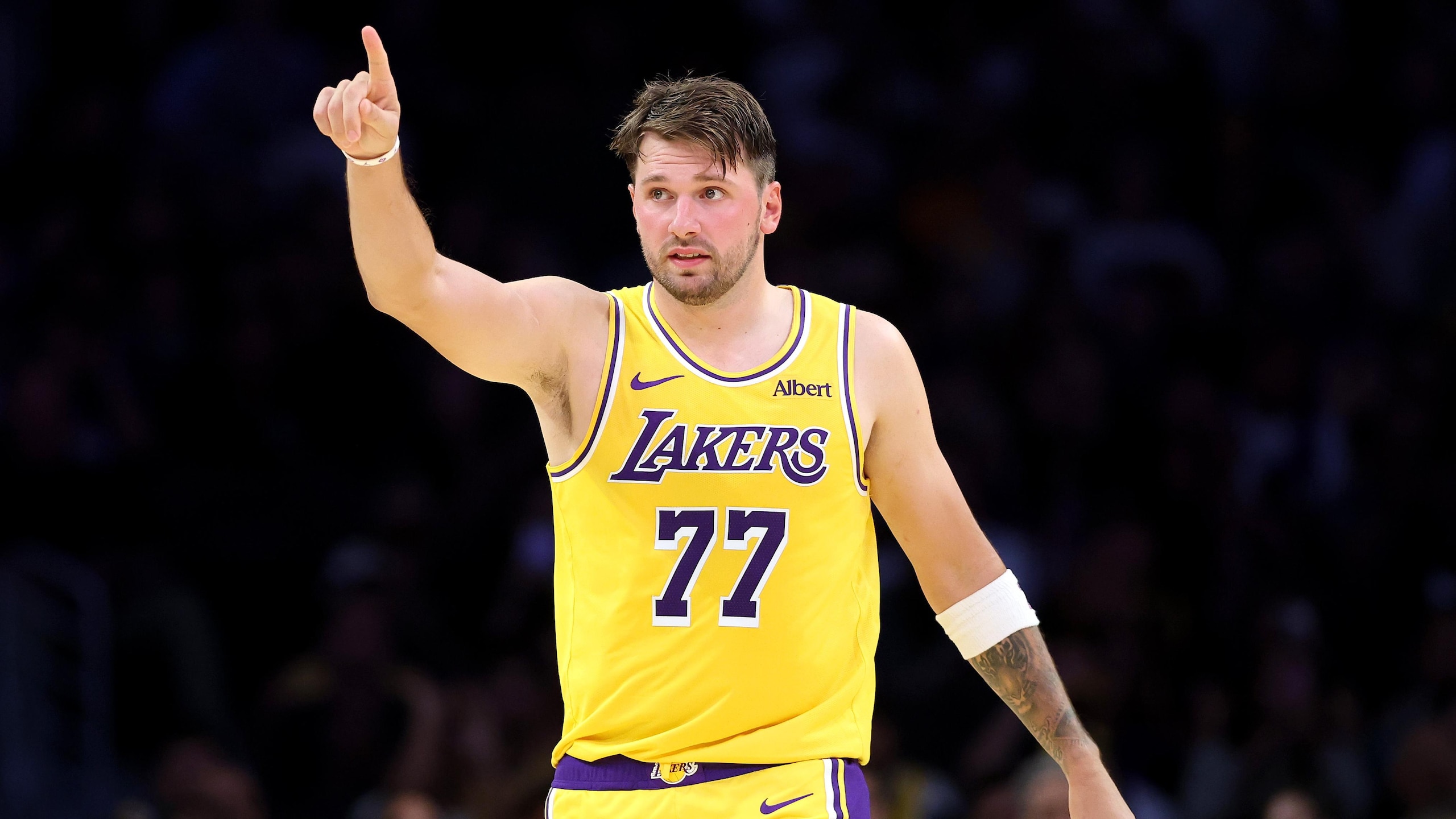
Los Angeles Lakers: B
14 of 30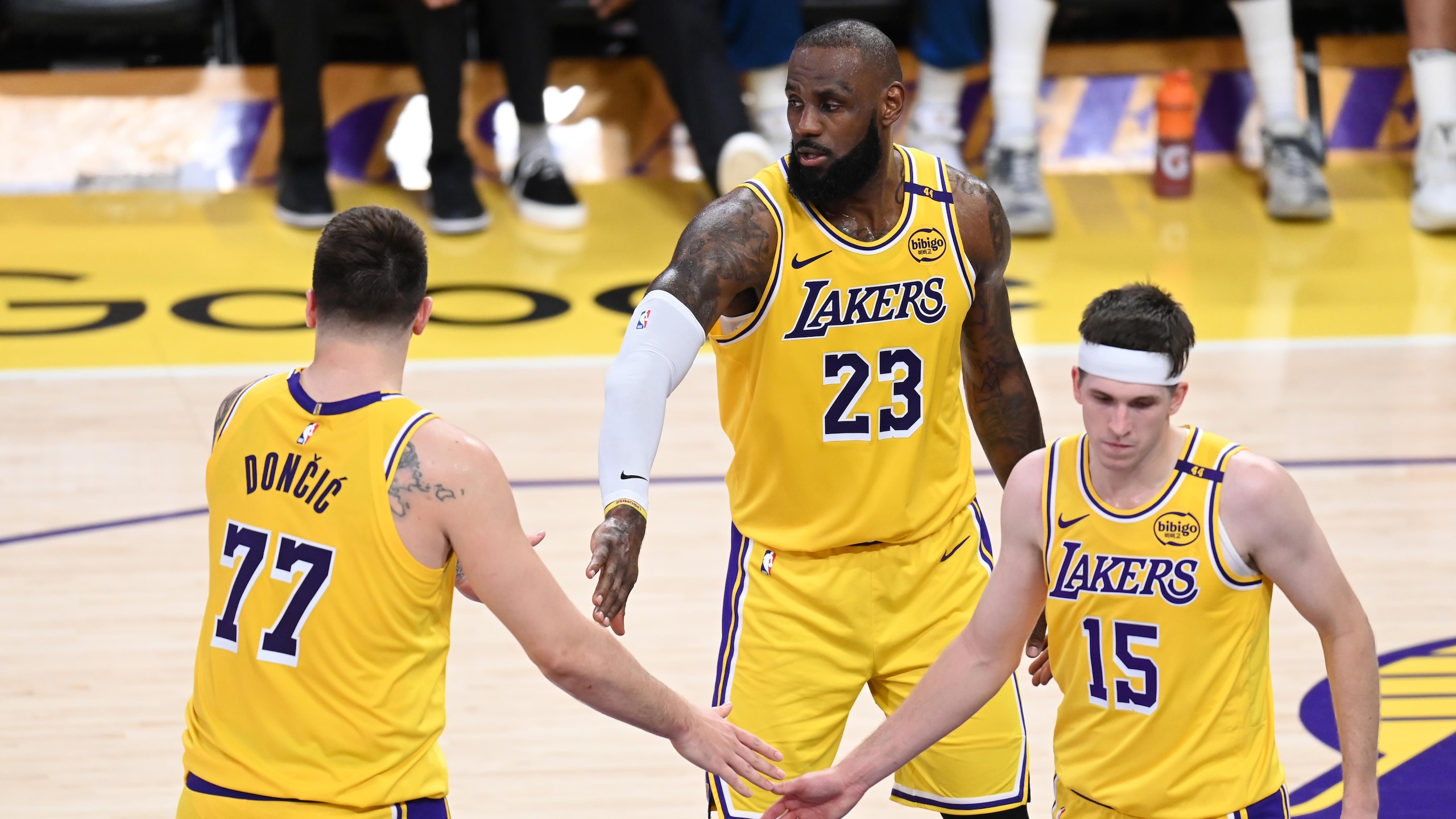
Lineup: Luka Dončić, Austin Reaves, Marcus Smart, LeBron James, Deandre Ayton
2024-25 Net Rating: N/A
Smart is the only question mark, but one assumes the Lakers added him following a buyout from the Washington Wizards because they believe he can fill a critical defensive role with the first unit.
If he can't, Rui Hachimura projects as a reliable replacement—albeit one who probably isn't suited for matching up against the opponent's top scoring wing.
Offensively, this group should dominate. Dončić has plenty to prove after last year's slippage, and Ayton stands to benefit from the best spoon-fed setups he's seen since playing with Chris Paul in Phoenix.
James will continue his defiance of the aging process and should be good for highly efficient scoring numbers. He might not match last year's 24.4 points per game, but he has never spent a full season with a facilitator like Dončić. He could be in for the most open spot-ups he's ever seen.
As long as he's willing to accept a more dependent role in the offense, James will be positioned for tons of easy buckets.
Defense is going to be a shortcoming, as Ayton will have to clean up plenty of messes. Quietly, though, the former No. 1 pick has posted a positive D-EPM in every year of his career while sliding into negative territory on offense the last three seasons.
Memphis Grizzlies: A-
15 of 30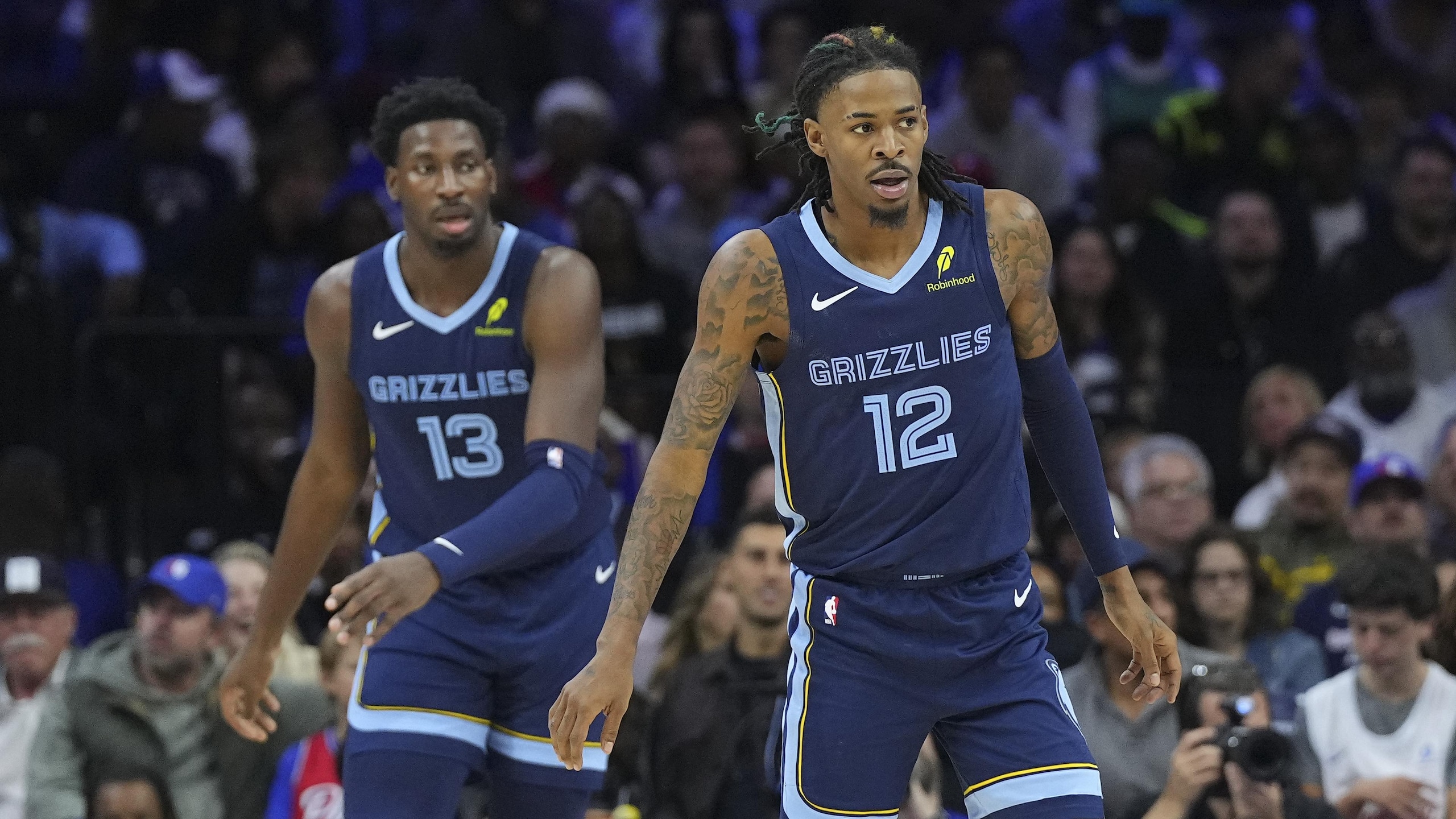
Lineup: Ja Morant, Kentavious Caldwell-Pope, Jaylen Wells, Jaren Jackson Jr., Zach Edey
2024-25 Net Rating: N/A
Zach Edey is likely to miss the start of the season following June ankle surgery, and Jaren Jackson Jr. isn't a sure bet to be out there on opening night either following an operation on his right foot in July.
But there's not much sense in evaluating how a Memphis Grizzlies starting five will look with Brandon Clarke and Santi Aldama if we know those two won't be in the first unit for the bulk of the season.
Caldwell-Pope almost certainly won't outproduce Desmond Bane as he slots in at the 2, but Memphis' new shooting guard only needs to put up career-average figures to ensure this starting group hammers the opposition.
When Morant, Wells, Jackson and Edey shared the court last season, the Grizzlies walloped teams by 25.5 points per 100 possessions, rating in the 98th percentile on offense and the 99th on D. KCP could be as bad as he was in Orlando last year, and the Grizz would still have a fearsome starting group.
We have to account for health issues, and it's also worth noting much of Memphis' gaudy net rating was compiled when it was running an unusual, screen-free offense that won't be in the playbook in 2025-26.
Still, the numbers suggest the Grizzlies will be phenomenal with their starters on the court.
Miami Heat: C-
16 of 30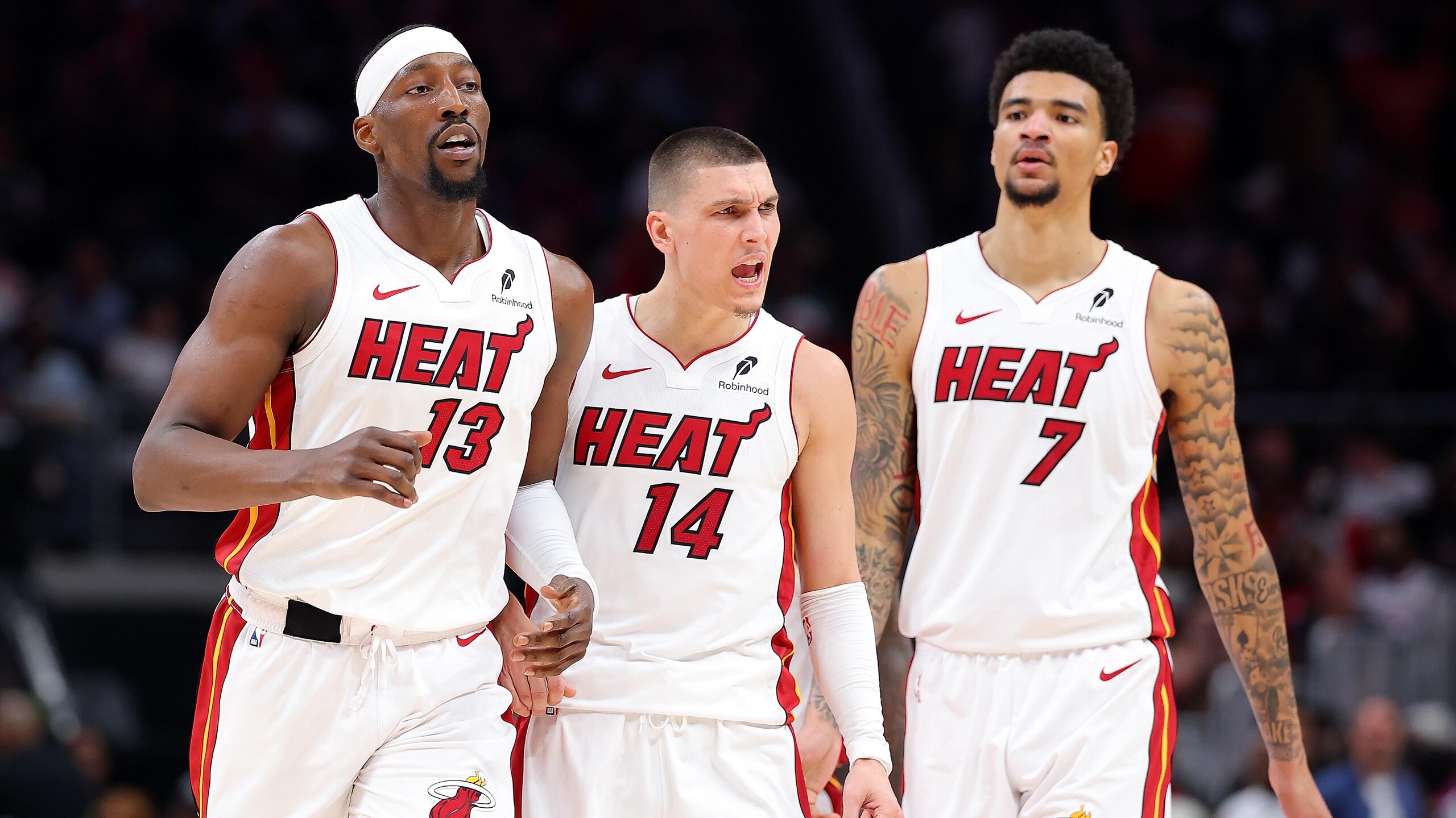
Lineup: Davion Mitchell, Tyler Herro, Andrew Wiggins, Bam Adebayo, Kel'el Ware
2024-25 Net Rating: Plus-0.3
Norman Powell's exclusion from the first unit stands out, but it's just too hard to imagine head coach Erik Spoelstra trusting the backcourt defense of Herro and Powell together.
Davion Mitchell—2025 postseason scoring binge notwithstanding—is in the league because he's an on-ball menace, exactly the kind of pest Miami needs as a shield for Herro on D.
Maybe this group won't be able to score or space the floor, and Spoelstra will have no choice but to elevate Powell into the starting lineup. In that scenario, Wiggins will probably have to wrangle whichever threat is most dangerous in the backcourt or on the wing.
Though once an elite stopper against the likes of Luka Dončić and Jayson Tatum in the 2022 playoff run for Golden State, Wiggins hasn't come close to that level since.
Powell's inclusion would ease the shooting worries created by basically everyone but Herro. Even then, it's not likely the Heat starters will post a strong offensive rating.
However you slice it, Miami is going to have some scoring issues and might have to compromise its defense to address them.
Milwaukee Bucks: D
17 of 30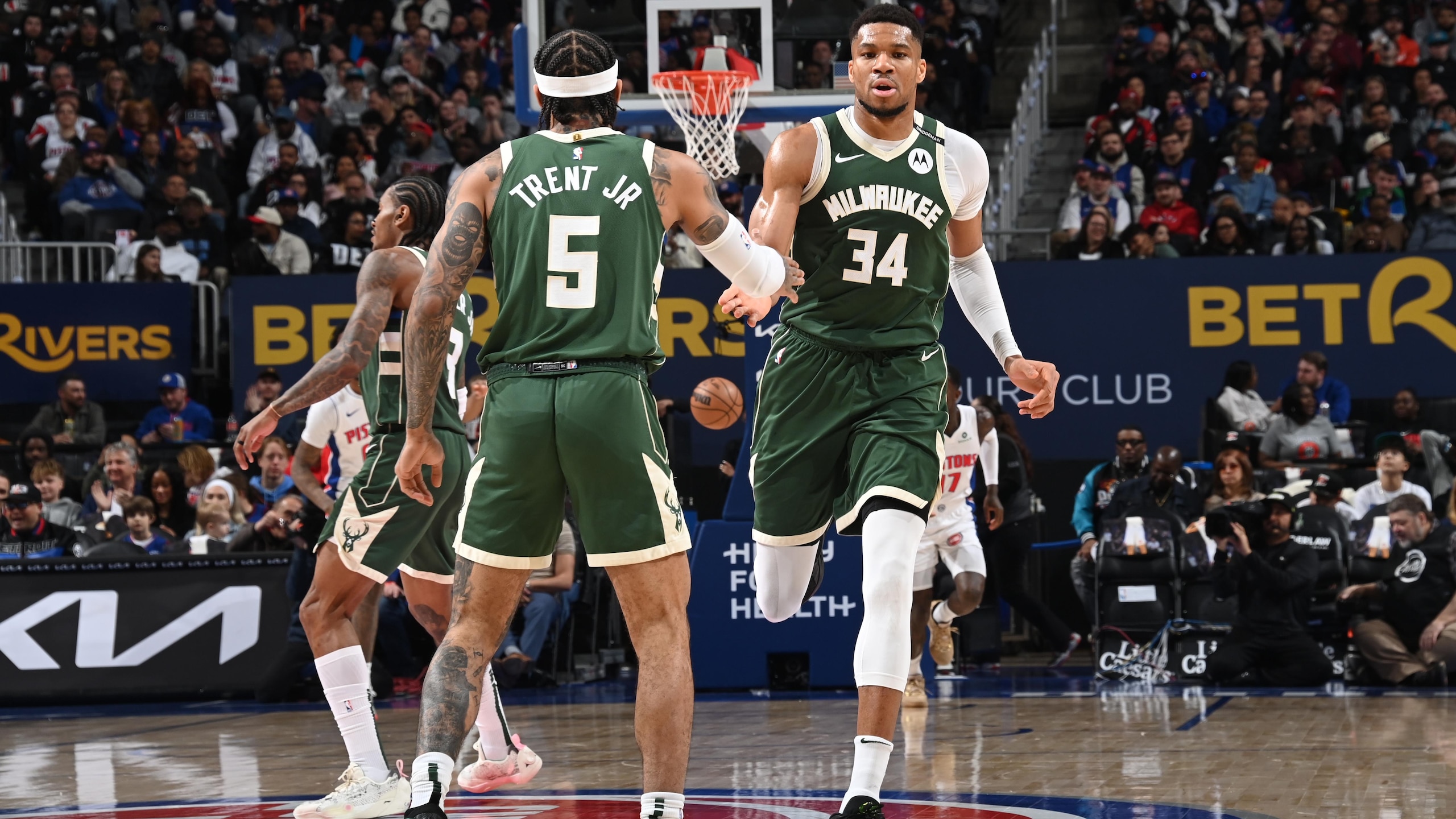
Lineup: Kevin Porter Jr., Gary Trent Jr., Kyle Kuzma, Giannis Antetokounmpo, Myles Turner
2024-25 Net Rating: N/A
Myles Turner might be an even better complement to Giannis Antetokounmpo than Brook Lopez was (last season; not at Lopez's peak), but that's pretty much where the positivity ends.
Kevin Porter Jr. has had his moments, but he's never contributed at a starter's level on a winner, and it's hard to get excited about Gary Trent Jr., who shot over 41.0 percent from deep last year and still graded out with a negative EPM.
Kyle Kuzma was one of the most damaging players in the league last season—inefficient from two- and three-point range and a disaster defensively. Milwaukee will start him in hopes he can improve on a career-worst effort, but it's only getting harder to imagine him making a positive impact on either end.
The optimist might point to Porter posting a 49.4/40.8/87.1 shooting split in 30 games (two starts) for the Bucks last year, but the realist would cite his vastly inferior career numbers and history of off-court issues.
At least AJ Green and Bobby Portis will offer scoring punch off the bench.
Minnesota Timberwolves: A
18 of 30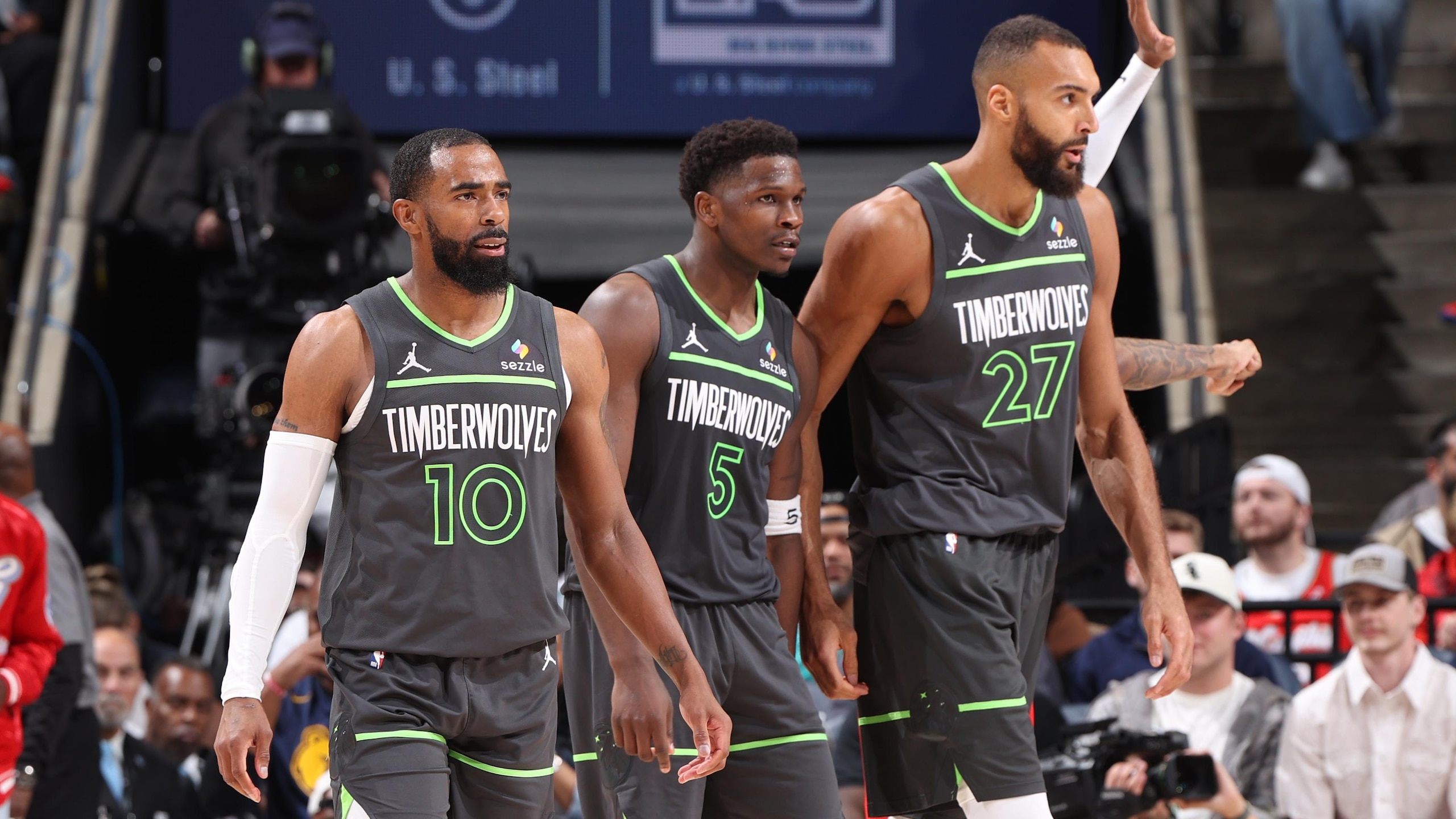
Lineup: Mike Conley, Anthony Edwards, Jaden McDaniels, Julius Randle, Rudy Gobert
2024-25 Net Rating: Plus-4.8
Volume should matter in assessing a lineup, and this is one that has the best net rating of any unit that logged at least 1,000 possessions a year ago.
So, while that plus-4.8 figure isn't a jaw-dropper, it counts for a little extra because the Minnesota Timberwolves were (and should continue to be) able to count on it so often.
Despite his experience, Conley might have the shortest leash here. Minnesota was almost as effective with Donte DiVincenzo in his place, which put the ball in Edwards' hands more often.
Similarly, the Wolves will experiment with Naz Reid instead of Randle or Gobert, depending on matchups.
This group has excellent defenders at three positions with Edwards, McDaniels and Gobert, and it should continue to get solid secondary playmaking from Randle if last postseason is any indication.
New Orleans Pelicans: D
19 of 30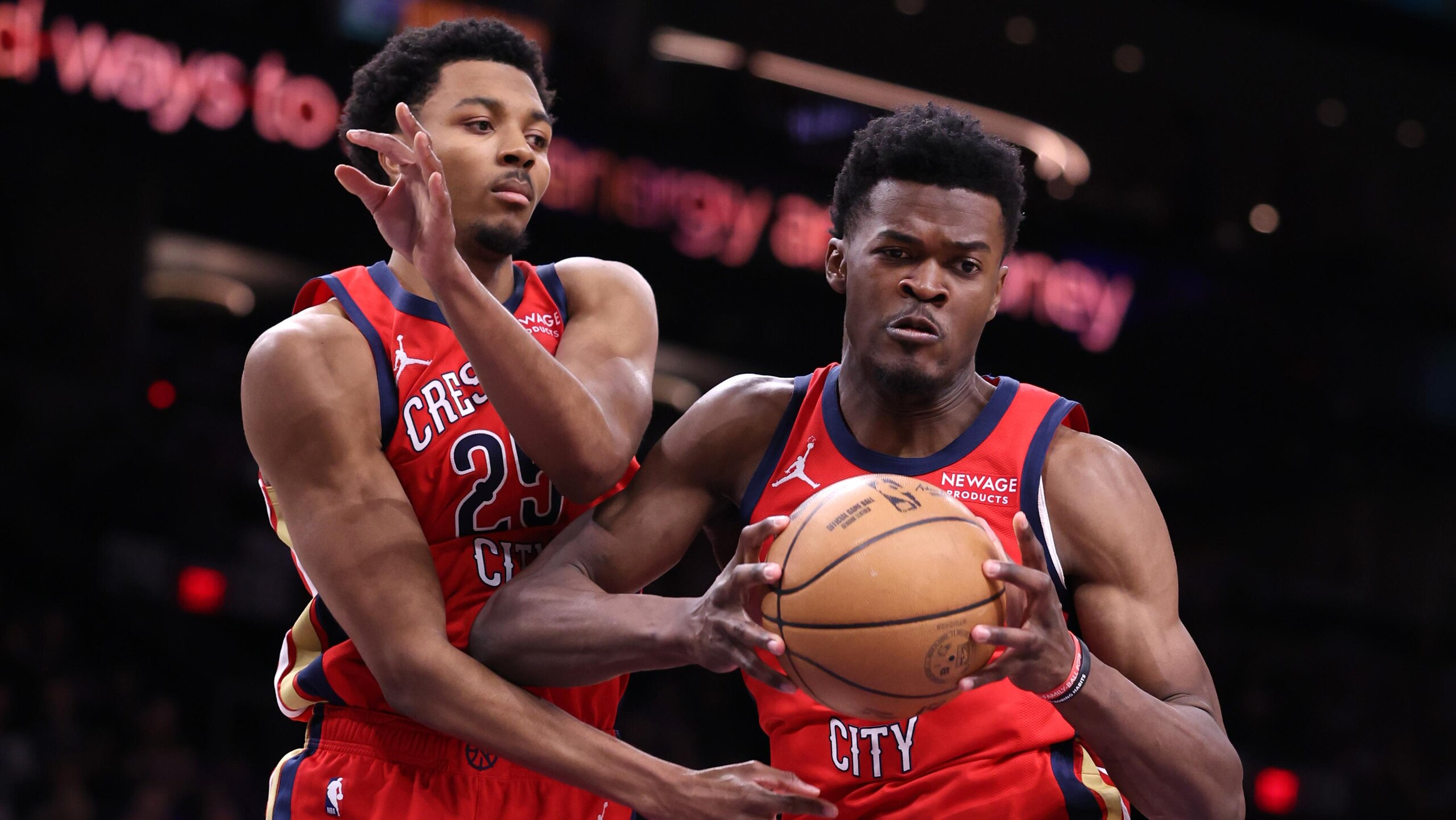
Lineup: Jordan Poole, Herb Jones, Trey Murphy III, Zion Williamson, Yves Missi
2024-25 Net Rating: N/A
The New Orleans Pelicans used 47 different starting lineups last season, so recent history suggests we shouldn't get too attached to this one. If the five players above are healthy, though, they'll give defenses enough trouble to be competitive.
That starts with Williamson, who figures to share playmaking duties with Poole. Zion is an offense unto himself when he's physically fit, and it will be intriguing to see him out there with a healthy Murphy and Jones, with the former always seeming like he's ready to break out.
Poole quietly had a bounce-back campaign in Washington last season, appearing in a career-best 68 games and setting a personal high with 20.5 points per game. He's a chaotic force who'll play some of the least serious defense in the league, but he can shoot the ball (37.8 percent from deep in 2024-25) and can take over games as a second-side attacker or self-sufficient creator.
Missi was a bright spot last year, but he's probably no better than the 25th-best starting center in the league. He can't possibly shore up a defense that only has one player, Jones, who isn't a complete sieve.
Potentially solid offense, atrocious defense and an operation completely dependent on the health of Williamson. What could go wrong?
New York Knicks: A
20 of 30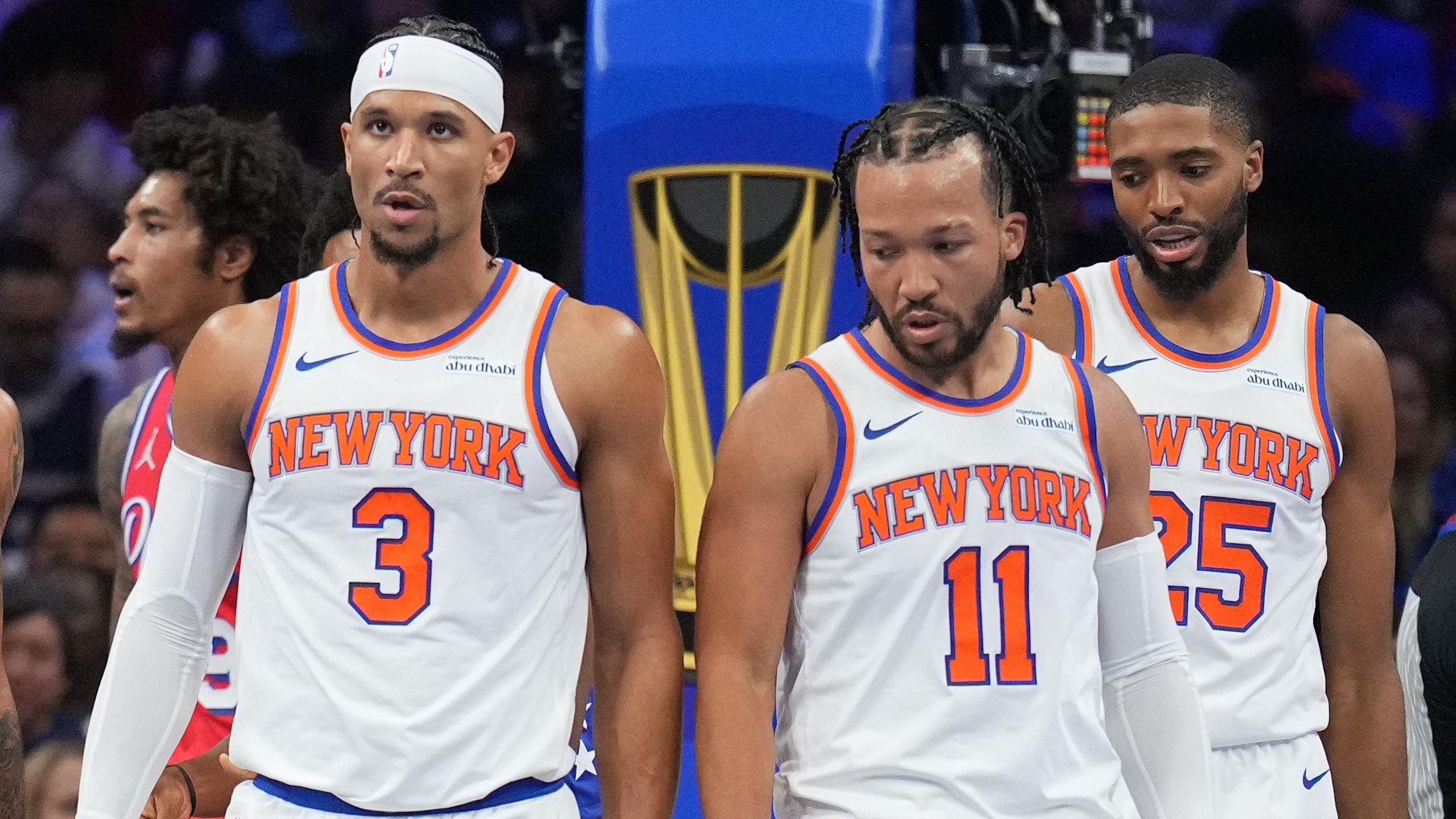
Lineup: Jalen Brunson, Josh Hart, Mikal Bridges, OG Anunoby, Karl-Anthony Towns
2024-25 Net Rating: Plus-4.1
Unless new head coach Mike Brown demotes Josh Hart to the bench and goes double-big by slotting Mitchell Robinson next to Karl-Anthony Towns up front, we know what we're going to get from the Knicks because we got so much of it last year.
No five-man unit played more than this one in 2024-25, and the results were good enough to justify sticking with the status quo. If any changes are coming, it'll be in the volume department—not to the overall makeup of one of the NBA's top starting groups.
If Brown cuts down on his starters' minutes, it should make it easier to encourage more transition pushes. New York was highly efficient on the break last season but posted a bottom-10 transition-frequency rate. If fatigue is less of a factor, the Knicks could see this group be more productive on a per-minute basis.
Known commodities are comforting, and the Knicks' starters are as reliable as it gets. This may not be the most dominant unit in the league, but it gets the job done at a high level—even with KAT continually failing as a defensive anchor.
Oklahoma City Thunder: A
21 of 30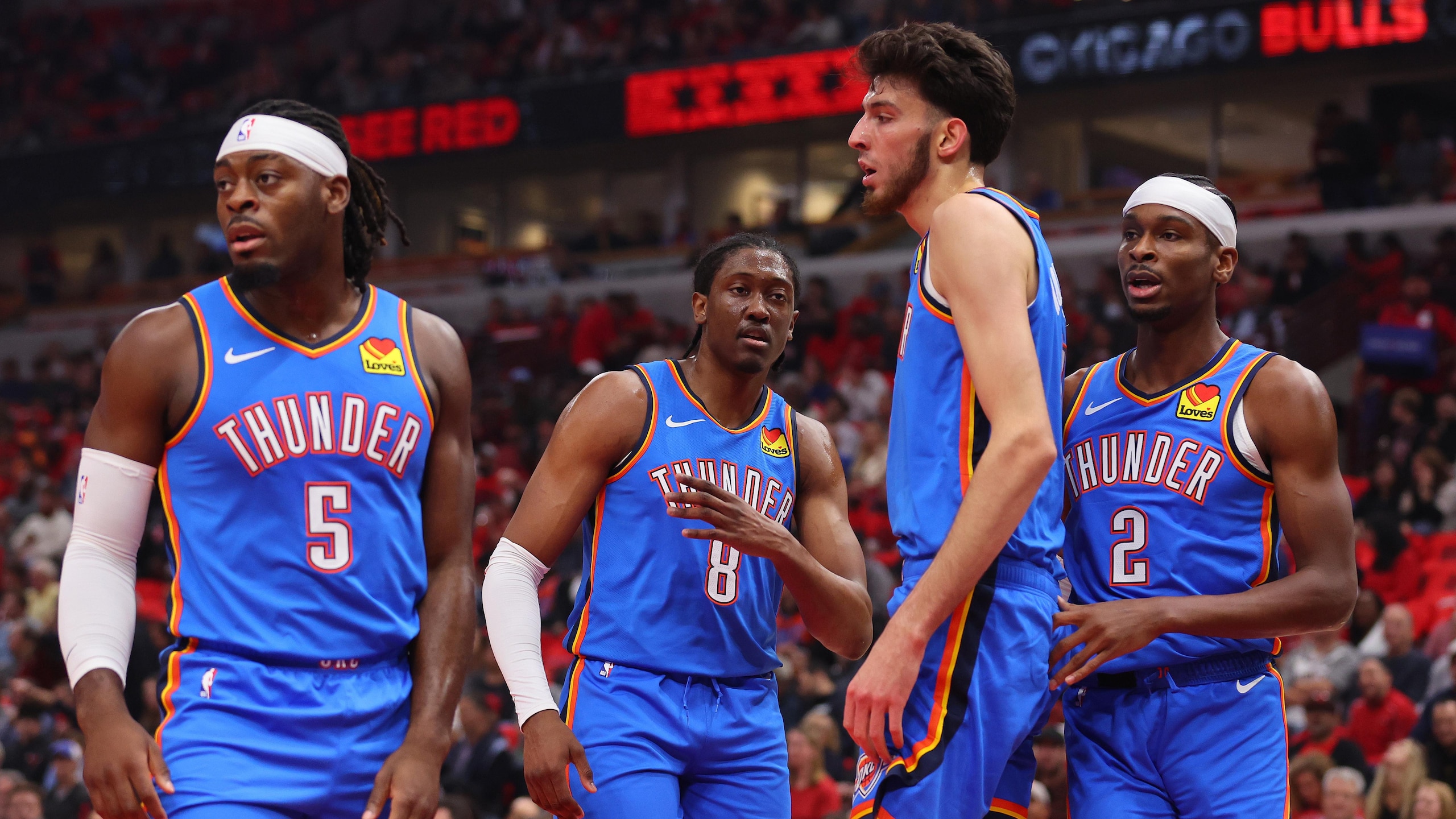
Lineup: Shai Gilgeous-Alexander, Lu Dort, Jalen Williams, Chet Holmgren, Isaiah Hartenstein
2024-25 Net Rating: Plus-14.8
Some nights, it might make sense to swap in Cason Wallace for Hartenstein, but it's basically impossible to screw up a starting five that includes SGA, Williams and Holmgren.
OKC's title-winning team is fully intact and should have plenty of trust in the above unit, which offers a double-big look without sacrificing spacing or secondary facilitation.
If anything, Holmgren should be expected to improve his shooting, and Hartenstein could easily make further developments as a foul-line passing hub.
Dort and J-Dub are as good as it gets defensively on the wing, and Holmgren is arguably more impactful than either of them as a highly mobile shot-blocker.
With SGA running an offense that should be focused on improving its flow, there's no reason to expect these guys to be anything less than the best lineup in the league.
Orlando Magic: A-
22 of 30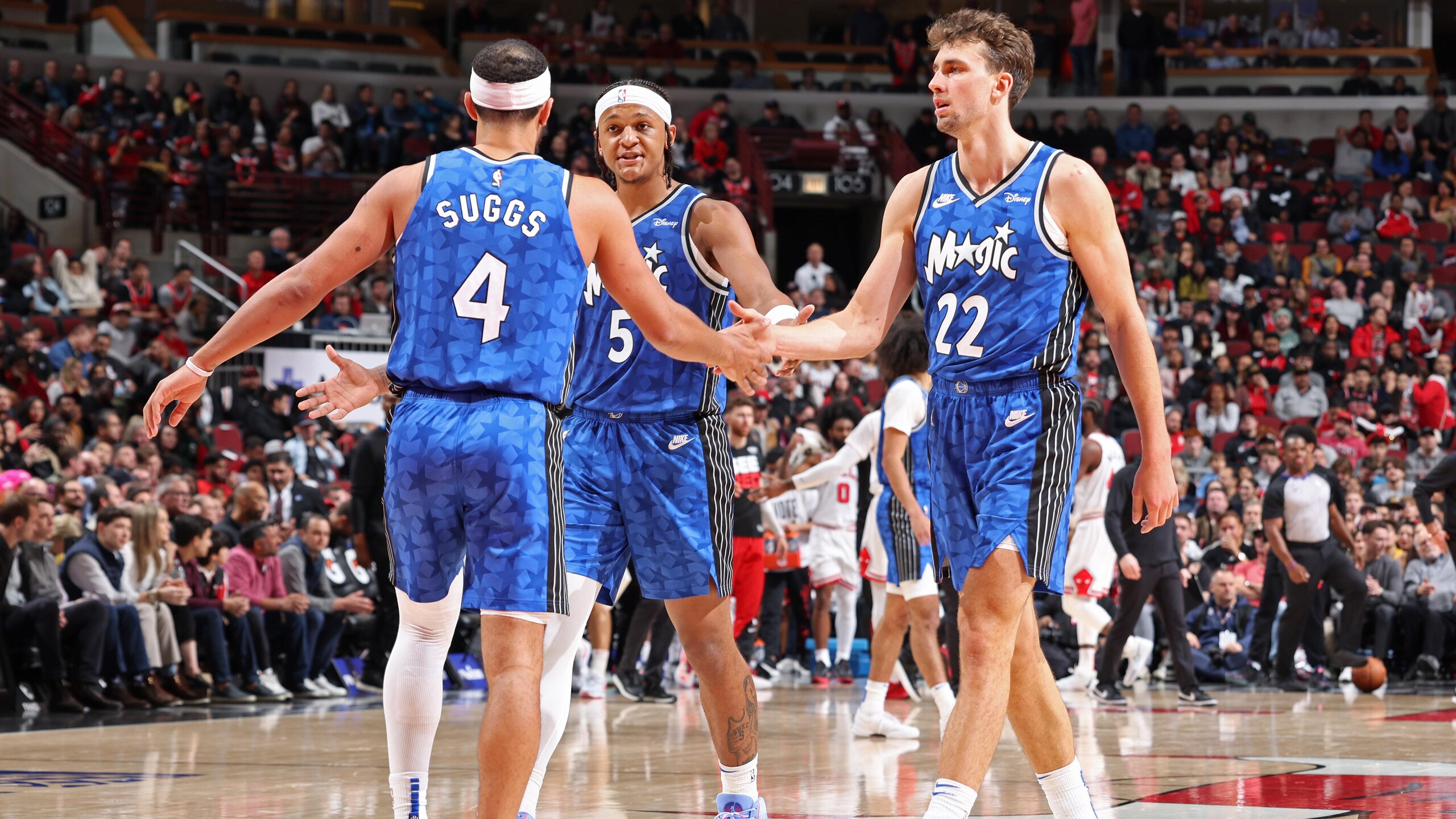
Lineup: Jalen Suggs, Desmond Bane, Franz Wagner, Paolo Banchero, Wendell Carter Jr.
2024-25 Net Rating: N/A
Orlando's starters should be better than they were a year ago, but that small-sample bar won't be tough to clear.
The above group with Kentavious Caldwell-Pope in Bane's place was outscored by 7.2 points per 100 possessions while barely logging two full games' worth of court time together on the year.
Bane is a solid defender who should be able to match KCP's contributions while dramatically outperforming him offensively. Orlando hopes he won't be the only true dead-eye shooter from deep, as Suggs' last healthy season (2023-24) included a 39.7 percent clip on threes.
Banchero is a good pick to crash the top five in MVP voting, and Wagner will earn All-NBA consideration if he manages to fix his perimeter stroke.
Carter Jr. will need to be more efficient offensively as well, but last year's 54.4 true shooting percentage was way out of line from his previous three campaigns, all of which saw him post at least a 60.0 true shooting figure.
All told, the Magic are going to be excellent defensively. While scoring will be a problem for the reserves, this quintet is going to be just fine on offense—and potentially great if Banchero, Suggs and Wagner all perform as expected.
Philadelphia 76ers: C
23 of 30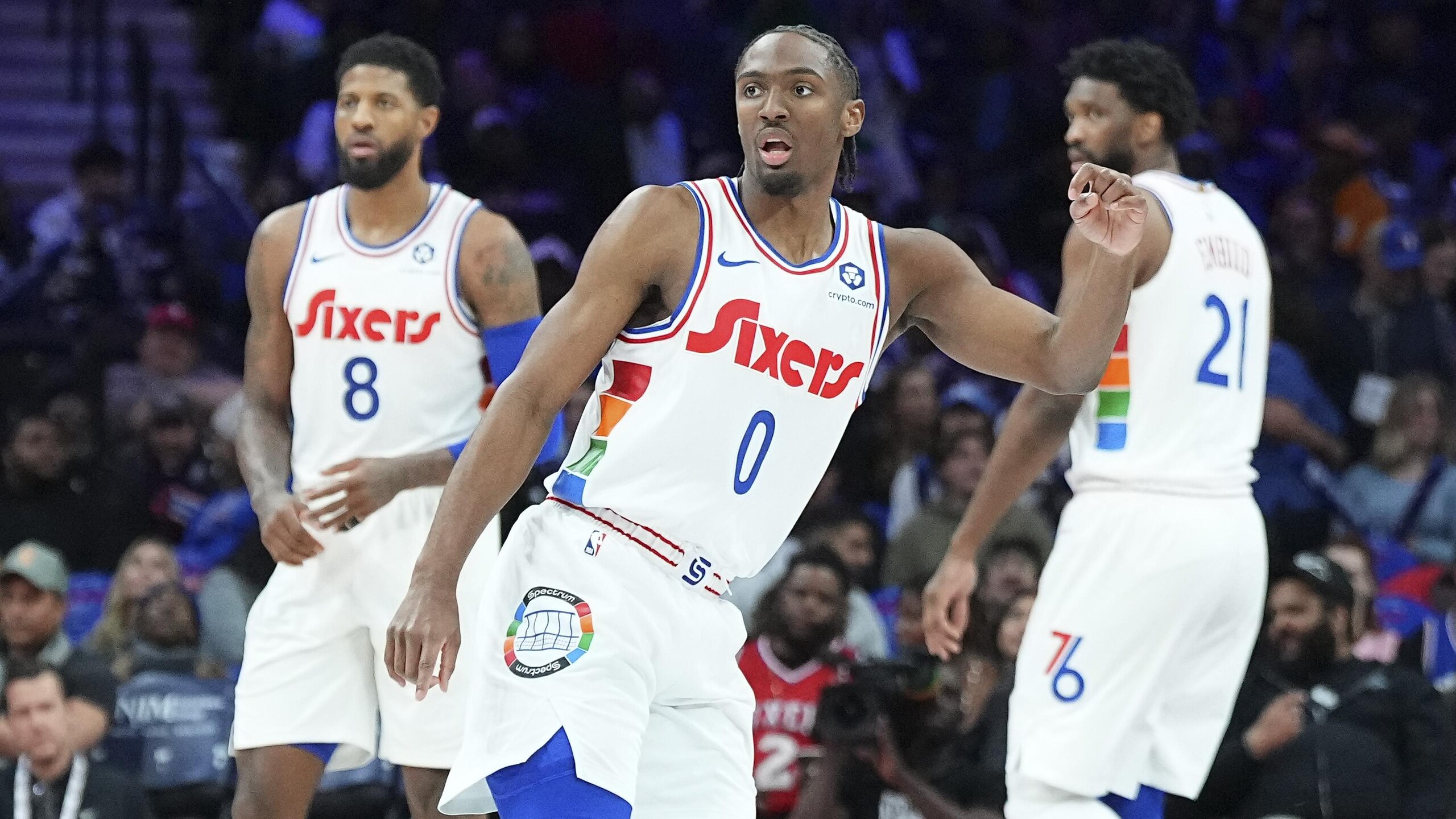
Lineup: Tyrese Maxey, V.J. Edgecombe, Quentin Grimes, Paul George, Joel Embiid
2024-25 Net Rating: N/A
Jared McCain has 23 games of NBA experience on Edgecombe, but he has a little more self-creation in his game than the Sixers' new rookie and probably fits best as a second-unit leader.
That could change if Edgecombe is out of his depth as a starter, which is a great segue into the general uncertainty surrounding this group.
Grimes, for one, isn't yet signed. Assuming he comes back in restricted free agency, he showed enough late last year to get a crack at the starting small forward spot—even if his role can't possibly be as big as it was a year ago.
George and Embiid are the great unknowns. If healthy, they'll give the Sixers' starters a shot to be among the best in the league. If not, Maxey will find himself shouldering far too heavy of a load for the second consecutive year.
There's an A-grade ceiling for Philly's first unit, but the floor is in the "F" range if injuries arise again. That Embiid and George both underwent offseason surgeries doesn't bode well, but maybe everything will look a little rosier by opening night.
For now, we have no choice but to acknowledge the upsides, downsides and risks by giving the Sixers a split-the-difference C grade.
Phoenix Suns: D
24 of 30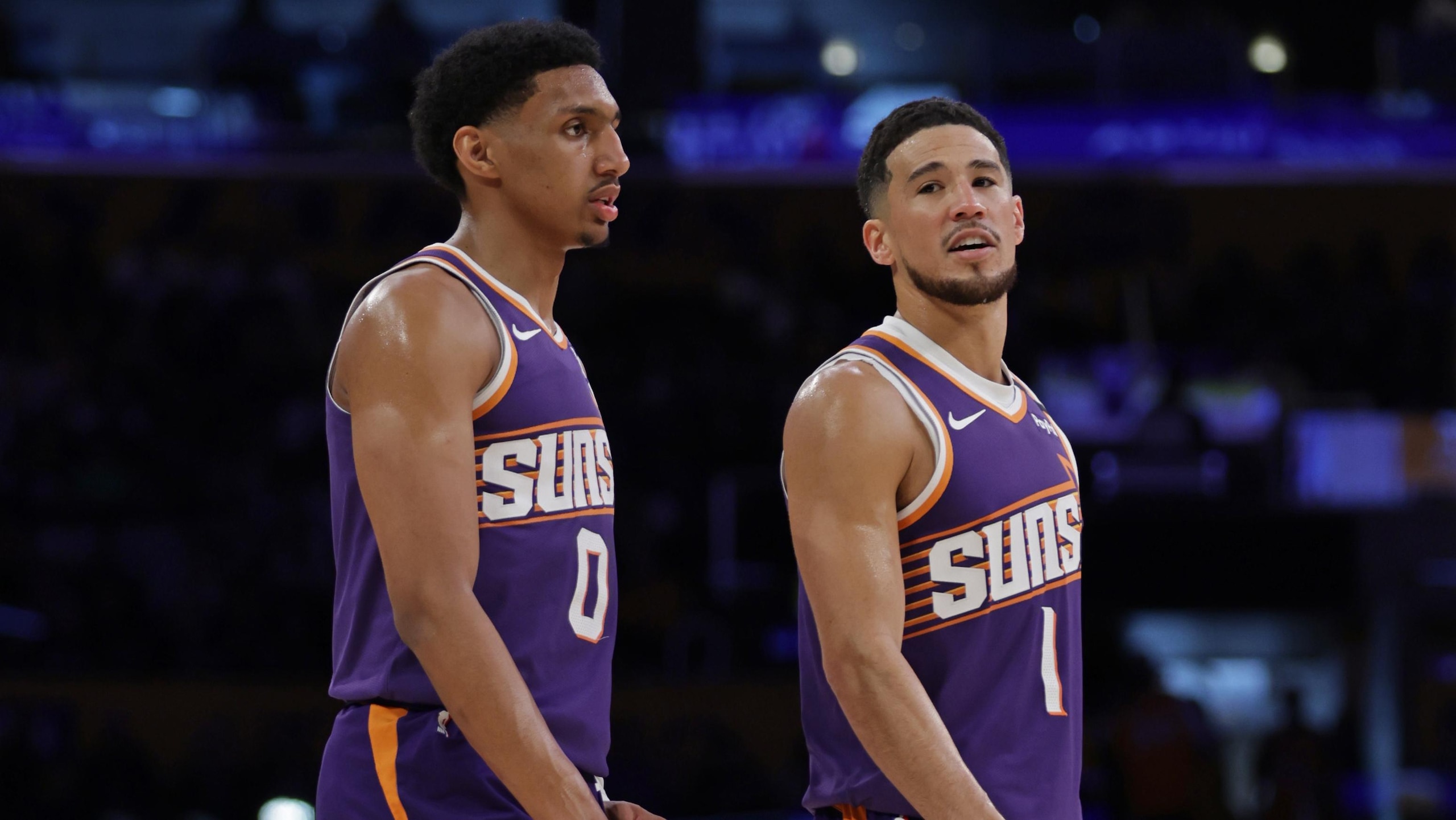
Lineup: Devin Booker, Jalen Green, Dillon Brooks, Ryan Dunn, Mark Williams
2024-25 Net Rating: N/A
Dunn is the biggest question mark here, as the Suns could opt for Royce O'Neale to add a little more spacing. But if Booker and Green are going to man the guard spots, it'd help to have another load-lightening defender next to Brooks. That way, Dunn and Brooks could wrangle the most difficult guard or forward matchups, freeing up Phoenix's pair of off-guards for offense-only work.
This is an undersized group overall, which will probably compromise rebounding. The other issue you've probably spotted by now: There's no point guard in this lineup.
Booker is a better passer than most primary scoring options and has posted an assist rate at or above the 90th percentile for combo guards and wings in nearly every season of his career. Green, though, is a below-average facilitator whose limited vision will hurt offensive flow—particularly with no one else in the lineup having much of a high-assist history.
As good as Booker is overall, he's in the wrong position. The pieces just don't fit here, and it's hard to imagine the Suns' starters excelling on either end.
Portland Trail Blazers: B
25 of 30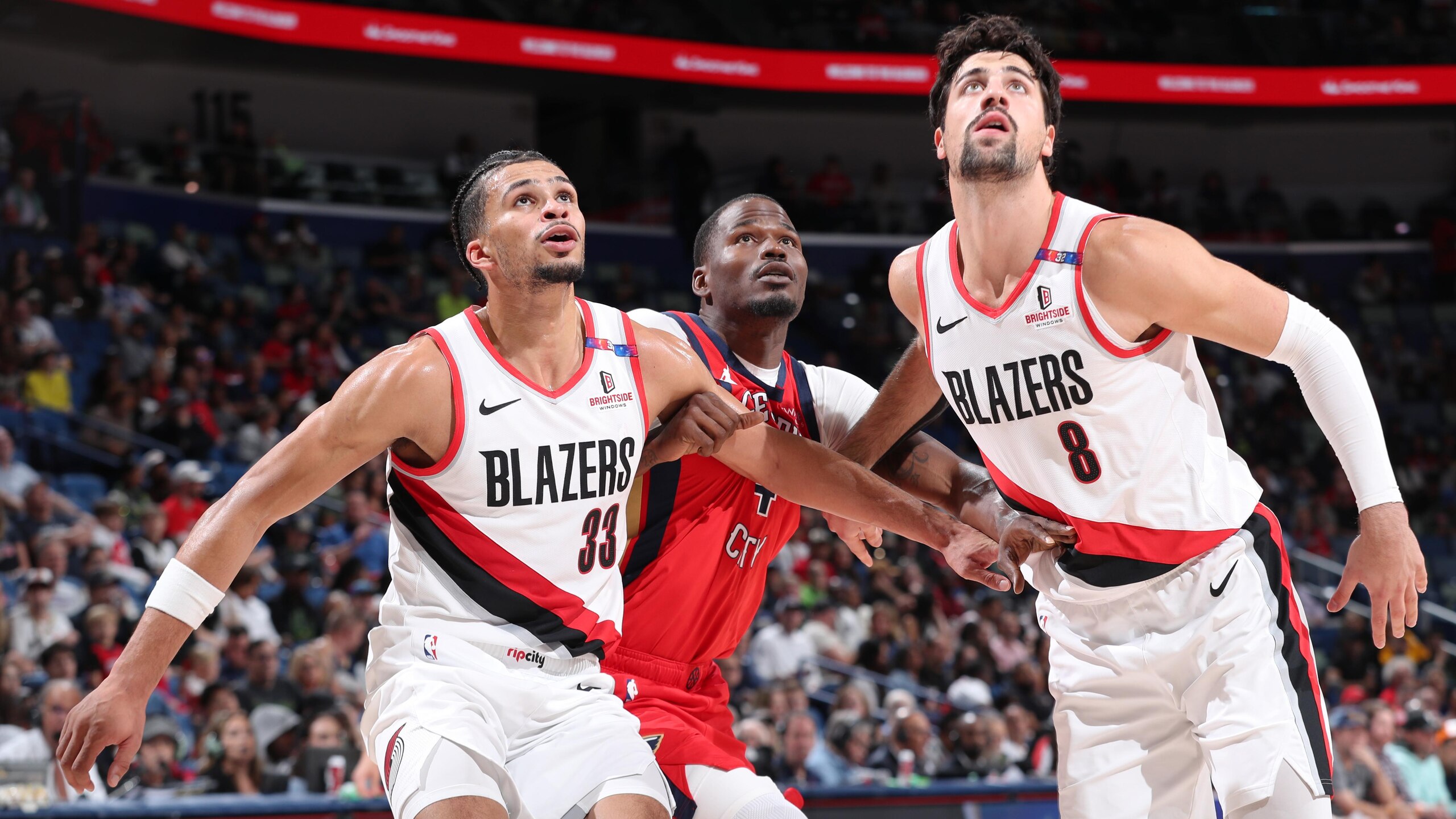
Lineup: Jrue Holiday, Shaedon Sharpe, Deni Avdija, Toumani Camara, Donovan Clingan
2024-25 Net Rating: N/A
Scoot Henderson believers won't be on board, but it seems like newcomer Jrue Holiday is a better starting-lineup fit for the Portland Trail Blazers' defense-first identity.
It's been a while since anyone expected true, facilitating point-guard play from Holiday, and he may show enough slippage early in his age-35 season to warrant a change. Likewise, Henderson could take a leap in his third year and force head coach Chauncey Billups to swap him into the first unit.
Sharpe profiles as an intriguing first-option scorer with Avdija and Camara locking things down defensively. Clingan, too, will make an impact on D. If the second-year big man can add some offensive verve to his game, this group has a puncher's chance against almost anyone.
Much depends on Avdija (36.5 percent) and Camara (37.5 percent) carrying last year's three-point shooting gains into 2025-26. If either can sustain those rates, a unit that seems certain to defend at a high level could score enough to post a net rating in the plus-5.0 range.
Sacramento Kings: D
26 of 30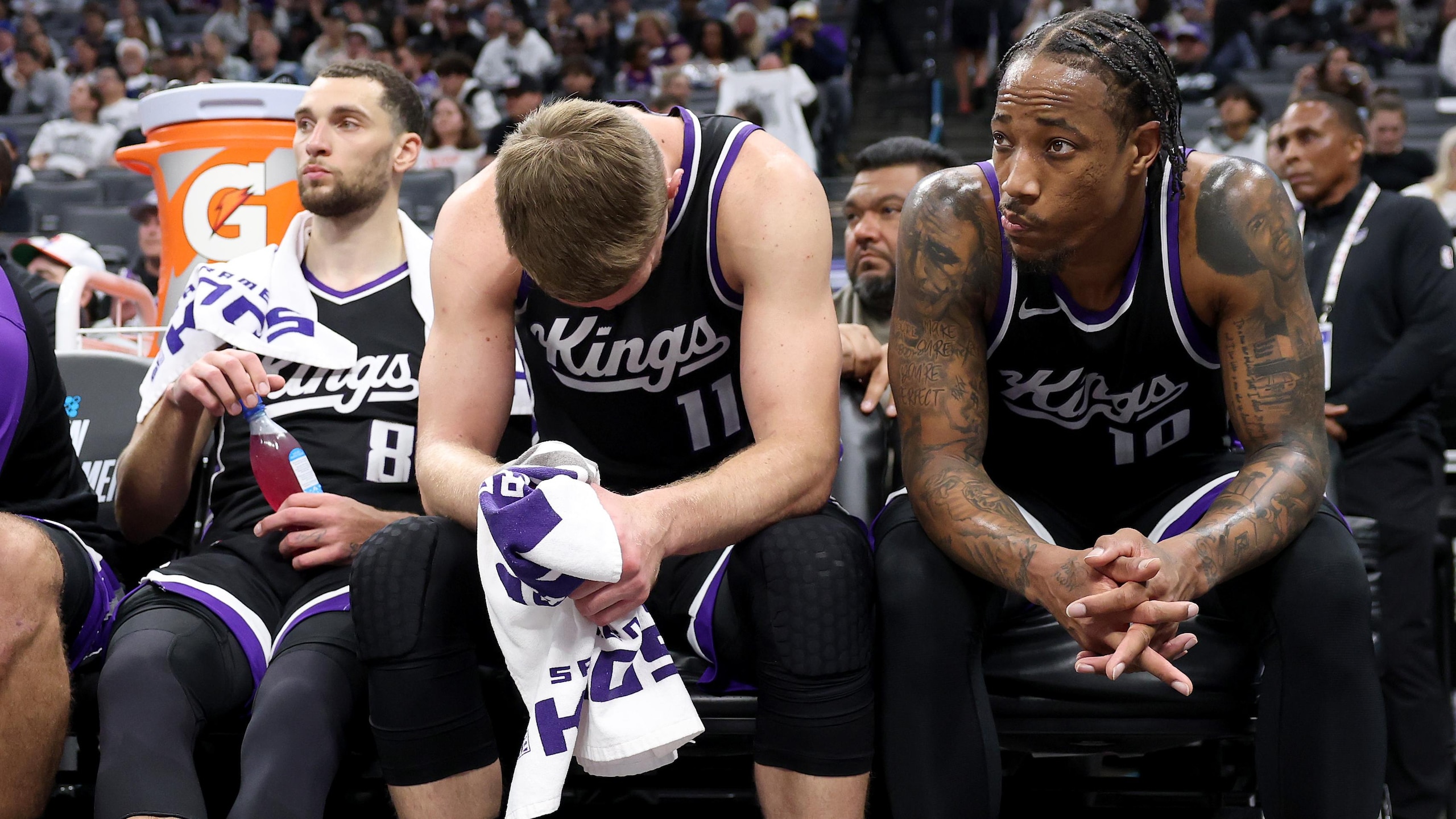
Lineup: Dennis Schroder, Zach LaVine, DeMar DeRozan, Keegan Murray, Domantas Sabonis
2024-25 Net Rating: N/A
De'Aaron Fox didn't have his best year in 2024-25, but it was still better than anything Dennis Schroder has ever produced. That's why it's discouraging to note that Fox teamed with LaVine, DeRozan, Murray and Sabonis to put up a minus-1.7 net rating across 444 possessions last season.
Maybe some of those struggles can be explained away by citing whatever bad vibes preceded Fox's trade request, not to mention the possible strain that attended former head coach Mike Brown's firing.
Or, maybe it's simpler than that: The Kings' starters make no sense together—a fact that'll be as true with Schroder as it was with Fox.
The only quality defender in the group is Murray, who has long been marginalized on offense because the other four players need the ball to be effective. Other than LaVine, nobody in the group has been a consistent high-volume threat from deep. Murray used to fit that description but he slipped to 34.3 percent from deep last year and shot the ball less often than ever on a per-minute basis.
Sabonis can't defend the rim or move in space, and his lack of stretch cramps the floor on offense. DeRozan's mid-range game always feels clunky with Sacramento's big man hanging around the elbows.
San Antonio Spurs: B
27 of 30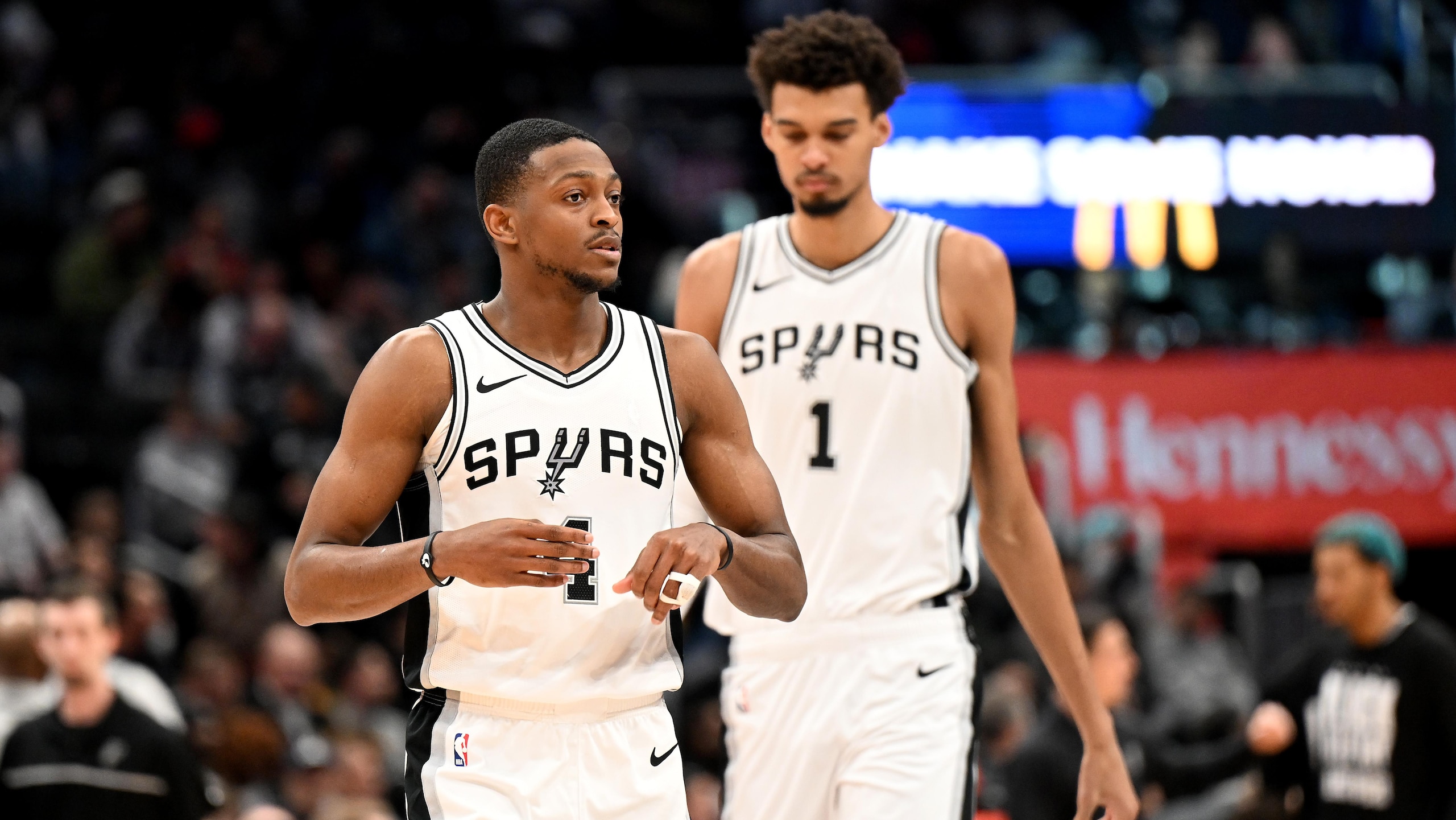
Lineup: De'Aaron Fox, Stephon Castle, Devin Vassell, Harrison Barnes, Victor Wembanyama
2024-25 Net Rating: Minus-9.1
We're going to discard that minus-9.1 net rating from last season because it only came from 22 possessions.
If you want to read anything into it, the 98th-percentile defensive rating might be somewhat useful—in that it underscores the reliably great defense San Antonio plays whenever Wembanyama is on the floor.
Just mark it down now: This lineup and any other that includes Wemby, the easy favorite for DPOY, is going to suppress opponent scoring at elite rates.
Offense is where the questions arise.
Can Fox hit enough threes to ensure Castle is the only non-spacing threat on the floor? Can he also develop chemistry with Wembanyama after barely getting a chance to play with him at all last season? Will Vassell take a step forward and break the 20-point barrier for the first time as he enters his age-25 season?
Tentatively, it seems like most of the answers will be "yes." But if Castle can't make shots, Dylan Harper could steal his spot. And if Vassell or Barnes aren't up to wrangling tough forward matchups, Jeremy Sochan could slide in to offer some help at the expense of spacing.
In the end, it's just not wise to doubt Wembanyama, whose presence on the floor, regardless of who else was out there with him, produced a plus-2.3 net rating last season. He's bound to continue improving, and the supporting cast around him is as talented as it's ever been.
Toronto Raptors: C
28 of 30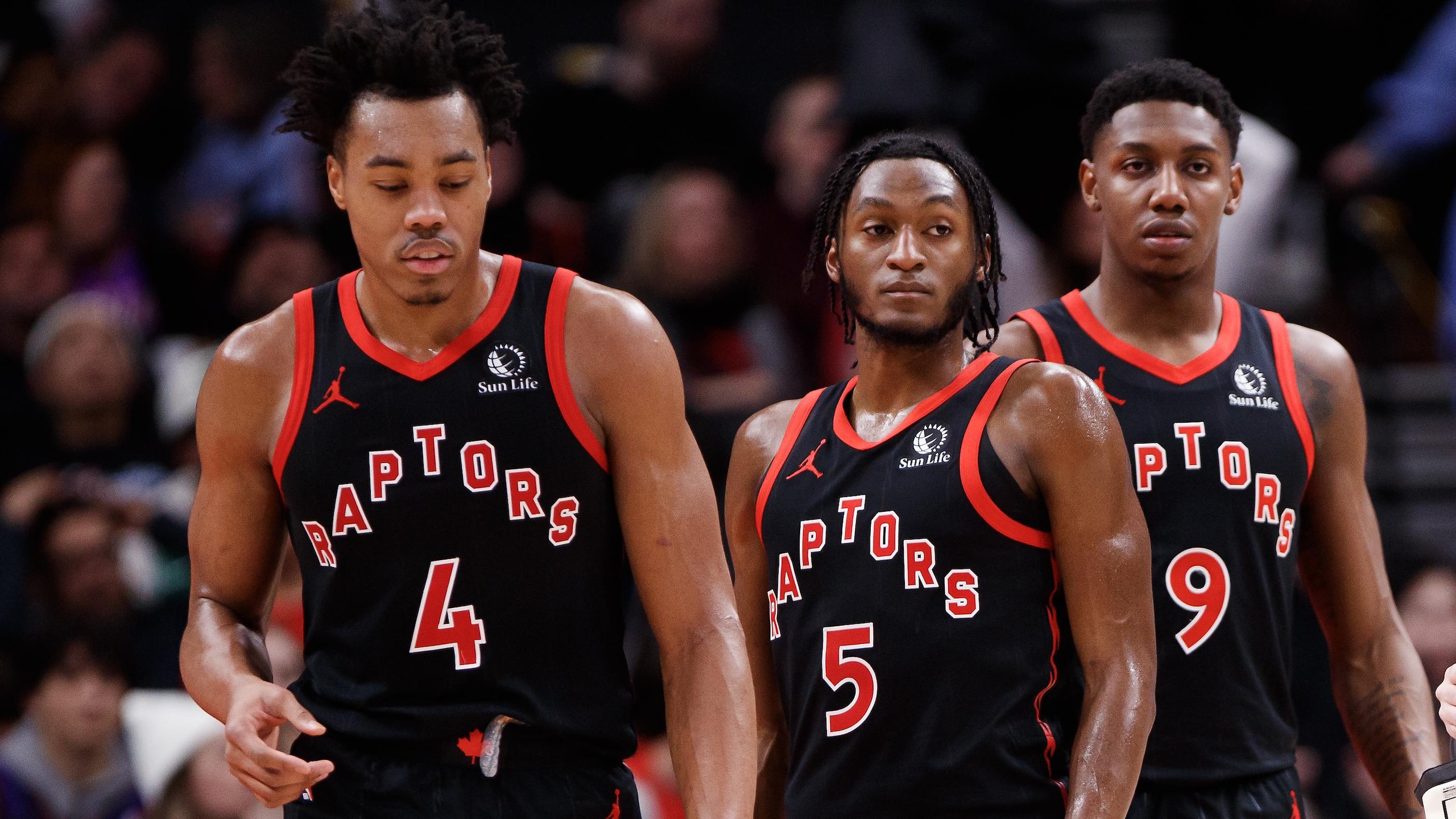
Lineup: Immanuel Quickley, RJ Barrett, Brandon Ingram, Scottie Barnes, Jakob Poeltl
2024-25 Net Rating: N/A
Brandon Ingram never played for the Raptors last season after coming over via trade, but the four incumbents saw 227 possessions together.
The results weren't great, as Quickley, Barrett, Barnes and Poeltl produced a minus-8.4 net rating driven way down by an anemic offense that produced just 103.4 points per 100 possessions.
That punchless attack should give Raptors fans pause, as it's basically what a worst-case scenario could look like this season.
Ingram is a talented scorer, but he'll need to sustain the career-high three-point volume he showed with New Orleans last season before anyone believes this unit can generate enough space to keep defenses honest.
Poeltl never shoots threes, and Barnes doesn't scare anyone from distance. That'll create some tough sledding for Quickley, who is a bit overtaxed as a pure point guard.
Toronto has a chance to defend well, and while nobody in this group is a high-end passer, most of them are average or better.
Bank on a defensive rating somewhere around the 75th percentile and an offense that will struggle to reach the 25th.
Utah Jazz: F
29 of 30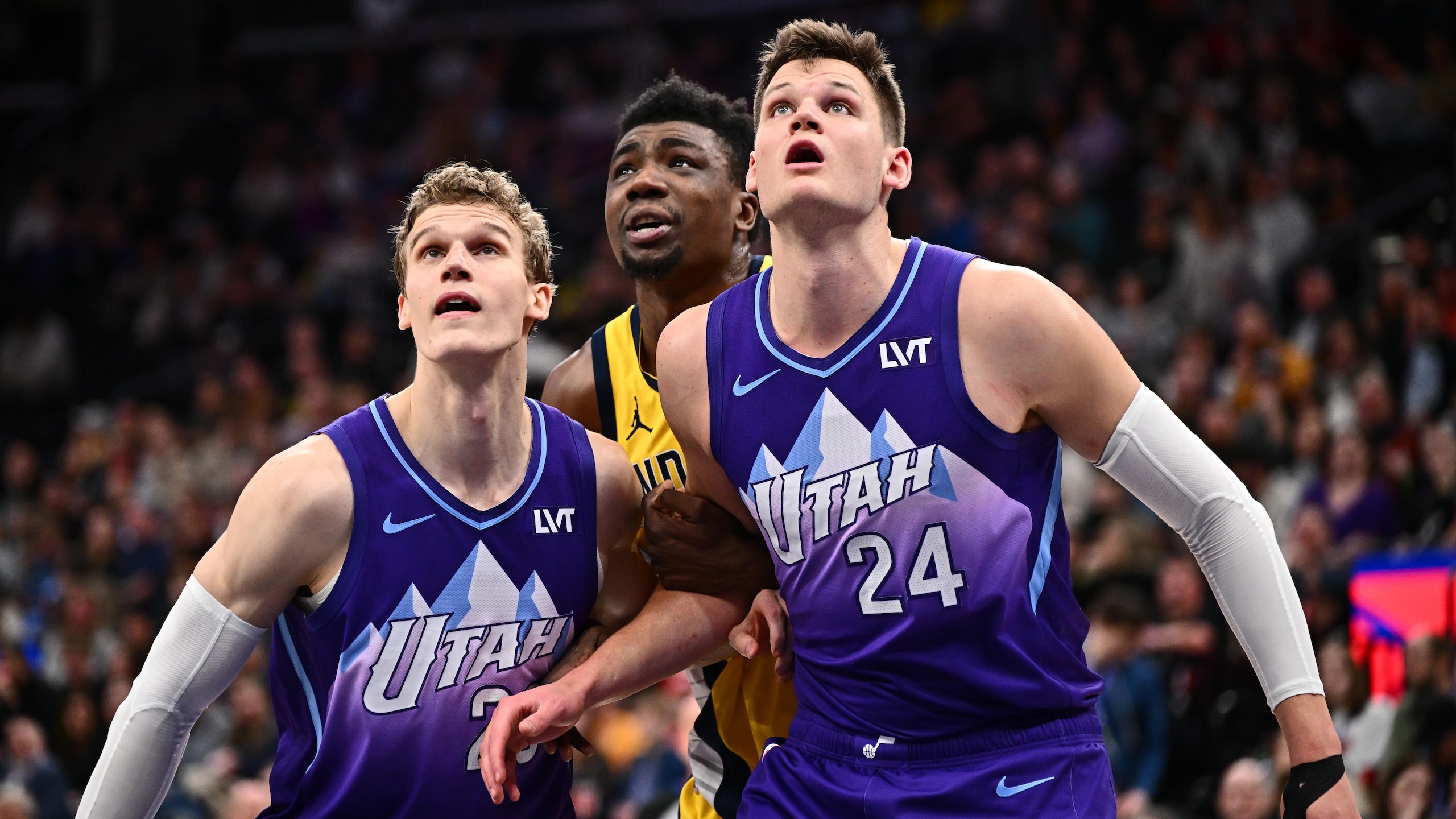
Lineup: Isaiah Collier, Keyonte George, Ace Bailey, Lauri Markkanen, Walker Kessler
2024-25 Net Rating: N/A
Markkanen and Kessler are the only sure things here, with Collier probably ranking third in terms of starting job security—even after a rough Summer League showing underscored concerns about his ball security and shooting.
Ultimately, it doesn't matter for grading purposes if Kyle Filipowski slots in ahead of Bailey, or if Brice Sensabaugh puts George back into the bench role he occupied down the stretch last season.
No matter who's out there with Markkanen and Kessler, the Jazz are going to be overmatched.
Collier has his strengths as a driver and setup man, but defenses don't have to guard him honestly on the perimeter. And while Filipowski can juice the offense, he's among the worst frontcourt defenders around.
Kessler can erase a lot of mistakes, but even he won't be able to stop the cascade of points allowed by the other four players out there with him.
Bailey probably doesn't deserve a starting gig on merit, but he's the franchise's current best shot at a cornerstone and should be allowed to play and grow through his mistakes.
Losing will again be the goal in Utah this season, and all the youth on the roster will ensure every imaginable starting five gets a nightly pummeling.
Washington Wizards: F
30 of 30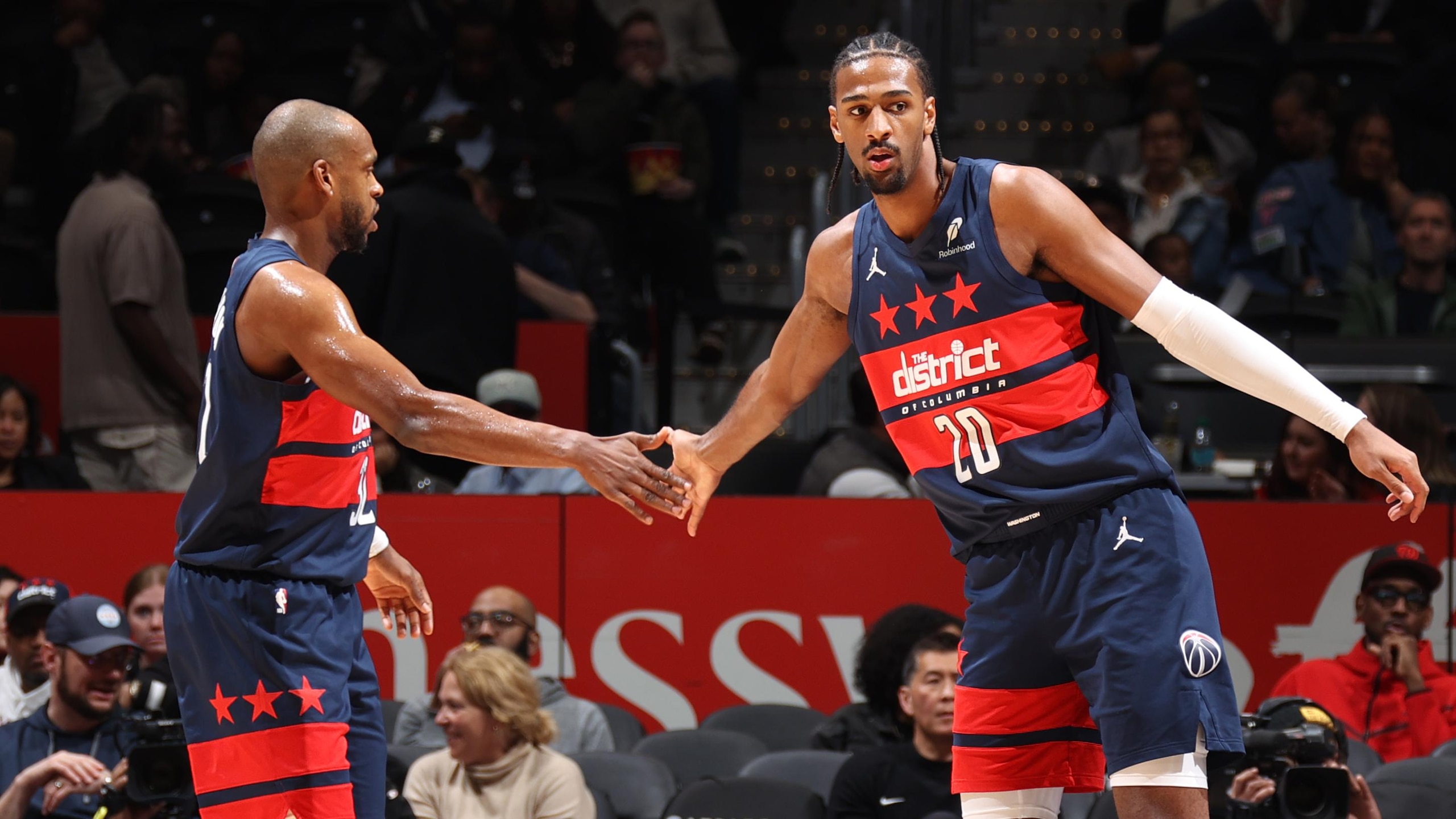
Lineup: Bub Carrington, CJ McCollum, Khris Middleton, Bilal Coulibaly, Alex Sarr
2024-25 Net Rating: N/A
It'd be a lot more fun to see Tre Johnson and Kyshawn George in place of veterans McCollum and Middleton, but the Washington Wizards (not to mention the old heads themselves) would probably prefer a bit of a showcase for the first several weeks of the season.
Washington is bound to trade or buy out McCollum and Middleton, neither of whom fit a rebuilding timeline, but it's good business to try to do right by your vets. The Wizards should certainly care more about the future, but broadcasting their willingness to appease older players is smart.
Even with the more experienced options, Washington is going to get housed by just about every opposing first unit it faces. Carrington, Coulibaly and Sarr all have potential to be quality starters down the road, but they're wildly overmatched at the moment.
Coulibaly's defense is probably the only skill among all three that would fit on a winner right now.
Once the Wizards pivot to a five-man youth movement after the trade deadline, things could get fun with such an athletic and hungry lineup. The results may be even uglier then, but that's kind of the point.
Stats courtesy of NBA.com, Basketball Reference and Cleaning the Glass. Salary info via Spotrac.
Grant Hughes covers the NBA for Bleacher Report. Follow him on Bluesky and subscribe to the Hardwood Knocks podcast, where he appears with Bleacher Report's Dan Favale.
.jpg?w=2560 "🚨 Week 8 AP Top 25 Poll")
.jpg?w=2560 "Mahomes Told Teammate to Leave Meeting")
.jpg?w=2560 "Baker Gets Glove From Rays 🧤")

.jpg?w=2560 "NFL investigating Eagles")
.jpg?w=2560 "Updates from EVERY NFL Game 🏈")
.jpg?w=2560 "Steelers Roll Saints in Paris")
.jpg?w=2560 "CFP Bracket After Week 8 🏆")