
Best Emerging QB-WR Combinations in the NFL Today
Look—you want to start this slideshow, and I want to start this slideshow. But before we get anywhere, we need to talk about what the term "emerging" means.
The pure dictionary definition wants to say "coming to maturity" or perhaps "becomes apparent." My interpretation of "emerging" involves both aspects of popularity and age. So here's what we're going to do.
- Both the quarterback and the wide receiver have to have been drafted in 2012 or later to form an emerging combination. Eli Manning isn't emerging anywhere, and I'm not about to involve a vet like Eric Decker who has already gotten a free-agent contract as someone just hitting popular consciousness.
- The quarterback cannot have played in and won a playoff game. That means no Andrew Luck and no Russell Wilson. You know who those players are. They exist in public debate. Russell Wilson's contract future can't stay out of public debate. Ergo, they're not emerging.
- I'm not including quarterbacks who aren't projected starters. Sorry, Johnny Manziel. I'm not even willing to put Jimmy Garoppolo on here. I need to have some sort of clue about who these guys are before I talk about them, and the sample size is just too small.
From there, I will talk about each half of the combination separately, ranking out how comfortable I feel about them among their peers on this list based on their future. The total combined number will be the ranking.
This is a subjective ranking. You're probably already writing that comment about how that makes me the worst, and that's fine.
10. Robert Griffin III and Jamison Crowder, Washington
1 of 10
Robert Griffin: Fourth Year
On-list ranking (among QBs): Seventh of 10
At some point, your cat stops chasing the laser pointer, you stop pretending you're not going to push the snooze alarm twice before you get up, and we have to give up on the idea that Robert Griffin III is ever coming back athletically from the torn ACL and LCL he suffered at the end of the 2012 season in Washington's playoff loss to Seattle.
I'm not there yet. But I'm close.
Griffin has been drawing acclaim from head coach Jay Gruden. But that was in June, and we're now at the point where even faintly brushing praise on Griffin is news for a reason. His mental processing speed and deep ball have been missing for a few seasons now. I'm holding out just the tiniest flicker of hope, given what we saw in 2012, that he can be that guy again. But it's more of a finger holding up a window frame at this point.
Jamison Crowder: Rookie Year
On-list ranking (among WRs): 10th of 10
Crowder honestly has no business on a list like this. It's unfair to put him with the other receivers I've chosen. But that tells you how old the Washington receiving corps(e) is. I think I just saw Santana Moss as the slot guy with Art Monk outside.
There's a fair chance that Crowder develops into a serviceable slot receiver. That day probably won't come this year, and given his size (5'8", 185 lbs), it may not come ever. While we remember the Wes Welkers who challenge our size bias, we forget about the Ryan Swopes.
Either way, he's only here because Washington has failed to develop any receivers of note over the past four seasons.
9. Geno Smith and Devin Smith, New York Jets
2 of 10
Geno Smith: Third Year
On-list ranking (among QBs): Ninth of 10
It's admirable that the Jets have come out and committed to Geno Smith as the favorite to start. For one thing, they have nobody else with his ceiling. For another, Ryan Fitzpatrick is...not an inspiring choice to lead the team anyway.
But facts are facts, and after two seasons where he's shown more combustibility than flashes of the deep ball that had people swooning at West Virginia, we don't have a lot of evidence that Smith is going to do any better. I'd say the odds are overwhelmingly against him being more than a career backup.
And the fact that he's still ahead of someone on this list says it all about how the recent quarterback classes have been ghastly.
Devin Smith: Rookie Year
On-list ranking (among WRs): Eighth of 10
I really believe in Devin Smith. The 2015 wide receiver class looks to be just as strong on the top as 2014 was, and people got a little bit too caught up in Smith's average timed speed in the 40-yard dash (4.42 seconds) and failed to look at how effective he was as a deep threat for Ohio State.
With the trade for Brandon Marshall, the Jets probably won't be utilizing Smith too much in his rookie season. However, he could have the kind of effect that T.Y. Hilton and John Brown had down the stretch in their rookie years.
And, down the line, Smith will be much more of an asset for New York than Marshall will be.
8. Nick Foles and Brian Quick, St. Louis
3 of 10
Nick Foles: Fourth Year
On-list ranking (among QBs): Sixth of 10
Common knowledge would say that this is the year when we learn if Foles was a pure Chip Kelly creation or not. I think that answer is already self-evident in the fact that Kelly was willing to pay more money to Sam Bradford rather than give Foles another season to bounce back.
But here we are: Foles has been brutal outside of the confines of the 2013 Eagles. That year came more recently than Robert Griffin's last good year, to be sure, which is why he ranks ahead of him. But I have a similar lack of faith in Foles to get back to his peak performance.
The difference is simple: Foles has a higher floor.
Brian Quick: Fourth Year
On-list ranking (among WRs): Seventh of 10
Quick lost most of his 2014 to injury, but the seven games he did play showed a completely different receiver than the raw Appalachian State product he came out of the draft as. Posting a 115 defense-adjusted yards above replacement (DYAR), per Football Outsiders numbers, he would have been on pace to be a top-15 receiver by the metric had he continued to play that well for 16 games.
ESPN.com's Nick Wagoner has faith that Quick will bounce back from shoulder surgery to be ready for Week 1. He certainly proved that he has the highest upside of the spiraling cycle that is the St. Louis receiving corps.
But, much like Foles in 2014, his task will be to prove that a small-sample-size breakout represented his true talent and was not a fluke of circumstance.
.jpg?w=2560 "Texans Titans Football")
.jpg?w=2560)
.jpg?w=2560 "Cardinals Giants Football")
7. EJ Manuel and Sammy Watkins, Buffalo
4 of 10
EJ Manuel: Third Year
On-list ranking (among QBs): 10th of 10
I watched plenty of poor quarterback play last season. I watched every Blake Bortles start. Manuel's start against Houston in Week 5 was the worst performance I saw all season.
All you need to know about Manuel's standing in the NFL at this point is that his play has emboldened Rex Ryan to bring in multiple quarterbacks to attempt to revitalize the Mark Sanchez-Tim Tebow conundrum. It's to the point where I'm not even sure Manuel will start. But I can't bring myself to say Matt Cassel is an NFL starter. And I certainly have no faith in Tyrod Taylor being a hidden gem.
At this point, running Manuel out there has tinges of mysticism to it. Like finding a broken shovel on the ground and believing it was planted there for you to do lawn work. The Bills, working without a first-round pick for reasons explained below, are not above that. And Ryan hasn't met a quarterback situation he can't muck up.
Sammy Watkins: Second Year
On-list ranking (among WRs): Second of 10
Just sneaking onto my under-25 list despite what I'd call a middling season by expectations, Watkins seems destined to be stuck on offenses that can't fully utilize the game-changing talent the Bills admitted they thought he had when they traded a future first-rounder to acquire him. Watkins was saddled with Tajh Boyd at Clemson, and the EJ Manuel-Kyle Orton punch last season did him no favors either.
So while the statistics are going to be pretty, Watkins is going to turn into a cause celebre among fantasy football heads and film junkies. The kind of guy who they protest isn't getting the ball enough while LeSean McCoy runs into the line 30 times in November.
And they'll probably be right, because the Bills are going to have problems figuring out how to get him the ball all season.
6. Blake Bortles and Allen Robinson, Jacksonville
5 of 10
Blake Bortles: Second Year
On-list ranking (among QBs): Eighth of 10
And now we get to figure out if Blake Bortles is going to be the quarterback of the future for the Jacksonville Jaguars.
He's ranked eighth on this list because unlike the two guys below him, he's only failed once. But not much went right in 2014, and in 2015, the sheer amount of excuses we've seen coming out of Jacksonville camp for his play is nearly unfathomable.
Now, in terms of pedigree and athletic skill set? Bortles has all the tools. The question is if he'll be able to use them, and the answer is, at this point, still hazy. I would lean toward no. But the pulse is not completely dead here.
Allen Robinson: Second Year
On-list ranking (among WRs): Third of 10
This might be considered an aggressive ranking, but Robinson really became the go-to receiver for Jacksonville last season, developing fast enough that the team let receiver Cecil Shorts walk in free agency.
A favorite of new NFL.com editor Matt Harmon, Robinson has all the necessary tools to become a star receiver in this league. The main concern at this point is how he'll rebound from a broken foot that sent him to injured reserve in November. OTA reviews have been stellar to this point, so I'm guessing it won't be a big deal.
The Jaguars still have a lot to sort out on offense, but it looks like the Robinson pick will at least give them the foundational piece they've lacked since Maurice Jones-Drew got old. And along with tight end Julius Thomas, he provides at least a little optimism for Bortles' surrounding cast boosting the offense up by their own accord, regardless of how much Bortles improves.
5. Teddy Bridgewater and Charles Johnson, Minnesota
6 of 10
Teddy Bridgewater: Second Year
On-list ranking (among QBs): First of 10
Yes, it's a controlled list without Russell Wilson and Andrew Luck, but it's still a little surprising to see that Bridgewater is the quarterback I like most on this list after all the predraft character assassination he took. His first half of the season had the skeptics howling, but he roared back with a strong second half to establish himself as the top prospect of the 2014 quarterback class.
The question in the second year will be how Bridgewater lives up to higher expectations. He no longer has the excuse that Cordarrelle Patterson is holding the offense back, and with Kyle Rudolph (for now) and Adrian Peterson back, the Vikings have the makings of an interesting group of skill-position players.
I'm still less than enthused by the receiver corps here as far as anyone jumping out and becoming a star, but Bridgewater should have a plethora of solid-average targets.
Will Peterson's return spark a step forward? Minnesota's playoff chances could hinge on the answer.
Charles Johnson: Third Year
On-list ranking (among WRs): Ninth of 10
Johnson was a hell of a find by general manager Rick Spielman. An all-tools small-school kid coming out of Grand Valley State with Packers roots, Johnson had found early playing time but no long-term takers before the Vikings signed him up.
That said, there's a difference between Johnson as a potential star based on those physical attributes and what actually takes place on the field. He has been undersold throughout his career, but he's going to be more than a solid-average receiver.
Which means, in other words, that he's a good find for Spielman but not necessarily a guy I'm banking on to rack up 1,000 receiving yards. In the grand scheme of the NFL, that's pretty good.
On this list, where he's measured against every team's most talented young receiver? He's lacking a bit.
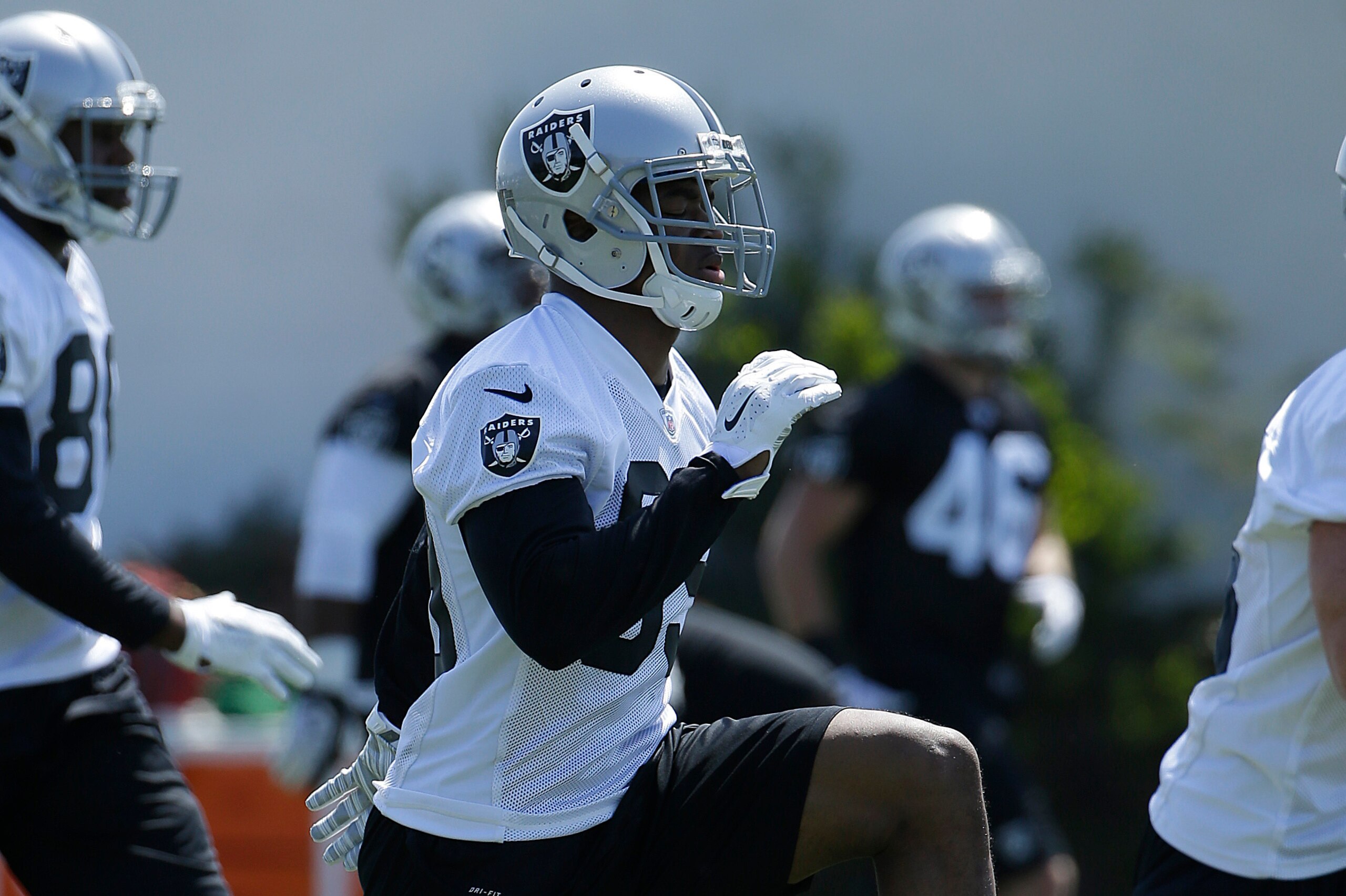
4. Derek Carr and Amari Cooper, Oakland
7 of 10Derek Carr: Second Year
On-list ranking (among QBs): Fifth of 10
Carr had the better rookie season statistically to Bridgewater, but it was far from a smooth transition. I have doubt that he has a lot of untapped potential left to hit. He threw a good deal more interceptable balls last season than actual picks, hinting at regression.
Now, that's not to say he can't build on this. I would rather have had his rookie season than the season Blake Bortles put up. It's also true that Carr wasn't asked to do much last season, because offensive coordinator Greg Olson rightly had no expectations that anyone on the offense around him was going to be a star. Again, like Bortles, it was a similarly desolate situation.
But I lean more toward bearish than bullish on Carr's future. In some ways, I wonder if that means that the predraft opinion I gleaned of him is too inured in me, because I'd like to say there's more to like here than I give him credit for. I just can't picture a scenario where he becomes a no-doubt top-10 quarterback.
Amari Cooper: Rookie Year
On-list ranking (among WRs): Fourth of 10
Cooper is instant help for the Raiders, and he comes out as one of the most polished wideouts I've ever seen. The debate between him and Kevin White that was prevalent in the lead-up to the draft is an interesting one once you contrast White's route running at West Virginia to Cooper's at Alabama. I suspect Cooper is far and away the safer option.
But where does Cooper win? He's going to be great on the deep ball, but his body—while not bad—is not ideal for fighting routes over the middle. He's going to be better against zone.
Add it up and I'm just a little hesitant to put him with the top two receivers on this list while I'm betting on a step forward from Allen Robinson. Cooper could very well make that look silly, but either way he's a safe bet to be the keystone of the Oakland offense this time next season.
3. Ryan Tannehill and Jarvis Landry, Miami
8 of 10
Ryan Tannehill: Fourth Season
On-list ranking (among QBs): Fourth of 10
Perhaps the best modern comparison to Tannehill thus far would be the career of Andy Dalton. He hasn't been bad. He hasn't shown more than flashes of franchise quarterback ability, and he now has a brand-spanking new "big money" deal that essentially lets the Dolphins take it year by year after 2016.
The difference statistically (and as far as playoff appearances) is that Dalton has always had the luxury of playing with a much more talented team, throwing to A.J. Green and handing off to Gio Bernard. Tannehill has spent his career throwing at Brian Hartline and an occasionally interested Mike Wallace, behind a bad offensive line that caused one of the great media firestorms in recent NFL history, and watching Daniel Thomas plow into the line for three yards.
So while under normal circumstances it would be fair to wonder if last season's improvement was a fluke, Tannehill is good enough (like Dalton) to helm a playoff team. I just think he might be on the borderline of acceptability.
The Dolphins have certainly done all they could this offseason to give Tannehill a better receiving corps by bringing in Greg Jennings, DeVante Parker, Kenny Stills and Jordan Cameron. It's up to him to take them to Daltonland.
Jarvis Landry: Second Season
On-list ranking (among WRs): Fifth of 10
Landry isn't a tall receiver. He's not a fast receiver. He's not an imposing receiver.
Landry is a football player.
And it was immediately apparent that the Dolphins began to function better on offense when he was on the field. According to Football Outsiders, Landry had a sparkling 75 percent catch rate last season.
We're never going to put Landry in an article about dominant forces, but watching him technically overwhelm his opponents despite his disadvantages is going to be a treat for the rest of the decade.
2. Marcus Mariota and Kendall Wright, Tennessee
9 of 10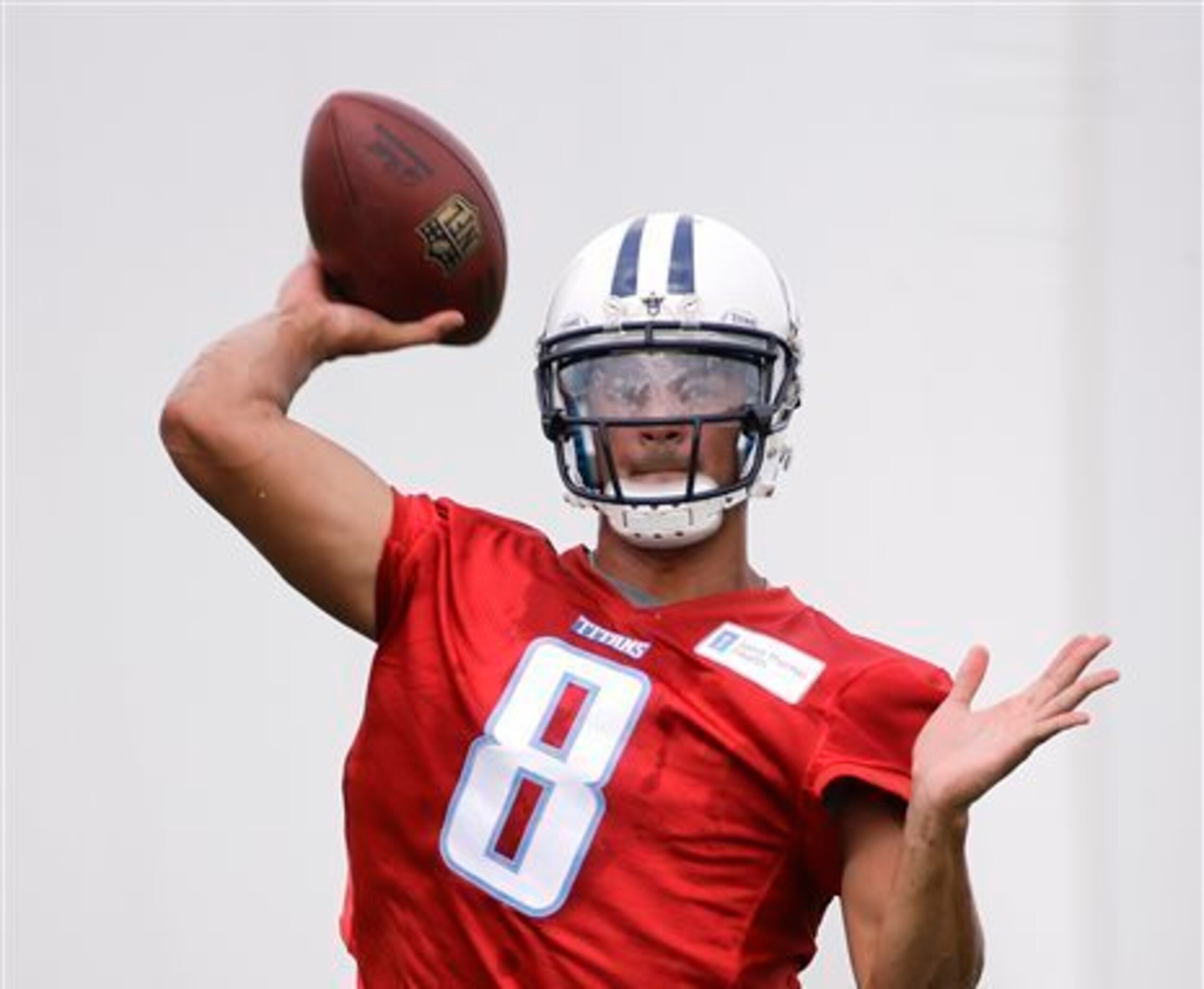
Marcus Mariota: Rookie Year
On-list ranking (among QBs): Second of 10
I've been over my reasoning in ranking Mariota ahead of Winston before, but the too-long-won't-click-a-link version is that he's a more accurate quarterback with a better decision-making process. While both players could be in for some growing pains in the first year, Mariota will be fine as long as his pocket presence holds up.
Tennessee's issue right now is actually getting Mariota signed. He's not in camp right now because of a dispute in "offset" language. For the laymen in the audience, think of it as a challenge to an appeal in authority (the club's right to enforce a clause that is ceremonial and doesn't mean much) versus an agent's ability to say "no."
If this drags on too much longer, it'll be bad, but if we learned anything from the Dez Bryant/Demaryius Thomas day of reckoning, it's that it's not worth worrying about semantics when both Mariota and the Titans have an incentive to be in camp on time.
Kendall Wright: Fourth Year
On-list ranking (among WRs): Sixth of 10
Wright is coming off a down year—one where he openly questioned head coach Ken Whisenhunt's system being right for him—but has in the past shown a tremendous amount of ability as a creator with the ball in his hands.
Can he still be an effective weapon in the NFL? I believe so. And I'm heartened by the idea that Whisenhunt has said he'll tailor the offensive system around Mariota's strengths early, which will play into a Wright rebound.
But given his poor year, Wright has to rank low on the list. He was the team's only real wideout of note, yeah, but he struggled.
1. Jameis Winston and Mike Evans, Tampa
10 of 10Jameis Winston: Rookie Year
On-list ranking (among QBs): Third of 10
Winston is in for a rude awakening.
I don't think the Tampa Bay quarterback will fail to live up to expectations over the long term. But we're seeing too much hype for his short-term success—like the video above. Winston simply tried to make too many throws that his arm couldn't cash last season. That was his main flaw. Translate that to the pros, where the windows are even tighter, and, well, it's conceivable that Winston has a three-interception game or two.
That doesn't mean I don't believe in him as a player. He was a worthy No. 1 pick, certainly, and he's going to be a fixture for this team for a long time barring off-field issues. But at this moment, I wouldn't be surprised if he finished on the bottom half of this list and then truly began to realize how much he has to do to be great in the NFL.
Mike Evans: Second Year
On-list ranking (among WRs): First of 10
Popular culture has co-opted the term "beast" for players with the size and speed combination that scouts drool over. We're all the way on to calling Evans a full-fledged mutant.
Evans, whom I ranked sixth among all NFL players under 25 years old, was impossible to stop in his rookie season. He finished 17th in DYAR among all wideouts, per Football Outsiders, and more importantly, he did it on a team where the only other receiving option with positive DYAR was Vincent Jackson—at 4 total DYAR for the entire season.
Such is life with Josh McCown.
With a quarterback who won't be afraid to put the ball up for grabs, we may have a historically good combination of traits in Winston's aggressiveness and Evans "my-ball" mentality. At least once Winston figures out how to not hang Evans completely out to dry.
.jpg?w=2560 "Broncos Chargers Football")
.jpg?w=2560 "MHJ Bought Own Jugs Machine")