

Welcome to Bleacher Report's 2025 MLB draft tracker!
The Washington Nationals hold the No. 1 pick after winning the annual draft lottery in December. The last time they picked first overall was back in 2010 when they selected Bryce Harper, a year after taking Stephen Strasburg with the top pick in 2009.
High school shortstop Ethan Holliday has been the most talked about prospect during this year's draft cycle and headlines the 2025 talent pool alongside a deep crop of college starting pitching and high school shortstops.
Day 1 of this year's draft will feature 105 total picks spanning the first, second and third rounds, as well as the competitive balance and compensatory picks slotted in between. Rounds 4-20 will be completed on Monday.
Keep it locked right here as Sunday's draft action unfolds for scouting reports, grades and pick analysis.
Note: My final Mock Draft, published Saturday, can be found here.
Arizona Diamondbacks
1 of 30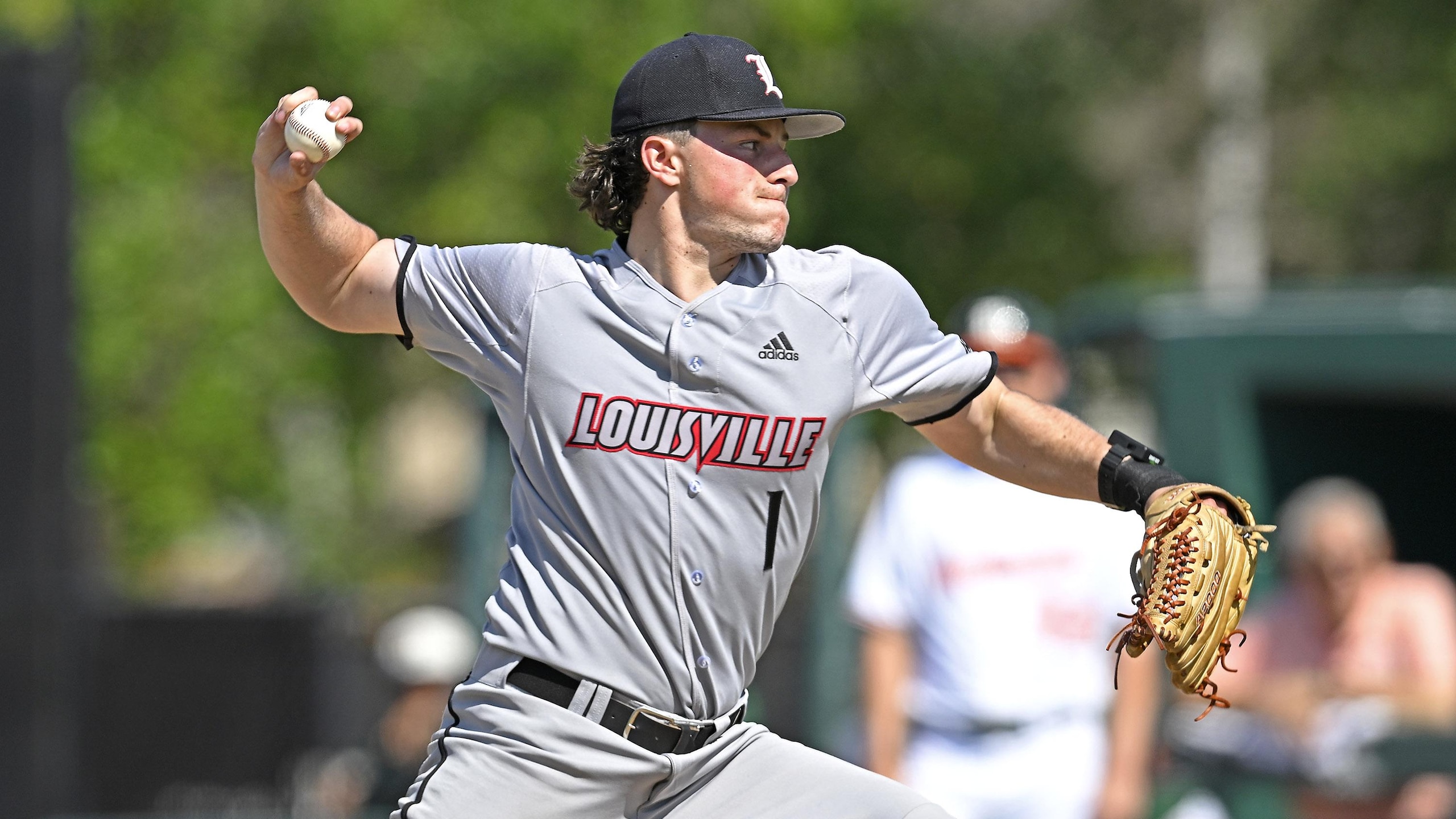
First Round (No. 18 Overall): Kayson Cunningham, SS, Johnson HS (TX)
MLB Comp: prep Termarr Johnson
There are questions about where Cunningham fits best defensively and how much pop he will develop, but there is no doubt he can flat-out hit. The 5'10", 182-pound infielder led the U18 Team USA squad with a .418 average last summer, taking home MVP at the World Cup qualifier tournament, and he added Texas Gatorade Player of the Year honors this spring. Despite plus speed and a high motor, his defensive game fits best at second base, similar to Pirates prospect Termarr Johnson when he was in high school.
Grade: A
The D-backs are willing to prioritize hit tool over power potential more than most clubs, so this is a great organizational fit. He could be the heir to Ketel Marte at second base.
Compensation Pick (No. 29 Overall): Patrick Forbes, RHP, Louisville
Forbes saw more action at third base than he did on the mound during his first two seasons at Louisville, but he posted a 3.29 ERA with 22 strikeouts in 13.2 innings in the Cape Cod League last summer while also pitching for Team USA. With his full attention on the mound this spring, he logged a 4.42 ERA and 117 strikeouts in 71.1 innings, touching triple digits with his high-spin fastball. There is effort in his delivery and more development needed than most Day 1 college arms, but the payoff could be an impact starter.
Grade: A
Forbes was getting some late first-round buzz and fits near the top of the second tier of college arms. There's more upside here than most from his demographic, and there is potential for serious value here.
Third Round (No. 92 Overall): Brian Curley, RHP, Georgia
Curley was taken in the 16th round of the 2024 draft, but opted to return to campus, transferring from VCU to Georgia for his junior season. He began the season in the bullpen and ended it as the team's Friday starter, showcasing a fastball that bumps 100 mph and a plus slider. His undersized 5'10" frame and max-effort delivery will likely land him in the bullpen, but his stuff could fit at the back of a MLB bullpen.
Athletics
2 of 30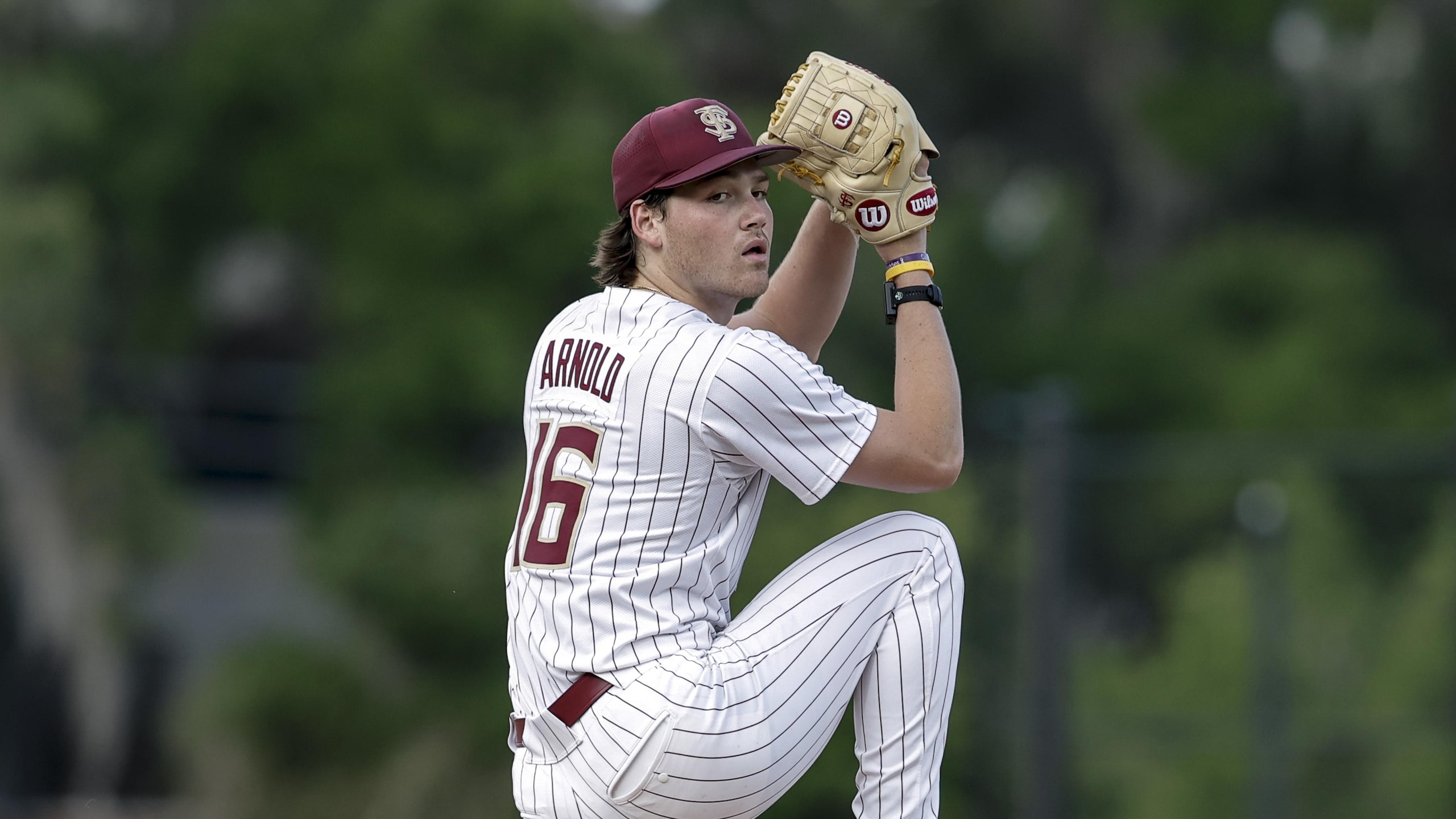
First Round (No. 11 Overall): Jamie Arnold, LHP, Florida State
MLB Comp: Chris Sale
Arnold entered the spring as the top pitcher in the 2025 draft class after going 11-3 with a 2.98 ERA, 1.10 WHIP and 159 strikeouts in 105.2 innings as a sophomore. The 6'1", 188-pound southpaw did nothing to hurt his stock, but he also failed to take the next big step forward that some evaluators were expecting, finishing with a 2.98 ERA, 1.06 WHIP and 119 punchouts in 84.2 innings. With a low three-quarters arm slot and an advanced fastball-slider combination, he looks a bit like an undersized Chris Sale.
Grade: A
Great value here for the A's, with Arnold getting some legitimate 1-1 buzz earlier this spring. He's a safer pick than Liam Doyle, and this will be a popular pick on "biggest steal" lists tomorrow morning.
Second Round (No. 48 Overall): Devin Taylor, OF, Indiana
In 169 games over three years at Indiana—roughly the equivalent of one full MLB season—Taylor hit .350/.459/.672 with 54 home runs and 179 RBI. What he does in the batter's box will have to drive his value. He's a below-average athlete who will likely be limited to left field, but his 55-hit, 60-power offensive game is loud. He hit .374/.494/.706 with 18 home runs, 66 RBI and more walks (52) than strikeouts (30) this spring.
Atlanta Braves
3 of 30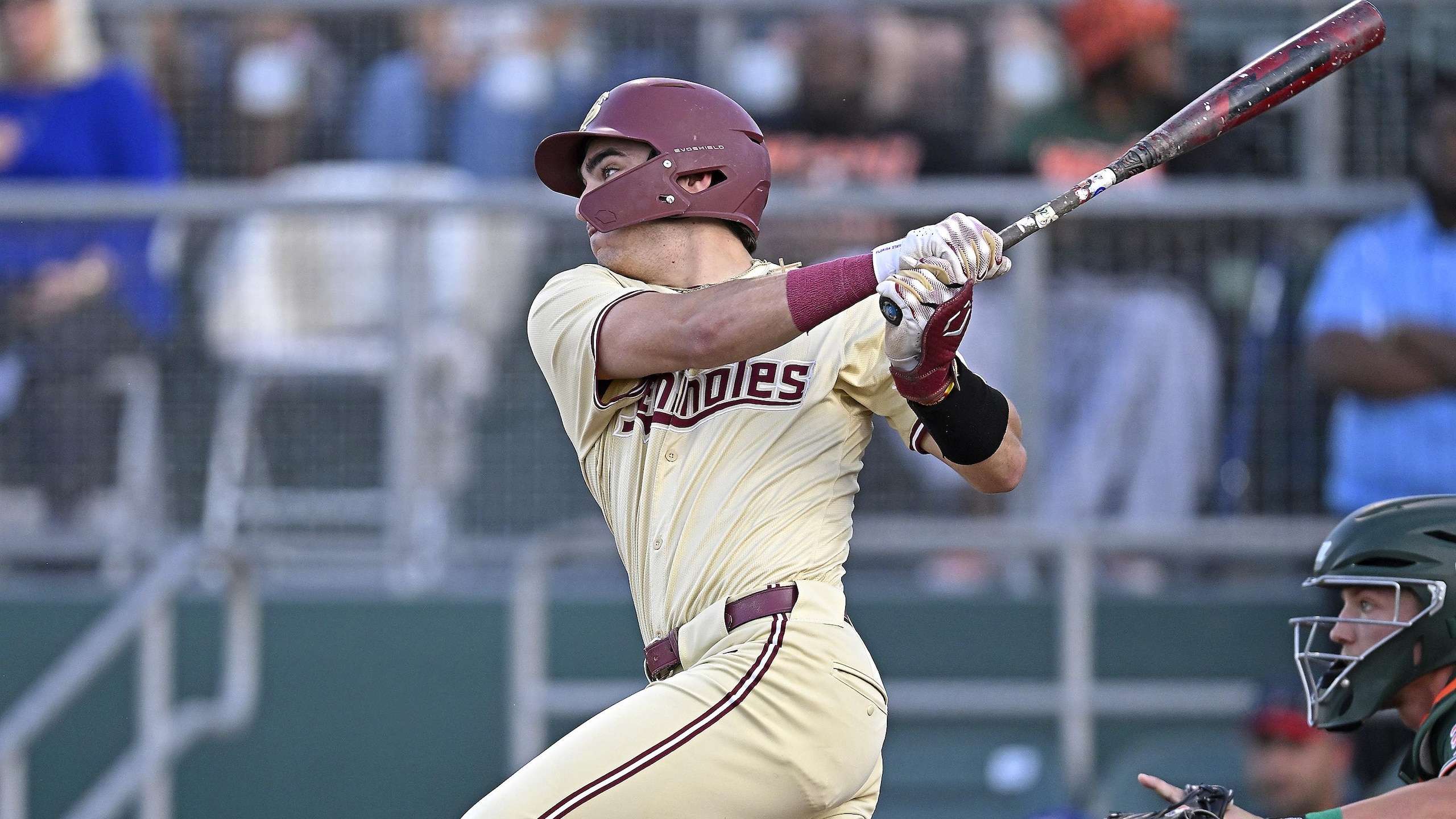
First Round (No. 22 Overall): Tate Southisene, SS, Basic Academy (NV)
MLB Comp: Orlando Cabrera
Southisene has average-or-better tools across the board, with good bat-to-ball skills and budding power in his 5'11", 180-pound frame, to go along with plus speed and athleticism which should give him a chance to stick at shortstop. He has an aggressive approach at the plate that might need to be toned down in pro ball, but he has shown the ability to make consistent, hard contact throughout his prep career. The Cubs signed his brother, Ty, to an above-slot deal as a fourth-round pick in 2024.
Grade: C
I like Southisene a lot as a prospect, but Wehiwa Aloy might have been a better fit for their contention window, and the upside of Gage Wood was awfully intriguing for an organization that has skewed heavily toward pitching in recent drafts.
(Edit: I like this pick a lot better after they got Lodise at No. 60 overall)
Second Round (No. 60 Overall): Alex Lodise, SS, Florida State
Lodise posted an .833 OPS with nine home runs as a sophomore at Florida State after transferring from North Florida, but a 64-to-19 strikeout-to-walk ratio kept him out of the top draft prospect conversation. He raised his OPS more than 300 points this spring, hitting .394/.462/.705 with 18 doubles, 17 home runs and 68 RBI in 58 games, and made strides with his walk rate (7.5 to 9.8 percent) and strikeout rate (25.1 to 20.0 percent) to send his stock soaring.
Third Round (No. 96 Overall): Cody Miller, SS, East Tennessee State
Miller was one of the more productive mid-major shortstops in the nation this spring, hitting .331/.430/.623 with 15 doubles, 18 home runs, 58 RBI and 27 steals in 58 games.

Baltimore Orioles
4 of 30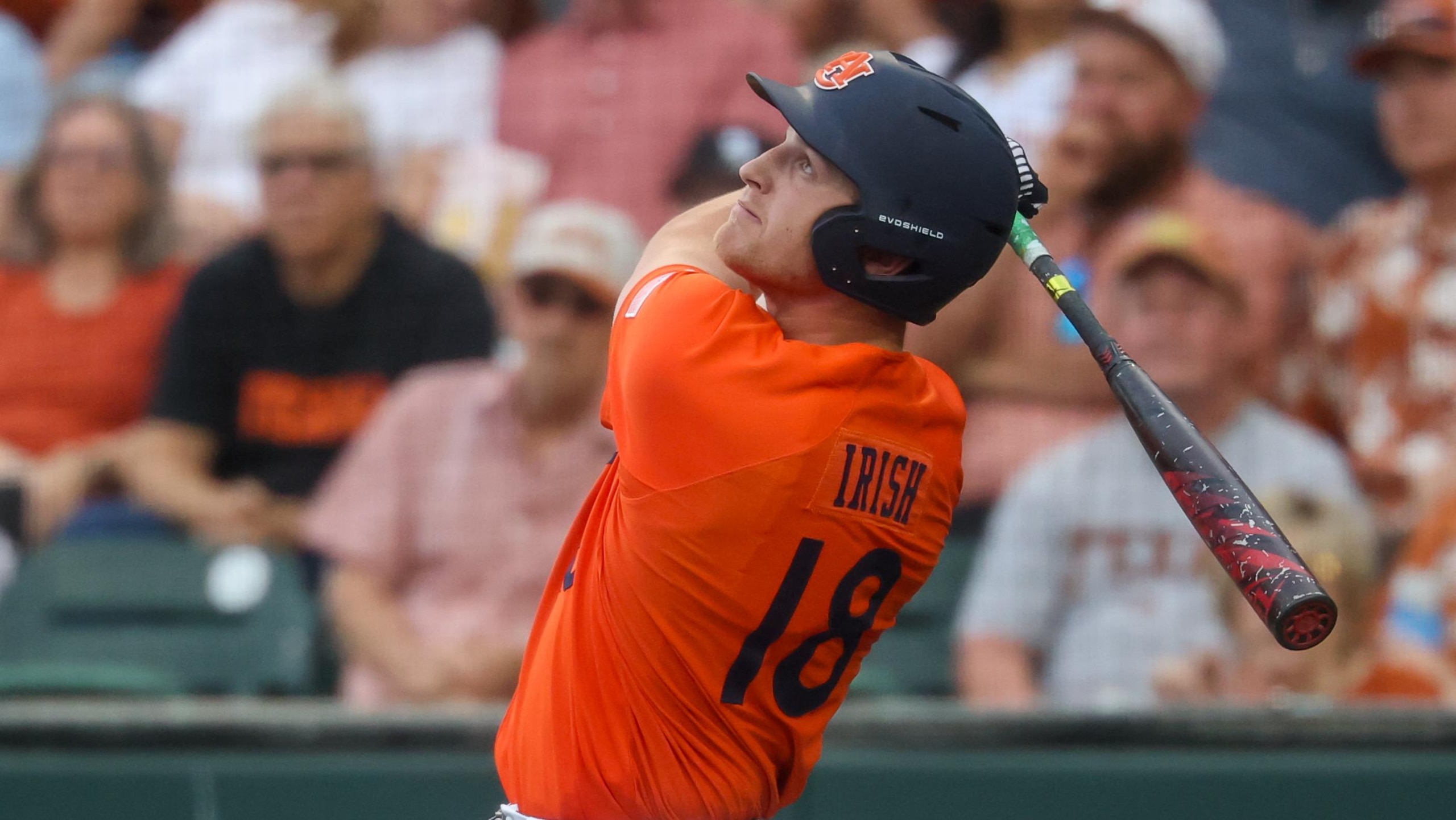
First Round (No. 19 Overall): Ike Irish, C, Virginia
MLB Comp: less athletic Christian Yelich
The top catcher in the 2025 draft class heading into the spring, Irish suffered a fractured scapula in March and ended up spending the bulk of the season manning right field. Meanwhile, he emerged as the best hitter in this year's college class, posting a 1.179 OPS with 19 home runs and 58 RBI in 55 games. He hit .364/.469/.710 with 13 home runs in 28 games during SEC play, and his 60-hit, 55-power profile and overall polish would put him on the fast track to the majors if his days as a catcher are behind him.
Grade: A
Steal of the first round right here after he absolutely crushed SEC pitching this spring! He was drafted as a catcher, but they're taking him for his bat, so it will be interesting to see if he gets reps behind the plate or immediately moves to the outfield.
Compensation Pick (No. 30 Overall): Caden Bodine, C, Coastal Carolina
Bodine possesses some of the best contact skills in the 2025 draft class, and he hit .318/.454/.461 with nearly twice as many walks (47) as strikeouts (24) this spring while helping lead Coastal Carolina to the College World Series finals. He hit just five home runs in 313 plate appearances this spring, so his 60-grade hit tool will drive his offensive value, but he has a high floor as a switch-hitter who can spray the ball to all fields and a strong receiver behind the plate.
Grade: B
The floor here is extremely high given his hit tool and sure-fire defensive profile behind the plate. No such thing as too many catchers.
Compensation Pick (No. 31 Overall): Wehiwa Aloy, SS, Arkansas
The 2025 Golden Spikes Award winner, Aloy hit .350/.434/.673 with 21 home runs and 68 RBI in 65 games while helping Arkansas reach the College World Series semifinals. He did strike out 64 times in 311 plate appearances, and he can be susceptible to selling out for power and chasing out of the zone at times, but the potential is there for him to be an offensive-minded middle infielder. He hit .309 with eight home runs and 24 RBI in 21 games in the Cape Cod League last summer.
Grade: A
Could have gone a dozen spots higher and should make an impact with the bat even if he doesn't stick at shortstop. Love this start for the Orioles busy Day 1.
Balance Round A (No. 37 Overall): Slater de Brun, OF, Summit HS (OR)
The success of Corbin Carroll and top prospects like Jett Williams and Slade Caldwell has helped make it easier to overlook an undersized prep player who can hit, and de Brun is the leading example in this draft class with a 55-grade hit tool and a 5'10", 187-pound frame. With plus speed and the potential to be a standout defender in center field providing secondary value beyond his strong bat-to-ball skills and polished approach, he doesn't need to develop above-average power to make an impact.
Grade: A
It would not have been a surprise to see all four of the Orioles picks so far taken in the first 20 or so selections, so this is shaping up to be a farm system-changing haul of young talent. Well done, O's!
Second Round (No. 58 Overall): Joseph Dzierwa, LHP, Michigan State
Dzierwa won Big Ten Pitcher of the Year honors this spring, going 8-3 with a 2.36 ERA, 0.98 WHIP and 104 strikeouts in 91.2 innings. The 6'8" southpaw has been the ace of the staff for the Spartans since his freshman season, making 42 starts and working 250 innings during three years on campus. Dzierwa has been up to 95 mph with his fastball and has a terrific changeup, but he hasn't shown a great feel for spinning a breaking ball, and developing one will likely determine his long-term ceiling.
Balance Round B (No. 69 Overall): JT Quinn, RHP, Georgia
Quinn struggled to a 7.35 ERA in 74.2 innings during two seasons at Ole Miss, but found success this spring in a swingman role after transferring to Georgia. The 6'6" right-hander has an electric fastball and a solid slider, and he posted a 2.75 ERA, 1.11 WHIP and 49 strikeouts in 36 innings over 17 appearances.
Third Round (No. 93 Overall): RJ Austin, OF, Vanderbilt
Austin has played better for Team USA and in the Cape Cod League than he has during his three years at Vanderbilt, with an athletic all-around profile and the potential for some untapped upside. He batted .257/.353/.383 with 21 extra-base hits and 22 steals this spring, and he has seen regular action at first base, second base and in the outfield.
Boston Red Sox
5 of 30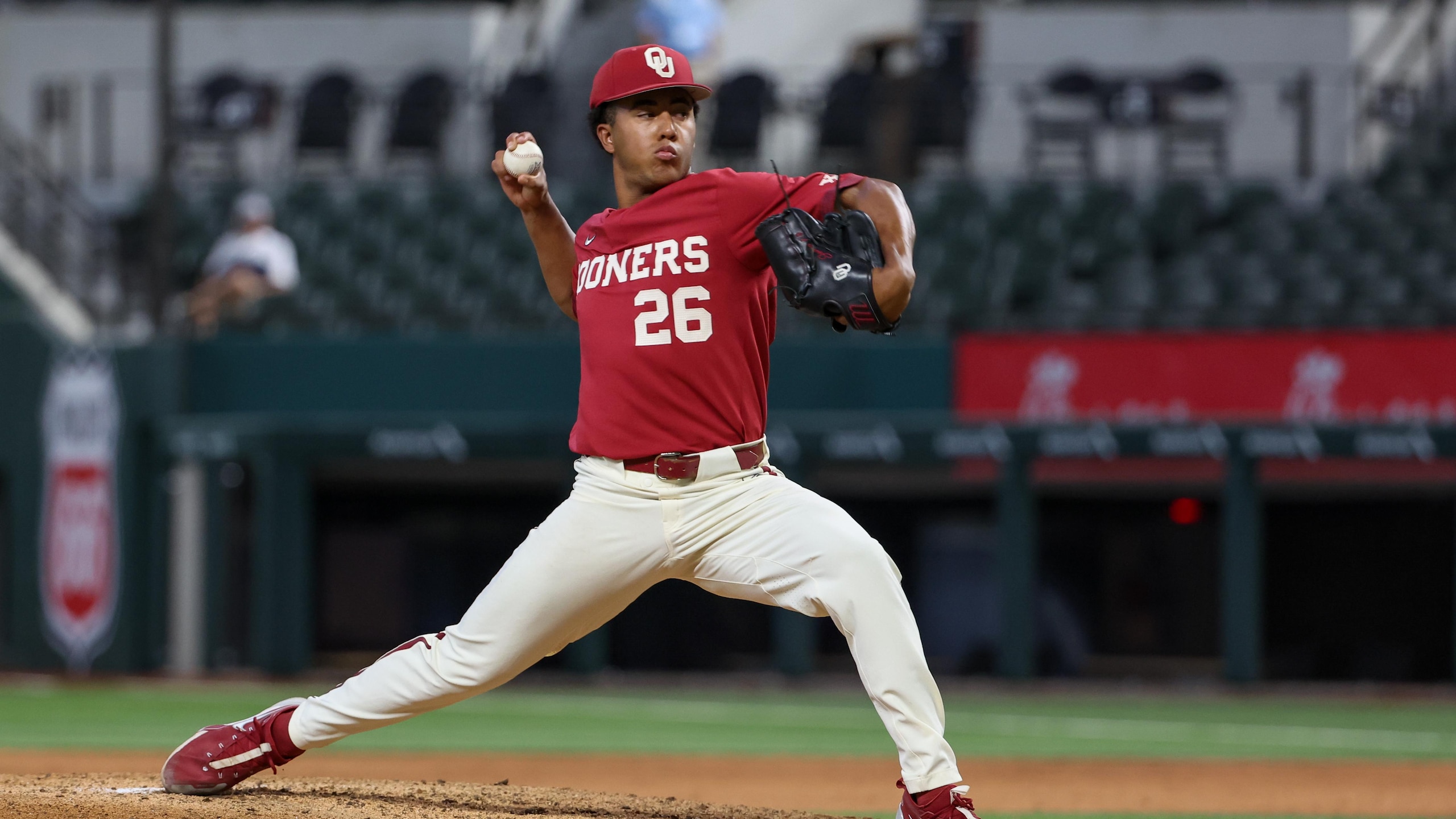
First Round (No. 15 Overall): Kyson Witherspoon, RHP, Oklahoma
MLB Comp: Dylan Cease
Witherspoon tallied 90 strikeouts in 80 innings as a sophomore after transferring from Northwest Florida State JC to Oklahoma with his twin brother Malachi, and he took another huge step forward this spring. The 6'2", 206-pound right-hander finished 10-4 with a 2.65 ERA, 1.01 WHIP and a 124-to-23 strikeout-to-walk ratio over 95 innings, showcasing an upper-90s fastball and three quality offspeed pitches. He hides the ball well with a compact arm action that is reminiscent of Dylan Cease.
Grade: A
The Red Sox were tied to the second tier of college pitching and likely did not expect Witherspoon to still be on the board at this point, so terrific value for a team that has had a bit more success developing pitching in recent years.
Balance Round A (No. 33 Overall): Marcus Phillips, RHP, Tennessee
A South Dakota high schooler who spent his freshman year of college at Iowa Western CC, Phillips transferred to Tennessee as a sophomore and pitched out of the bullpen for the 2024 CWS champions. He won the No. 2 starter job this spring and posted a 3.90 ERA, 1.31 WHIP and 98 strikeouts in 83 innings, showcasing a triple-digit fastball, good slider and a swing-and-miss changeup. Questions remain about his command, and he doesn't have the cleanest mechanics, but his stuff can be electric.
Grade: A
Two of the most electric arms in the college class with give the Red Sox system a major shot in the arm. There is more risk here, but he will make an impact in some capacity, whether as a starter or reliever.
Compensation Pick (No. 75 Overall): Henry Godbout, 2B, Virginia
Godbout hit .372/.472/.645 with 28 extra-base hits and more walks (29) than strikeouts (20) as a sophomore, putting him squarely in the first-round conversation heading into the spring. He followed that up with a less impressive .309/.397/.497 line this spring, but he remains one of the better contact hitters in the 2025 class, tallying just 70 strikeouts in 665 plate appearances during his time as a three-year starter at Virginia. Godbout might hit for more power as a pro than he did in college as he continues to bulk up.
Third Round (No. 87 Overall): Anthony Eyanson, RHP, LSU
Eyanson was arguably the best No. 2 starter in the nation this year pitching alongside Kade Anderson in the LSU rotation, and he turned in a quality start (6.1 IP, 7 H, 3 ER, 9 K) in the College World Series clincher against Coastal Carolina. The UC San Diego transfer finished 12-2 with a 3.00 ERA, 1.15 WHIP and 152 strikeouts in 108 innings this spring, and has a middle-of-the-rotation ceiling if he can find more life on his fastball, with a high reliever floor thanks to his elite slider.
Chicago Cubs
6 of 30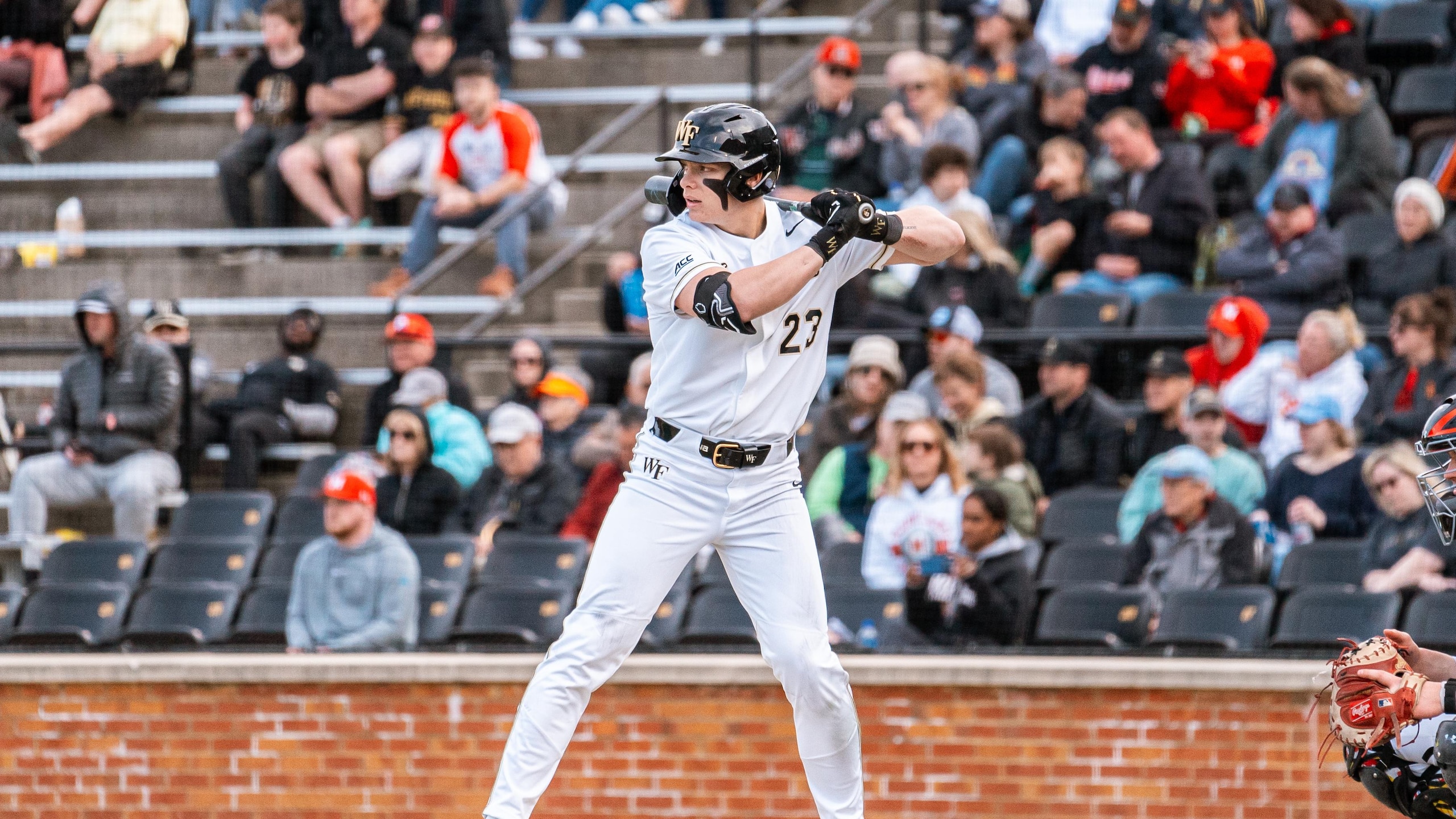
First Round (No. 17 Overall): Ethan Conrad, OF, Wake Forest
MLB Comp: Brandon Nimmo
After a stellar two-year run at Marist University and a strong showing in the Cape Cod League last summer, Conrad entered the transfer portal and landed at Wake Forest. The 6'3", 220-pound outfielder hit .372/.495/.744 with seven home runs and 27 RBI in 21 games before suffering a shoulder injury in March that required season-ending surgery. He played primarily first base at Marist, but proved capable of manning center field this spring which would add to his overall value at the next level.
Grade: B
Conrad might have been the slam dunk top college outfielder in this class if he had stayed healthy this spring, and he should move quickly through the minors, so this fits the type of college player the Cubs have often targeted. Ike Irish was right there, though.
Second Round (No. 56 Overall): Kane Kepley, OF, North Carolina
A 5'8" outfielder with bottom-of-the-scale power, Kepley is a unique prospect, and one with an extremely high floor thanks to his hit tool, speed and sure-fire center field profile defensively. After two seasons at Liberty, he made a smooth transition to ACC competition this spring, hitting .291/.451/.444 with 45 steals, 74 runs scored and twice as many walks (44) as strikeouts (22) in 61 games. He plays within himself and knows how to make the most of his tools.
Third Round (No. 90 Overall): Dominick Reid, RHP, Abilene Christian
Reid transferred to Abilene Christian for his junior season after working just 19.1 innings in two seasons at Oklahoma State and ended up serving as the team's staff ace this spring. With a mid-90s fastball and good changeup, he went 6-3 with a 3.26 ERA, 1.11 WHIP and 112 strikeouts in 88.1 innings.
Chicago White Sox
7 of 30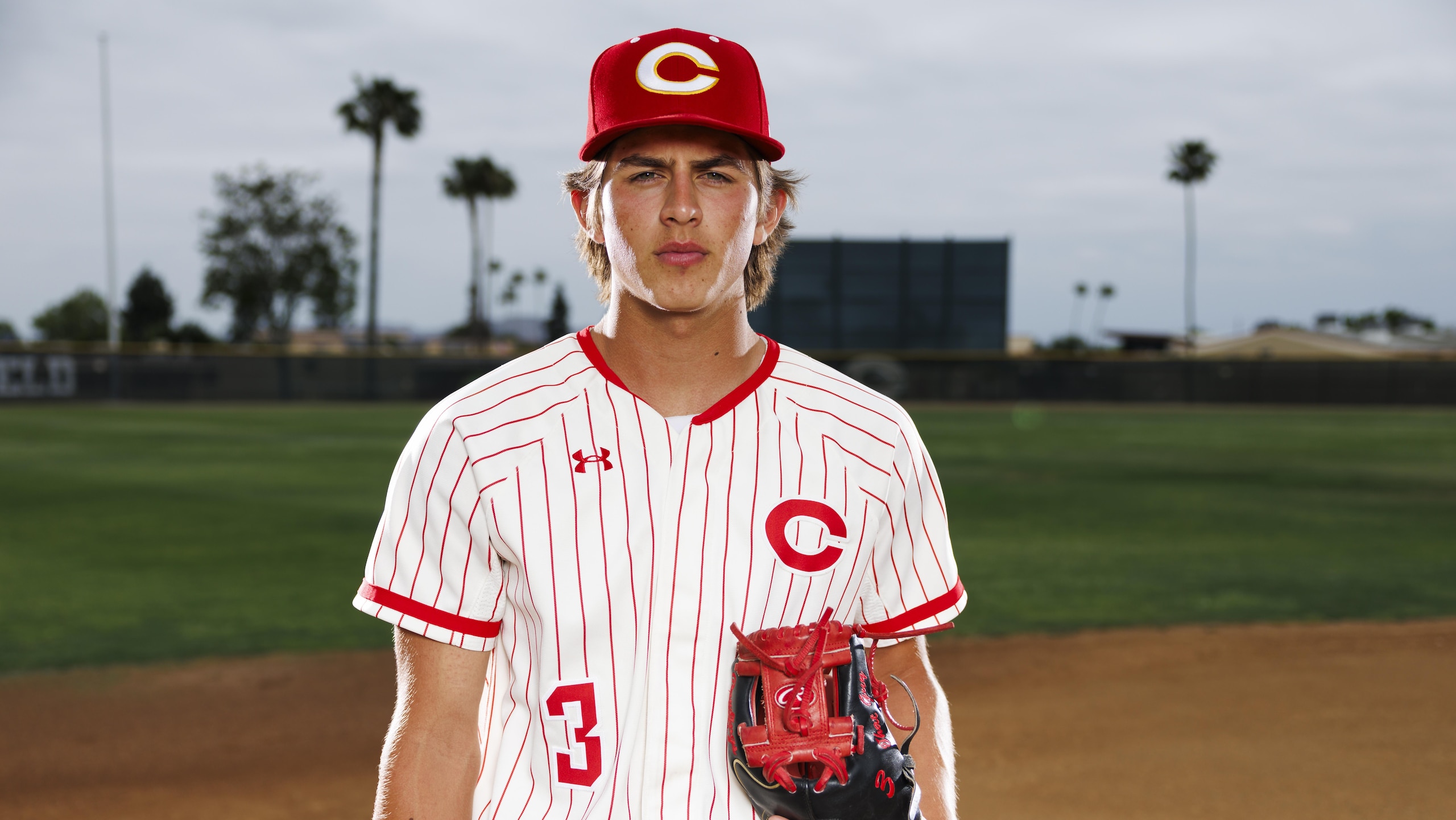
First Round (No. 10 Overall): Billy Carlson, SS, Corona HS (CA)
MLB Comp: Brandon Crawford
Carlson is the best defensive shortstop in the 2025 draft class, and arguably the best defender at any position. He has elite range in both directions, great instincts and a rocket arm that was up to 97 mph on the mound where he was also a legitimate pro prospect. He provides enough value with his elite defense that anything he does at the plate is icing on the cake, and he has a solid line-drive approach with good bat-to-ball skills and the potential for some pop as he matures.
Grade: A
Carlson is going to need a longer runway to develop than some of the other top high school players in this class, and the White Sox have nothing but time right now. If he ends up being even an average hitter, he could be a staple at shortstop for a decade.
Second Round (No. 44 Overall): Jaden Fauske, OF, Nazareth Academy (IL)
Fauske initially profiled as arguably the best catcher in the 2025 high school class, but he played primarily in the outfield last summer and during his senior season, and that seems to be where he prefers to line up defensively. With an advanced hit tool, the makings of 20-homer power and average speed, Fauske has a well-rounded skill set. Although his value would be higher if he returns to catching or proves he can stick in center field. Even if he doesn't, there is enough offensive upside to fit at a corner outfield spot.
Third Round (No. 76 Overall): Kyle Lodise, SS, Georgia Tech
Lodise earned second team All-ACC honors this spring, with the first team shortstop spot going to his cousin Alex, who won ACC Player of the Year honors at Florida State. Kyle does not have the same raw power as his cousin, but he still hit .329/.429/.667 with 20 doubles, 16 home runs and 61 RBI in 55 games this spring as one of the nation's more productive hitters. He plays a capable shortstop, but might end up fitting best as an offensive-minded utility player.
Cincinnati Reds
8 of 30_1.jpg?w=2560 "Steele Hall")
First Round (No. 9 Overall): Steele Hall, SS, Hewitt-Trussville HS (AL)
MLB Comp: CJ Abrams
One of the youngest players in the 2025 draft after reclassifying last November, Hall is a quick-twitch athlete with top-of-the-scale speed and enough feel for hitting to believe he could be a leadoff hitter down the road. His overall offensive game is still raw and he has work to do refining his approach and improving his pitch recognition, but his elite athleticism and solid defensive tools at shortstop make it easier to bank on his offensive game developing.
Grade: B
The thought of Elly De La Cruz and Hall running wild on the bases together is a fun one, and I wonder if they plan on running him out in center field where his elite speed could make him a standout. Loved Ike Irish for them here, but this is a solid pick.
Second Round (No. 51 Overall): Aaron Watson, RHP, Trinity Christian Academy (FL)
Watson offers some of the best pitchability and polish of any high school pitcher in the 2025 class, and while he's closer to a finished product than some prep arms, there is still room to grow into his 6'5", 205-pound frame. His low-90s fastball was up to 95 mph this spring, and Watson backs it with a good slider while also showing feel for a changeup despite using the pitch sparingly. He could be a tough sign away from his commitment to Virginia.
Third Round (No. 83 Overall): Mason Morris, RHP, Ole Miss
Morris was used almost exclusively as a multi-inning reliever at Ole Miss, but his 6'4", 225-pound frame and three-pitch repertoire give him some intriguing starter upside. He logged a 3.29 ERA and 12.8 K/9 in 54.2 innings this spring, and his lethal cutter gives him a high reliever floor.
Cleveland Guardians
9 of 30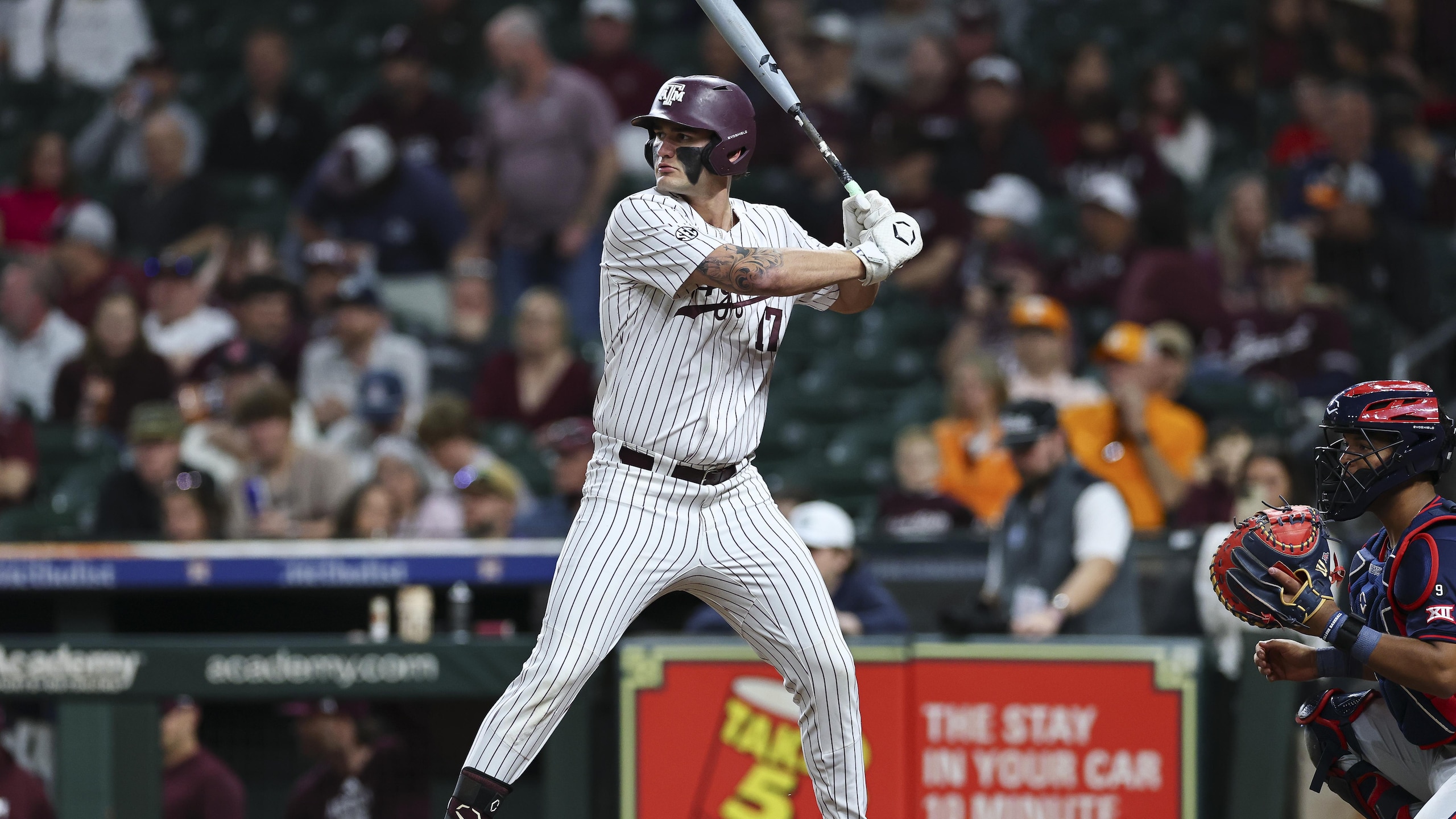
First Round (No. 27 Overall): Jace LaViolette, OF, Texas A&M
MLB Comp: more athletic Adam Dunn
LaViolette was one of the leading candidates to go No. 1 overall at the start of the spring on the heels of a sophomore season where he hit .305/.449/.726 with 29 home runs and 78 RBI in 68 games. Those gaudy numbers helped mask his 81 strikeouts, and the swing-and-miss issues became more pronounced this spring as he hit just .258 with a 25.2 percent strikeout rate. He still logged a .427 on-base percentage and swatted 18 home runs, but he now profiles more as a three outcomes guy with 30-homer upside than a potential offensive superstar.
Grade: B
The Guardians have been searching for answers in the outfield and in the middle of their lineup for years, so this was the perfect team to roll the dice on perhaps the biggest boom-or-bust prospect in this entire draft.
Second Round (No. 64 Overall): Dean Curley, SS, Tennessee
Curley posted an .888 OPS with 12 home runs and 50 RBI as the starting shortstop for Tennessee's national championship team in 2024, and he entered the spring as one of the best draft-eligible sophomores in the country. An up-and-down campaign, especially on the defensive side of things, caused his stock to slip, but he still hit .315/.435/.531 with 14 home runs and 51 RBI in 65 games. He has the leverage to potentially return to campus for his junior season, which will be a factor in bonus negotiations.
Balance Round B (No. 66 Overall): Aaron Walton, OF, Arizona
Walton hit .320/.437/.589 with 22 doubles, 14 home runs, 49 RBI and 19 steals this spring after transferring from Samford. He has a chance for above average power and speed as a center fielder, though there are some questions about his hit tool.
Balance Round B (No. 70 Overall): Will Hynes, RHP, Loren Park HS (Ontario)
A 6'2", 180-pound right-hander with a nice mix of projection and present stuff, Hynes is the top pitching prospect from the Canadian high school ranks in this draft cycle. He has good life on his fastball and can really spin a slider.
Third Round (No. 101 Overall): Nolan Schubart, OF, Oklahoma State
A burly 6'5", 223-pound masher, Schubart has some of the best raw power in the entire draft class, but that is his lone standout tool. He hit .334/.465/.705 with 59 home runs and 199 RBI in 165 games at Oklahoma State, and while he consistently showed the willingness to work a walk, he also carried a 26.8 percent strikeout rate that could be further exposed at the next level. Left-handed power doesn't grow on trees, and it will need to carry Schubart to the big leagues.
Colorado Rockies
10 of 30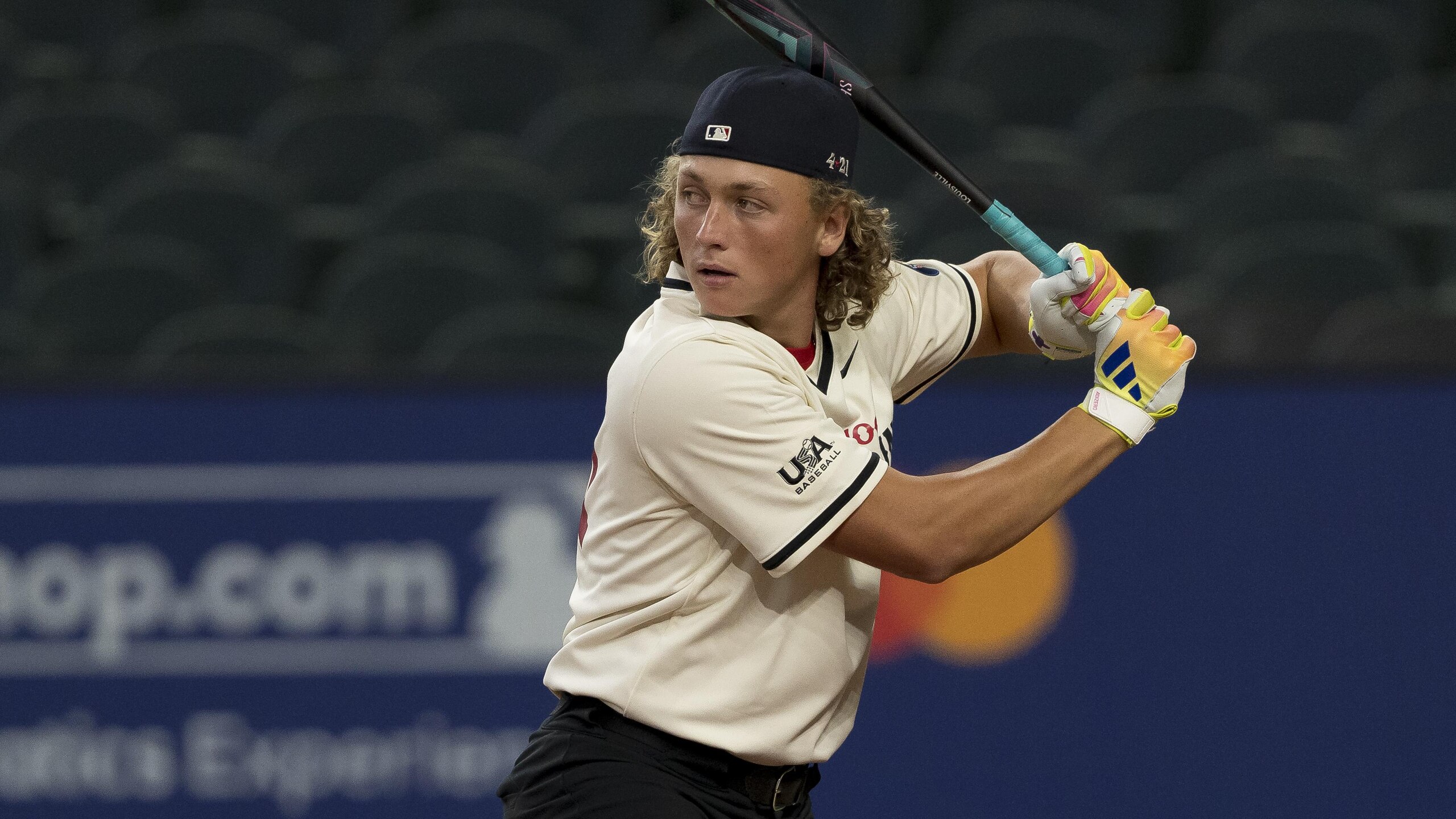
First Round (No. 4 Overall): Ethan Holliday, SS, Stillwater HS (OK)
MLB Comp: Corey Seager
Holliday hit a blistering .617/.737/1.309 with 19 home runs and 51 RBI in 32 games this spring, solidifying his status as the best power-hitting prospect in the 2025 draft class. His strong 6'4", 210-pound frame more closely resembles his All-Star father Matt than it does his contact-oriented brother Jackson, though it also means a shift to third base is in his near future. He showed some swing-and-miss on the showcase circuit last summer, but he has more than enough hit tool to consistently get to his elite power, giving him the potential to be a perennial 30-homer, 100-RBI threat.
Grade: A
This was the absolute best-case scenario for the Rockies, and for all the top pitching prospects still on the board who don't have to start their pro careers in Colorado now.
Second Round (No. 45 Overall): JB Middleton, RHP, Southern Mississippi
There always seems to be at least one high-performing mid-major arm who flies up draft boards each spring, and Middleton has been the guy this year, going 10-1 with a 2.31 ERA, 0.85 WHIP and 122 strikeouts in 105.1 innings on his way to first team All-Sun Belt honors. An undersized 6'0", 178-pound frame is the only real question about his ability to stick as a starter, as he has a polished three-pitch arsenal with a great feel for his fastball and plus athleticism that translates well on the mound.
Balance Round B (No. 74 Overall): Max Belyeu, OF, Texas
Belyeu logged just 21 plate appearances as a true freshman, then took home Big 12 Player of the Year honors as a sophomore when he hit .329/.423/.667 with 18 home runs and 53 RBI in 59 games. He played for Team USA last summer and got off to a strong start this spring before suffering a thumb injury in March that required surgery and cost him a month. With 55-grade power and a strong, accurate throwing arm, he fits the prototypical right fielder mold.
Third Round (No. 77 Overall): Ethan Hedges, 3B, USC
Hedges was a three-year contributor at USC, and after hitting just four home runs in 108 games his first two years on campus, he batted .346/.462/.619 with 14 home runs this spring. He still profiles more as a contact-over-power hitter, but there might be more in the tank than expected. He also logged a 2.40 ERA with nine saves in 15 appearances as the Trojans closer.
Detroit Tigers
11 of 30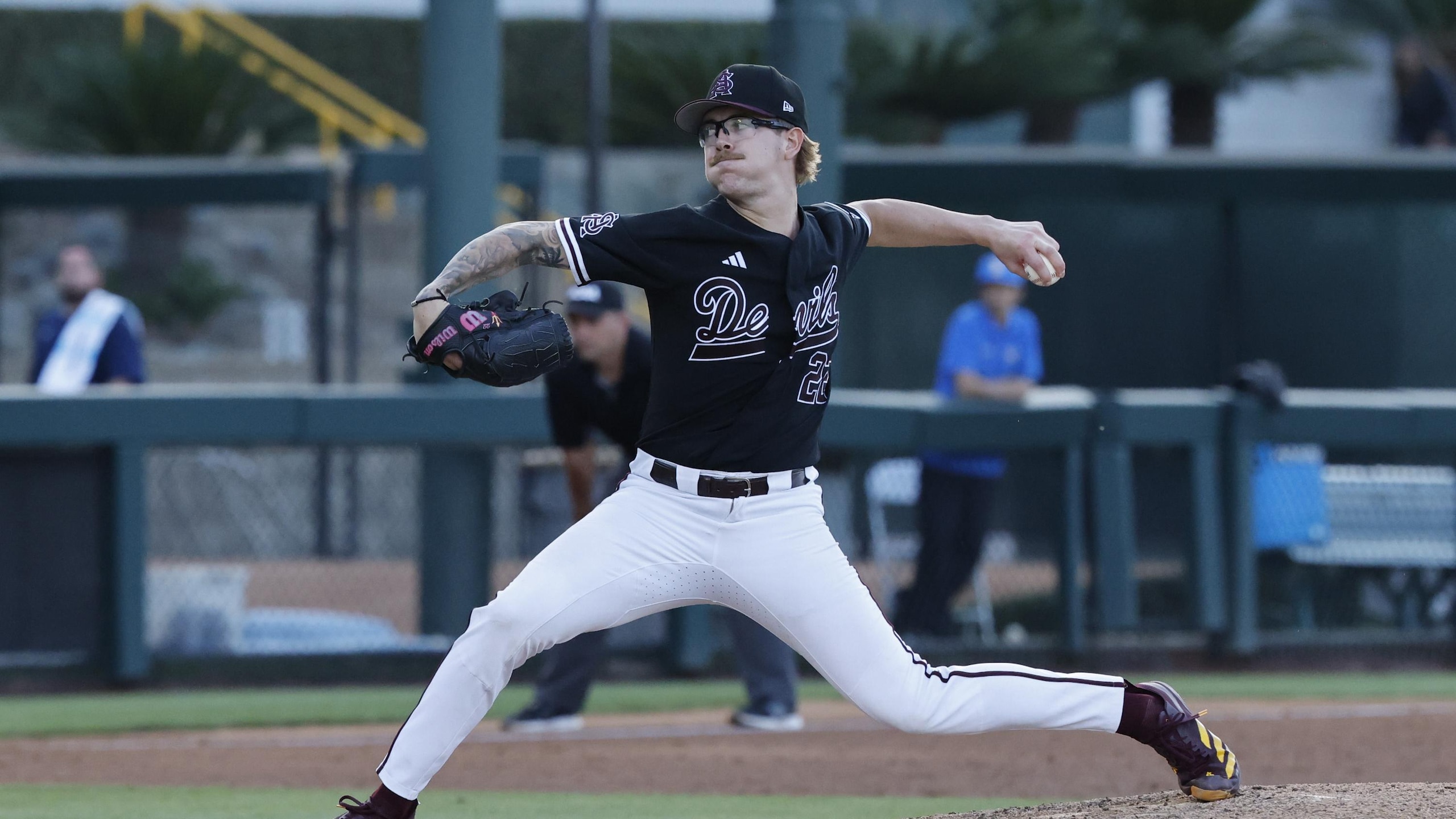
First Round (No. 24 Overall): Jordan Yost, SS, Sickles HS (FL)
MLB Comp: Jed Lowrie
Yost was one of the biggest pop-up prospects this spring, showcasing more strength and athleticism during his senior year, though his ability to hit for power is still a question. What is not a question is his hit tool, especially his contact skills, as he consistently puts the bat on the ball and has a good understanding of the strike zone. He has a strong commitment to Florida, where he would be playing alongside his brother Hayden, but his breakout spring has undoubtedly changed his short-term outlook.
Grade: C
Yost had some serious helium leading up to the draft after a strong showing at the combine, but this is still a reach. He almost certainly would have still been available at No. 34 overall, so it will be interesting to see what they do next.
Balance Round A (No. 34 Overall): Michael Oliveto, C, Hauppauge HS (NY)
A Yale commit who had zero D-I offers at this time a year ago, Oliveto turned heads at the WWBA World Championship last October to burst onto the prospect scene. After a strong spring, an equally impressive showing at the draft combine gave him some serious late helium. He has limited exposure to high-level competition, playing in a cold-weather state and rarely appearing on the showcase circuit, but he has serious raw power and some very real mystery box appeal.
Grade: B
The predraft ranking doesn't tell the story here, with Oliveto flying up draft boards the last few weeks on the strength of his power tool. I like his pop, but leaving Luke Stevenson on the board in this spot is a head scratcher.
Second Round (No. 62 Overall): Malachi Witherspoon, RHP, Oklahoma
Out of high school, Malachi was the better prospect of the Witherspoon twins, and the D-backs tried to sign him to an above-slot deal as a 12th-round pick. Three years later, he remains a plus athlete with starter potential, and he racked up 91 strikeouts in 74.1 innings this spring.
Third Round (No. 98 Overall): Ben Jacobs, LHP, Arizona State
The Friday night starter for Arizona State this spring, Jacobs missed plenty of bats with 120 strikeouts in 83.2 innings, though he lacks a true out pitch to lean on at the next level. That said, he's a lefty with three playable pitches and the potential to stick as a back-end starter, so there's potential value.
Houston Astros
12 of 30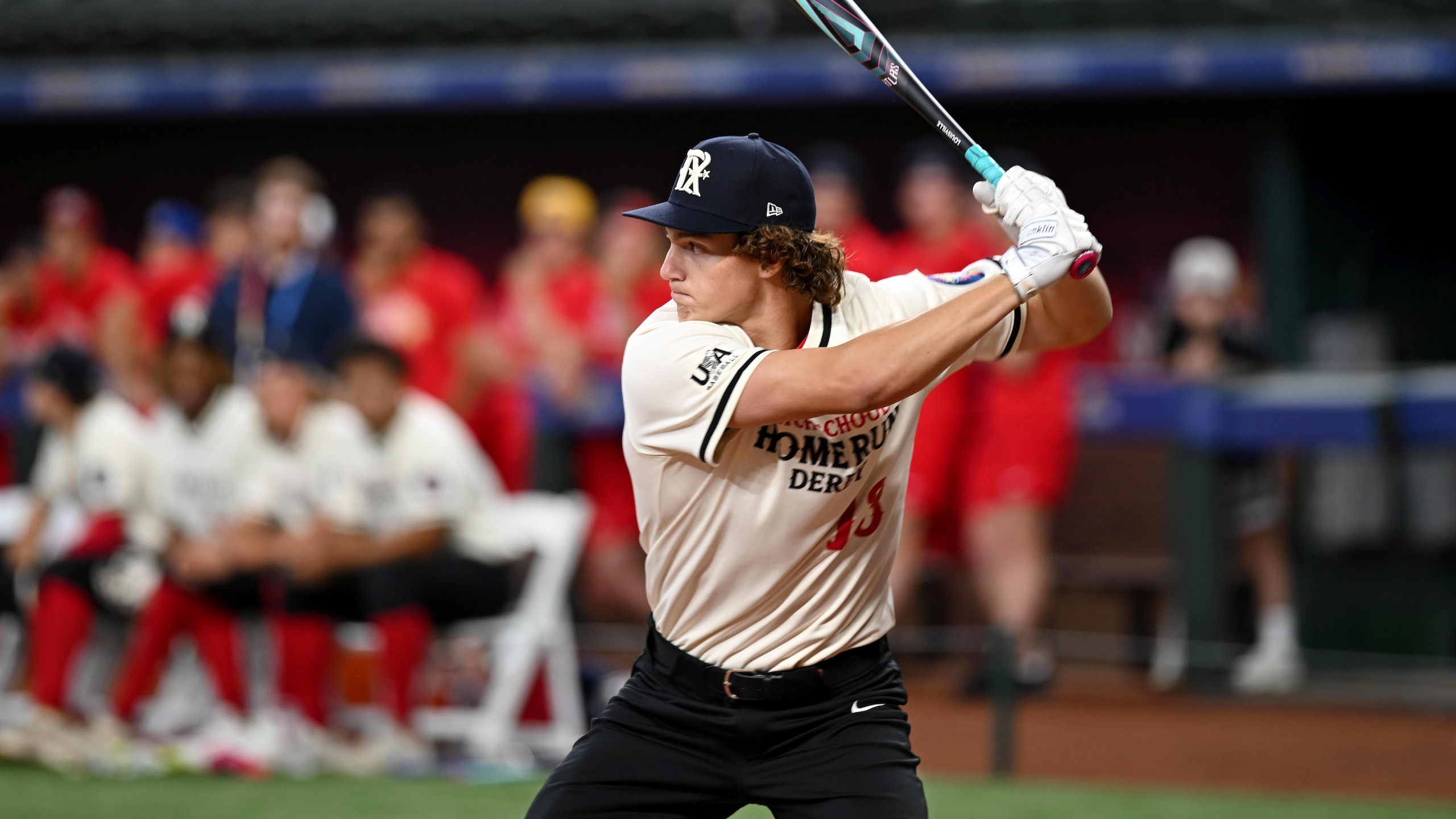
First Round (No. 21 Overall): Xavier Neyens, SS, Mount Vernon HS (WA)
MLB Comp: Isaac Paredes
A star on the showcase circuit and widely viewed as the best power bat in this year's prep class entering the spring, Neyens had an inconsistent senior season that raised questions about his hit tool. There could be some prospect fatigue at play given how long he has been on the draft radar, and his 65-grade power still gives him one of the highest offensive ceilings in the class if everything clicks. He has been up to 95 mph on the mound, and that strong arm will play well at the hot corner.
Grade: A
Neyens could have easily been a top-10 pick with a more consistent spring, so the potential upside at No. 21 overall is significant. The Astros love loud raw power, and they get one of the better power bats in the 2025 prep class.
Third Round (No. 95 Overall): Ethan Frey, OF, LSU
An imposing 6'6", 225-pound slugger with a 50-hit, 55-power, 55-speed offensive profile, Frey tallied just 88 plate appearances his first two years on campus before exploding onto the scene this spring with a .331/.420/.641 line and 13 home runs for the national champions. His lack of track record and a 22.2 percent strikeout rate give some reason for pause, but his tools are loud.
Kansas City Royals
13 of 30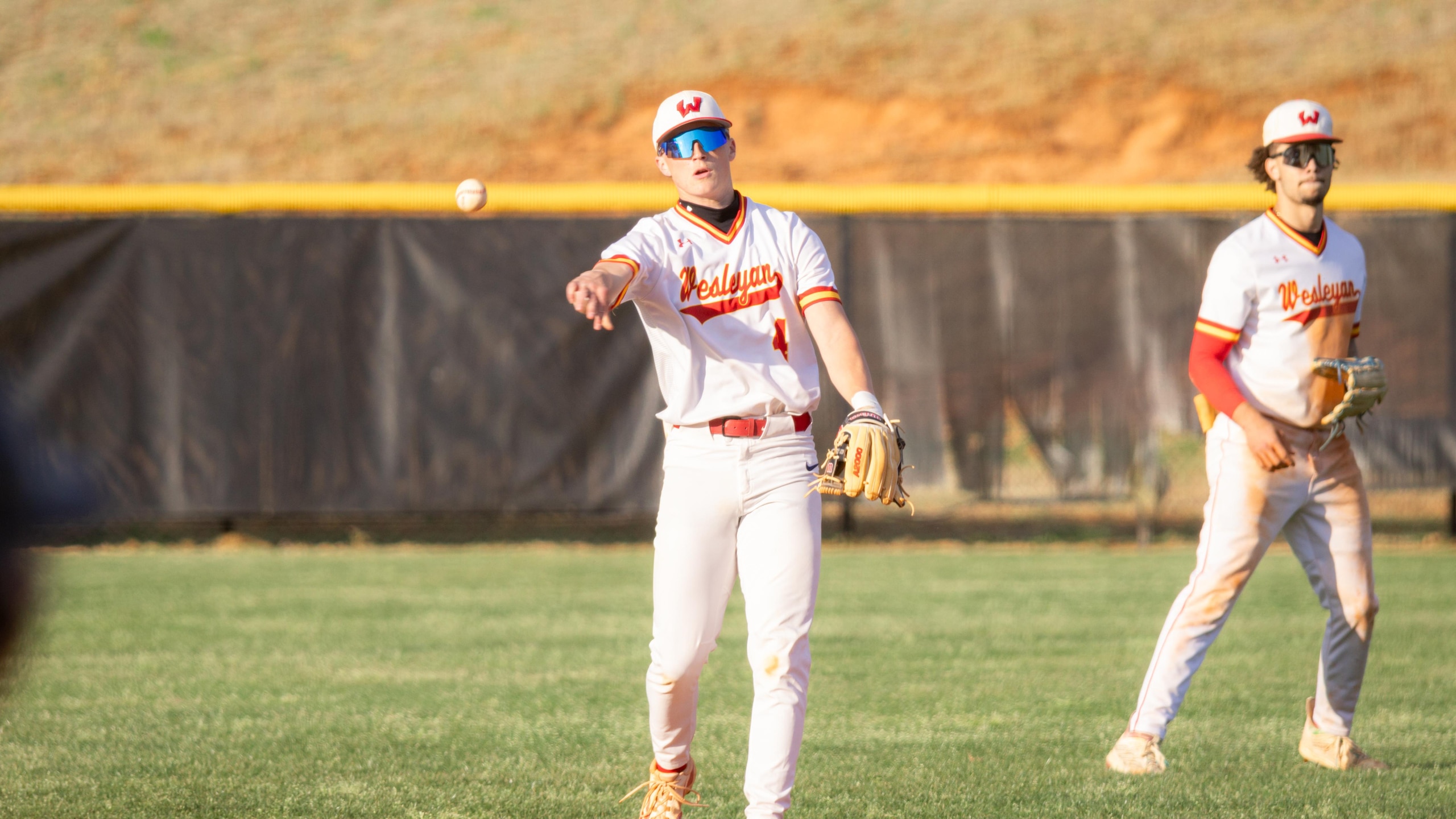
First Round (No. 23 Overall): Sean Gamble, OF, IMG Academy (FL)
MLB Comp: Bryson Stott
A strong performer on the summer showcase circuit, Gamble has steadily improved during his four seasons at IMG Academy to develop into one of the better all-around prospects in the 2025 high school class. His smooth left-handed swing and high barrel rate give him a plus hit tool, and he has started to flash more power as his 6'1", 188-pound frame has filled out. He played a lot of center field last summer, and that could be his best long-term home, but he could also get a shot at both middle infield spots.
Grade: B
I love the Royals swinging for the fences on offensive upside, and that's why Jace LaViolette was such an intriguing fit here, but Gamble his the potential to develop into one of the better all-around bats in this class.
Prospect Incentive Pick (No. 28 Overall): Josh Hammond, 3B, Wesleyan Christian Academy (NC)
One of the better two-way prospects in this year's prep class, Hammond focused mainly on pitching last summer, but he prefers to hit and has solidified his status as a position player with a strong senior season while leading Wesleyan Christian Academy to a 4A state title. His power to all fields and strong throwing arm make him a clean fit at third base. While he is still growing into his in-game power, his quality hit tool should help him maximize his pop.
Grade: A
Hammond was getting some buzz in the mid-teens and has one of the highest offensive ceilings in the prep class. The Royals need to make building an offensive core around Bobby Witt Jr. a priority, and they got another potential impact bat.
Second Round (No. 61 Overall): Michael Lombardi, RHP, Tulane
Lombardi was used as a reliever and center fielder this spring at Tulane, but he has the stuff to start with three quality pitches and an athletic 6'3" frame. He got a chance at an extended outing in the AAC tournament and allowed two hits and one run while striking out 11 over seven strong innings.
Balance Round B (No. 71 Overall): Justin Lamkin, LHP, Texas A&M
One of the top prep lefties in the 2022 draft class, Lamkin had a firm commitment to Texas A&M and contributed immediately as a freshman. His stuff took a step forward this spring and he turned in his best season, posting a 3.42 ERA, 1.10 WHIP and 98 strikeouts in 84.1 innings.
Third Round (No. 97 Overall): Cameron Millar, RHP, Alhambra HS (CA)
One of the bigger pop-up pitching prospects from the California high school ranks this spring, Millar went from throwing in the 92 mph range on the showcase circuit last summer to touching 97 mph during his senior year. He has the makings of a quality slider and changeup, though his command and mechanics need significant refinement, making him an intriguing developmental project.
Los Angeles Angels
14 of 30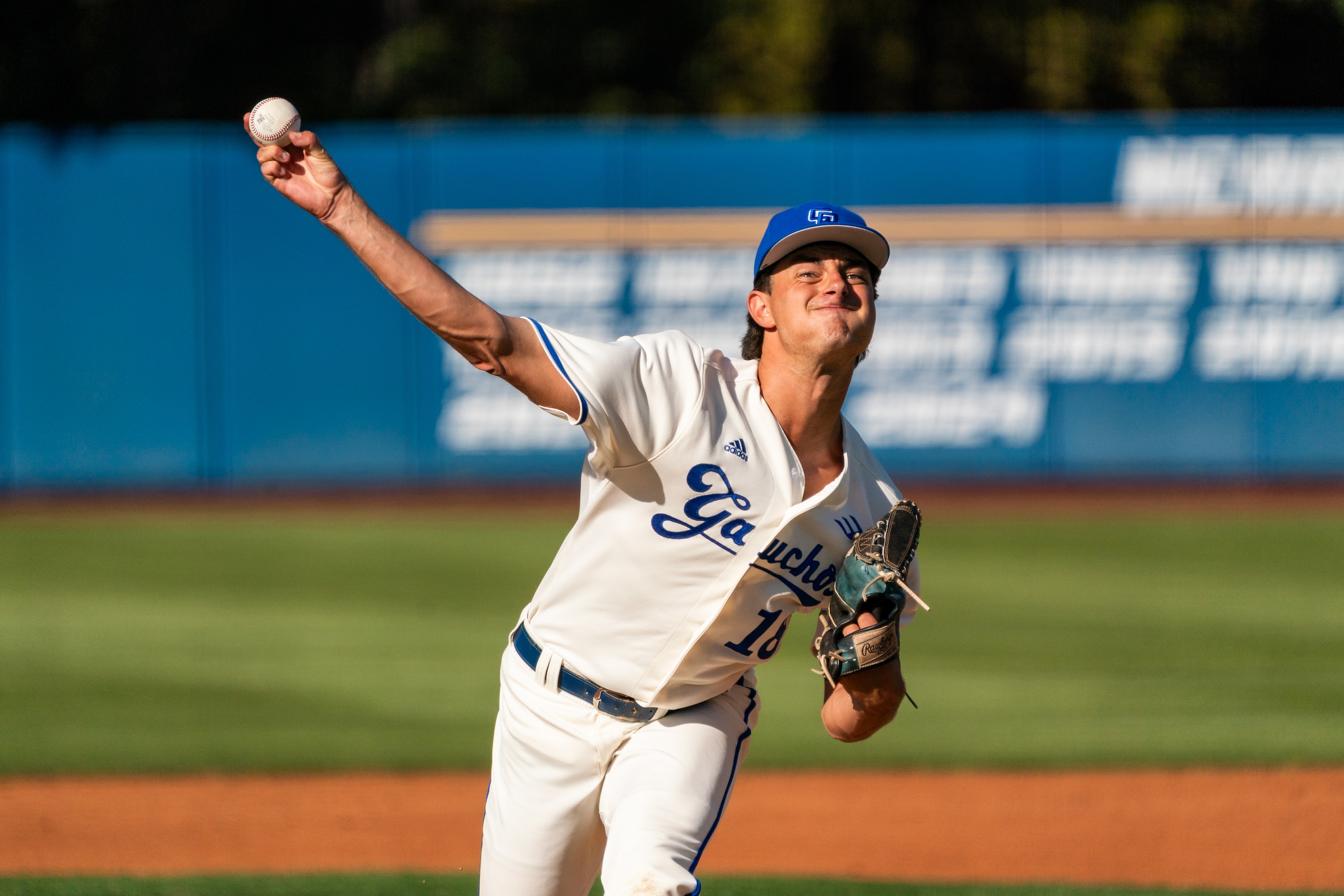
First Round (No. 2 Overall): Tyler Bremner, RHP, UC Santa Barbara
MLB Comp: Michael Wacha
Bremner entered the spring frequently mentioned alongside Jamie Arnold as the top college pitchers in the class after going 11-1 with a 2.54 ERA and 104 strikeouts in 88.2 innings as a sophomore. A slow start caused his stock to slip a bit, but he finished strong with double-digit strikeouts in six of his final seven starts en route to a 3.49 ERA and 111 punchouts in 77.1 innings. The development of his slider as a reliable third offering alongside his mid-90s fastball and elite changeup will be key.
Grade: C
Even with his strong finish, and even if the Angels are prioritizing proximity to the majors, it's tough to make a case for Bremner over Kade Anderson. Wonder if we'll see him in the majors later this year.
Second Round (No. 47 Overall): Chase Shores, RHP, LSU
Shores ranked No. 90 on Baseball America's prospect list for the 2022 draft, but high bonus demands led to him going undrafted. He pitched well in limited action as a freshman at LSU, but missed his sophomore season recovering from Tommy John surgery. The 6'8", 245-pound righty battled inconsistent command in his return this spring, but still punched out 70 hitters in 63.2 innings. He still has premium stuff, including a 101 mph fastball, but there is a wide range of potential outcomes for his future.
Third Round (No. 79 Overall): Johnny Slawinski, LHP, Johnson City HS (TX)
Slawinski has a good mix of projectability and polish, with an athletic 6'3", 180-pound frame and the makings of three plus pitches. He has touched 95 mph with his fastball and generally sits in the low 90s, backing it with a potential plus slider and a changeup that has significant fade. Improved velocity this spring helped raise his stock, and there should be more in the tank once he starts his pro career and adds strength to his frame.
Compensation Pick (No. 105 Overall): Nate Snead, RHP, Tennessee
Snead has been a workhorse out of the Tennessee bullpen the last two seasons, making 52 appearances and tallying 14 wins and 11 saves in 125 innings of work. He has a five-pitch arsenal and a durable 6'2", 212-pound frame, so he could get a chance to work as a starter in pro ball.
Los Angeles Dodgers
15 of 30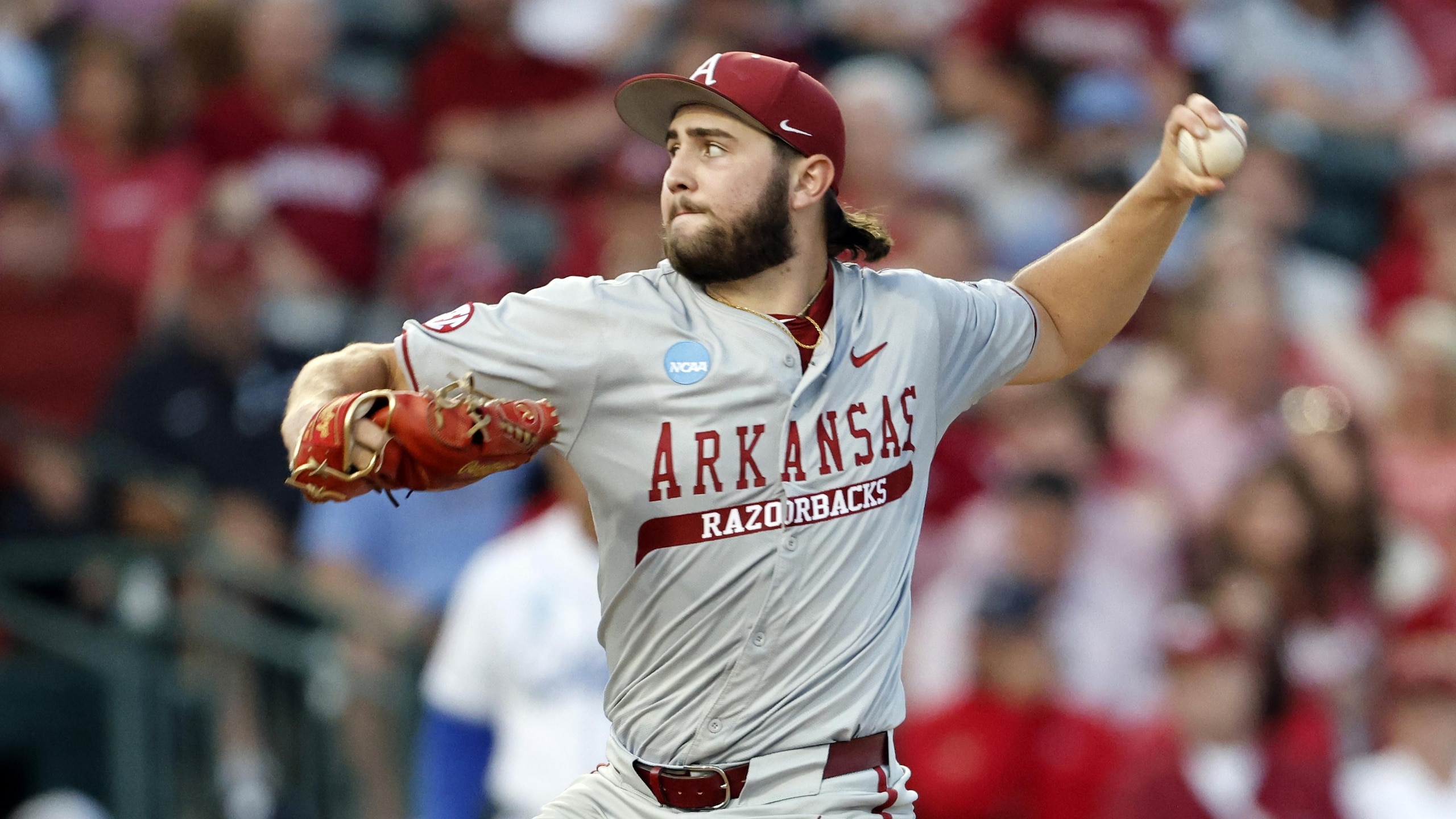
Balance Round A (No. 40 Overall): Zach Root, LHP, Arkansas
Tasked with replacing 2024 first-round pick Hagen Smith as Arkansas' Friday starter after transferring from East Carolina, Root went 9-6 with a 3.62 ERA, 1.18 WHIP and 126 strikeouts in 99.1 innings while helping lead the Razorbacks to the CWS semifinals. The 6'2", 210-pound southpaw has four quality pitches, with the best of the bunch being his changeup, though he also led all D-I pitchers by tallying 51 strikeouts with his curveball. He stands out more for his pitchability than his stuff and is a safe bet to stick as a starter.
Grade: B
A bit of a surprise that the Dodgers did not prioritize upside over floor here, but that could be coming with their next pick, and Root could be as good as any of the top college arms if everything clicks.
Balance Round A (No. 41 Overall): Charles Davalan, OF, Arkansas
Following a strong freshman season at Florida Gulf Coast, Davalan transferred to Arkansas and ended up being one of the best hitters in the SEC this season while setting the table as the Razorbacks leadoff hitter. He hit .346/.433/.561 with 12 doubles, 14 home runs, 60 RBI and 10 steals while tallying more walks (35) than strikeouts (27), showcasing an advanced approach and more power than his 5'9" frame might suggest. He played some second base at FGCU, and could end up there or in left field as a pro.
Grade: B
Busy scouting cycle for the Dodgers area scout tasked with covering Arkansas this year. Another high floor pick, and one that might save them a few bucks for an above-slot play down the line.
Second Round (No. 65 Overall): Cam Leiter, RHP, Florida State
Leiter showed a big fastball and hard-biting slider while also struggling with his command as a sophomore at Florida State, but his season was cut short by a shoulder injury that ended up requiring surgery and costing him his entire junior campaign. He's a lottery ticket, but one with electric raw stuff.
Third Round (No. 104 Overall): Landyn Vidourek, OF, Cincinnati
Vidourek posted huge exit velocity numbers this spring while hitting .304/.434/.576 with 14 home runs and 39 steals. He also struck out 65 times in 52 games and there are some concerns about his hit tool and lack of experience swinging wood bats, but he stands out as one of the better value power targets in this draft class.
Miami Marlins
16 of 30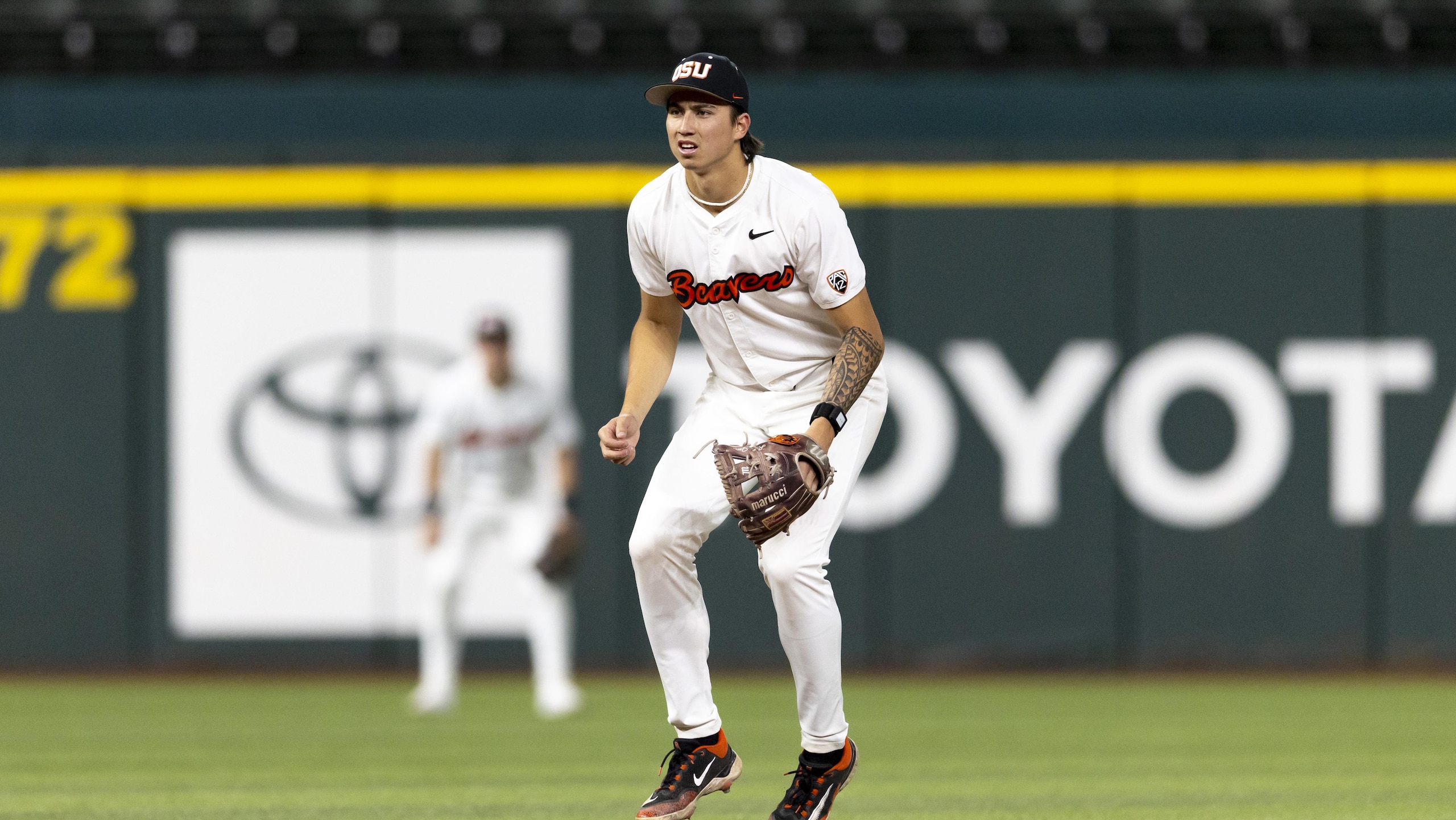
First Round (No. 7 Overall): Aiva Arquette, SS, Oregon State
MLB Comp: Troy Tulowitzki
Arquette hit .325/.384/.574 with 12 home runs as a sophomore, then turned in a strong showing in the Cape Cod League before transferring from Washington to Oregon State. Tasked with replacing last year's No. 1 overall pick Travis Bazzana in the Beavers lineup, he hit .354/.461/.654 with 19 home runs and 66 RBI in 65 games as one of college baseball's most consistent hitters. Despite his 6'5" frame, he has a real chance to stick at shortstop, with enough offensive upside to handle a shift to third base.
Grade: A
The Marlins need bats in the worst way, and after being tied to prep shortstops throughout the predraft process, they get a more MLB-ready bat who can help them in the not-too-distant future. Best-case scenario pick here.
Balance Round A (No. 43 Overall): Cam Cannarella, OF, Clemson
Cannarella hit .360/.453/.551 in 865 plate appearances over three seasons at Clemson. He never matched the numbers he posted during a fantastic freshman season and missed time as a sophomore with a torn labrum, but he still has a 55-hit, 60-speed offensive profile and the potential to be a standout defender in center field. He will likely never develop more than average power and his throwing arm is below average, but his three carrying tools are enough to make him an everyday player.
Grade: A
Cannarella was penciled in at No. 27 in my final mock draft, and the Marlins walk away with two of the more polished bats from this year's college class to start their draft. Exactly what they needed.
Second Round (No. 46 Overall): Brandon Compton, OF, Arizona State
Compton redshirted his freshman season, then hit .354/.427/.661 with 14 home runs and 51 RBI last spring before authoring an equally impressive showing in the Cape Cod League with a .903 OPS and six long balls in 38 games. That generated some early first-round buzz heading into the spring, but he took a step backward and hit .271/.379/.486 with nine home runs and 55 strikeouts in 59 games. With limited value outside of what he does at the plate, he will need to deliver on his 50-hit, 55-power upside.
Third Round (No. 78 Overall): Max Williams, OF, Florida State
Williams played sparingly as a freshman at Alabama, then transferred and put together a terrific two-year run at Florida State. He has a power-over-contact profile, slugging 33 home runs in 121 games for the Seminoles while also logging a 96-to-38 strikeout-to-walk ratio.
Milwaukee Brewers
17 of 30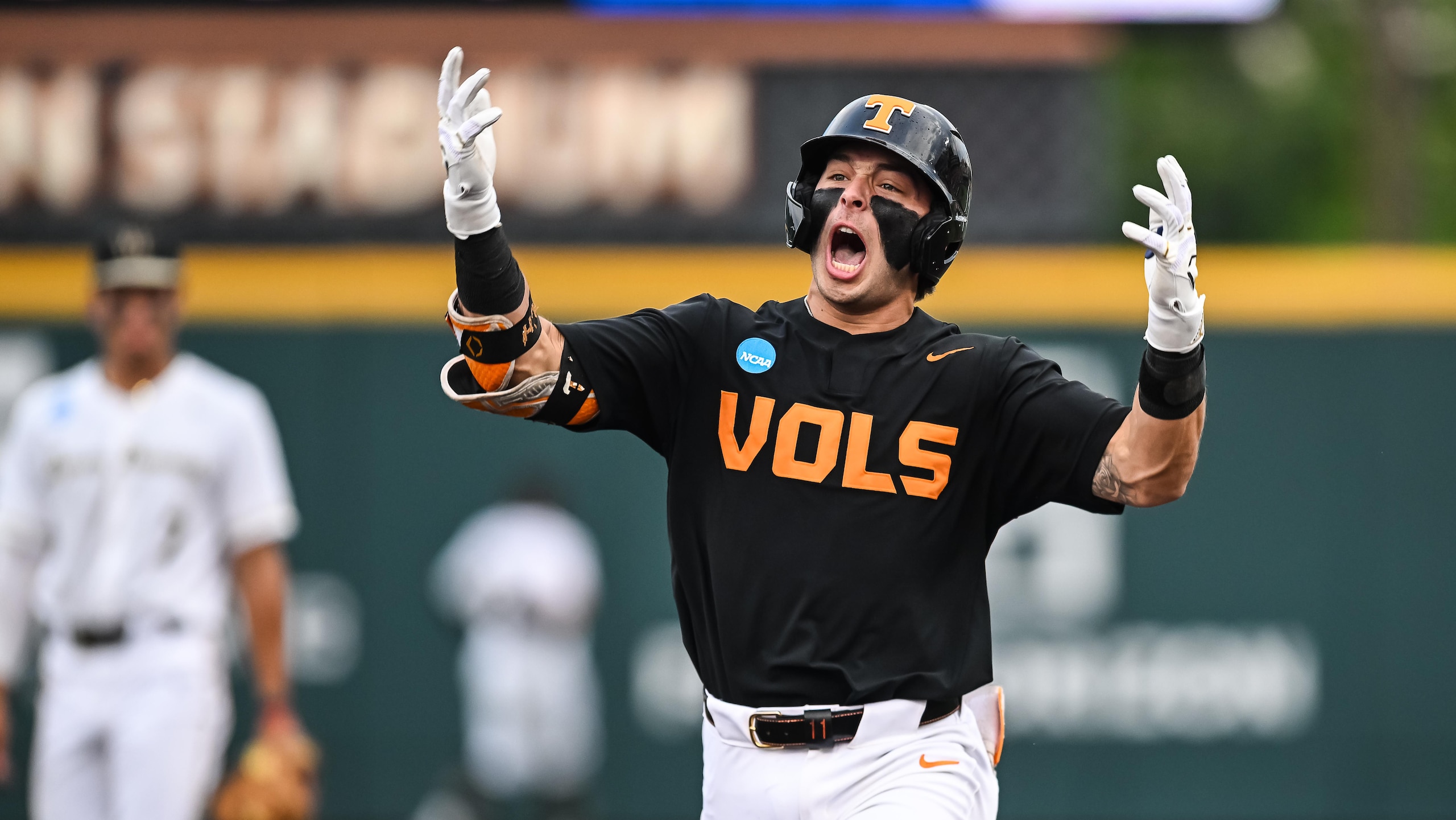
First Round (No. 20 Overall): Andrew Fischer, 3B, Tennessee
MLB Comp: Adrián González
After stops at Duke (.999 OPS, 11 HR, 33 RBI) and Ole Miss (1.039 OPS, 20 HR, 57 RBI) to begin his college career, Fischer turned in his best season to date hitting in the middle of the Volunteers lineup. The 6'1", 205-pound slugger batted .341/.497/.760 with 16 doubles, 25 home runs and 65 RBI in 65 games, and with far more walks (63) than strikeouts (42), his overall polish should help him move quickly through the minors. He saw time at third base this spring, but his future is across the diamond at first base.
Grade: B
His value spikes if he can stick at third base, and the Brewers have made trying to find a long-term answer at the hot corner an annual tradition. I'm not sold on that happening, though, which puts a lot of pressure on his bat.
Compensation Pick (No. 32 Overall): Brady Ebel, SS, Corona HS (CA)
Ebel shared the left side of the infield at Corona High School with fellow top draft prospect Billy Carlson, and while he does not have any one standout tool, he does everything well and is one of the more polished bats in this year's prep class. He has a smooth left-handed swing and an advanced approach in the batter's box, and there could be more power to come as he grows into his 6'3", 195-pound frame and finds more loft in his swing. He has a strong track record against high-level pitching.
Grade: A
Another potential future third baseman for the Brewers, and one with a chance to be among the more productive prep bats in this class. Nice pick to pair with the Fischer selection.
Second Round (No. 59 Overall): J.D. Thompson, LHP, Vanderbilt
An undersized 6'0", 199-pound lefty, Thompson served as the Friday starter at Vanderbilt this spring, finishing with a 4.00 ERA, 1.21 WHIP and a 122-to-30 strikeout-to-walk ratio over 90 innings. His fastball is not overpowering, but it has good carry and gets a ton of swings and misses and chases out of the zone. He stands out more for his pitchability than his pure stuff, throwing all four of his pitches for strikes, and he has a high floor as a future back-end starter.
Balance Round B (No. 68 Overall): Frank Cairone, LHP, Delsea Regional HS (NJ)
Cairone is a 6'3", 215-pound southpaw with a fastball that touches 94 mph and a great feel for spinning a breaking ball. He will need to find a viable third offering and refine his overall command, but his two present standout pitches from the left side give him a high floor.
Third Round (No. 94 Overall): Jacob Morrison, RHP, Coastal Carolina
Morrison helped pitch Coastal Carolina to the College World Series final this spring while winning Sun Belt Pitcher of the Year honors. The towering 6'8" right-hander missed all of 2024 recovering from Tommy John surgery, but returned to finish 12-1 with a 2.42 ERA, 0.95 WHIP and 104 strikeouts in 107.2 innings this spring. He turned 22 years old in September and is more floor than ceiling, but the results are tough to ignore.
Minnesota Twins
18 of 30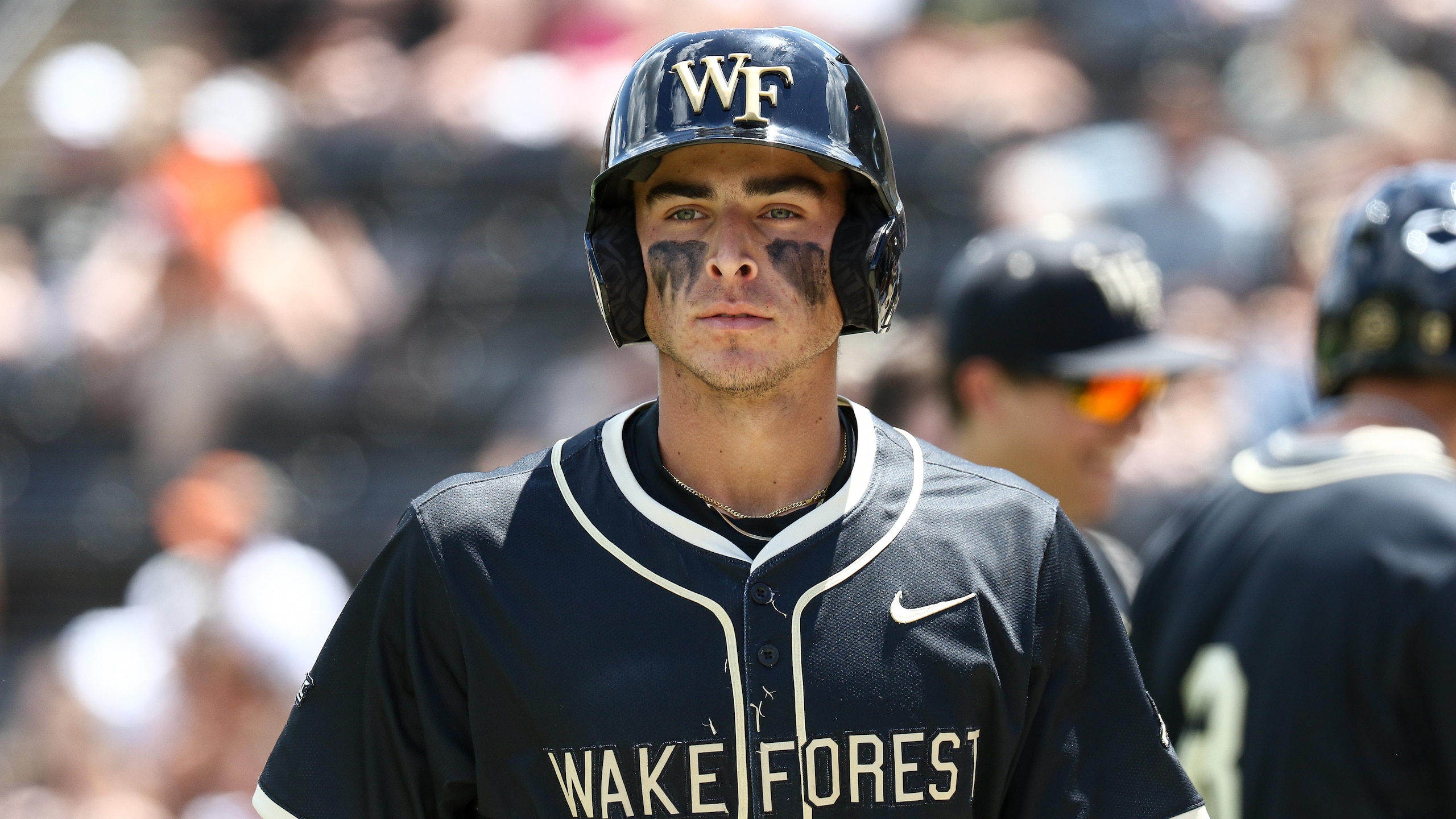
First Round (No. 16 Overall): Marek Houston, SS, Wake Forest
MLB Comp: Jeremy Peña
Houston was a surprise winner of the shortstop job as a freshman thanks to his stellar defensive work, hitting just .220/.328/.307 with four home runs in 260 plate appearances. Two years later, he was one of the most productive hitters in college baseball, posting a .354/.458/.597 line with 15 home runs, 66 RBI and 19 steals in 61 games. It remains to be seen how much of that power production will translate to the next level, but his solid hit tool and standout defense give him an extremely high floor.
Grade: A
A no-doubt shortstop with an offensive game on the rise would be a top-10 pick some years, and given the high likelihood that Carlos Correa will eventually shift to third base, he fits a potential long-term need.
Balance Round A (No. 36 Overall): Riley Quick, RHP, Alabama
A 4-star offensive lineman coming out of high school, Quick chose to play baseball at Alabama, where he pitched out of the bullpen as a freshman and then blew out his arm in his first start as a sophomore. The 6'6", 255-pound righty made a successful return from Tommy John surgery this spring, going 8-3 with a 3.92 ERA and 70 strikeouts in 62 innings while showcasing a three-pitch power arsenal. With just 87 innings pitched during his time on campus, he has more untapped upside than most college arms.
Grade: B
This is upside over floor for the Twins given how little time Quick spent on the mound at Alabama, but the potential is there for him to be a workhorse starter.
Second Round (No. 54 Overall): Quentin Young, OF, Oaks Christian HS (CA)
Young is the nephew of former big leaguers Delmon Young and Dmitri Young, and he is one of the best power-hitting prospects in the 2025 draft class with 60-grade pop and a strong, athletic 6'6", 225-pound frame. He played shortstop in high school, but will likely settle in at third base or in right field where his offensive profile and strong throwing arm will be a clean fit. There are swing-and-miss and pitch recognition concerns, but his offensive ceiling is significant and he could be one of the steals of the draft in the second round.
Third Round (No. 88 Overall): James Ellwanger, RHP, Dallas Baptist
Ellwanger was one of the breakout prospects of the 2024 Cape Cod League, posting a 2.77 ERA, 1.15 WHIP and a 22-to-5 strikeout-to-walk ratio in 13 innings of work, but he did not take the major step forward some were expecting this spring. While his 3.98 ERA and 95 strikeouts in 63.1 innings speak to the quality of his stuff, he was plagued by command issues with a 13.5 percent walk rate and 1.53 WHIP. His fastball has the makings of an elite pitch, but his secondary stuff and control still need significant refinement.
New York Mets
19 of 30
Balance Round A (No. 38 Overall): Mitch Voit, TWP, Michigan
MLB Comp: Jake Cronenworth
Voit was a productive two-way player his first two seasons at Michigan, but he focused exclusively on hitting this spring after suffering an elbow injury. He hit .346/.471/.668 with 17 doubles, 14 home runs and 60 RBI while slashing his strikeout rate from 22.7 to 13.0 percent.
Grade: C
The Mets found a top prospect in two-way player Nolan McLean, so it's interesting to see them go to that well once again. This was a big reach, but he probably would not have made it to No. 102, so if this was their guy they had to pounce.
Third Round (No. 102 Overall): Antonio Jimenez, SS, UCF
After hitting .182 in 122 plate appearances as a freshman at Miami and scuffling in the Cape Cod League, Jimenez landed at UCF in the transfer portal and enjoyed a breakout season as a draft-eligible sophomore. He hit .329/.407/.575 with 14 doubles, 11 home runs, 51 RBI and 11 steals, and he has legitimate power potential with a chance to stick at a middle infield spot.
New York Yankees
20 of 30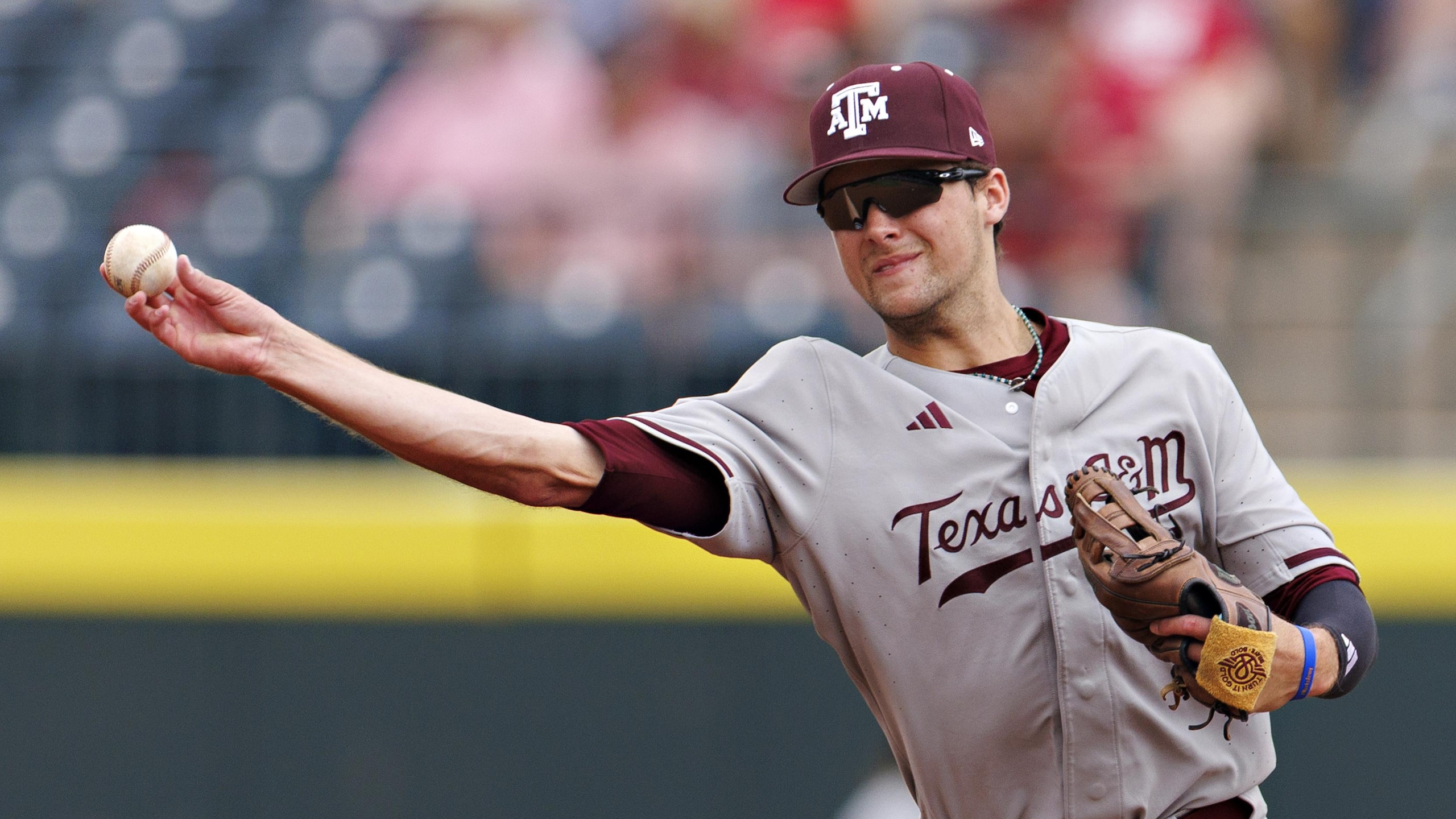
Balance Round A (No. 39 Overall): Dax Kilby, SS, Newnan HS (GA)
Kilby belongs in the top-tier prep shortstop conversation from an offensive standpoint, with a 55-hit, 50-power profile and a strong track record on the showcase circuit thanks to a smooth, compact left-handed stroke. The question is defensive fit, with an awkward arm slot and middling arm strength making shortstop an unlikely long-term home. He could be a tough sign away from his Clemson commitment, since answering those questions on campus would boost his stock significantly.
Grade: B
Kilby would have landed closer to the top tier of the prep shortstop class with a better defensive outlook, the bat is that good. Nice upside swing for the Yankees on their first pick.
Third Round (No. 103 Overall): Kaeden Kent, SS, Texas A&M
Kent served in something of a super-utility role his first two seasons at Texas A&M before taking over as the team's starting shortstop this spring. He hit .279/.398/.544 with 13 doubles, 13 home runs and 49 RBI while logging more walks (37) than strikeouts (35), and between his versatility and MLB bloodlines he offers a high floor. He is the son of former NL MVP Jeff Kent.
Philadelphia Phillies
21 of 30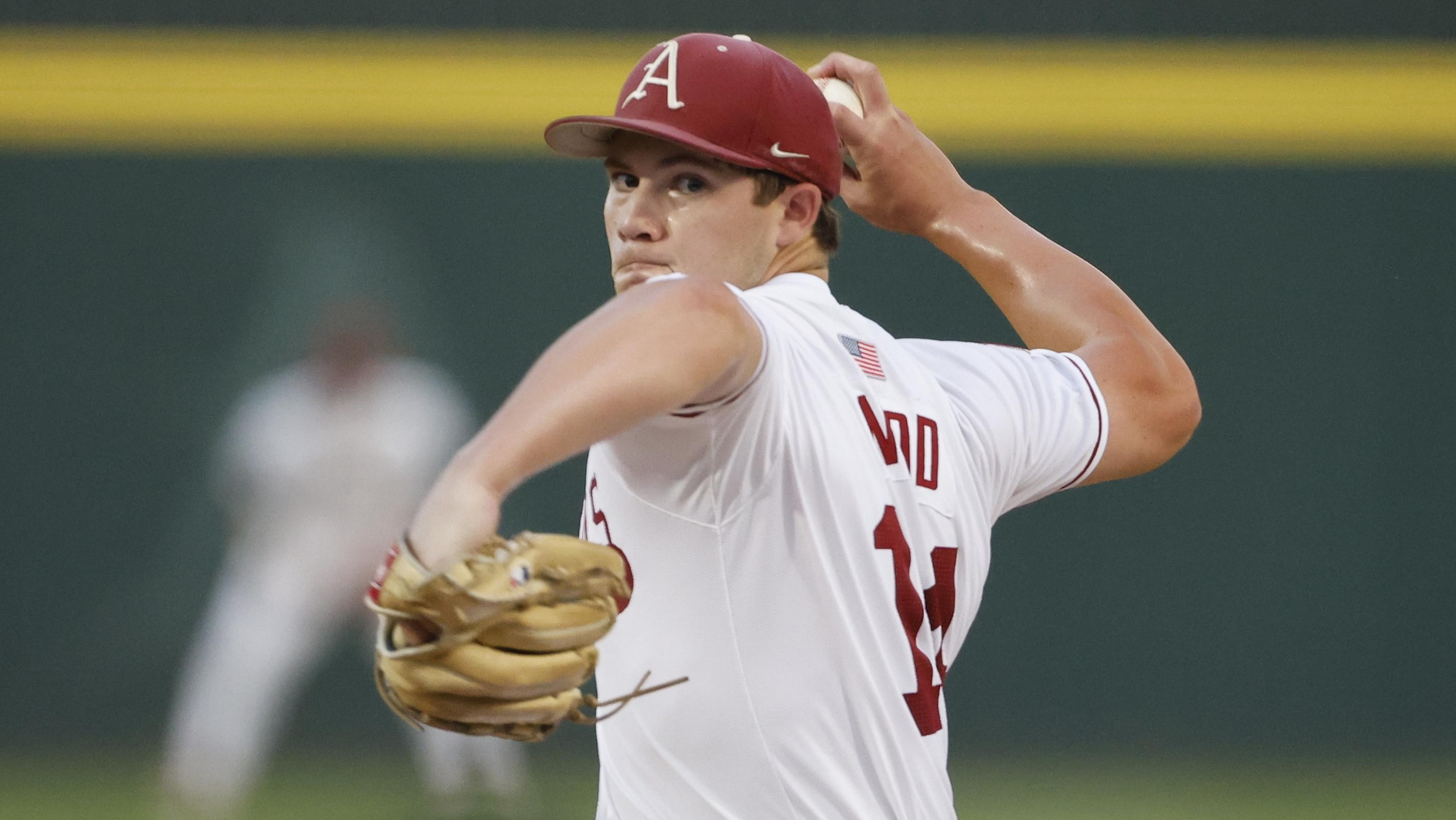
First Round (No. 26 Overall): Gage Wood, RHP, Arkansas
MLB Comp: Cade Horton
Wood turned in one of the best pitching performances in CWS history with a 19-strikeout no-hitter against Murray State, but it's worth mentioning that he had a 5.02 ERA in 28.2 innings heading into that start. The 6'0", 205-pound righty pitched almost exclusively in relief his first two seasons, and he missed two months this spring with a shoulder issue, so he still needs to prove he can handle a starter's workload. He also needs to further refine his secondary stuff, but his electric fastball stacks up to any in the 2025 class.
Grade: A
Can he help out in the MLB bullpen later this year? He was just getting fully stretched out by the end of the season and does not have the same workload on his arm as some of the other top college arms. Could be the best pitcher in this class.
Second Round (No. 63 Overall): Cade Obermueller, LHP, Iowa
Obermueller is limited by an undersized 6'0", 170-pound frame and the lack of a reliable third offering, but his fastball-slider combination might fit in a MLB bullpen right now. He had a terrific junior season in the Iowa rotation, posting a 3.02 ERA, 1.13 WHIP and 117 strikeouts in 83.1 innings.
Third Round (No. 100 Overall): Cody Bowker, RHP, Vanderbilt
Bowker boosted his stock on the mound with a strong run in the Cape Cod League last summer, posting a 3.28 ERA with 36 strikeouts in 35.2 innings, and he served as the No. 2 starter for Vanderbilt this spring. With one of the better fastballs in the draft class, he posted a 4.38 ERA with 99 strikeouts in 72 innings.
Pittsburgh Pirates
22 of 30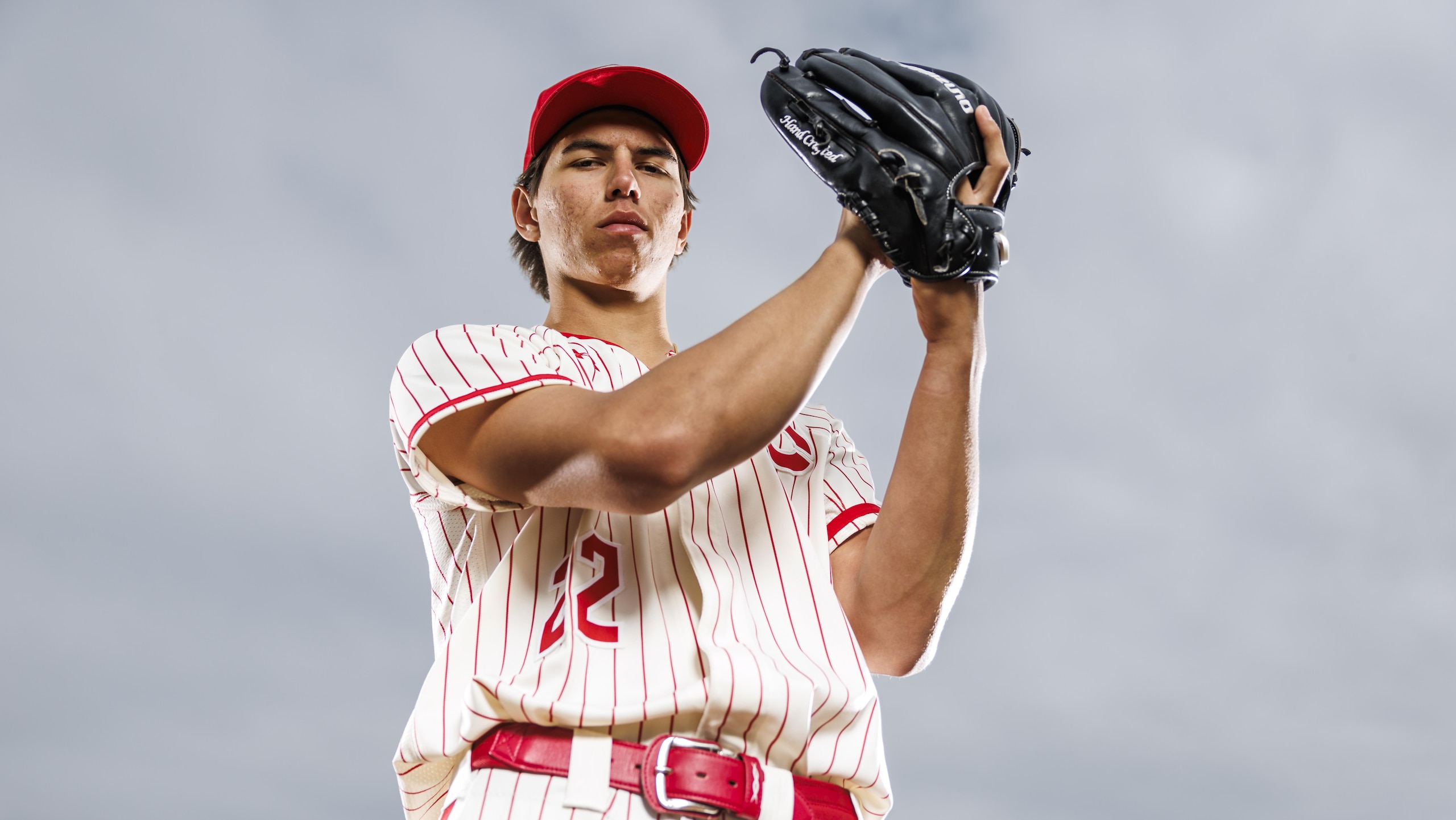
First Round (No. 6 Overall): Seth Hernandez, RHP, Corona HS (CA)
MLB Comp: Josh Beckett
With a highly projectable 6'4", 190-pound frame, four plus pitches, advanced command and clean, loose mechanics, Hernandez is the best prep right-hander to come along in years. His fastball is his best pitch and touches triple digits, though his changeup is not far behind and stands as one of the best in this draft class. He can also spin two distinct breaking pitches, registering 3,000 RPMs with his curveball, and he throws all four pitches for strikes. The pieces are there for him to be a generational talent on the mound.
Grade: A
It's easy to dream on a 1-2 punch of Paul Skenes and Hernandez a few years down the road, and if the focal point for the Pirates was simply best available at this spot, they got their guy. He could have been the No. 1 overall pick on pure talent.
Second Round (No. 50 Overall): Angel Cervantes, RHP, Warren HS (CA)
Cervantes gave his draft stock a major shot in the arm last summer when he twirled three perfect innings with eight strikeouts at the Area Code Games, though his prospect profile is still more about projection. His fastball sits in the low 90s with good carry, and he has a terrific changeup, but he needs to develop a better feel for his breaking stuff. There is still plenty of projection left in his 6'3", 195-pound frame, and his advanced pitchability makes it easier to buy his secondary stuff improving as he matures.
Balance Round B (No. 73 Overall): Murf Gray, 3B, Fresno State
Gray posted a .329/.367/.500 line with five home runs and 27 RBI in 35 games in the Cape Cod League last summer. His value will come almost exclusively from his bat, though he does have a strong throwing arm, and he logged a 1.037 OPS with 22 doubles, 18 home runs and 73 RBI this spring.
Third Round (No. 82 Overall): Easton Carmichael, C, Oklahoma
Carmichael is one of the better catchers in a thin college crop, despite lacking a true standout tool. He posted an .868 OPS with five home runs and 23 RBI over 36 games in the Cape Cod League last summer, and won MVP honors in the Cape Cod League All-Star Game. That strong performance served as the foundation for a terrific junior season where he hit .329/.398/.613 with 17 home runs and 62 RBI while the Sooners made the move from the Big 12 to the SEC.
San Diego Padres
23 of 30
First Round (No. 25 Overall): Kruz Schoolcraft, LHP, Sunset HS (OR)
MLB Comp: Nick Lodolo
Schoolcraft is one of the better two-way talents in the 2025 draft class, with an overall profile similar to Giants prospect Bryce Eldridge when he was in high school. He would be a pro prospect as a power-hitting first baseman, but there is no question his future is on the mound. The 6'8", 229-pound lefty has a wicked fastball-slider combination and a good feel for his changeup, and he repeats his mechanics well for a pitcher his size. He turned 18 in April and was originally a part of the 2026 draft class.
Grade: A
Death, taxes and the Padres taking a high school player in the first round. Schoolcraft was the consensus No. 2 prep pitcher in the class and immediately becomes the top pitching prospect in the San Diego system.
Third Round (No. 99 Overall): Ryan Wideman, OF, Western Kentucky
Wideman played JUCO ball for two seasons at Georgia Highlands College before transferring to Western Kentucky. He filled up the stat sheet this spring, hitting .398/.466/.652 with 20 doubles, 10 home runs, 68 RBI and 45 steals, though he has limited exposure to high-level pitching.
San Francisco Giants
24 of 30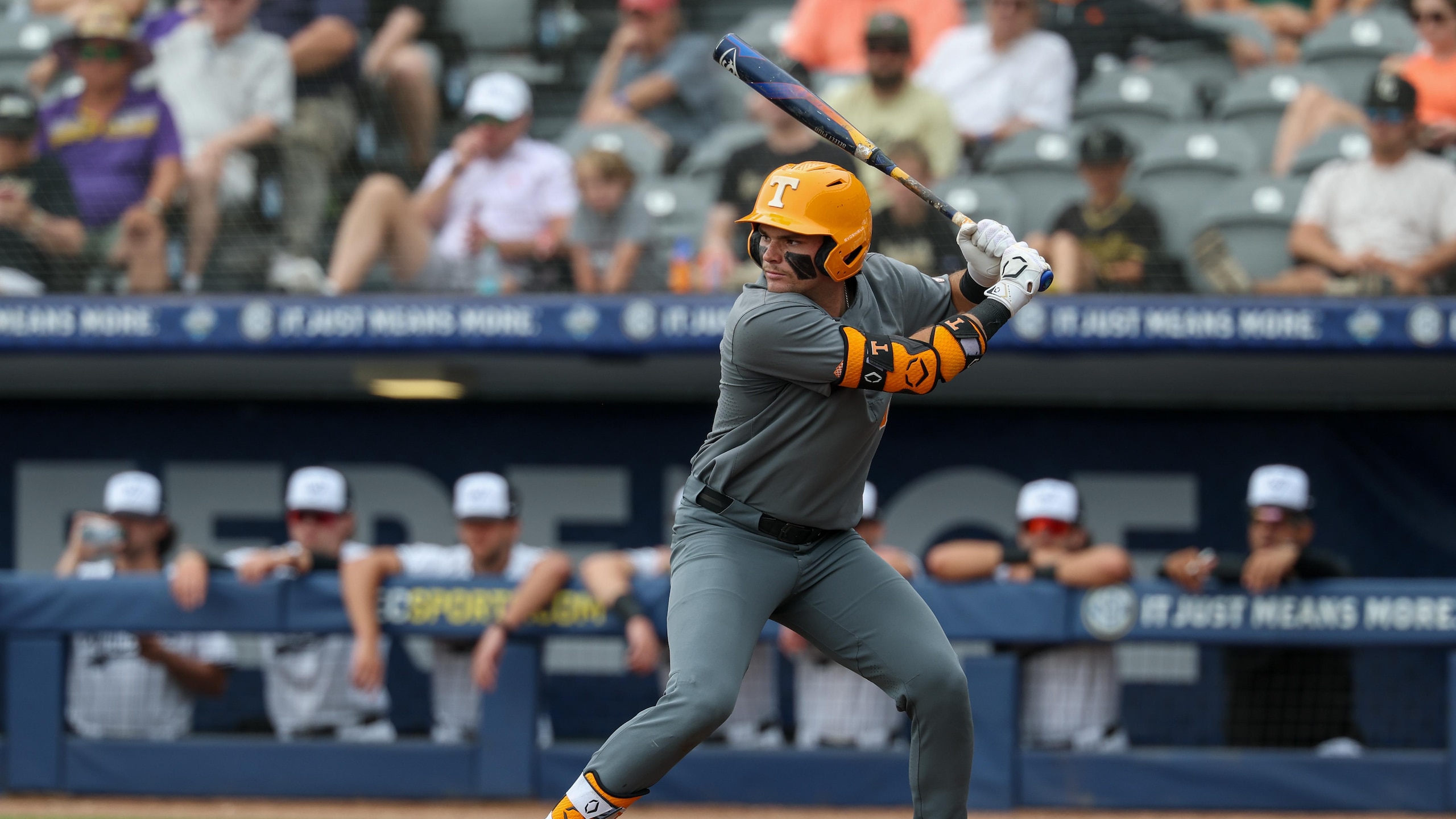
First Round (No. 13 Overall): Gavin Kilen, SS, Tennessee
MLB Comp: Jeff McNeil
A 13th-round pick by the Red Sox out of high school, Kilen took a significant step forward during his sophomore season at Louisville, then transferred to Tennessee where he helped replace 2024 first-round pick Christian Moore this spring. He hit .357/.441/.671 with 15 home runs and 46 RBI, tallying more walks (30) than strikeouts (27) while splitting his time between second base and shortstop. His 60-grade hit tool will drive his value, while average tools across the board beyond that give him a high floor.
Grade: A
I think he winds up at second base, which puts more pressure on his bat, but there is no question he can hit. Don't be surprised if he's playing second base at Oracle Park in the very near future.
Third Round (No. 85 Overall): Trevor Cohen, OF, Rutgers
Cohen hit .387/.460/.523 with 24 doubles and 19 steals this spring at Rutgers where he was a three-year starter in the outfield. He tallied more walks (30) than strikeouts (15) and offsets his lack of power with a polished hit tool and advanced approach at the plate.
Seattle Mariners
25 of 30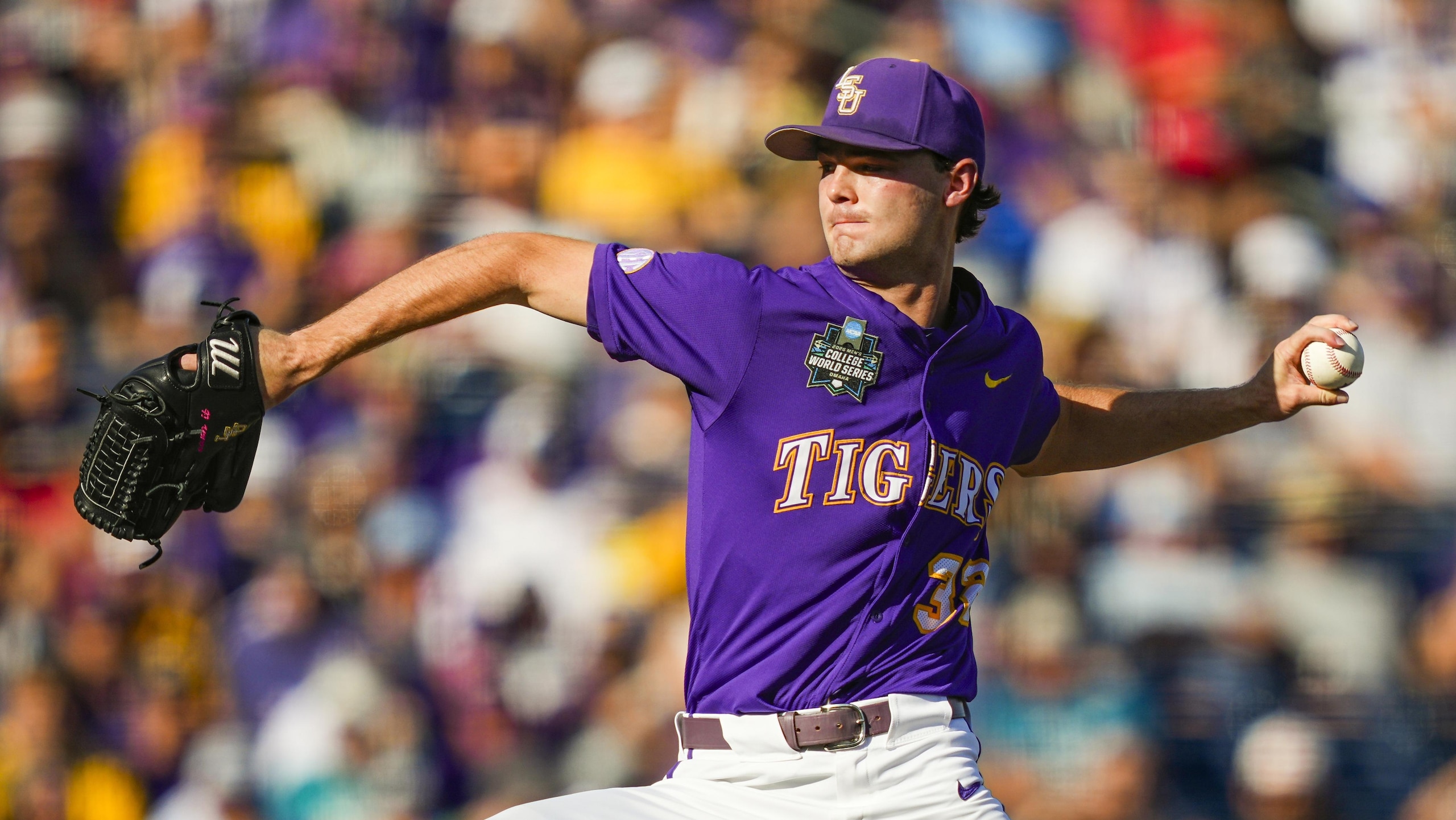
First Round (No. 3 Overall): Kade Anderson, LHP, LSU
MLB Comp: Max Fried
Anderson went 12-1 with a 3.18 ERA, 1.06 WHIP and 180 strikeouts in 119 innings this spring, and he lived up to his staff ace role with a three-hit shutout in Game 1 of the College World Series finals against Coastal Carolina. With a polished four-pitch repertoire and a 6'2", 179-pound frame that still offers further projection, he has a rare combination of floor and upside for a college pitcher. He could be the first player from this draft class to reach the majors, and an uptick in his stuff this spring has moved his ceiling from middle-of-the-rotation starter to potential frontline ace.
Grade: A
The Mariners develop pitching talent as well as anyone, and Anderson should join their dynamic young rotation in short order. Not a scenario they likely envisioned being possible heading into the draft.
Balance Round A (No. 35 Overall): Luke Stevenson, C, North Carolina
After posting a .955 OPS with 14 home runs as a true freshman and then suiting up for Team USA last summer, Stevenson entered the year as one of the top draft-eligible sophomores in the 2025 class. He hit .251/.414/.552 with 19 home runs and 58 RBI this spring, and while his 70 strikeouts in 61 games raise some questions about his hit tool, his power potential and strong defensive skills make him one of the few prospects with everyday catcher upside in this draft.
Grade: A
This feels like the perfect time to remind everyone that teams don't draft for current MLB need in the draft with Cal Raleigh raking this season. I wonder if this helps make Henry Ford a potential trade chip this summer?
Second Round (No. 57 Overall): Nick Becker, SS, Don Bosco Prep (NJ)
Becker is the younger brother of University of Virginia shortstop Eric Becker, who could be an early pick in the 2026 draft. His father also played in the Cleveland farm system, and Nick has a good shot at being the best of the bunch. He has a well-rounded toolbox right now, and it's easy to dream on the projectability of his 6'4", 190-pound frame, both from a power and overall athleticism standpoint. His 55-hit, 55-speed offensive profile is a strong foundation for success, especially if he can stick at shortstop.
Third Round (No. 91 Overall): Griffin Hugus, RHP, Miami
After two lackluster seasons at Cincinnati, Hugus posted a 2.31 ERA with 24 strikeouts in 23.1 innings pitching in relief in the Cape Cod League last summer and landed at Miami in the transfer portal. By season's end, he was the team's Friday night starter, finishing with a 4.16 ERA and 95 strikeouts in 93 innings. He has the makings of a four-pitch repertoire and some upside as a starter on the rise.
St. Louis Cardinals
26 of 30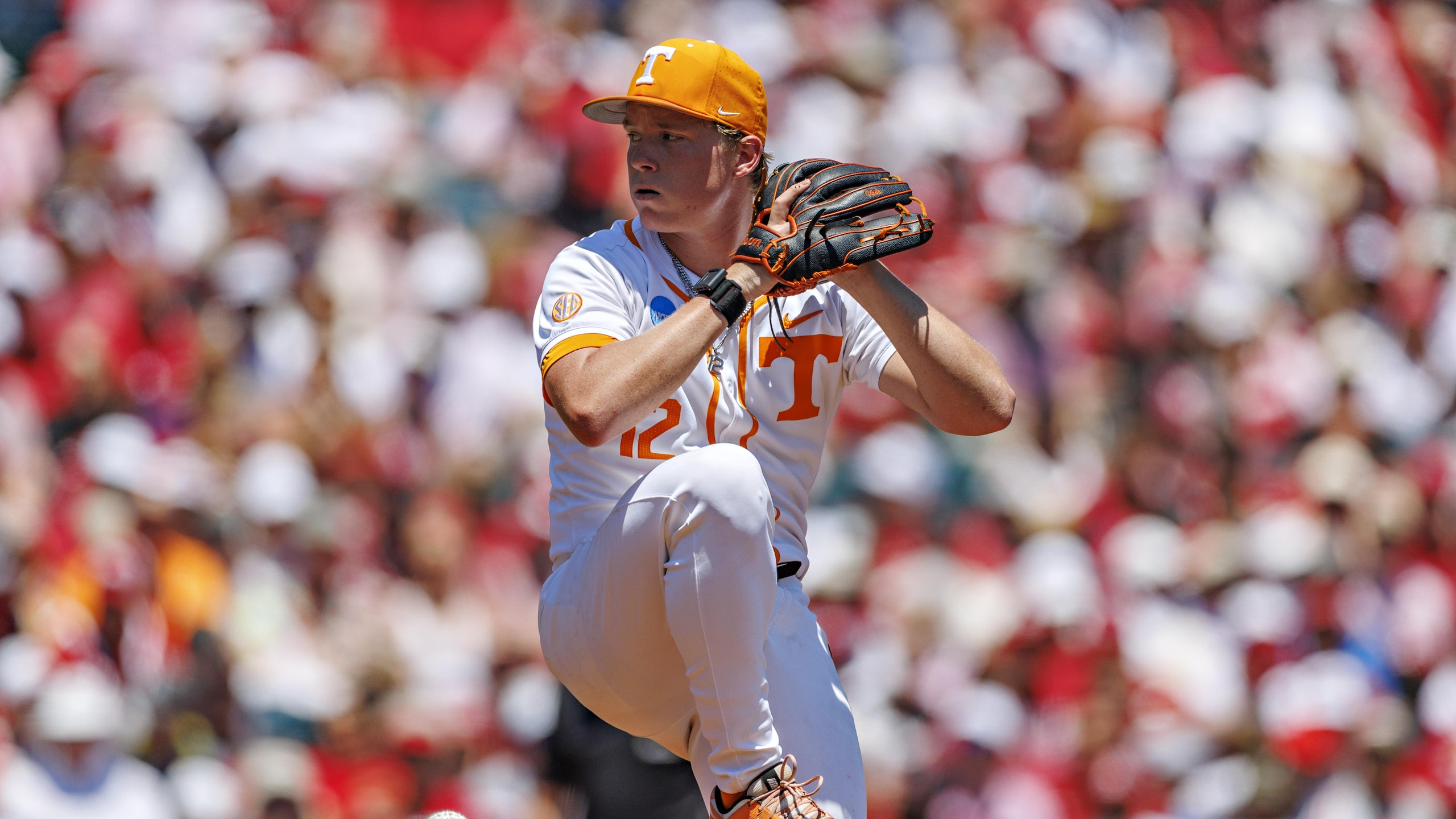
First Round (No. 5 Overall): Liam Doyle, LHP, Tennessee
MLB Comp: Robbie Ray
After flashing swing-and-miss stuff at Coastal Carolina (56.1 IP, 4.15 ERA, 69 K) and Ole Miss (55.0 IP, 5.73 ERA, 84 K), Doyle joined his third team when he transferred to Tennessee where he was college baseball's biggest breakout star. Leaning heavily on a high-octane fastball that touches 100 mph and blows hitters away up the zone, he posted a 3.20 ERA, 0.99 WHIP and 164 strikeouts in 95.2 innings. A max-effort delivery and his lagging secondary stuff raises some legitimate reliever questions, but a fastball like his from the left side does not come along often.
Grade: B
The predraft expectation was that Doyle would be gone and the Cardinals would be picking between Jamie Arnold or someone from the prep shortstop class. Instead they get the most overpowering pitcher in college baseball this year, though there is some risk here.
Second Round (No. 55 Overall): Ryan Mitchell, OF, Houston HS (TN)
Mitchell is one of the best pure hitters in the 2025 prep class, showing a disciplined approach and spraying the ball to all fields. There is projectable power potential in his 6'2", 185-pound frame, and his overall hitting ability should help him make full use of the pop he develops. His defensive profile is more of a question mark, with average range and arm strength likely limiting him to second base if he stays on the dirt. Center field might end up being his best fit, but it's his hitting ability that will determine his impact.
Balance Round B (No. 72 Overall): Tanner Franklin, RHP, Tennessee
Franklin walked 40 batters in 38.1 innings during his two seasons at Kennesaw State, but harnesses his swing-and-miss stuff out of the Tennessee bullpen this spring, posting a 52-to-9 strikeout-to-walk ratio in 38.2 innings. He has closer potential if his command continues to improve.
Third Round (No. 89 Overall): Jack Gurevitch, 1B, San Diego
Gurevitch hit .371/.477/.681 with 16 doubles, 17 home runs and 56 RBI in 56 games this spring. The left-handed hitter has a first-base-only profile and employed more of a line-drive approach in the past, but registered some loud exit velocities and an uptick in power production as a junior.
Tampa Bay Rays
27 of 30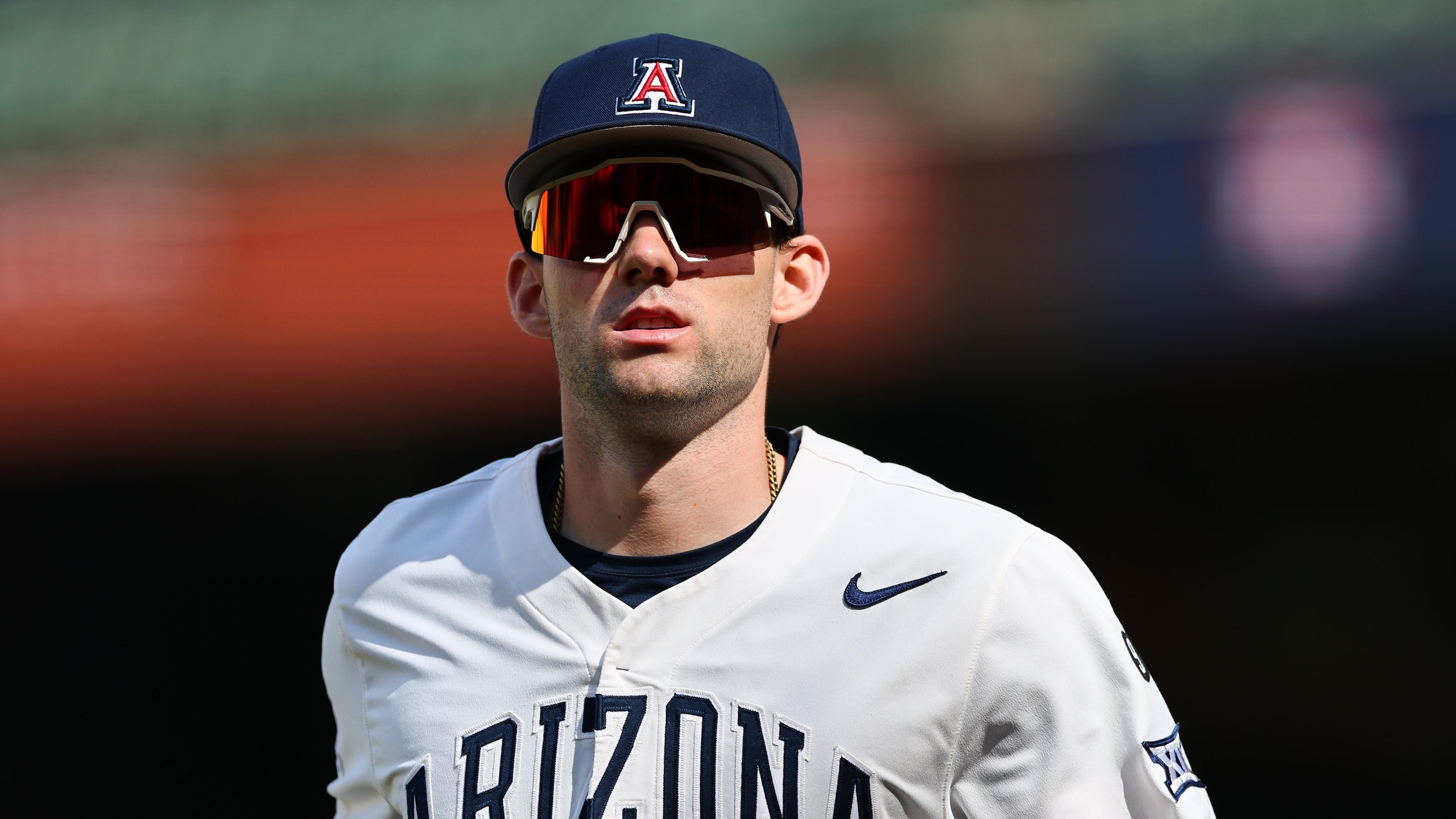
First Round (No. 14 Overall): Daniel Pierce, SS, Mill Creek HS (GA)
MLB Comp: Elvis Andrus
Pierce has been one of the biggest risers from this year's prep class, showing up stronger and more athletic for his senior season while playing for his dad at Mill Creek High School. He has a 55-hit, 60-speed offensive profile, and while he might never hit more than 12-15 home runs in a season at the next level, the strides he made this spring suggest there is still room for him to take another step forward. Defensively, he should have no problem sticking at shortstop, further elevating his long-term outlook.
Grade: A
The Rays were tied to Steele Hall and Pierce throughout the predraft process, so they got one of their guys. His two-way value fits the type of player the Rays love, and even if the power never comes, he can help in a lot of areas.
Balance Round A (No. 42 Overall): Brendan Summerhill, OF, Arizona
Summerhill leapfrogged several other college outfielders this spring by hitting .343/.459/.556 with 22 extra-base hits and more walks (36) than strikeouts (24). He dealt with some injuries, including a broken hand that cost him more than a month, but showed a full toolbox when healthy. The question is his over-the-fence production after he homered just 14 times in 124 games at Arizona, though there is untapped raw power in 6'3", 200-pound frame, similar to Garrett Mitchell coming out of UCLA.
Grade: A
At one point, I had Summerhill going inside the top 10 in one of my earlier mock drafts, and even if the power doesn't show up he could be a great value here if he sticks in center field.
Second Round (No. 53 Overall): Cooper Flemming, SS, Ganesha HA (GA)
Flemming is a projectable 6'3", 190-pound shortstop with solid tools across the board, though his offensive game will hinge on how much strength he adds and whether he can find some loft in his swing. He has the arm to stay on the left side of the infield and has been up to 90 mph on the mound.
Balance Round B (No. 67 Overall): Dean Moss, OF, IMG Academy (FL)
A longtime standout on the showcase circuit who has been at IMG Academy since he was in eighth grade, Moss has a 55-hit, 50-power offensive profile, albeit with a 6'0", 180-pound frame that is more or less maxed out physically. Scouts are split on whether he will be able to stick in center field defensively, and shifting to a corner outfield spot would put far more pressure on the development of his in-game power production. Either way, he stands as one of the more accomplished prep bats in the 2025 class.
Third Round (No. 86 Overall): Taitn Gray, C, Dallas Center-Grimes HS (IA)
Gray was one of the standouts at this year's draft combine, recording the fifth-highest average exit velocity at 102.0 mph during his batting practice session. With a 6'4", 220-pound frame and a 50-hit, 60-power offensive profile, he offers significant upside at the plate. His defensive skills are still extremely raw, but he is also only 17 years old with plenty of time for further refinement, and he is athletic enough to handle a corner outfield spot if a team decides to prioritize his bat.
Texas Rangers
28 of 30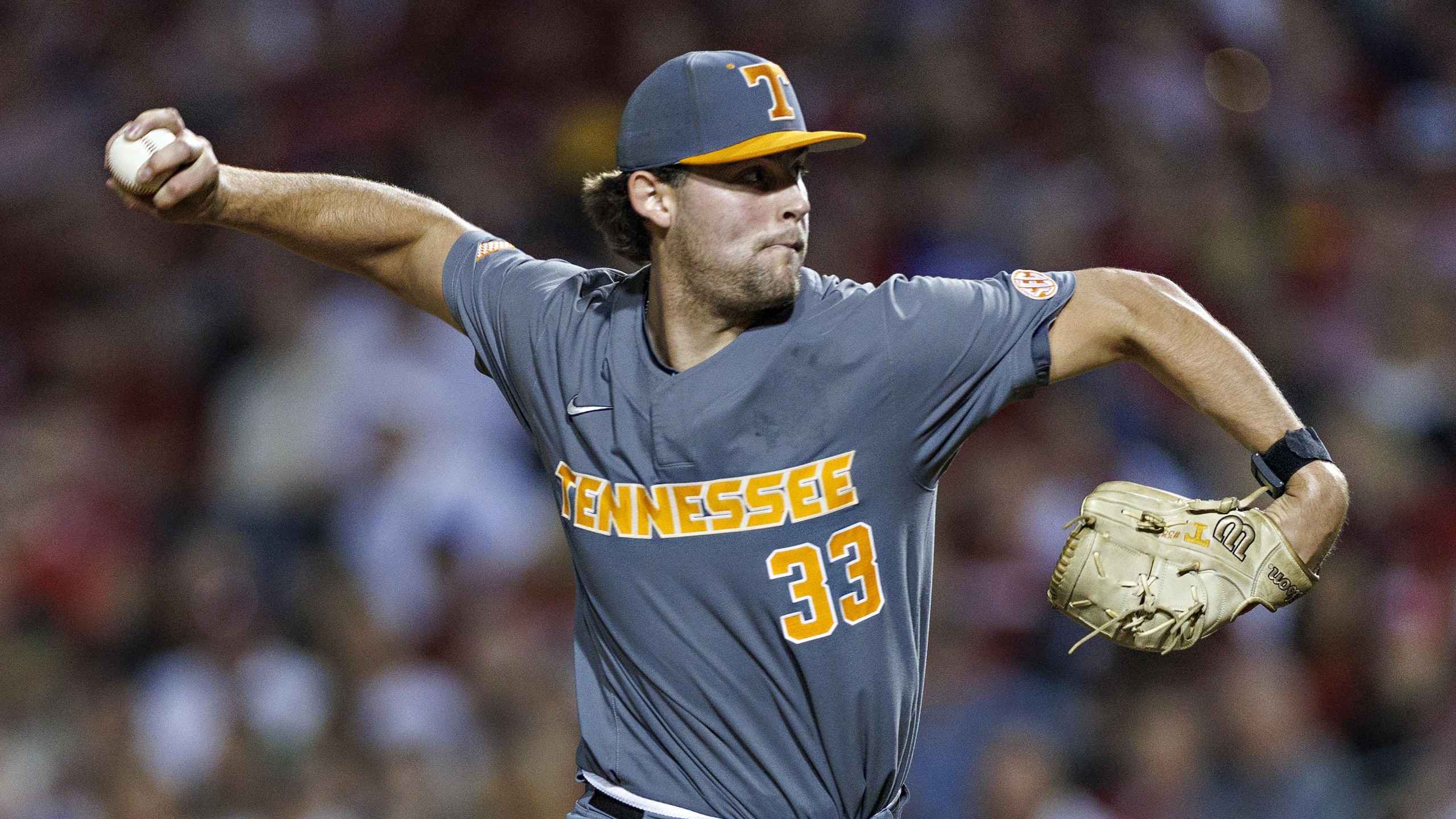
First Round (No. 12 Overall): Gavin Fien, SS, Great Oaks HS (CA)
MLB Comp: Ryan Zimmerman
Fien was one of the top performers on the showcase circuit last summer, winning MVP honors at MLB's High School All-American Game and hitting .400 for Team USA at the U-18 World Cup qualifier. He has a mature 6'3", 200-pound frame, and while he might need some tweaks to his swing setup after dealing with timing issues this spring, the tools are there for him to be an impact player offensively. He has the arm and athleticism to stick at third base and could also be a fit in right field, but his bat will drive his value.
Grade: B
This is a bit of a reach relative to predraft rankings, but he fits the type of toolsy young player the Rangers have targeted time and time again. I like prioritizing upside here over a higher floor college infielder.
Second Round (No. 52 Overall): A.J. Russell, RHP, Tennessee
Russell would have the clear-cut best fastball in this draft class with a tick more velocity, but the pitch is still a metrics darling with great armside run and carry up in the zone while sitting in the 92-94 mph range. The 6'6", 223-pound right-hander had an internal brace procedure as a sophomore and was brought along slowly in his return this spring, posting a 3.55 ERA with 36 strikeouts in 25.1 innings. There is frontline starter upside if he can stay healthy, and closer stuff if a move to the bullpen proves necessary.
Third Round (No. 84 Overall): Josh Owens, SS, Providence Academy (TN)
Owens is a raw, projectable speedster with baseball bloodlines, as his father Jeremy played 10 professional seasons and had a pair of 50-steal campaigns in the Padres system. His toolbox is similar to his dad's, with top-of-the-scale speed and a contact-over-power approach, though there could be more pop to come as his 6'3", 185-pound frame fills out. He played left field and pitched for the U18 Team USA squad last summer, and was up to 92 mph on the mound, so his arm strength is also a standout tool.
Toronto Blue Jays
29 of 30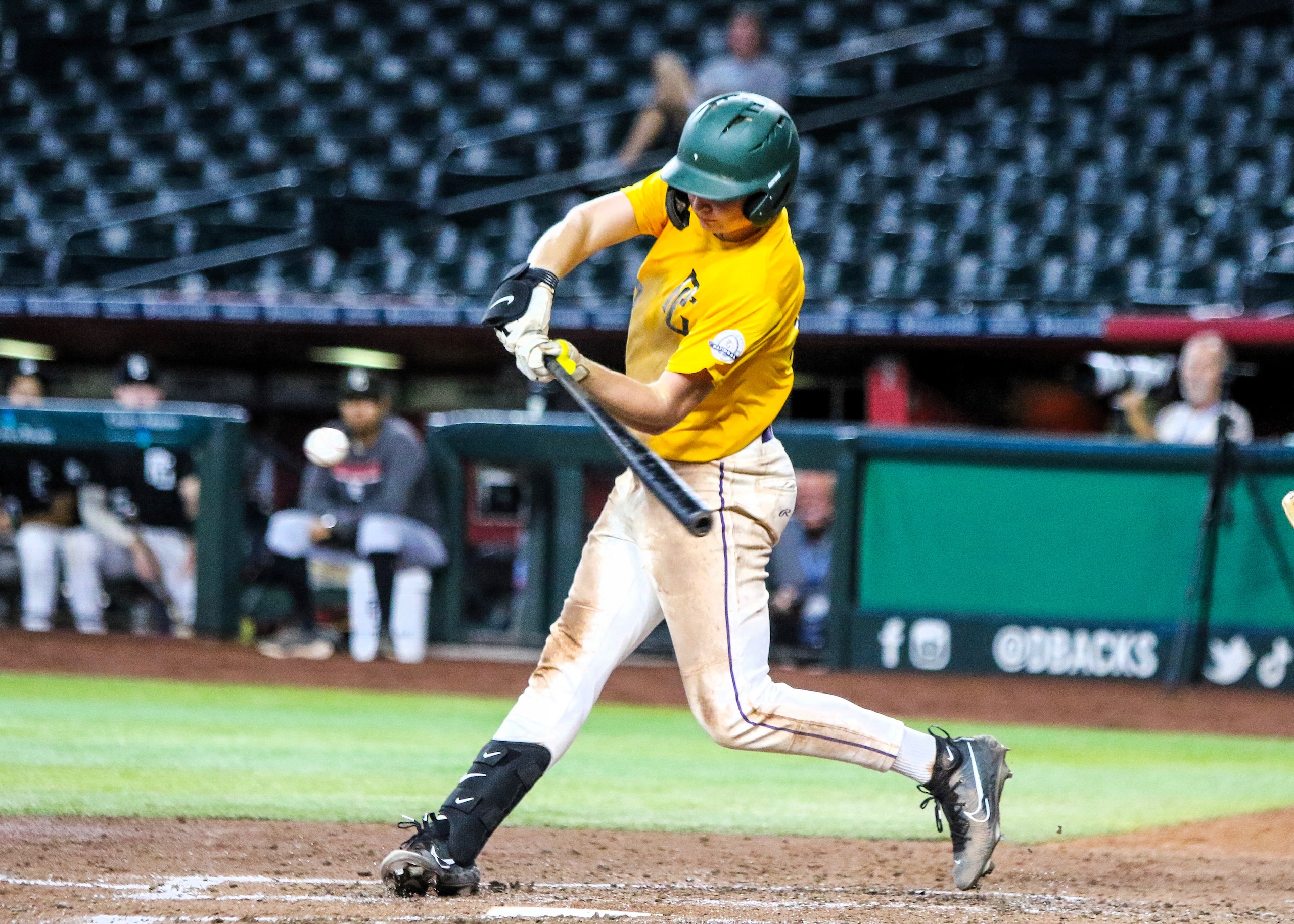
First Round (No. 8 Overall): JoJo Parker, SS, Purvis HS (MS)
MLB Comp: Ketel Marte
With a 60-hit, 55-power offensive profile, Parker has some of the best offensive tools in the 2025 prep class, and he hit .465/.665/1.010 with 13 home runs and 30 steals in 37 games this spring to take home Mississippi Gatorade Player of the Year honors. He will get a chance to play shortstop to begin his pro career, and it's not out of the question he could stick there long-term, though he has more than enough bat to make a clean shift to second base or third base.
Grade: A
Parker can develop into an offensive centerpiece alongside Vlad Jr. in the Toronto lineup, and he has more than enough bat to still live up to being a top-10 selection if he ends up moving off shortstop.
Third Round (No. 81 Overall): Jake Cook, OF, Southern Mississippi
Cook began his college career focused mostly on the pitching, running his fastball up to 96 mph but struggling with his command. He entered the spring with just 20 career plate appearances, but ended up hitting .350/.436/.468 with 19 extra-base hits in 284 plate appearances while showing top-of-the-scale speed in center field.
Washington Nationals
30 of 30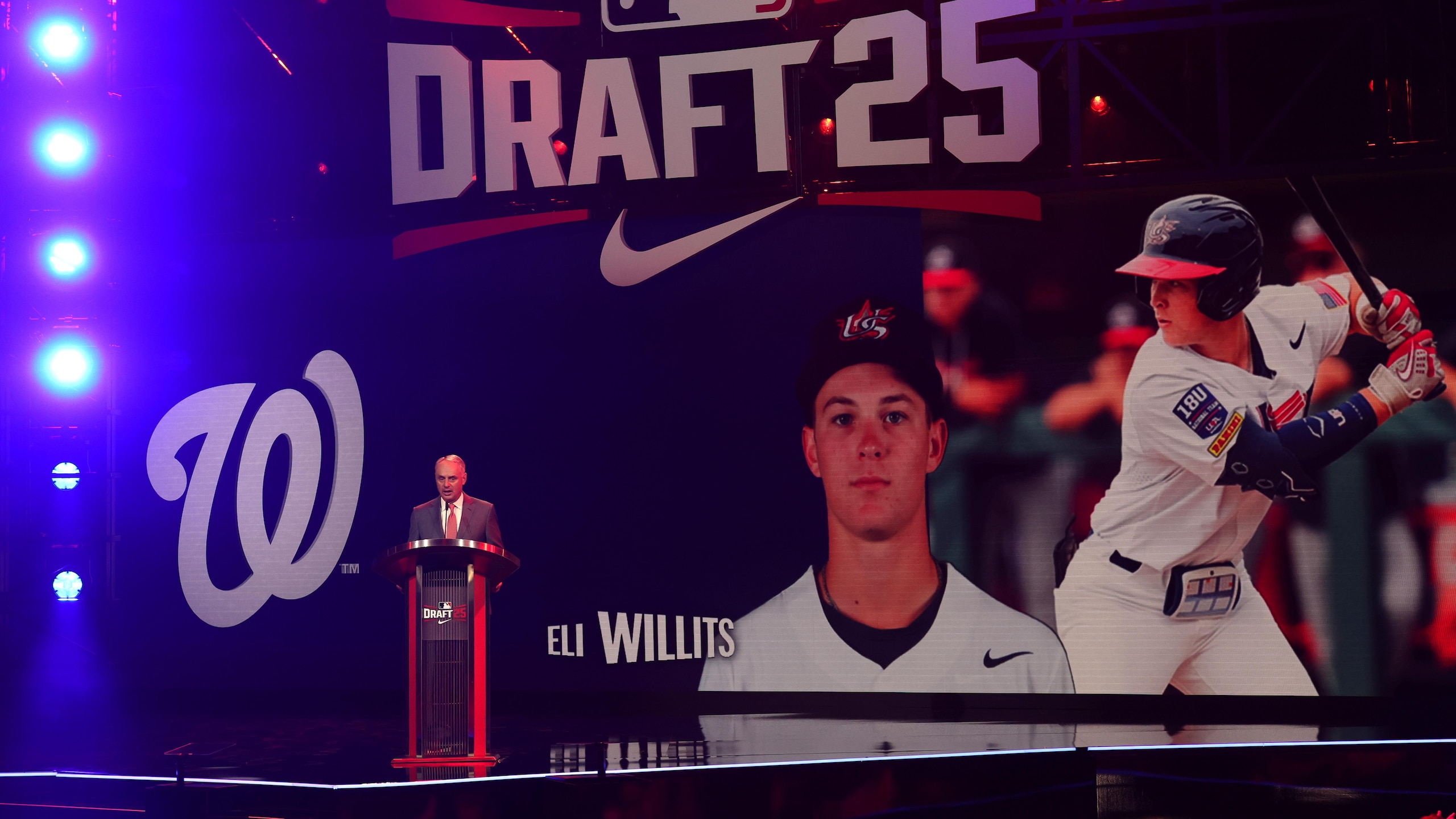
First Round (No. 1 Overall): Eli Willits, SS, Fort Cobb-Broxton HS (OK)
MLB Comp: prime Edgar Rentería
The most well-rounded prospect in the 2025 draft class, Willits has a chance for four above-average tools, with only his power lagging behind the rest of his game. A future where he hits .300 with 15 home runs and 30 steals while playing Gold Glove-caliber defense at shortstop is easy to envision, though he could also be a good fit in center field where he played for Team USA in the U18 World Cup last summer. His father, Reggie, played six seasons with the Angels and is currently a coach at Oklahoma.
Grade: B
Not going with the top talent at 1-1 is always risky, but Willits is not a huge reach as a consensus top-five player with an extremely high floor for a prep player. Expect a big swing at No. 49 overall with an above-slot bonus.
Second Round (No. 49 Overall): Ethan Petry, OF, South Carolina
After slugging 23 home runs as a freshman and 21 more as a sophomore, Petry took home Cape Cod League MVP honors last summer, hitting .360/.480/.760 with 11 home runs in 31 games. Expectations for a big junior season were dampened by a sprained left shoulder that limited him to 44 games, but he still posted a 1.027 OPS with 10 home runs and 34 RBI while trimming his strikeout rate from 25.3 to 17.4 percent. The 6'4", 235-pound masher has played some outfield, but he fits best at first base defensively.
Third Round (No. 80 Overall): Landon Harmon, RHP, East Union HS (MS)
With a fastball that has bumps 99 mph and an uber-projectable 6'5", 190-pound frame, Harmon is one of the top high school pitching prospects in the 2025 class. He repeats his smooth, easy mechanics well for a tall, lanky teenager and uses his size to get good extension on his pitches. Like many prep standouts he has not had much need for a changeup, relying almost exclusively on his fastball and slider, so he will need to further refine that pitch while adding strength to his frame as he climbs the minor league ranks.



.jpg?w=2560 "Shedeur Hires 1st Agent")
.jpg?w=2560 "Jury Finds Tyreek Hill Liable for 2 Battery Counts (AP)")