
LeBron, Steve Nash Talk MVP Award, 3-Point Line and More Potential NBA Rule Changes
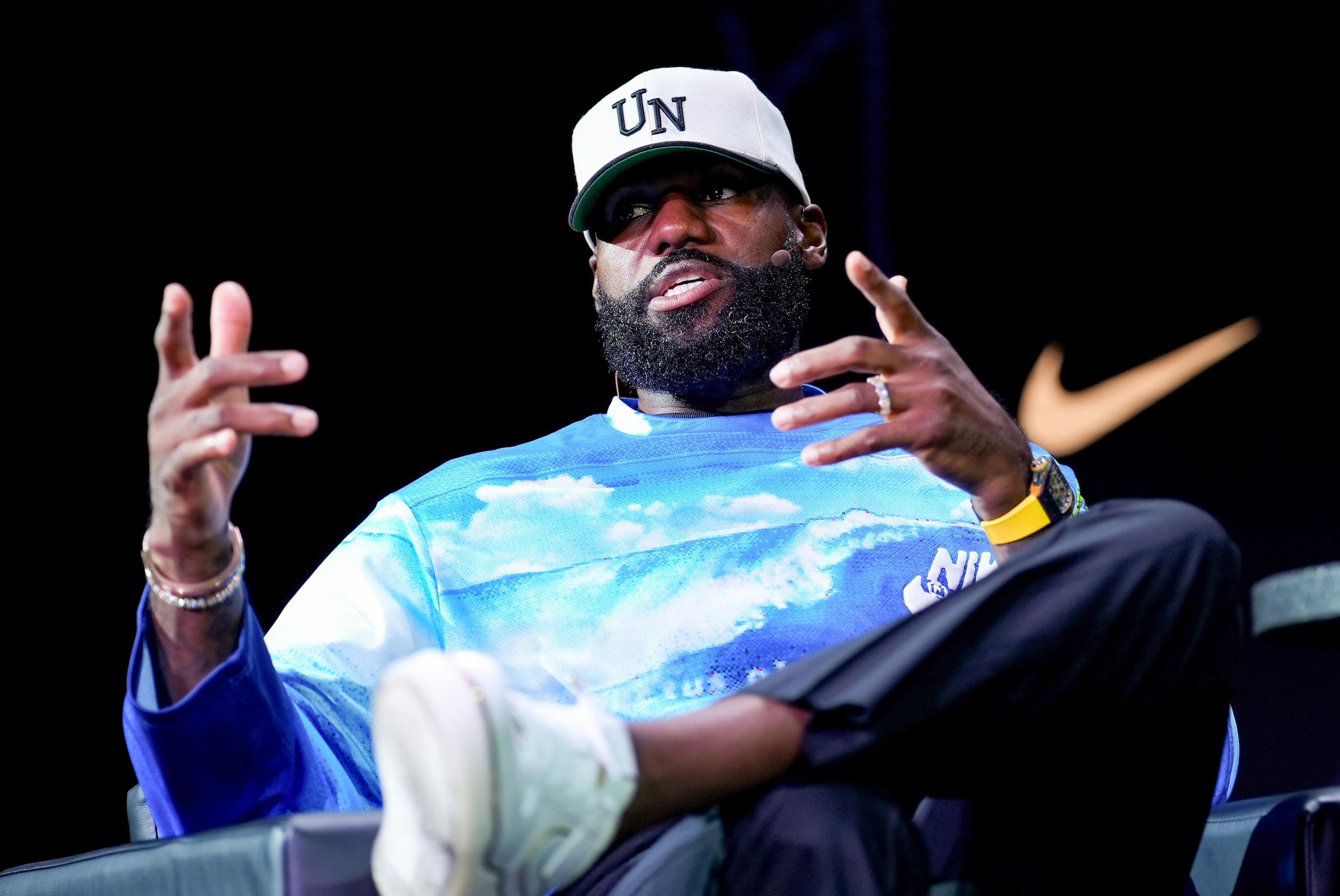
Los Angeles Lakers star LeBron James believes the NBA might benefit by taking a page from the NFL when it comes to awards season.
Beginning at the 39:36 mark in the newest episode of his Mind the Game podcast, James and co-host Steve Nash discussed the possibility of naming an Offensive Player of the Year in the NBA. That sparked a conversation about the difficulty in pinning down who qualifies for Most Valuable Player.
TOP NEWS

Duren Calls Out 'False' Rumors

Pic of LeBron's Helicopter Commute 🚁

NBA Power Rankings Entering Preseason 🔢
"There's no real criteria about MVP. It's a statement, most valuable player," Nash said. "What's the criteria? Because we usually associate it in some capacity with team success, which is a good thing."
The Hall of Fame guard went on to say there are also narratives that can be attached to the MVP debate, which only muddy the waters in terms of who is and isn't the best candidate in a given year.
James chimed in to question whether MVP meant "the best player" or "the player that had the best season with his team."
Nash said this is where Offensive Player of the Year could be beneficial. A star who's pretty much excluded from the MVP conversation because he's on a poor team might have his contributions honored in a different way.
Prior to shifting the episode to awards discourse, James and Nash weighed in on new rules that might help the NBA product.
Nash brought up the idea of eliminating the corner three-pointer by having the three-point arc end somewhere along the sideline.
"I like our game where it is," James said at the 36:44 mark. "I think the corner three is a great shot. Obviously, it's the best shot besides a dunk or a layup or a free throw. But it would be something that could be looked at."
LeBron and Nash were also in agreement in questioning the benefit of eliminating the defensive three-second rule, which is how the game is played at the FIBA and college levels. Nash argued that college basketball "can get a little bogged down" because players can more easily pack the paint.
"We want to encourage speed of play, skill, athleticism, fast-pace," he said. "For the fans, too, it's a give and take obviously, but I like the way our game's played — open and fast. It's more jazz now, like read and react, play out of principles, seeing the players think and adapt on the fly. I think this is an incredible era for that."
The NBA is ultimately an entertainment business, though, one that may need to adapt to the preferences of its fans. If enough people are frustrated with the league's emphasis on three-pointers and floor-spacing, players and officials will have to consider some bold proposals.
.jpg?w=2560 "NFL investigating 2 referees for separate viral exchanges")
.jpg?w=2560 "OBJ Calls Out Giants After Release")
.jpg?w=2560 "Report: Chiefs Contact Hill's Agent")
.jpg?w=2560 "Tyreek makes another cryptic post amid Chiefs rumors")