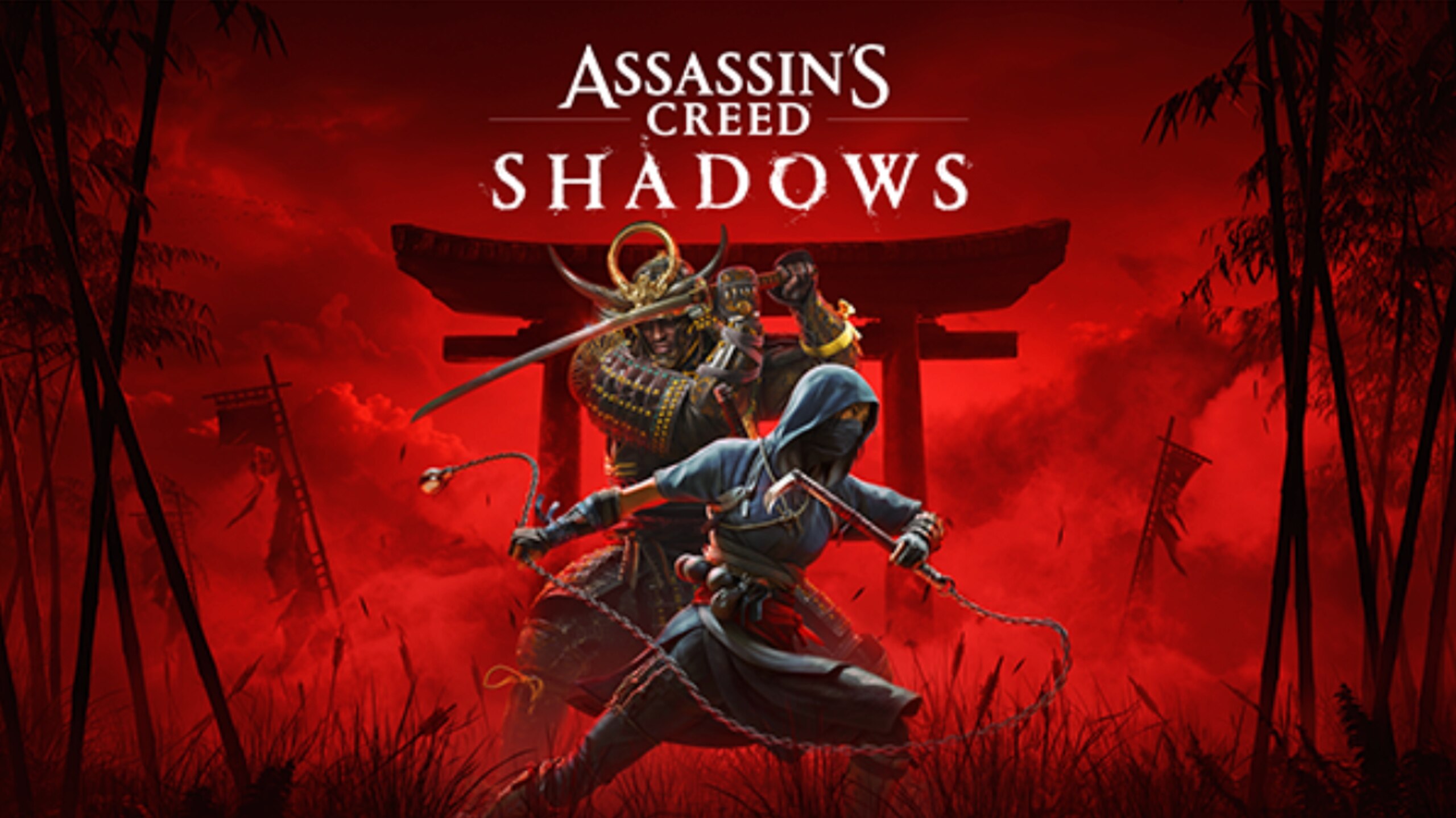

Assassin's Creed Shadows Review: Gameplay Impressions, Videos and Top Features
Assassin's Creed Shadows from developer Ubisoft Quebec boldly embraces the duality of the two major directions the series has taken to date.
Rather than charge down one path and leave the other dominant playstyle and vibe behind, Shadows attempts to balance both through a dual protagonist system. One is a brute-force, open RPG combatant, while the other prefers a stealthy, deadly approach.
Accompanied by characters wrapped up in an emotionally supercharged tale with a breathtaking 16th-century Japan backdrop and some downright shocking evolutions of non-story systems, Shadows attempts to do it all while cementing itself as the best entry in the series yet.
TOP NEWS

NFL Season Shaping Up To Be Unpredictable 🗣️
.jpg?w=2560 "Texans Titans Football")
Cam Ward Says He's Not A Loser
.jpg?w=2560 "Lions Cardinals Football")
Viral Dan Campbell Presser 💙
No easy task given the path traveled so far. But the engrossing design choices built atop a familiar-feeling foundation seem like enough to secure a spot on GOTY lists.
Graphics and Gameplay
Breathtaking above wasn’t an accident, nor exaggeration. Shadows unabashedly shows off its stunning graphics and deep immersion feats from the very opening during a stroll down the road in a new land.
There, incredible details amongst the crowds watching the player’s character and group include faces almost startling in their realism and attention-grabbing detail in the environments that give even the smallest nook and crannies a lived-in feel.
Like Mirage, its predecessor from 2023, sheer NPC density and behaviors in populated areas is a feat of modern tech, when applicable. But Shadows prides itself even more on absolutely massive draw distances with varied, era-accurate locales with a play space that, thankfully, feels smaller than the beast that was Valhalla a few years back.
The effect is fantastic, to the point it blows past Ghost of Tsushima in immersion factor, a game that Shadows will understandably find itself compared with often. Whether players traverse little abodes, sprawling farms, or isolated bits of nature, the depth to each step, complemented by some fantastic ambient and overall sound design and captivating, flowing foliage throughout, is tops in the industry right now.
A new Seasons system impacts gameplay and marries presentation and play experience in interesting ways. During some seasons, the high grass players have hidden in before won’t be there, as one example. Triggering a seasonal change after a cooldown can also influence NPC behavior, such as what sort of lighting they carry around on patrols.
That symbiotic relationship between presentation and actual gameplay is a staple of the entire experience, in part because of how both protagonists interact with the world in different ways.
Yasuke is the combat-heavy character who sledgehammers his way through encounters, taking a direct approach and punishing both enemies and destructible environments. Naoe is a stealth-oriented character who can sneak along areas, slipping in and out without combat at all.
Overall, combat is punchy and necessarily strategic. Proper timing of parries will lead to piercing a foe’s armor, which exposes them for big damage. Controls aren’t hard to pick up after a little time and it isn’t long before players can pull off some fun feats. And, as expected for the subject matter, things go turbo on the gore compared to other games in the series.
It’s hard not to get cliche about how different the two feel in combat. Naoe is weak, in the sense that missing a dodge and taking a hit will have a dramatic impact on her health bar. Yasuke is more akin to the Hulk, with slower combat moves that have devastating impacts on enemies if they land.
It still very much feels like Assassin’s Creed combat, which also works to its detriment in some ways. Well-versed players in the series might find some of the fights brutally tough at first and the little staples of the series like enemies coming in from off-screen to inflict damage remain (ditto for rare parkour hiccups that have plagued the series for a decade-plus).
Only Naoe has access to the shinobi tools (shuriken, smoke bomb, kunai, bell) to aid in her quieter exploits and players will feel right at home going for ranged attacks and setting up distractions.
Differences extend to world exploration, too—only Naoe, for example, has the series’ Eagle Vision. Yasuke instead has Adrenaline, which is used in combat to unleash abilities. This extends to little things, too, like Yasuke straight-up breaking tightropes Naoe could navigate quickly.
Stealth, overall, is just endlessly more dynamic than in past games. Players will now remain hidden in any of the game’s shadows. That includes creative things, including extinguishing a lantern with a shuriken to advance.
A player’s character naturally adheres to cover when moving through buildings or similar while undetected. Also new is the ability to go prone and crawl. It’s now quite possible to slip in and out of even a small room, accomplishing an objective along the way right near enemies. The detection A.I. isn’t always perfect and can dash immersion at times, but it’s a passing annoyance.
In fact, the stealth is so good it might have players yearning to see the return of a beloved series like Splinter Cell. That, and a why hasn’t this been in all the games? sort of reaction, too.
The usual guards and alarms gameplay that has been confined to base infiltrations in the past is now greatly expanded. Now, players can become wanted in an entire province, which adds a fun risk-reward wrinkle to the actions-consequence loop. That said, only the character that committing the crime is wanted, so players can swap to the other protagonist and otherwise try to find ways to work out the problem.
While rich in depth in many ways, Shadows keeps itself accessible to as broad an audience as possible with the Pathfinder tool that provides the guiding line to objectives.
Overall, it sort of feels like Shadows was engineered first and foremost for Naoe, with Yasuke more of a cookie-cutter action RPG guy. But that’s not a bad thing and a huge eye-of-the-beholder statement.
Story and More
Past Assassin's Creed stories haven’t been bad by any means, but players sort of knew what they were walking into in most cases. Odyssey hit on expected mythological notes of ancient Greece, while Valhalla hit on the obvious Vikings stuff.
Shadows, which takes place in 1579 Japan, though, starts with an emotional bang that is a high mark for the series and never really lets up with the tension in a way that was, frankly, pretty surprising.
Both Yasuke and Naoe are endearing characters in their own rights and it’s hard not to root for them in a way that has little to do with being forced to control them. Dialogue choices are there to give players some agency and outcomes of scenarios (an early example is a training session resulting in different dialogue) can create different results. It’s a fun, engrossing tale that, again, marks a high mark for the series.
A big change that might be welcome for many fans is the inclusion of Canon Mode. This narrative-driven option frees players of any choices, letting the intended canon story unfold.
Good as the story is, players will often find themselves sidetracked. There are plenty of things to do across Japan, but it’s not as open-world-checklisty as past outings. In fact, there’s a blatant almost harmonic-with-nature vibe to the whole thing, including painting exoitc animals.
Overarching progression is rather standard for the series, with one notable exception—the hideouts. This time out, players can outright customize an entire town, including—yes, thankfully—the ability to choose pets.
This is time-consuming, yet fun, in the same vein as, believe it or not, something like Animal Crossing. It’s an unexpected, happy development for the series with some rather surprising depth.
While players do this, they can juggle contracts and a battery of scouts they can send on missions for supplies and the like. The little micromanagement of resources atop the customization is just a little exclamation point that really lets players feel like they are living in that era of Japan, never mind in an overarching simulation merely accessing the rich, dense memories.
Otherwise, the standard progression includes upgrade trees, including “mastery” nodes. This last part deeply encourages world exploration, as only by doing some of these side activities found in the open world can players actually unlock access to these nodes.
The things to do out in the world are many. There are merchants to visit, lore to uncover and animals to find atop the usual side quests.
Weapons, too, have their own skill trees and players will level up proficiency with each as they progress.
The game is a love letter to the era in more than just its presentation, too. There’s lore, plus meditation activities that can tell players more about characters and an overarching codex that offers up even more information about the areas and background.
Of note is Shadows marking the debut of the “Animus Hub,” which is the name for a universal Assassin’s Creed launcher for various titles in the series. It’s one part cool, one part unnecessary-feeling, but some of the extras will make longtime fans happy.
Like always, the series continues to pace the industry in terms of options. Beyond Pathfinder, a gauntlet of gameplay assists and accessibility controls dominate the menus in a good way. There, various difficulty levels and narrative-based experiences permit players who don’t feel like dealing with the challenges of combat to enjoy the ride, too.
Overall, the game runs well, too, with very limited load times, including when switching between the protagonists on the fly.
Conclusion
Assassin's Creed Shadows is a pleasant surprise in the sheer number of ways it refines and improves the tried-and-true experience.
The dual protagonists feel incredibly different and are fun to play while wrapped in a heartfelt tale. Leaning into next-generation power to finally bring meaningful stealth around the game’s namesake (Shadows) and sprinkling in must-haves like the ability to go prone has a shockingly big impact on the formula, too.
Shadows isn’t perfect, of course. Those with open-world fatigue won’t see this game change their mind and the story won’t be for everyone. It is, at its core, still Assassin's Creed.
But Shadows takes some necessary-feeling steps for the series that create a surprisingly great result as a whole. The result is an offering that easily stands amongst the best ever in the storied franchise and while it might not take down GOTY, no list should omit it from consideration.
.jpg?w=2560 "Broncos Chargers Football")