
Unrivaled Awards Predictions: Picks for MVP, DPOY, More
We're approaching the end of an entertaining opening year of Unrivaled. The regular season ended Monday night, setting up a two-day single-elimination postseason featuring the league's top four teams on March 16 and 17. Those matchups are as follows:
- Lunar Owls BC (13-1) will face Vinyl BC (5-9)
- Rose BC (8-6) will face Laces BC (7-7)
While we have a little bit of a break in the action, it seems fitting to take a look at this year's award races.
There will be three individual awards (MVP, DPOY, Coach of the Year) handed out, as well as two All-Unrivaled teams (three players each). The voting breakdown is a little different from the WNBA (and the NBA for that matter).
For MVP, players and coaches each make up 30 percent of the vote, media accounting for 25 percent and the fans accounting for the remaining 15 percent. For the other awards, players (40%), coaches (35%) and media (25%) will decide the honors.
I've been honored with an official media ballot, so I'll be sharing and explaining my picks here. But because of the way the votes are weighted, I also expect there will be some differences between my ballot and the way things ultimately shake out. In the interest of fun, I'll also attempt to predict the winners.
The fun of having a diverse voting pool—or, what should be the fun of it, assuming the work is put in—is that everyone has their own value system.
Coaches and players have a level of insight—they're literally in this thing!—that even the most locked-in fans and media aren't privy to. Media and fans (for MVP at least) may value things differently, especially in light of the newness of this 3v3 format and the (publicly available) stats that we have to sort through.
Without further ado, let's get into picks and predictions.
Most Valuable Player
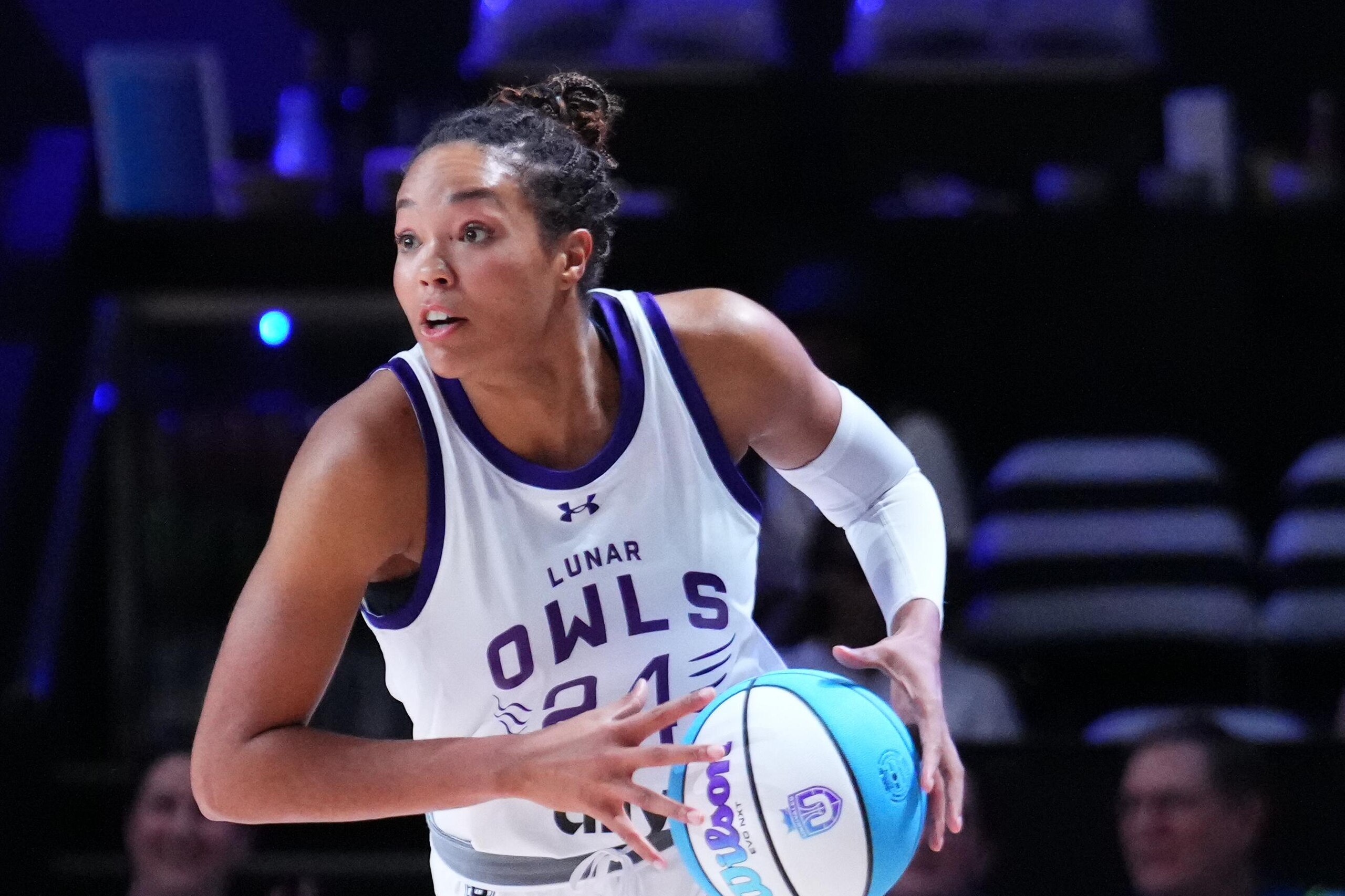
1 of 4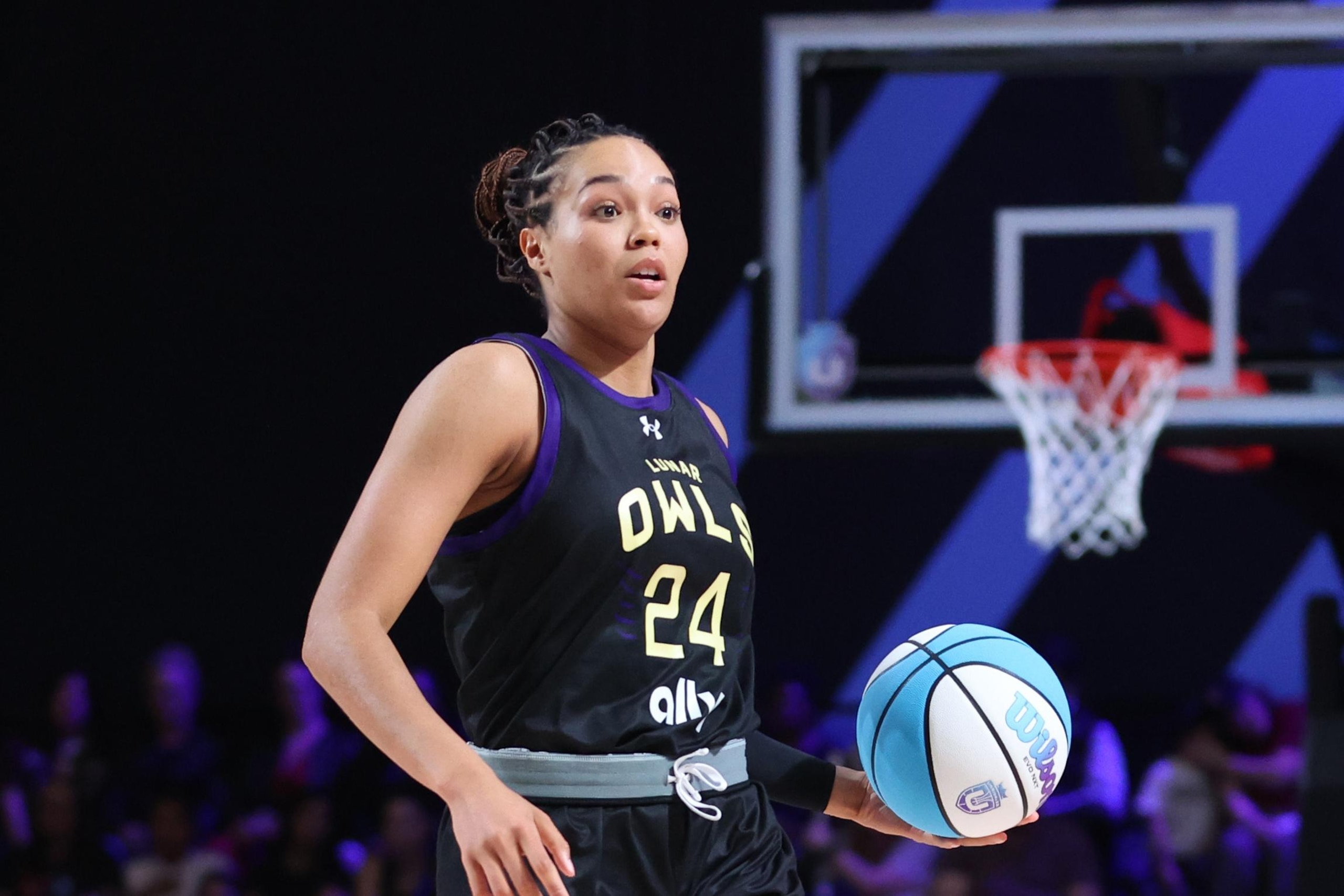
Who I selected: Napheesa Collier (Lunar Owls BC) first; Chelsea Gray (Rose BC) second, Kayla McBride (Laces BC) third
Prediction: Collier wins, Gray comes second and McBride finishes third
My thoughts: The most prestigious individual award also seems like the easiest to parse.
It's hard to overstate just how good Collier was this season. Leading, by far, the best team in the league, Collier paced Unrivaled in points (25.7) and steals (2.0), narrowly finishing second in blocks (1.4) and finishing fourth in rebounds (10.6) per game.
Collier was a versatile and impactful screening partner for Skylar Diggins-Smith, Allisha Gray and Lynx teammate Courtney Williams. When they needed her to get buckets, she did so in myriad ways—and flat-out bullied smaller players on switches. To that end, Collier converted a blistering 69.4 percent of her shots inside the arc.
Her ability to grab defensive rebounds and trigger offense consistently proved to be darn-near impossible to deal with. And even before ending possessions, Collier was everywhere defensively. She held up well in space, dutifully defended ball screens and disrupted many offensive possessions as a helper. It's just hard to poke at her case in a real way.
Even with that, I'd be surprised if Collier was named the unanimous MVP. That, ultimately, would be a testament to how insane (complimentary) Gray was to close out the season. Her blend of playmaking and pull-up shooting was truly unmatched.
Gray's overall averages were strong enough, finishing third in scoring (21.3), first in assists (5.4) and eighth in steals. Over her last seven games, which coincided with Rose BC going 5-2 and shooting up the standings, Gray averaged 26.4 points (44.9 percent on twos, 53.1 percent on threes), 5.7 rebounds, 4.6 assists and 1.6 steals. Gray hitting the game-winner in four of those five wins only adds to her MVP argument.
Finally, it's only right to show McBride some love. She and teammate Stefanie Dolson were the only players to appear in all 13* games for the Laces this year, a feat in its own right considering the injury misfortune this team suffered. A whopping 10 players logged minutes for Laces BC this year, easily the highest mark among the six clubs.
As for the actual on-court exploits, McBride finished ranked second leaguewide in scoring (22.2 points, 53.1 percent on twos, 38.3 percent on 8.2 threes) while thriving on and off the ball. When playing with the original (healthy) roster, McBride flew off screens and handoffs for quick attacks and got easy buckets as a cutter.
When tasked with creating for herself, she leaned on a mix of pull-up jumpers and drives to keep the offense afloat. I personally appreciated how well she held up defensively in light of the offensive burden she had to shoulder at times this year.
Defensive Player of the Year
2 of 4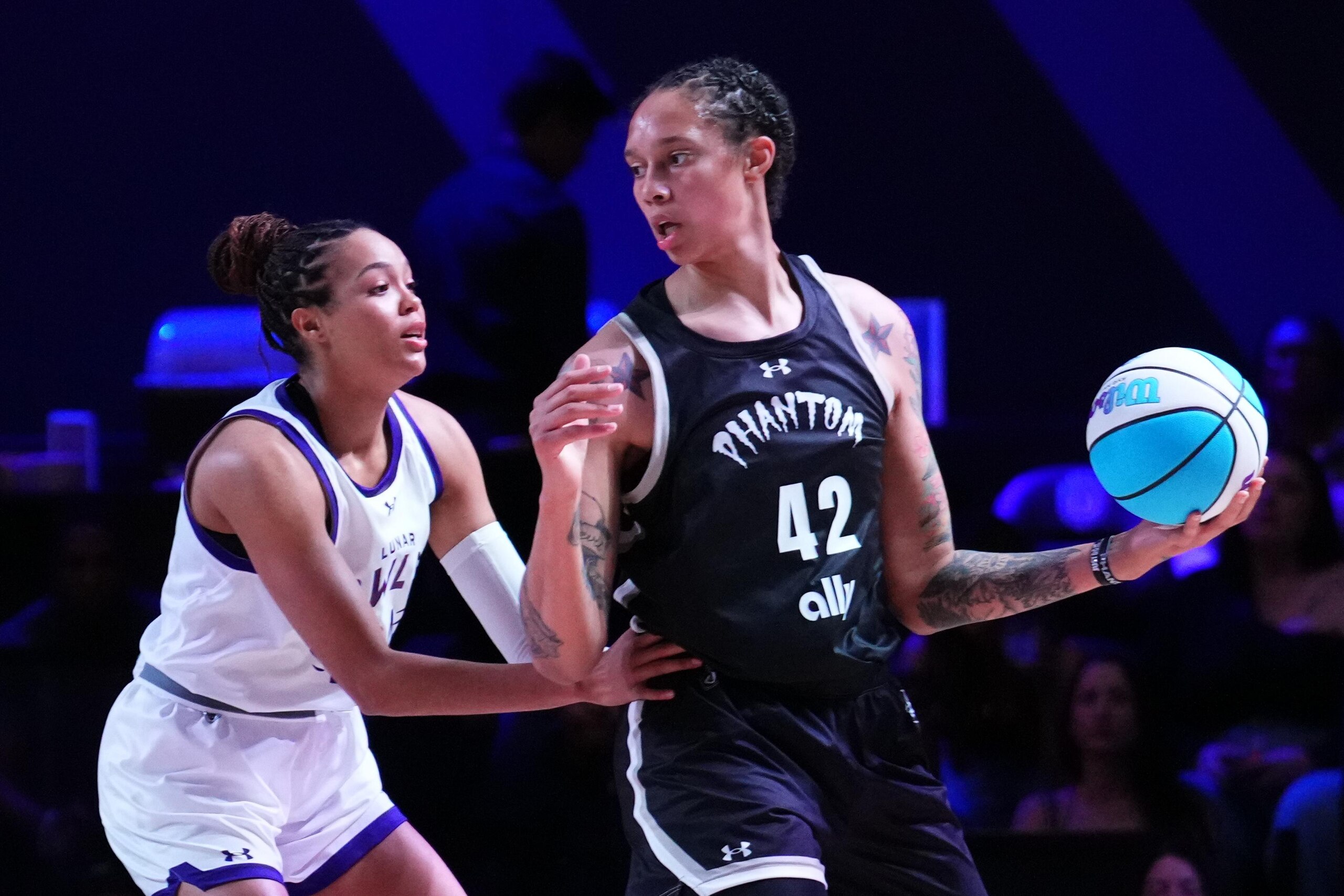
Who I picked: Napheesa Collier (Lunar Owls BC) first; Breanna Stewart (Mist BC) second, Angel Reese (Rose BC) third
Prediction: Collier takes home the award, Skylar Diggins-Smith (Lunar Owls BC) places second and Reese finishes third.
My thoughts: This was certainly the most difficult individual player award to parse through!
As someone who generally enjoys (and ultimately stresses over) award talk, I love to use a blend of film and numbers (box score, tracking data, on/off data) to get a full picture before coming to conclusions. Because of the nature of Unrivaled, I only had half of that (film, box score) available. That obviously isn't the end of the world—I trust my eye at the end of the day—but it did make for more handwringing over my selections.
(Brief aside: If Unrivaled is going to continue its lone-city setup, it would be cool to get some tracking cameras in there. The nerds would love Synergy or some equivalent!)
Anyway, Collier put together a strong case for the award. On the numbers front, she was the only player in Unrivaled to average at least one steal (2.0, first) and one block (1.4, second). She ended possessions at a high clip (8.9 defensive rebounds, second), which again fed into her value as an early-offense attacker.
Lunar Owls BC could comfortably lean into (late) switching in large part because of Collier's skillset; she can and did hold her own in space and displayed great timing as a helper whenever one of her guards were tasked with defending bigger players.
Similar to the most recent WNBA season, Stewart's defensive impact flew a bit under the radar.
While 3v3 play naturally lends itself to more switching, it was noteworthy to me that Mist BC often went with more traditional ball-screen coverages with Stewart on the floor. Part of that was trusting the navigation on the roster (shoutout DiJonai Carrington), but a lot of it was trusting that Stewart could shrink the floor and ultimately end possessions thanks to her length. She certainly did that while checking similar boxes to Collier.
Stewart led Unrivaled in defensive rebounds (10.1), ranked third in blocks (0.9), and fifth in steals (1.2). I also enjoyed the possessions where Stewart would be deployed on a guard, allowing Mist BC to switch ball screens with ease and, if the guard was a questionable shooter, unlocking Stewart as a roamer. It was a disappointing season for Mist BC overall, but I'd argue that was because their offense was not holding up its end of the bargain.
Reese's name might be a surprise to some, but it shouldn't be.
Rose BC led Unrivaled in points allowed (65.2), opponent effective field goal percentage (48.2), and opponent points per shot attempt (0.96). Only Mist BC (6.4) allowed fewer offensive rebounds per game than Rose BC (6.6).
Reese played a big role in all of those numbers. The rebounding (8.5 defensive rebounds, third) speaks for itself, but her scheme versatility popped throughout the season. Similar to the W season, she didn't look out of place when tasked with switching. Rose BC could afford to mix in some at-the-level coverage with Reese because of her mobility and quick hands.
(And on the hands front: how many times has she ripped Stewie in the past year? This just keeps happening and I'm amused.)
Bigger players (and Alyssa Thomas) gave her some trouble at times—she narrowly edged out Collier (3.4) for the Unrivaled lead in fouls (3.9)—but she mostly held her own at the center of a very good defense.
Key differences: Skylar Diggins-Smith over Breanna Stewart
Because Mist BC was a disappointment—missing the playoffs with a healthy Stewart is unheard of in virtually any context you can think of—I'd be a little surprised if she gets a bunch of award love.
Beyond that, there were quite a few strong defensive performances this season. I expect people to gravitate towards Skylar Diggins-Smith in this regard. Her ball pressure and screen navigation was an important piece of the Lunar Owls' defensive puzzle. Her film is littered with aggressive swipes (especially when battling against bigger players) and safety-like play in the passing lanes. Ranking third in steals (1.5) will be an easy thing for voters to point to.
Quick Shoutouts: Allisha Gray (1.1 steals, enjoyed her screen navigation and post defense), DiJonai Carrington (second with 1.6 steals, just filthy on and off the ball), Rhyne Howard (fourth in steals and blocks, excited to see how much of this consistently carries over into the W season), Alyssa Thomas (would've factored heavily into this discussion if she appeared in more than eight games), Natasha Cloud (had to defend a little bit of everyone as Phantom BC tried—and ultimately failed—to find their way)
Coach of the Year
3 of 4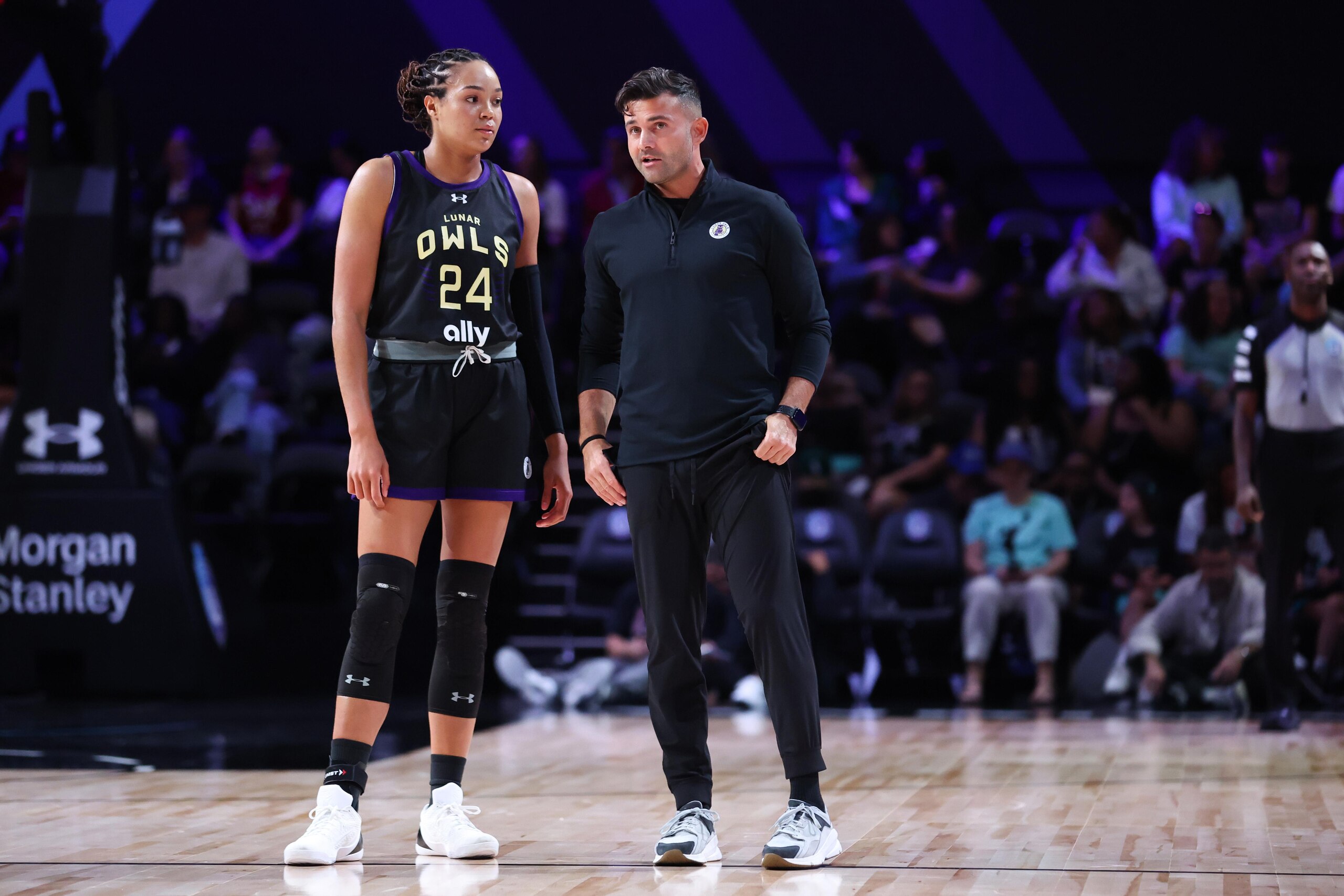
Who I picked: DJ Sackmann (Lunar Owls BC) first; Andrew Wade (Laces BC) second, Nola Henry (Rose BC) third
Prediction: Sackmann wins, Henry comes second, Wade finishes third
My thoughts: When your team is this dominant, it's difficult not to hand over the award.
Seriously, a 13-1 record with a plus-170 (!!!) point differential is absurd. The talent makes life easier, of course, but I was impressed by the way it was deployed.
Something that stood out in Week 1 was their willingness to pick up and pressure ball-handlers behind half-court. That initial pressure, combined with their space-chewing switches—I encourage you to pay attention to how quickly the Owls get into the ball-handler's airspace when they decide to switch actions—made life incredibly difficult.
From there, they were able to flow in early offense with drag screens—even inverted ones with a guard or wing screening for Collier. They'd dabble in post splits, were big fans of Chicago action, and I personally enjoyed how they mixed the positioning of their traditional pick-and-rolls. The lower, inside-the-arc ball screens with Diggins-Smith or Courtney Williams at the helm were incredibly effective.
As for Wade's Laces group, they played a beautiful brand of basketball when healthy. Alyssa Thomas and Stefanie Dolson were often used as hubs, either above the break or stationed around the elbow area. Between quick-hitting handoffs and more traditional post splits, teams could never really get a beat on them.
And frankly, them nearly finishing with the second-best record in the league despite all but two of their players missing significant time is enough to boost the case for me.
It took a bit for Rose BC to find the lineup combinations they liked, but they certainly took off when they did. I appreciated the experimentation from Henry in that regard, as well as her usage of the elbows within their half-court offense.
You can't get a full-fledged HORNS setup in 3v3 play, but Rose BC got as close as they could. Many possessions started with a player stashed at each elbow and one of those players receiving a pass; the fun would kick in from there, as you wouldn't knock if a back screen, a low ball screen, or a handoff was coming.
You also didn't know who would be stationed at the elbows. They'd randomly invert the offense and let Angel Reese bring the ball up and enter the ball into Chelsea Gray at one of the elbows. Other times, you'd get a more traditional setup with Gray as the initiator before making an entry pass and setting a screen in her own right.
Key difference: Nola Henry over Andrew Wade
The degree of difficulty with the injury bug is what ultimately gave Wade the edge for me, but it's again worth noting that Rose BC ended the season incredibly strong. I mentioned the 5-2 closing run for Gray in the MVP slide, but you can actually go back a little further to make the team/Henry argument. After a 1-4 start, Rose BC finished the year 7-2, including handing Lunar Owls BC their first and only regular-season loss.
I'd have no issue with Henry finishing second.
.jpg?w=2560 "Packers 49ers Football")
.jpg?w=2560 "Lions Cardinals Football")
All-Unrivaled 1st and 2nd Teams
4 of 4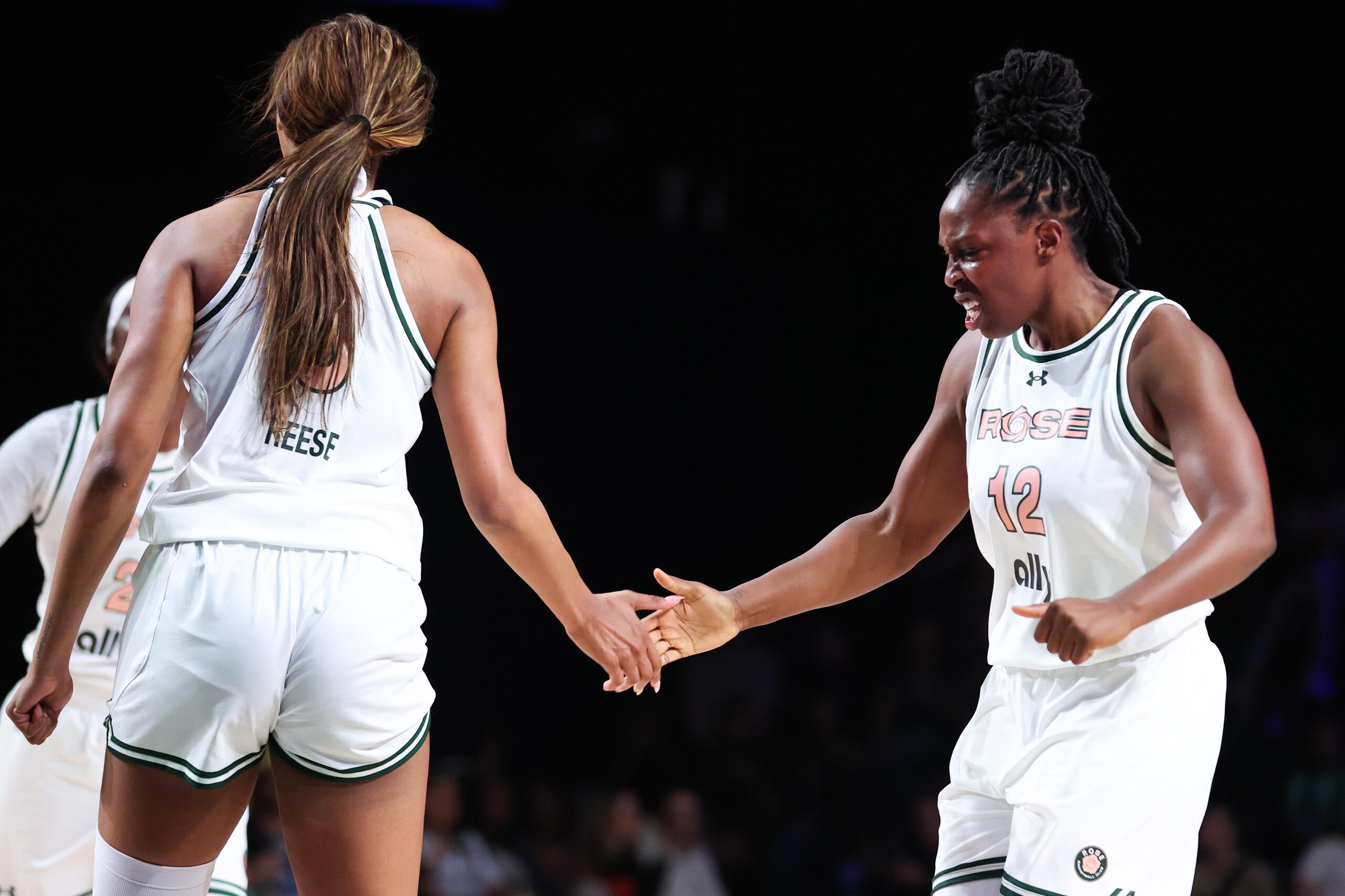
Who I picked: Napheesa Collier, Chelsea Gray, Kayla McBride on the First Team; Allisha Gray, Breanna Stewart, Angel Reese on the Second Team
Prediction: Napheesa Collier, Chelsea Gray, Kayla McBride on the First Team; Skylar Diggins-Smith, Rhyne Howard, Angel Reese on the Second Team
My thoughts: The first team feels pretty straight-forward. These were the three best players from the top three teams, with deeper dives in the MVP slide.
The second team was incredibly tough, as evidenced by the shoutout section you'll see at the bottom of this slide.
Allisha Gray (19.1 points, 5.5 rebounds, 1.1 steals) was a two-way force pretty much all season long. She was efficient from everywhere, converting 52.1% of her 2s and nearly 38% of her threes on high volume (6.1 attempts). The drives were impactful, whether they came in transition, out of ball screens or handoffs, or against closeouts. Defensively, she consistently set the tone with her ball pressure and, again, really battled against bigger players when tasked with switching.
Stewart (19.1 points, 11.0 rebounds, 3.1 assists, 1.2 steals, 0.9 blocks) underwhelmed offensively, but she mostly did so by her own gaudy standards. The three-ball never arrived (18.6% on 3.1 attempts), and I was a bit surprised by some of the short jumpers she missed. It's still important to zoom out and note she averaged over 19 points while converting nearly half of her 2s, with a large share of those being contested. And as mentioned on the DPOY slide, Stewart was a big part of an elite defense that kept Mist BC competitive most nights.
Reese (13.1 points, 12.1 rebounds, 0.7 steals) similarly helped anchor an elite defense while providing value as a screener and flow-maintaining handoff hub. Reese's growth and experimentation as a scorer was often cited in this space (here and here and here) -- here's hoping that carries into the W season.
Key differences: Skylar Diggins-Smith over Allisha Gray, Rhyne Howard over Breanna Stewart
While there's a reasonable argument that Diggins-Smith (17.9 points, 4.8 assists, 1.5 steals) and Gray should make the second team, I'm anticipating that only one will get the nod. Diggins-Smith having multiple game-winners, initiating a little more offense while providing plus-defensive value in her own right may give her the edge over Gray for voters.
Similarly, Howard (20.5 points, 5.5 rebounds, 1.3 steals, 0.9 blocks) stuffed the stat sheet while actually making threes (37.7% on league-high 9.4 attempts) and, well, actually making the postseason. She was difficult for defenses to track; she got loose in transition and off intricate off-ball actions, and she certainly didn't mind getting busy with the ball in her hands.
Quick Shoutouts: Dearica Hamby (19.9 points, 9.8 rebounds, 1.1 steals; definitely my toughest omission, wouldn't be surprised or complain at all if she made it), Alyssa Thomas (again, would easily make a team if she was healthier this season), Brittney Griner (16.7 points, 5.7 rebounds, 1.4 blocks; was an offensive monster off the bench, though she wasn't the defensive anchor her league-leading block number would suggest), Tiffany Hayes (16.1 points, 5.3 rebounds, 3.0 assists; was on her way to a strong Second Team bid before her own injury woes)
.jpg?w=2560 "Steelers Browns Football")
.jpg?w=2560 "Texans Titans Football")
.jpg?w=2560 "Buzz: MHJ Hired Agents for Trade")
.jpg?w=2560 "Chargers Fall to 0-5 🤢")