

Every offseason there are a handful of NBA free agents who slip through the cracks.
That's one of the things that makes this point on the basketball calendar as exciting as it is.
It's easy to recognize a monumental shift when a premier player changes locales in free agency. But no one really knows which under-the-radar additions could have a major impact on their new clubs.
How many people even noticed when the Golden State Warriors took a one-year, veteran-minimum flier on Leandro Barbosa last August? And who could have imagined then that he'd go on to have four double-digit-scoring outbursts during Golden State's postseason march to the NBA championship?
The 15 players on this list are capable of following the same path. Their signings won't receive front-page coverage, but they could play key roles in changing a franchise's fortune.
The league will have reasons to sleep on all of them. Their track records—some unproven, others underwhelming—don't demand a different response.
But consider this an early wake-up call to the biggest sleepers of the 2015 free-agent class.
Alexis Ajinca, C
1 of 15
It's a little hard to imagine that Alexis Ajinca can actually fly under the radar. That's not easy to do for someone with his size (7'2", 248 lbs) and length (7'8.75" wingspan), especially when his mobility and mid-range shooting touch seemingly fit today's pace-and-space NBA.
But the idea of Ajinca is still a tad better than the reality. Despite those freakish physical gifts and that intriguing offensive arsenal, he only logged 14.1 minutes per game in 2014-15 for the New Orleans Pelicans. And when he did play, the Pellies were 1.7 points per 100 possessions worse than when he was on the sideline.
He's not nearly the defensive force his massive frame says he should be. He allowed opponents to shoot 52.3 percent at the rim, which was nearly the same success rate yielded by noted sieves Dirk Nowitzki (52.4) and Kevin Love (52.6).
Ajinca is still somewhat of a project, which is a bit concerning given that he's already celebrated his 27th birthday. But the 2014-15 campaign was easily the best of his five-year career (16.7 points, 11.8 rebounds and 1.9 blocks per 36 minutes), so he's trending in the right direction.
Between his improving stats and imposing frame, the unrestricted free agent shouldn't lack for interest when he hits the open market.
Al-Farouq Aminu, SF
2 of 15
The eighth overall pick in 2010, Al-Farouq Aminu is slowly but surely carving out his NBA niche.
The 24-year-old's individual numbers don't jump off the page. In fact, both his scoring (5.6 points per game) and rebounding (4.6) averages fell to their lowest levels since his rookie year this past season. Then again, so did his playing time (18.5 minutes). So the statistical declines should have surprised no one.
His offensive production is uncomfortably volatile, as he's struggled to find consistency from the field (career 43.7 percent) and from three (28.6). But he's an active, athletic presence on the glass. And his defense can be downright suffocating. With a hawkish 7'3.25" wingspan, he has both the length and tenacity to smother opponents.
He has a player option for 2015-16 but will decline it, according to Michael Florek of the Dallas Morning News.
The strengths he already possesses should put him on the radar of any team needing defensive and rebounding help at either forward position. His impressive showing in five playoff games for the Dallas Mavericks—11.2 points on 54.8 percent shooting (63.6 percent from distance), 7.2 rebounds and 2.0 steals—should move him higher up his suitors' lists.
Alan Anderson, SG
3 of 15
Stability has been hard to find for swingman Alan Anderson.
Undrafted out of Michigan State in 2005, Anderson had a brief cup of coffee with the then-Charlotte Bobcats, appearing in 53 games over the 2005-06 and 2006-07 seasons. Then, he had to embark on a worldwide five-year journey back to the big leagues, playing everywhere from the NBA D-League to several different European countries.
But Anderson finally found his way back to the NBA by latching on with the Toronto Raptors in 2011-12. He spent the past two seasons with the Brooklyn Nets. And it was there that the well-traveled Anderson became Brooklyn's unlikely "Mr. Reliable," a title draped on him by Nets general manager Billy King, as noted by Tim Bontemps of the New York Post.
Anderson isn't great in any particular area, but he's solid in a number of them. He's a willing defender, a capable spot-up shooter and a good locker room presence. The Nets were 3.3 points per 100 possessions better with him than without, which is a good way to highlight his value that isn't always easily seen in the box score.
He has a player option for the upcoming season, but according to Bontemps, he will decline it.
The 32-year-old isn't the type of player who can lift an afterthought club into title contention. He is, however, the kind of glue guy every contender needs on its roster.

Darrell Arthur, PF
4 of 15
A torn Achilles cost Darrell Arthur the entire 2011-12 campaign, and he's seemingly still feeling the effects of that injury. He was a career 46.8 percent shooter before suffering the ailment. He's only been a 41.5 percent shooter over the past three seasons.
But the injury didn't strip away all of his effectiveness.
Since joining the Denver Nuggets before the 2013-14 campaign, the 27-year-old's worked on adding a three-point shot to counteract the athleticism he lost. The jury is still out on how reliable that weapon can be (50-of-174 from distance the last two seasons, 28.7 percent), but he's trying to evolve in a way that could pay obvious perks in a league that's stressing the long ball now more than ever.
But that three-point shot isn't the reason for executives, fans and analysts to keep an eye on Arthur. Rather, his work at the opposite end of the floor is responsible for that.
The Denver Nuggets were 9.1 points per 100 possessions better defensively this season with Arthur in the lineup. Last year, his floor presence helped Denver surrender 8.9 points per 100 possessions fewer than it did without him.
The unrestricted free agent is good in pick-and-roll coverage and versatile enough to tackle multiple defensive assignments. Both of those elements are critical to defensive success in today's NBA.
Will Barton, SG
5 of 15
Will Barton's gas pedal is permanently glued to the floor. That can get him into trouble when he tries to do too much, but any team looking to pick up the pace should take a long look at the third-year restricted free agent.
"I'm going to play with a lot of heart, a lot of passion," Barton said, per Christopher Dempsey of the Denver Post. "I'm a guy that never gives up on a game and just goes out there and gives it my all."
After struggling to snag consistent minutes with the Portland Trail Blazers, Barton found himself moved to the Denver Nuggets in a trade deadline deal in February. There, he finally showcased his ability in a relatively significant role (24.4 minutes per game). And he made the most of his opportunity, averaging 11.0 points, 4.6 rebounds, 1.9 assists and 1.2 steals in 28 games for the Nuggets.
More importantly, the 24-year-old Barton showcased an unwavering aggressiveness on attack. Why is that important? Because this season's fastest team, the Golden State Warriors, just took home the Larry O'Brien trophy. And the second-fastest outfit, the Houston Rockets, fell in the Western Conference Finals to the world champs.
Acceleration is quickly becoming a desired offensive trait. And Barton's motor stays revved up like few others'.
Bismack Biyombo, C
6 of 15
Don't get too comfortable with the idea of the NBA sleeping on Bismack Biyombo. If the speedy, athletic center can carve out a consistent offensive role, he'll alert league executives to everything he has to offer in a hurry.
Biyombo plays bigger than his muscular 6'9", 245-pound frame, thanks in no small part to his preternatural 7'6" wingspan. He's a physical force on the defensive interior. His 6.3 block percentage was tied for the fourth highest among players who averaged at least 15 minutes per game last season. His 18.0 total rebound percentage tied for 21st among that same 339-player group.
So how can Biyombo possibly qualify as a sleeper? Well, there are two ends of the basketball floor. And the offensive one has not been kind to the 22-year-old.
"He shot 65.7 percent within three feet of the rim last season and well under 30 percent when beyond an arm’s length away," wrote Bleacher Report's Michael Pina. "He turns it over a ton and has terrible hands. More often than not, passing him the ball is a mystical journey with a tragic ending."
In other words, teams shouldn't be expecting much offensive production from the restricted free agent. But if Biyombo simply improves his hands, he could be a havoc-wreaking screener on pick-and-roll attacks. And considering how much damage he's already doing in other areas, that could be the final step in maximizing his potential.
Jae Crowder, SF
7 of 15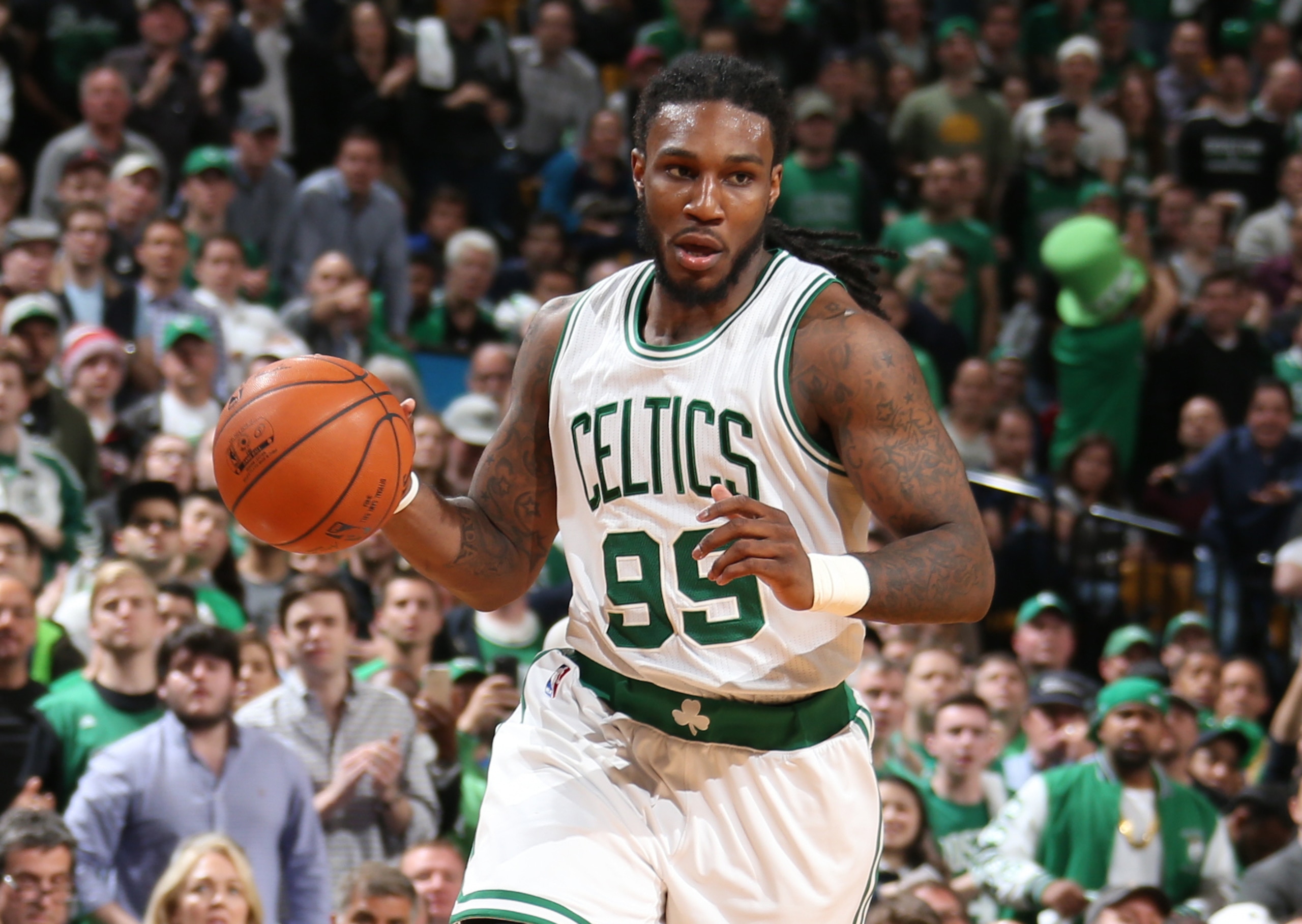
Jae Crowder shot 41.8 percent from the field and 28.2 percent beyond the arc in 57 games for the Boston Celtics this season.
Those numbers seem to scream "Expendable!" Yet, the Celtics view the 24-year-old as anything but.
"I can emphatically say that we will definitely qualify Jae Crowder, which I think is pretty obvious," Celtics president of basketball operations Danny Ainge said of the restricted free agent, via ESPN.com's Chris Forsberg.
It's the right move for Boston to make and, as Ainge said, an obvious one. No, Crowder isn't the most reliable shooter. But he's a tremendous competitor and someone who helps in nearly every other area.
His career per-36-minute marks are packed to the brim: 11.6 points, 5.7 rebounds, 2.1 assists and 1.6 steals. This season, he held opposing shooters 1.0 percentage point below their field-goal average. That doesn't sound like much, but context is needed to understand it. In Boston, where he spent the majority of the season, he routinely guarded the opponent's best wing scorer and had no rim protection behind him.
Crowder is versatile, intelligent and blue collar to his core. Any roster would welcome his addition.
Jonas Jerebko, PF
8 of 15
The Detroit Pistons could never figure out what they had in Jonas Jerebko after grabbing him with the 39th pick in 2009.
They gave him 73 starts and 27.9 minutes per game during his rookie campaign, and he responded with 9.3 points per contest on 48.1 percent shooting. But his playing time decreased in each of the next three seasons, and his volume production plummeted with it.
The Pistons finally decided to move on without Jerebko and sent him to the Celtics in a three-team trade-deadline exchange in February. Once he landed in Beantown, Jerebko found the consistent role he'd been missing in Detroit. And the 28-year-old seized his opportunity, averaging 14.1 points and 9.6 rebounds per 36 minutes and burying 40.6 percent of his three-point attempts.
A 6'10" sniper has exceptional value in today's league, and the unrestricted free agent's defensive versatility only adds to his appeal.
Cory Joseph, PG
9 of 15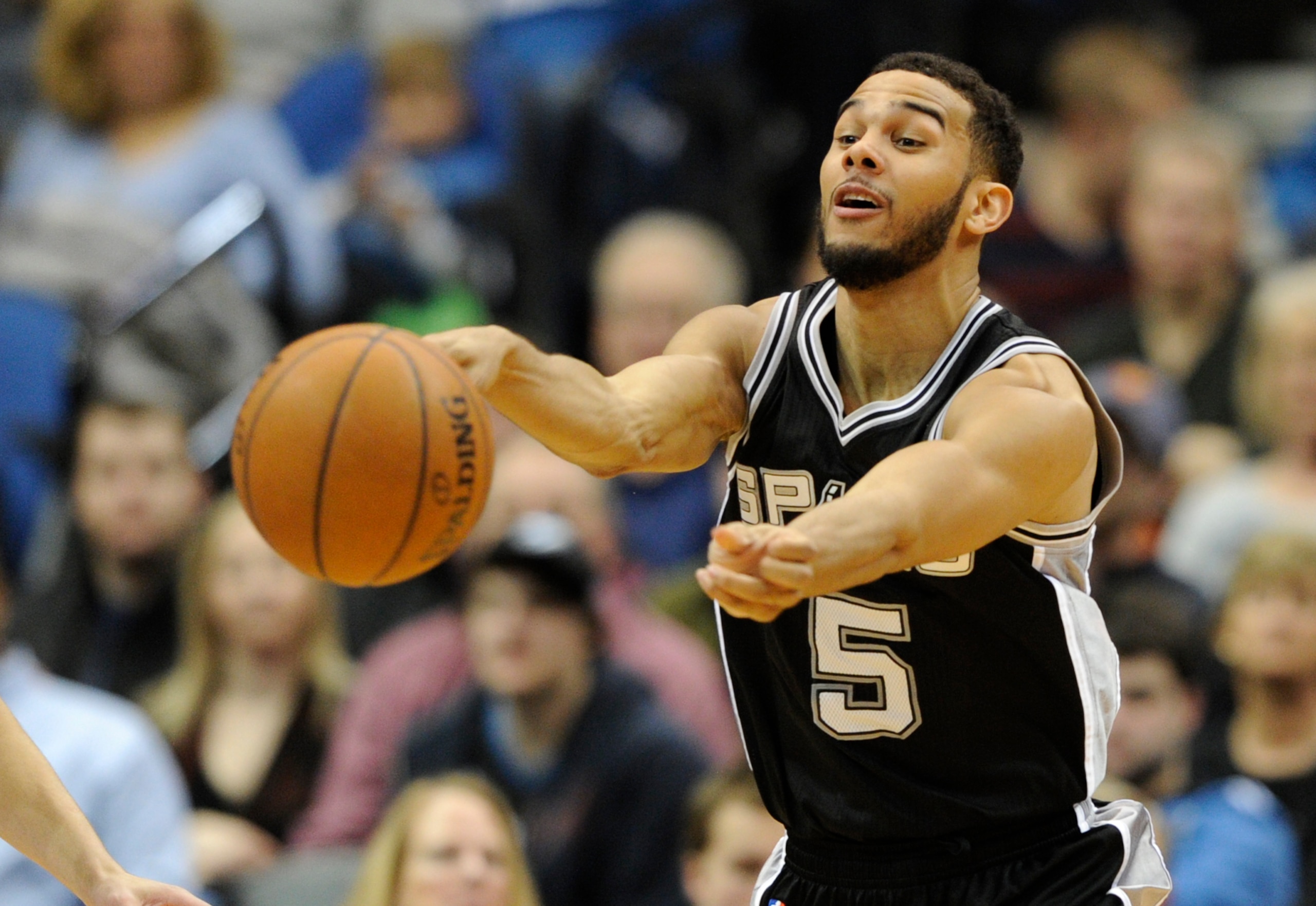
Cory Joseph did what most players who go through the San Antonio Spurs' assembly line do: He perpetually improved.
As a seldom-used rookie in 2011-12, he shot just 31.4 percent from the field and 20.0 percent from long range. By his sophomore campaign, he bumped those numbers to 46.4 and 28.6, respectively. This season, Joseph's fourth in Gregg Popovich's system, he averaged a career-high 6.8 points while converting 50.4 percent of his shots and 36.4 percent of his triples.
Joseph, 23, is clearly a much better player than when he first arrived in the Alamo City. But it will be interesting to see how the market views the restricted free agent's improvement—was it his doing or a product of his environment?
The Spurs might not be the ones who answer that question. They already have an eight-figure commitment to Tony Parker for each of the next three seasons, and Patty Mills has another two years and $7.1 million left on his deal. With other roster holes to fill, San Antonio probably doesn't want to give a third point guard major money.
But if it doesn't, someone will be ready to pounce on Joseph. He's a relentless defender and capable playmaker (career 4.6 assists against 1.7 turnovers per 36 minutes). Even if his efficiency takes a hit in a move away from San Antonio, he brings enough to the table to be a worthwhile investment.
K.J. McDaniels, SG
10 of 15
It was a tale of two seasons for hyper-athletic rookie K.J. McDaniels.
He started his campaign playing a significant role for the rebuilding Philadelphia 76ers. In Philly, McDaniels tallied 9.2 points, 3.8 rebounds, 1.3 assists and 1.3 blocks in 25.4 minutes a night, filling the highlight reels with aerial assaults on the rim and volleyball-spike rejections.
But a deadline deal sent him to the Houston Rockets, who were in the middle of a championship race and already had a crowded perimeter core. McDaniels only made 10 appearances and played a total of 33 minutes for the Rockets before an elbow fracture ended his debut effort.
The market for McDaniels, who fast tracked his path to restricted free agency by opting for a one-year deal, is murky. He aces the eye test from a physical standpoint, but he shot just 39.6 percent from the field and only 28.7 percent from deep.
Still, the 22-year-old has a skyscraper's ceiling. And he'll be a defensive menace regardless of how long the rest of his game takes to come around. If he finds his footing from beyond the arc, he could easily fill the three-and-D role that has become such a critical part of this league.
Gary Neal, SG
11 of 15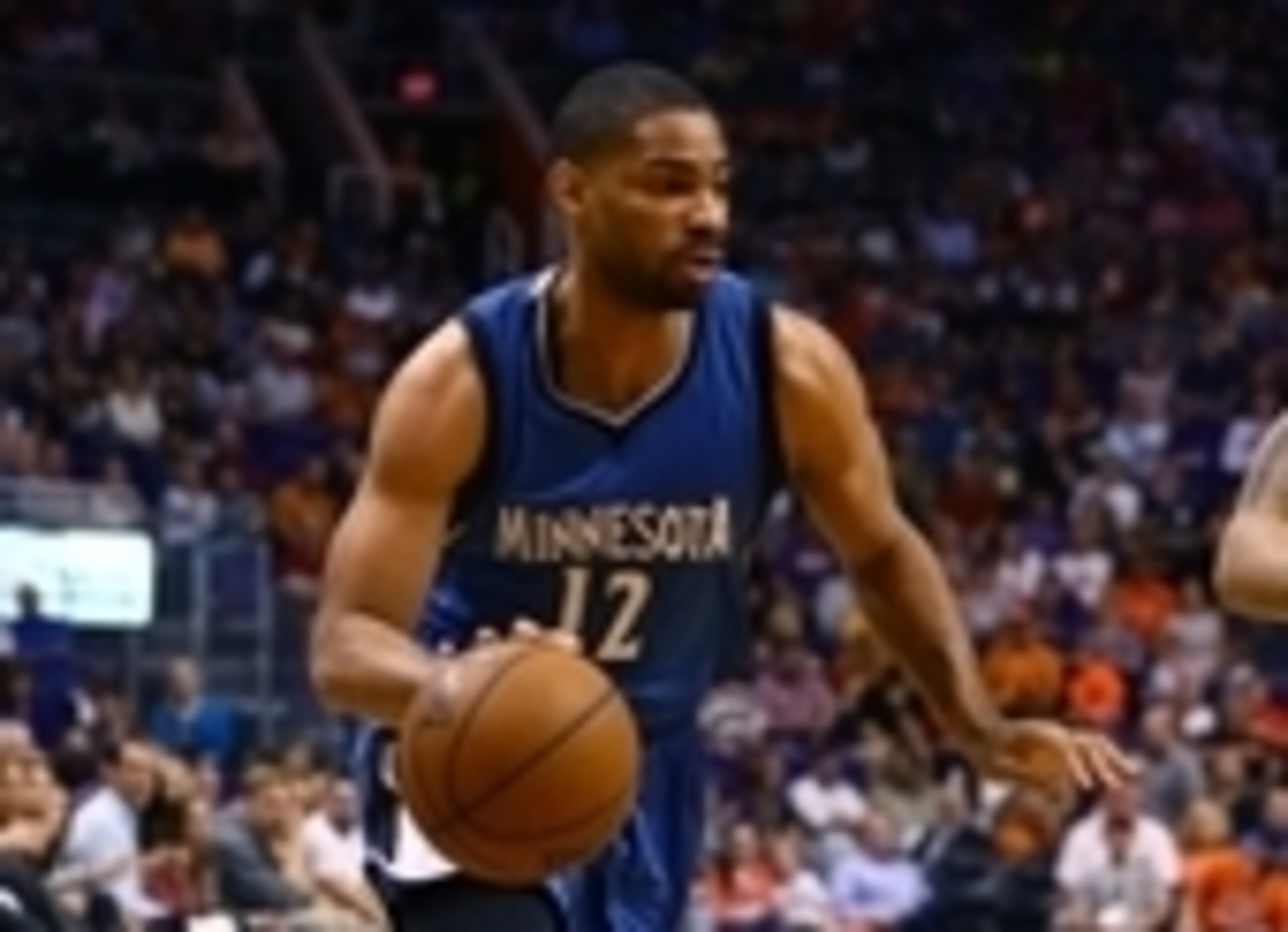
In some respects, Gary Neal is the cautionary tale for teams bidding on a San Antonio free agent. The 30-year-old last suited up for the Spurs in 2012-13, and he has yet to match both the shooting and efficiency marks he hit while with the Silver and Black.
Neal has posted better scoring numbers since leaving the Spurs, but they've been more of the volume variety. Both his field-goal and three-point percentages plummeted to personal worsts this season (37.4 and 30.5, respectively), which he split between the Charlotte Hornets and Minnesota Timberwolves.
But the unrestricted free agent ended his campaign on a high note. In 11 games with the Wolves, he averaged 11.8 points on 42.9 percent shooting. Stretched out over a full season, that scoring rate would have been the best of his career. And his field-goal percentage was as high as it had been since his sophomore season of 2011-12.
The sample size is admittedly minuscule, but his price tag should reflect that. If nothing else, the unrestricted free agent's an intriguing buy-low candidate, who could jolt a team's reserve unit with instant offense and serviceable—albeit streaky—long-range shooting.
Kyle O'Quinn, PF
12 of 15
Kyle O'Quinn is a partially proven commodity. As far as the free-agent market is concerned, that's sort of a double-edged sword.
Potential suitors can—and honestly should—question why in three seasons with the Orlando Magic he's been largely unable to hold down a permanent place in the rotation. He has never averaged more than 17.2 minutes per game, and his playing time fell to only 16.2 minutes a night this season.
But O'Quinn isn't a blank slate. He has produced when given the opportunity (career 13.0 points, 10.5 rebounds and 2.1 blocks per 36 minutes), and the biggest impediment to his playing time may have nothing to do with him. The Magic are overloaded in the frontcourt and, as any rebuilding team should do, experimenting to find the right combination.
There's quite a bit of mystery here for a third-year player, and O'Quinn's game needs more seasoning than one would like to give a 25-year-old. But there's quite a bit of talent, too.
He's always been a smooth mid-range shooter (career 48.0 percent from 10-16 feet), and the restricted free agent tried expanding his range behind the three-point arc this season. He's also an effective defender near the basket (48.6 percent shooting allowed at the rim). Bigs in today's game either need to space the floor or protect the rim. O'Quinn could potentially do both.
Kevin Seraphin, C
13 of 15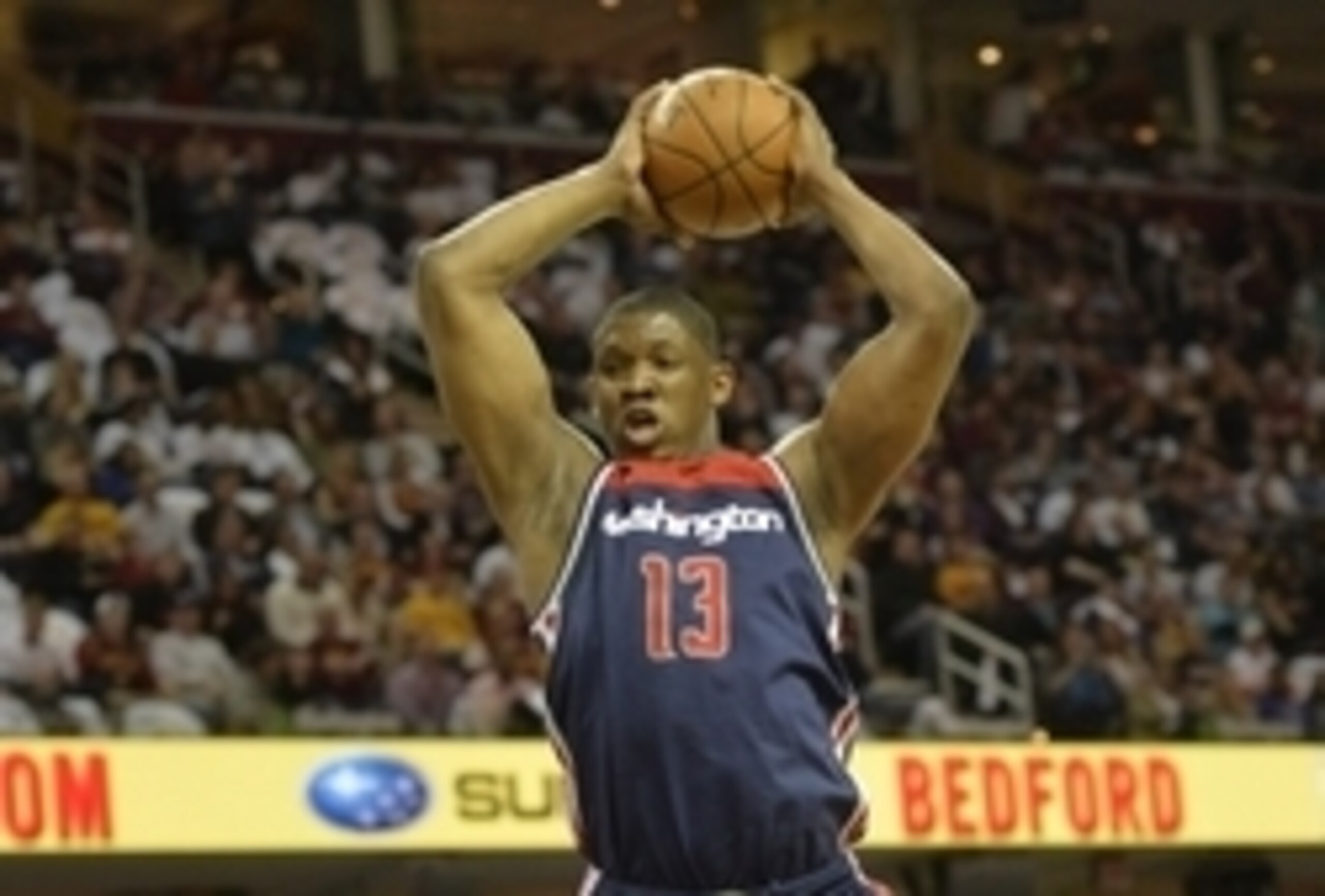
Kevin Seraphin's five-year stay with the Washington Wizards produced a mixed bag of results.
The team constantly shuffled him in and out of the rotation. He would erupt some nights and stay silent on others.
His crafty back-to-the-basket skills could give opponents fits, and he can be an effective interior defender (he held opponents 4.4 percentage points below their shooting average within six feet of the basket). But his offense is inconsistent, and late rotations and foul trouble can limit his defensive impact.
Seraphin, 25, is an enigma, but it's hard to say how much of that stems from his erratic playing time. Now an unrestricted free agent, he's searching for a team that can give him a more stable role.
"I definitely want a chance to be a starter," Seraphin told CSN's J. Michael. "I definitely want to be somewhere I have a chance to be a starter."
As long as Marcin Gortat is around, the Wizards can't give him that chance. But the team that does could add a skilled scoring center with plenty of potential left at the opposite end of the floor.
Jeff Taylor, SF
14 of 15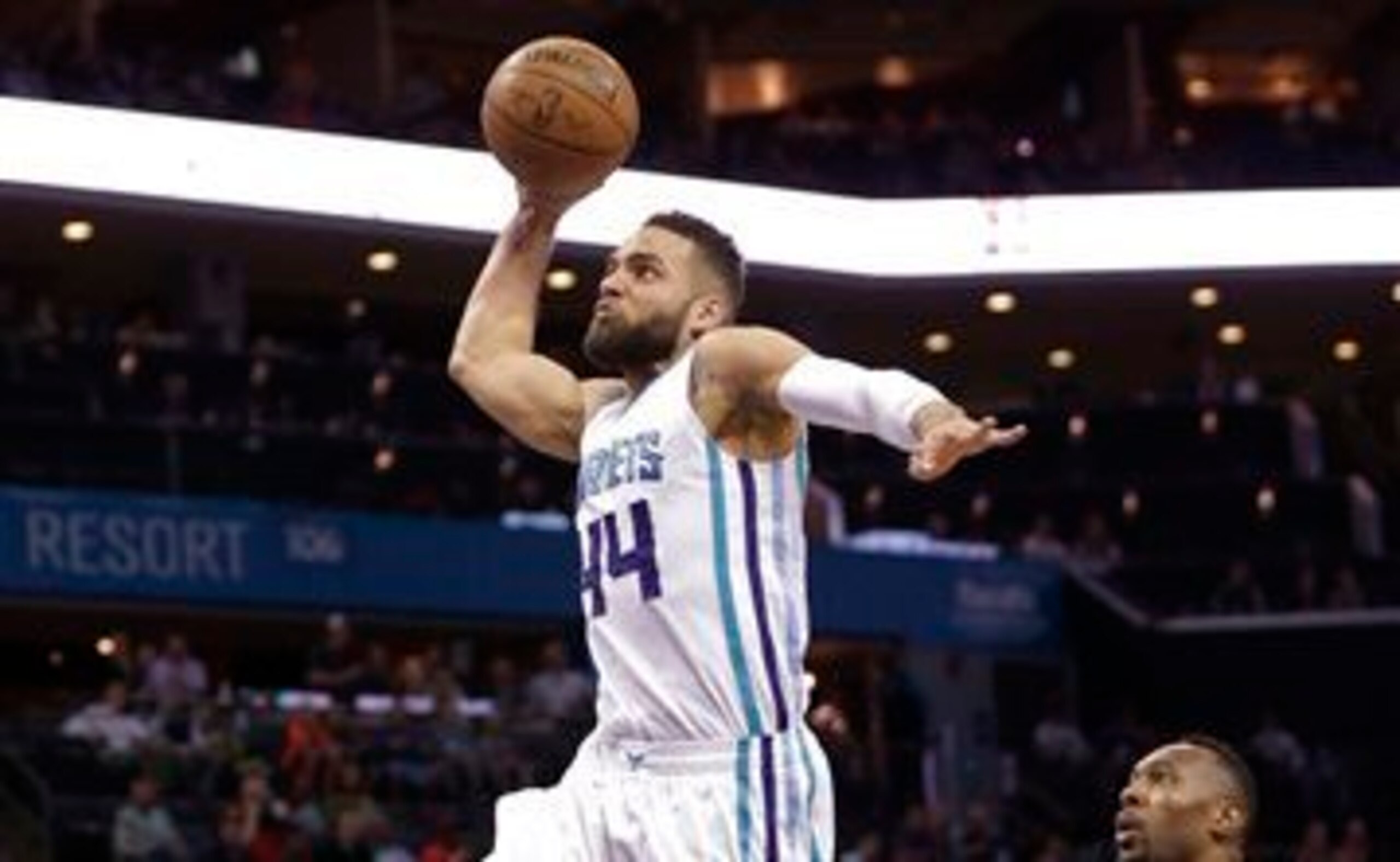
It wasn't that long ago that Jeff Taylor looked like a key piece of the Charlotte Hornets' rebuilding project. It just feels like it was.
The 31st pick in 2012, Taylor impressed right out of the gate. He made 77 appearances and 29 starts as a rookie, averaging 6.1 points on 43.1 percent shooting (34.4 percent from three) in only 19.6 minutes per game.
But a torn Achilles derailed his sophomore campaign after just 26 games. And a 24-game suspension threw his third NBA season off track after he pleaded guilty to a domestic violence charge.
Taylor has only played 55 games over the past two seasons combined. He also shot just 38.3 percent from the field and 28.2 percent from downtown during that stretch, so he clearly has work to do to get himself back on track.
The risk is unavoidable here, but the possible reward is real. He's an athletic defender, an aggressive finisher from close range and a capable shooter on the outside. The price of two-way wings is only going up, but Taylor could be a low-cost way to scratch that itch.
Marcus Thornton, SG
15 of 15
Free agency is not coming at a great time for Marcus Thornton.
This past season, he played fewer games (48) and averaged fewer minutes (15.0) than he had at any point of his six-year career. The rebuilding Celtics never worked him fully into the rotation, and the Phoenix Suns didn't bother to try after acquiring him in the deadline deal that sent Isaiah Thomas to Boston.
Thornton is also a quantity-over-quality gunner. That's not the best label to wear in a league becoming increasingly concerned with analytics and efficiency.
But the NBA still has a place for a microwave scorer like Thornton, especially when factoring in the low price it will likely take to get him. He's not the most discerning shooter, but his instant offense can work well in a reserve role. He can create his own shot off the dribble, light the lamp from distance and put up points in a flurry.
As long his next employer doesn't expect more than that, it should be pleased to bring him on board.
Unless otherwise noted, statistics used courtesy of Basketball-Reference.com and NBA.com. Salary information obtained via Basketball Insiders.



.jpg?w=2560 "Chiefs, Steelers Eye WR Trades")



.jpg?w=2560 "Latest Peyton-Colts Rumors")