Why Chelsea Are in Safe Hands for the Long Term with Thibaut Courtois
Gary Neville didn't hold back in outlining his appreciation for Chelsea's Thibaut Courtois last season.
Writing in his column for the Telegraph in November, Neville went so far as to suggest Courtois was shaping up to be an early runner for the Premier League's player of the season.
"Courtois has the talent to become the best goalkeeper in the world in the next 12 to 18 months," he enthused.


"I believe he will go past [Manuel] Neuer. The player of the season so far, for me, is not Sergio Aguero but Chelsea’s new No. 1, who has brought a smile to my face. And not many goalkeepers make me smile."
Selecting him over Petr Cech for Chelsea's first game of the season against Burnley, Jose Mourinho had long since put such faith in Courtois.
We had suspected it would happen, but Mourinho made a brave choice in dropping Cech. He was a crowd favourite, the custodian of the Chelsea goal for a decade in which he broke every record imaginable.
Replacing experience with youth isn't always as simple as it looks, especially when the experience remains equally talented.
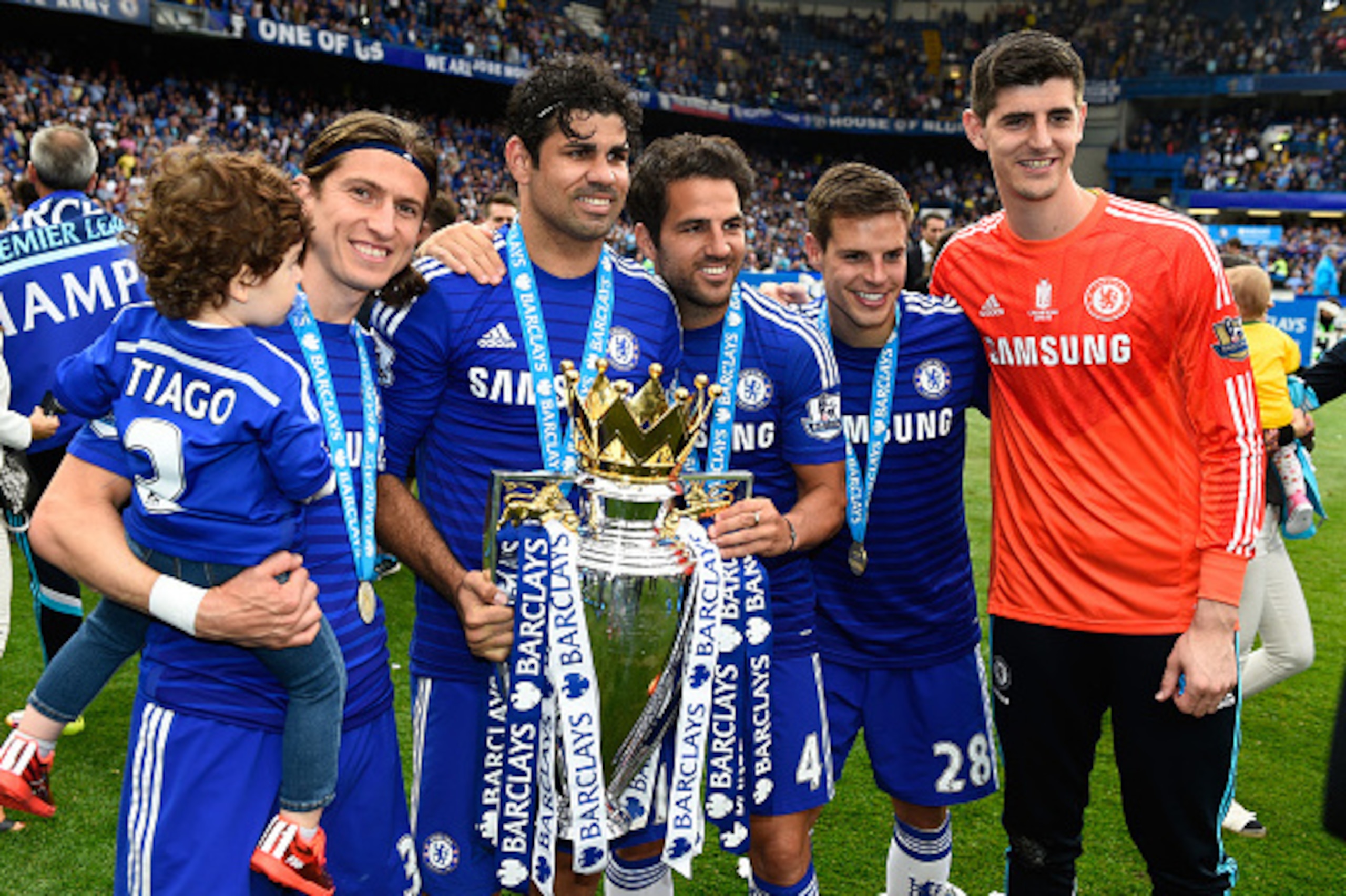
Mourinho wasn't looking at things in the short term, however. Like Neville, the Chelsea boss was setting his sights ahead to the next couple of seasons, when he will have potentially the world's finest goalkeeper on his hands.
That's where Courtois is headed, and invariably players who hold such status more often than not represent the best teams in the world.
It's what is so exciting about this Chelsea team.
We can use this column to discuss Courtois' brilliance, but then we may as well just regurgitate the reams of articles that were written throughout 2014/15.
Courtois is an assured presence, he dominates the 18-yard box and brings reassurance to the defenders in front of him. From that, defensive stability grows, and we saw Chelsea's solidity at the back get ever stronger as the previous campaign developed.
Courtois is much more than a talented goalkeeper, though. He's a symbol of where Chelsea will be in the next few years.
Neville speaks about Courtois surpassing Neuer in the future, and as a collective, it's what Chelsea are plotting to achieve when we consider the club Neuer plays for.

Mourinho isn't targeting just Bayern Munich, either. The mission at Stamford Bridge is to eclipse Real Madrid and newly crowned European champions Barcelona; to stunt Paris Saint-Germain's growth and ensure Manchester City remain England's No. 2 club.
To do that, Mourinho needs to convince the next generation at Chelsea that they actually can. He's already got Eden Hazard on board after the Belgian signed a new five-year contract in January, so the focus is elsewhere.
The notion of what makes a big club has often remained the same throughout the history of football. The definition comes with winning trophies and a considerable fan base, yet there is a key element that can go overlooked: status.
Being a big club and having big status are not the same thing.
For instance, Liverpool's history and fanbase marks them out as an institution in the English game. We hear it said often about how players should be proud to represent the club, to feel honoured that they play at Anfield.
In reality, it's not the case. The club can't attract the big names it desires, and when those in the Anfield dressing room perform to a level that attracts others, they rarely remain much longer.
Luis Suarez has been the biggest name to leave in more recent times, having used the club as a springboard to bigger and better things.

Suarez didn't just move to Barcelona for the status, he moved there to win trophies. In one season he lifted more silverware than in his entire four years at Liverpool.
Can we imagine a player leaving Barcelona for Liverpool, against the European champions' wishes?
Liverpool tried to play hardball with Suarez, but they lost because when Barcelona came calling, the prospect was too good to turn down.
It's why Courtois is so vital to Chelsea's future.
Unlike Suarez, he can't be seen to be using Stamford Bridge as a springboard. While other big clubs in England are struggling to keep hold of their talented stars—think Manchester United and the David De Gea links with Real Madrid—Chelsea are the end game for their players.
Where can Courtois go if he leaves Chelsea? The mission is to show him he can only go down.
There's been a power shift this past decade. Sure, the money of Roman Abramovich and Sheikh Mansour has effectively brought it about, but it doesn't make it any less valid.

Chelsea and Manchester City are the power brokers of the English game right now. United are spending lavishly to keep their head above water, but the past two seasons have hinted they are losing the battle.
Chelsea are signing the players clubs don't want to sell, as are Manchester City. They're offering something the others can't, and so long as that continues, their status among the elite few will remain.
Start selling the prized assets and the whole perspective changes. Suddenly the proposition isn't as appealing and the ambition doesn't appear to be there.
Angel Di Maria joined Manchester United last summer because Real Madrid allowed him to, not because the player forced it.
It was symbolic—Di Maria wasn't good enough for Real any more, so they let United have him.
It's different for Chelsea. When they have a player who is potentially the world's best goalkeeper, he cannot leave.
Forget the player for a moment; Courtois is a symbol of much more than a goalkeeper. With him at Stamford Bridge, Chelsea are in safe hands for their long-term prosperity.
It's when players of his ilk begin to leave in their prime that the walls will come tumbling down at Stamford Bridge.
Garry Hayes is Bleacher Report's lead Chelsea correspondent. All quotes were obtained firsthand unless otherwise noted. Follow him on Twitter @garryhayes





.jpg?w=2560 "Latest Peyton-Colts Rumors")