How Much Longer Does Yaya Toure Realistically Have Left at the Top of the Game?
With Manchester City 1-0 down in the 2014 League Cup final with Sunderland, they were in desperate need of some inspiration. Chasing their first win in the competition since 1976 but looking desperately short of ideas and dynamism, it was down to Yaya Toure, the club’s inspirational Ivorian midfielder, to produce a moment of brilliance to haul his side back into the match.
A mind-bending 30-yard striker that flew into the top corner of the net and gave Vito Mannone no chance brought City level. Moments later, buoyed by Toure’s brilliance, Samir Nasri hit a wonderful outside-of-the-boot shot in off the post to give City the lead. They went on to register a third and win the trophy. Toure had been the catalyst.



This was hardly an isolated story. Toure had produced a series of vitally important performances since his arrival from Barcelona in 2010. For £24 million, City got themselves a bargain.
He arrived having been exclusively a defensive midfielder at the Camp Nou. His remit was narrow, he was told not to venture over the halfway line, instead instructed to shield the back four and allow Barcelona’s array of attacking talent to flourish.
It was a gross misuse of his talents. Roberto Mancini deserves a lot of credit for spotting Toure’s potential to take on more attacking responsibility. Since moving to City, he’s transformed into one of the most unique and creative midfield players in world football, a force of nature so many have struggled to contain.
Winning goals in the FA Cup semi-final against Manchester United and final against Stoke City in 2011 went a long way in securing City their first piece of major silverware in 35 years. The goal against United, in particular, signalled a shift in momentum in Manchester and gave City the win their fans needed to really start believing the Sheikh Mansour revolution was happening.
The following season he bagged two against Newcastle United in the penultimate league match of the season as City closed in on their first title in 44 years, and then a series of strikes in last season’s run in helped the club to their second Premier League win in three seasons. Few players have contributed quite as significantly as Toure has to City’s recent success.
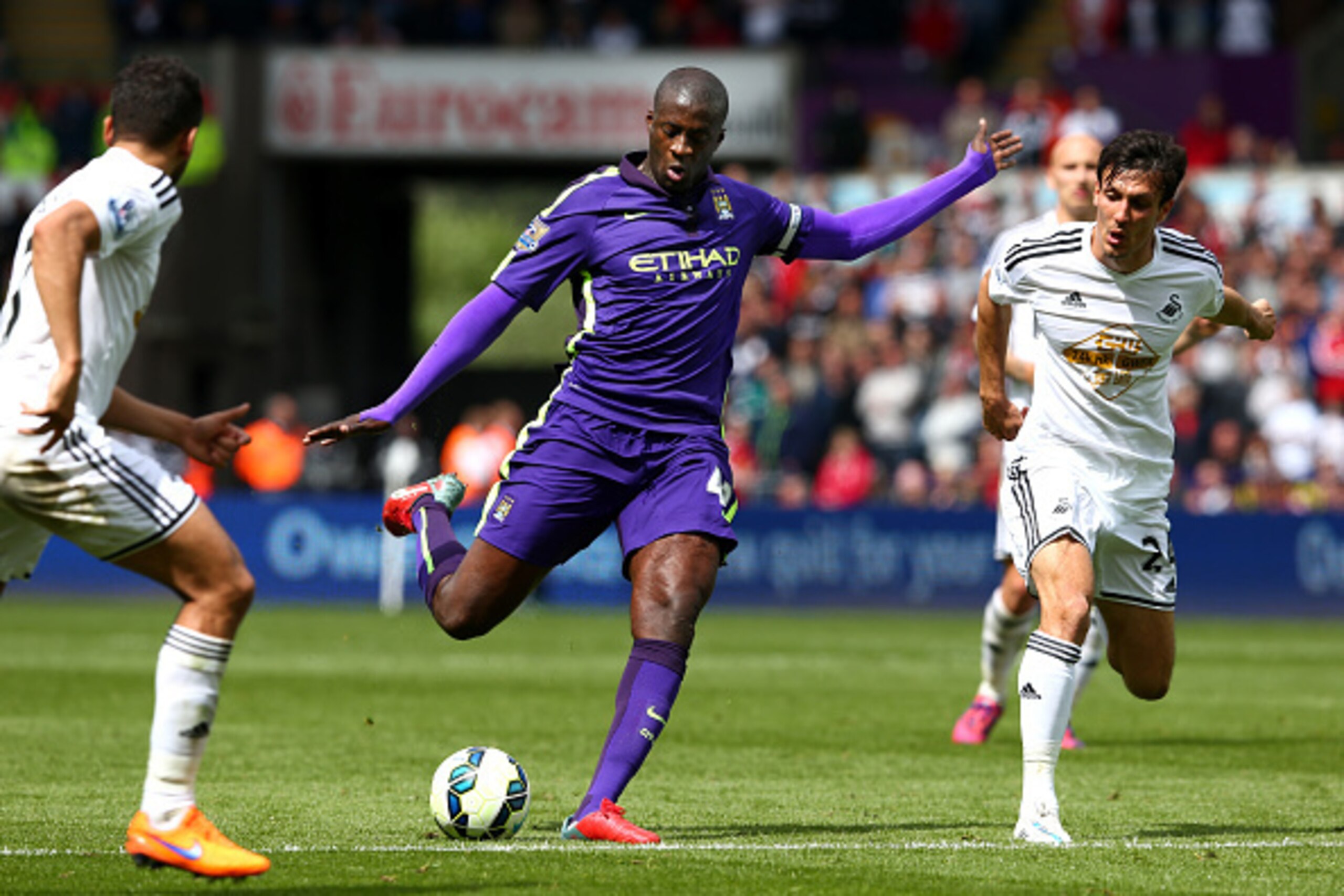
Indeed, Manuel Pellegrini’s arrival saw an even more attacking Toure, with the handbrake released still further. He scored 20 league goals in 2013/14, becoming only the second central midfielder to do so in the Premier League era, and was named the club’s Player of the Season.
But last season saw regression. Toure’s influenced waned and the goals dried up somewhat. It’s led to question marks over his longevity. At 32, can he really be expected to play at the top level for too much longer?
It’s quite possible his 2013/14 season will never be matched, but he has plenty of time left at the top of the game. He has two years left to run on his current City contract and the club may feel it’s in their interests to let him run that deal down. The £24 million fee they paid to bring him to the club has been paid back tenfold. City have nothing to lose by letting him stay until he is 34 and seeing then whether a new contract is deserved, or whether some kind of ambassadorial role is necessary.
But to maximise his impact over the next two seasons, perhaps his role needs altering. It’s arguably too much to expect a 32-year-old to play as a box-to-box-type player in a 4-4-2 system, breaking from deep and demanded to dictate play and score goals. It’s an all-consuming role, demanding every ounce of energy a player has.
Pellegrini would be well advised to reduce the demands on his star midfielder. Playing in the No. 10 role in a 4-2-3-1 formation, which is the way City ended the season playing, would be much more suitable. Toure’s attacking qualities would still be utilised, but the energy expenditure of his current role would be greatly reduced.
Players are now lasting longer than ever before. Sport science has developed rapidly in the last 10 years, and it would hardly be a surprise if Toure was still a City regular in the final year of his contract. A future role at the club beckons beyond that, whether he leaves to play somewhere else first or not.
No one embodies the club’s alteration from perennial underachievers to one of the most successful sides in English football quite as well as Toure. His profile in Africa and, indeed, the rest of the world means City should look to keep him at the club after his playing days.
His story since coming to City has been one of the most remarkable in recent times. The transformation from Camp Nou cast-off to the envy of the world has been wonderful to observe. Very few players possess the same mix of devastating attributes Toure does and City can realistically expect to see him turning out regularly for them for at least the next two years.
Rob Pollard is Bleacher Report's lead Manchester City correspondent and follows the club from a Manchester base. All quotes were obtained firsthand unless otherwise noted. Follow him on Twitter: @RobPollard.

.jpg?w=2560 "Seahawks Chiefs Football")



.jpg?w=2560 "Latest Peyton-Colts Rumors")