It's been 20 years since Penny Hardaway got his first (and last) taste of the NBA Finals.
At the time, Hardaway was an anomaly. He was a 23-year-old starring on the biggest stage in basketball in just his second season as a pro and a 6'7" forward playing the point for the Orlando Magic alongside Shaquille O'Neal and Horace Grant.
You don't have to squint too hard to see traces of Hardaway in the ongoing series between the Golden State Warriors and Cleveland Cavaliers. LeBron James, in his attempt to keep the Cavs afloat, has essentially pushed the notion of a point forward, of which Hardaway was a progenitor, to its logical—if not extreme—conclusion.
TOP NEWS

J-Dub Suffers Gruesome Leg Injury

Blockbuster Trade Idea To Shake Up the East
Melo's Quote on Confidence 😎
All the while, both teams have leaned heavily on young players to brush aside the bright lights and step up in support of their superstars.
Naturally, Hardaway's been keeping a close eye on these Finals, albeit amid a busy schedule. He produces The Bottom Line Sports Show on SiriusXM's NBA Channel, a show designed to give listeners insight on players behind the numbers, along with Charles Oakley, Howard Coward and Gerald Brown. He's also spent time scratching his basketball itch more directly, by coaching high school kids—many of whom he mentored as middle schoolers—through a tournament at his alma mater, the University of Memphis.
Bleacher Report caught up with Hardaway by phone on Monday to get a read on this year's Finals. What follows is an edited version of that conversation.
Bleacher Report: What’s it like to be a young player on a stage as big as the Finals?
Penny Hardaway: You know, it’s amazing because you’re not really in tune. Back then, I wasn’t really in tune with what was at stake. You were just playing. I knew I was in the Finals, but there wasn’t a lot of pressure. I didn’t put a lot of pressure on myself. I just played as if I were playing another basketball game. That was the difference for me. Nowadays, guys understand the magnitude because of social media, because of all the awareness, it’s a different game. But when I played, I basically was just playing like it was a normal game, out there playing ball.
BR: When you were going into the 1995 Finals as a young player, what was asked of you as far as your role was concerned?
PH: I was asked to just continue to do the same things I was doing that got us there. Don’t try to do anything different. Go out there and be relaxed. Dominate your matchup, and everything should be OK. I think it was already understood amongst us what we had to do. We had to go out there and dominate our matchups.
BR: What do you make of what LeBron’s done in these Finals as a point forward?
PH: It’s so hard to even pick anything out that LeBron is doing wrong because he’s averaging almost 40 points, 10-12 rebounds and almost averaging double-figure assists. He’s almost averaging a triple-double. The only thing that I would say is that I would love to see him not settle for so many one-legged fadeaways. That’s his game, that’s the freedom of his game, but with that strong, powerful body, he is unstoppable. That’s the only thing I would see: him get on the post more instead of catching the ball out so far. Maybe that helps. But who am I to say that to LeBron James? He’s a four-time MVP, two-time champion. It’s just, as a fan, when you see him shoot those fadeaways and stuff, it’s like, well, he bailed the defense out on that because there’s no way that guy could stop him if he really did what he had to do.

BR: Do you think energy plays a part in that?
PH: It does play a part because I can see him conserving energy a lot during the game. When he becomes a point forward, he definitely is conserving energy to try not to burn himself out.
BR: What would you do to try to conserve energy as a point forward?
PH: I didn’t have to shoulder that much of the load because I had so much help. If I were in LeBron’s situation, I think I was there when we played the Miami Heat when Shaq left to go to L.A...only during timeouts, really, and free throws and dead-ball situations where you can kind of catch your breath. Anything outside of that is going to be too tough to do so, unless you walk the ball up the floor and play a slower-paced game. It worked the first three games, but then the last couple, it really hasn’t worked as well.
BR: How has the point forward position evolved in the NBA since you played it?
PH: I think it’s just LeBron, actually. I think it’s just LeBron. I think he’s just kind of feeling like I have to do this for us to win. This is our best shot, and he’s doing it. He’s in a unique situation.
BR: If you had a say, would you give LeBron Finals MVP even if the Cavs lost?
PH: No. I don’t ever believe in giving a guy, no matter how many points he averages, the MVP if he doesn’t win. It always has to go to the winning team, in my mind. LeBron’s put up unbelievable numbers, but if he doesn’t win, you don’t deserve MVP.
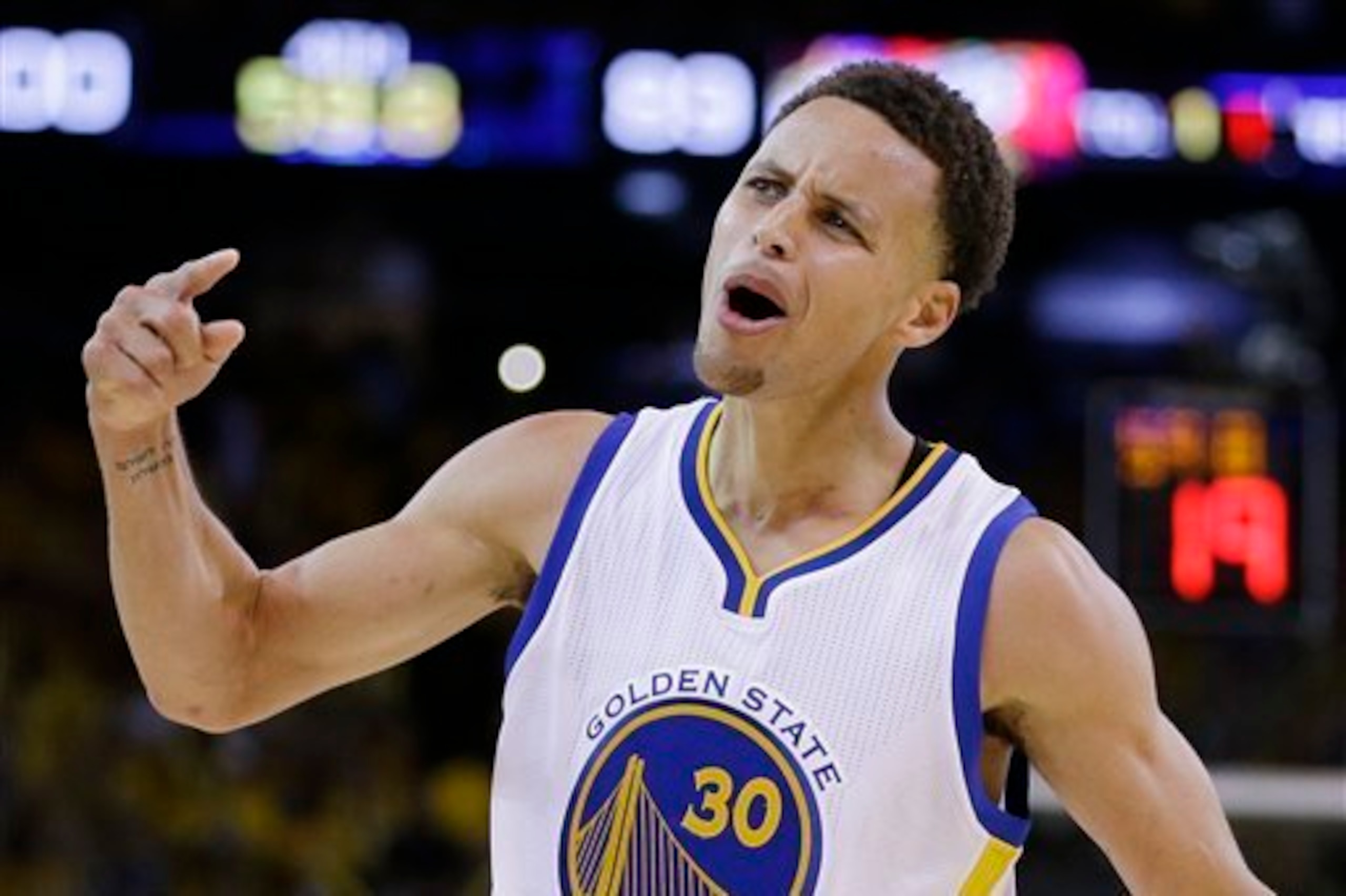
BR: If the Warriors win, who would you give it to?
PH: Steph [Curry]. I’d give it to Steph because he’s drawing so much attention for the other guys. Even if he’s not scoring, he’s the reason why that the other guys are scoring because they’re double-teaming him almost every time. They almost have to faceguard him to try not to get him the ball back. He’s allowing guys to play.
Josh Martin covers the NBA for Bleacher Report. Follow him on Twitter.




.jpg?w=2560 "Latest Peyton-Colts Rumors")