

Everyone, come and gather 'round the crystal baseball. It's time to gaze into the future.
Specifically, we're interested in looking at what Major League Baseball's power structure will look like in a few years' time. We can, after all, safely assume that the current status quo won't be set in stone forever. Teams are going to rise, and teams are going to fall.
For this mission, we're going to need some ground rules.
It would be too easy to look ahead to 2016 or 2017, so we're going to go three years down the line to 2018. As for how we'll be sizing teams up, we'll keep things simple by looking at the players they control for the long haul, their financial flexibility and what's in their prospect pipelines.
We'll go division by division and get a sense of the league's eventual power structure by ranking the futures of the teams within them. Step into the box whenever you're ready.
The AL East
1 of 6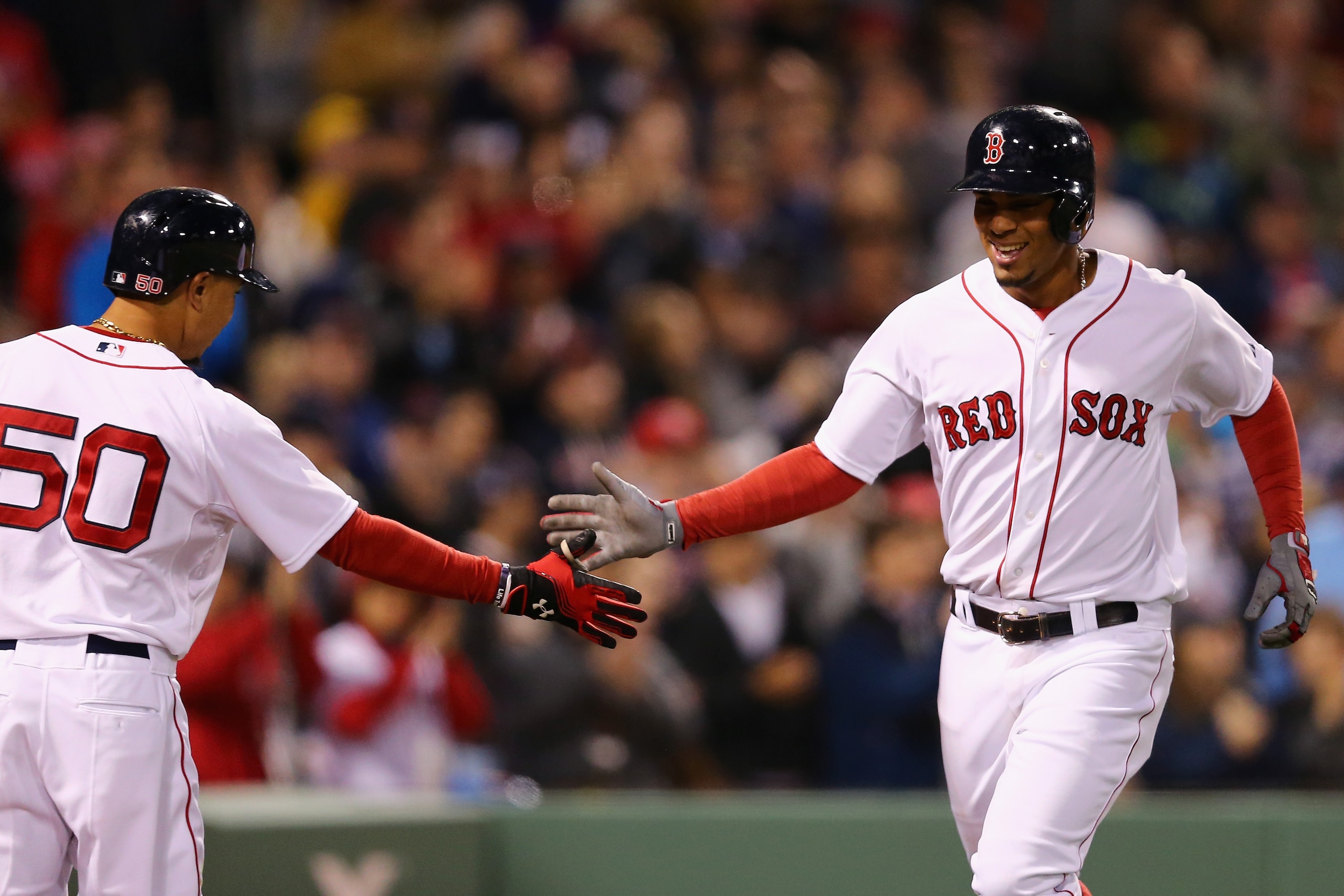
1. Boston Red Sox
In 2015, the Red Sox have looked at least as bad—and arguably worse—than the last-place team they've been. Looking beyond 2015, however, there's plenty to like about what's ahead for Boston.
In David Ortiz, Mike Napoli and Shane Victorino, the Red Sox will soon shed some older parts. And though Hanley Ramirez, Pablo Sandoval and Dustin Pedroia are good bets to be albatrosses when 2018 rolls around, they'll be wrapped around a rock-solid core of players like Xander Bogaerts, Mookie Betts, Blake Swihart, Rusney Castillo, Rick Porcello, Eduardo Rodriguez and Wade Miley.
A handful of those parts have come from a farm system that's still very strong, checking in at No. 4 on B/R's Joel Reuter's post-draft rankings. Between that and the less than $70 million in salaries the Red Sox have committed to 2018, they shouldn't have trouble loading up on talent in the coming years.
2. New York Yankees
The Yankees are in a weird spot, as the roster they have this year has pushed them to the top of the AL East but doesn't have a very long shelf life.
In the next couple of years, the Yankees are going to be losing Alex Rodriguez, CC Sabathia, Mark Teixeira and Carlos Beltran. And though guys like Jacoby Ellsbury, Brett Gardner, Chase Headley, Brian McCann and Andrew Miller are controlled through 2018, all of them should be past their primes by then.
The good news, however, is twofold.
For one, that the Yankees have less than $100 million committed to 2018 means they'll soon have a whole bunch of spending power. Two, their 15th-ranked farm system will soon provide them with studs like Aaron Judge and Luis Severino, and is generally trending upward.
3. Tampa Bay Rays
There might be no team that's been as good as quietly as the Rays have been this season, and it shouldn't be just a one-year thing.
The Rays have some solid players committed for the long haul, as Evan Longoria, Chris Archer, Matt Moore, Drew Smyly, Jake Odorizzi, Kevin Kiermaier and Steven Souza Jr. are locked up through 2018. And though they stand to lose guys like Alex Cobb, Desmond Jennings and Jake McGee to free agency before then, it's a good bet that at least one of them will be traded for some young talent.
Speaking of which, the Rays have baseball's No. 11 farm system, and it's loaded with the bats that they'll soon need to complement the arms they already have. They should also have the money for the team-friendly deals they love so much, as they have less than $20 million in commitments for 2018.
4. Toronto Blue Jays
The Blue Jays are suddenly playing like a team that doesn't want to waste its 2015 season. And looking at the state of their future, that's certainly the right idea.
Toronto's partnership with the slugging duo of Jose Bautista and Edwin Encarnacion seems destined to end after 2016, and by then R.A. Dickey and Mark Buehrle will also be gone. And though Jose Reyes, Russell Martin and Josh Donaldson are controlled through 2018, they're not getting any younger.
Fortunately, the Blue Jays have a young core of Marcus Stroman, Drew Hutchison, Aaron Sanchez, Daniel Norris, Dalton Pompey and Devon Travis locked up through 2018. And while there's not much left in their 14th-ranked farm system, they could boost what they have with money instead. As of now, they have less than $24 million committed to 2018.
5. Baltimore Orioles
The Orioles are struggling to keep up with the rest of the AL East. And with the way things are shaping up, that looks like a tease for their near future.
The Orioles could soon see a whole bunch of talent jump ship, as Chris Davis, Matt Wieters, Wei-Yin Chen and Bud Norris are set for free agency this winter. And through 2018, the only regulars they have control of are Adam Jones, J.J. Hardy, Manny Machado, Jonathan Schoop and Jimmy Paredes.
The good news is that the Orioles have less than $20 million committed to 2018. The bad news is that they tend to hesitate before spending. The further bad news is that they're still waiting on Dylan Bundy and Kevin Gausman to live up to their potential, and below them is a farm system that ranks 29th.
The AL Central
2 of 6
1. Cleveland Indians
Take a look now, and you'll see the Indians at the bottom of the AL Central. Stick with them, however, and eventually you'll see them skyrocket to the top of the division.
In lineup stalwarts Jason Kipnis, Michael Brantley and Yan Gomes, and a starting rotation foursome of Corey Kluber, Carlos Carrasco, Trevor Bauer and Danny Salazar, the Indians have a very strong core of players locked up through 2018. Add in fewer than $40 million in commitments for 2018, and they should also have some money to add outside talent.
The real boost, however, could come from within.
Cleveland may only have MLB's No. 22 farm system, but it features stud shortstop Francisco Lindor and at least three other high-ceiling talents in outfielders Bradley Zimmer and Clint Frazier and left-hander Brady Aiken. If they're added to what the Indians already have, the club will have juggernaut potential.
2. Minnesota Twins
It's frankly hard to explain the Twins being in second place in the AL Central, as their roster consists of a so-so group of veterans and a good-not-great group of youngsters.
Unfortunately, they're stuck with that so-so group of veterans, as Joe Mauer, Phil Hughes, Ricky Nolasco and Ervin Santana are controlled through 2018 at big bucks. So is Glen Perkins, who will probably be over the hill by then. Worse, it's largely because of these guys that the small-market Twins have an uncomfortably large sum of $60 million committed to 2018.
The bright side, however, is very, very bright.
The Twins already have some solid building blocks in Brian Dozier, Oswaldo Arcia, Kyle Gibson and Trevor May, and they also have the very best farm system in MLB. That will soon produce Byron Buxton, Miguel Sano and a handful of other elites, allowing the Twins to be on their way.
3. Chicago White Sox
The White Sox's push to contend in 2015 has resulted in a whole bunch of mediocrity. But in the long run, it could very well look like a prelude to the real deal.
The White Sox don't have much locked up for the long haul, but what parts they do have locked up are very good. Among those controlled through 2018 are Jose Abreu, Chris Sale, Jose Quintana, Carlos Rodon, David Robertson, Avisail Garcia and Adam Eaton.
That's a darn good core to build around. And the White Sox should have the tools for the job.
Though their farm system only ranks at 21st in MLB, it does feature high-upside talents like shortstop Tim Anderson and freshly drafted right-hander Carson Fulmer. Add in the financial flexibility allowed by less than $45 million in salary commitments for 2018, and there's plenty of talent waiting to be added on the South Side.
4. Kansas City Royals
The Royals currently find themselves atop the AL Central and, given how balanced they are across the board, in a strong position for another run to the World Series.
Royals fans should enjoy it while it lasts, because things will soon get dicey. Among the players the Royals stand to lose to free agency in the coming years are Alex Gordon and Greg Holland after 2016 and Eric Hosmer, Mike Moustakas, Lorenzo Cain and Wade Davis after 2017.
It's highly unlikely that the small-market Royals will be able to keep the band together by handing out big-money extensions. That means they'll have to replenish their ranks from within, and that'll be hard to do with baseball's No. 20 farm system. And though the Royals could boost that number with trades in the next two seasons, that won't happen if the Royals are still contenders in 2016 and 2017.
5. Detroit Tigers
The Tigers are barely hanging on in third place in the AL Central. But lest you think things can't get worse, be warned that things could really go downhill after 2015.
The Tigers stand to lose David Price, Yoenis Cespedes, Joakim Soria, Alex Avila and Alfredo Simon to free agency this winter. And though they do tend to have a lot of money to spend, that they have so much money tied up in Miguel Cabrera, Justin Verlander, Victor Martinez, Anibal Sanchez and Ian Kinsler does put a dent in their spending power.
Even worse is how all five of them are either already in their decline phases or will soon find themselves there. Even worse is the reality that the Tigers have baseball's No. 30 farm system. They're thus headed toward a future that features too many wrinkles and not enough youth.
The AL West
3 of 6
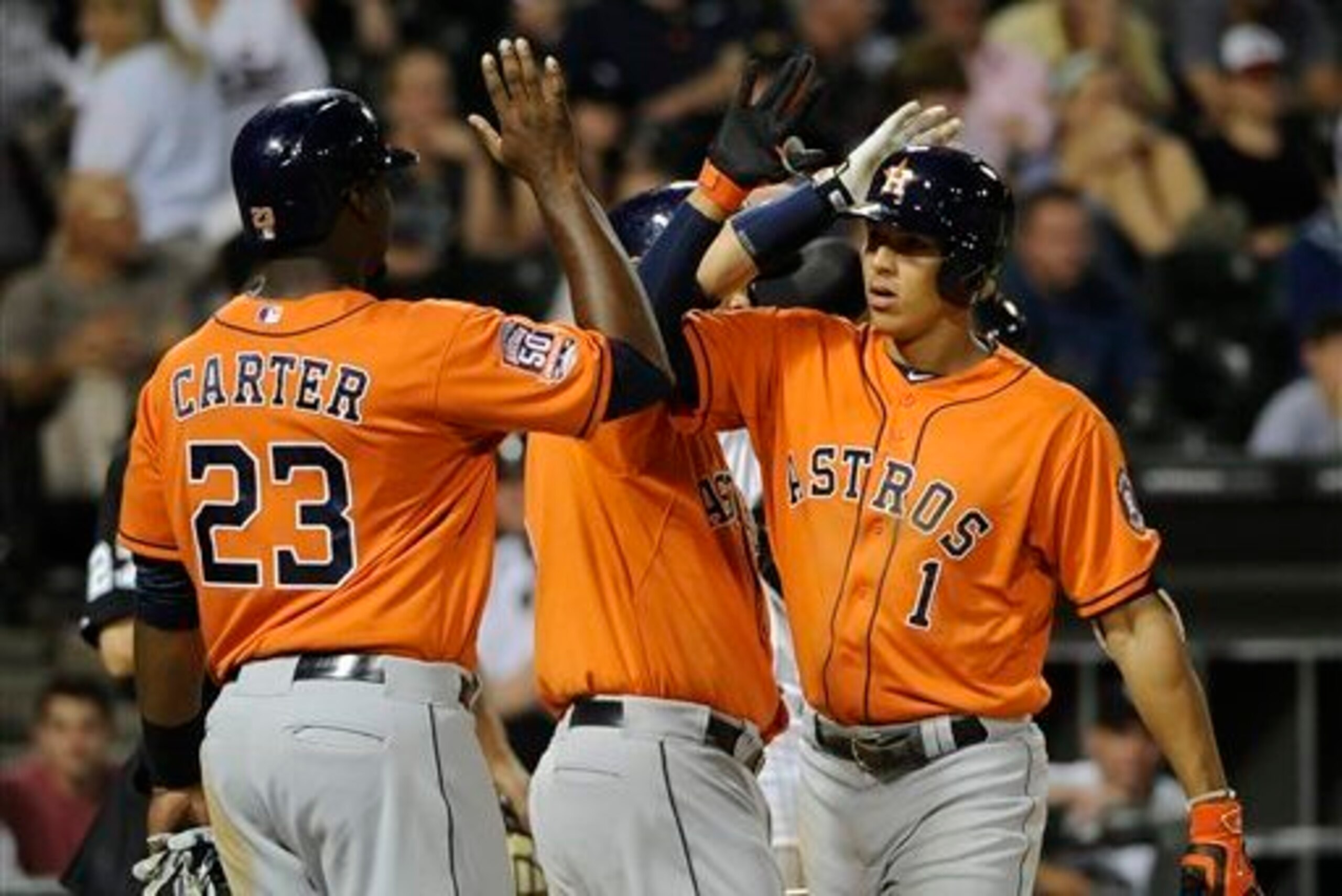
1. Houston Astros
The 2015 season has seen the Astros transform from perennial cellar dwellers to the team to beat in the AL West. And knowing what they're packing, the transition likely won't be just a one-year thing.
The Astros are loaded with controllable talent, as the list of players they control through at least 2018 includes Jose Altuve, Chris Carter, Evan Gattis, George Springer, Carlos Correa, Dallas Keuchel, Collin McHugh and Lance McCullers Jr. And because they're all so young and cheap, it's no surprise that the Astros have all of $3 million in salaries committed to 2018.
That's what happens when you develop young talent, and there's plenty more on the way. The Astros have MLB's No. 2 farm system, in part because they recently bolstered it with what MLB.com's Jim Callis thinks was the best haul of the 2015 draft.
2. Los Angeles Angels
The Angels' quest to repeat as MLB's best team isn't going so well, as they find themselves fighting to get above .500 as the season nears the halfway point.
And looking ahead, the Angels' future looks a bit shaky. Albert Pujols is going to sink further into albatross territory as the years go by. And while Mike Trout, Garrett Richards, Kole Calhoun, Matt Shoemaker and Tyler Skaggs make for a good core of young talent, it's not an especially deep core. With the Angels' farm system only checking in at No. 27, additional young talent isn't forthcoming.
So why are things not as bad as they seem?
Partly because any team that has Trout is in good shape, but also because the Angels will be down below $65 million in commitments for 2018 once they get rid of Josh Hamilton's contract and other expensive ones. They'll be able to buy their way to the top.
3. Texas Rangers
The Rangers have made a shocking rise from the depths in the last couple of weeks, mainly because they've made the most of a roster that features equal parts stars and scrubs.
Looking ahead, though, there are concerns.
The Rangers owe big money to Prince Fielder, Shin-Soo Choo and Elvis Andrus through 2018, and all three are likely to be albatrosses by then. And outside of them, the Rangers control a good-not-great core of Joey Gallo, Leonys Martin, Nick Martinez and Martin Perez through 2018.
Fortunately, other big contracts coming off the books will lower the Rangers' salary commitments below $60 million by 2018. They also have MLB's No. 9 farm system, which is now loaded with talented pitching after a strong draft. They'll have their work cut out for them, but they won't sink too far.
4. Seattle Mariners
The Mariners have been one of 2015's biggest disappointments, as they find themselves in fourth place in the AL West and seemingly incapable of getting on track.
And to a degree, what's happened this year has clouded their future. Robinson Cano appears to be on his way to albatross status. With Nelson Cruz likely headed in that direction before long, the Mariners stand to have $40 million in dead weight on their payroll by 2018.
That'll make it tough for them to add to a solid core featuring Felix Hernandez, Kyle Seager, Mike Zunino, James Paxton, Taijuan Walker and Carson Smith. And as much as the Mariners would probably love to graduate some young talent, their farm system has been depleted to a point where it now ranks 26th.
So, the M's had better get on track and win now. It'll be that much harder later.
5. Oakland Athletics
Whatever the A's had in mind for 2015 after remodeling in a big way over the winter, it hasn't worked. They're in last place in the AL West and are likely stuck there.
That puts the A's in a position to get what they can for their tradeable assets, and that's a long list. Scott Kazmir, Ben Zobrist and Tyler Clippard loom the largest on it, but Josh Reddick, Jesse Chavez and Stephen Vogt could also be moved as well.
If they are moved, general manager Billy Beane had better get his money's worth.
Because right now he has a long-term core that features Sonny Gray, Sean Doolittle, Brett Lawrie and then a bunch of spare parts. Below it all is a farm system that ranks just 24th after extensive pillaging in recent seasons. And though the team's salary commitments fall below $20 million as soon as 2017, "payroll flexibility" is very much a relative term.


The NL East
4 of 6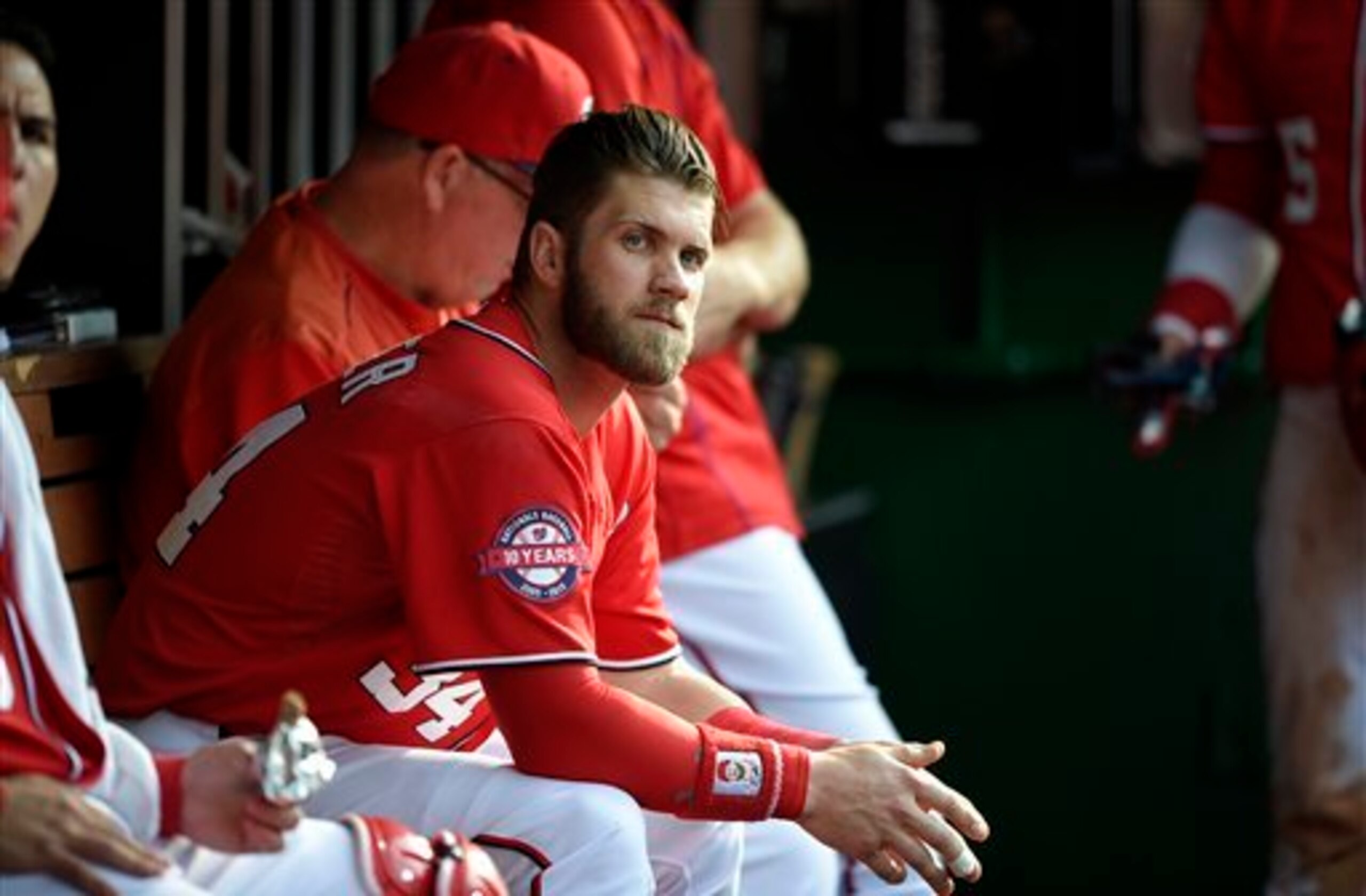
1. New York Mets
It seems like the Mets are dealing with a crisis each day in 2015, but things have generally been good as they find themselves in a battle for first place in the NL East.
And the thing is, we're probably only witnessing the start of a bright future.
Outside of the crumbling David Wright, the pieces the Mets control through 2018 include hard-throwing foursome Matt Harvey, Jacob deGrom, Noah Syndergaard and Zack Wheeler, as well as a stud center fielder in Juan Lagares and a talented catcher in Travis d'Arnaud.
It's true there's not much depth there, but the Mets should be able to add some from outside with their salary commitments set to count down below $30 million by 2018. They should also be able to add some from within, as they're sitting on a top-10 farm system even after a lackluster draft.
2. Washington Nationals
The Nationals have gone back to being inconsistent after an incredible hot stretch, but don't worry. They're still a championship-caliber team.
The real trouble is coming, though. The Nats could lose Jordan Zimmermann, Doug Fister, Denard Span and Ian Desmond to free agency this winter, and Stephen Strasburg and Drew Storen next winter. When it comes to pieces they have locked up to 2018, there's only Bryce Harper, Anthony Rendon, Max Scherzer, Gio Gonzalez, Tanner Roark and a bunch of role players.
They'll thus need to make the most of their spending power knowing that their salary commitments will be below $40 million by 2018. They'll also need some fresh talent, which their No. 16-ranked system fortunately should be able to provide.
Here's thinking the Nats will piece it together and keep putting together great teams. It's just that it wouldn't be at all surprising if the Mets leapfrog them in the firepower department and stay there.
3. Atlanta Braves
The Braves probably aren't making the postseason this year, but they've been surprisingly good. That makes you wonder how they could be once they're actually trying again.
Spoiler: Pretty good.
The Braves have a core that notably includes Freddie Freeman, Andrelton Simmons, Nick Markakis, Shelby Miller, Julio Teheran and Alex Wood locked up through 2018. And with MLB's No. 12 farm system at their disposal, more young talent should soon be arriving.
True, it's easy to notice the Braves have over $50 million in commitments for 2018, and you can imagine how much arbitration costs will add to that. But the thing to keep in mind is that their revenues will be boosted by a new ballpark by then, allowing them to afford the talent they already have and more.
4. Philadelphia Phillies
The Phillies are a last-place team now, and perilously short on young, worthwhile talent at the major league level. So, why, oh why, are they not at the bottom of this list?
Well, one good thing the Phillies have going for them is that they'll soon have a bunch of big contracts off their hands. Cole Hamels should be traded this summer. Cliff Lee and Jonathan Papelbon should be gone this winter. Then it will be time for Ryan Howard and Chase Utley to go after that.
That's a lot of money coming off the books, which is a scary thought knowing that the Phillies can use their new $2.5 billion TV deal to replenish their ranks. They also have a farm system that's only No. 23 now but is bound to get better as they shed more and more parts and lose more and more games.
Add it all up, and the Phillies' rebuild looks like one that could be over quickly.
5. Miami Marlins
The Marlins are not a good team right now. They have the core, but they don't have enough around it.
And going forward, this could continue to be the status quo.
The list of players the Marlins control through 2018 includes Giancarlo Stanton, Jose Fernandez, Christian Yelich, Dee Gordon, Adeiny Hechavarria and Marcell Ozuna. With the right supporting cast, that's a group that could do a lot of damage.
But the Marlins don't have the right supporting cast now in part because of their cheapness and in part because their farm system is lacking. Both could continue to be problems. The $32 million in salary commitments the Marlins have locked into 2018 is almost half of what they're spending this year, and their farm system is only ranked No. 25 and not trending upward.
The NL Central
5 of 6
1. Chicago Cubs
Yes, the Cubs are legit contenders this year. And yes, this is just the start of something much bigger.
Few teams are built for the long haul quite like the Cubs. Among the stars they control through 2018 are Jon Lester, Anthony Rizzo, Kris Bryant, Addison Russell, Jorge Soler and Starlin Castro. And because a handful of them are signed to team-friendly deals, the Cubs' salary commitments for 2018 only amount to $50 million. Not bad for a big-market club.
That makes it possible for the Cubs to extend Jake Arrieta if they so choose, but the real fun will be watching them continuing to add talent from a farm system that still ranks in the top 10. And though it lacks pitching, its wealth of bats should make it easy to acquire impact arms in trades.
2. St. Louis Cardinals
The Cardinals are once again making excellence look routine in 2015, as they're in first place in the NL Central by plenty.
Looking forward, what puts a damper on things is the reality that Adam Wainwright and Yadier Molina are likely past their primes and that guys like Jason Heyward, John Lackey, Lance Lynn, Jhonny Peralta and Matt Holliday are due for free agency before 2018. That makes it look like the Cards aren't built to last.
And yet, their controllable core includes Matt Carpenter, Kolten Wong, Matt Adams, Michael Wacha, Carlos Martinez and Trevor Rosenthal. With their commitments for 2018 below $40 million, they're due for some spending power. Although they only have MLB's No. 17 farm system, their record of turning silver into gold is a reminder that farm system ranks are largely pointless with them.
3. Pittsburgh Pirates
After getting off to a slow start, the Pirates have come on lately and looked a lot more like the team that made the playoffs in 2013 and 2014.
And they may keep sticking around. Though they stand to lose guys like A.J. Burnett, Pedro Alvarez, Francisco Liriano, Neil Walker and Mark Melancon in coming winters, their core isn't going anywhere.
That core is a good one, as Andrew McCutchen, Starling Marte, Josh Harrison, Jung-Ho Kang, Gregory Polanco and Gerrit Cole are all controlled through 2018. As for how the Pirates can flesh things out around that core, their commitments for 2018 are only in the $35 million range and they also have baseball's No. 7 farm system. Adding talent shouldn't be a problem.
4. Cincinnati Reds
The Reds aren't that far off from .500, but we're not wrong to be asking when they're going to raise the white flag and sell off what they have. It's what needs to be done.
With guys like Joey Votto, Homer Bailey, Brandon Phillips and Jay Bruce weighing down their payroll, the Reds need to accumulate as much cheap young talent as they can, especially knowing that two of those deals (Votto and Bailey) will be on their hands through at least 2019.
Fortunately, the Reds could add quite a bit of talent if they deal Johnny Cueto, Mike Leake and/or Todd Frazier this summer. If they do, they'll be adding to a system that already ranks at No. 13 and is providing future support for guys like Devin Mesoraco, Billy Hamilton, Anthony DeSclafani and Michael Lorenzen.
Then they'll just have to catch up with the Cubs, Cardinals and Pirates. That'll be the hard part.
5. Milwaukee Brewers
The Brewers stink now, and are probably doomed to keep stinking for a while longer.
This is, after all, a team that's painfully short on worthwhile controllable talent. Ryan Braun's health is already a volatile thing, and around him is a controllable core that includes unspectacular names like Jean Segura, Khris Davis, Wily Peralta, Mike Fiers and Jimmy Nelson.
Like the Reds, the best thing the Brewers can do in the short term is sell off what they have, be it Aramis Ramirez and Kyle Lohse or even Carlos Gomez and Jonathan Lucroy. But even if they do, they'll only be beginning to rebuild a farm system that ranks all the way down at No. 28.
The NL West
6 of 6
1. Los Angeles Dodgers
The Dodgers are on top of the NL West now, and here's a spoiler: Things are staying that way for a while.
Yes, the Dodgers have some looming departures that will hurt them. Zack Greinke and Howie Kendrick are among the players who could leave this winter, and Kenley Jansen and Carl Crawford could leave in the following two winters. Elsewhere, they have to worry about Adrian Gonzalez, Andre Ethier, Brandon McCarthy and Hyun-Jin Ryu succumbing to the injury and/or age bugs.
But oh well. The Dodgers have Clayton Kershaw, Yasiel Puig, Joc Pederson, Alex Guerrero and Yasmani Grandal locked up long-term. They also certainly have the money to add outside talent, and they're also sitting on baseball's No. 3 farm system after an excellent draft.
Really, what more could you ask for?
2. Arizona Diamondbacks
The Diamondbacks are in last place in the NL West, which may also be where they end up this fall. After that, however, their ascent could happen quickly.
The Diamondbacks are short on talent now, but they do have a strong controllable core headlined by Paul Goldschmidt, A.J. Pollock, Yasmany Tomas, Patrick Corbin and Chase Anderson. They've also quietly positioned themselves to become a big-time spender with a $1.5 billion TV contract.
Meanwhile, Arizona's farm system ranks at No. 5. It's loaded with talented arms and recently welcomed a No. 1 overall pick in star Vanderbilt shortstop Dansby Swanson.
So don't sleep on the D-Backs. They're coming.
3. San Francisco Giants
Unlike in 2011 and 2013, the Giants are refusing to succumb to a World Series hangover. They're in second place in the NL West and breathing down the necks of the Dodgers.
But looking ahead, things could soon get tricky.
In Buster Posey, Hunter Pence, Madison Bumgarner, Joe Panik and Chris Heston, the Giants have good talent locked up through 2018. But they don't have much of it, and that puts pressure on them to extend two players in particular: shortstop Brandon Crawford and first baseman Brandon Belt.
If the Giants do that, their commitments for 2018 will be notably higher than $50 million, making it tougher for them to add outside talent. And as far as adding talent from within, that they only have baseball's No. 19 farm system means they had better keep finding talent in unexpected places.
4. San Diego Padres
The Padres went all-out this past winter for the sake of going all-in on 2015, but all it's meant so far is a return to respectability and nothing more.
And this might actually be as good as it gets for the Padres.
That their big winter put Matt Kemp and James Shields' contracts on their hands is going to be an issue when those two are accounting for more than $40 million of San Diego's small-market payroll in 2018. In addition, it's easy to notice that the club's list of controllable young parts includes Wil Myers, Derek Norris, Will Middlebrooks and not much else.
Kemp and Shields' contracts won't make it easy to fix that on the open market, and the Padres also have the difficulty of a mediocre farm system. It ranks at No. 18 now and isn't trending up.
5. Colorado Rockies
Relative to what was expected of them, the Rockies have actually done reasonably well for themselves in 2015. Things are looking up.
Or are they?
One problem with the Rockies' future is how short they are on controllable talent. The only notable pieces locked up through 2018 are Troy Tulowitzki, Nolan Arenado, Charlie Blackmon, D.J. LeMahieu and Eddie Butler. And if Tulo isn't traded before then, he'll probably be on his last legs before 2018 comes.
The one piece of really good news is that the Rockies have the No. 8 farm system in MLB, and it's loaded with bats. But pitching will always be the key to winning in Colorado, and the Rockies don't have enough of it outside of Jon Gray. And while they could always buy quality pitching on the open market, they'll likely never have the funds they'd need to overpay good pitchers to come to Colorado.
Note: Contract and payroll data courtesy of Cot's Baseball Contracts.
.jpg?w=2560 "Chiefs, Steelers Eye WR Trades")