Changes Diego Simeone Must Make to Get Atletico Madrid Back on Top of La Liga

Barcelona's bench spilled onto the turf at the Vicente Calderon, rushing to join their 11 team-mates in the centre who'd formed a tight, jumping circle. There, they danced, they sung, they hugged and they smiled, celebrating the completion of a journey that had come full circle.
Exactly 365 days earlier, Diego Simeone's Atletico Madrid had done the same thing at the Camp Nou, a extraordinary season having ended with a draw against the Catalans and a famous league title for Los Colchoneros—perhaps their most famous of all.
Now, however, Barcelona were returning the favour. For Luis Enrique's men the journey had started with Atletico and completed itself with Atletico, Simeone's men stripped of their champion status on their own patch. It hurt.


In the days that followed, Simeone, having reassessed and collected himself, was characteristically pragmatic. And already looking ahead.
"We have to prepare as a team for when Real Madrid and Barcelona are not so attentive," the Argentinian told Spanish radio station Onda Cero, per Reuters, after the Liga title had returned to Catalonia. "To become champions again we have to work to finish second, third and when they get distracted win the title again."
Simeone was essentially demanding his team to lurk in the shadows, to operate like predators. Opportunists. But he also insists Atleti, to avoid stagnation, have to change and evolve.
Below, we examine the two most critical changes that must occur.
Revamp of the Forward Setup
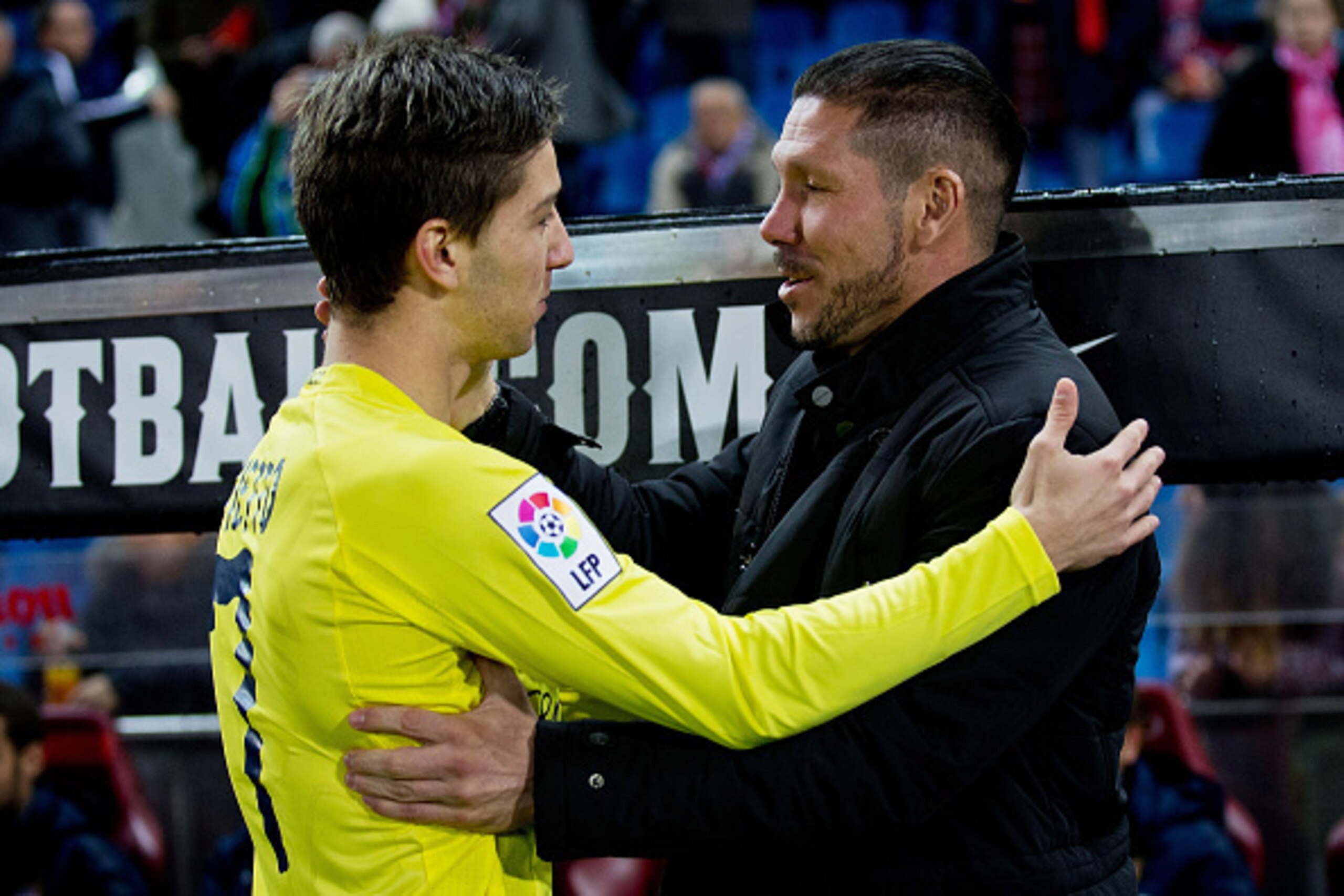
In an interview with AS published this week, Simeone was quizzed on his club's pursuit of two forwards: Carlos Tevez and Luciano Vietto. Relaxed and comfortable, Simeone wasn't hiding anything; his responses were frank.
"I know people at the club are talking to his agent," the manager said of Tevez. "He has the game in his blood. He'd be an ideal signing for our style of play."
And Vietto? "He's one of our objectives. His signing is imminent and I expect to have his services for next season."
It was a statement of intent from Simeone, from Atletico. But it was also recognition of the fact that the club's forward setup needs work—that to become more predatory Atleti must first become more potent.
In 2013-14, Los Colchoneros had been exactly that, Diego Costa leading a side that fought, scrapped and punished the mistakes of physically bruised opponents. Sitting deep and counter-attacking with force, Atleti were the ultimate opportunists. But 2014-15 was different.
Atletico's gutting at the hands of Chelsea forced Simeone and his men to change this season. The departed Costa was replaced by Mario Mandzukic—a fine centre-forward but a player not capable of leading a line with devastating power on the break.
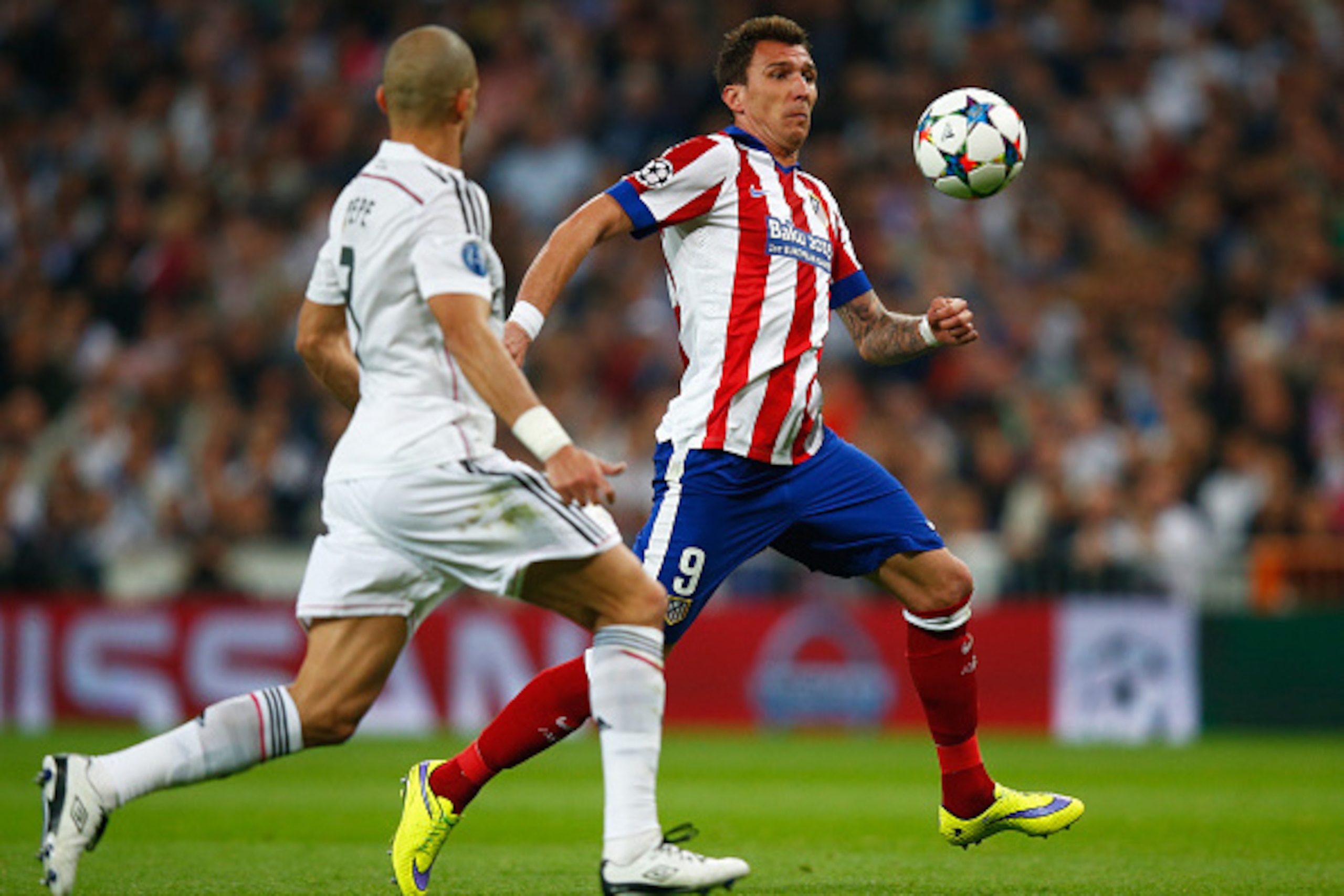
To cater for the Croatian, Atleti had to play higher, press more, pass more and cross more. It meant a more patient, intricate method was necessary, the central striker—as they've often done at the Vicente Calderon—dictating the team's style.
It was successful to an extent: Mandzukic scored 20 goals in all competitions with the team adjusting to him; Antoine Griezmann bagged an impressive 25 flanking him; Atleti beat Valencia and Sevilla to third place; Real Madrid were consistently thwarted. But the basic facts remained that Atletico, compared to the season prior, scored less, conceded more and won fewer points. Twelve fewer, to be precise. Simply, Atletico found themselves in an uncomfortable middle-ground between the style they wanted to play and the style they had to play.
But the pursuits of Tevez and Vietto (Angel Correa will also be available) are clear indications Simeone wants to remedy that. Such forwards would give the 2014 Spanish champions a front line of pace and dynamism, returning Atleti more to the essence of their 2013-14 campaign.
Evolution of the Midfield

At the Camp Nou in 2014-15, Barcelona's first-choice midfield consisted of Sergio Busquets, Andres Iniesta and Ivan Rakitic. At the Bernabeu, Real Madrid's featured Toni Kroos, Luka Modric and James Rodriguez.
At the Vicente Calderon, meanwhile, Atletico's was Gabi, Tiago, Koke and Arda Turan, the latter two stuck in wide roles.
It's quite a difference.
Whereas Atleti's title rivals boast midfields of sumptuous skill and technical quality, Simeone's central ensemble has been defined by qualities such as work rate, tenacity and discipline. It's admirable, and the likes of Gabi and Tiago in the middle have shouldered herculean duties. But for Atletico to move forward, to consistently challenge Spain's big two for the Liga title, the midfield must evolve. And Simeone knows it, as he told AS, via Football Espana:
"We're in an important situation. The team needs a change, a new stimulus. I think it's not easy for a coach to be so long with the same players. And it isn't easy for the players.
We've spent a lot of time together. They know my strengths, my weaknesses, and I know theirs. I'm convinced we need a change, an internal movement where the team takes a step forward.
The way I see it, for example, is for Koke to go in the double pivot. That is going to start generating a team from another idea. And we need that. I'm convinced it's that time.
"
In 2015-16, Koke's transition to a central orchestrator is likely to be fast-tracked, seeing him supplant either Gabi or Tiago at the base of Simeone's midfield. Saul Niguez is also expected to enjoy prominence next season, adding youth, exuberance and vigour to a one-paced group. Ditto for Oliver Torres.
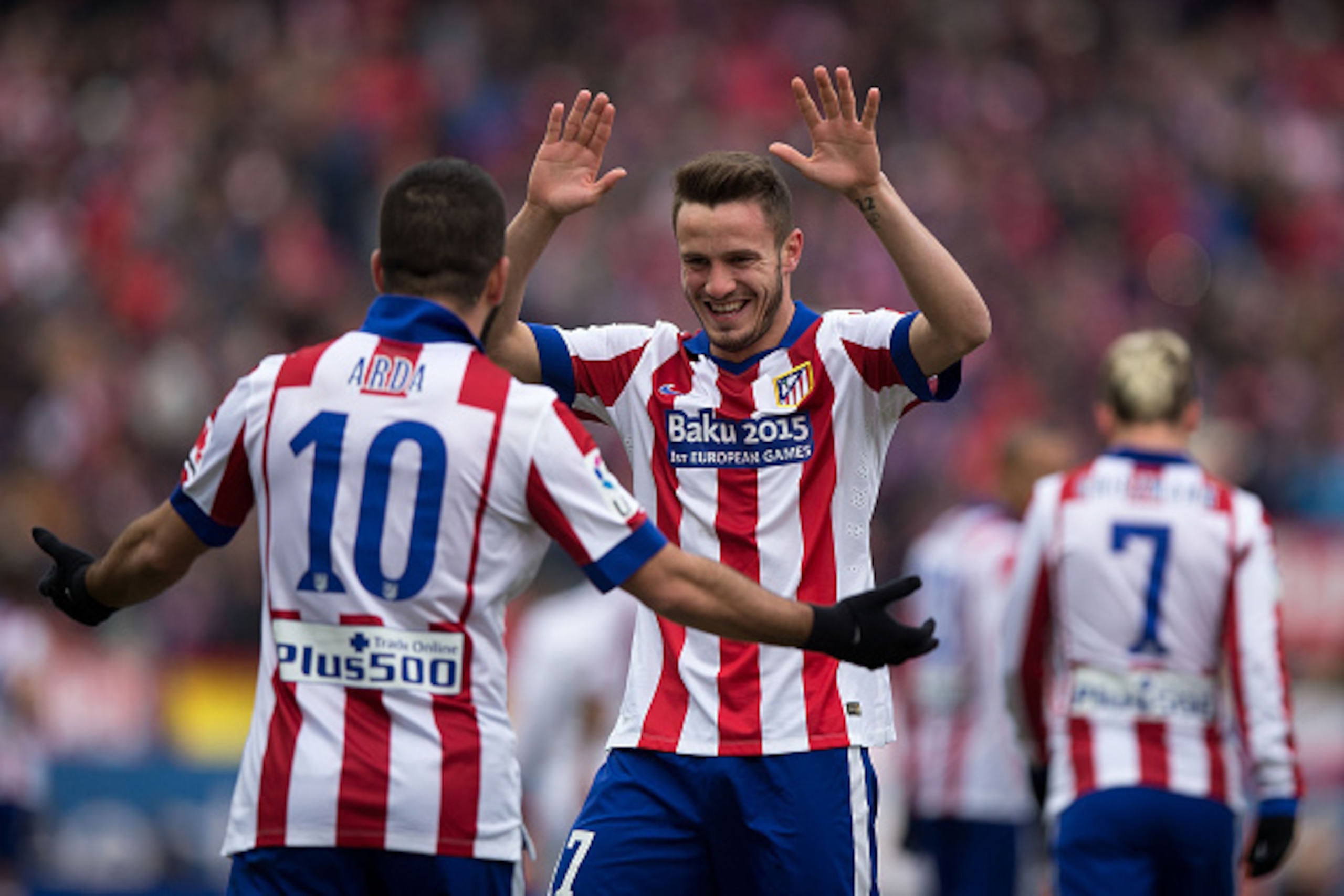
Simeone also portrayed the sense he's ready to lead a revolution in the way Atletico move the ball—"we're a team more ready to play in space," he said. The manager's pursuit of pacey forwards suggests the intention is still to sit deep and pick off opponents, but you sense Simeone wants the ball moved faster, with urgency. One-twos. Quick interchanges. Essentially: pass, pass, pass; release the striker.
Such a transition is necessary for Atletico. In 2014-15, they often became stagnant and predictable in midfield, teams such as Espanyol, Celta Vigo, Real Sociedad, Villarreal, Athletic Bilbao and Rayo Vallecano able to stifle them. More and more, Atleti turned to set pieces to score.
Overhauling the midfield is critical in changing that. And if performed simultaneously with a revamp of the forward setup, Atletico Madrid might be poised to mount a strong title challenge in 2015-16.





.jpg?w=2560 "Latest Peyton-Colts Rumors")