
5 Devils Who Have to Prove They Belong in System of New Bosses Shero and Hynes
So far, this offseason has been an offseason of "new" for the New Jersey Devils.
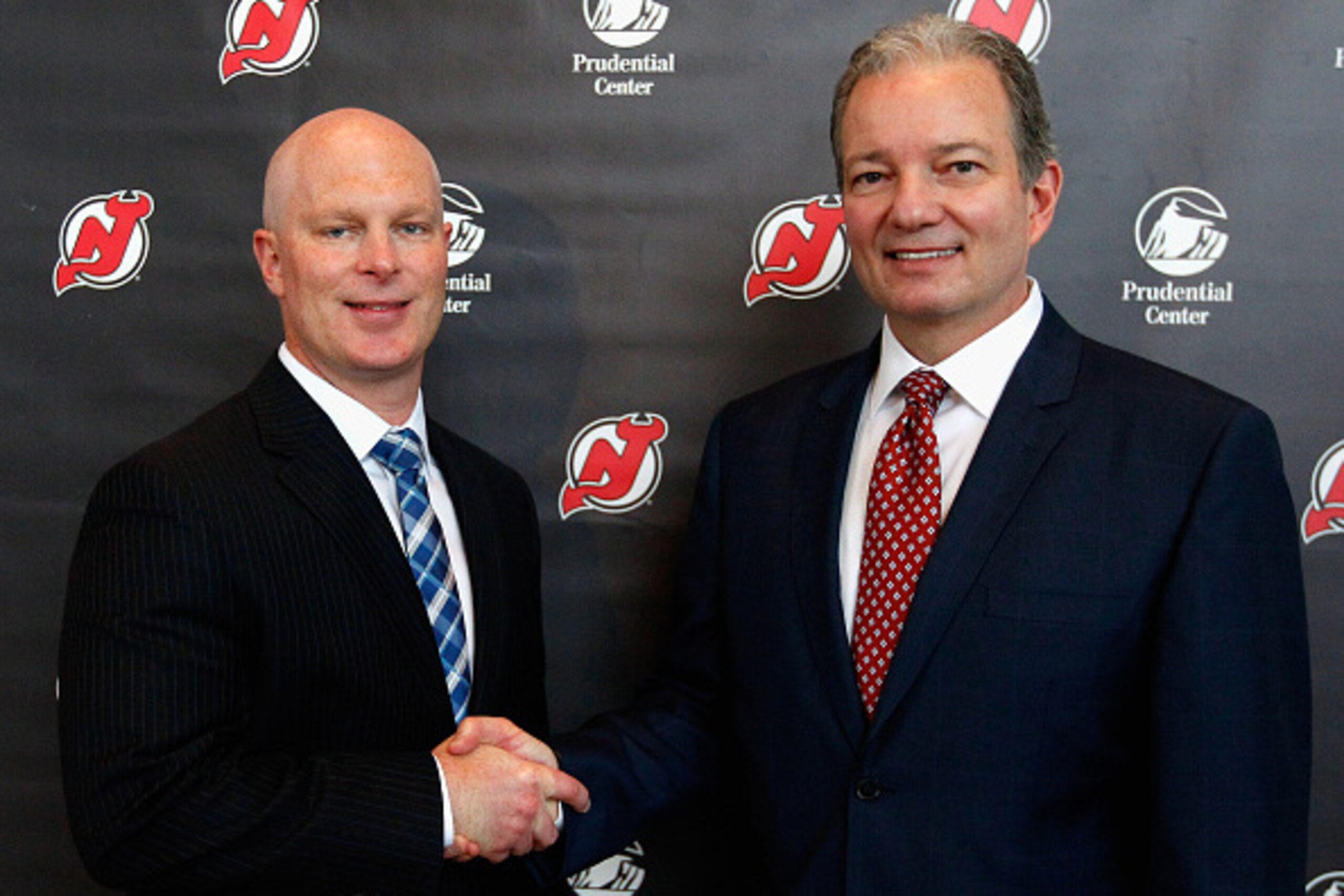
On May 4, longtime team president Lou Lamoriello stepped down from his role as general manager, hiring former Pittsburgh Pengiuns GM Ray Shero to take over.
On May 27, the Devils signed two prospects, Ryan Kujawinski and Blake Pietila to their first professional contracts.
On May 29, New Jersey signed a new winger, Russian Sergey Kalinin formerly of the KHL, to his first NHL contract.
Most recently, the Devils hired John Hynes to be the team's next head coach. Hynes, 40, had most of his prior head coaching experience in charge of the AHL's Wilkes Barre-Scranton Penguins.
Now, perhaps as a culmination of several of the above changes, the Devils are talking about a new system. In a June 2 press conference, Shero explained that he wants New Jersey to be a fast, attacking and supportive team.
Tom Gulitti of Fire and Ice noted that Shero described each of those traits in the following way:
- On being fast: "When I talk about fast, I don't mean about skating around the ice fast. That's part of it, but fast hockey is practice fast, think fast, execute fast, move the puck quickly. That's fast hockey."
- On being attacking: "Attacking is being aggressive both offensively and defensively, not giving the opposition a lot of room. That's an identity. Attacking is not just thinking about scoring goals. It's a mindset defensively that I share with the head coach here today."
- On being supportive: "Supportive is five guys in your defensive zone, five guys supporting the neutral zone, and coming out of the defensive zone on coverage. We talk about an identity (and) if you can't come out of your defensive zone in this league, you can talk all day about scoring goals, you're not going to do it."
With new leaders, personnel and ideology coming into New Jersey, the pressure will be on many Devils players to elevate their games. With that in mind, this list will look at five players who will have to prove to management and their new coach that they can fit into a system that is fast, attacking and supportive. If they cannot do so, some of these players may find themselves scratched, traded or demoted to the AHL.
Dainius Zubrus
1 of 5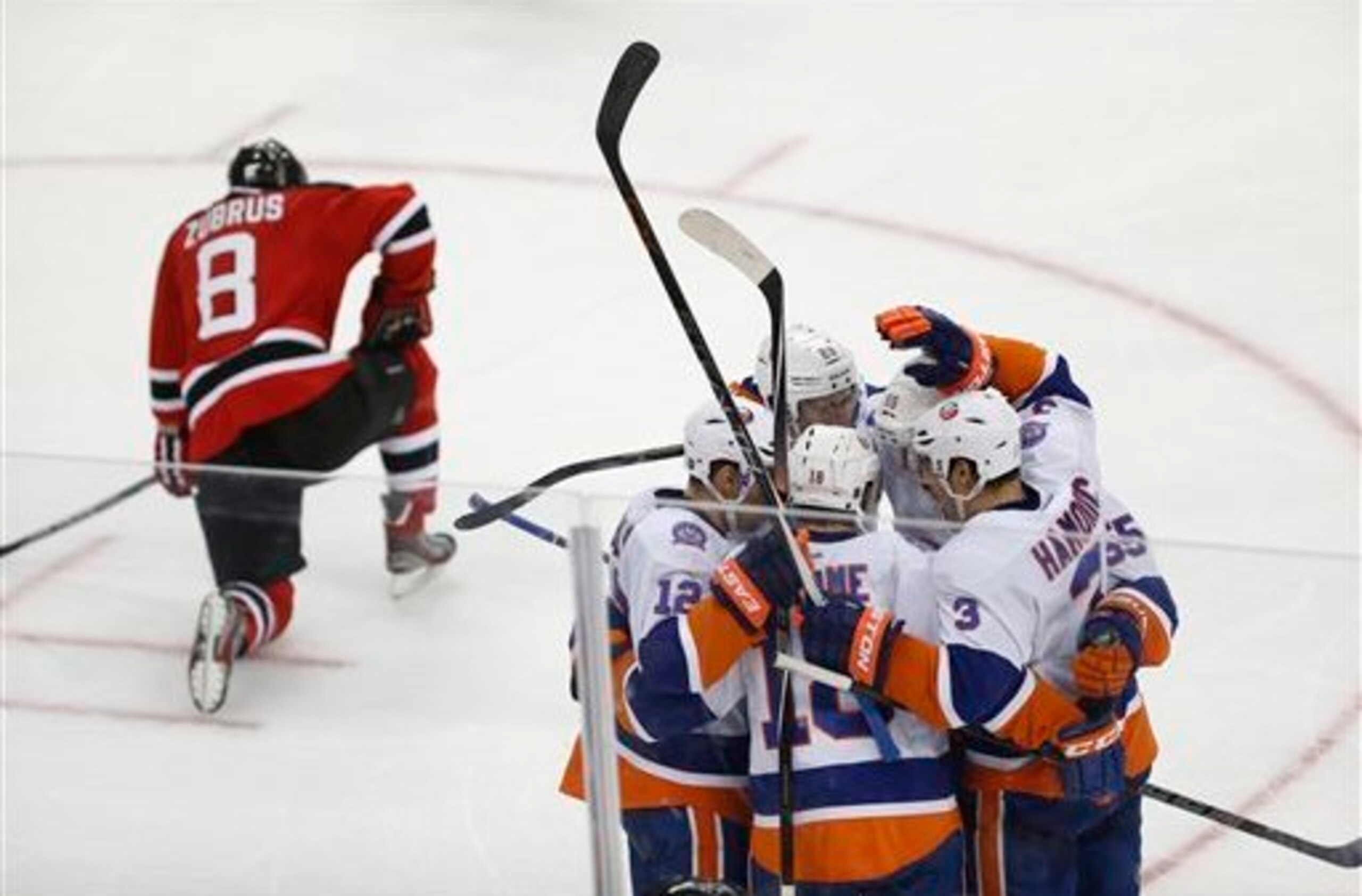
It is safe to say that in 2014-15, Dainius Zubrus was not fast, attacking or supportive.
The big Lithuanian, who turns 37 later this month, was never particularly fleet of foot, and age has certainly not helped him in that department. Zubrus also struggled to move the puck and make decisions quickly, which led to a minus-6.42 SAT per 60 minutes, meaning that the team gave up 6.42 shots more than it took per 60 minutes Zubrus was on the ice.
Zubrus was tame in terms of attacking as well. He had only four goals and six assists in 74 games.
The poor possession stats listed above indicate that he was below average in being supportive as well, as his inability to move and make decisions quickly and aggressively led to turnovers and long spells without the puck.
Zubrus' $3.1 million cap hit, per Spotrac.com, likely means he will not be traded, as his contract simply outweighs his value based on his performances last season. So it's unclear what role Zubrus will have in New Jersey.
To end up as anything above a fourth-line player, Zubrus will have to significantly improve his play in the areas that Shero has highlighted. Just to ensure a spot on the fourth line, Zubrus will have to have a decent training camp to stand out amid the growing pool of potential bottom-six forwards the Devils have put together, which includes Jordin Tootoo, Tuomo Ruutu, Sergey Kalinin, Stefan Matteau, Stephen Gionta and Jacob Josefson.
Jacob Josefson
2 of 5
Jacob Josefson, like Zubrus, faces a long line at the back end of New Jersey's forwards. In fairness to the young Swede, though, he has a lot more going for him than Zubrus does.
Josefson, 24, is one of the few Devils forwards who could be described as fast. Josefson certainly fits the supportive criteria as well, as he is a smart defensive player who is adept at moving the puck out of the defensive and neutral zones. The young center is the only Devils forward who had a positive SAT per 60 minutes in 2014-15, coming in at 1.09.
His problem is with attacking. Josefson has tremendous individual skill, as exhibited by his 5-of-8 shootout record from last season. But he simply lacks aggression. Josefson is a good defensive player but does not regularly transfer that physicality to the offensive zone.
Without that aggressive mindset in all three zones, Josefson cannot be an attacking player in the sense that Shero is looking for. At 24, he still has time to find this part of his game, but he must prove he can do so in training camp to lock up a spot in the starting lineup for 2015-16.
Stephen Gionta
3 of 5
Stephen Gionta, like Josefson, more or less fits the fast and supportive criteria that Shero spoke of.
Gionta, 31, is one of the quickest forwards on the Devils and does a decent job of making quick decisions. He is also one of the team's best defensive forwards, made clear by his team-best plus-four rating in 2014-15 and important role on New Jersey's penalty kill.
Attacking, on the other hand, is not exactly Gionta's forte. At 5'7" and 185 pounds (listed generously perhaps), he does not have the size to successfully put pressure on players in the offensive zone, not to mention Gionta's mediocre offensive skills.
Of course, if Gionta is a fourth-line player, his attacking ability may or may not be of much consequence. Perhaps the bigger point for Gionta will be generally impressing a new coach and general manager.
Former coach Peter DeBoer seemed to rate Gionta very highly despite his limited offensive ability. The interim coaching staff seemed to feel the same, and Gionta played in essentially every game in which he was healthy during 2014-15. Will Shero and Hynes feel the same way about the Rochester, New York, native?
He will have to either exhibit an attacking improvement or the value of his speed and supporting play alone in training camp to lock up a spot in the lineup.

.jpg?w=2560 "Golden Knights Blues Hockey")
Patrik Elias
4 of 5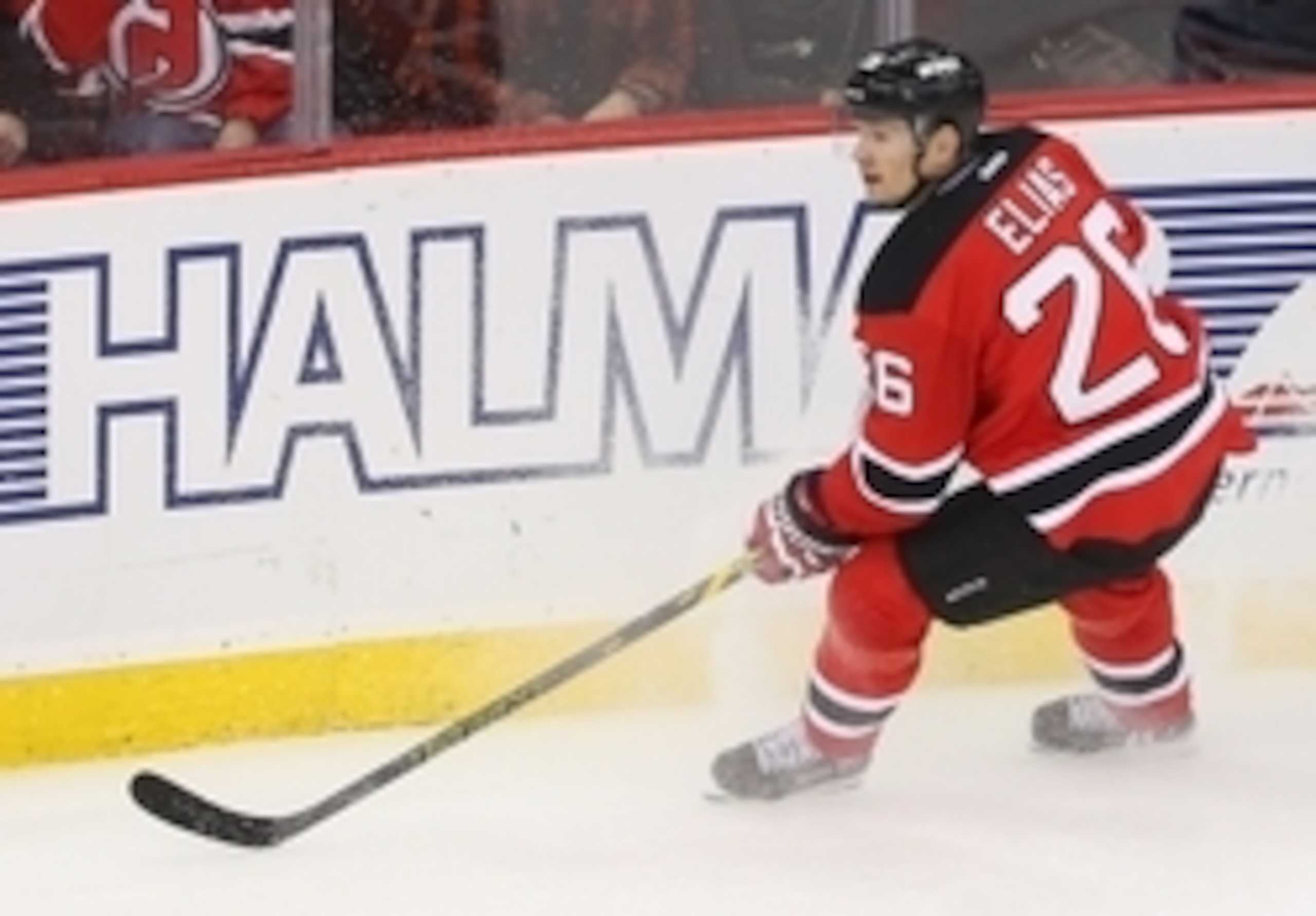
Patrik Elias' struggles during 2014-15 have already been well documented. In short, he had only 13 goals in 69 games and a team-worst minus-20 rating. At 39 years old, Elias is coming to the end of his career without a doubt. But is he already at the end of being a useful player for the Devils?
He will certainly have something to prove to Shero and Hynes during training camp before the season begins.
Any hope of being fast is probably past Elias at this point, though his decision-making and puck-moving speed could definitely still be improved. Such improvements are largely mental and could reasonably happen for the experienced Czech forward.
Elias knows how to play attacking hockey in all three zones, as his career numbers (406 goals, 611 assists and a plus/minus of plus-167) reflect. When on his game, Elias still has an ability to set up goals as well as score them. But when off his game, Elias has tended to become invisible.
In terms of being supportive, Elias has a strong record as well but was equally unimpressive last season. His minus-20 rating came, at least in part, as a result of playing with poor linemates such as Zubrus and Martin Havlat. But plenty of blame ought to fall on Elias as well.
So, Elias needs to show an improvement in all three of these categories to ensure a decent amount of playing time for next season. His upside is too high for him to reasonably be benched, but there is a real possibility he winds up as a fourth-line player if he does not show well in training camp and get off to a good start in 2015-16.
Eric Gelinas
5 of 5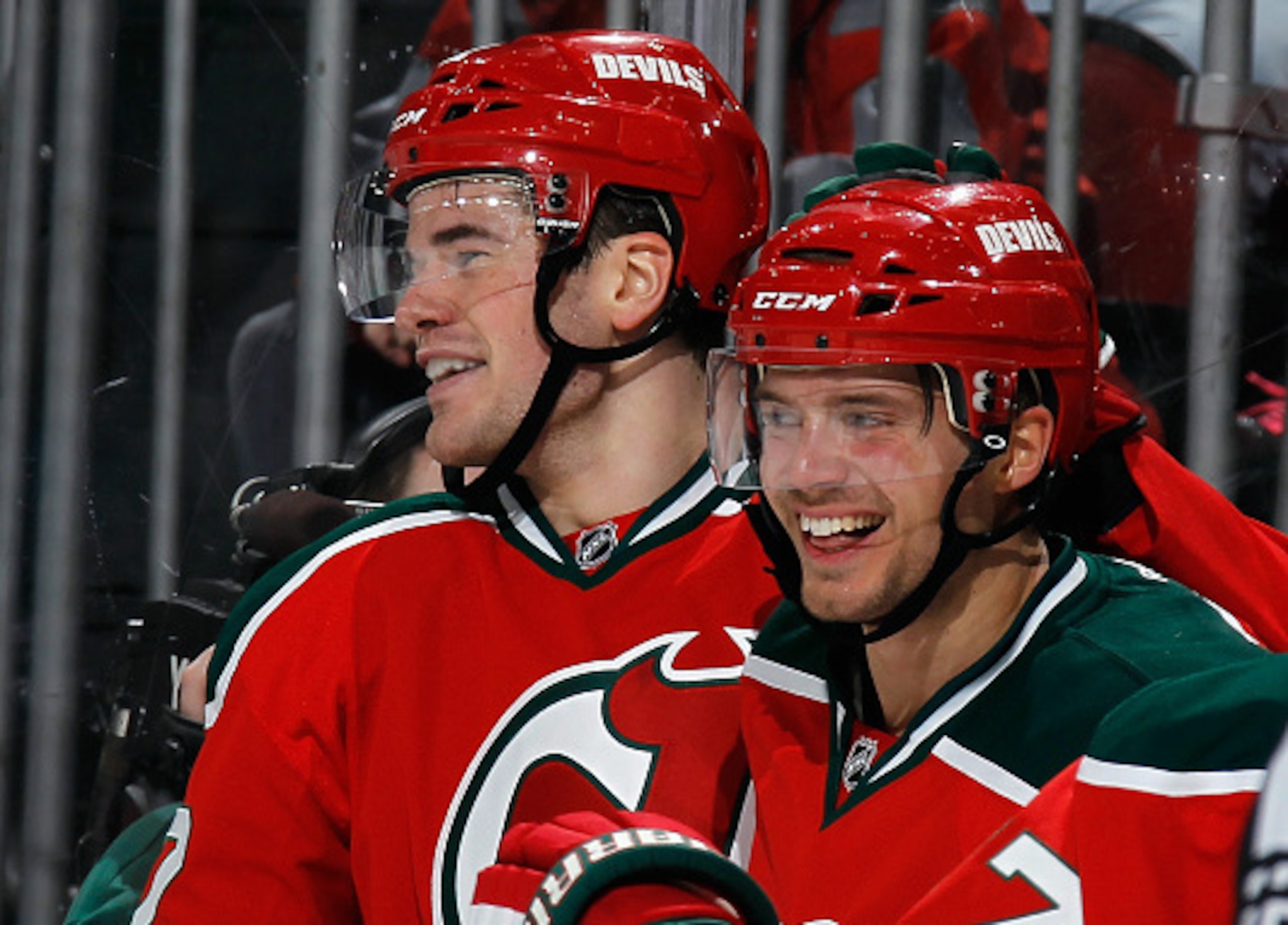
Eric Gelinas is the only defenseman on this list, but he may have more at stake than any of the other players here.
Gelinas is one of several young defensemen within the organization who could compete for a second= or third-pairing position, but all of the members of that group could also conceivably be traded as well. In reality, the Devils may make a move involving Gelinas or another defenseman before training camp even opens.
But if they wait to make such a trade, Gelinas would have everything to play for before the season starts to make a case to remain in New Jersey.
Of the categories mentioned by Shero, Gelinas has attacking down the best. He has an absolute cannon of a slap shot, moves the puck well and is aggressive in the defensive zone. In fact, his aggression in the defensive zone often gets him into trouble when it comes to playing supportive hockey.
Gelinas has spent extended parts of each of the last two seasons as a healthy scratch as a result of his poor defensive play. To make a case to stay in New Jersey and make the starting lineup, he must learn to balance his aggressiveness with supportive play.
If he can do so, Gelinas could possibly make the starting lineup for 2015-16. If he cannot, he could find himself in the AHL, benched or even traded.
Note: Advanced stats courtesy of NHL.com


.jpg?w=2560 "Chiefs, Steelers Eye WR Trades")