

Checking in on Denver Broncos' Biggest Project Players
The Denver Broncos have put together a quality roster for the 2015 season. They have seasoned veterans who are among the best in the league at their respective positions. These players are known for their ability to dominate on the football field, and that’s what makes up Denver’s nucleus of talent.
The Broncos also have some good young talent they’ve added over the last few years. Some of these players have already made big impacts for the team on both sides of the ball. Other players have needed more time to develop.
As we continue through OTAs, it’s time to measure the development of these players. Project players only get a certain amount of time to prove what they can do in the NFL. If they take too long to contribute, a team will quickly move on to another project.
Here is a progress report on the five biggest project players the Broncos have on the roster.
Zac Dysert
1 of 5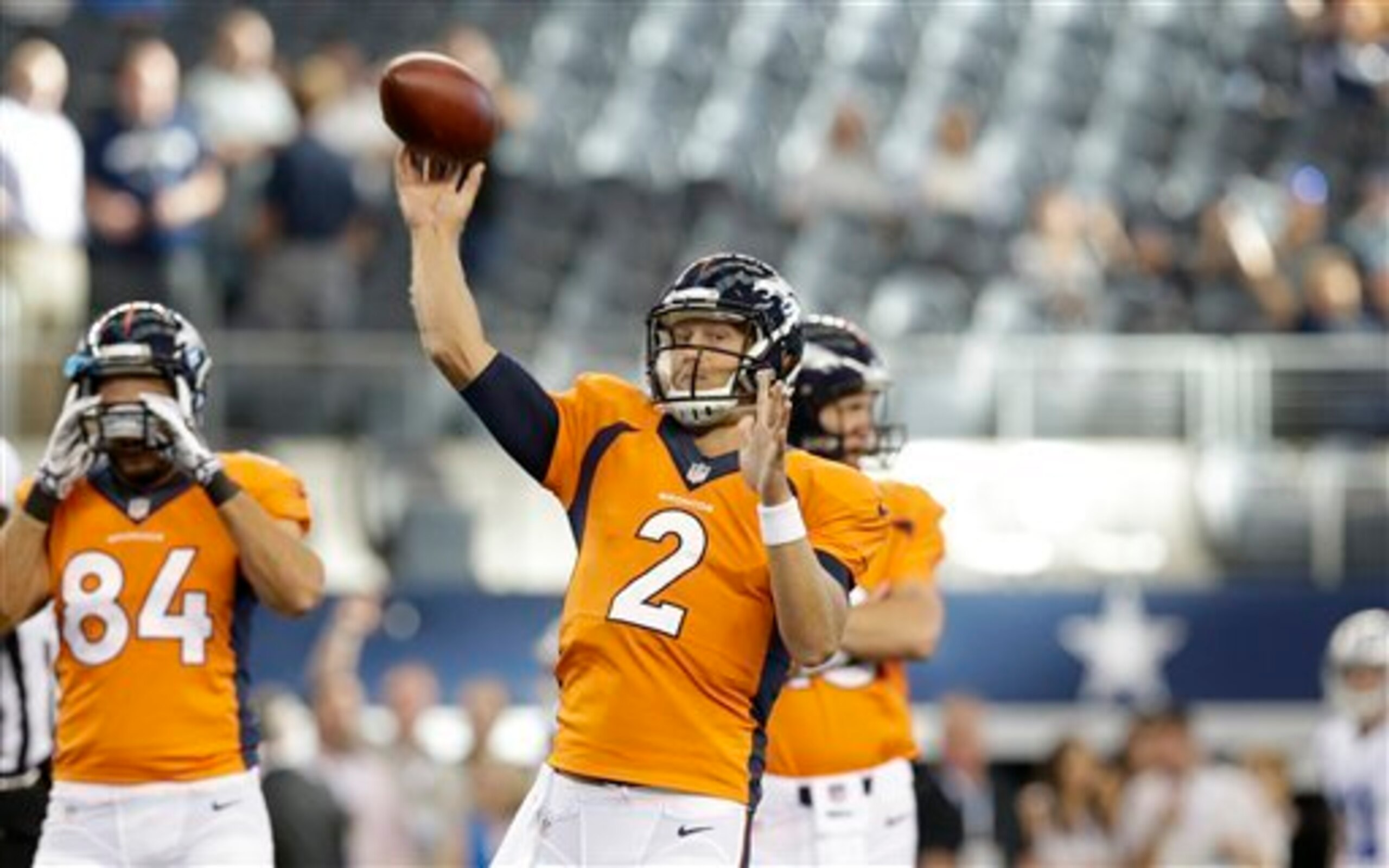
Developmental quarterbacks are a smart investment for teams late in the draft. That’s why the Broncos added Zac Dysert in the seventh round of the 2013 NFL draft. Dysert broke many of Ben Roethlisberger’s records at Miami (OH), and his outstanding arm strength is a rare asset. He made the 53-man roster as a rookie, but Dysert had to spend his sophomore season on the team’s practice squad.
This year, Dysert’s going to face competition from rookie Trevor Siemian for the third-string/developmental quarterback job.
Dysert was inconsistent on film during his college career. He was also inconsistent during the week of practice for the Senior Bowl after his college days were over. It should come as no surprise that Dysert’s biggest problem during his time with the Broncos has been a lack of consistency.
Watching him closely at Dove Valley for the last three offseasons, Dysert is a frustrating player to monitor. He’ll make some incredible throws downfield because of his arm strength and fearlessness when attacking the edges of a defense. Dysert will then follow that one play up with a multitude of passes that are far off the mark.
He has had plenty of time to improve his consistency as a pro, and time is running out. If Dysert doesn’t outperform Siemian in training camp and the preseason, then the Broncos could let him go. Even if Dysert does perform well, the Broncos might only want to carry two active quarterbacks again this season.
Matt Paradis
2 of 5
In the sixth round of the 2014 NFL draft, the Broncos selected center Matt Paradis out of Boise State. Known as an athletic center, Paradis made a name for himself in college by working hard on the field and in the film room. He failed to make the final roster as a rookie, but the team did keep him around on the practice squad.
In 2015, Paradis has an opportunity for a large role because of the question mark the team currently has at center.
The Broncos started 2014 with Manny Ramirez at center, but he was later replaced (for about half the season) by Will Montgomery.
Ramirez was traded to the Detroit Lions in the transaction that moved Denver up in the first round of the NFL draft to select Missouri's Shane Ray. Montgomery followed former head coach John Fox (and former offensive coordinator Adam Gase) to the Chicago Bears. Paradis will get a chance to prove he deserves a spot on the final roster, and he could make a push for the starting job in 2015.
Earlier this year, the Broncos traded with the Baltimore Ravens to acquire center Gino Gradkowski. He started every game for the Ravens in 2013, but Gradkowski was replaced by Jeremy Zuttah as the starting center in 2014. Gradkowski will be the primary competition for Paradis.
The Broncos also added center Max Garcia with a fourth-round pick in the 2015 NFL draft. Garcia is a power player, and he may end up playing inside at guard as a member of the Broncos.
Gradkowski has the experience advantage over Paradis because of those 16 starts from 2013. Broncos head coach Gary Kubiak has also seen a lot more of Gradkowski, as he was the offensive coordinator for the Ravens last year. At this time, Gradkowski is the player to beat for the starting job.
Paradis has the athleticism to work well in a zone-blocking system. Last year as a rookie, Paradis worked in the weight room to improve his functional strength. We’ll see if he can show off his improvements and talent in training camp and the preseason.
Michael Schofield
3 of 5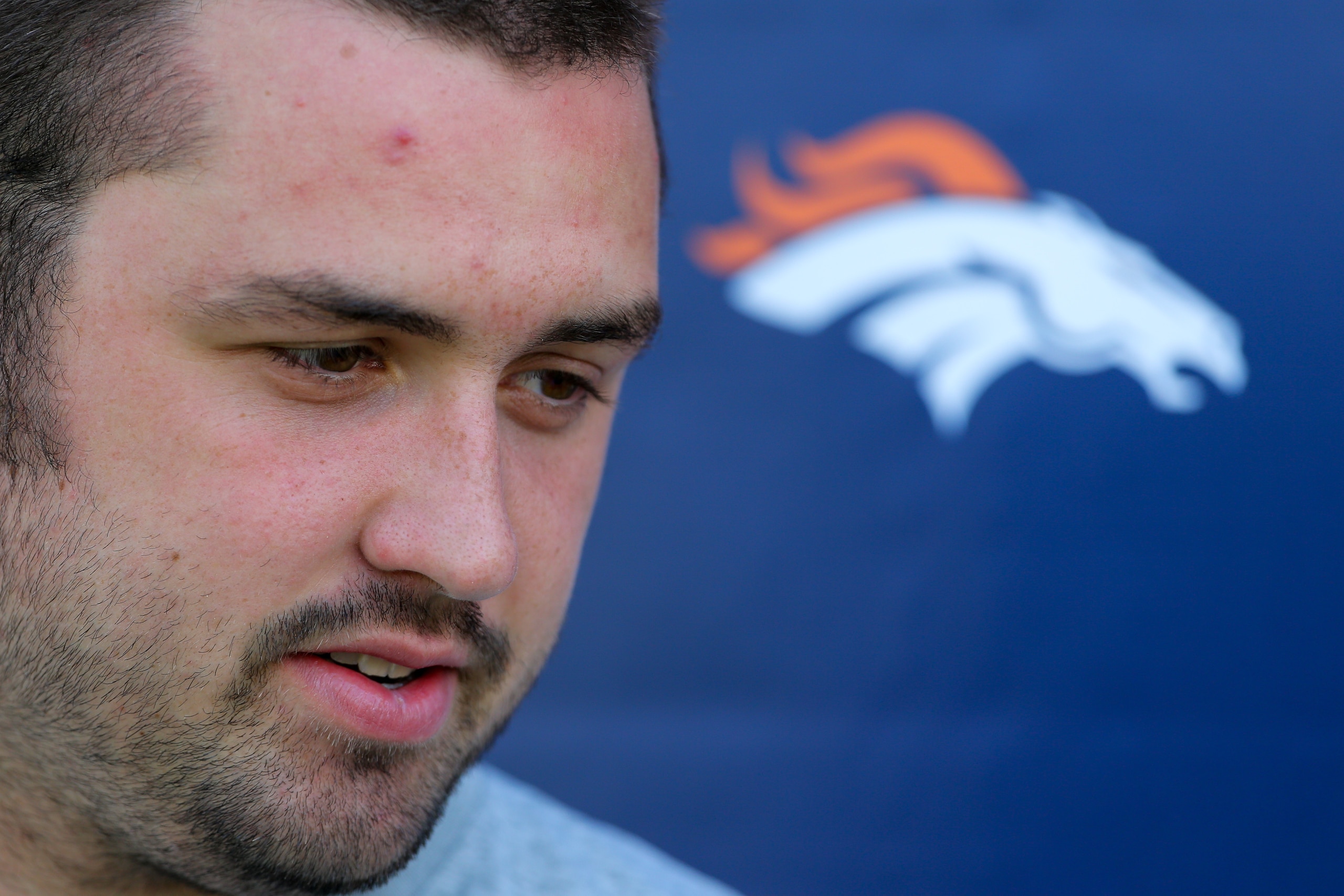
The Broncos picked up right tackle Michael Schofield with a third-round pick in the 2014 NFL draft. He made the 53-man roster as a rookie, but Schofield was not active for a single game. Instead, he struggled with maintaining his weight. He also failed to show proper technique in pass protection during practice.
We’ll see Schofield compete for a larger role this season—either at right tackle, swing tackle or left guard.
After Ryan Clady was injured during OTAs last week, it was Schofield who came in to work with the first team. The opportunity to compete for the first-string left tackle spot was changed when Ty Sambrailo was announced to be in the mix at left tackle. Nothing is set in stone, but the 2015 second-round pick is going to get the first crack.
Schofield played both right tackle and left guard during his time in college with the Michigan Wolverines. With the Broncos, Schofield is trying to find his best fit. Like every position but right guard, the left guard position is up for grabs this offseason. We’ll see Ben Garland and Shelley Smith as the primary competitors, but Schofield could also get a few looks there.
If Chris Clark is going to start at right tackle, then the team will be in need of someone who can play swing tackle. That may be Schofield’s best spot to land for the 2015 season. We’ll know more when these battles continue to unfold during training camp.
.jpg?w=2560 "Seahawks Chiefs Football")


Bennie Fowler
4 of 5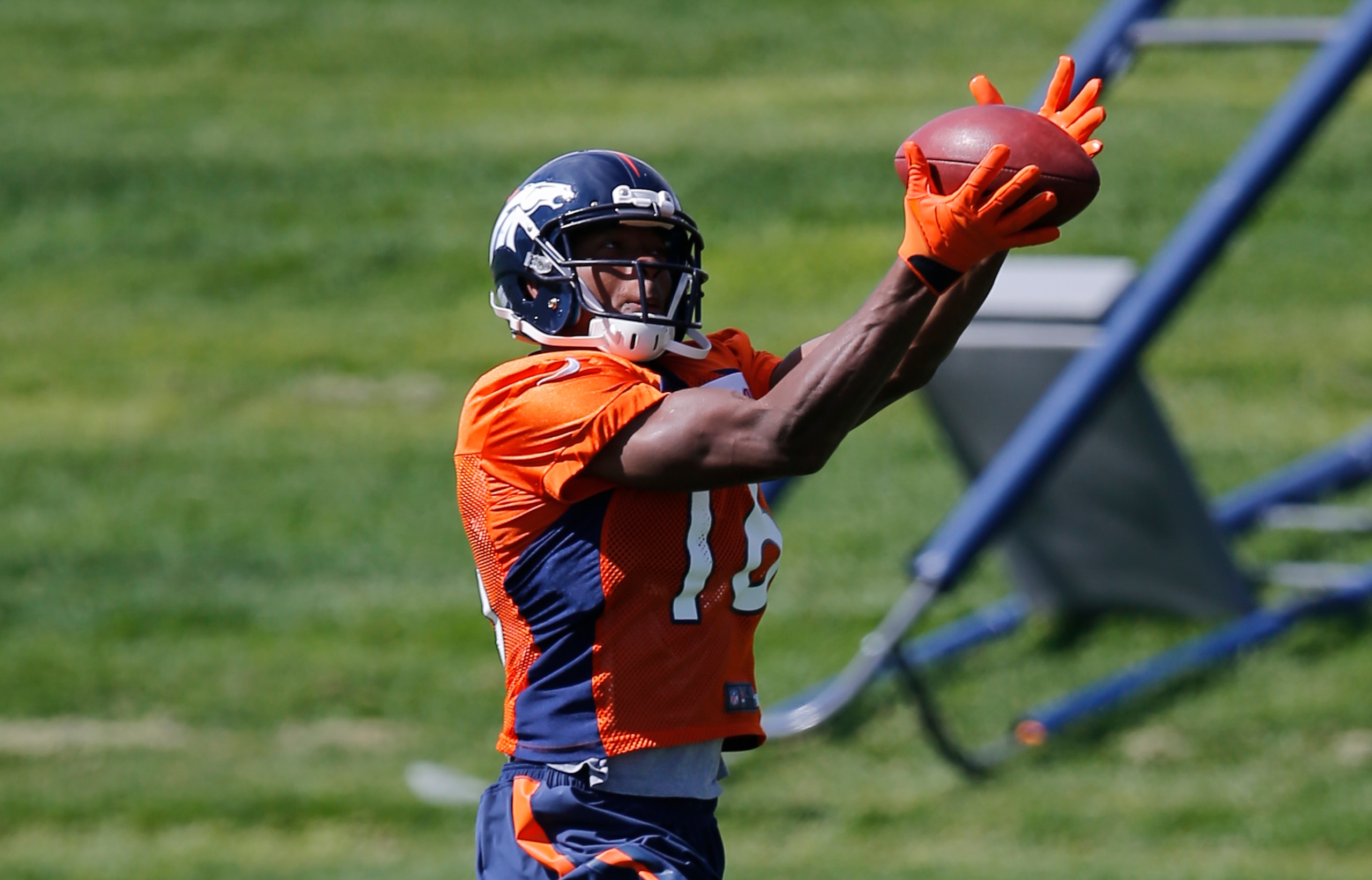
The Broncos added an intriguing wide receiver last year as a college free agent after the 2014 NFL draft.
Bennie Fowler didn’t take long to impress out at Dove Valley as a rookie. Working with second-string quarterback Brock Osweiler in training camp, Fowler showed off strong hands, good body control and strength when running after the catch. Fowler didn’t make the final roster, but the Broncos liked him enough to keep him around on the practice squad as a developmental prospect.
The wide receiving corps in Denver is jam-packed with incredible talent, and Fowler will be looking to impress the team enough to stick around near the bottom of the depth chart (or again on the practice squad).
Fowler is a strong receiver who can pick up yards after the catch because he’s tough to bring down. He’s fearless when running routes over the middle, and Fowler does a good job of winning at the point of the catch. Scouts call this “my ball” mentality, and Fowler will fight to win contested catches anywhere on the field.
His skill set is a bit reminiscent of a young Anquan Boldin. He plays bigger than his size, and Fowler can play “above the rim” because of his wingspan and leaping ability. Fowler can make difficult catches seem routine, and he shows consistency when looking passes into his hands.
It will be tough to crack the final roster at the wide receiver position in Denver, but Fowler has the natural talent to do so.
Kapri Bibbs
5 of 5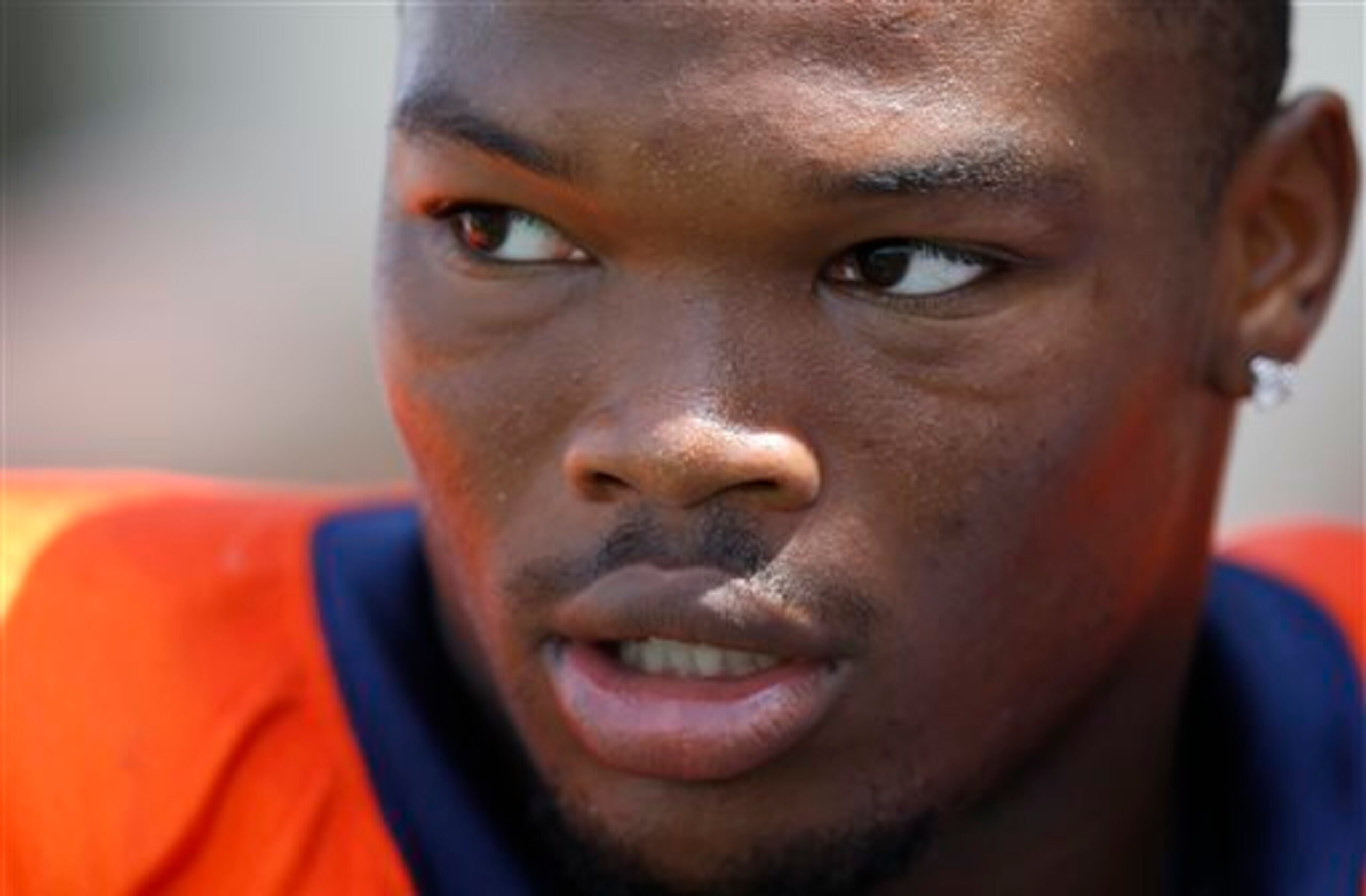
After a tremendously productive 2013 at Colorado State, running back Kapri Bibbs didn’t hear his name called in the 2014 NFL draft. The Broncos were quick to snatch up the talented running back as a college free agent after the draft was over. During his rookie training camp, Bibbs showed his talent as a runner, but he especially stood out because of his receiving ability.
The Broncos are going to have a balanced offense this season, and they need the best collection of talent at running back they possibly can get—and Bibbs could be on that list.
Bibbs is looking great in OTAs this offseason. He looks like a natural in the zone-blocking system. Bibbs does a good job of patiently waiting behind his offensive line for holes (or cutback lanes) to develop, and he’s a decisive runner who can burst to and through the hole quickly.
He has a good nose for the end zone, as evidenced by the 31 rushing touchdowns he scored in 2013 for the Rams. Only three backs in FBS history have rushed for 30 or more touchdowns in a single season—and the other two are Barry Sanders and Montee Ball.
Bibbs runs low to the ground, and this center of gravity helps him bounce off would-be tacklers. He has good burst and can change directions without losing much speed.
Bibbs is swift as a receiver out of the backfield as well. With only eight catches during his one season at CSU, Bibbs proved last year in camp (and has continued to prove this year) that he could reliably catch the ball out of the backfield.
He has the skill set of a featured back, and Bibbs could make the final roster this year. The team has a group of strong running backs led by C.J. Anderson. Ball is a lock to make the final roster, and Juwan Thompson could arguably be considered a lock as well.
If Bibbs wants to make the team, then he’ll have to prove to be more valuable than Ronnie Hillman. Last year, Hillman looked good as a starter for four games, but he is not built to carry a starter’s workload. Hillman is arguably the fastest player on the team, and that speed would be missed in the backfield.
No matter what happens with Bibbs, he’s certainly doing the best he can to show that he belongs on an active roster in the NFL.
All quotes and injury/practice observations obtained firsthand. Record/statistical information provided via the Broncos' media department unless otherwise noted.
Contract and salary-cap information provided by Spotrac. Transaction history provided by Pro Sports Transactions.
.jpg?w=2560 "Raiders Saints Football")



