Gemma Davison's Omission Could Prove Costly for England in Canada
England kick off their Women’s World Cup campaign against France on June 9, and looking at the preparation and recent friendly results, it appears England coach Mark Sampson may have left a vital player at home.
It can’t be easy to pick a 23-player squad for any international tournament. People have to miss out, decisions have to be made, and nine times out of 10, you will probably get one wrong.
Gemma Davison has been in sensational form for Chelsea during the first half of the Women’s Super League season, but her name wasn’t announced as part of Sampson’s squad.



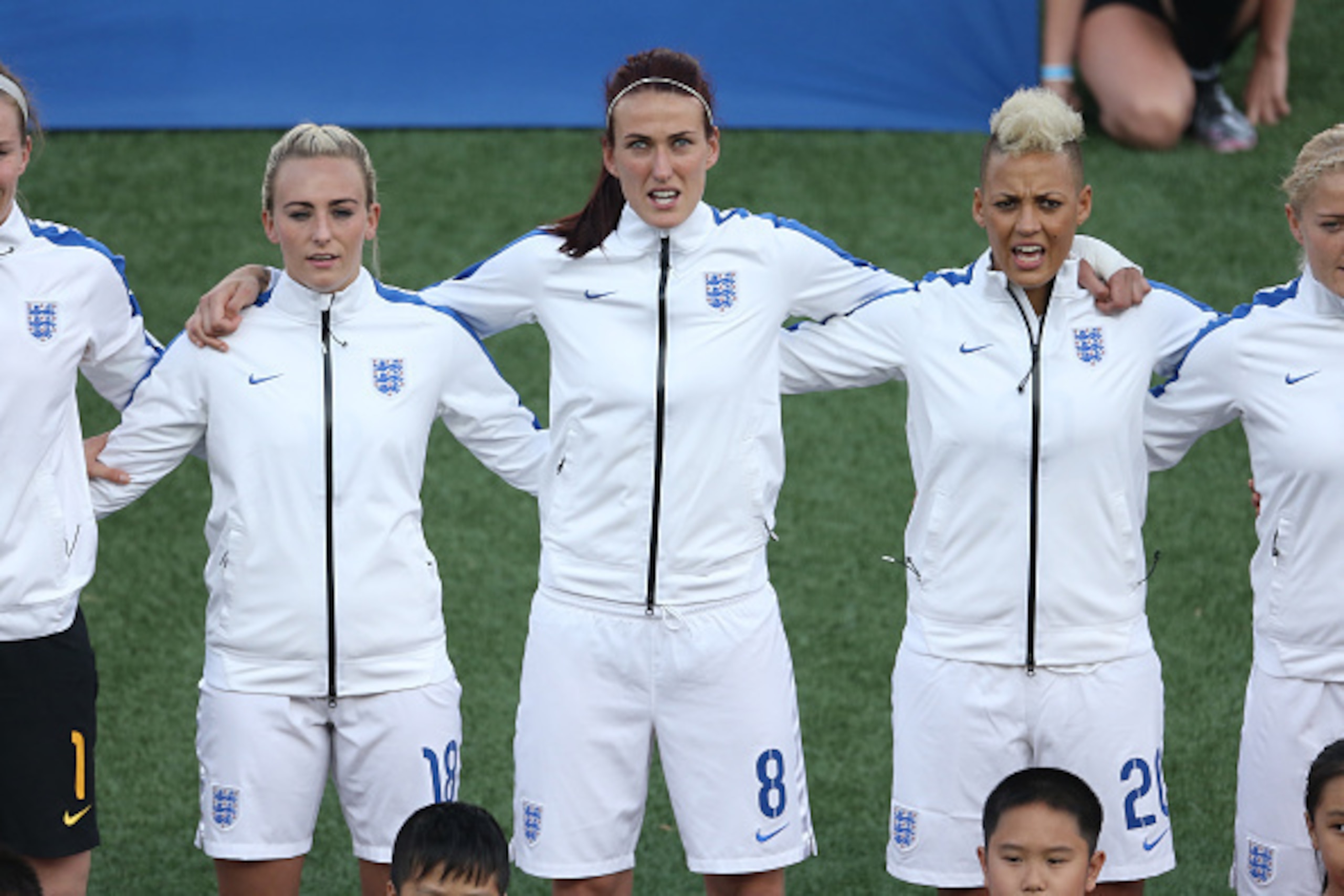
She wasn’t included in the final home friendly against China and was left out again when he announced his squad for the tournament in Canada.
Sampson favours versatility in his players, which may have cost Davison a roster spot, but as we approach the opening game against France, it is looking a little short-sighted.
Alex Greenwood of Notts County was picked ahead of Manchester City’s Demi Stokes because she can play at both left-back and centre-back. The same applies to Lucy Bronze and Stephanie Houghton, who can play in various positions at the back and step into the midfield.
Davison is a winger. She loves to take players on, cutting in from the left with her right foot and creating chances for herself and her team-mates.

Her direct style and dangerous runs not only create space for her team, but confuse opposing defences.
Against China, Sampson fielded a 4-3-3, playing Francesca Kirby, Jodie Taylor and Jade Moore up front. The three attackers interchanged positions, played freely and caused the Chinese defence a lot of problems in the first half.
The England coach had another five attacking options on the bench, though all of them were mostly centre-forwards who were able to play out wide.
In their final warm-up game before the summer tournament, England took on the hosts Canada in what proved to be a tough test.
Facing the third all-time scorer in the history of women’s football in Christine Sinclair, Sampson decided to keep things tight at the back and started with a 4-4-2 formation.
Lianne Sanderson and Ellen White led the line, with forwards Toni Duggan and Karen Carney out wide.
Defensively, it worked well and made a lot of sense. England’s two banks of four were well-organised and frustrated the home side. It took a wonderful strike from Sophie Schmidt to breach the back line, and Karen Bardsley had little else to do in the England goal.
However, going forward, England offered almost nothing. Duggan and Carney were frustrated and couldn’t get involved. Katie Chapman and Jill Scott offered little in the attacking sense from the middle, and there was a huge gap between the midfield and the front line.
This season, Davison has played on the left in Chelsea’s midfield, offering an outlet and an attacking presence without leaving left-back Claire Rafferty—who played left-back against Canada—out to dry.
As Chelsea have swept all that have been put in front of them, Davison has scored five times in just eight starts this season. The decision to omit her from the squad, giving Sampson another option and making his team more versatile, seems to go against his own philosophy.
England’s match against France in Moncton on Tuesday will be a huge test of his players. Playing 4-4-2 is ideal from a defensive viewpoint. France often get frustrated when they are faced with a well-organised defence.
However, once you frustrate, you must take the opportunity to get up to the other end of the pitch and create chances. It didn’t happen against Canada, and France will be another step up.
Without Davison, it is hard to see anyone in the squad offering the same danger from the wide positions playing 4-4-2.
Against the weaker sides in the group, 4-3-3 will work fine, and you will see the quality within the squad that Sampson has chosen. But that lack of versatility in the wide areas could be what lets England down when they come up against tougher opposition.




.jpg?w=2560 "Latest Peyton-Colts Rumors")