


In the immediate aftermath of Atletico Madrid's season-ending draw with Granada at Los Carmenes, manager Diego Simeone was asked how he'd grade his club's 2014-15 season.
"Top marks for me," was the Argentinian's quick response, per Goal, delighted with Atleti's capture of the third and final guaranteed place in next season's Champions League.
"This year we won the Spanish Super Cup, we are third, and we've had a great competition with Real Madrid and Barcelona in the Champions League and the Copa del Rey. It has been an incredible season," he added.
TOP NEWS

Final Men's Ballon d'Or Rankings 📊
Highlights and Viral Moments 🍿

J-Dub Suffers Gruesome Injury
Incredible might be overselling it; incredible was lifting the league trophy and reaching the European Cup final the season prior. But in terms of the club's continued growth and its ongoing emergence from a financial black hole, the 2014-15 season was mightily important for Atletico. And Simeone led the club through it with relative success.
Below, we break down what went right and what went wrong for the Atleti manager, grading his fourth season in charge in the Spanish capital.
What Went Right
Prolonging Atleti's Champions League Presence

All season, Simeone refused to be drawn into talk that Los Colchoneros had their sights set on defending their league title, insisting that his team's goal was securing third place, reported by Goal.
Publicly, it was a sensible move—privately, you sense Simeone was targeting more—to temper expectations and reduce the pressure on a squad that had taken a number of hits in the summer transfer market.
By season's end, Simeone achieved what he'd consistently outlined to those listening, clinching third spot in La Liga and a group-stage berth in next season's Champions League with a point on the final day at Granada.
And for Atleti, a club whose rise could easily stagnate without European football, the importance of an ongoing presence in the continent's top-tier club competition cannot be underestimated.
Derby Domination
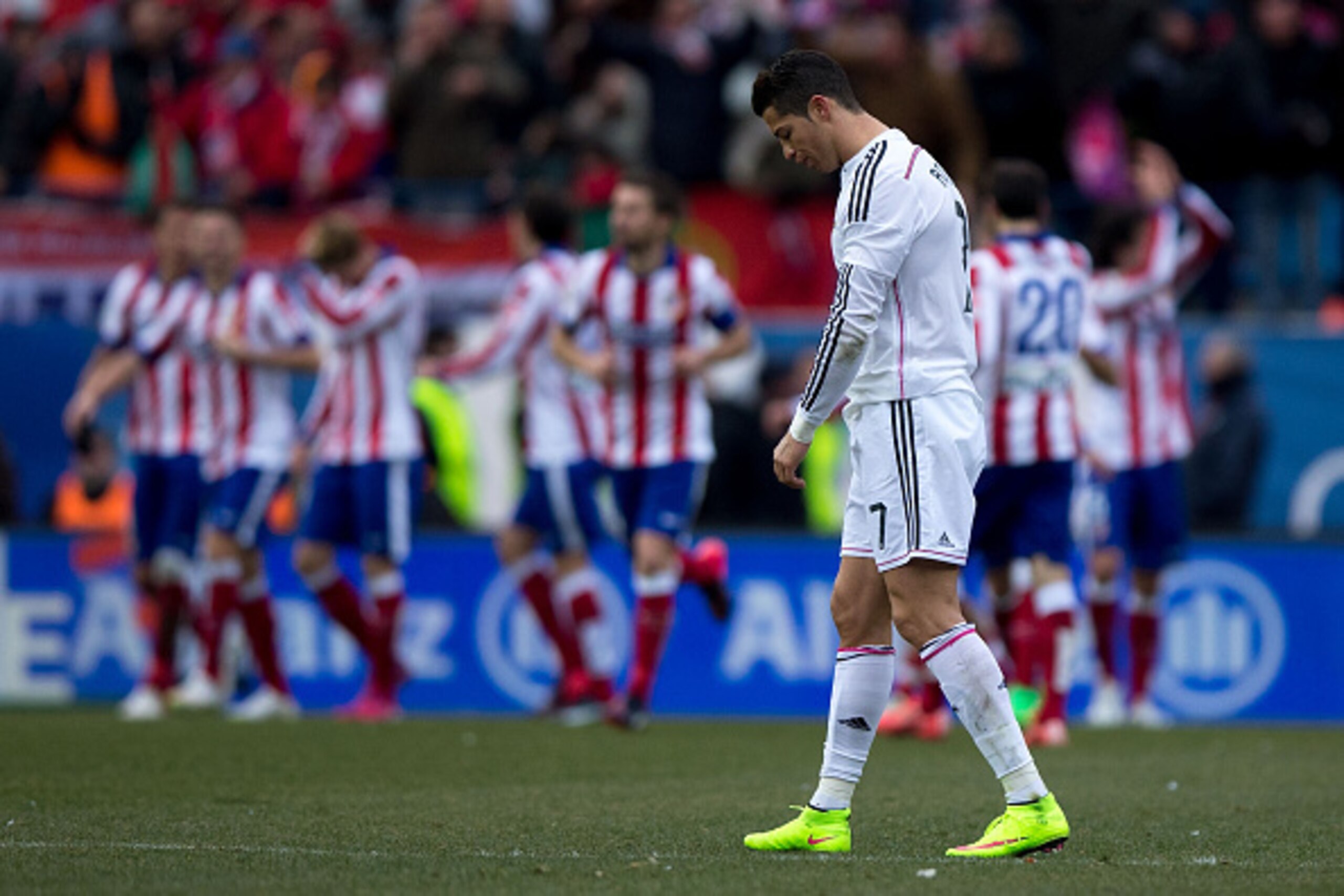
Though Atletico lost perhaps the most pivotal Madrid derby of the season, the club's record against their more glamorous neighbours was astounding.
Across eight meetings in a single season with the defending European champions, Atleti claimed four victories, lost just once and recorded an aggregate score of 12-5. In doing so, they snatched away the Spanish Super Cup, knocked Real Madrid out of the Copa del Rey and landed hefty blows to Real's title push in La Liga.
For Simeone, the derby domination reinforced his credentials emphatically. The robust system he's crafted at the Vicente Calderon—a predictable but highly effective 4-4-2—blunted Europe's most powerful attack, smothering a silky midfield and sapping the life out of Ancelotti's glittering front three.
Atletico hasn't known derby success like it for decades.
Transformation of Antoine Griezmann
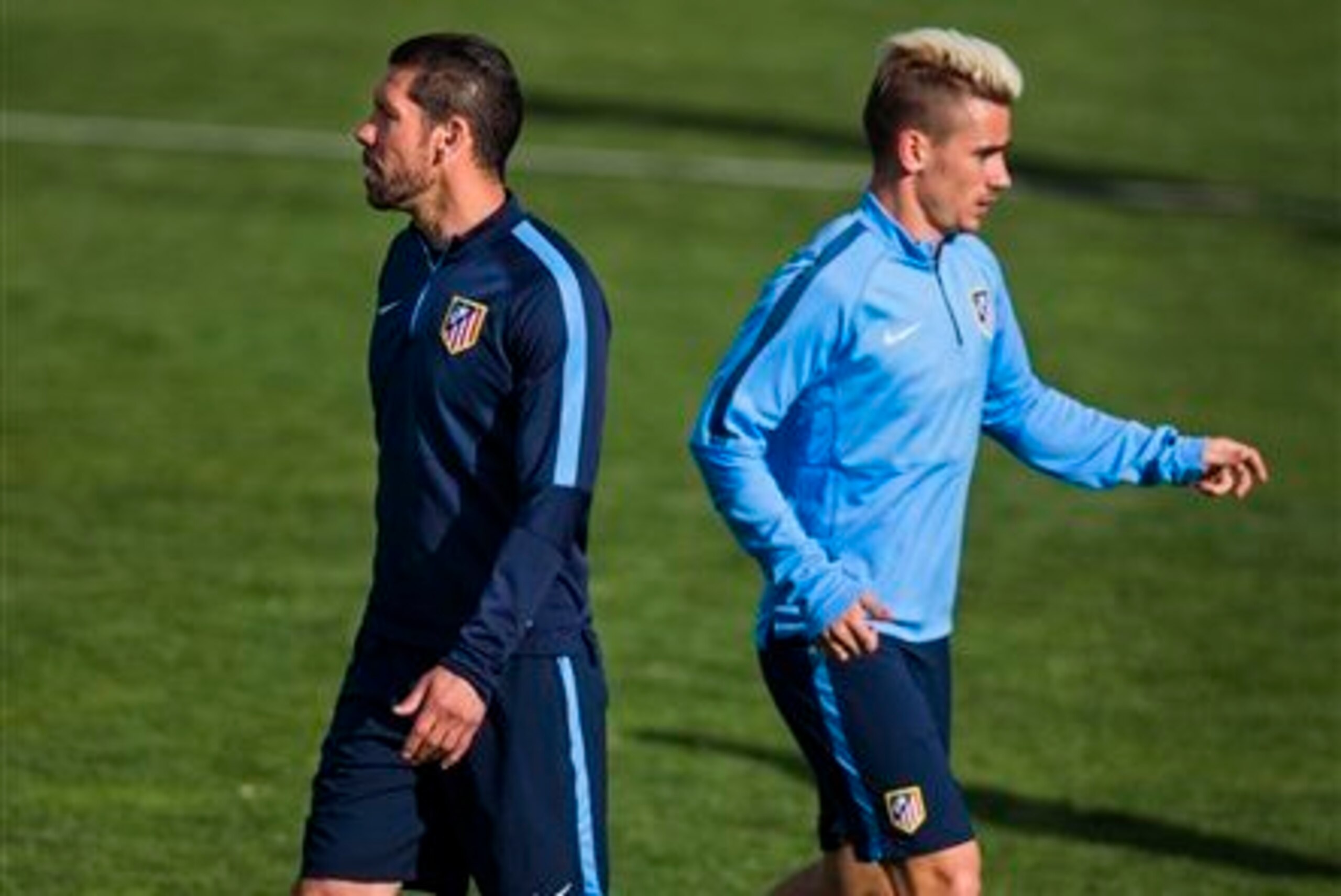
Antoine Griezmann arrived at Atletico Madrid last summer as the club's €30 million marquee signing. Griezmann's stock was soaring after sparkling performances for Real Sociedad and France.
Simeone's response? Bench him.
In the opening months of the season, the Atleti manager made life difficult for the Frenchman. He consistently forced him to settle for second-half cameos. When he did start him—at one point, Griezmann made just two starts in nine games—Simeone always withdrew him early.
He also forced the 24-year-old to play in midfield. He made him defend, tackle and chase. Essentially, it was a power play. The Argentinian was making Griezmann aware there are no stars at the Vicente Calderon.
It worked.
The former Real Sociedad star quickly transformed from a precocious winger to a diligent, hard-working striker. His break came in the last game before Christmas, when he struck a hat-trick against Athletic Bilbao in Mario Mandzukic's absence.
From there, the second half of his season was outstanding. He raced to 22 goals in La Liga and 25 in all competitions in his first 12 months at a European heavyweight.
Adapting the Style to New Faces

Losing Diego Costa isn't easy to deal with. It's even harder when Thibaut Courtois, Filipe Luis and David Villa are following him to through the exit door.
In 2013-14, those men were pillars of Simone's starting XI, and Costa alone defined the style Atleti used to claim an extraordinary league title. But Mandzukic's arrival forced major changes upon Atleti's manager, depriving him of a counter-attacking outlet and giving him no choice but to rework the team's method.
Therefore, Atletico adopted a higher defensive line in 2014-15, winning the ball higher up the pitch. They maintained possession more, passing slightly more fluently. In attack, they became more patient, more diverse and more aerial focused. They used the full-backs more.
To cater for Mandzukic, everything needed to be tweaked. That Atleti maintained touch with Real Madrid and Barcelona while doing so has to be considered a success for Simeone.
What Went Wrong
Clashes with Barcelona
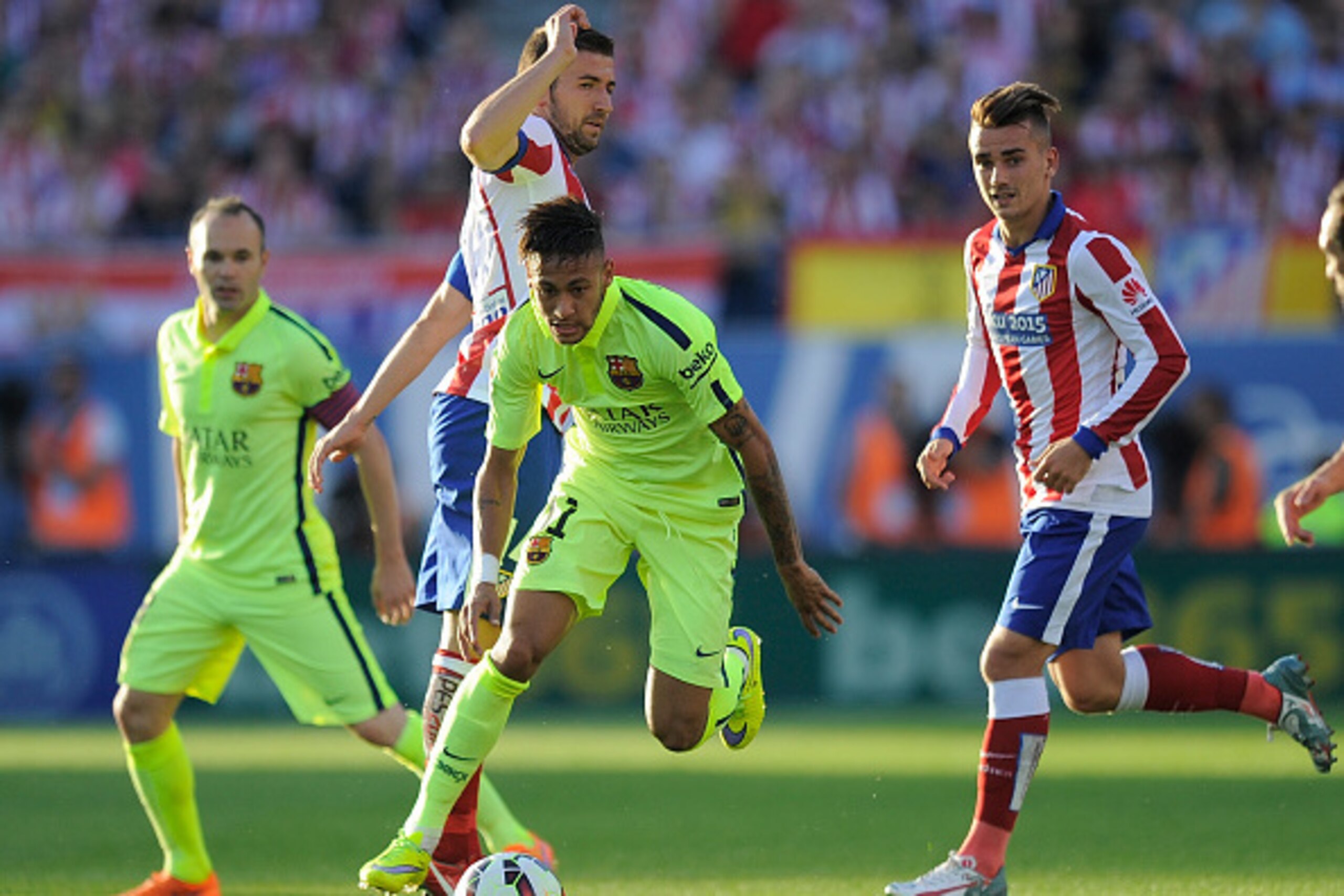
Last season, Atletico met the Catalans six times across three competitions. Not once did the Blaugrana beat them.
In 2014-15, the teams met on four occasions. Atleti lost every one of them. Convincingly.
In a campaign in which both teams underwent significant changes in style—oddly, these previously polar opposites came slightly closer together on the style spectrum—the dynamic between the sides saw a change that was equally significant.
Summer Transfer Business

Since Simeone's arrival at Atletico Madrid in 2011, transfer activity has remained the one area that has proved troublesome for Atleti under the Argentinian. Last summer continued the trend.
While Griezmann was a roaring success at the Vicente Calderon, there were a number of signings who were very much the opposite: Alessio Cerci, Guilherme Siqueira and Raul Jimenez.
Collectively, that trio cost roughly €30 million—a staggering figure when you consider Cerci is now in back Italy, Jimenez made four league starts and Siqueira was regularly replaced at left-back by a right-back playing out of position in Jesus Gamez.
Simeone and Atleti can't afford a repeat of 2014's extremely mixed bag in the forthcoming transfer window.
Champions League Hangovers in La Liga
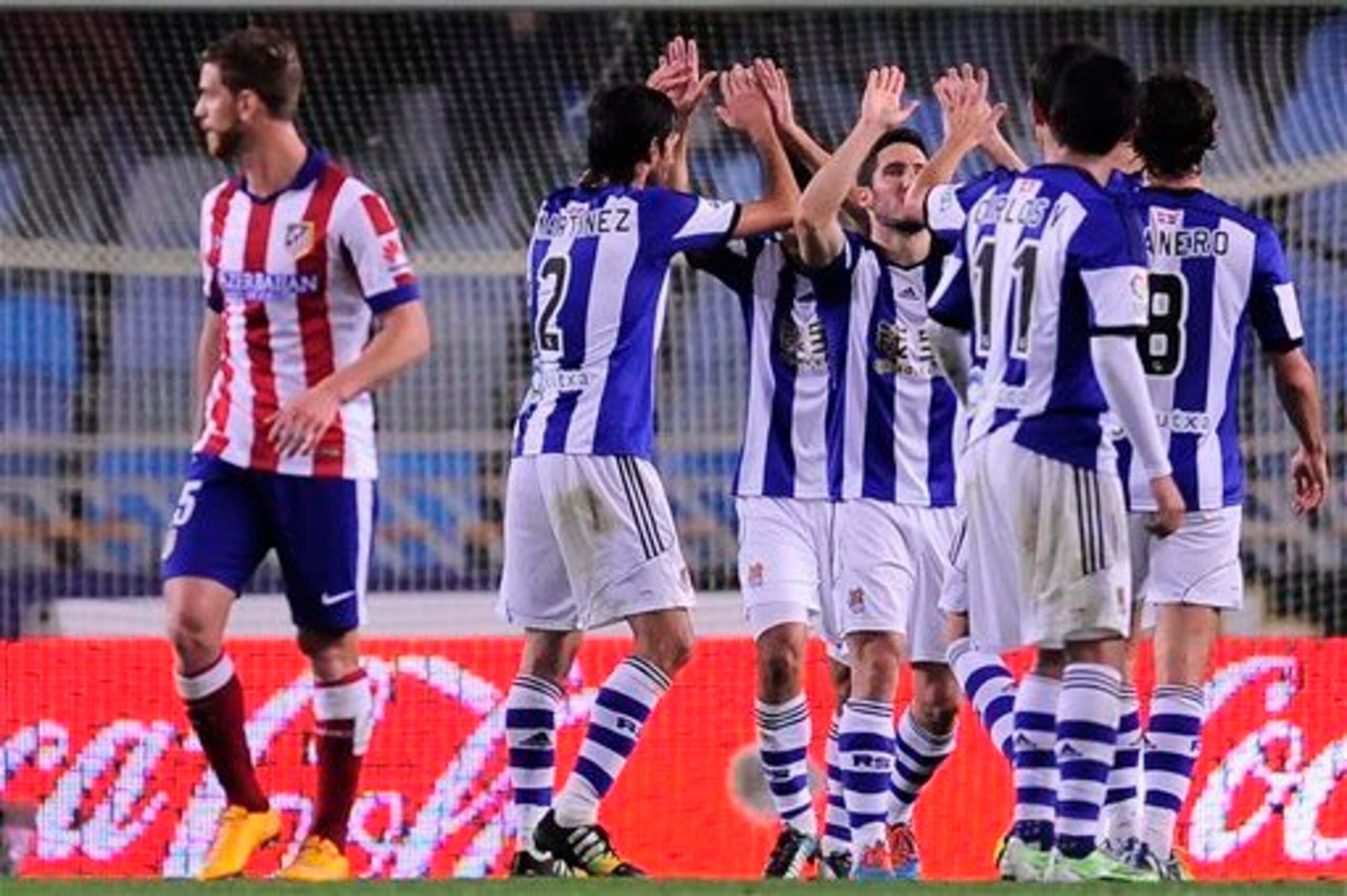
In the first half of Atleti's 2014-15 campaign in La Liga, Simeone's men dropped points at home to Celta Vigo, away to Valencia, away to Real Sociedad and at home to Villarreal.
Naturally, those games dented the club's title defence, but it was the circumstances that were most notable: All four games came immediately after Champions League outings. And in all four, Atleti weren't the typical Atleti.
Seemingly unable to harness their characteristic fire twice a week, Simeone's men were often outfought and outworked in the league after European duties—something that would have been unthinkable in 2013-14.
Explaining the underlying causes remains troublesome; perhaps it was simply a coincidence. Nevertheless, the theme damaged Atletico's season.
Discipline
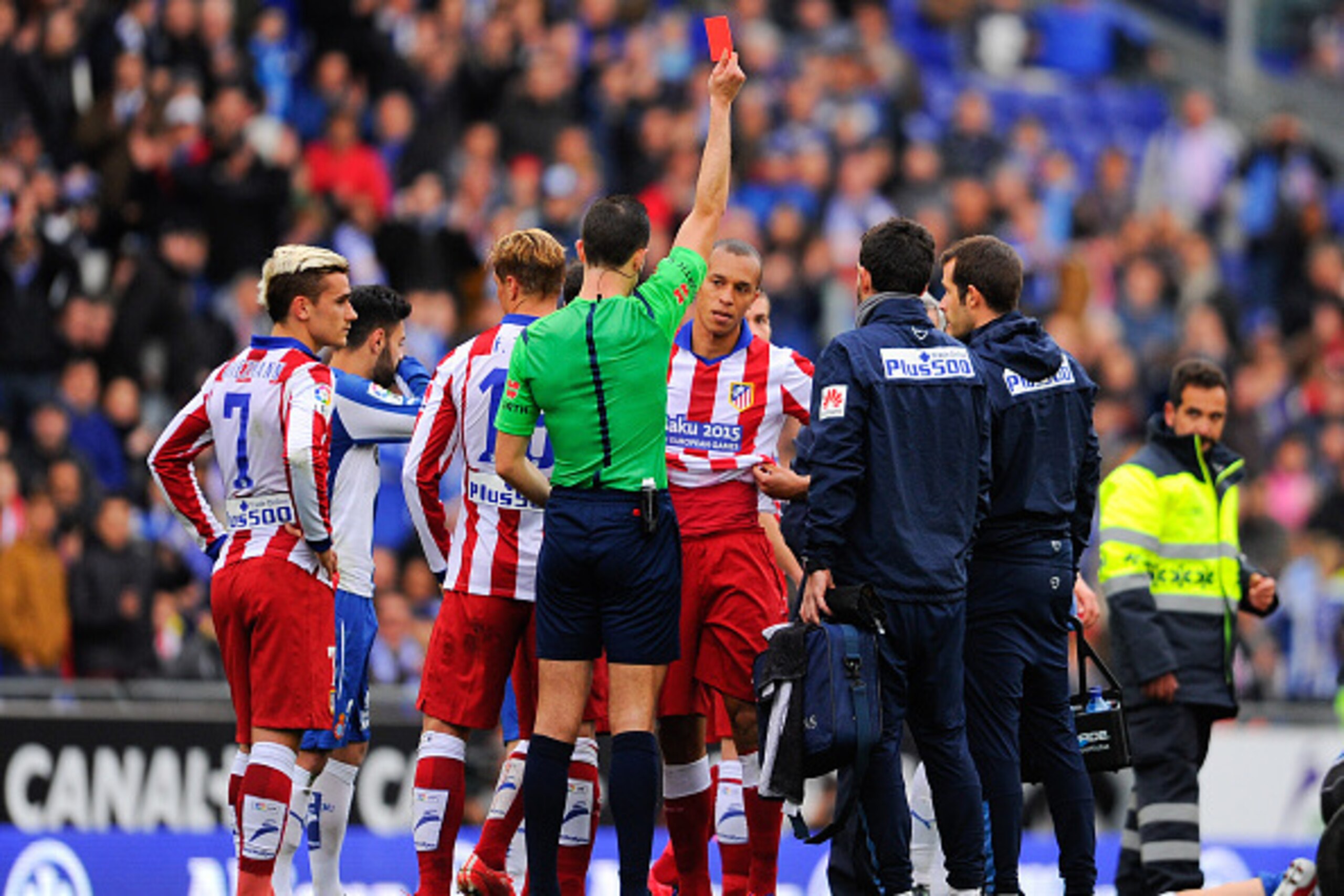
At the beginning of the season, Simeone earned himself an eight-game suspension for aggressive conduct toward a fourth official. Midway through the campaign, Arda Turan was extremely fortunate to escape punishment for throwing his boot at a linesman.
But those two moments epitomised Atleti's discipline, or lack thereof, in 2014-15.
Indeed, Atleti tread the line under Simeone, and they don't always tread it well. In La Liga alone, the team racked up 110 yellow cards and five reds. In comparison, Barcelona tallied 67 and three respectively.
It saw the club consistently enter pivotal games without key players—think the trip to Celta Vigo in February—and made Atletico's season more difficult than it needed to be.
Verdict
Grade: A-
On the whole, it was a relatively successful season for Simeone and Atletico Madrid. Despite the challenges posed by key departures last summer, the Argentinian guided his club through a transitional campaign while meeting the targets necessary to continue Atleti's ongoing emergence in European football.
We have stopped short of giving Simeone the "top marks" he believes he deserves—an indifferent summer transfer period the main factor—but can't help but admire his ability to get an under-resourced team to fight ferociously with the game's powerhouses.
.jpg?w=2560 "Rams Raiders Football")


.jpg?w=2560 "Rodgers Iced Out on Plane 💎")
.jpg?w=2560 "Packers Safety Slams Refs 🤬")

.jpg?w=2560 "🚨 Week 8 AP Top 25 Poll")
