Ruben Loftus-Cheek's Response to Mourinho Rebuke Will Define His Chelsea Career
Not every press conference is noteworthy, not every managerial quote should be dissected and not every footballer should concern themselves with unsparing post-game statements—the following case, however, is an exception.
Jose Mourinho pulled no punches in addressing the performance of budding midfielder Ruben Loftus-Cheek after Chelsea's 1-0 post-season victory over Sydney FC.
As documented by ESPN FC, the Blues manager was detailed in his criticism of the 19-year-old's commitment to defending and pressing:



"Ruben said he had a pain in his back, but what I was feeling was that he only had the pain when Sydney had the ball. When Chelsea had the ball he was playing very well, but when Sydney had the ball I think he was more impressed by watching [John Obi] Mikel and [Nemanja] Matic work, instead of him working.
So, with Ruben, it's one step back in terms of my relationship with him. If he doesn't know what it is to play for me and Chelsea—one step back.
...I don't accept that when he's playing in midfield with Mikel and Matic—when we don't have the ball—he doesn't press, he doesn't have intensity and is waiting for other people to recover the ball. I don't accept that in the superstars, so how can I accept that in a 19-year-old kid?
He has to learn what it takes to play for us.
"
One could debate whether a press room full of ravenous journalists is the proper place to release a brutally honest statement directed at an emerging youth player, but the moment has passed and what transpired is history.
Mourinho elected to use that particular platform to baptise his young midfielder by fire, leaving the next move squarely on Loftus-Cheek—which is exactly what the Portuguese wants.

Nothing uttered in a Mourinho press conference is accidental; language barriers exist by the nature of geography, but the 52-year-old's genius is not limited to just football tactics—man management is just as vital to his successful past.
Though undoubtedly harsh comments, Mourinho can accomplish three things with his words before the summer—all of which he likely had planned the moment he started Loftus-Cheek as a central-attacking midfielder vs. Sydney.
The first benefit is being an example.
Chelsea have not had a meaningful academy player come through their ranks since John Terry, but their youth system has steadily become England's best since the late 2000s. The Blues' young talent is immense, and Loftus-Cheek is the first of many with legitimate chances of breaking the Chelsea first team.

Mourinho cannot allow his first integrated youth player to be slack, as the mentality could seep into the youth teams. If Loftus-Cheek was allowed to be lazy, it stands to reason others might get their chance and follow suit.
Knowing Mourinho's demands of hard work for the one currently closest to breaking through, others with prospects—Dominic Solanke, Lewis Baker, etc.—should see Loftus-Cheek as their template: "If Mourinho wants him to work even harder, then so must I."
This sets the second potential reason for Mourinho's remarks in motion.
As the Chelsea boss is mandated to comply with UEFA's financial fair play regulations, academy players are the cheapest option for clubs around Europe. Their presence, though, does have the potential to upset those already installed as first-team options.

Suppose Loftus-Cheek was given a slot in Mourinho's first team in 2015/16, and (despite lacklustre energy levels) was given matches over Ramires, Mikel or even Matic and Cesc Fabregas. The dressing room has eyes and would notice the unwarranted favouritism—which could create schisms.
If the 19-year-old is to usurp Ramires or Mikel, he must do it via Mourinho's meritocracy; Loftus-Cheek must have the talent and diligence to make the Portuguese alter his veteran midfield arrangement—there will not be any handouts at Stamford Bridge.
Last, and most importantly, Loftus-Cheek is being given an opportunity to prove his manager wrong, forging his hopeful Chelsea career and gaining respect.
Mourinho's mind games are legendary, but one needs to look back just 13 months to see their fruits.

After crashing out of the 2013/14 UEFA Champions League semi-final vs. Atletico Madrid, Mourinho—responding to Eden Hazard's critique of Chelsea's counter-attacking football—told the media, as per the Daily Express' Tony Banks:
"Eden is the kind of player that is not so mentally ready to look back at his left-back and leave his life for him.
Eden is not the kind of player ready to sacrifice himself 100 percent for the team and his mates. I'm not happy that a player does not sacrifice himself. I've spoken to him all season and tried to improve him.
"
No doubt an attempt to have his talisman work harder, the Belgian international was nothing short of spectacular in 2014/15.
Hazard's game flourished under Mourinho last season, using his energy in both directions en route to winning a domestic double and collecting numerous individual honours (including PFA, FWA and Chelsea Player of the Year awards).
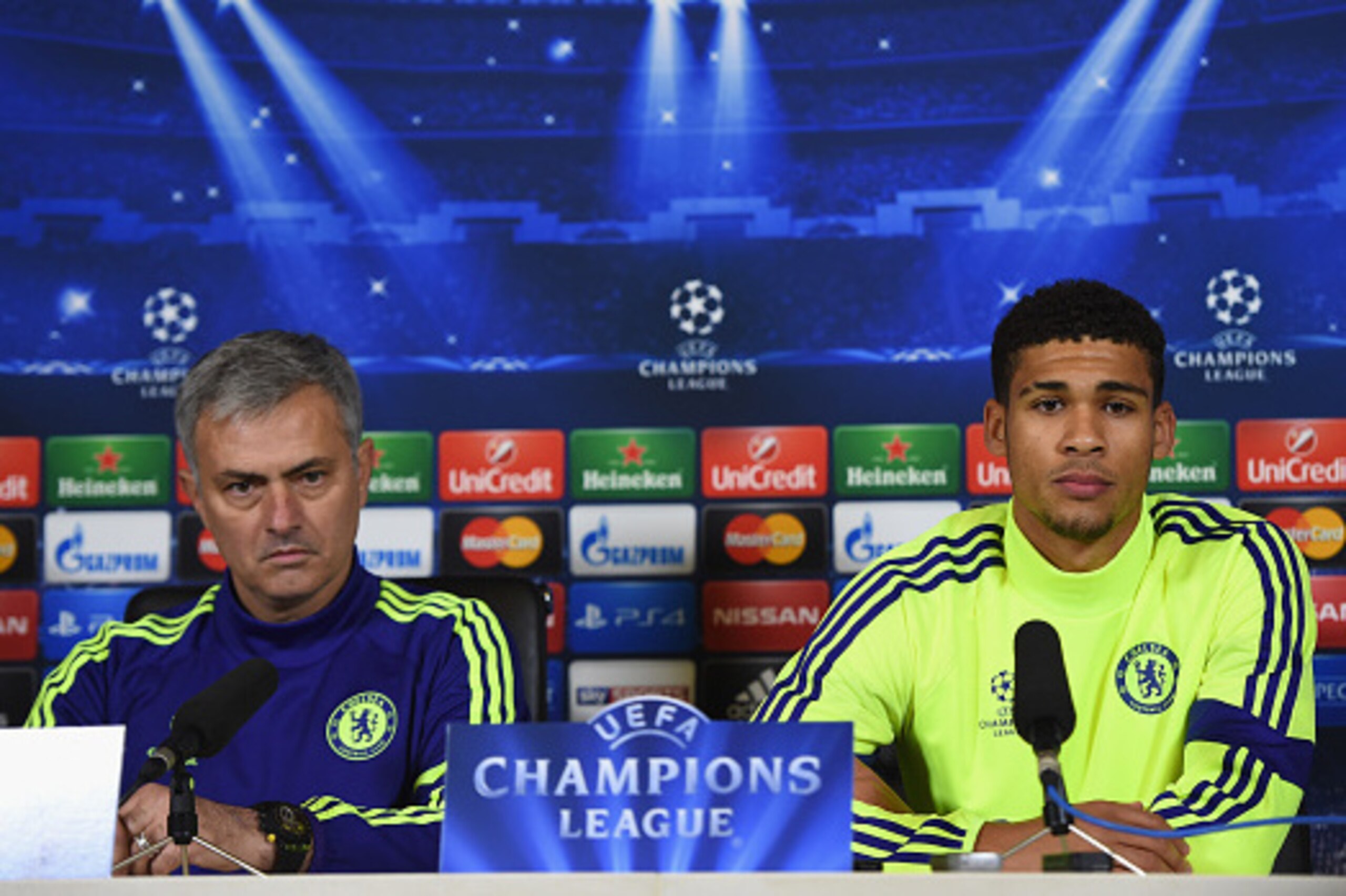
When Mourinho elects to use the press, it is not to bash, slate or slam—it is an offering. A worse manager would allow a player to unknowingly proceed with poor displays, then release them with no forewarning.
Chelsea's boss has shown Loftus-Cheek the door he needs to walk through. A negative response would simply confirm Mourinho's original sentiment. A positive response, however, would confirm the 19-year-old a "Mourinho man," and keep him in west London for a decade-plus.
Terry, via the Daily Mail's Jack Bezants, told reporters he will "have a quiet word" with the talented youngster and help explain the method to Mourinho's madness.
The Portuguese has lit a fire, Terry can now help stoke Loftus-Cheek's determination, fortitude and ambition—possibly passing the torch from Chelsea's last academy success to its next hopeful.
*Stats via WhoScored.com; transfer fees via Soccerbase.com where not noted.

.jpg?w=2560 "Seahawks Chiefs Football")



.jpg?w=2560 "Latest Peyton-Colts Rumors")