

San Francisco 49ers: 5 Rookies Primed for Biggest Impact in 2015
You could argue zero of the San Francisco 49ers’ rookies are primed to make a big impact in 2015.
The first-round pick, Arik Armstead, is a 21-year-old project who has played football full time for just one year.
The second-round pick, Jaquiski Tartt, is a safety on a team that already has two Pro Bowl safeties.
And the third-round pick, Eli Harold, is an outside linebacker on a team that has three starting-caliber outside linebackers.
None of the Niners rookies are likely to start. But a few of them—including an undrafted free agent—can earn significant roles in specific defensive packages or offensive personnel groupings or special teams units.
If any of the Niners’ rookies end up making an impact next season, I expect these five will make the biggest in ascending order.
5. Arik Armstead, Defensive Lineman
1 of 5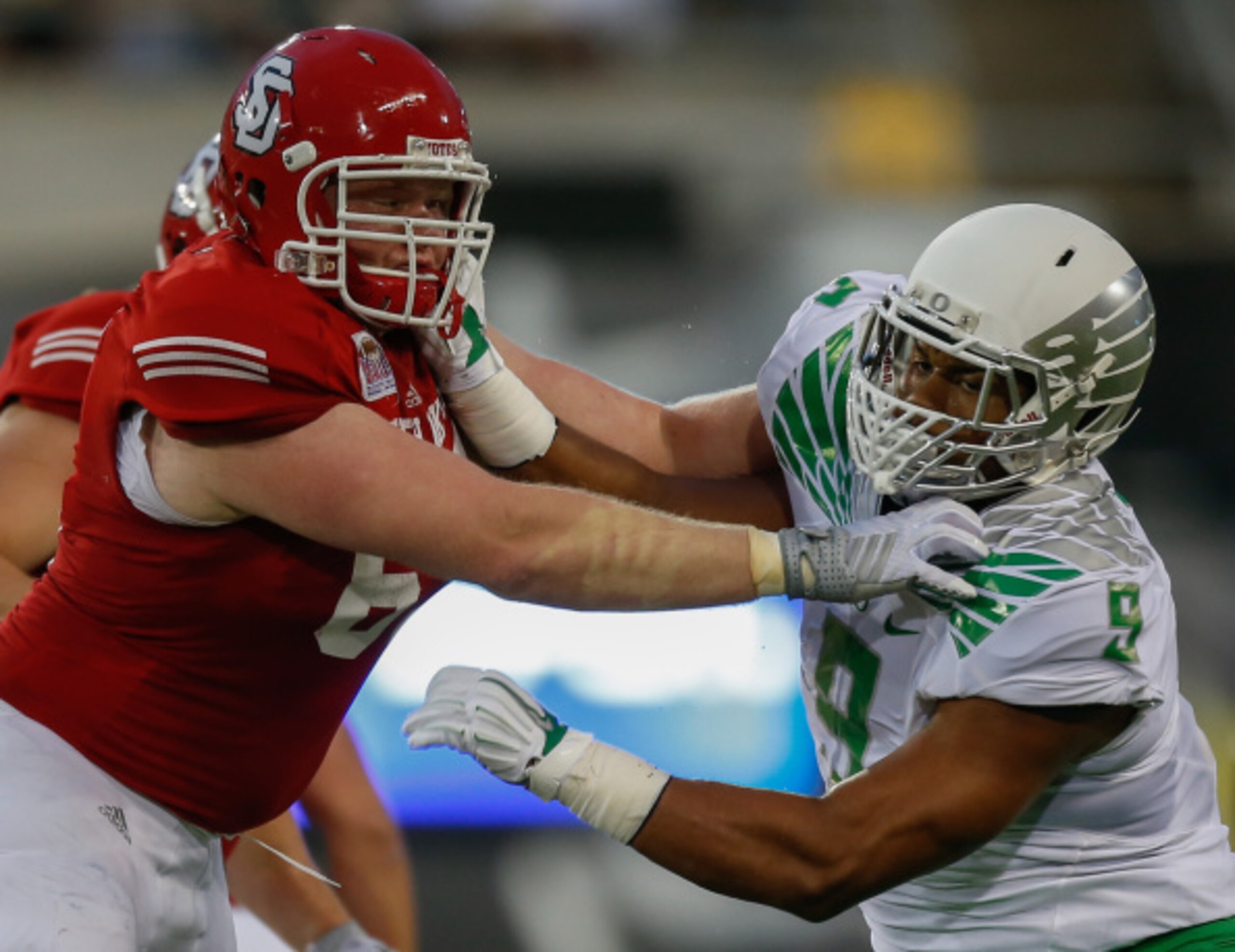
Arik Armstead might not even suit up for games to start the season.
He has to miss all but one day of OTAs and minicamp as he waits for the University of Oregon’s school year to end. So he’ll find himself behind the rest of the team when he finally joins it.
He has virtually no chance of playing on passing downs in the 49ers’ sub-packages as a rookie. The Niners probably will use Darnell Dockett and Tank Carradine as the defensive tackles in passing situations because they’re talented pass-rushers. Armstead is a run-stuffer who’s still learning how to rush the quarterback.
Armstead has a better chance to play in the base defense on running downs. But the Niners already have three quality veteran run-stuffers on the defensive line of their 3-4 base defense: Glenn Dorsey, Ian Williams and Quinton Dial.
I expect those three will start. They will allow Armstead to develop on the bench his rookie season. But if any of those three gets injured, Armstead probably will take that player’s place.
Armstead’s playing time depends on the health of the veterans ahead of him.
4. Eli Harold, Outside Linebacker
2 of 5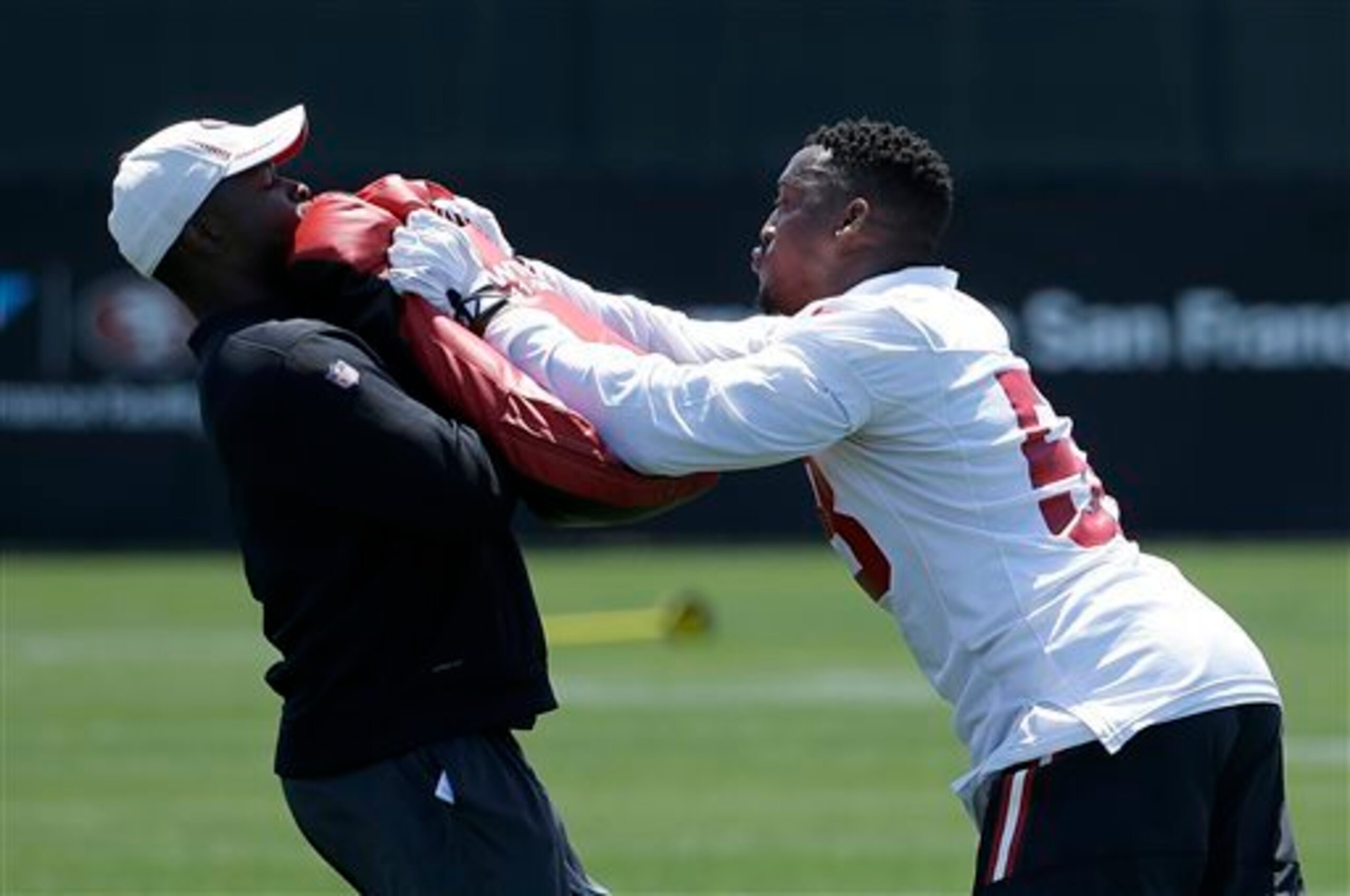
Like Armstead, Eli Harold currently is buried on the 49ers’ depth chart.
Aldon Smith clearly will start at right outside linebacker. And either Ahmad Brooks or Aaron Lynch will start at left outside linebacker.
If Lynch beats out Brooks—and it's likely Lynch will; he's an ascending talent—then the Niners will have an expensive 31-year-old starting-caliber veteran on the bench.
That wouldn't be a bad thing. It's always nice to have a good player in reserve. But Brooks might be more valuable to the Niners in a trade. Some team’s starting outside linebacker probably will get injured during training camp or preseason, and that team will need a player like Brooks.
In which case the Niners can cash in on another team's desperation. It won't be surprising if the Niners trade Brooks before the regular season begins. That move would make Harold the third outside linebacker on the depth chart, meaning he would be join the Niners' edge-rusher rotation.
3. Bradley Pinion, Punter/Kickoff Specialist
3 of 5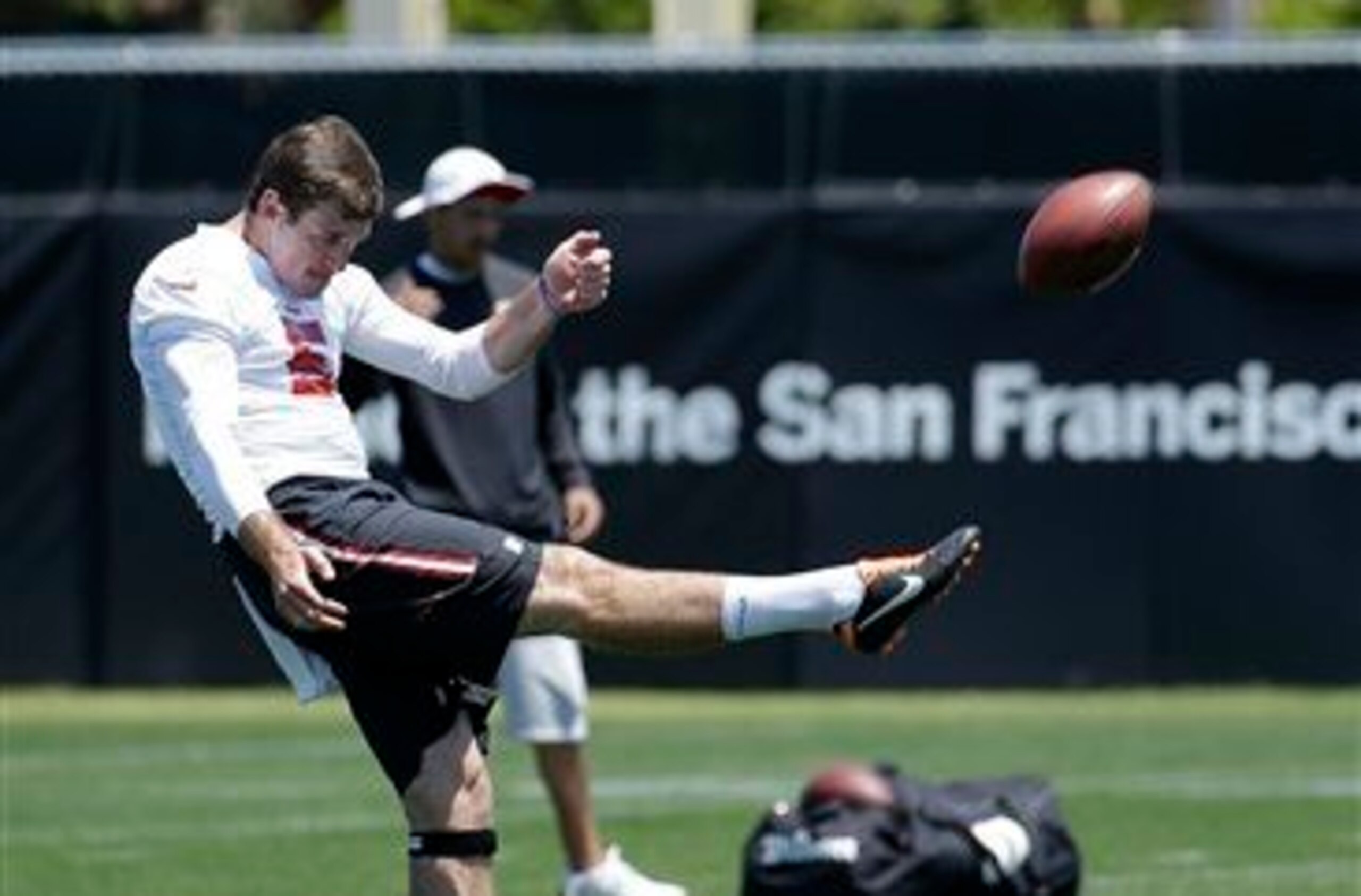
If the Niners cut Pro Bowl punter Andy Lee, fifth-round pick Bradley Pinion will make a much bigger impact than the rest of the Niners’ rookies next season. He’d be the starting punter and the only rookie with a starting job.
But it would make sense for the Niners will keep Lee for one more season. They paid him $2.4 million last season, and they’re scheduled to pay him $2.55 million next season, according to Spotrac. In 2016, his salary-cap hit jumps to $3.333 million, per Spotrac. That’s when I expect the Niners to cut him.
Until then, Lee will likely be the punter, and Pinion will kick the kickoffs. Pinion has a strong leg—he said he made a 65-yard field goal a few days before the draft, per Niners Nation's David Fucillo. Maybe, in addition to kickoffs, Pinion will get a chance kick a few 60-yard field goals next season. Phil Dawson, the starting field-goal kicker, is 40 and starting to lose leg strength.
.jpg?w=2560 "Rams Raiders Football")

.jpg?w=2560 "Steelers Saints Football")
2. Jaquiski Tartt, Safety/Gunner
4 of 5
Jaquiski Tartt will be one of the gunners on the punt-coverage team—that’s almost a given. I think he’ll have a role on the defense as well.
Not a starting role. Tartt can earn a role in the 49ers’ dime defense, something they rarely used under former defensive coordinator Vic Fangio.
The Niners mostly used a nickel defense (five defensive backs) during passing situations the past few seasons. Why? Because they had two three-down inside linebackers—Patrick Willis and NaVorro Bowman—who could cover just about any tight end or running back.
Those two inside linebackers made the Niners’ nickel defense great. Fangio rarely needed to replace either one with a sixth defensive back. But Willis is history, and Bowman is coming off a torn ACL and MCL. The Niners no longer have two three-down inside linebackers. They might have zero.
That means in passing situations they probably need to use a dime defense—six defensive backs and only one inside linebacker. They need players athletic enough to cover fast tight ends like Jimmy Graham of the Seattle Seahawks.
Tartt is extremely athletic—he can cover in space. He’s also a big hitter and a strong run defender. With Tartt on the field, the Niners’ dime defense should hold its own against the run and the pass.
1. Dres Anderson, Wide Receiver
5 of 5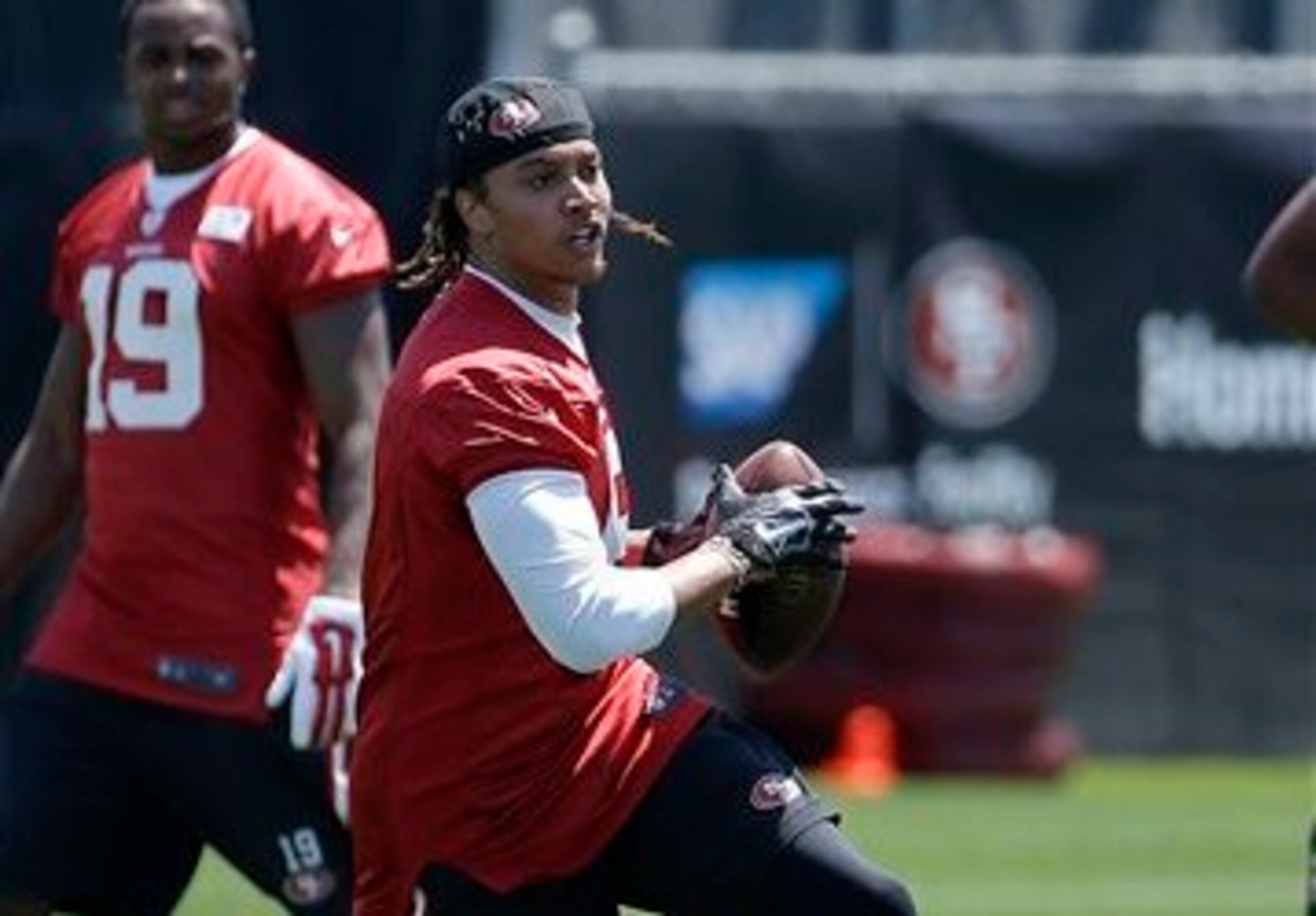
Bear with me.
Yes, I’m picking an undrafted free agent to make the biggest impact of all the Niners’ rookies next season. Yes, I realize Anderson might not even make the final roster. He’ll have to play awfully well during the preseason to force his way onto the team.
I expect Anderson will do exactly that.
Anderson tore his meniscus last season, but he seems fully recovered. Compare him to the New York Jets’ second-round pick, former Ohio State wide receiver Devin Smith.
Anderson: 6’1”, 187 pounds, 4.43-second 40-yard dash, 6.83-second three-cone drill, 4.22-second short shuttle, 121-inch broad jump.
Smith: 6’0”, 196 pounds, 4.42-second 40-yard dash, 6.83-second three-cone drill, 4.15-second short shuttle, 122-inch broad jump.
Now compare their junior season numbers (Anderson missed half of his senior season with a torn meniscus).
Anderson: 53 catches, 1,002 receiving yards (18.9 yards per catch), seven touchdowns.
Smith: 44 catches, 660 yards (15.0 yards per catch), eight touchdowns.
You could argue Anderson is even better than Smith, and Smith is terrific. He should be the No. 3 receiver for the Jets just as Anderson should be the No. 3 receiver for the 49ers.



.jpg?w=2560 "🚨 Week 8 AP Top 25 Poll")
.jpg?w=2560 "Packers Safety Slams Refs 🤬")