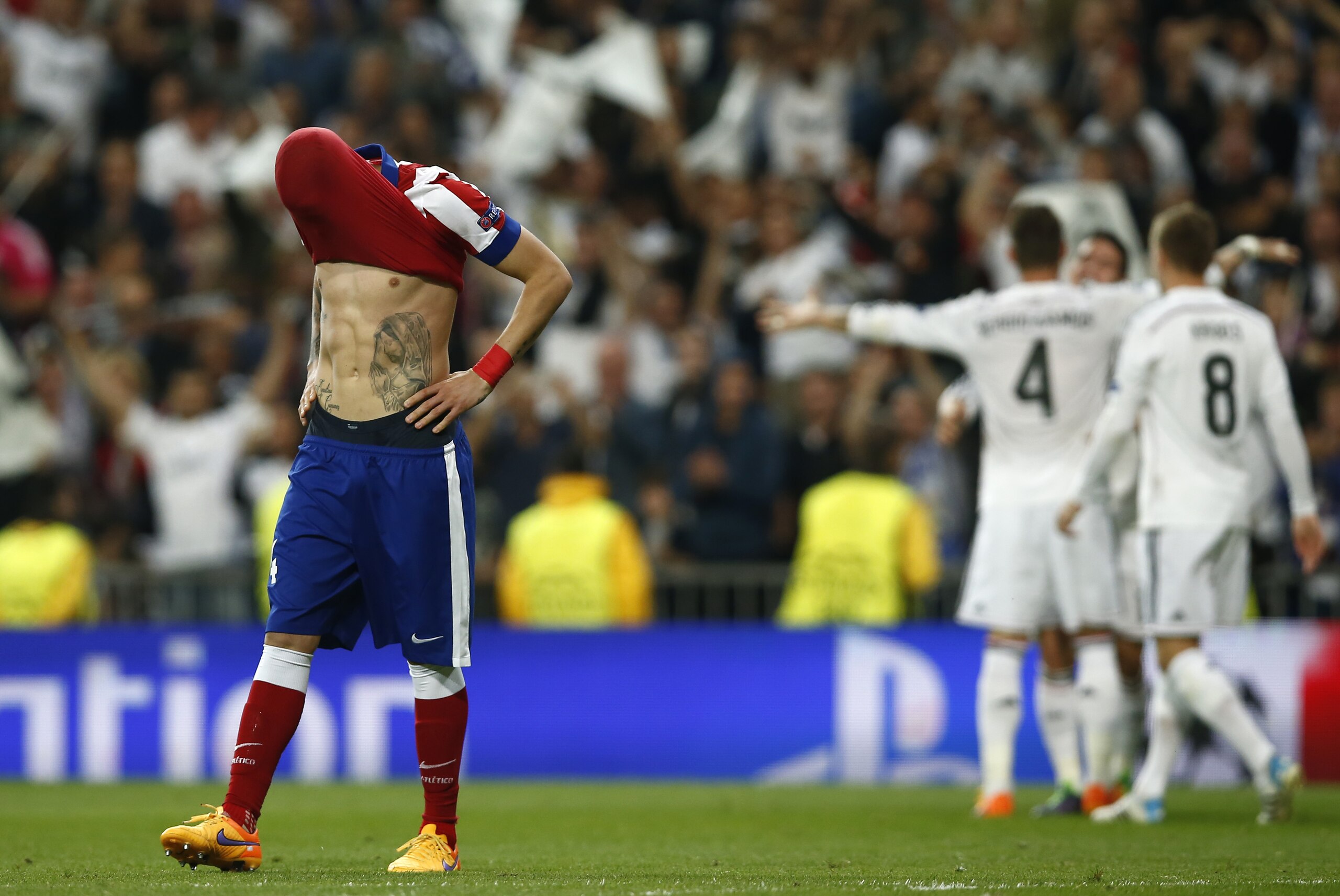

Atletico Madrid's Biggest Regret of 2014-15 Season: Tactical Failure at Bernabeu

In the build up, Marca had dubbed it "the never-ending derby." An apt description. The teams, Atletico Madrid and Real Madrid, had already met seven times in the eight months prior. The clash at the Bernabeu on April 22 would be the eighth meeting, and the 13th in just two seasons.
El Derbi madrileno had grown to become a seemingly perpetual battle. But it was a changing battle, too. "The Madrid derby is living its best years since '59, '60 and '61," wrote AS editor Alfredo Relano, pointing toward a duel that had not only been revitalised, but flipped on its head.
TOP NEWS

Final Men's Ballon d'Or Rankings 📊
Highlights and Viral Moments 🍿

Carrick Replacement Options 📝
In the seven meetings prior to the second leg of the Champions League quarter-final tie at the Bernabeu, Real Madrid had gone winless. They'd lost four times, conceded 12 goals and scored just four. Atletico had grown to become Real's tormentors, Diego Simeone's unfashionable soldiers thriving in the capital's combat. Real manager Carlo Ancelotti even admitted that "facing 'Cholo' Simeone is a big honour but also big trouble."
All season, power had been shifting from Chamartin to banks of the Manzanares, and as the eighth encounter approached, Real's entire season felt as though it was crumbling. Gareth Bale and Karim Benzema were unavailable in attack. In midfield, Luka Modric was missing. At the back, Marcelo was suspended. "Carlo Ancelotti must build another puzzle in record time," cried AS, a task the Madrid-based daily stressed would be "more complicated than his last Sudoku."
For Atletico, April 22 represented a golden opportunity. Earlier in the season, they'd snatched the Spanish Super Cup away from their glamorous neighbours. Then they'd dumped Ancelotti's side out of the Copa del Rey. And their league double over Real had done almost irreparable damage to the European champions' title push in the Primera Division.
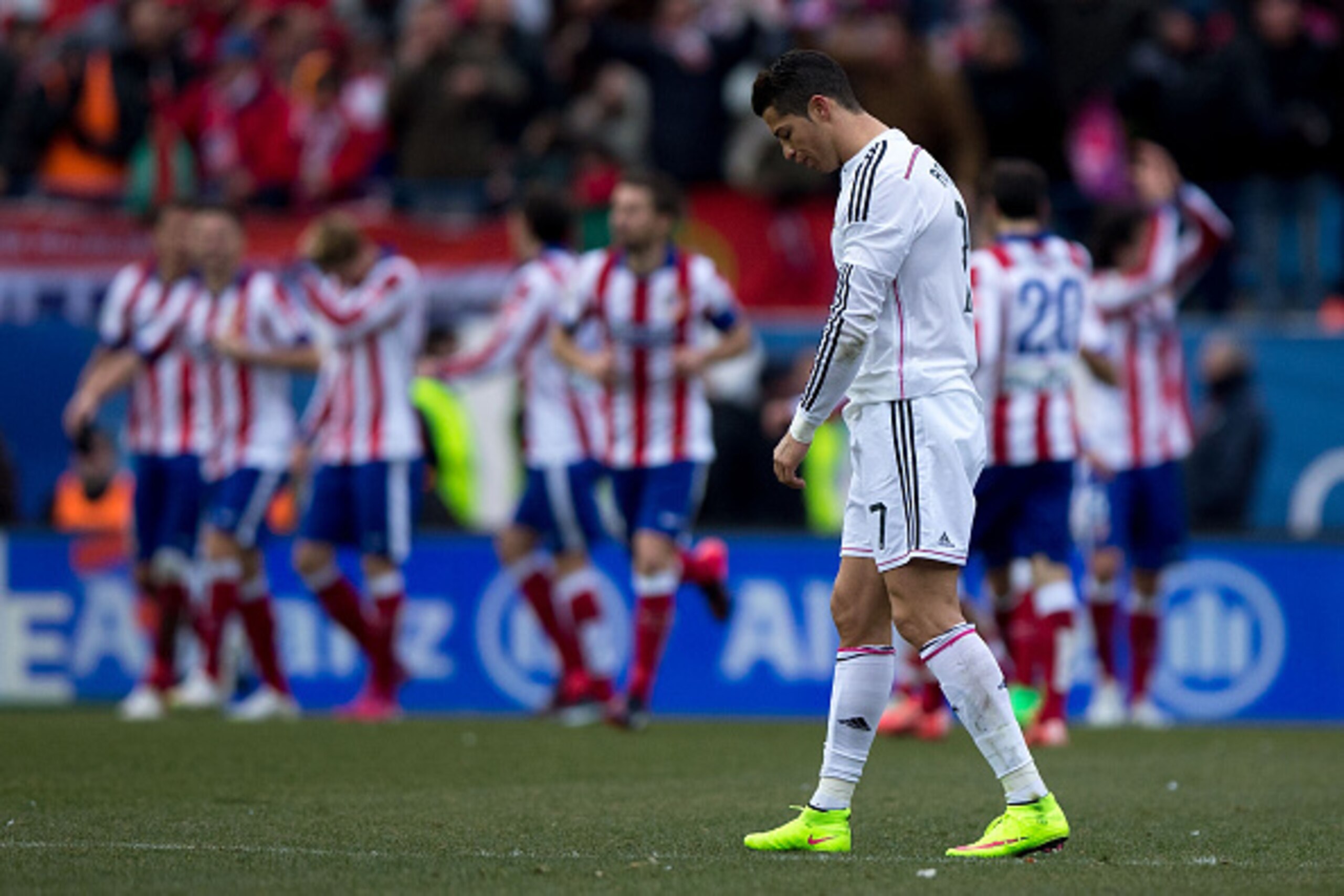
Thus, the Champions League quarter-final tie would be a chance to sink Real's bid for silverware in four separate competitions. And for Atleti, the stars were aligning. The form, momentum, injuries, head-to-head record and the psychology of the derby: it all favoured Madrid's red-and-white half.
Then came the team sheets. The visitors were essentially at full strength; the hosts anything but. Up front, the barely used and frustrated Javier Hernandez was thrust into the striker role. In the middle, centre-back Sergio Ramos was one of Ancelotti's midfield three. And at the back, Fabio Coentrao had come in for Marcelo, despite having totalled zero minutes in the six weeks prior.
What's more, the tie's complexion also favoured the derby's historical underdogs. A scoreless draw at the Calderon in the first leg a week earlier had arguably given Atleti the upper hand, the away-goal rule considered. A single strike potentially enough to take them through, Simeone's men could opt for their favourite play: sit deep, defend resolutely and pick off Real on the break. Just as they'd done in the three previous visits to the Bernabeu, the most recent of which had seen Fernando Torres punish mistakes from Pepe and Ramos.
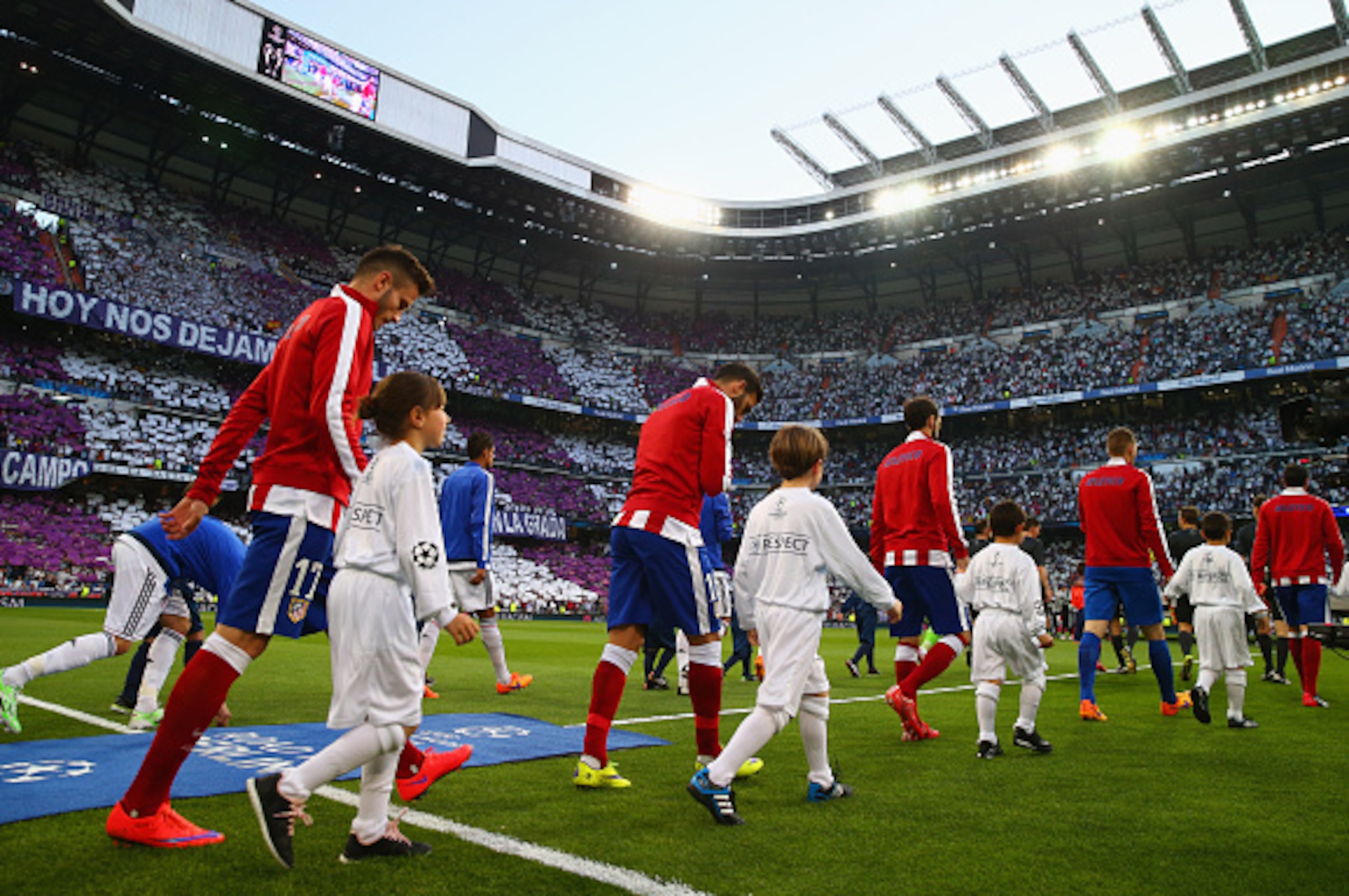
And when the teams walked out, the Bernabeu was anxious. It had the feel of a perfect cocktail for Simeone.
But then something strange happened: Atleti lost their conviction, their belief.
From the opening whistle, Simeone's midfield sat barely 10 yards from the back four, who themselves seemed bound by their ankles to the 18-yard box. In turn, Antoine Griezmann and Mario Mandzukic (far from fully fit) played in their own half.
Some may ponder what was unusual about it, the perception being that's what Atleti do. But this was unusual. In Simeone's tenure, deep-lying football has still been aggressive, attacking and positive, the team harnessing its strengths. But this was notable because it wasn't those things, it was negative. Instead of sitting deep with the intention of counter-attacking, Atleti only sat deep. Period.
Somehow, the alteration of the dynamic between the teams had affected Simeone and Co. They were no longer the massive underdogs. Hope had become something more like expectation. Instead of a free hit, this was a tie they realistically could—and perhaps should—win.
But because of that, Atleti had been taken away from what they know, their comfort zone.
Real, sensing the visitors' timid approach, laid down a barrage. They took 23 shots to six, per WhoScored.com; eight on target to two. Jan Oblak had to keep out Cristiano Ronaldo, James Rodriguez, Raphael Varane, Hernandez and Ramos. And Ramos—whose positioning in midfield would draw significant criticism two weeks later in Turin—controlled the central battle with ease, remarkably enjoying more touches and passes than any other player on the pitch.
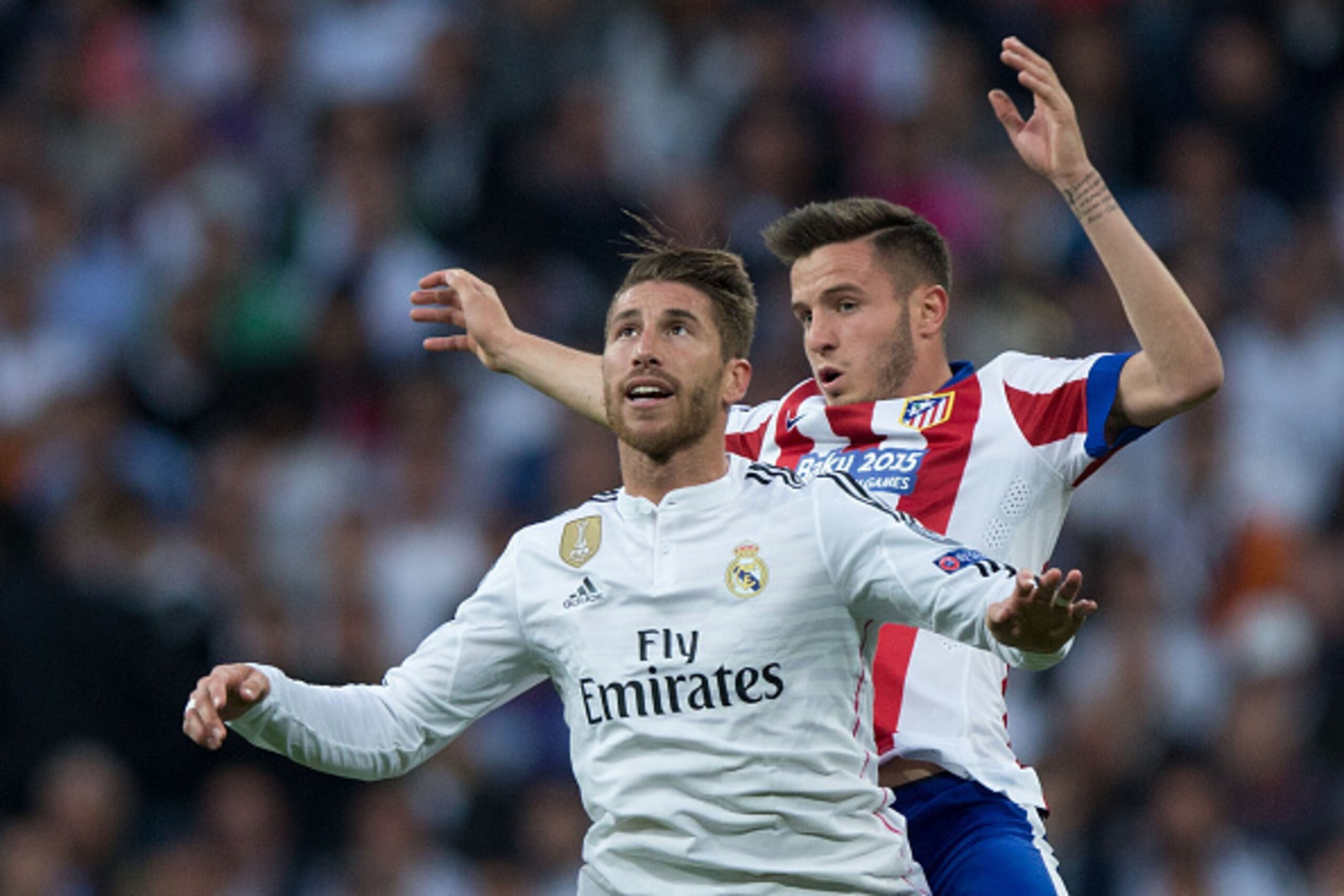
For Atleti, it was inexcusable. Their opponents had entered the night with concerns on every line, but not once did Los Colchoneros look to attack or expose a weakness. Instead, the objective seemed the opposite of that: get to extra time and penalties. And when Simeone withdrew his only counter-attacking threat in Griezmann with half an hour still to play in normal time, that perception was reinforced.
Twenty-three minutes later, Hernandez broke the deadlock, turning in the pass he received from Ronaldo to break Atleti's resistance. Soon after the final whistle blew, a once-anxious Bernabeu turned delirious.
"Atletico always make it difficult, but we deserved to pass through to the next round," Iker Casillas told AS in the game's aftermath. "Things are decided by details and you have to fight and struggle. Aside from having great players, they [Atletico] are a team of fight, struggle and effort."
That they are. But on that night, April 22, with a golden opportunity in front of them, Atleti lost both their nerve and a tactical battle they were ideally placed to win.


.jpg?w=2560 "Raiders Could Start Mendoza")




.jpg?w=2560 "Rodgers Iced Out on Plane 💎")
.jpg?w=2560 "🚨 Week 8 AP Top 25 Poll")
