


There might not be a stronger position than center in the 2015 NBA draft. The top two picks could well both be centers. We could even see five big men go in the lottery.
Between Kentucky's Karl-Anthony Towns and Duke's Jahlil Okafor, the position is loaded with star power at the top. Beyond those two, there should also be solid center options for teams to choose from throughout the draft.
The NBA Draft 100 metric measures each prospect based on a number of factors that account for everything from athleticism to room for growth. Each position has different criteria related to the traditional responsibilities tied to it. We measured centers in five separate categories:
- Size for Position/Athleticism
- Scoring/Shooting
- Defense/Rim Protection
- Rebounding
- Upside
Though some prospects played multiple positions, we assigned each prospect to the position we project him to play most at the next level.
On the next slide, we address how we chose which categories to evaluate for each position, as well as how we came up with each individual score.
Scoring Guide
1 of 21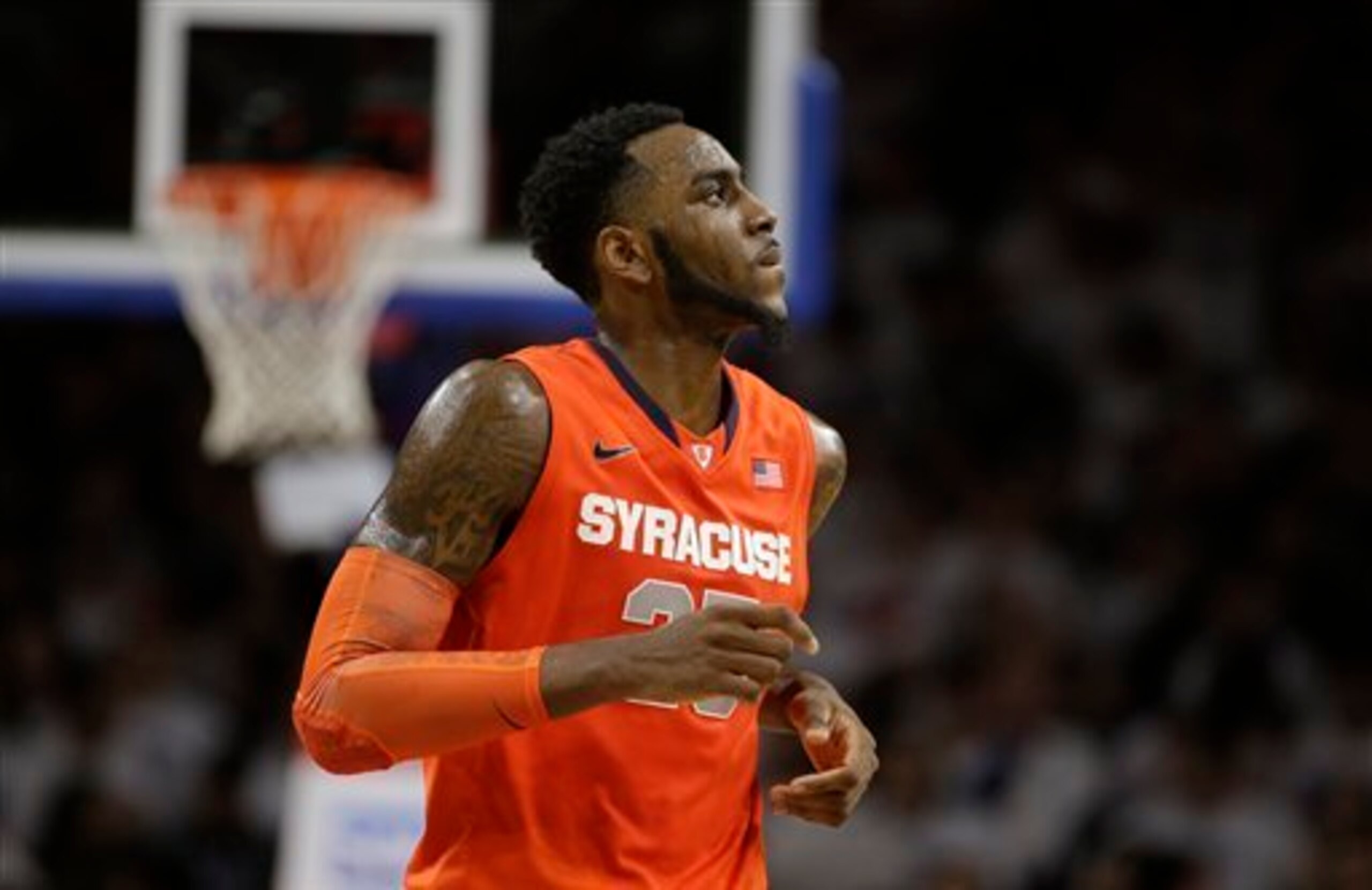
We used five categories to evaluate the centers. Each category is also assigned a different weight based on significance.
We created a formula to reflect each prospect's performance in a particularly category. For scoring/shooting, rebounding and rim protection, the weights are listed below in percentage points.
Size for Position/Athleticism (25 points)
From a physical perspective, there is a big difference between the average NBA center and the average college center, most of whom stand around 6'8" to 6'10". Big men in the pros are at an entirely different level in terms of size, strength and athleticism. Some centers without any skill can find a rotation spot just based on their physical tools and athleticism alone.
Height (5)
Most NBA centers are in the 6'10" to 7'0" range.
5 = 6'11" or above
4 = 6'10"
3 = 6'9"
2 = 6'8"
1 = 6'7"
Weight (5)
Alarms won't sound if a center doesn't reach the 240-pound mark, but they will if he's significantly lighter. Strength is important for centers, given how much time they spend fighting for position around the basket.
5 = 240-plus pounds
4 = 230-239 pounds
3 = 220-229 pounds
2 = 210-219 pounds
1 = Less than 210 pounds
Athleticism (15)
We weighed athleticism slightly more than size, as there is a bigger difference between an above-average athlete and an average athlete than an inch-or-two difference in height.
Athleticism allows centers to separate from defenders and pick up easy baskets around the rim, where most spend the majority of their time. It can play a big role in their ability to run the floor, finish, rebound and defend.
Physically, athleticism is more important than meeting the traditional height requirements. Above-average athletes were subjectively scored in the 11-15 range. Average athletes were subjectively scored in the 6-10 range. Below-average athletes were subjectively scored in the 1-5 range.
11-15 = Above-average athlete
6-10 = Average athlete
1-5 = Below-average athlete
Scoring/Shooting (40)
Scoring centers are valued come draft time. That's because most centers aren't typically skilled enough to create one-on-one. Points per 40 minutes tells us how productive a center was offensively. It's also important for big men to shoot a high percentage. Centers who shoot in the 40-45 percent range aren't as valuable offensively.
Centers with outside touch are also highly valued. Since most college centers don't shoot threes, we instead used their free-throw percentage (10 percent of scoring/shooting score), which generally gives a good idea of where a player is as a shooter.
60 percent: Points per 40 minutes
30 percent: Field-goal percentage
10 percent: Free-throw percentage
Defense/Rim Protection (15)
Rim protectors are valuable in today's NBA. Centers who struggle in rim protection aren't valued as highly, even if they are volume scorers.
Block percentage is a number that translates well from college to the pros. Those who put up poor block percentages in college typically struggle with rim protection in the NBA. On the other hand, college centers who block shots at high rates in college are generally plus NBA defenders.
Each center's defense/rim protection score takes fouls per 40 minutes into account as well. Shot-blocking doesn't necessarily always equate to sound defense. Those who fouled at a high rate were docked accordingly.
80 percent: Block percentage
20 percent: Fouls per 40 minutes
Rebounding (15)
Centers who aren't strong rebounders lose NBA value points. Rebounding is one of the primary responsibilities of every big man. In college, it's tough to pick out the poor rebounders, but the great ones are capable of standing out. The NBA Draft 100 metric rewards them.
100 percent: Rebound percentage
Upside (10)
The upside score projects a player's ceiling or best-case outlook. The projections were set based on Jonathan Wasserman's scouting and collective opinions from scouts and other draft analysts.
10 = MVP
9 = Superstar
8 = Perennial All-Star
7 = All-Star potential
6 = High-end starter
5 = Low-end starter
4 = High-end reserve
3 = Low-end reserve
2 = High-end benchwarmer
1 = Low-end benchwarmer
Please note that slight adjustments were made for international and mid-major prospects.
If two players received the same total score, we used "Upside" as the tiebreaker. If there was still a tie, we chose the player who ranked higher on Jonathan Wasserman's big board.
20. Stefan Nastic, Stanford, 6'11", Senior
2 of 21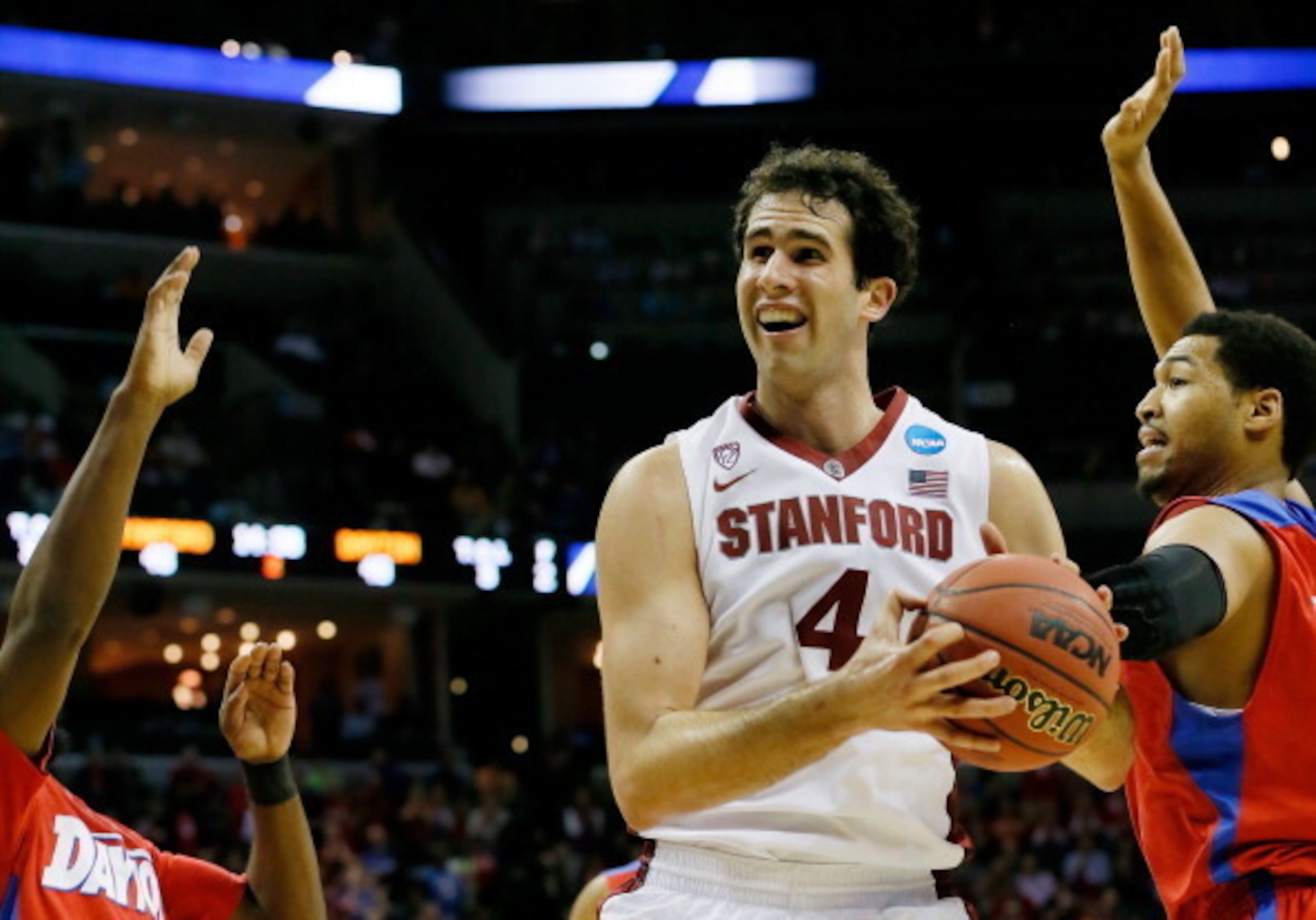
Size for Position/Athleticism
At 6'11", 238 pounds with a 7'2 ½" wingspan, Stefan Nastic has plenty of size for an NBA center, but he's lacking in the much strength, quickness and athleticism departments.
Scoring/Shooting
Nastic averaged 18.1 points per 40 minutes as a redshirt senior this past season. His most appealing strength may be his mid-range touch. He knocked down 45.2 percent of his two-point jumpers, per Hoop-Math.com, and shot 75.4 percent from the free-throw line. Nastic can score over the shoulder, but he lacks the ability to separate and struggles against length and after contact.
Defense/Rim Protection
Nastic's 3.8 percent block percentage highlights his minimal defensive potential. He doesn't project as a shot-blocker or physical interior defender.
Rebounding
Nastic is a below-average rebounder for a center. His 12.7 percent total rebound percentage is the lowest of any top-20 player at his position.
Upside
Unfortunately, Nastic just isn't an NBA talent. Unless he goes to Europe or the NBA D-League and earns the reputation as an automatic mid-range shooter, I wouldn't count on him making a roster any time soon.
Overall
He'll most likely go undrafted on June 25 and look to catch on with a summer league team.
19. Matt Stainbrook, Xavier, 6'11", Senior
3 of 21
Size for Position/Athleticism
Matt Stainbrook measured 6'9 ½" in socks at the Portsmouth Invitational. He's a big boy at 283 pounds, but he is a below-average athlete from every possible angle.
Scoring/Shooting
Stainbrook has go-to moves in the post, where he can score with his back to the rim or finish at tough angles below it. And though not exactly a shooter, he can knock down mid-range shots and miscellaneous looks around the key.
Defense/Rim Protection
Stainbrook's 2.9 percent block percentage from his senior season is painfully low. His inability to get off the ground and his short arms for a center (7'0 ½" wingspan) really restrict him defensively.
Rebounding
He wasn't a bad or great rebounder this past year, given his average of 10.4 rebounds per 40 minutes and 16.1 percent total rebound percentage. However, he wasn't much of a factor on the offensive glass.
Upside
Stainbrook's lack of athleticism will likely be too severe to overcome. Consider him a long shot to earn an NBA training camp invite.
Overall
Don't expect Stainbrook to get drafted. He could have a better chance of making a name for himself in track and field.

18. Joshua Smith, Georgetown, 6'10", Senior
4 of 21
Size for Position/Athleticism
While his 6'10" size and 7'3" wingspan both fit the mold of an NBA center, Joshua Smith has never managed to keep his weight in check. He's listed at a whopping 350 pounds. Conditioning, athleticism and mobility are major concerns that may prevent NBA teams from even giving him a look.
Scoring/Shooting
There was never any doubting Smith's skills. With terrific hands in the post, he has an excellent feel for the rim and can score over either shoulder. He isn't a threat to face up or shoot, but he uses his size to gain position and his touch to finish over defenders. He actually averaged 21.0 points per 40 minutes for Georgetown as a senior.
Defense/Rim Protection
Smith isn't much of a defensive factor. His 3.9 percent block percentage from this past season is distressingly low for a near-7-footer, while his lack of foot speed led to him picking up a ridiculous 6.8 fouls per 40 minutes.
Rebounding
Given all the space he took up in college, Smith's rebounding numbers were fine. His 17.0 percent total rebound percentage is actually one of the better marks among centers.
Upside
Already 23 years old, Smith is running out of time to prove himself. He'll need to transform his body, but having failed to do so over the last five years, it seems unlikely.
Overall
Smith won't get drafted this June after failing to receive an invite to the combine. Whether he can make any money playing basketball could come down to his work ethic over the next year.
17. Amir Williams, Ohio State, 6'11", Senior
5 of 21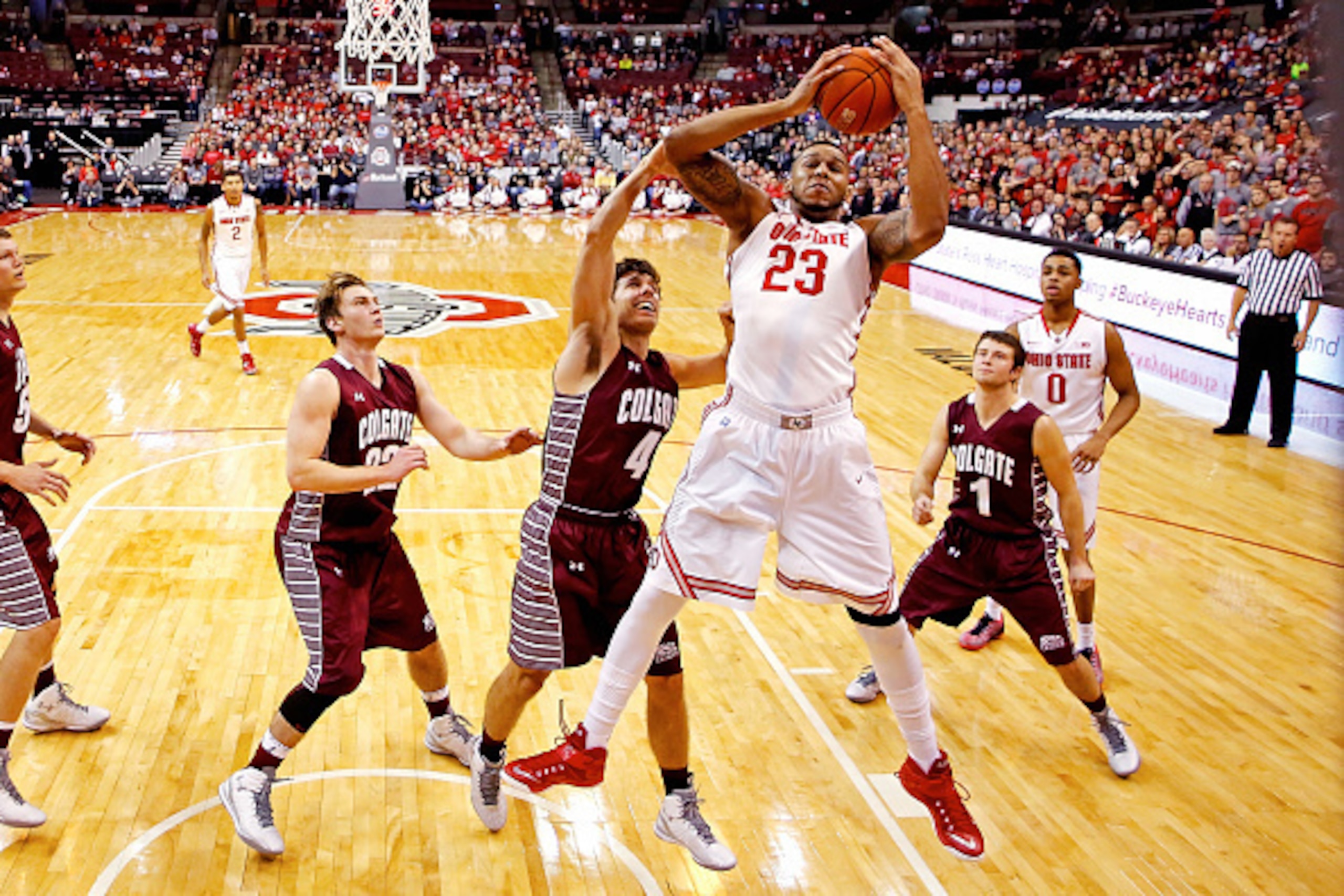
Size for Position/Athleticism
Amir Williams passes the eye test with 6'11", 257-pound size and a 7'3" wingspan. But he isn't a standout athlete by any means, as he lacks leaping ability and quickness.
Scoring/Shooting
Williams averaged just 13.0 points per 40 minutes as a senior, rarely taking a shot that wasn't right at the rim. Per Hoop-Math.com, 84.4 percent of his shots were at the rim. His over-the-shoulder hook is really the only move in his arsenal. Otherwise, Williams doesn't create shots or knock them down outside the paint.
Defense/Rim Protection
Though his 3.2 blocks per 40 minutes from this past season aren't bad, his defensive impact wasn't always felt. Just having long arms isn't likely to translate to rim protection at the next level.
Rebounding
Williams wasn't a big-time rebounder, a result of questionable toughness and athleticism. He averaged 9.6 boards per 40 minutes.
Upside
He just doesn't do enough things well. His measurements check out, but Williams lacks the offensive game, athleticism and defensive consistency to become relevant in the draft conversation.
Overall
He'll be a fringe second-rounder hoping to hear his named called in the 50-60 range, but chances are Williams ends up in the D-League or overseas.
16. Yanick Moreira, SMU, 6'11", Senior
6 of 21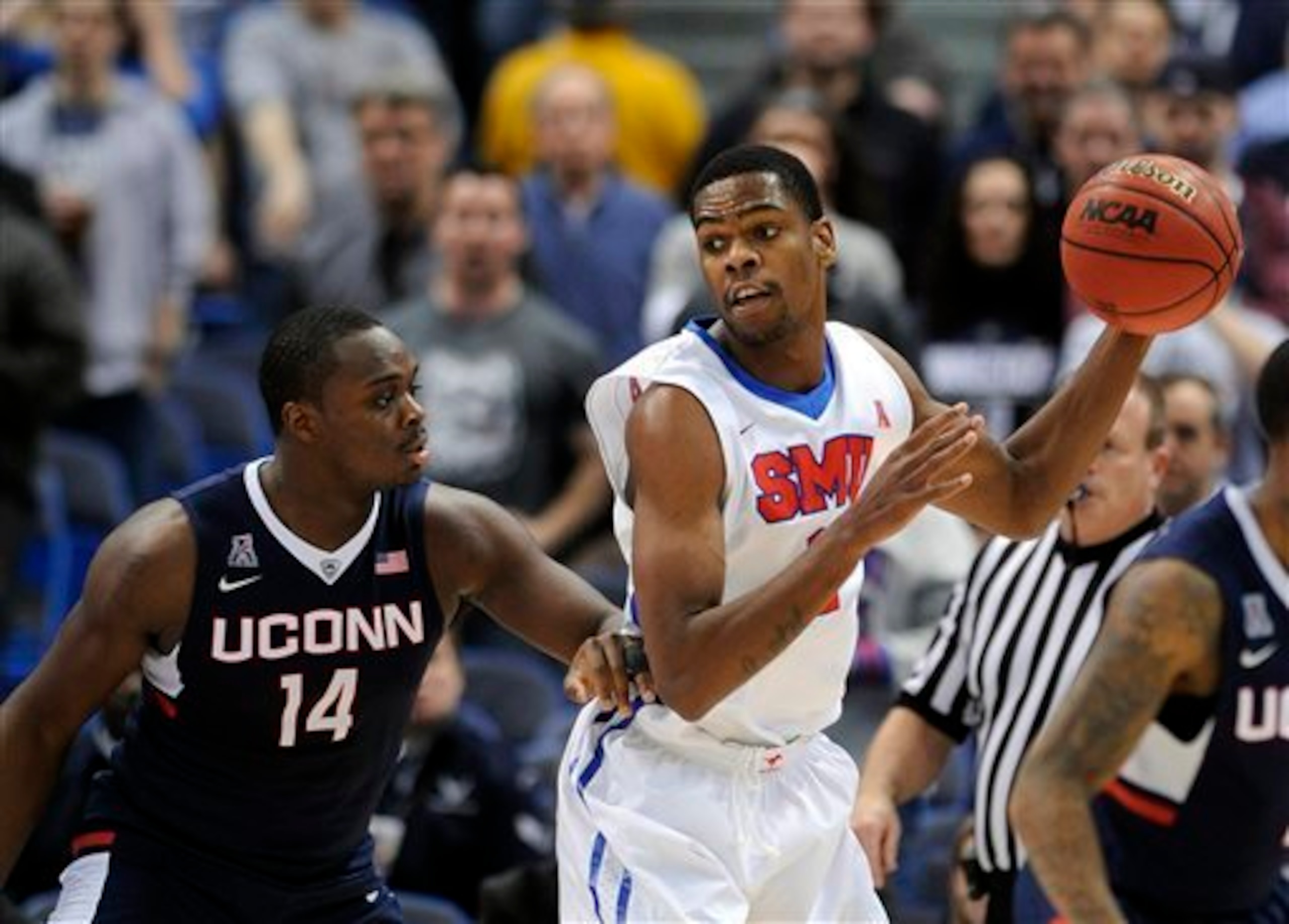
Size for Position/Athleticism
At 6'11", 220 pounds, Yanick Moreira's physical tools stand out at the college level. He moves well for his size, though he lacks strength and explosiveness.
Scoring/Shooting
Moreira averaged 18.2 points per 40 minutes as a sophomore, scoring mostly within five feet off catch-and-finishes or low-post entry passes. He's not overly skilled, but he'll occasionally score out of pick-and-rolls, with a jump hook or a fallaway. However, he shot just 64.0 percent from the free-throw line and doesn't show much touch on his shot.
Defense/Rim Protection
Moreira blocked 1.9 shots per 40 minutes this past season. He hasn't exactly established himself as a promising rim protector.
Rebounding
His rebounding numbers were fairly average, having pulled in 10.6 boards per 40 minutes. A lack of bulk and lift work against him in 50-50-ball situations.
Upside
He'll be 24 years old in July, and without any strengths to differentiate himself, Moreira doesn't offer any upside.
Overall
Moreira has worked out for a few teams, but he's unlikely to get drafted. He's generated zero buzz in May and June. He'll have to hope for an offer overseas to make some money.
15. Alan Williams, Santa Barbara, 6'8", Senior
7 of 21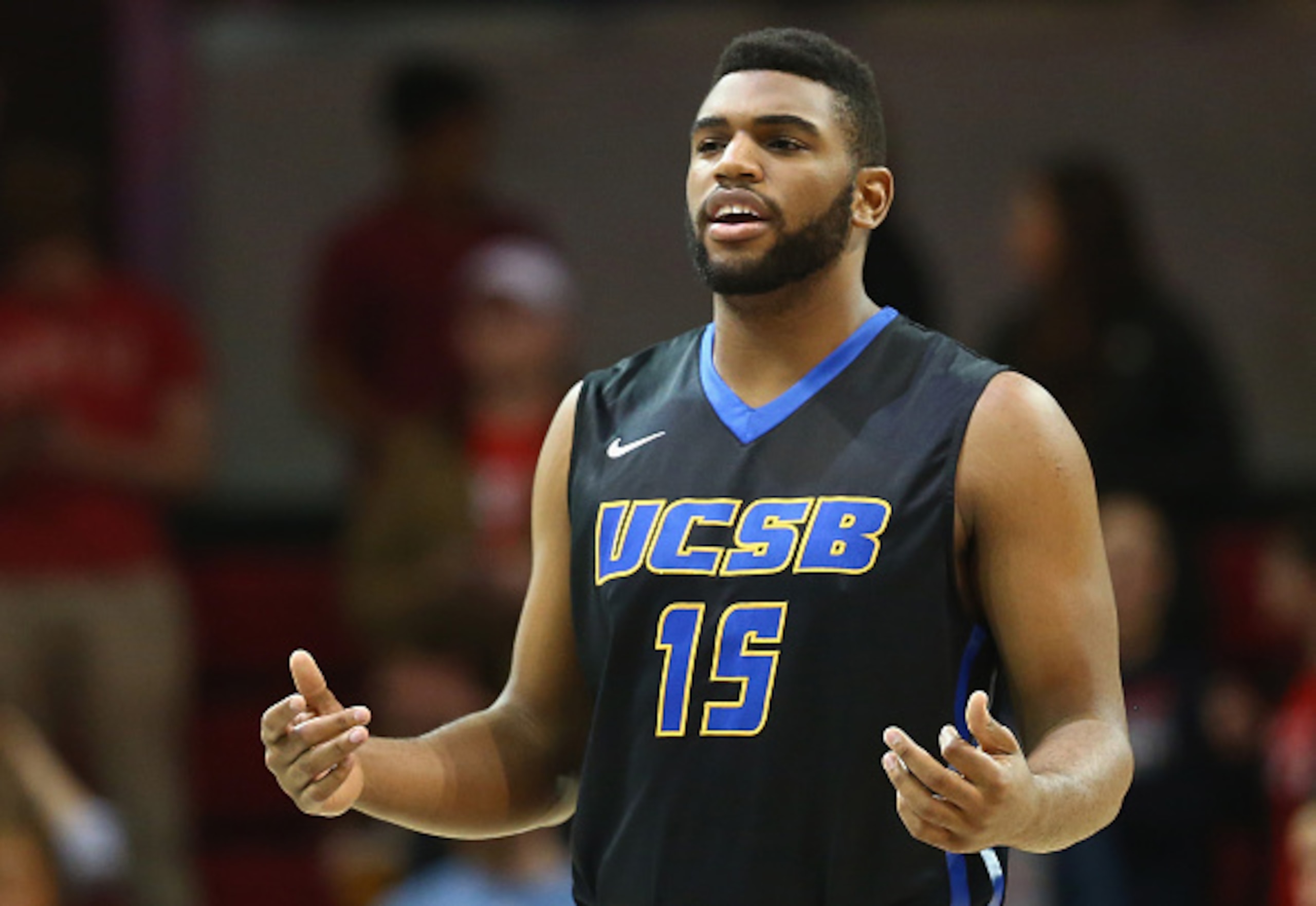
Size for Position/Athleticism
Alan Williams takes up a ton of space in the paint, thanks to his massive 261-pound frame and 7'2" wingspan. But at 6'8", he's undersized and can barely get off the ground (28 ½" max vertical). And it's tough to see him playing power forward in the NBA.
Scoring/Shooting
Williams has been dominant at times in the post, where he combines strength, footwork and touch. The best thing going for him is his improving jumper. He made 40.7 percent of his two-point jumpers, per Hoop-Math.com, and 76.8 percent of his free throws.
Defense/Rim Protection
Williams' physical tools were just too overwhelming against the mid-major frontcourts he faced. He averaged 1.5 steals and 2.2 blocks per 40 minutes. But his lack of size, lateral foot speed and explosiveness are bound to limit him in the NBA.
Rebounding
Though the competition he faced was underwhelming, Williams consistently controlled the glass. He pulled in 14.5 boards per 40 boards in 2014, which was somehow the lowest mark of his career.
Upside
Williams has NBA potential based on his strength, post game and promising mid-range jumper. However, his margin of error is tiny due to his below-average height and athleticism.
Overall
He'll get second-round looks from teams that believe he has Glen Davis-type ability.
14. Nikola Milutinov, Serbia, 7'0", 1994
8 of 21Size for Position/Athleticism
At 7'0" with a 7'3" wingspan, Nikola Milutinov has the requisite measurements of an NBA center, but he isn't particularly strong (220 pounds), quick or athletic.
Scoring/Shooting
He's averaging 15.0 points per 40 minutes between Adriatic League play and Eurocup this season, though he was especially good in April and May. Milutinov has good hands and a decent skill level, with the ability to score over the shoulder and occasionally knock down the short- to mid-range jumper. Still, he'll have to add strength and continue improving his touch (59.9 percent from the free-throw line). He already has a good feel for finishing off dump passes, pick-and-rolls, offensive boards and cuts around the basket, though.
Defense/Rim Protection
Milutinov doesn't block too many shots—just 1.2 per 40 minutes. Of course, he's just 20 years old playing against pros, but he doesn't get the lift or have the foot speed you typically see from NBA rim protectors.
Rebounding
Milutinov is an excellent rebounder, having averaged 11.7 boards per 40 minutes. He even racked up 20 in a game against Mega Vizura on May 23.
Upside
He lacks the bulk and athleticism that make you think he can really have his way in the NBA paint. But between his ability to finish and rebound, along with the room he has to improve offensively, Milutinov has some big-man role-playing potential.
Overall
Teams with more than two picks (Boston Celtics, Philadelphia 76ers and Minnesota Timberwolves) could be most likely to draft and stash Milutinov in the second round.
13. Cady Lalanne, Massachusetts, 6'10", Senior
9 of 21
Size for Position/Athleticism
Cady Lalanne checks out physically with a 6'10", 241-pound frame and an enormous 7'5" wingspan. He isn't the greatest athlete, but he moves well enough to keep the alarms from sounding.
Scoring/Shooting
He's not a great scorer, having averaged just 15.9 points per 40 minutes as a senior. But Lalanne was fairly efficient (55.2 percent shooting) at doing what he does best—finishing around the paint off low-post moves, tips, cuts and dump-offs. As a shooter, he's capable in the mid-range, but he hasn't been consistent through his four-year career at Massachusetts.
Defense/Rim Protection
Lalanne blocked 2.6 shots per 40 minutes this past season, which you can credit to his length and energy. You just don't see many 7'5" wingspans on players under 6'11".
Rebounding
Lalanne is active around loose balls at the rim, where he averaged 13.1 rebounds per 40 minutes. He's a threat to tip in a miss (48 putbacks, per Hoop-Math.com), while his 23.4 percent defensive rebound percentage remains strong relative to other centers.
Upside
Lalanne's selling point focuses on his length, motor and ability to make things happen in the paint. He finishes, rebounds and blocks shots. Becoming a real shooting threat in the mid-range would improve his chances of making a roster, whether it's this summer or another one in the future.
Overall
Lalanne could get mid-second-round looks. He'll be one of the players hoping to stand out in summer league, which could lead to a training camp invite.
12. Dakari Johnson, Kentucky, 7'0", Sophomore
10 of 21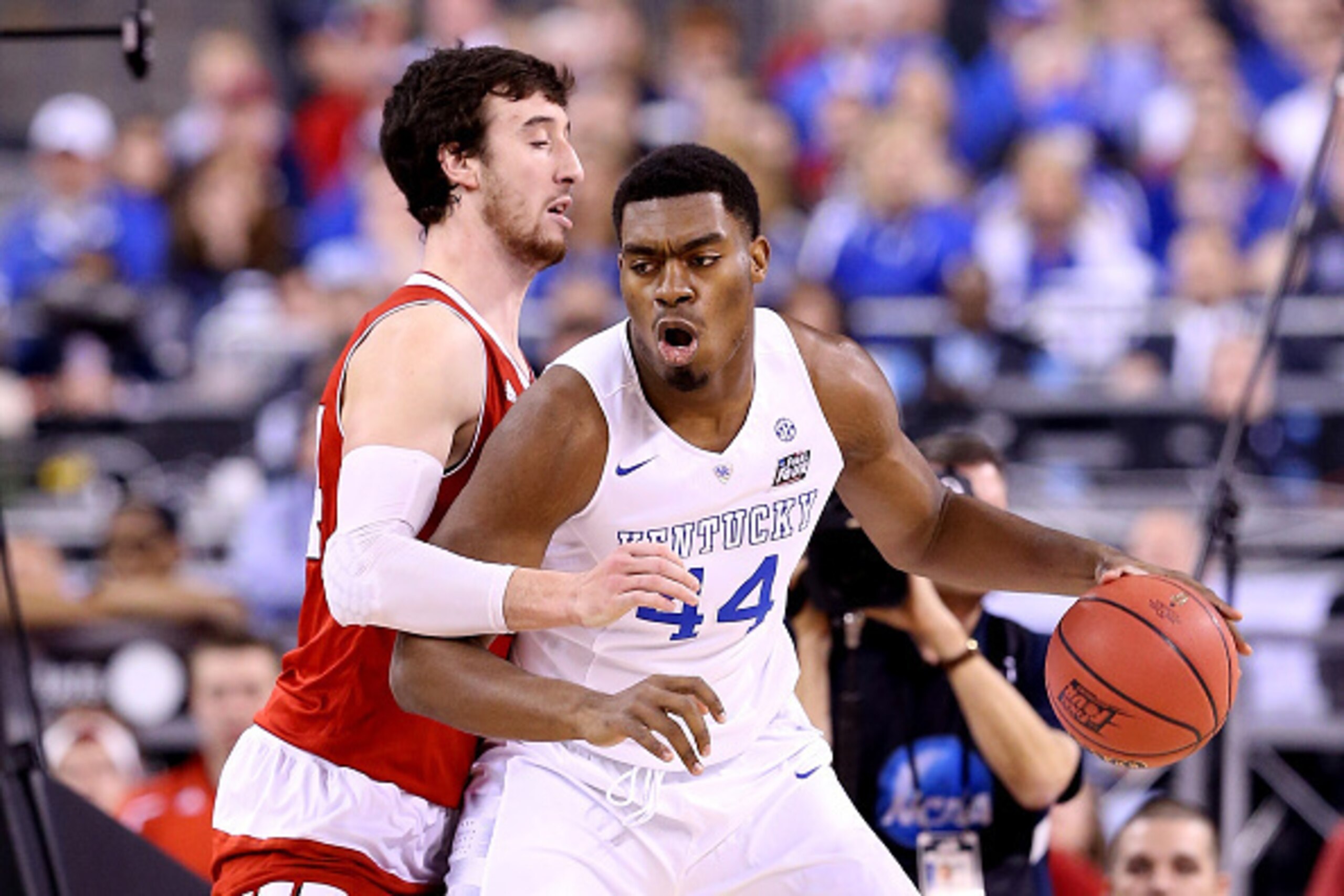
Size for Position/Athleticism
Dakari Johnson's measurements are strong—7'0" size, 7'2" wingspan, 9'4" standing reach. However, he weighed in 265 pounds with the highest body fat percentage at the combine. He is also an average athlete at best. He'll need to get in better shape to maximize his mobility and leaping ability.
Scoring/Shooting
Rarely does Johnson take a shot outside the paint. He goes to work on the low block, where he has one basic over-the-shoulder hook. He lacks counter moves and fluidity in the post, and he hasn't shown much of a jumper in two years. He scored 15.6 points per 40 minutes on 50.6 percent shooting from the floor and 62.5 percent from the free-throw line as a sophomore.
Defense/Rim Protection
Johnson blocked 2.3 shots per 40 minutes this past season. His physical tools alone made it difficult for opposing frontcourts to get clean looks at the basket. He doesn't project as a shot-blocker in the NBA, but teams could covet his overall interior defensive presence.
Rebounding
That presence is also felt on the glass, where he grabbed 11.3 rebounds per 40 minutes. Given all the space he took up, loose balls just happened to find him at Kentucky.
Upside
Limited athleticism, questionable conditioning and a raw offensive game keep Johnson's ceiling in check. In the best-case scenario, we're likely talking about a backup center. But he'll still have improvements to make, both to his body and skill set, before we can comfortably refer to Johnson as an NBA player.
Overall
Johnson could get looks from teams that are drafting late in the first round. Keep an eye on the Memphis Grizzlies at No. 25 or the Los Angeles Lakers at No. 27, in particular. Otherwise, expect him to go somewhere within the first 20 picks of Round 2.
11. Mouhammadou Jaiteh, France, 6'11", 1994
11 of 21
Size for Position/Athleticism
Mouhammadou Jaiteh isn't a standout athlete in terms of quickness and explosiveness. However, his physical tools pass the NBA eye test. He measures 6'10 ½" with a 7'3" wingspan and 247-pound frame.
Scoring/Shooting
Jaiteh had a strong year in France, where he averaged 19.6 points per 40 minutes on 59.9 percent shooting. Though still raw, he has improved his over-the-shoulder game in the low post, which is ultimately his bread and butter offensively. But he still lacks fluidity with his moves, as well as a reliable shooting stroke, having knocked down just 59 percent of his free-throw attempts.
Defense/Rim Protection
Jaiteh doesn't do a great job of holding his ground. He can allow opposing players to finish through him. His 0.92 blocks per 40 minutes and 2.27 percent block percentage rank right near the bottom of the top 20.
Rebounding
Though his defensive numbers are poor, Jaiteh really cleaned the glass, having pulled in 11.5 rebounds per 40 minutes and put up an 18.28 percent total rebound percentage.
Upside
Without an advanced offensive game and questions regarding his defense, Jaiteh's ceiling isn't overwhelmingly high. But his interior presence could potentially hold value in a backup role that asks him to finish and rebound.
Overall
Jaiteh will be a draft-and-stash option for teams that are selecting in the second round. The Minnesota Timberwolves and Philadelphia 76ers each have two picks in the 31-37 range. Watch out for them.
10. Arturas Gudaitis, Lithuania, 6'10", 1993
12 of 21Size for Position/Athleticism
Listed at 6'10", 253 pounds, Arturas Gudaitis has NBA size and above-average athleticism for a center. He's created a number of highlights just by dunking on defenders.
Scoring/Shooting
Gudaitis works mostly without the ball, where he can pick up buckets off pick-and-rolls, dump passes and putbacks. He's an explosive finisher at the rim and is also mobile enough to put the ball on the floor and attack in line drives. He doesn't take many jumpers, but he looks capable when left open. Gudaitis averaged 16.9 points per 40 minutes in Euroleague.
Defense/Rim Protection
If the numbers aren't lying, Gudaitis could have some intriguing potential as a rim protector. He blocked 2.7 shots per 40 minutes on the year.
Rebounding
Gudaitis also left his mark on the glass, having averaged 11.6 rebounds per 40 minutes this season.
Upside
He's an intriguing prospect due to his athleticism and face-up ability for a big man. Gudaitis also plays in Euroleague against legitimate competition.
Overall
Gudaitis will be 22 years old on draft night, which makes him equivalent to a college senior. Still, he could draw interest from late-first-round teams that are looking to stash their pick and avoid having a rookie salary soak up cap space.
9. Guillermo Hernangomez, Spain, 6'11", 1994
13 of 21Size for Position/Athleticism
Guillermo Hernangomez won't blow anyone away with athleticism, but he's nimble and agile for a 6'11", 255-pounder. For a center, he passes the NBA eye test from a physical perspective.
Scoring/Shooting
Hernangomez has a strong feel for the game offensively, where he can make open shots around the key or improvise and finish on the move. He has some touch to work with in the mid-to-short range. He plays back-to-the-basket ball in the post, where he can turn and score over either shoulder. He's also a target in the pick-and-roll game. Hernangomez averaged 20.5 points per 40 minutes between Eurocup and Spanish ACB play.
Defense/Rim Protection
Hernangomez totaled just 18 blocks in 50 games, averaging 19.7 minutes in each. That's an alarmingly low rate for a big man his size.
Rebounding
Though not a dominant defender, Hernangomez grabbed 11.6 rebounds per 40 minutes. His 18.45 percent total rebound percentage is one of the better marks among eligible 2015 centers.
Upside
Hernangomez's uninspiring athleticism and poor defensive instincts limit his perceived upside. But it's tough to write off his physical tools, offensive game and production while playing at a high level. He has the potential to find a role as a backup NBA big man.
Overall
It's possible teams drafting in the 20s give Hernangomez a look, but he'll likely be taken in the second round as a draft-and-stash pick. He should be in line for big minutes next year overseas.
8. Gabriel Olaseni, Iowa, 6'10", Senior
14 of 21
Size for Position/Athleticism
Gabriel Olaseni is a fluid run-and-jump athlete with decent 6'10" size and an excellent 7'3 ½" wingspan. But for an NBA center, he'll need to add weight to his 223-pound frame.
Scoring/Shooting
He isn't a skilled scorer, though he did average 17.3 points per 40 minutes on 52.0 percent shooting as a senior. Olaseni does most of his work off the ball as a finisher, as opposed to creating shots himself. He also increased his free-throw percentage to 75.0 percent as a senior (up from 61.5 percent as a freshman).
Defense/Rim Protection
Olaseni's long arms translate to rim protection, where he blocked 3.4 shots per 40 minutes. Unfortunately, foul trouble (5.8 fouls per 40 minutes) contributed to his minor 18.6-minute-per-game role. He can naturally block shots, but he needs to improve as an actual defender.
Rebounding
His 10.3 rebounds per 40 minutes and 14.7 percent total rebound percentage are both average numbers relative to other centers.
Upside
He's 23 years old, and despite his decent numbers, Olaseni doesn't bring much to the table offensively. He'll look to land on a summer league team and hopefully generate interest as an interior specialist.
Overall
Olaseni wasn't invited to the NBA combine, but he's been getting predraft workouts with teams. Still, despite his high NBA Draft 100 score, he remains a borderline second-round option.
7. Rakeem Christmas, Syracuse, 6'10", Senior
15 of 21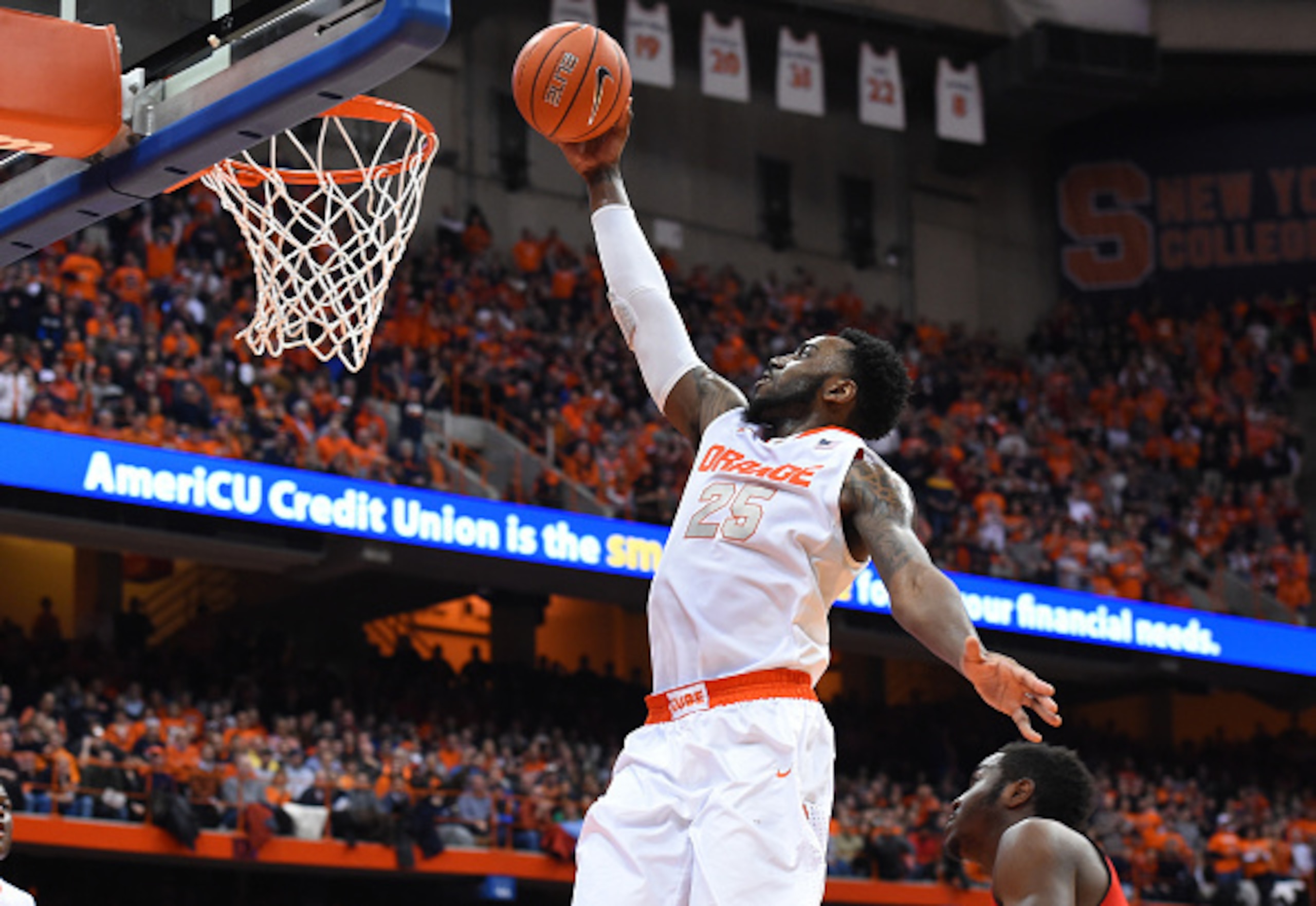
Size for Position/Athleticism
Rakeem Christmas measured just less than 6'10" at the combine, but his spectacular 7'5" wingspan helps make up for a few inches in height. He also has a strong basketball body at 243 pounds. He moves better running up and down the floor than he does side to side. He's an above-average athlete for a center, though his 29" standing vertical ranked in the middle of the pack at the combine.
Scoring/Shooting
After three years of being an afterthought in Syracuse's offense, Christmas emerged as a go-to option in 2014-15, averaging 20.4 points per 40 minutes. He developed terrific back-to-the-basket footwork and learned to finish with both hands. Christmas has the ability to separate into high-percentage shots over his shoulder or attack using his first step and a dribble. He didn't take many jumpers, but when given the green light, he knocked down a handful of them in five-on-five action at the combine.
Defense/Rim Protection
Christmas blocked a lot of shots as an anchor in the zone. We didn't see him often in one-on-one situations, but his 8.5 percent block percentage and 2.9 blocks per 40 minutes are both tremendous. His length should come in handy for him defensively in the pros, but he'll have to make a big adjustment moving from zone to man-to-man. He averaged 3.9 fouls per 40 minutes.
Rebounding
He was a good rebounder at Syracuse—not a great one. Christmas put up a 14.9 percent total rebound percentage and pulled in 10.6 boards per 40 minutes as a senior.
Upside
Christmas will turn 24 in December, so it's fair to question how much he'll improve. Then again, you don't typically see players break out at 23 years old, either. He projects as a physical backup big who can man the paint, score down low and occasionally knock down jumpers.
Overall
Christmas has put himself on the late-first-round radar for teams that are searching for immediate frontcourt help. The Brooklyn Nets, whom Christmas has worked out for, could be a team to watch at No. 29.
6. Myles Turner, Texas, 6'11", Freshman
16 of 21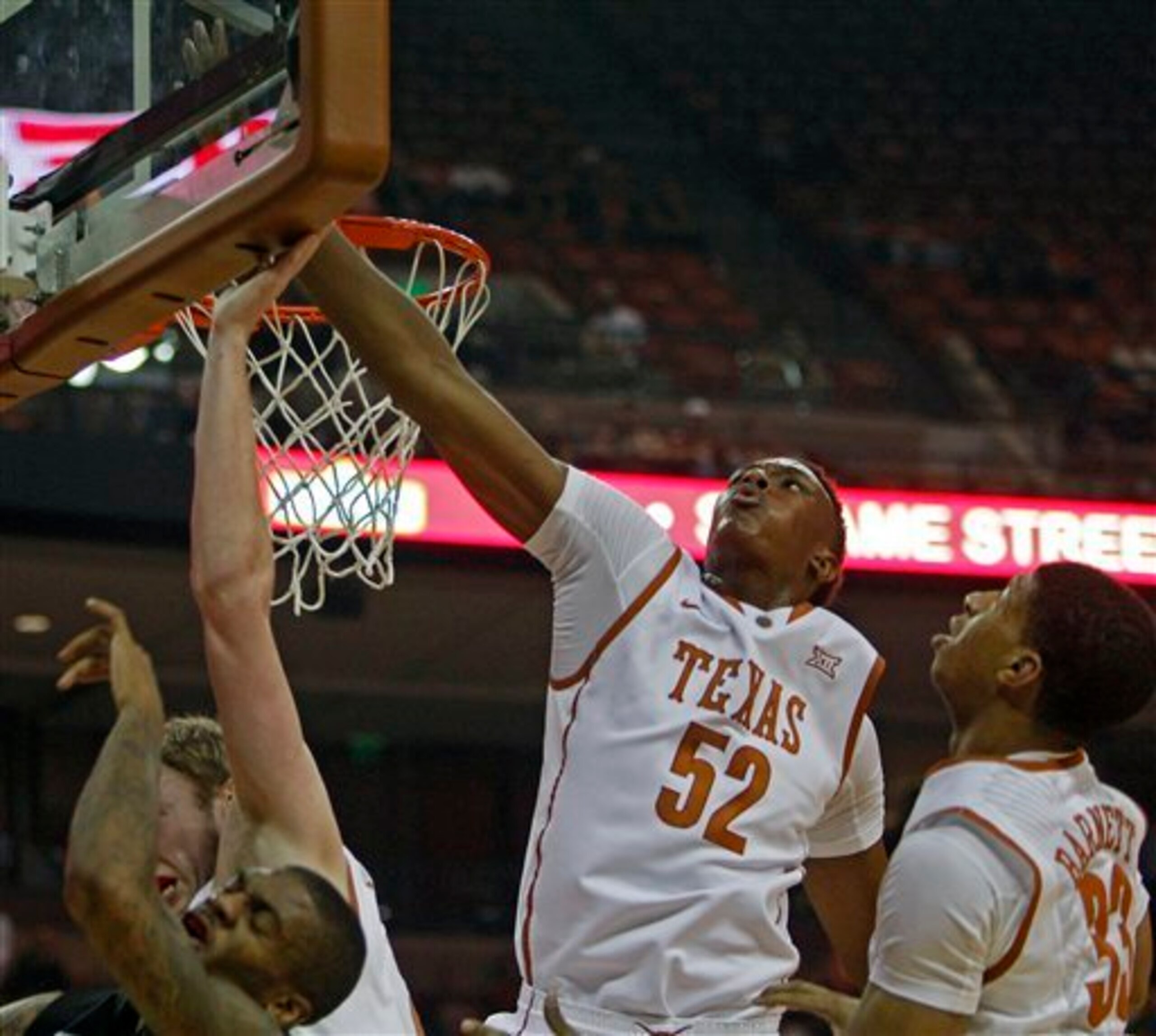
Size for Position/Athleticism
Myles Turner's measurements are strong, specifically his 6'11 ½" size and giant 7'4" wingspan. He has great hands, but his gait has raised questions. He doesn't exactly glide down the floor or explode off the ground. He could also stand to add muscle, as he struggled playing through contact.
Scoring/Shooting
Turner averaged 18.3 points per 40 minutes as a freshman, though inconsistency plagued him throughout the year. Some of it had to do with his role, but his preference for the perimeter also factored in. On one hand, Turner has a promising shooting stroke, having made 17 threes and shot 83.9 percent from the free-throw line. He can catch, square up and shoot from just about every spot on the floor, whether he's spotting up or working from the high post. On the other hand, he rarely pounded it down low, and though his jumper is smooth, it was also erratic. Turner just took too many tough shots for a player who was usually the tallest on the floor.
Defense/Rim Protection
Turner's 12.3 percent block percentage is one of the top numbers in the country. His blend of length and instincts translated to 4.7 blocks per 40 minutes. He was a big shot-blocker in high school, and it carried over to his one-year stint at Texas. He has intriguing defensive potential as a rim protector as a pro.
Rebounding
Though he lacks strength and explosiveness, it's tough to argue with Turner's numbers on the glass, as he averaged 11.8 boards per 40 minutes. He gobbled up a ton of loose balls, even though he shared the paint with another center in Cameron Ridley.
Upside
There aren't many big men who can stretch the floor and protect the rim. If Turner continues to improve his shooting stroke, ball skills and body, we could be talking about one of the more unique players in the NBA. Otherwise, he could end up stuck between the 4 and 5 positions, without the strength to bang in the paint or mobility to play power forward.
Overall
Turner will need a year in the D-League or watching from the bench. He presents somewhat of a risk in the top nine, but he could potentially offer great value after that. He should generate real consideration, starting with the Miami Heat at No. 10.
5. Frank Kaminsky, Wisconsin, 7'1", Senior
17 of 21
Size for Position/Athleticism
Frank Kaminsky has tremendous size at 7'1" in sneakers. He also has nimble feet and above-average mobility. But he lacks strength, athleticism and length (6'11" wingspan), and it raises questions as to whether he'll be able to execute in the NBA the way he did at Wisconsin.
Scoring/Shooting
In terms of inside-out offense, nobody is more skilled offensively than Kaminsky. He's a lights-out shooter from downtown, having made a career-high 41.6 percent of his three-point attempts as a senior. He can spread the floor or attack closeouts off the dribble and score on the move. His footwork is terrific, whether he's facing up or working with his back to the basket. Kaminsky averaged 22.3 points per 40 minutes and finished with a .628 true shooting percentage.
Defense/Rim Protection
Kaminsky did a much better job of avoiding fouls as a senior, but he still blocked shots at a poor rate. He finished with a 4.5 percent block percentage, which ranks toward the bottom when compared to other centers. His short arms and lack of explosiveness will likely keep him from ever becoming an intimidating defensive anchor.
Rebounding
Kaminsky improved significantly in the rebounding department as a senior. He raised his total rebound percentage from 14.3 percent to 16.1 percent, having pulled in 1.9 more boards per game. Still, for the same reasons he could struggle in rim protection, Kaminsky isn't likely to become a volume rebounder.
Upside
Few ceilings are tougher to project than Kaminsky's. Though his skill set for a 7-footer is versatile and advanced, a lack of athleticism and strength could hold him back at both ends of the floor. Regardless, big men who can shoot are highly valued. He should eventually start in some team's frontcourt as a stretch 4 or 5.
Overall
Every team could use another big man who can shoot. Kaminsky should draw top-10 looks, starting with the Detroit Pistons at No. 8. He isn't likely to slip out of the lottery. The Heat at No. 10, Pacers at No. 11, Jazz at No. 12 and Suns at No. 13 may all be hoping Kaminsky falls to them. He should contribute right out of the gates as a high-IQ shot-maker and floor-spacer.
4. Robert Upshaw, Washington, 7'0", 1994
18 of 21
Size for Position/Athleticism
Robert Upshaw put up some can't-miss measurements at the combine, where he came in at 7'0" and had the biggest wingspan (7'5 ½"), standing reach (9'5") and hands (10" by 11"). Though not an explosive athlete, he moves well and plays above the rim.
Scoring/Shooting
Upshaw averaged 17.6 points per 40 minutes on 59.3 percent shooting this past season. He scored mostly off catch-and-finishes, cuts around the basket and putbacks. He didn't show off a great shooting stroke, having knocked down just 43.4 percent of his free throws, or an advanced post game. But he was efficient around the basket without playing outside his comfort zone.
Defense/Rim Protection
Upshaw was leading the country in shot-blocking before getting dismissed from Washington in January. He was putting up some jaw-dropping numbers: 7.2 blocks per 40 minutes and a 17.4 percent block percentage. He has the physical tools and defensive instincts to become a feared NBA rim protector.
Rebounding
He was also a monster on the glass, given all the space he takes up down low. Upshaw pulled in 13.1 rebounds per 40 minutes and registered an outstanding 18.7 percent total rebound percentage.
Upside
Having been kicked out of Fresno State in 2013 and Washington in 2015, there are obvious concerns regarding his character. He's also not a top-flight athlete and remains raw offensively. He'll enter the draft as a major risk, but Upshaw also offers plenty of potential reward as a defensive anchor. He's 21 years old, so he still has time to grow and mature.
Overall
Upshaw is a first-round talent with red flags that may keep teams from even considering him in the second round. But all it takes is one general manager to overlook the concerns and covet his upside. No prospect's draft range is more unpredictable than Upshaw's. A patient team may hope Upshaw suddenly matures the way Hassan Whiteside did with the Miami Heat.
3. Willie Cauley-Stein, Kentucky, 7'0", Junior
19 of 21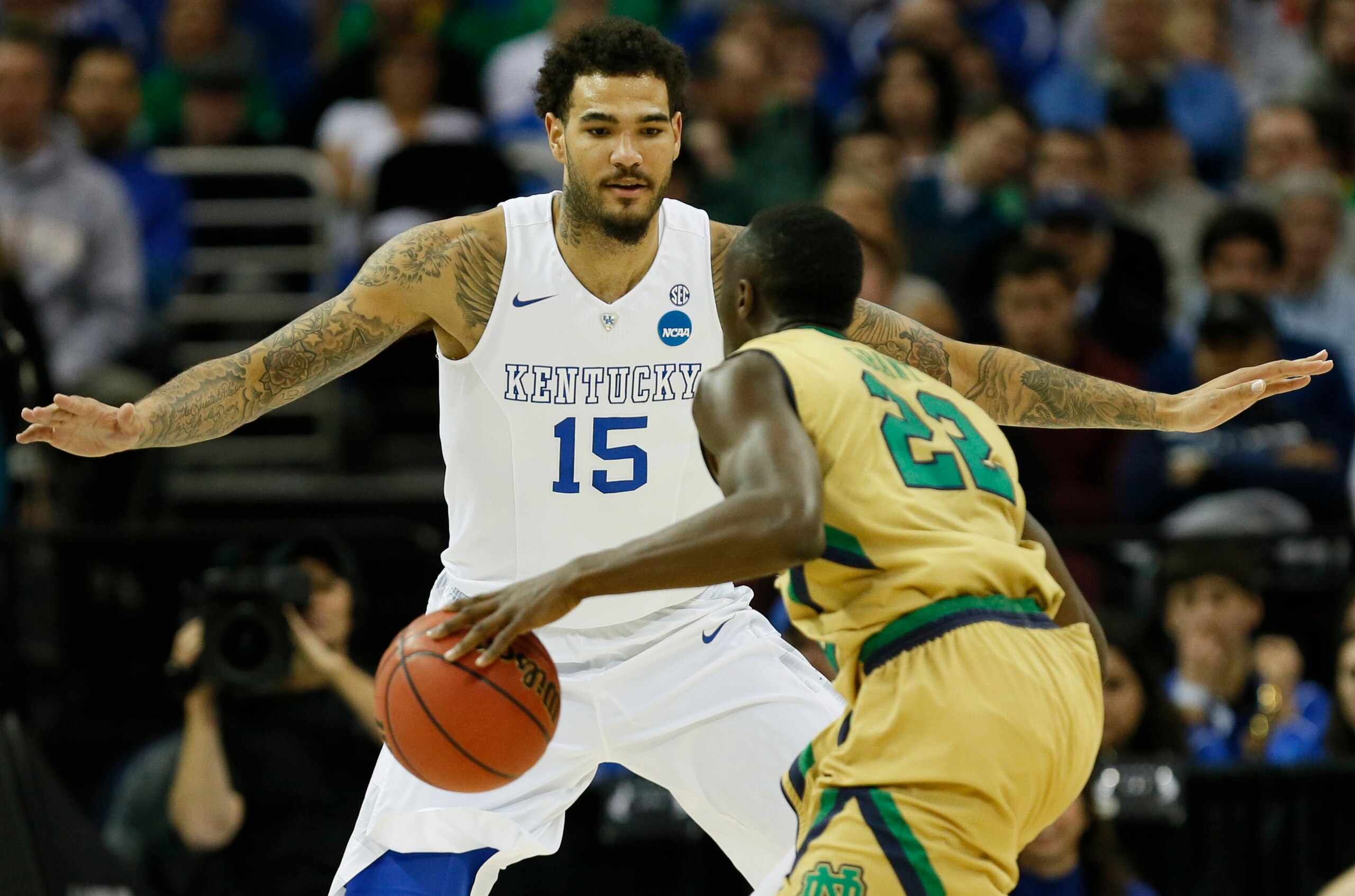
Size for Position/Athleticism
With 7'0 ½," size and a 7'3" wingspan, Willie Cauley-Stein has ideal physical tools to match an elite level of athleticism. You just don't see players his size who can run, jump and slide side to side like him, who is explosive leaping vertically and lightning-quick laterally.
Scoring/Shooting
Cauley-Stein lacks ball skills and the ability to create his own shot. Occasionally, we'll see a jump hook or short-range jumper, but he doesn't project as a center whom coaches will run plays through. Instead, his offensive contributions come in the form of easy buckets, whether they are dunks off dump passes, lobs, offensive rebounds or transition opportunities. He shot at least 57 percent from the floor for the third straight season.
Defense/Rim Protection
Cauley-Stein is arguably the best all-around defender in this draft. While he has the foot speed to switch onto guards, he projects as a rangy, disruptive rim protector. He registered a 7.1 percent block percentage, which was actually the lowest of his career. Cauley-Stein spent more time defending the perimeter this year with Karl-Anthony Towns down low, but he still managed to block 2.6 shots per 40 minutes.
Rebounding
He finished his junior season with a 14.5 percent total rebound percentage, which is right around his sophomore and freshman numbers. Cauley-Stein doesn't carve out space, but his size and leaping ability translate to 50/50-ball victories.
Upside
Centers don't need a refined offensive game when they're as big, athletic and good defensively as Cauley-Stein is. He reminds me of Nerlens Noel on defense and DeAndre Jordan on offense. I'd count on Cauley-Stein eventually emerging as a long-term starter at center.
Overall
According to DraftExpress' Jonathan Givony, Cauley-Stein's 2014 ankle injury hasn't healed properly, and it has some teams hesitant. Still, don't expect him to get by Indiana at No. 11. If he winds up on a team with established talent to play off, he'll have a great chance of thriving.
2. Jahlil Okafor, Duke, 6'11", Freshman
20 of 21
Size for Position/Athleticism
Listed at 6'11", 270 pounds with a 7'5" wingspan, Jahlil Okafor is a handful in the paint, where his size, strength and length are simply too much. His first step is quicker than his lateral foot speed. He is agile, though he lacks explosiveness.
Scoring/Shooting
Okafor is as skilled in the post as anyone we've come across in years. He uses his strength to gain position, his footwork to separate and his touch to finish from every angle. With go-to moves and counters, he can turn, spin or face up and score while moving left or right. Okafor projects as an option that coaches can feature against a set half-court defense. The only concern is his lack of shooting touch with two hands on the ball. He didn't take many jumpers and shot a disastrous 51.0 percent from the free-throw line.
Defense/Rim Protection
At times, Okafor didn't show great effort or instincts as a rim protector, as he blocked a low 4.5 percent of two-point shots when on the floor. He also struggled in pick-and-roll coverage. He has the tools to be effective, but after one year at Duke, he just doesn't seem to have the awareness yet.
Rebounding
Okafor completely overpowered opposing bigs on the offensive glass, where he grabbed 3.5 rebounds per game and put back a whopping 62 misses, according to Hoop-Math.com. But the same can't be said at the defensive end. His 18.2 percent defensive rebound percentage was on the low side for a big man.
Upside
Okafor could have the chance to become one of the game's premier post players, and he could likely help a team right away on offense. However, centers who don't protect the rim well lose value points in the NBA. His questionable defense, limited explosiveness and poor shooting touch are working against him. But his scoring attack from foul line to baseline may allow him to make an Al Jefferson-like impact in the pros.
Overall
Okafor will get strong consideration from the Minnesota Timberwolves at No. 1. If they go with Karl-Anthony Towns, it's tough to picture the Los Angeles Lakers passing on Okafor at No. 2. He won't slip past the New York Knicks at No. 4.
1. Karl-Anthony Towns, Kentucky, 6'11", Freshman
21 of 21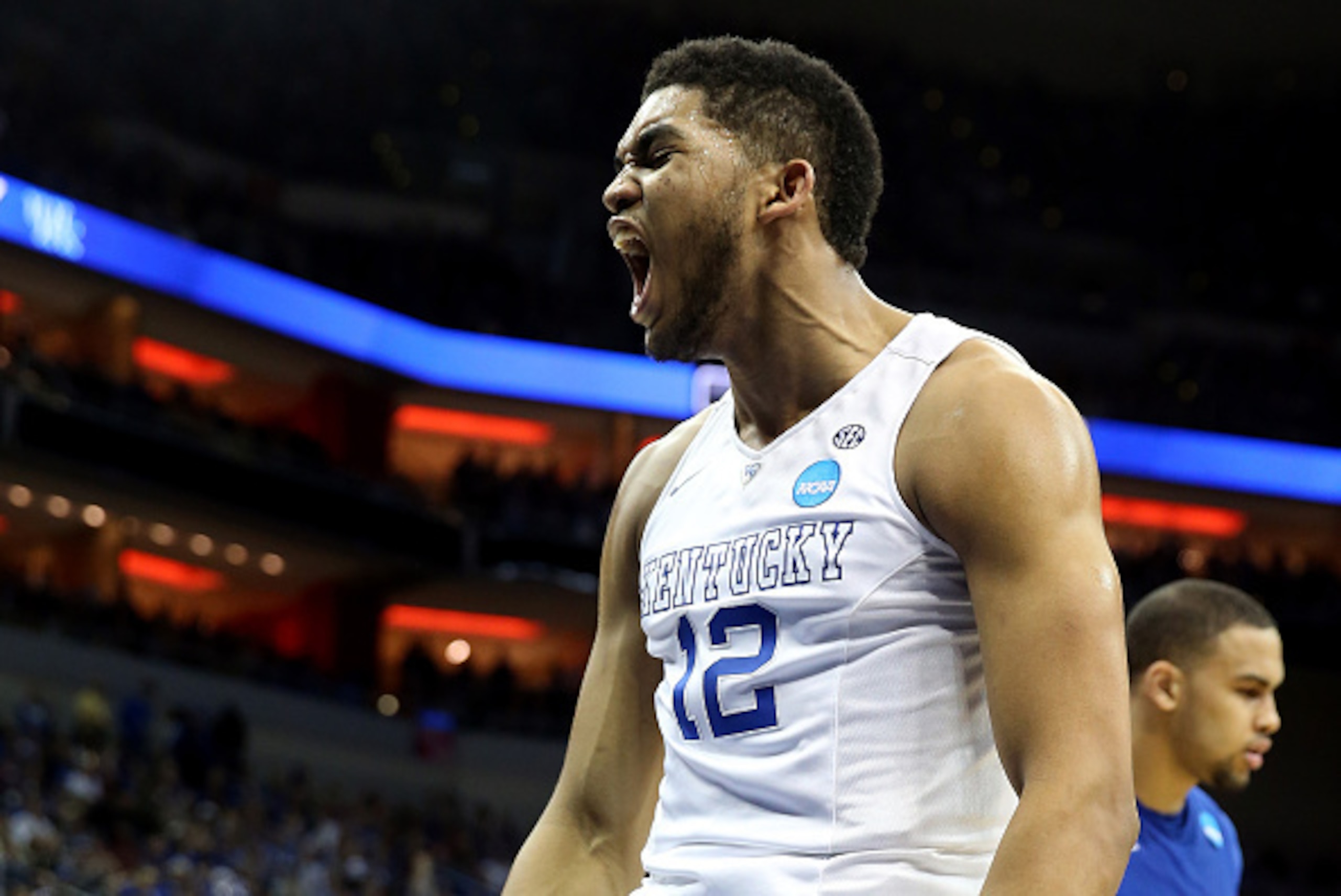
Size for Position/Athleticism
At 6'11", 250 pounds with a 7'3" wingspan, Karl-Anthony Towns has textbook physical tools to go with above-average athleticism and mobility. He can be overwhelming on the interior and nimble on the perimeter. His foot speed (and skill set) may even allow him to play some power forward in the pros.
Scoring/Shooting
Towns' offensive versatility is tremendous. He's shown the ability to score with his back to the basket in the post or away from it in the mid-range, where he can shoot—he hit 43.1 percent of his two-point jumpers, per Hoop-Math.com, and went 81.3 percent from the free-throw line—pass or put the ball on the floor. Towns averaged 19.5 points per 40 minutes on 56.6 percent shooting. He's still on the raw side, but his post game and touch seemed to have improved with every month of the season.
Defense/Rim Protection
His 11.5 block percentage ranked up there with some of the best in the country. Towns blocked 4.3 shots per 40 minutes, showing the ability to shrink the rim he's defending due to his length, athleticism and instincts. However, he's still learning how to defend, given his 5.6 fouls per 40 minutes.
Rebounding
Towns was a factor on the glass whenever he took the floor. He used his big body to move defenders and his springs to go after loose balls. He racked up 12.7 rebounds per 40 minutes and registered an 18.5 percent total rebound percentage.
Upside
Nobody in the 2015 draft class has a higher ceiling than Towns, who can score in the post, stretch the floor as a shooter, control the glass and protect the rim. It might take a year or two for everything to come together, but if it does, we could be talking about a two-way cornerstone and long-term NBA All-Star.
Overall
If he doesn't go No. 1 to the Minnesota Timberwolves, consider him a lock to the L.A. Lakers at No. 2. And it shouldn't matter to Towns, who's likely to succeed in any setting.
All advanced statistics via Sports-Reference.com, unless otherwise noted. All player measurements via NBA.com, Sports-Reference.com or DraftExpress.



.jpg?w=2560 "Chiefs, Steelers Eye WR Trades")



.jpg?w=2560 "Latest Peyton-Colts Rumors")