After a 2014 season that saw them finish with the No. 6 offense in the NFL and an offseason in which they retained and/or added key players, the Green Bay Packers will look to boast one of the league's top offenses in 2015.
Given their personnel and scheme, there are certain plays and players that will enable the Packers to run the highest-octane offense possible this season.
From plays with which they have found success in the past to some new directions they could take heading into a new season, this is the foundation for Green Bay's most optimal offense in 2015.

.jpg?w=2560 "Steelers Saints Football")
.jpg?w=2560 "Rams Raiders Football")
Starting personnel
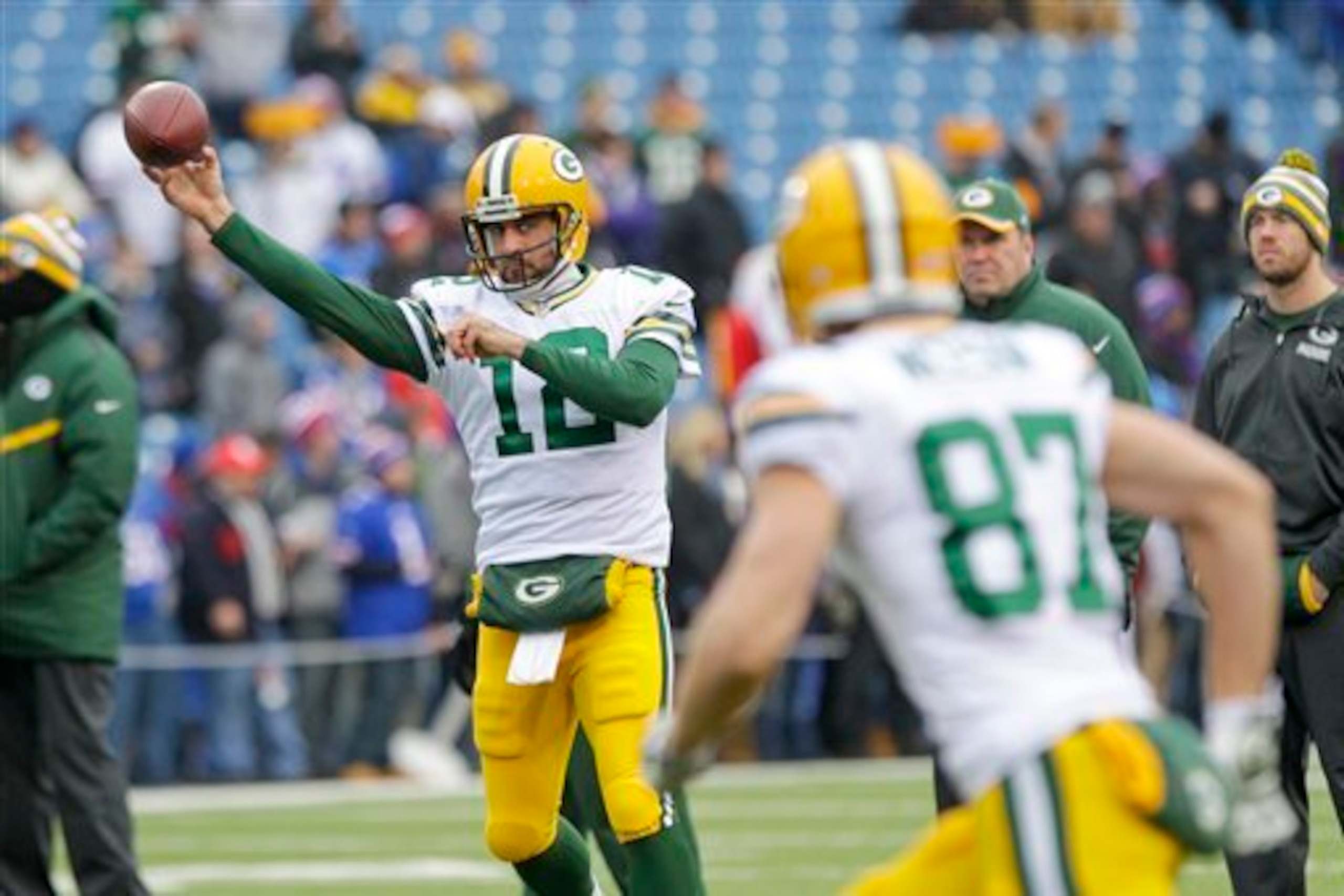
The Packers use their standard 11 personnel, featuring one running back, one tight end and three wide receivers, a majority of the time. Recent data from 2013 from Pro Football Focus shows that Green Bay used 11 personnel on a whopping 84.40 percent of their plays when that data was compiled, the highest in the league.
That's no surprise, as general manager Ted Thompson is one of the best in the business at scouting wide receiver talent, and the Packers have enjoyed great success developing them.
A Packers wide receiver has finished ranked among the league's top 10 in every season since 2010, with the exception of 2012. (It's no coincidence that their best receiver since 2011, Jordy Nelson, only played 12 games in 2012.)
When the Packers are in 11 personnel in 2015, expect these players to be on the field.
| Aaron Rodgers | Eddie Lacy | Jordy Nelson | Richard Rodgers | David Bakhtiari (LT) |
| Randall Cobb | Josh Sitton (LG) | |||
| Davante Adams | Corey Linsley (C) | |||
| T.J. Lang (RG) | ||||
| Bryan Bulaga (RT) |
Other offensive packages
Per the Pro Football Focus data, through 2012 the Packers only ran packages with 21 personnel (two running backs, one tight end and two receivers) on 3.67 percent of plays. That is the most popular two-running back package used in the NFL.
It makes sense; Green Bay typically likes to get as many wide receivers on the field as possible, frequently using the four-wide receiver 10 personnel package and even five-wide receiver sets during its 2010-11 Super Bowl run.
However, it's key that the Pro Football Focus data only comprehensively covers through the 2012 season. 2013, of course, was an incredibly important year for Green Bay's offense: the year Eddie Lacy burst onto the scene and put up the first of his two consecutive 1,000-yard seasons.
The Packers were the league's No. 20 rushing offense in 2012.
By the end of 2013, they had risen to No. 3.
I spoke with Nathan Jahnke of Pro Football Focus and learned that, per their data, the Packers use 20 personnel (two backs, zero tight ends and three receivers) and 22 personnel (two backs, two tight ends and one receiver) more frequently than 21 personnel.
The 20 personnel package, which Green Bay used 95 times in 2014, per Jahnke, has become a standard rushing package for the Packers, who have been utilizing a fullback less as a pass-catcher in third-down situations and more as a lead blocker on run downs as Lacy has become an essential part of the offense.
The screenshot below shows the Packers in 20 personnel: Lacy and John Kuhn in the backfield and Nelson, Randall Cobb and Davante Adams lined up wide. On this play, in the second quarter of the Week 17 game against the Detroit Lions, Kuhn was the lead blocker for Lacy.

It's a great package for the Packers offense, as they can utilize a fullback and a running back but keep three receivers on the field to keep Rodgers' options open.
In 2015, the Packers should continue to use Kuhn, who is on what will likely be his final one-year deal, with Lacy in zone-blocking schemes. While rookie fullback Aaron Ripkowski will most likely be used to help improve special teams this season, next year he'll take on that lead-blocking role in the run game.
In order to use 21 personnel more frequently, as you see done around the rest of the league, the Packers would need to develop a complete tight end. Because he's the only tight end on the field in that package, he needs to have the versatility to line up wide as well as block. Time will tell if Richard Rodgers can become that player.
In 2015, expect the Packers to also utilize third-round rookie Ty Montgomery as a pass-catcher out of the backfield as well. They have used Cobb for this purpose and found success doing so.
Utilize more pistol formation
The pistol formation has been an occasional part of the Packers offense for the last three seasons, though, it would be inaccurate to say they use it often.
"I would say this is about the third year it's been part of our pace and installation," Mike McCarthy said, per Tom Silverstein of the Milwaukee Journal Sentinel.
However, after Rodgers injured his calf toward the end of the 2014 season, the Packers went to the pistol formation almost exclusively. Lining up three-to-five yards behind the line of scrimmage enabled Rodgers to continue to both hand off to Lacy and pass the ball without having to drop back from center.
As the screenshot below shows, the pistol allows Lacy to build up ground speed before reaching the line of scrimmage.
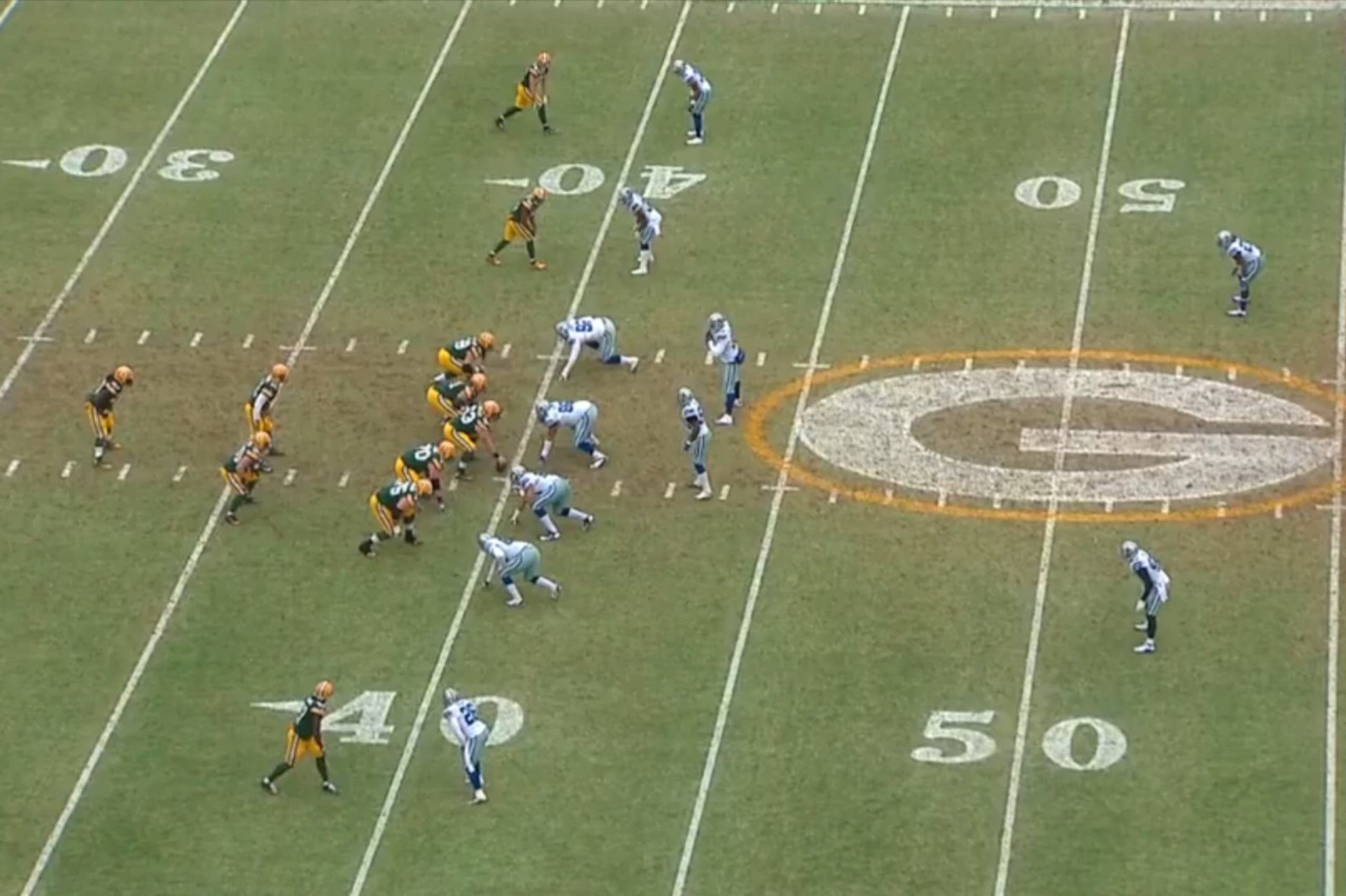
Per ESPN Stats & Information, 88.9 percent of the plays on which the Packers used the pistol formation in 2014 were after Rodgers' injury, via Rob Demovsky.
"I like the pistol," McCarthy said in March, per Demovsky. "I think there's a lot of value regardless of the injury to Aaron. I know he likes it. There's a place for it year round in your offense."
The benefits of the pistol are that it allows for flexibility for Rodgers to read the defense and react accordingly. The plays don't change much from what the Packers can run from under center or the shotgun, but it places more onus on the defense.
Get Rodgers more involved
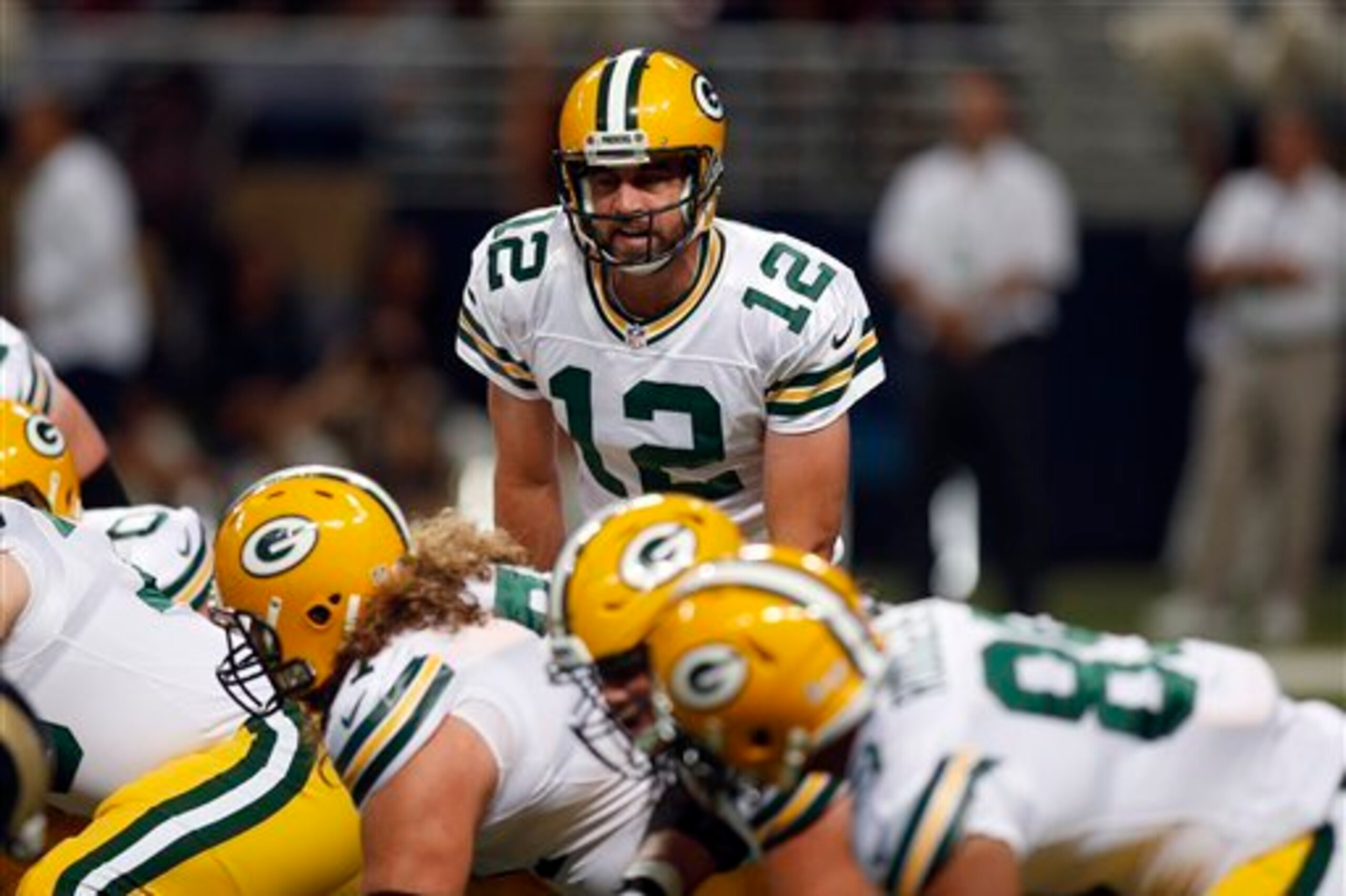
Big changes are in store for the Packers offense in 2015 in terms of the preparation in the week leading up to the game as well as how the plays are called at the line of scrimmage.
In addition to McCarthy relinquishing play-calling duties to Tom Clements, Rodgers will also have more say in the game plan and more power to call his own plays at the line of scrimmage.
At the NFL combine in February, McCarthy said he wanted to give Rodgers more responsibility "because he's on a level, clearly, as a coach," per Silverstein. There's a lot of give and take there," McCarthy added.
Because he doesn't need to be tied to play-calling, McCarthy can have a bigger hand in all aspects of game preparation, including on defense and special teams. But he also has more time to meet with Rodgers and Clements and to allow Rodgers to have more input.
Given how frequently the Packers run the no-huddle offense, Rodgers has had the freedom to audible for years, and some beneficial plays have resulted from it.
However, giving him this coach-like position from which to contribute, given his high football IQ and knowledge of the playbook, is the next logical step based on what he's accomplished in Green Bay.
"It's really because of what Aaron has given us," McCarthy said, per Silverstein. "He puts us in position to do this."
.jpg?w=2560 "Chiefs Giants Football")
.jpg?w=2560 "Titans Ravens Football")
.jpg?w=2560 "🚨 Week 8 AP Top 25 Poll")

.jpg?w=2560 "Packers Safety Slams Refs 🤬")