
Grading Brendan Rodgers on Liverpool's 2014/15 Premier League Season
With major questions over Liverpool manager Brendan Rodgers' future at the club, just how did the 42-year-old perform in the Premier League in 2014/15?
According to reports from Chris Bascombe of the Telegraph, Rodgers will face an end-of-season review with Liverpool owner Fenway Sports Group this summer, with the manager confessing after the Reds' final-day 6-1 mauling away to Stoke City that: "If the owners want me to go, I go."
With soon-to-be departed Borussia Dortmund manager Jurgen Klopp linked with the position, via Bild (h/t This Is Anfield), this is a delicate situation for Rodgers.
FSG must consider his performance in the Premier League during this review.
Here, we consider four major factors of his performance—organising defensive stability, coaxing goals, managing his squad and masterminding big-game victories—scoring each category with a grade ranging from a lowly F to an exceptional A before awarding Rodgers an overall grade.
How did he fare?
Defensive Stability
1 of 5
"It's the new defensive coach that we got in that everybody thought we needed. That's what has done the trick," Rodgers joked after Liverpool's 2-0 away win over Southampton in February, as reported by Ian Doyle of the Liverpool Echo.
This came in the middle of a run of eight clean sheets in 13 games, during which the Reds conceded just eight goals. That spell served as a strong response to vociferous calls from some quarters to appoint a defensive coach earlier in the season.
But did Rodgers truly manage to fix a leaky Liverpool back line and restore defensive stability in 2014/15?
This run contributed 62 per cent of Liverpool's 13 clean sheets in the Premier League, and looking at the bigger picture, the Reds conceded 48 goals.
While that spell saw them let in just 0.6 goals per game on average, over the course of the season, Liverpool conceded 1.26 goals per game.
Owing much to a shift to a back-three defensive line, this seems more of a purple patch than a signal of renewed, long-term stability, particularly given Rodgers reverted to a poor back-four system shortly after.
As the season came to a close, Liverpool's defence looked miserably similar to that of the previous campaign, during which the Reds conceded an average of 1.32 goals per game.
Grade: C
Goalscoring
2 of 5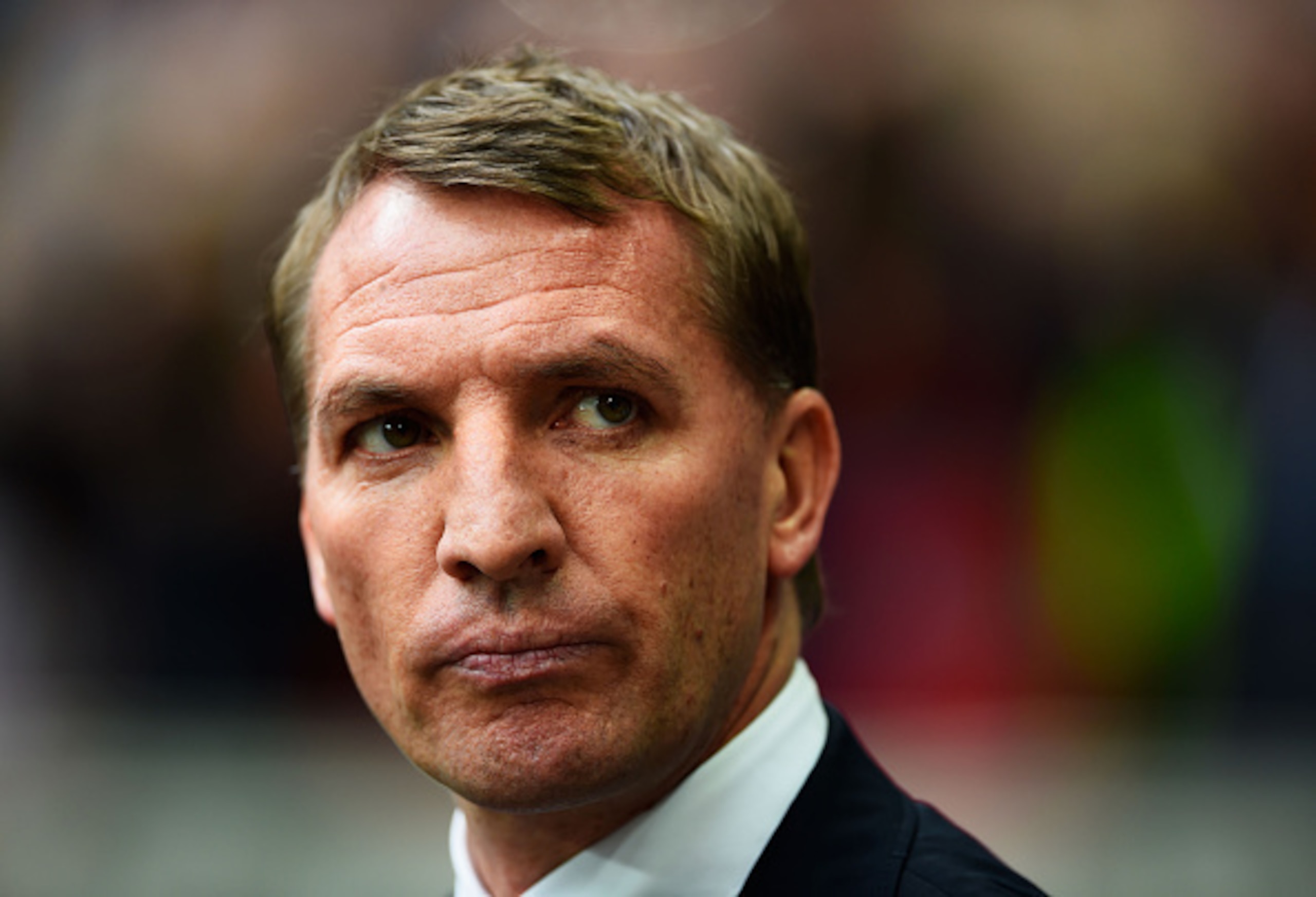
"We just don’t score as many goals. It’s as simple as that. The players have given the same effort and attitude but we had two players last year who played in the front three who got 50 plus goals and we don’t have it now."
Rodgers' words after April's 0-0 draw away to West Bromwich Albion, relayed by the Press Association (h/t This Is Anfield), highlighted a major, glaring issue for Liverpool this season.
Liverpool finished 2013/14 having scored 101 goals in the league; in 2014/15, they managed just 52.
Rodgers lamented the departure of Luis Suarez and Daniel Sturridge's injury problems—between them, they contributed 52 league goals last term—as the main issues behind this lack of productivity.
But having sanctioned the £20 million outlay to sign Mario Balotelli and Rickie Lambert last summer, a lot of the blame can be attributed to the manager.
For Southampton, Lambert scored 13 league goals in 2013/14; for AC Milan that same season, Balotelli scored 14 in Serie A.
This season, the pair scored just three Premier League goals between them, and the Reds' top scorer was Steven Gerrard, with nine.
There is seemingly an issue running deeper than pure personnel discrepancies when it comes to Liverpool's goalscoring under Rodgers.
Grade: E
Squad Management
3 of 5
One of the contributing factors behind Liverpool's poor goalscoring rate was the manager's squad management—did he prove the tactical genius for which he was once lauded, as he referenced in April?
"I don’t think there’s anyone better. Three months ago I was a tactical genius and performing to a good level," he said after the FA Cup semi-final loss to Aston Villa, as reported by Bascombe for the Telegraph.
Three months earlier, Rodgers was roundly applauded for his switch to a 3-4-2-1 formation, heralding that run of defensive stability, with a radical use of a dual-No. 10 attacking support and a marauding centre-back/wing-back flanking system, transforming Liverpool into a dominant force once more.
But the way in which Rodgers saw that disintegrate points to poor squad management on the whole.
Once system-integral players such as Mamadou Sakho, Emre Can and Lucas Leiva had dropped out because of injuries and suspensions, the manager had no answers.
The likes of Balotelli, Lazar Markovic, Jordon Ibe, Raheem Sterling and Adam Lallana were all utilised out of position in this formation, and there was evidently no depth to his tactical "genius."
That this switch took place four months into the season, and that it so swiftly dissolved after that run—with Can a prime example of an out-of-position struggler at right-back in a 4-3-3—further highlights how poorly Rodgers managed his squad in 2014/15.
Grade: D


Big Games
4 of 5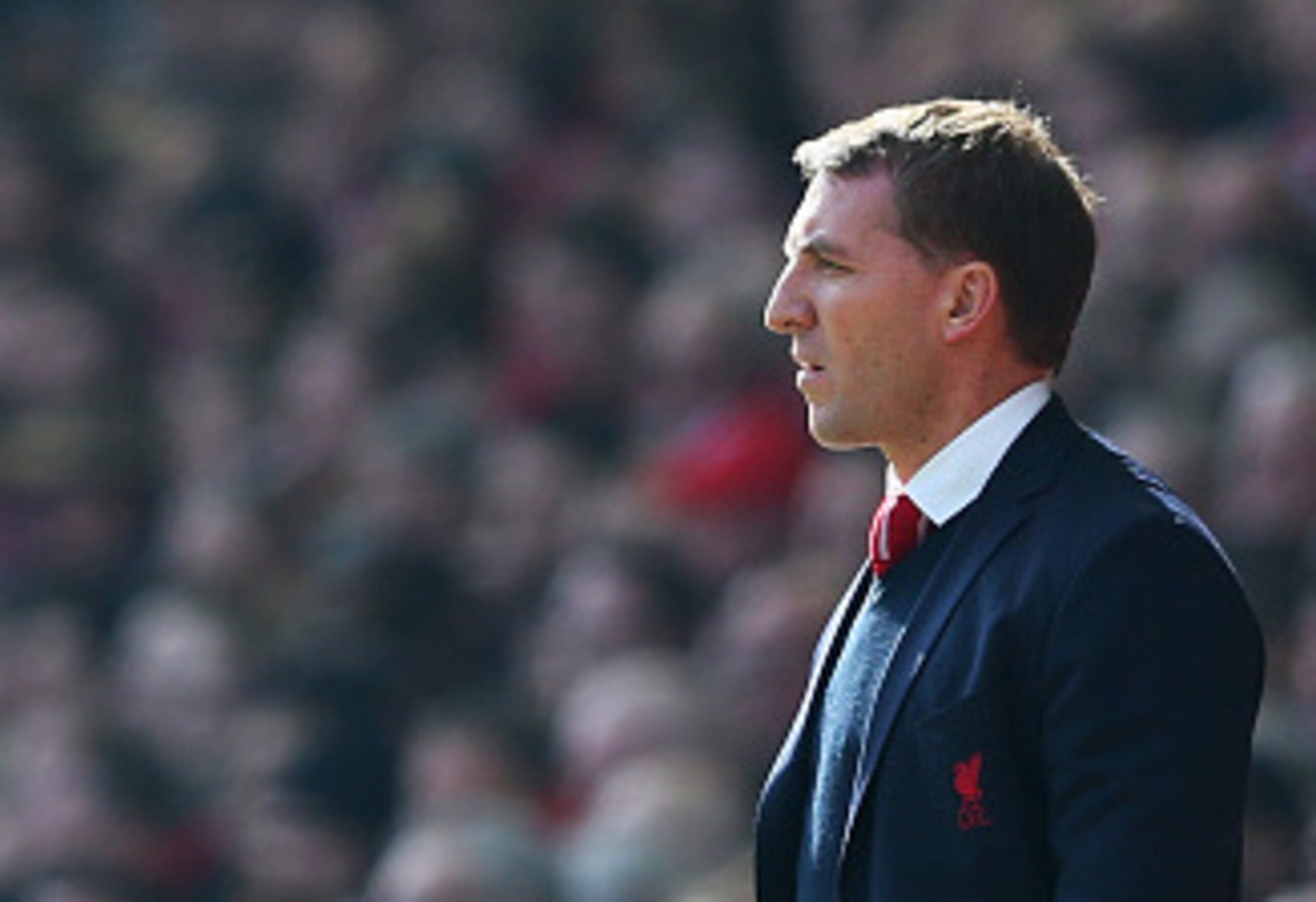
After that FA Cup semi-final loss to Villa, Rodgers told Sky Sports: "We need now to have the courage and bravery to play better in the big games, because we didn't play well enough today...We looked as if maybe the occasion and the energy got to us a bit today."
Did this poor big-game performance also translate to the Premier League this season?
Measuring results against the league's fellow top-six incumbents—Chelsea, Manchester City, Arsenal, Manchester United and Tottenham Hotspur—is the perfect way to assess this.
In 10 games against that group in 2014/15, Liverpool won just three games—a double against Spurs and an impressive victory over City in March.
Those performances did outline a certain big-game mastery from Rodgers, with his introduction of Balotelli toward the end of February's 3-2 win over Spurs a particularly outstanding choice. Elsewhere, however, Liverpool were extremely lacking.
Perhaps the most indicative of this failure were the pair of losses to United—the Reds' main rivals—and a dismal 1-1 draw against a decidedly lacklustre Chelsea in May, with the champions already mentally on their holidays.
That they couldn't carve a result out in the latter showed the Reds' paltry spirit under Rodgers this season.
Grade: D
Overall Grade
5 of 5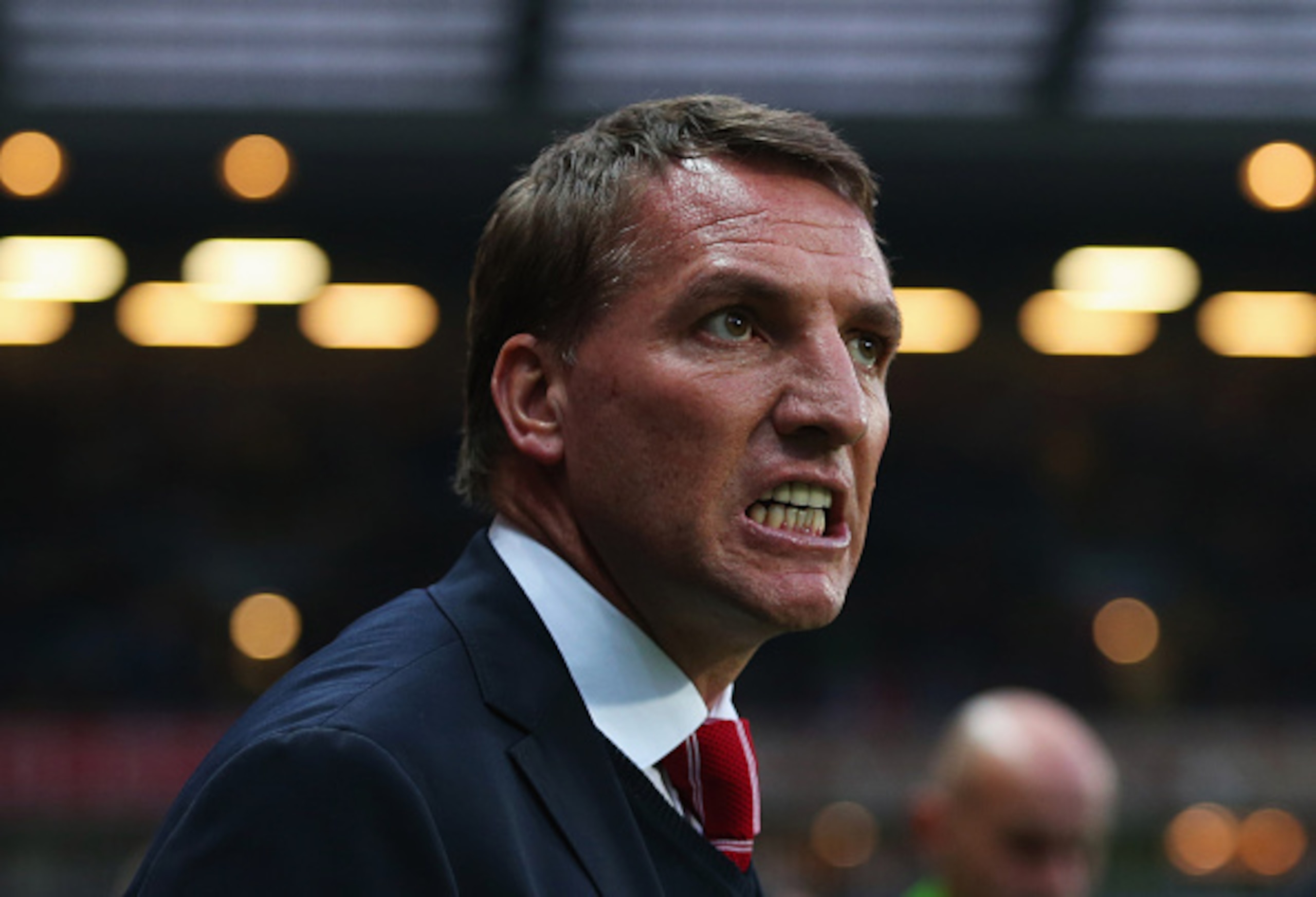
That Rodgers is heading into the summer with the Liverpool supporters still unsure of his future as manager and a routine end-of-season review representing a possible death knell should say it all about his performance in 2014/15.
Failures in domestic cups and in Europe should be major factors, but a miserable Premier League campaign that ended with a sixth-placed finish—four places short of the previous campaign—should be No. 1 on the agenda.
A failure to maintain defensive stability in his squad, coax goals from previously prolific strikers, manage his squad cohesively and inspire his side to big-game victories all amount to a poor season for Rodgers.
If he stays, next season must be significantly better.
Grade: D
Statistics via WhoScored.com and Squawka.com.
.jpg?w=2560 "Rams Raiders Football")

.jpg?w=2560 "Rodgers Iced Out on Plane 💎")

.jpg?w=2560 "Packers Safety Slams Refs 🤬")
.jpg?w=2560 "🚨 Week 8 AP Top 25 Poll")