Juan Pablo Montoya and Open-Wheel Racing: Dream Pairing Only Partially Realized
As the old saying goes, “two out of three ain’t bad.”
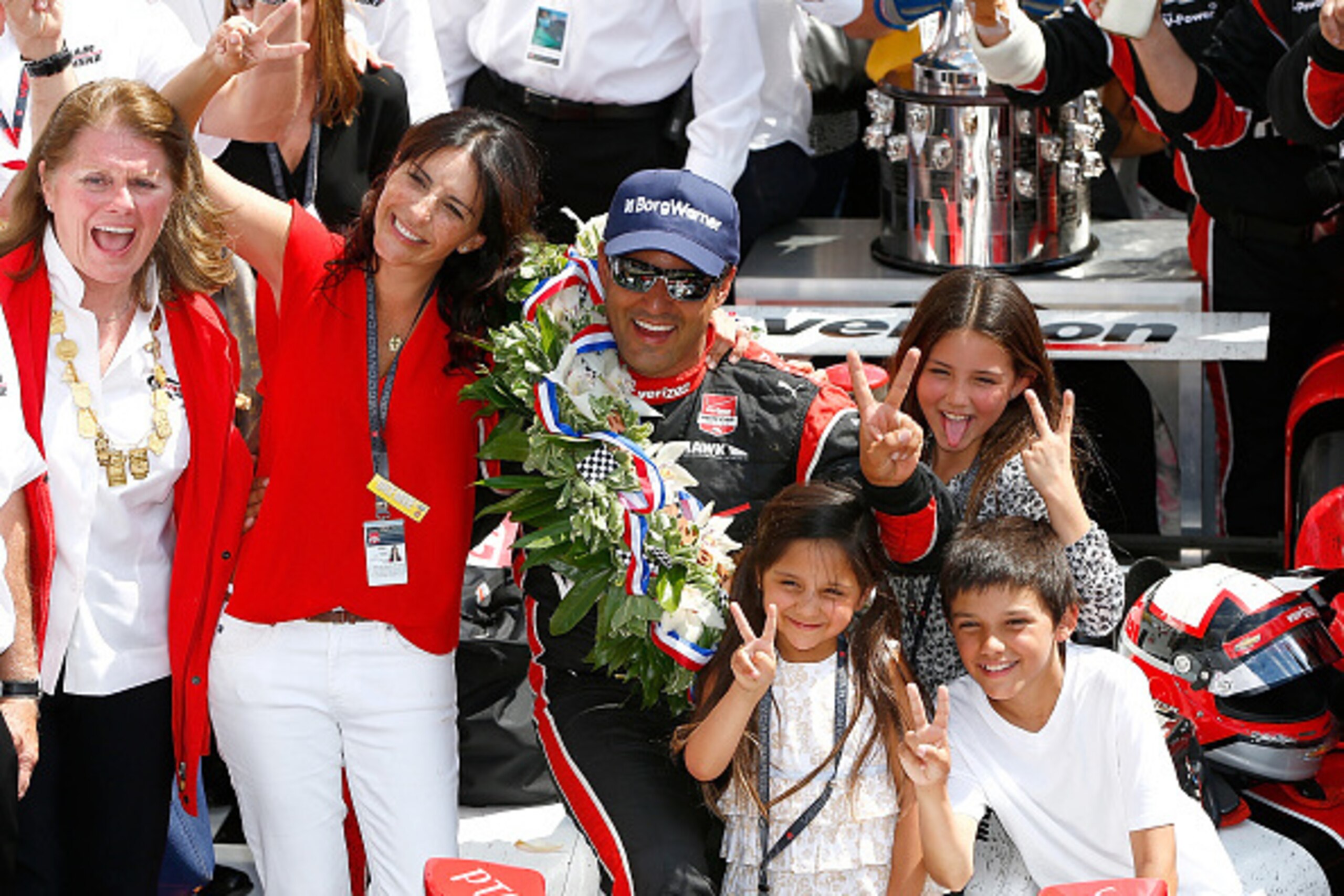
But with Juan Pablo Montoya’s impressive rally to win his second career Indianapolis 500 on Sunday—in only his third try at the Greatest Spectacle in Racing—one big question emerges from Victory Lane.
What would Montoya have been able to accomplish in IndyCar if his career course didn't go in another direction—first a six-year run in Formula One and then a seven-year stint in NASCAR?

.jpg?w=2560 "Rams Raiders Football")

And then there’s the follow-up question: Could Montoya have won another one, two, three or more Indy 500s if he had stayed in the American open-wheel world?
This is not second-guessing Montoya’s career moves. When he went to F1 and then NASCAR, he did what he felt was right for himself, his family and his career.
I don’t blame him. After winning the 1999 CART championship and then the 2000 Indy 500 in his only appearance on the IndyCar circuit that year, Montoya had already proven just how good he was.
That’s why he emigrated to Formula One, where he did well. In six seasons overseas, he finished in the top five in the standings four times, and he was never worse than eighth.
The move to F1 wasn’t all that difficult in the overall picture: The then-Indy Racing League was floundering in popularity, attendance and attention, just as it had since it began as a rebellious castoff from CART in 1996.
At the same time, CART (which would morph into the Champ Car Series), was slowly falling out of popularity and significance, a victim of the CART-IRL split.
And after winning the 2000 Indy 500, Montoya was just 24 years old, with the world—the F1 world—ahead of him.
That move made sense.
When the opportunity came along to return to the U.S. and try his hand at NASCAR in 2007, Montoya jumped at proving he could be just as competitive and successful in stock car racing as he had been in open-wheel cars.
Unfortunately, Montoya’s results in the NASCAR world never quite met his hopes and expectations going in. In 255 starts, he was almost like a fish out of water: He won just two races (three, if you count his sole win in 23 Xfinity Series starts, as well), had 24 top-five and 59 top-10 finishes.
But his average career start and finish in NASCAR was admittedly unimpressive: 17.9 for the former and 19.8 for the latter.
He’d make the Chase for the Sprint Cup just once, finishing eighth in 2009. Even worse, he finished 20th or worse in the standings five of the other six years (and 17th in the other remaining season).
Making the transition from IndyCar or F1 to NASCAR might seem easy in theory, but in practice, it is anything but. After all, you’re going from a sleek, sophisticated, technologically advanced ride to driving what late NASCAR champion and TV analyst Benny Parsons affectionately called “a taxi cab” in the Cup circuit.
Stock cars are everything sleek open-wheel cars aren’t: They plod along, they’re about 1,500 or more pounds heavier, and they don’t have the lightning-quick response in the throttle or steering wheel like F1 and IndyCar rides have.
Montoya came to NASCAR to be a trailblazer and prove that open-wheel drivers can be a success in the series. Unfortunately, he ultimately joined a long list of former open-wheelers who found NASCAR nowhere near as easy as they might have thought.
Dario Franchitti won four IndyCar championships, but he couldn’t make it in NASCAR. Ditto Jacques Villeneuve, who won championships in CART (including a win in the Indy 500) and F1, was also a bust in NASCAR.
Ditto for Patrick Carpentier.
And let’s not forget Sam Hornish Jr., who won three IndyCar championships and the 2006 Indy 500. He has struggled since moving to NASCAR.
Heading into Sunday night’s Coca-Cola 600, Hornish has made 143 Sprint Cup starts without a win, earning just three top-five and 10 total top-10 finishes.
To be fair, Hornish has fared much better in the Xfinity Series: In 110 starts, he has three wins, 32 top-five and 57 top-10 finishes.
And then there’s Danica Patrick. While she has shown significant improvement this season, she’s still nowhere near where she should be in NASCAR—or where she might have been if she had stayed in IndyCar.
The only current NASCAR driver who has successfully made the transition from open-wheeler to stock cars is Tony Stewart.
Stewart made 26 IndyCar starts in his pre-NASCAR career, winning three races and capping things off with the 1997 championship.
Since coming to NASCAR, he’s gone on to make 565 Cup starts, with 48 wins, 182 top-five and 298 top-10 finishes—as well as Sprint Cup championships in 2002, 2005 and 2011.
Regardless of the series, being a race car driver is one of the most difficult jobs there is. One wrong flick of the steering wheel or one split-second of slowness could put you into a wall—or worse.
Which brings us back to Montoya. He left NASCAR after the 2013 season—arguably seven of the best years of his career that he’ll never get back—to once again try his luck on the open-wheel side in the Verizon IndyCar Series.
He finished the 2014 campaign a respectable fourth place—a higher season showing in IndyCar than he ever had in his entire NASCAR career.
He also won a race last year in his first year back in the American open-wheel circuit.
Thus far this year, Montoya has now won two races—the season-opening Grand Prix of St. Petersburg and Sunday’s Indy 500—and further increased his lead in the IndyCar points standings.
While it’s hard to look back and not second-guess, I can’t help but wonder what might have happened if Montoya had never gone to F1 or NASCAR.
Heck, we might not be talking today of Montoya winning his second Indy 500 in just three tries. Instead, we could be trumpeting him for having won maybe his third, fourth or even a record fifth 500.
Or more.
And I'm convinced that, even though he turns 40 later this year, Montoya still has another Indy 500 win or two in him. In fact, I wouldn't be surprised to see him tie the all-time Indy 500 wins record of four victories, shared by Rick Mears, A.J. Foyt and Al Unser.
When he left CART for F1 and left F1 for NASCAR, Montoya did what he felt he had to do.
But somehow, somewhere deep inside, I can’t help but wonder if he thinks about the same thing I do: What might have been if he hadn’t gone anywhere?
All quotes obtained firsthand unless otherwise noted.
Follow me on Twitter @JerryBonkowski

.jpg?w=2560 "Steelers Saints Football")

.jpg?w=2560 "Packers Safety Slams Refs 🤬")
.jpg?w=2560 "🚨 Week 8 AP Top 25 Poll")