Inability to Win When Playing Ugly Still Holding Arsenal Back
Even a laudable football purist like Arsene Wenger knows titles are won as much with earning three points when you're playing ugly as they are via style points. Arsenal haven't been short of the latter in recent seasons, but until the Gunners start to claim three points when their performances are less pleasing on the eye, the Premier League title will remain a forlorn dream for Wenger's men.
Learning to win when playing ugly is as important to Arsenal's preparations for next season as anything Wenger might do to add to his squad during the summer transfer window. If you need proof, consider the Gunners' last five matches.
TOP NEWS

Final Men's Ballon d'Or Rankings 📊
Highlights and Viral Moments 🍿

J-Dub Suffers Gruesome Injury
In that span, Wenger's charges have claimed just six points from 15. The reason is simple: three games without scoring at home, the latest a goalless stalemate with Sunderland, per BBC Sport's Phil McNulty, that ensured the north-east club's Premier League survival.
To put this barren run into quantitative terms makes for depressing reading, as this statistic via WhoScored.com reveals:
Not sufficiently depressed by Arsenal's woes in front of goal yet? Well, how about this for some deeply sobering historical context:
Of course, you don't need the numbers, although they help, to tell you one indisputable fact: Arsenal just aren't playing well at the moment.
In fact, the Gunners have been far from their fluid best since the 4-1 annihilation of Liverpool at the Emirates back in early April. Every game since has been a laboured, arduous struggle.
There's plenty of potential reasons why, yet sadly, no obvious solutions on the horizon. The most obvious reason behind Arsenal's strangely timed current malaise is a weary squad energy sapped by the rigours of a gruelling campaign.
Wenger more than hinted at a certain lethargy following the tame draw with Sunderland, per Max Jones for Arsenal's official website: "We gave a lot at Manchester United and you could see that we had not completely recovered. It shows how vital the point was at Manchester United, to get three points in front of them, and now we have to finish well on Sunday—that’s important."
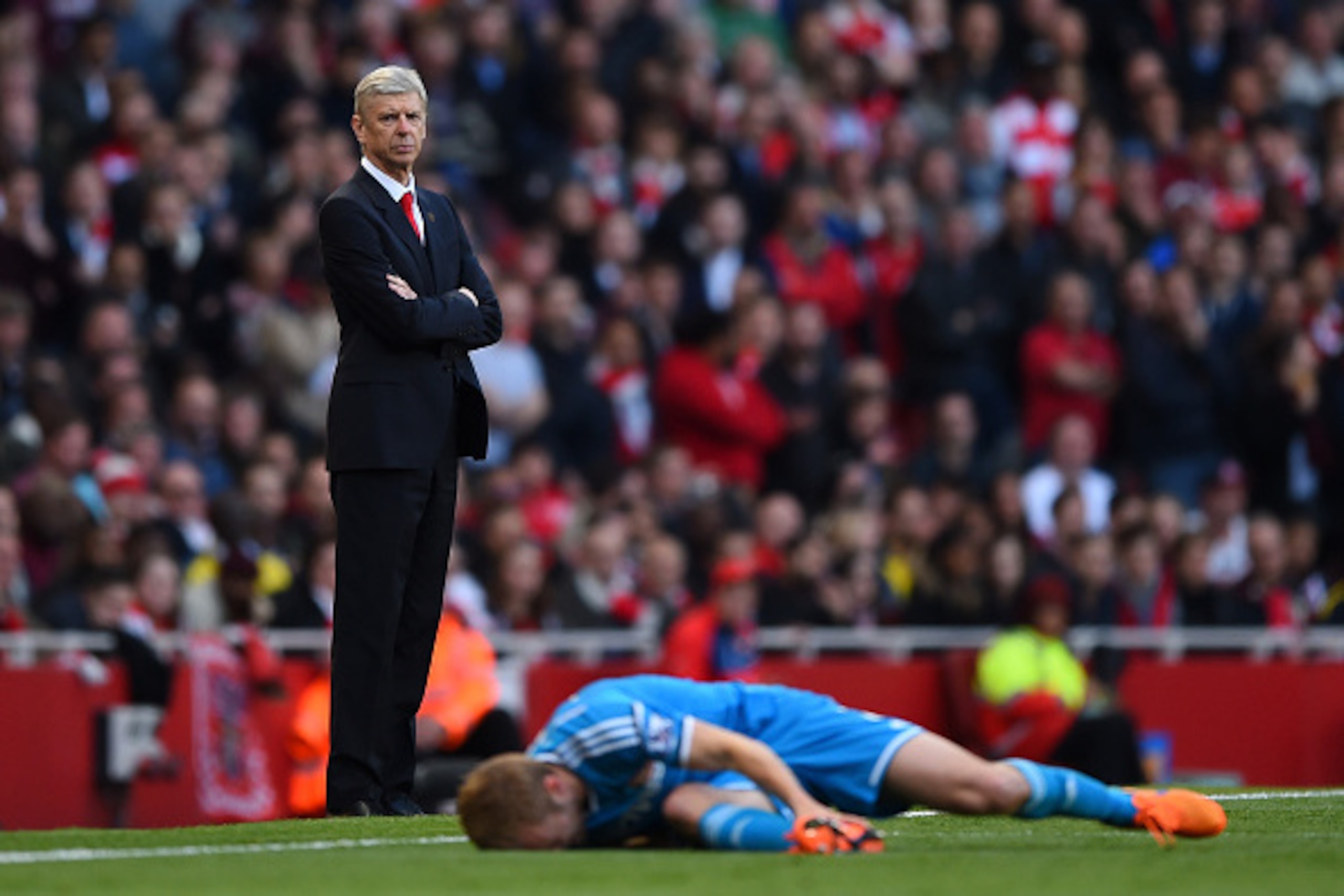
Wenger's players certainly looked jaded during their latest Premier League outing. Yet this is a problem largely of the club's own making.
Prior to being held by Sunderland, Wenger had picked the same starting 11 in six consecutive matches. Not wanting to break up a winning formula sounds great in theory, but in a practical sense, it's just not physically viable in the ultra-intense modern era.
Too little rotation has hurt the Gunners. It's become easy to question the purpose of signing Gabriel Paulista for £11.2 million back in January, when the Brazilian centre-back continues to languish on the bench.
A home match with Sunderland followed by the impending visit of West Bromwich Albion seemed like the perfect chance to rest both Laurent Koscielny and Per Mertesacker. It might even have helped Wenger assess which player Paulista, seemingly a future starter, partners best.
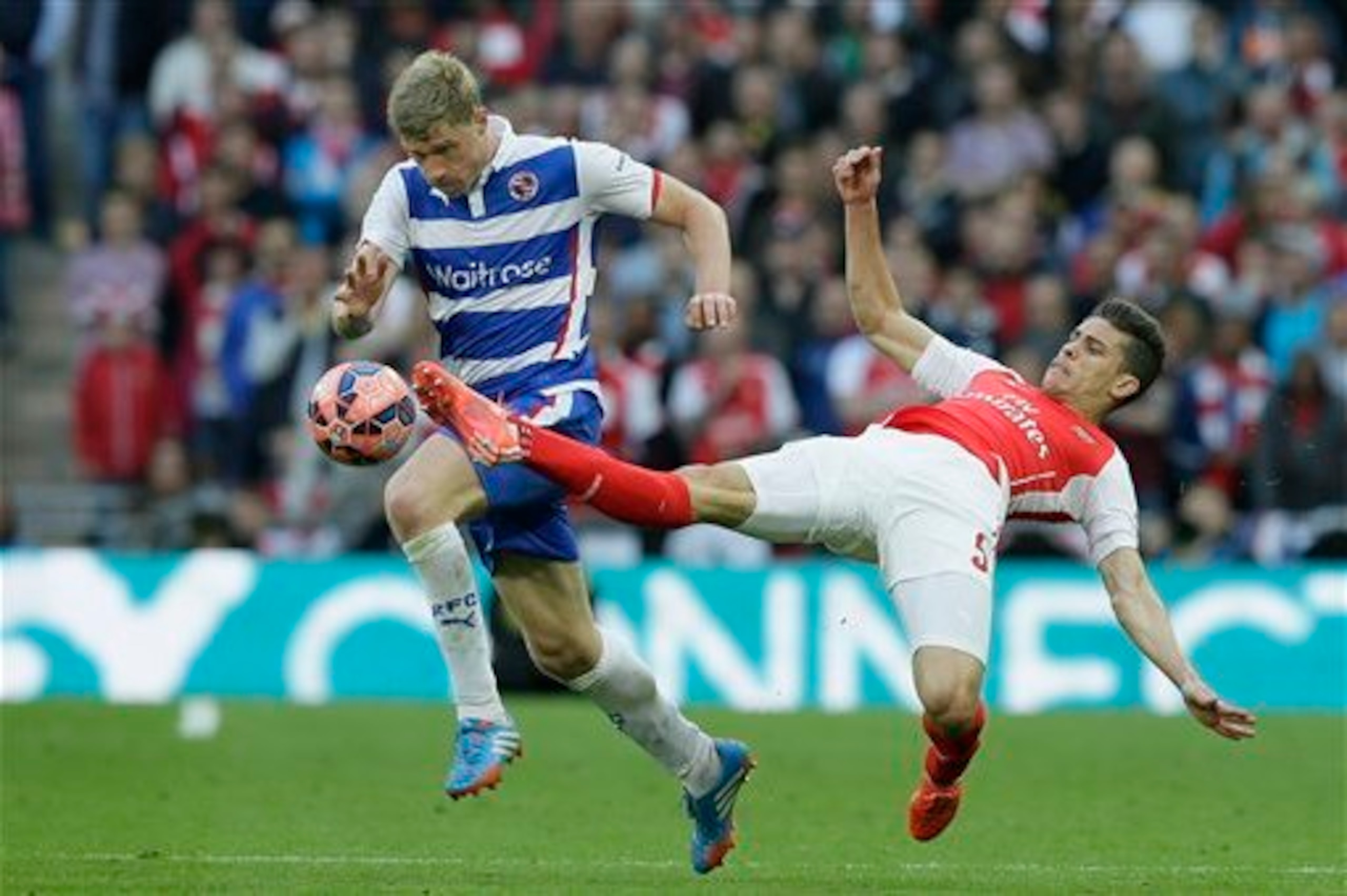
Sadly, this is now an opportunity missed.
While handing Jack Wilshere a start made some sense, even though his presence usually disrupts midfield balance, what about Tomas Rosicky? The Sunderland match was a great chance to give the hugely likable, if slightly overrated, veteran playmaker a start.
Rosicky might have come in for either Mesut Ozil or Santi Cazorla. Both have looked particularly torpid in recent matches.
Of course, none of those changes would have solved the woes up front. Only playing with much more pace and width can do that.
Unfortunately, Arsenal are hardly in a position to inject those vital qualities into their forward play. Not when Danny Welbeck and Alex Oxlade-Chamberlain continue nursing injuries, along with Wenger still not feeling confident enough about Theo Walcott's freshness to start him, per the Daily Star's Jonathan Green.

But even selection dilemmas don't solve Arsenal's biggest problem. This team just doesn't win when they play below par. In fact, Wenger's teams usually lose whenever their standards slip.
It's the defining characteristic separating them from title winners Chelsea. The Blues have been mediocre for months but have consistently found ways to still win.
Think of narrow scrapes past Stoke City, Queens Park Rangers and Crystal Palace as prime examples. But while the men from Stamford Bridge stumbled over the line in those games, nine points awaited them once they regained their balance.
Wenger took some solace from the lone point against Sunderland, one that's all-but guaranteed automatic qualification for next season's UEFA Champions League, per Sky Sports: "We are solid, at least we didn't concede and got an important point that shows how important the point was at United on Sunday."
While that's true, it does rather skirt the main issue. Just why can't Arsenal win when they aren't at their very best?
Part of it is down to one of the great strengths of the Wenger era and one of the manager's most endearing qualities. His fidelity to expansive and attractive combination football has made Arsenal a joy to watch for two decades.
The one drawback is its demand for perfection. Those intricate triangles of one and two-touch passing the Gunners have made their forte need everything to go right in order to come off.
When they do, Arsenal score goals like Wilshere's marvellous ode to collective creativity against Norwich City last season. Then there's Rosicky's similarly elaborate and rewarding finish against Sunderland from the same campaign.
But just the merest error in touch, weight of pass or movement renders an entire attacking move redundant.
So one or two players having an off night destroys the regimented machine that ironically produces so much free-flowing brilliance. Of course, tired players are more likely to be guilty of slack passing and sluggish movement.
But Arsenal's struggle to cross the finishing line even after bumbling through the race isn't just about stylistics or fatigue. It's also concerned with what the Gunners don't have.
Breaking down tightly packed and deep-sitting defences can often require some luck. But it's fortune usually created by something that pulls those miserly structures apart.
Arsenal have been lacking that elusive X-factor while overworked superstar Alexis Sanchez has slowed. His appearance against Sunderland was something of a milestone, but one that revealed the lack of rotation, per the club's official Twitter feed:
A slow Sanchez means no sudden acceleration or no rasping shot from distance. Those are the kind of things that ultimately undo stubborn rearguard actions like the ones the Gunners have seen against Chelsea, Swansea City and Sunderland.
Going more direct, both in terms of movement and intent, is a vital shift of the gears all top teams must possess. It's likely why Wenger values Walcott so highly, the threat he poses can't be matched by others in the current squad.
One quality Walcott and those around him certainly aren't sharing at the moment is efficiency. There's no other way to explain a struggle for goals that's seen just four converted strikes in five matches, with three of those aided by significant deflections.
Efficiency is a must for any title-winning squad. How else can you weather pressure, or even set up to play your own defensive game, and still win if you don't maximise the few chances you create?

It's a habit Wenger's men haven't quite mastered this season. It worked wonderfully in January's away win over Manchester City, when just 35 percent possession still translated into two goals, per the Guardian's Daniel Taylor.
But the Gunners weren't nearly as ruthlessly unerring when they squandered late chances to turn a 1-1 draw at Old Trafford into a vital win over Manchester United.
Wenger may not be able to fix that problem until the summer, either by signing a new striker, or closer work to refine the finishing of Olivier Giroud and Welbeck.
But what he really must fix is Arsenal's inability to win when playing at less than full capacity. Ugly performances sometimes scrape draws, the way they did against United and Sunderland.
But turning those stalemates into unflattering wins often enough can be the difference between finishing third and winning the title.
.jpg?w=2560 "Rams Raiders Football")


.jpg?w=2560 "Rodgers Iced Out on Plane 💎")

.jpg?w=2560 "Packers Safety Slams Refs 🤬")
.jpg?w=2560 "🚨 Week 8 AP Top 25 Poll")