

Liverpool FC: Creating Brendan Rodgers' 2015 Summer Blueprint
After failing to capitalise on last season's near-success in the Premier League over the summer of 2014, Brendan Rodgers has seen his Liverpool side slip into mediocrity this season, with the Reds currently hopeful of a fifth-placed finish come next weekend but with the very real prospect of finishing seventh also lingering.
Also crashing out of the Champions League in the group stages, the Europa League in the next round and both FA Cup and League Cup in the semi-finals, Liverpool represent miserable also-rans this season, and there are many factors that contribute to this.
So how does the manager address this over the summer?


.jpg?w=2560 "Rams Eagles Football")
Rodgers' 2015 summer blueprint is a hefty one.

One of the principal factors to Liverpool's 2014/15 pandemonium is Rodgers' failure to settle on a regular system for his side. After last season saw much success with a 4-3-3 or a 4-4-2 diamond, the loss of Luis Suarez seemed to prompt a summer rethink for the manager, which can be evidenced by his summer signings sheet, as relayed by This is Anfield.
Adding to an already cluttered attacking midfield consisting of Philippe Coutinho, Raheem Sterling, Jordan Henderson and, at the time, Suso and Luis Alberto, Rodgers sanctioned a £45 million outlay on Adam Lallana and Lazar Markovic.
It seemed clear he was buying for a 4-2-3-1 formation, and this was utilised in the opening-day victory at home to Southampton, with a three-pronged attacking midfield on Sterling (left), Coutinho (central) and Henderson (right) lining up behind Daniel Sturridge as the lone striker; this worked well in terms of build-up in the forward areas, and goals from Sterling and Sturridge sealed the three points.

The £16 million signing of Balotelli four days later, however, seemed to suggest this perhaps wasn't the long-term tactical plan for Rodgers.
Neither Balotelli or Sturridge were intended to play second fiddle to the other and, duly, the Italian's debut prompted a switch to a 4-4-2 diamond setup, with Henderson and Joe Allen operating as diamond-flank midfielders, Sterling as a No. 10 and Balotelli and Sturridge paired in a fruitful strike partnership. This stands as Liverpool's best performance of the season.
Injury to Sturridge—initially sustained on international duty in September—scuppered this, however, and Rodgers' tactical mishmash began. Throughout 2014/15, we've seen 4-3-3, 4-2-3-1, 4-4-2, 5-3-2 and the much-lauded 3-4-2-1, among other variations.
Rodgers' success with the 3-4-2-1 over the turn of the year was this season's high point in terms of longevity of form but has since, seemingly, been trashed—Saturday's 3-1 loss to Crystal Palace marks the first time it was utilised in four games, with Rodgers scrapping it midway through April's 2-1 FA Cup semi-final loss to Aston Villa.
Liverpool have lacked stability, fluidity and consistency as a result.
The single most important thing that Rodgers must do this summer, and the very first decision he must make, is on which system he is planning to utilise throughout 2015/16.
This could be the previously successful 3-4-2-1, but perhaps most suitable for his current squad, the 4-3-3 seen in recent weeks could get the best out of Coutinho, Sterling, Markovic and Henderson—among others—without hampering their progress by utilising them out of position, as Markovic, for example, has been when used as a wing-back in the 3-4-2-1.
Of course, there will be times when he needs to deviate from this, as no manager opts for just one system without being found out by his contemporaries in due course, but Liverpool cannot risk another failed summer of transfers due to poor planning for the long term.

Rodgers' switch to the 3-4-2-1 this season was as much of a reaction to his side's poor defensive form as it was his engineering of a more fluid attacking system, and this came shortly after widespread calls for the club to appoint a specialist defensive coach.
The manager rebuffed these suggestions swiftly, telling James Pearce of the Liverpool Echo: "It's not a case of needing to bring in another coach, a defensive coach or anything like that. I wouldn't go down that route. The bottom line is our team is based on balance and at times it's been poor. There is a collective responsibility to defend better and that's what we have to do."
He added: "Our problem and the issue we have which we need to find the solution for is our lack of coaching time. Take this week, we played Wednesday night, the players physically recover on Thursday, and that leaves us with only a short period of time on the training field before we've got the game on Saturday."
To give Rodgers credit, the side's defensive form did improve shortly after they crashed out of the Champions League. The 3-4-2-1 first appeared in its sharply defined form in the 3-0 loss away to Manchester United in mid-December, a result that marked Liverpool's last loss in the league for 13 games, with the Reds keeping eight clean sheets in that period, conceding just eight goals.
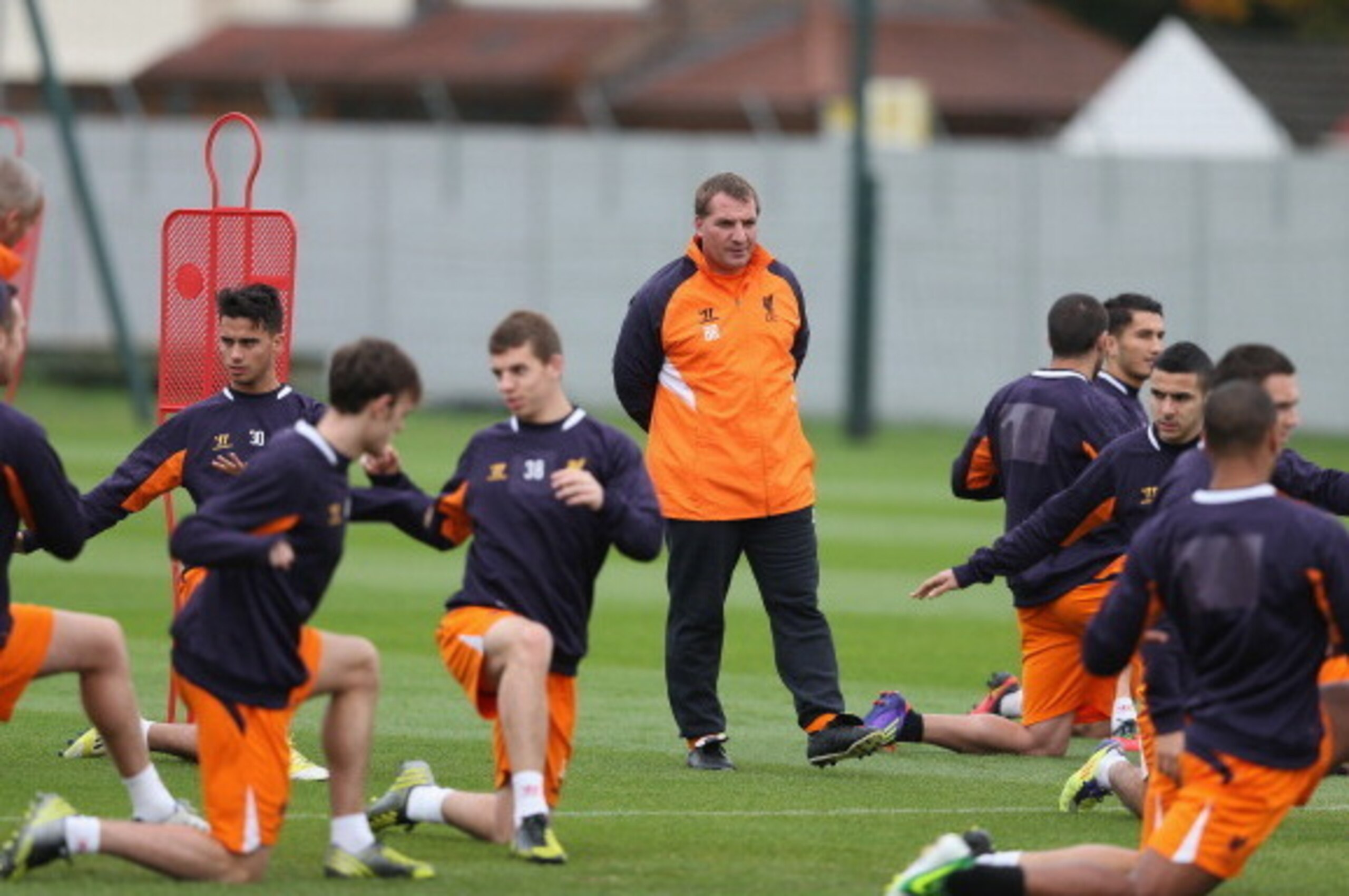
Midway during that spell, following a 2-0 away win over Southampton in February, Rodgers joked his side's improved form was, as reported by Ian Doyle of the Echo, down to: "The new defensive coach that we got in that everybody thought we needed. That's what has done the trick."
Flash-forward to May and Liverpool have kept just two clean sheets in the past eight league games, conceding 12 goals along the way. Right about now that defensive coach looks more and more tempting as the games slip through Rodgers' grasp.
Over the summer, the manager must take his responsibilities, and those of assistant manager Colin Pascoe and first-team coach Mike Marsh, and whittle them down to their particular strengths. Reinforcing his backroom staff with a specialist defensive coach, among others, Rodgers can cope with what will likely be similar training-ground demands next season, with the Reds looking likely to qualify for the Europa League and, as reported by Doyle this week, could begin a potentially majorly congested season on July 2.
Many hands make light work, in theory.
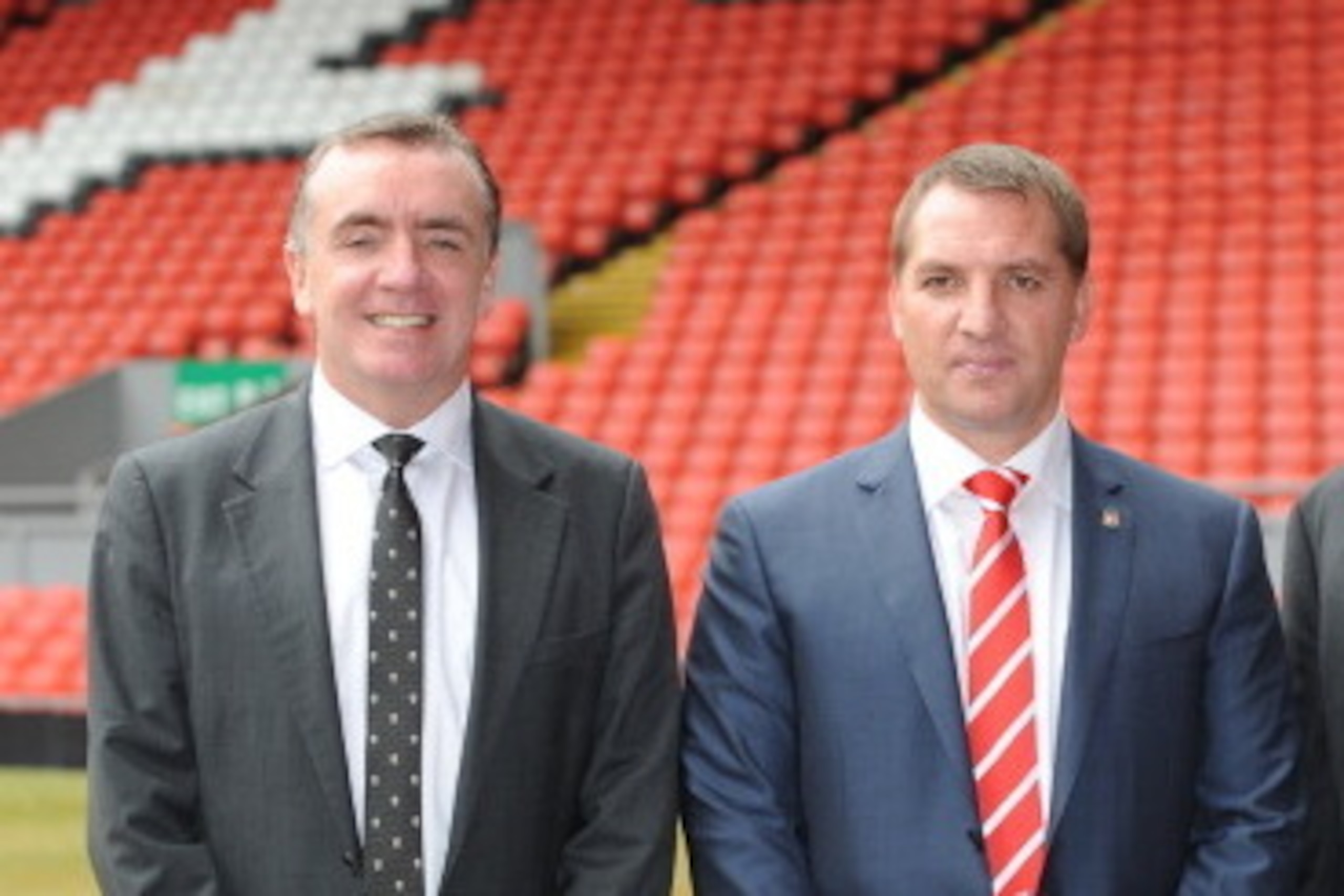
As well as rejigging his backroom in terms of the training field, Rodgers and Liverpool's owners Fenway Sports Group must consider a reconfiguration of the club's transfer protocol of the summer—last season's failings should be the damning evidence required to prompt such a move.
Rodgers told the Echo's Pearce this time last year about how FSG's appointed transfer committee of, in Pearce's words, "managing director Ian Ayre, head of recruitment Dave Fallows and head of performance and analysis Michael Edwards," alongside chief scout Barry Hunter and director Mike Gordon, functions when it comes to identifying potential targets and approaching the finalising of a signing:
"Obviously, I am involved heavily in the identification of the player. The principle [sic] idea when I first came in was that like any manager you will have the first call on a player and the last call. That’s the call on whether he’s good enough to continue to look at and try to organise a deal and the last call to say yes or no.
There is a big part that goes on in between. In modern football you need to trust other people to do the work. That’s something we do here and that’s why we have had the success we’ve had.
The finer details of that are left to Ian who does a terrific job and our other guys in that field who will go through the contracts. I am aware of where the situation is at right the way through the process.
We will never bring in a player here who the manager doesn’t want in. That’s a great credit to the owners and the other people at the club. We work very closely together—it’s worth stressing that. It’s key that we are very much one club. We are really preparing for next season. I’ve had some very good meetings with our recruitment team. We are very much together as one.
"
But there remain questions over this process and whether players are always truly signed with the manager's best interests in mind.
For example, why was Spanish striker Iago Aspas turfed out so swiftly last summer, after just one season with the club? Why was £20 million Dejan Lovren brought when £18 million left centre-back Mamadou Sakho was already at the club? Why does Javier Manquillo continue to rot on the substitutes' bench or not even be in the matchday squad while the departing Glen Johnson prospers?
These imbalances and seemingly constant oversights point to a problematic transfer protocol.
This summer this needs to be addressed, whether that be through a more harmonious, cohesive committee structure, helmed by a new arrival perhaps inspired by Spurs' decision to bring Paul Mitchell from Mauricio Pochettino's former club Southampton back in November, or the appointment of a near-totalitarian Director of Football, as Manchester City have with former Barcelona man Txiki Begiristain.
Liverpool have made way too many mistakes with this particular committee setup and need to solve these problems this summer.
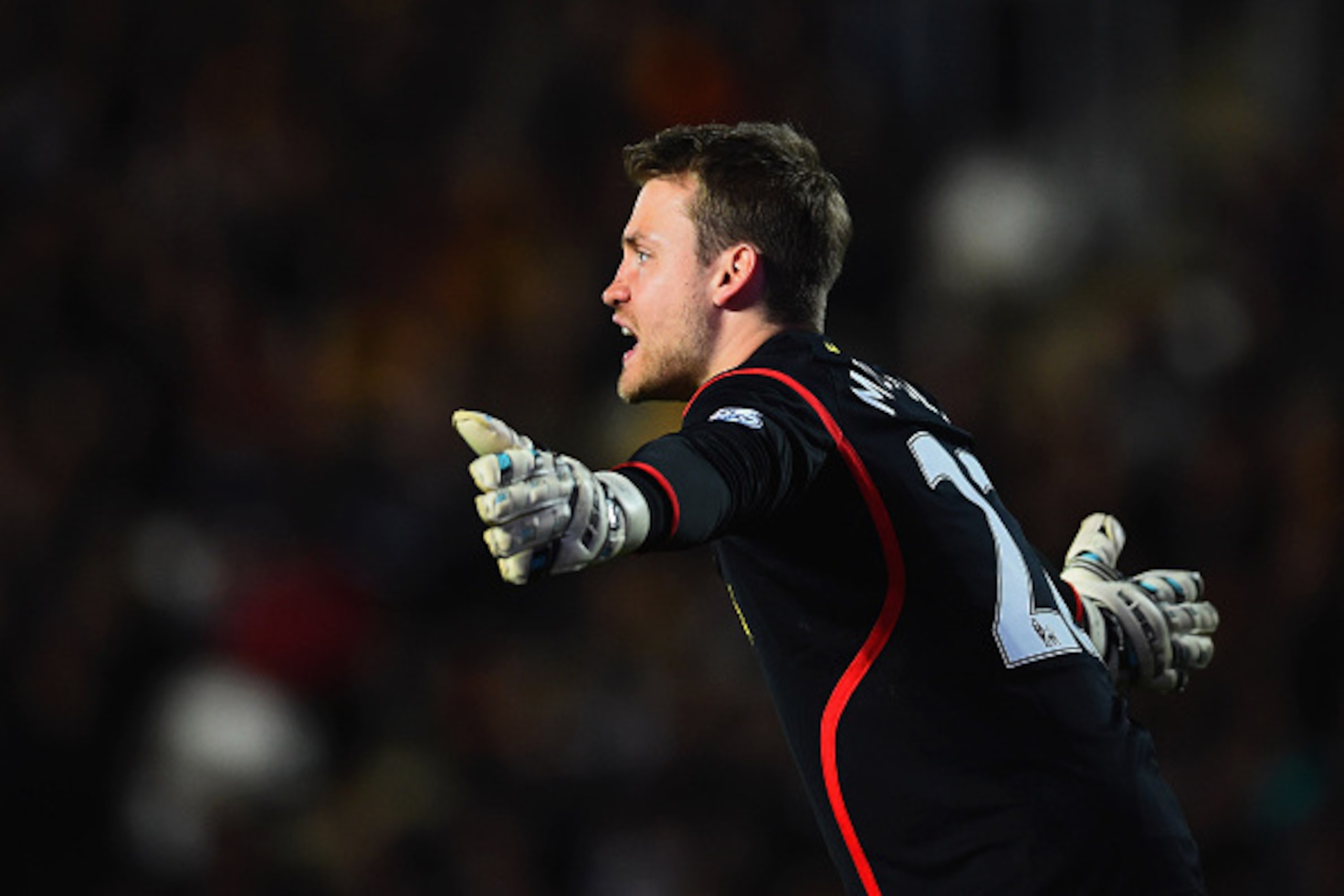
Whoever is directing Liverpool's transfer activity over the summer, there are many areas that require strengthening once again—miserably, given the significant outlay FSG have made with Rodgers at the helm—and one of these signings should come in the form of a new backup goalkeeper.
Current second-choice goalkeeper Brad Jones confirmed his summer departure this week, taking to Instagram (h/t This is Anfield) to declare: "I would have loved to have stayed at the club I have supported since the age of 5 but sometimes the dream ends."
This leaves Rodgers with just first-choice charge Simon Mignolet and U21s regular Danny Ward as players in his goalkeeping reckoning at this point looking towards next season.
Jones' departure is warranted. While he has been a loyal servant to the club, his two-game spell between the sticks in December—in the 3-0 loss to United and the following 2-2 draw against Arsenal—saw him underline just why he isn't considered to possess the quality required to flourish at Liverpool.
His inclusion came as a reaction to Rodgers dropping Mignolet for the poor form he showed in the first half of the season, and while this spell on the sidelines has seen the Belgian pick up significantly in the second half of the season, it would be hard to argue it was the pressure of Jones' performances that spurred this resurgence—Jones has spent much of the second half of the season nursing an injury, leaving Mignolet as Rodgers' undisputed shot-stopper.
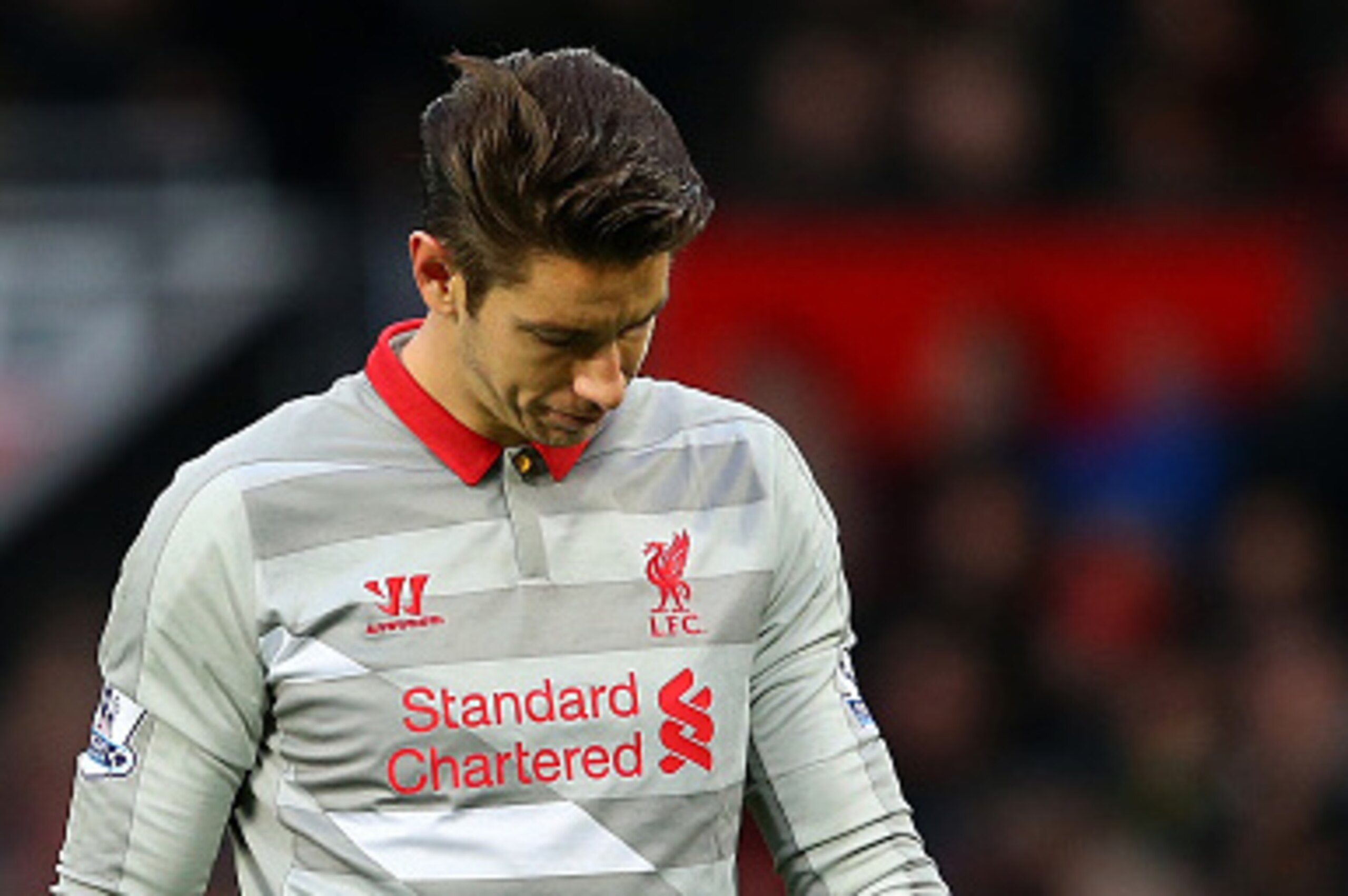
But goalkeepers need competition, and this is something Rodgers attested to when he brought Mignolet to the club back in 2013, claiming the former Sunderland man was signed to put pressure on existing first-choice Pepe Reina.
"I always felt it was important for us to have competition right the way through the squad, and that includes the goalkeepers," Rodgers said, as reported by David Anderson of the Mirror. "Simon comes in and we've got great competition and when you've got competition it pushes everyone to perform."
Reina's swift departure, however—initially on loan at Napoli and now permanently with Bayern Munich—put paid to that situation, and Mignolet has ambled through the past two seasons as an unchallenged No. 1.
This summer, with Jones' departure, Rodgers needs to make signing a new goalkeeper a priority, to put pressure on Mignolet as first choice and push him to perform. Arsenal are the perfect evidence of this situation, with manager Arsene Wenger now boasting, with his words relayed by Jonathan Green of the Daily Star, "three world-class keepers" in David Ospina, Wojciech Szczesny and Emiliano Martinez.
Ospina supplanted Szczesny as first choice this season, and this is the situation that Rodgers needs at Liverpool—a goalkeeper who can come in as a real threat to Mignolet's first-team prospects, to motivate him.
The player Green links with Arsenal, Chelsea's Petr Cech, would be the ideal candidate, but Queens Park Rangers' Robert Green, Genoa's Mattia Perin, Club Brugge's Mathew Ryan and Stoke City's Asmir Begovic all represent reasonable candidates for a club in Liverpool's position, for better or worse.
Whoever they sign, they must be able to put pressure on Mignolet in the No. 1 position.
As mentioned, Liverpool's defence has reverted to the shambolic towards the end of the season, and along with the appointment of a defensive coach, this structural improvement can be aided with further additions in the transfer market as well as rational clarification and pruning within Rodgers' current squad.
Head in hands as Yannick Bolasie tormented Dejan Lovren throughout Palace's Anfield victory on Saturday, Rodgers seemed to recognise just how poor his defensive options are at present, as he suggested post-match to David Prentice of the Echo: "We made poor defensive errors across the field and got punished at the end of the first half and in the second half we didn’t defend well enough. Their attacking players posed us problems and we didn’t cope well enough."
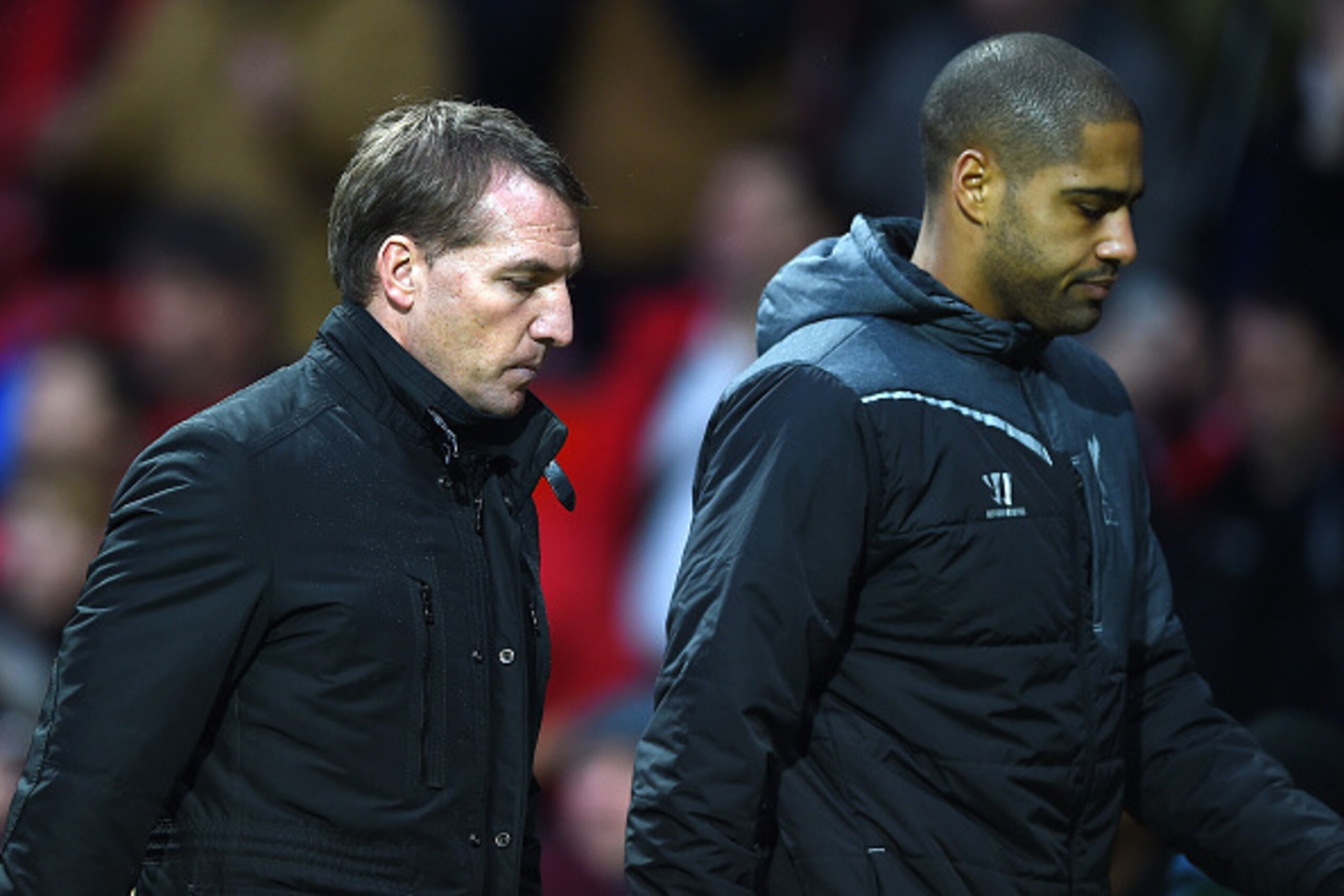
Following this mauling, and with the season coming to an end, Rodgers must rectify his side's defensive mistakes and overhaul his personnel in the back line. He must turf out the likes of Jose Enrique and Lovren if possible, along with ushering the abysmal Johnson out through the Anfield exit on the expiry of his contract, and take stock of his side and bolster his defensive options.
Sakho, Martin Skrtel, Kolo Toure, Alberto Moreno, Manquillo, Jon Flanagan and the returning Andre Wisdom represent reasonable-to-excellent options in his current squad, but he must add more quality.
Rodgers needs to sign a new right-back, with Southampton's Nathaniel Clyne representing the ideal candidate but Burnley's Kieran Trippier a more reasonable, attainable option. He needs to support Moreno with a more experienced left-back option. He needs to find a long-term partner for Sakho in central defence.
With his side leaking goals with alarming regularity, having conceded 11 more than Southampton at this point in the season, despite signing the player who was considered their best centre-back in Lovren last summer, Rodgers must address his defensive issues for good this transfer window.
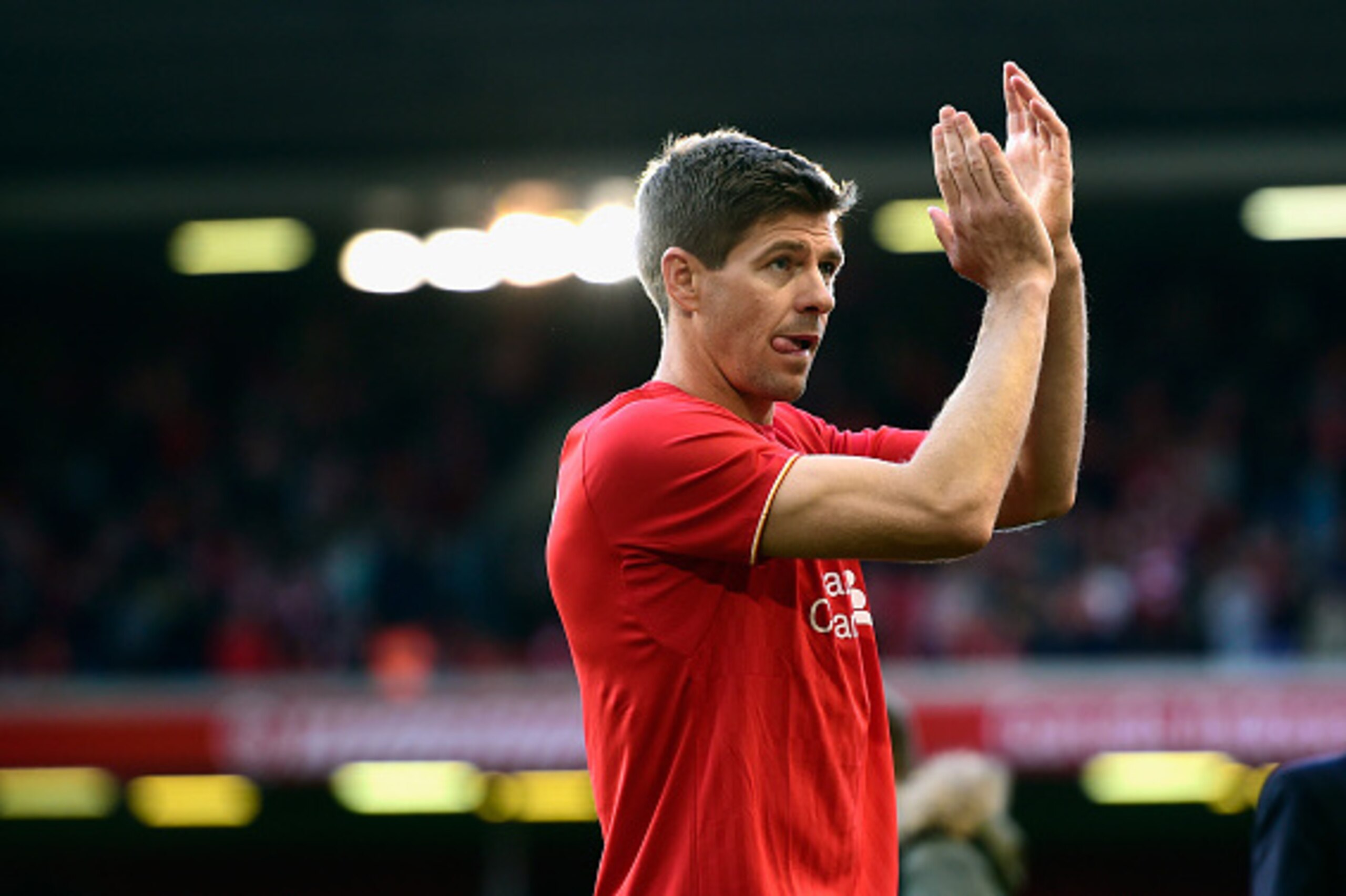
As the defeat to Palace marked the final steps of Steven Gerrard around the Anfield turf as a Liverpool player, ahead of his summer departure for MLS franchise LA Galaxy, Rodgers has a major gulf to address now in the form of the role the captain vacates in his squad.
Unfortunately, as the manager attested last week via Richard Jolly of ESPNFC.co.uk: "He is a player and a person who is irreplaceable with the standard he has set and what he has done here."
Gerrard is a unique player in his loyalty to the club married with his enduring quality and vitality, and with that soon to be gone, Liverpool will struggle to replace that in the transfer market. However, Rodgers continued: "We will have to plot a way to improve in the summer, and that is our challenge."
One of Rodgers' biggest challenges this summer is to find a way to negotiate the departure of such an important player and captain. In terms of the transfer market, he must do so by signing two players for the first team.

David Maddock and Neil McLeman of the Mirror suggested earlier this month that Rodgers' plan was to do so, with Inter Milan midfielder Mateo Kovacic potentially filling one of the roles that Gerrard vacates: "Rodgers knows he won't find a single player to do all his captain does so wants to sign a goal-scoring midfielder and a more defensive one...Kovacic, who has also been linked with Arsenal, has been identified as the man to provide goals from midfield next season."
Gerrard is Liverpool's top scorer in the Premier League this season with eight goals, but he is also typically deployed in the deep-lying midfield position that a more defensive charge could take up in the future.
Kovacic would be a shrewd move in terms of signing that goalscoring midfielder, with the 21-year-old likely to develop into a rare, roving midfielder with genuine cutting edge, but a clear-cut defensive-midfield option is yet to materialise. Sporting Lisbon's William Carvalho could be the perfect choice, however.
Neither of these roles will likely fill the captaincy void that Gerrard fills, though, and this is another area that Rodgers must address this summer, likely by appointing current vice-captain Henderson to this role, although Sakho should also represent a viable candidate.
As Rodgers says, Gerrard is irreplaceable, but the manager must find a way around that this summer.
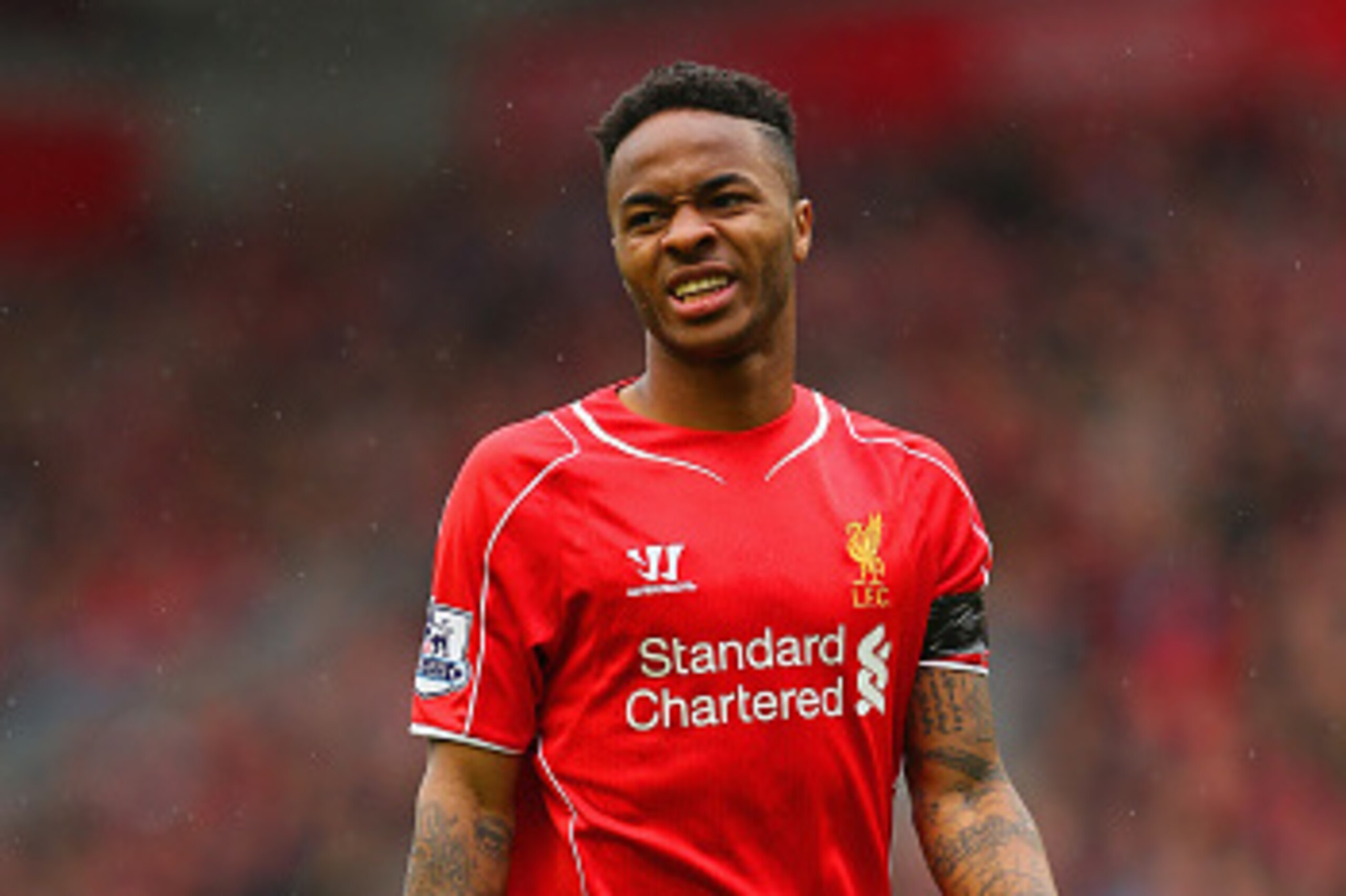
Forming part of Gerrard's final press conference pre-Palace, the Liverpool captain offered some sage advice to current contract rebel Sterling, as reported by Pearce for the Echo, saying: "For me, I am always going to be biased towards this club. My advice to Raheem is he needs a manager who is going to play him, to coach him, to believe in him. I think there is no-one better for him than Brendan Rodgers. I think he should sign a new deal."
This underlines one of the major movements Rodgers must make this summer, in concluding Sterling's contract saga, and this must be done early, for better or for worse.
Sterling seemingly laid his cards on the table on Monday, with BBC Sport's Ben Smith suggesting that: "Sterling is expected to tell the club he wants a move away from Anfield this summer."
While this is a disappointing development for Liverpool supporters, with Sterling representing the club's finest young talent in many, many years, this should put the club in a fairly straightforward position.
Reacting to the news on Sky Sports' Monday Night Football show, former Liverpool defender Jamie Carragher and fellow pundit Gary Neville made a smattering of salient points on the subject, but Neville's assertion that the club have struggled in concluding contract talks in recent seasons is perhaps the most important—too often talks drag on, such as with Henderson this season, and too often the media are made all too aware of it.
Arguably closer to Sterling, Gerrard's advice was furthered by his testimony that: "The danger for younger players is they want it all too soon and go to another club and just become a number." This represents solid advice for Sterling.
But whether Rodgers secures the future of Liverpool's brightest young talent or not, with the player's ambitions seemingly exceeding that of the club in his—or his agent's—eyes, this must be done early. The club must avoid making this a sideshow, with the manager not knowing whether or not one of his key players will remain just that, as this would stunt his planning for the season ahead.
Rodgers must probe for a resolution early this summer.
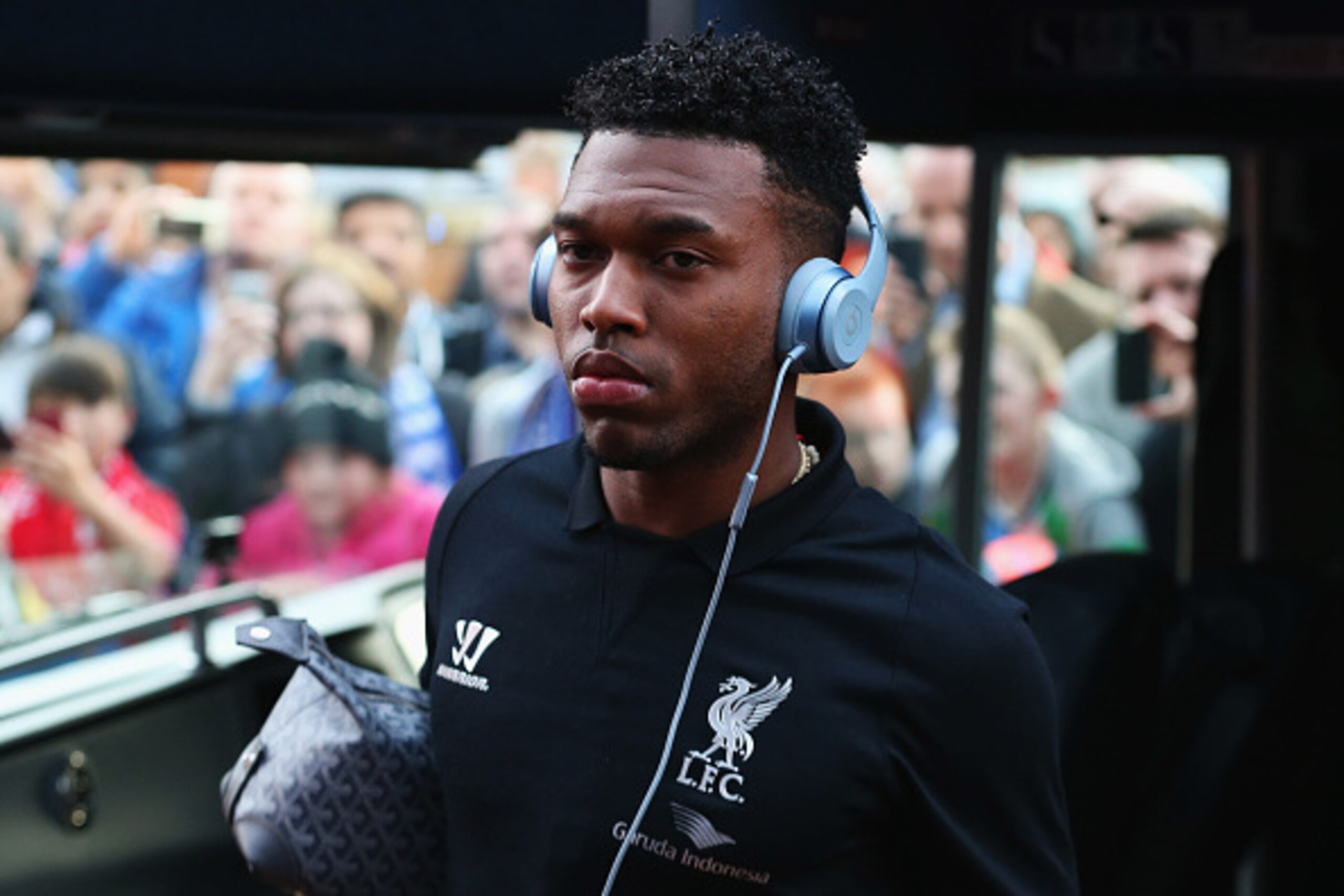
Whether Sterling stays or goes, the paramount area that Rodgers must look to strengthen this summer in terms of playing personnel is in attack, as his Reds side have been woeful in front of goal throughout 2014/15 for various reasons.
After last season's 101-goal league haul, Liverpool have so far managed just 51 this season, with Gerrard's eight goals far from Suarez's squad-high of 31 from last term. Sturridge's long-term injury issues have contributed to this, but it is the poor form of Lambert, Balotelli and Borini that has also ensured the Reds' goal-shy demise this term. The latter trio should see the exit this summer, and Rodgers has a major task on hand in supporting Sturridge in the future.
With Liverpool missing out on Champions League football next season, it will be difficult to convince top-class goalscoring centre-forwards to join the club, but there should remain value in the market if Rodgers looks closely enough.
Signing a goalkeeper, a handful of defenders and a pair of top-class midfielders should be high on Rodgers' list of priorities this summer, but Liverpool will likely continue to struggle either way if he doesn't find a striker or two or support Sturridge and the arriving Divock Origi next season.
This transfer-market activity represents a significant portion of Rodgers' blueprint for the summer as Liverpool manager, but he has much work to do elsewhere, too. He must establish a regular tactical setup first, as well as addressing his lack of coaching support in the backroom, and his and the club's approach to the transfer market in a major overhaul of Liverpool Football Club this summer.
2014/15 can only be described as a miserable failure for Liverpool, and Rodgers has a lot of work on his hands to make it right this summer.
If he's still at the club, that is.
Statistics via Squawka.com and WhoScored.com.
.jpg?w=2560 "Texans-Mixon Released Football")
.jpg?w=2560 "Commanders Eagles Football")

.jpg?w=2560 "Grading WWE Raw 🔠")
.jpg?w=2560 "Mahomes' Wife Trolls Kubiak 💀")

