
NBA Draft Combine 2015: Takeaways from Measurements, Workouts and More

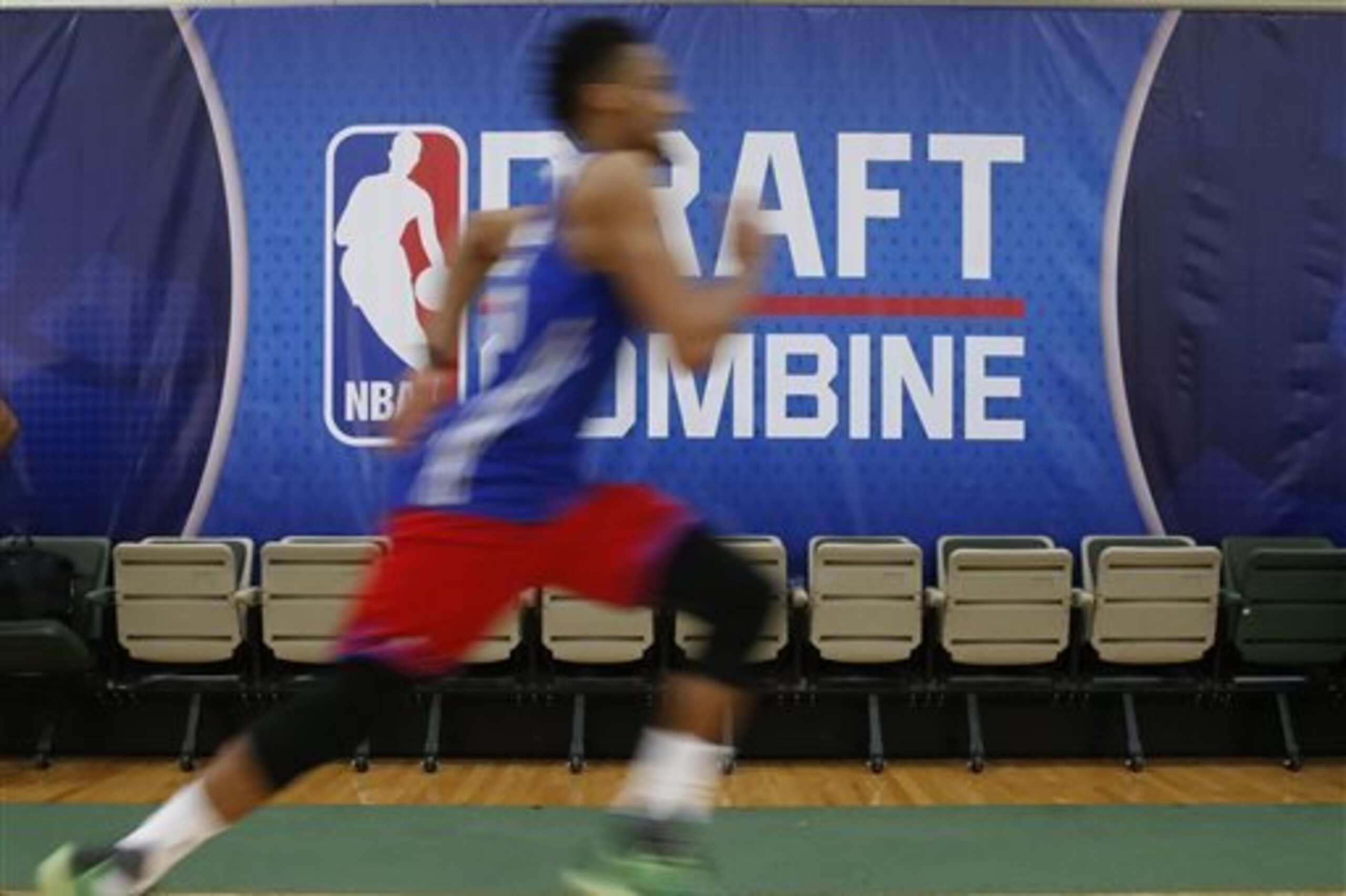
CHICAGO—There was plenty to take away from Day 1 at the 2015 NBA combine. Even though many of the top prospects declined to participate, it didn't stop the majority of coaches and general managers from attending.
The five-on-five portion of the event also seemed to be a big hit. There were a number of prospects who took advantage of it, including bigger names like Kentucky's Andrew Harrison and LSU's Jordan Mickey, as well as the lesser-known ones like UTEP's Vince Hunter.
This was a chance for many prospects to make an impression in front of NBA executives who didn't watch them live during the year. There is bound to be a few players who now generate first-round interest after entering the combine viewed as second-round options.
Through Thursday, we've already seen each player get measured, the majority go through athletic testing and 36 players in live game action.
Adding Five-on-Five Was a Good Move
1 of 10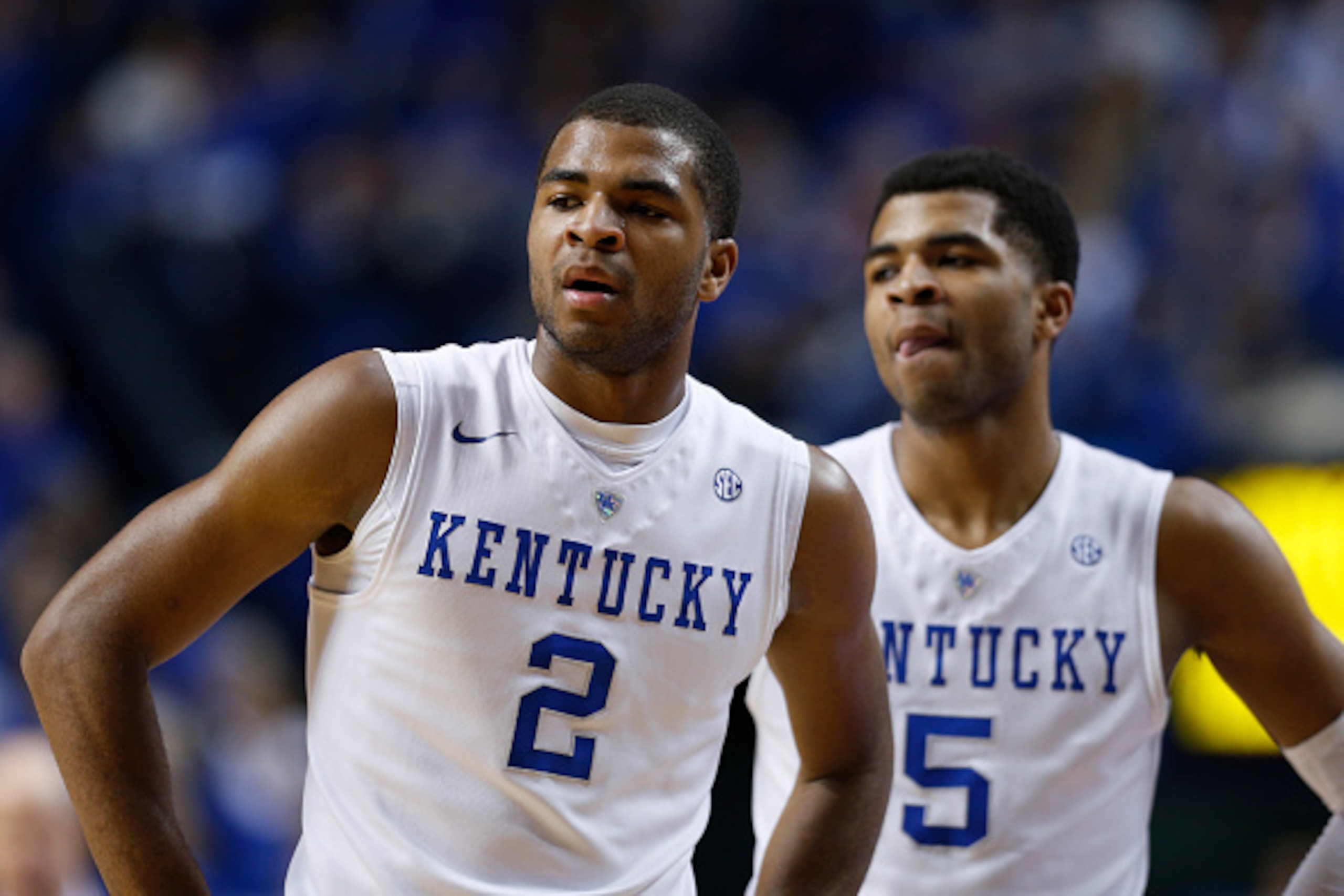
The NBA combine brought back five-on-five game action, which turned out to be a good decision. The games were intense and competitive, with everyone playing for something.
There were ultimately dozens of high-ranking NBA executives, including general managers, head coaches and directors of scouting in attendance. And unlike last year, many actually stayed the entire day.
The games gave the NBA folks a chance to see prospects operate with a little more freedom than they might have had during the year. We also got to see many mid-major stars play against power-conference players.
And though the five-on-fives consisted mostly of second-round options, there were a handful of them who may have helped move the needle for their draft stock.
It might mean the end of the first-round prospects participating, but the change was worth it. The top guys would have likely sat out regardless.
Kentucky's Andrew Harrison Was Sharp
2 of 10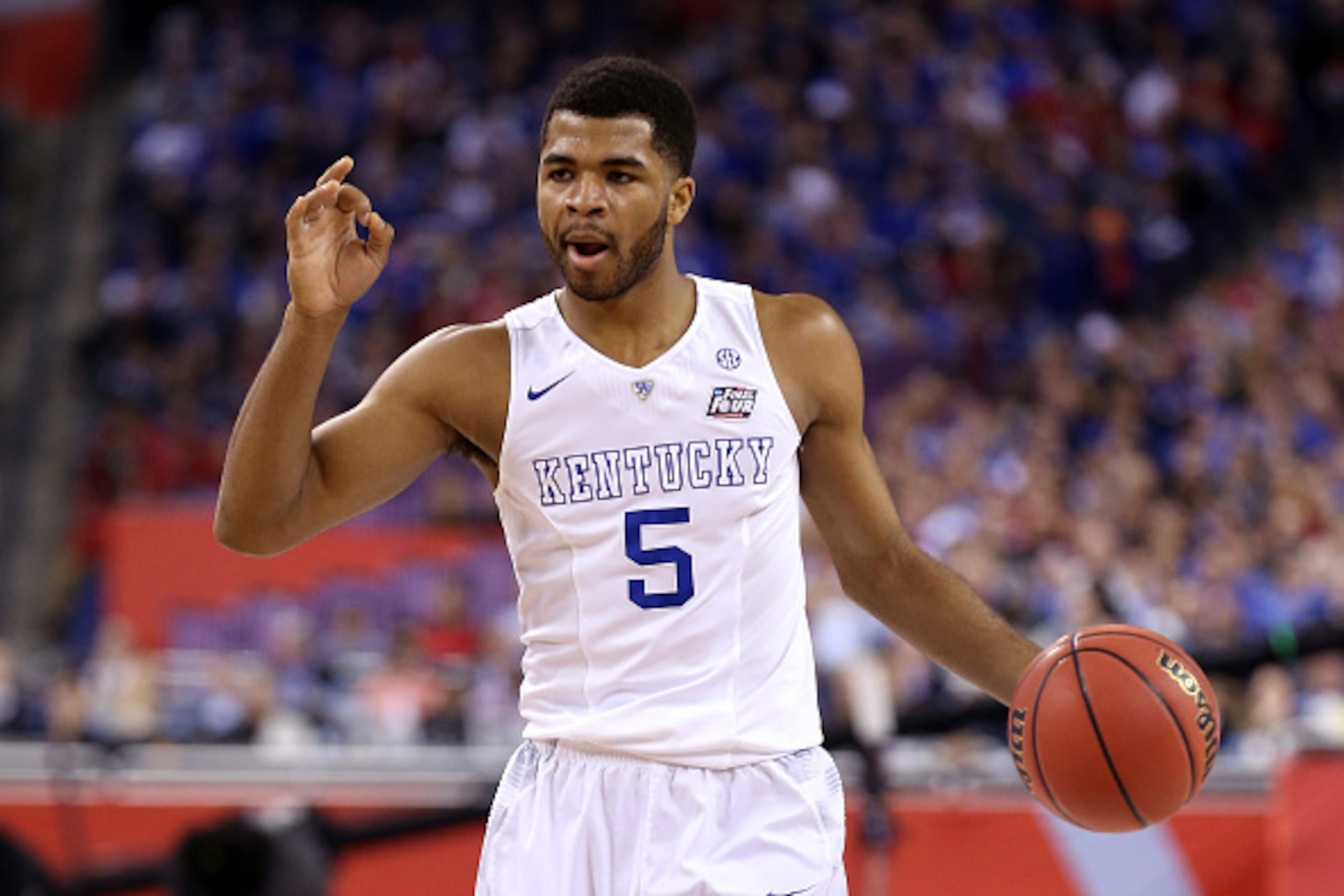
Andrew Harrison looked comfortable and confident running the point throughout the afternoon, finishing with 17 points, five assists and no turnovers in five-on-fives.
Harrison controlled the pace and did a nice job of setting the table for teammates off ball screens.
He made a couple of strong takes to the basket, overpowering defenders and finishing over the top. Harrison also generated a few "wows" from the crowd off a textbook step-back in the mid-range.
"I just want to prove I'm the best player here, not just playing, but in the whole draft," Harrison said after his game.
Realistically, he'll be fighting for a spot somewhere in the late-first round. But consider Day 1 a success for Harrison, who stood out from pack during game play.
LSU's Jordan Mickey Was a Standout
3 of 10
Jordan Mickey was an animal in Game No. 2, making himself impossible to miss throughout. He finished with 17 points, eight rebounds and a whopping eight blocked shots.
Having led the country in shot blocking, Mickey's nose for the ball was no secret coming in. He continually flashed his spectacular blend of athleticism and defensive instincts.
Mickey even knocked down a few jumpers in pick-and-pop situations.
He measured in just above 6'8", which is considered somewhat undersized in today's NBA for a power forward. But Mickey was an obvious standout during gameplay.
If he keeps knocking down outside jumpers, the inch or two he's lacking in height shouldn't be all that problematic. He did measure a monster 7'3¼" wingspan.



The International Kids Have Something to Offer
4 of 10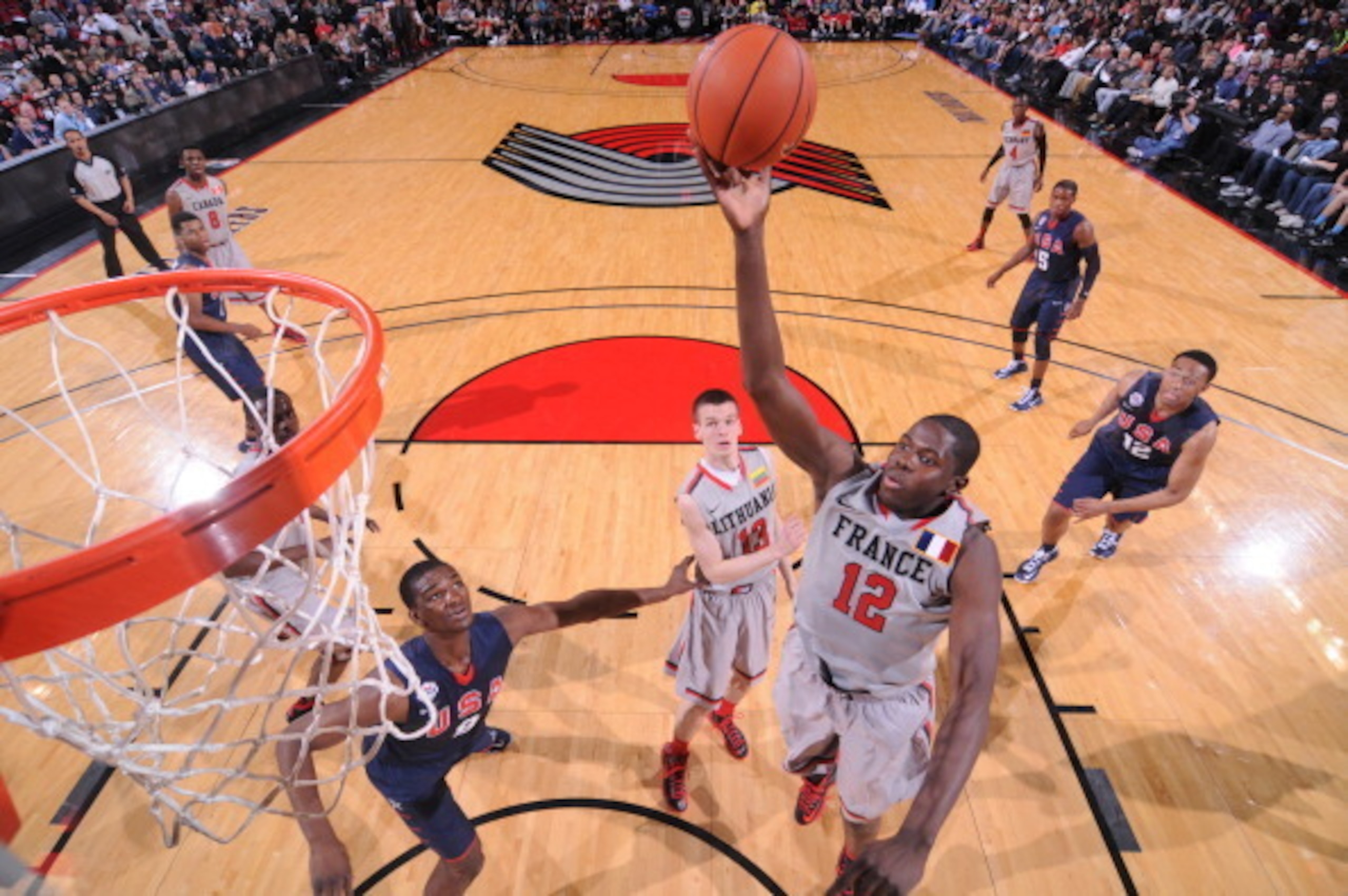
Brazil's George de Paula and France's Mouhammadou Jaiteh flashed the potential that earned them an invite to the combine in the first place.
Jaiteh finished his first game with 12 points and 10 rebounds. He generated some buzz in the stands just based on his body (6'10½" size, 7'3" wingspan, 246 pounds) alone.
Though still raw and methodical in the post, he made some nice passes and jump hooks with his back to the basket. And he cleaned his area under the boards.
De Paula, who put up eye-opening measurements for a point guard—6'5½" size with a 7'0" wingspan—also made an impression. He needs to tighten up his handle, but he dished out a couple of pretty assists and knocked down a three-pointer.
De Paula said this was only the fourth time he's even been to the United States. And he's still learning the language. But as a long-term project, teams looking to draft-and-stash and avoid paying rookie salary could certainly target him in the 20-30 range.
Both international prospects will likely be viewed as late first-round options. If not, don't expect them to fall past No. 45 in the draft.
Louisville's Terry Rozier Looked Comfortable at the Point
5 of 10
If you were watching Louisville's Terry Rozier for the first time, you wouldn't have known there has been skepticism regarding his ability to play the point. He ran it exclusively on Day 1 of the combine after spending most of his sophomore season off the ball, where he was asked to score—not necessarily distribute.
And though Rozier didn't wow us with any flashy assists, he looked fairly natural bringing the ball up the floor and initiating his team's offense.
"I laugh," Rozier said when asked about skeptics who question whether he can play point guard. "I've been playing point guard all my life. I'm just a guy who can play on the ball and off the ball. I look at it as a versatile thing."
Rozier led his team with 13 points. He got into the lane at will with a dynamite first step. And he put loads of pressure on the defense by pushing the ball in the open floor.
He also measured well for a point guard—6'2¼ size with a terrific 6'8¼" wingspan. And he finished top 10 in the max vertical leap (38"), lane agility (10.8) and the three-quarter sprints (3.15).
Overall, it was a positive first day for Rozier, who'll be fighting for a spot in the 20-35 range.
North Carolina's J.P. Tokoto Helped Himself
6 of 10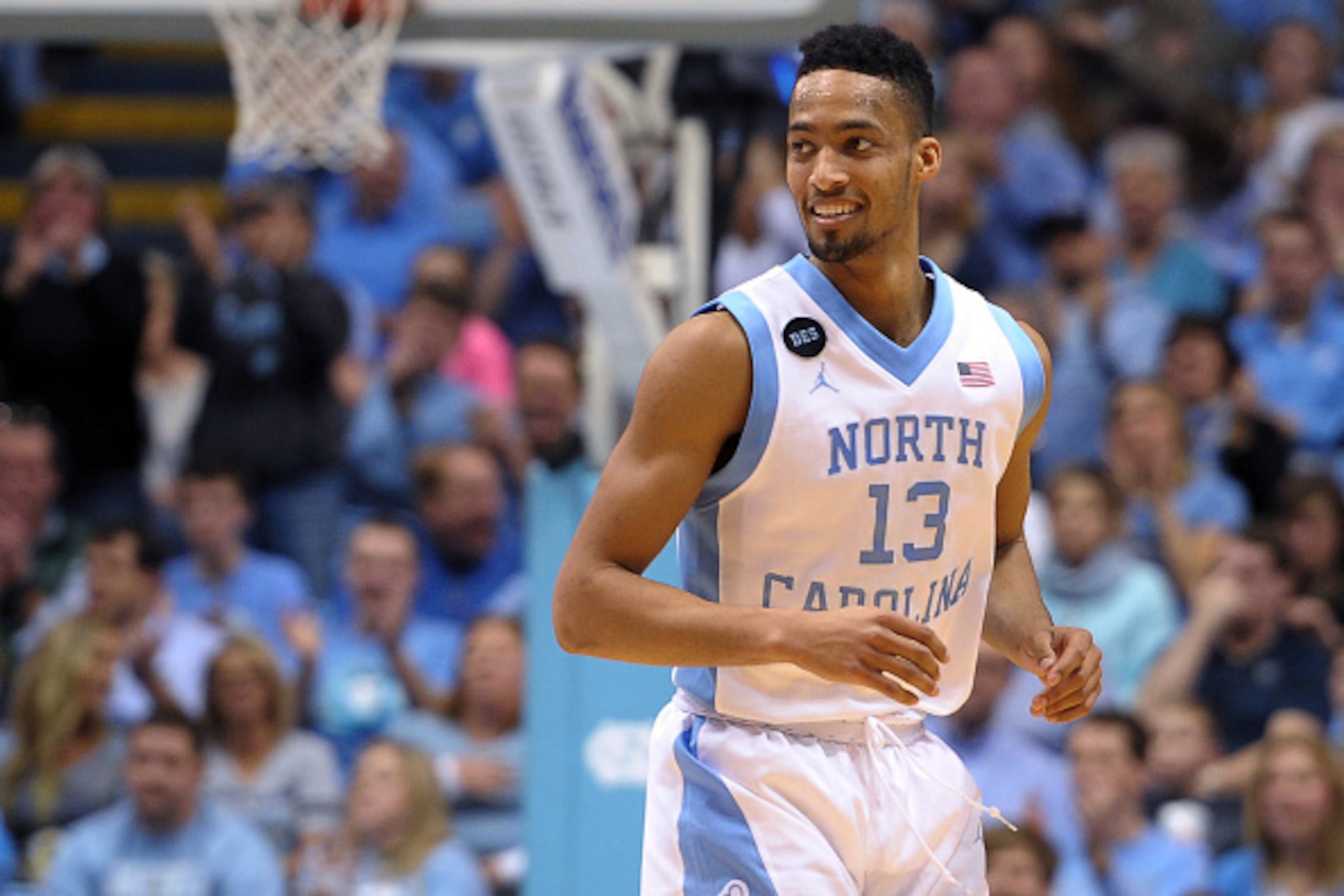
J.P. Tokoto's decision to enter the draft was questioned by many. He averaged single digits in points at North Carolina for three years in a row and made just 21 threes over the past two seasons.
But Tokoto was excellent during five-on-fives, where he finished six-for-six from the floor while showcasing his defensive ability and elite athleticism.
He opened up the game by jumping a passing lane and taking it the other way for a dunk. Tokoto followed with a three and a mid-range jumper. And then he got the crowd out of its seats with an explosive one-handed high-flying slam over a defender.
Tokoto also registered a 40" max vertical and hit the 6'6" mark in sneakers.
I'm not sure he could have done more for himself in Day 1. Tokoto should be in the early-second-round conversation.
Big Leapers
7 of 10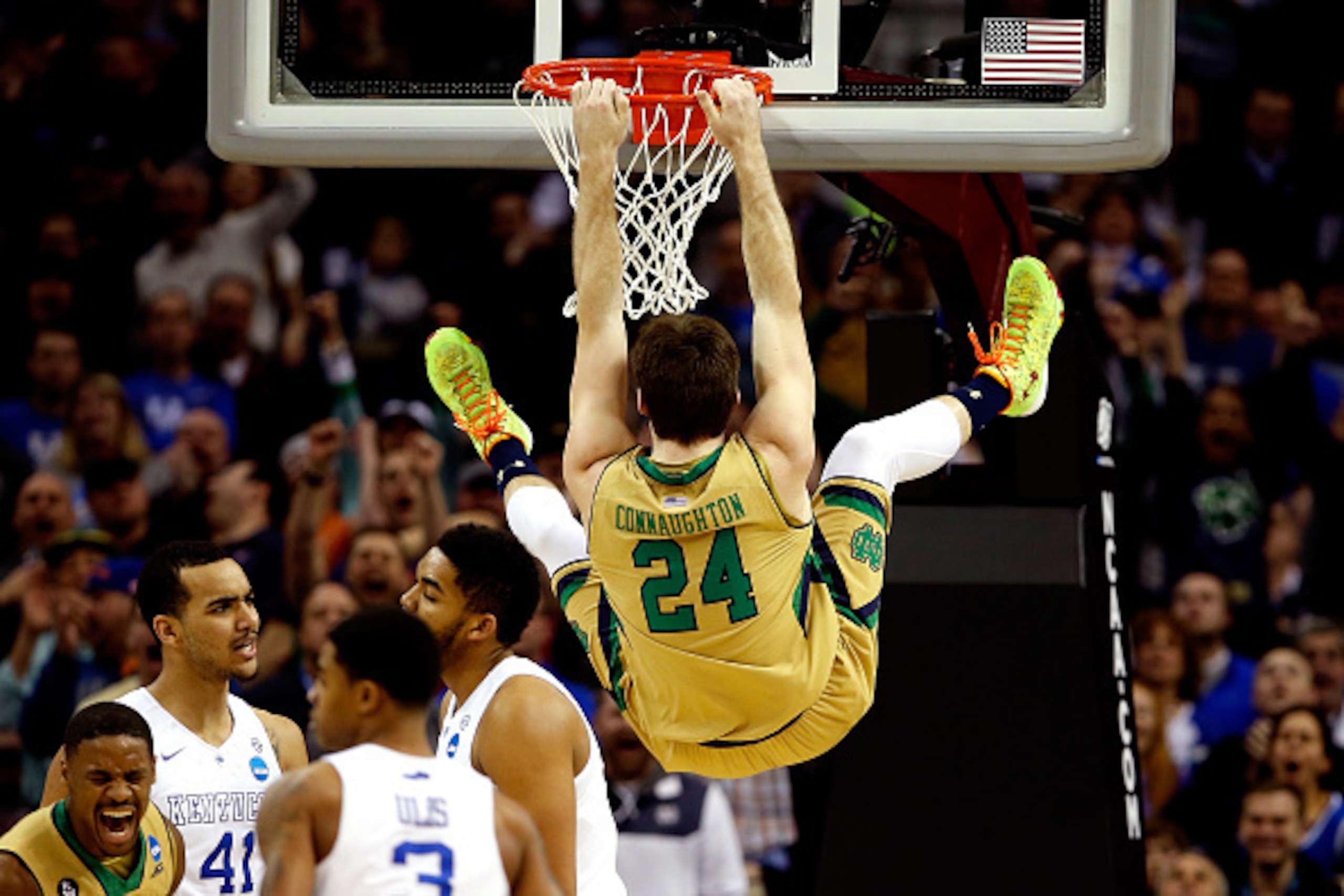
We saw a whole lot of monster jumps during the max vertical testing, though nobody generated more buzz than Notre Dame's Pat Connaughton.
He got up for a whopping 44" vertical, which tied Shane Larkin for the highest jump in combine history.
Green Bay's Keifer Sykes, Virginia's Justin Anderson and William & Mary's Marcus Thornton each hit the 43" mark.
Connecticut's Ryan Boatright tallied a 41, Oregon's Joseph Young managed 40½" and North Carolina's J.P. Tokoto hit 40".
Rakeem Christmas Looked the Part
8 of 10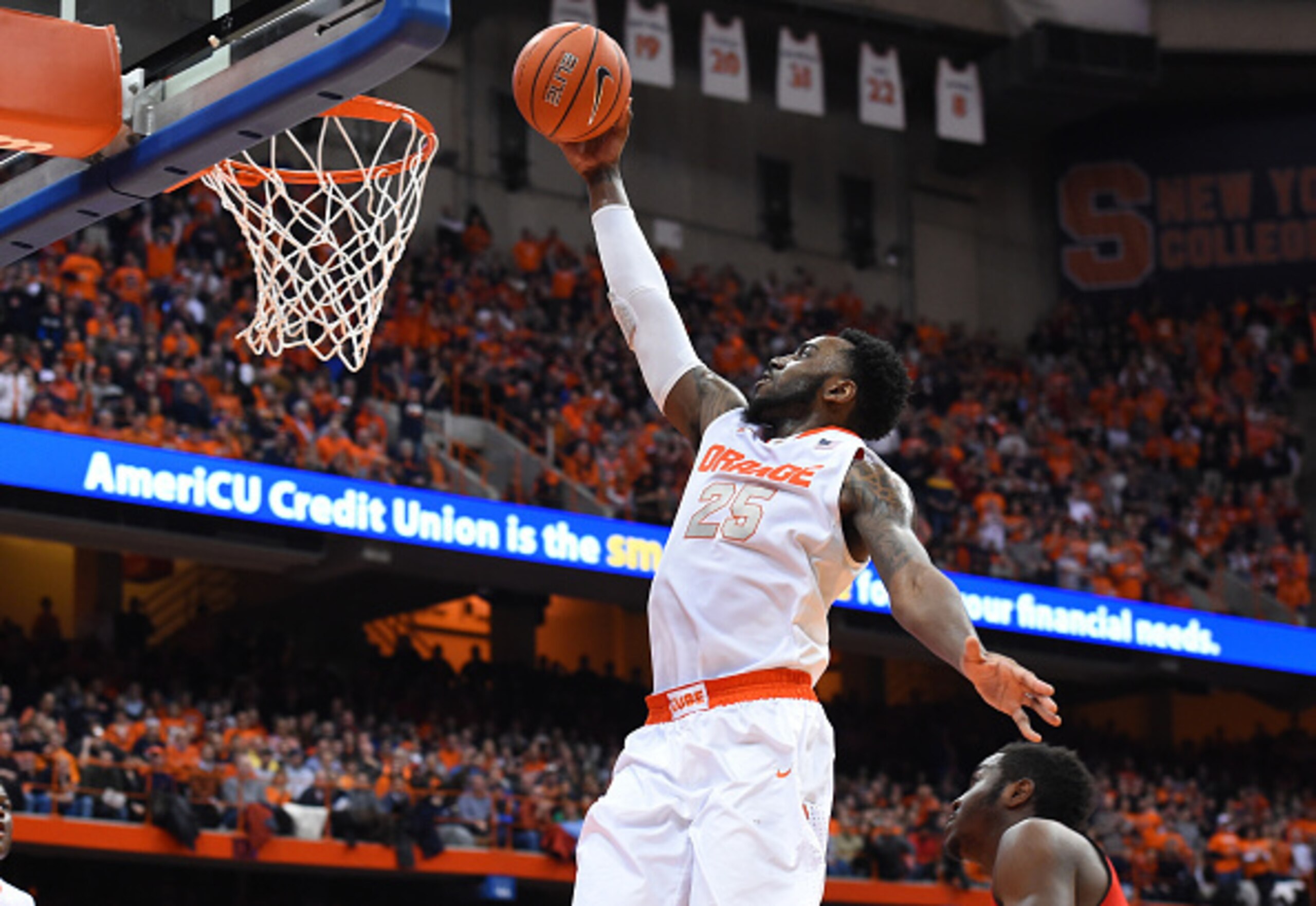
Rakeem Christmas started the week off strong with solid measurements—6'9¾" size and a ridiculous 7'5¼" wingspan.
He also brought it Day 1 of the five-on-fives, finishing with a game-high 20 points. And for most of the afternoon, he was guarded by Mahammadou Jaiteh, who has legitimate NBA size.
Christmas scored on a couple of pretty jump hooks in the lane, a shot he mastered over the course of his senior year. And he even hit three mid-range jumpers, a shot he'll need, but one he didn't show much of at Syracuse.
He looked like a grown man Day 1. Christmas will be 24 years old in December, which will likely keep him out of the first round. But as a physical interior presence, he could be in demand once Round 2 begins.
UTEP's Vince Hunter Made His Presence Felt
9 of 10
UTEP's Vince Hunter wasn't exactly one of the higher-profile prospects in attendance. But that might change after Day 1.
Hunter went for 18 points and 12 rebounds during his first game of five-on-fives. Nine of those boards came at the offensive end, where his motor and athleticism translated to plenty of activity.
He finished the season with an outstanding 19.1 percent rebounding percentage, per Sports-Reference.com, so his presence on the glass shouldn't have come as that much of a surprise.
And while most of his buckets were delivered around the basket, he did show some touch on a jumper.
Hunter was viewed more as a fringe second-round option coming in. But he definitely improved his chances of getting drafted with a strong first impression in Chicago.
Interviews Could Be the Only Hurdle for Robert Upshaw
10 of 10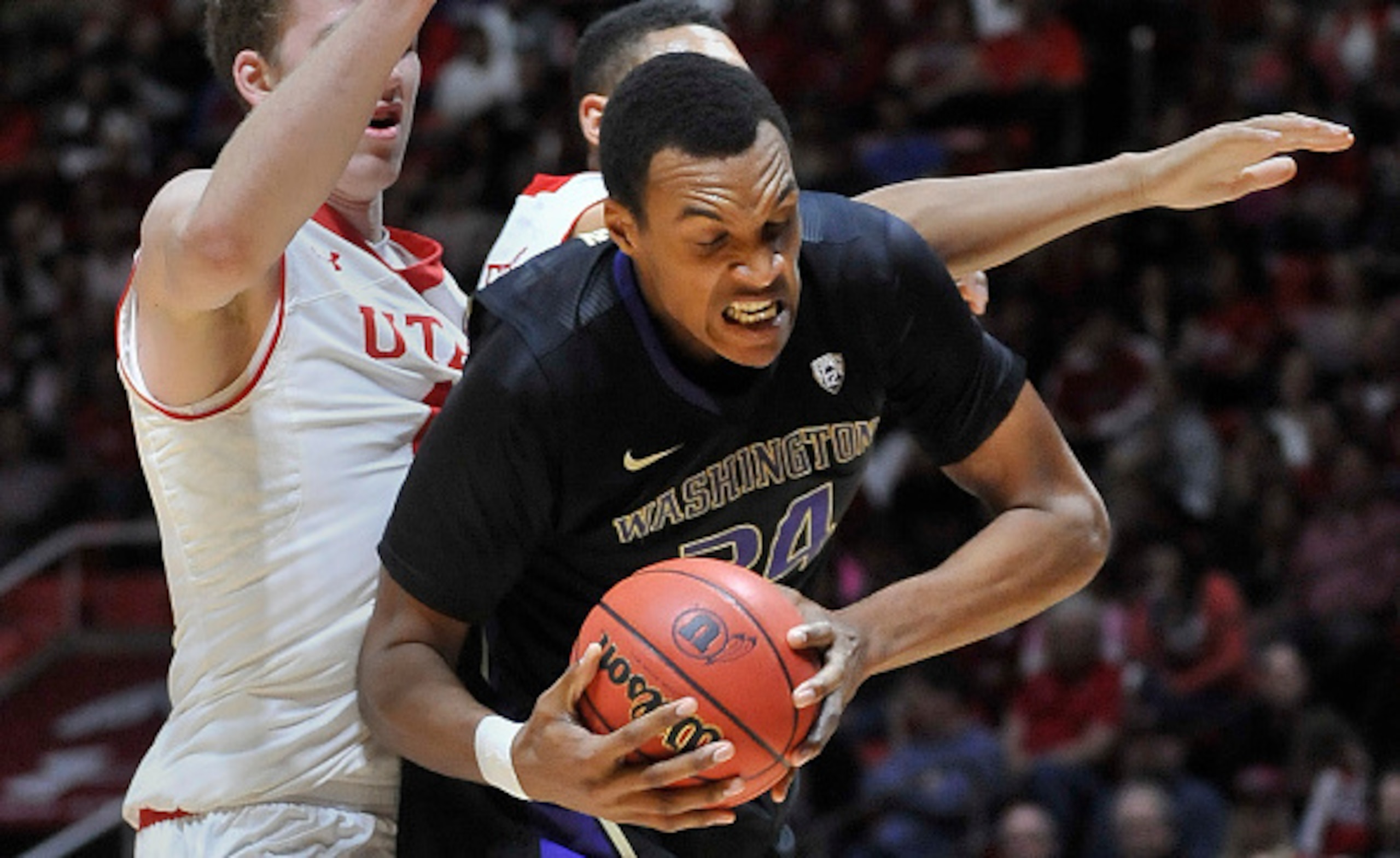
Robert Upshaw was arguably the big winner during measurements. He came in at 7'0" in sneakers, while his wingspan (7'5½"), standing reach (9'5") and hand size (10" by 11") each ranked No. 1 in the class.
Upshaw was leading the country in shot blocking before getting dismissed from Washington in January. And though there are questions concerning his character, there clearly aren't any regarding his physical tools.
The only challenge left for Upshaw will be explaining how he got kicked out of two separate programs in two years. Before getting the boot from Washington, he was bounced from Fresno State back in 2013.
Unfortunately, Upshaw didn't participate in five-on-fives, but his play through two months of the season was fairly convincing. There will no doubt be first-round general managers interested in Upshaw, if he can sell them on his maturity and awareness.
All quotes were obtained firsthand unless otherwise noted.

.jpg?w=2560 "Raiders Could Start Mendoza")

.jpg?w=2560 "Rodgers Iced Out on Plane 💎")
.jpg?w=2560 "Packers Safety Slams Refs 🤬")
.jpg?w=2560 "🚨 Week 8 AP Top 25 Poll")